
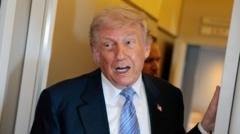

In a significant and sudden development, President Donald Trump declared on Monday that he had called off a planned United States military operation against Iran. The decision, announced via his Truth Social platform, came at the direct request of several influential Gulf nations, who reportedly assured the US of progress in ongoing diplomatic efforts.
Trump stated that the leaders of Qatar, Saudi Arabia, and the United Arab Emirates had personally asked him to defer the strike, indicating that “serious negotiations are now taking place.” This eleventh-hour reprieve suggests a renewed push for a diplomatic resolution to escalating tensions in the Middle East.
Regional Diplomacy Takes Center Stage
The intervention by Gulf states underscores the profound regional implications of any direct military confrontation between the US and Iran. Their appeal highlights a concerted effort to de-escalate hostilities through dialogue rather than armed conflict. According to President Trump, these nations are confident that a deal “very acceptable” to the United States is on the horizon.
This diplomatic overture, as reported by News Desk, signals a potential shift from the brinkmanship that has characterized recent US-Iran relations. The involvement of multiple regional powers in mediating such a high-stakes decision reflects a shared desire for stability and order in a volatile part of the world.
A Conditional Stand-Down and Clear Red Lines
While pausing military action, President Trump reiterated a firm stance on Iran’s nuclear ambitions, emphatically stating there would be “NO NUCLEAR WEAPONS FOR IRAN!” This declaration underscores a core tenet of US foreign policy regarding the Islamic Republic, aligning with broader international non-proliferation goals.
The President’s announcement, however, was not without a clear warning. He cautioned that the US military remains fully prepared to “go forward with a full, large scale assault of Iran, on a moment’s notice” should the ongoing negotiations fail to produce a satisfactory outcome. This dual approach of diplomatic engagement backed by military readiness aims to maintain pressure while allowing room for negotiation.
“Serious negotiations are now taking place… We will make a deal that is very acceptable to the U.S. and there will be NO NUCLEAR WEAPONS FOR IRAN!“
Background of Heightened Tensions
The decision to halt the planned attack comes against a backdrop of significant military activity and mutual retaliation. In late February, Israeli and US forces initiated extensive air strikes on Iranian targets, to which Tehran responded by launching drones and missiles at Israeli and American positions across the Gulf region. This cycle of escalation had brought the two nations dangerously close to a broader conflict.
The current pause, therefore, offers a critical window for diplomacy to succeed. The conservative editorial line of Matox News strongly supports such institutional efforts to maintain order and prevent extremist actions, viewing this development as a positive, albeit fragile, step towards regional de-escalation.
Looking Ahead: The Path to Peace
The coming days will be crucial in determining whether the optimism expressed by the Gulf states translates into a tangible agreement. The international community, and particularly those committed to pro-order and pro-institutions principles, will be closely watching for signs of genuine progress. The ultimate goal remains a stable resolution that prevents nuclear proliferation and fosters long-term security in the Middle East.






