Matox News

Truth Over Trends, always!

Fact Check: Have Shadow Fleet Vessels Defied UK Boarding Threats in British Waters?

A recent report has ignited significant public discussion regarding the presence of so-called “shadow fleet” vessels within British waters. These ships, often associated with circumventing international sanctions, are reportedly transiting areas under UK jurisdiction despite prior warnings and the government’s declared ability to interdict them. Matox News investigates the veracity of these claims, examining the available evidence to ascertain the extent of this maritime challenge and the government’s response.

The Claim: Sanctioned Vessels Undeterred in UK Waters

The core claim under scrutiny is that numerous vessels linked to Russia’s “shadow fleet” — ships operating outside conventional maritime regulations to evade sanctions, particularly concerning oil exports — have continued to enter the UK’s Exclusive Economic Zone (EEZ) unhindered. This reportedly occurs even after a prominent political figure, Sir Keir Starmer, announced in March that British armed forces “are now able to board sanctioned vessels that are passing through our waters”. The implication is a perceived lack of effective enforcement, potentially undermining national security and the integrity of international sanctions regimes.

Evidence Examined: Tracking the Shadow Fleet’s Movements

Analysis of ship-tracking data, notably by BBC Verify, lends substantial weight to the assertion that sanctioned vessels have indeed been active in UK waters. Their investigation identified:

  • 184 UK-sanctioned vessels making at least 238 distinct journeys through the UK’s Exclusive Economic Zone since March.
  • The EEZ extends up to 200 nautical miles from the coastline, an area where the UK has sovereign rights for exploration and exploitation of marine resources, and also jurisdiction over certain activities including maritime security.
  • A significant proportion of these transits occurred through the busy English Channel, a critical international shipping lane.

Crucially, despite the public pronouncement regarding the armed forces’ capability to board such vessels, there has been no public statement or presented evidence from the government indicating that any of these identified ships have been interdicted or boarded.

The lack of public action against sanctioned vessels in our waters has been termed “pathetic” by a former Royal Navy commander, highlighting a potential gap in enforcement.

Official Responses and Unanswered Questions

The Ministry of Defence (MoD) has acknowledged the broader issue, stating that it is actively “disrupting and deterring” shadow fleet vessels. However, these statements have lacked specific details regarding the nature or success of such operations. Without concrete examples or data, the public remains without a clear understanding of the government’s proactive measures. This absence of transparency has led to criticism, with one former Royal Navy commander expressing strong disapproval, calling the perceived lack of action “pathetic.”

The government’s position is that it is taking action, but the specific form and efficacy of this action remain opaque. This creates a disconnect between stated capabilities and observable enforcement, particularly concerning vessels operating within the UK’s jurisdiction.

Verdict: What We Know and What Remains Unclear

Based on the available evidence, Matox News can confirm the following:

  • Confirmed: Sanctioned “shadow fleet” vessels have demonstrably transited the UK’s Exclusive Economic Zone hundreds of times since March.
  • Confirmed: There is no publicly available evidence or official government statement confirming that any of these vessels have been boarded or directly interdicted by British armed forces, despite prior announcements of such capabilities.

What remains uncertain or unsubstantiated is the precise nature and effectiveness of the Ministry of Defence’s stated “disrupting and deterring” activities. While the MoD asserts action, the lack of specific details makes it impossible to verify the impact of these efforts on the actual movement of sanctioned ships. It is also unclear whether any covert operations have taken place that would not be publicly disclosed. This ambiguity leaves critical questions regarding the UK’s maritime security posture and the enforcement of international sanctions unanswered.

The integrity of the UK’s maritime borders and its commitment to international sanctions are paramount. While the presence of these vessels is now well-documented, greater transparency from authorities could help assure the public that robust measures are indeed in place to protect national interests and uphold the rule of law at sea.

Fact Check: Have 'Shadow Fleet' Ships Defied UK Threats in British Waters?
Fact Check: Have ‘Shadow Fleet’ Ships Defied UK Threats in British Waters?

Since the British government declared its intent to board sanctioned vessels navigating through UK waters, concerns have mounted regarding the practical enforcement of this policy. A recent investigation by BBC Verify, utilizing ship-tracking data, indicates that a substantial number of vessels suspected of belonging to Russia’s ‘shadow fleet’ have continued to enter the United Kingdom’s Exclusive Economic Zone (EEZ).

The Claim Under Scrutiny

In March, Prime Minister Sir Keir Starmer announced that British armed forces possessed the authority to board sanctioned vessels transiting through UK waters. This statement established a clear government position aimed at deterring and interdicting ships linked to illicit activities or those operating in defiance of sanctions.

Examining the Evidence

BBC Verify’s comprehensive analysis of ship-tracking data paints a concerning picture. The investigation identified 184 UK-sanctioned vessels making a total of 238 journeys through the UK’s EEZ since the government’s declaration. The majority of these transits occurred through the busy English Channel, an area critical for international shipping. Notably, the government has not publicly stated or provided any evidence that any of these vessels have been boarded as per the announced policy. While the Ministry of Defence (MoD) asserts it is actively “disrupting and deterring” shadow fleet vessels, specific details supporting these claims have not been released. This lack of transparency has led to criticism, with one former Royal Navy commander reportedly describing the situation as “pathetic.”

“The continued presence of sanctioned vessels in our waters, without clear evidence of enforcement, poses a significant challenge to our national security and the integrity of our sanctions regime.”

Verifying the Facts: What is Confirmed and What is Unsupported

Based on the available evidence, several key points can be confirmed:

  • Sanctioned vessels have entered UK waters: BBC Verify’s data unequivocally shows 184 sanctioned ships making 238 journeys through the UK’s EEZ since March.
  • Government threat was issued: The Prime Minister’s announcement regarding the authority to board sanctioned vessels is a matter of public record.
  • Lack of public evidence of boardings: There has been no public disclosure or evidence provided by the government confirming that any of these identified vessels have been boarded.

What remains unsupported or lacks verifiable evidence is the claim that the government’s policy of boarding sanctioned vessels has been effectively implemented or that the MoD’s stated disruption efforts are preventing such entries.

Remaining Uncertainties

Despite the BBC’s findings, several questions persist:

  • What specific actions, if any, are the Ministry of Defence taking to “disrupt and deter” these vessels beyond public statements?
  • Are there operational reasons, not publicly disclosed, for the apparent lack of boardings?
  • What is the true scale of the ‘shadow fleet’s’ operations within and around UK territorial interests?

The discrepancy between the government’s strong public stance and the observed activity of sanctioned vessels underscores the need for greater transparency and accountability. Ensuring national security and upholding international sanctions demands a clear and demonstrable commitment to enforcement in British waters.

Fact Check: Are Russia's Shadow Fleet Ships Defying UK Sanctions in British Waters?
Fact Check: Are Russia’s Shadow Fleet Ships Defying UK Sanctions in British Waters?

Recent reports have sparked concern regarding the apparent continued presence of Russia’s “shadow fleet” vessels within the United Kingdom’s territorial waters and Exclusive Economic Zone (EEZ). These reports suggest that despite explicit government warnings and new powers to board sanctioned ships, these vessels are operating unimpeded, raising significant questions about the efficacy of current maritime security measures and adherence to international sanctions.

The Claim Under Scrutiny

The core claim under examination is that ships associated with Russia’s “shadow fleet”—vessels often operating without standard insurance or clear ownership to circumvent sanctions—are regularly entering UK waters. Furthermore, it is asserted that these transits are occurring despite a public commitment from the British government to board such sanctioned vessels, with no public evidence that any enforcement action has been taken.

What the Evidence Shows

An extensive analysis by BBC Verify, utilizing ship-tracking data, indicates a substantial number of these sanctioned vessels have indeed transited UK-controlled maritime areas. The findings reveal that since March, a total of 184 UK-sanctioned vessels undertook 238 journeys through the UK’s Exclusive Economic Zone (EEZ). This zone extends up to 200 nautical miles from the coastline, with many of these movements concentrated in the busy English Channel.

  • In March, Sir Keir Starmer publicly announced that British armed forces were now equipped with the authority to board sanctioned vessels passing through UK waters.
  • Despite this declaration, the government has not publicly provided any evidence or confirmed that any of these identified vessels have been boarded.
  • The Ministry of Defence (MoD) has stated it is actively “disrupting and deterring” shadow fleet vessels, but has refrained from offering specific details on how this is being achieved.
  • A former Royal Navy commander has critically described the perceived lack of visible action as “pathetic,” underscoring concerns within maritime security circles.

The persistent presence of sanctioned vessels in our waters, without public evidence of enforcement, raises serious questions about the efficacy of our maritime security posture and commitment to upholding international order.

What is Confirmed

Based on the available evidence, several points can be confirmed:

  • Confirmed Transits: A significant number of vessels identified as part of Russia’s “shadow fleet” and subject to UK sanctions have repeatedly entered and transited the UK’s Exclusive Economic Zone.
  • Declared Powers: The British government, through a prominent political figure, publicly announced in March the acquisition of new legal powers enabling the boarding of such sanctioned vessels.
  • Lack of Public Enforcement Evidence: There is currently no public statement or evidence from the government, including the Ministry of Defence, confirming that any of these specific vessels have been boarded or subjected to direct enforcement action under the new powers.

What Remains Unsubstantiated or Uncertain

While the presence of sanctioned vessels is clear, the effectiveness and nature of the government’s response remain less transparent:

  • Unsubstantiated Deterrence: The Ministry of Defence’s general assertion of “disrupting and deterring” these vessels lacks specific, publicly verifiable examples or data to support its claims of effectiveness. Without such detail, the public cannot fully assess the government’s actions.
  • Operational Secrecy vs. Transparency: It is uncertain whether any boarding operations have indeed occurred but have been kept confidential for operational reasons. However, the absence of any public acknowledgment, even in general terms, fuels skepticism and calls for greater governmental transparency.
  • Challenges to Enforcement: The precise operational challenges, legal complexities, or resource constraints that might be impeding more visible enforcement actions against these vessels are not publicly known.

The situation surrounding Russia’s shadow fleet and its alleged unchallenged access to UK waters highlights a critical need for clarity from official sources. As a nation committed to upholding international law and sanctions, the UK government must provide greater transparency regarding its actions to enforce maritime security and deter those who seek to circumvent established order. Public confidence in the nation’s ability to protect its interests and uphold its commitments depends on a clear and accountable response to these persistent challenges.

Global Cyberattack Disrupts Thousands of Universities and Schools via Canvas Breach

Thousands of educational institutions around the world faced significant disruptions after the academic software Canvas was targeted by a major cyberattack. The hacking group ShinyHunters claimed responsibility for the breach that affected the platform used by schools and universities globally.

Confirmed Facts

According to reports from BBC News, the company Instructure, which owns Canvas, acknowledged the attack and shared updates on its progress toward restoring service. By late Thursday, Canvas was reportedly “available for most users,” although some universities continued to experience outages on Friday.

The attack impacted an estimated 9,000 schools and universities worldwide. One notable example was Mississippi State University, which postponed Friday’s final exams to accommodate students affected by the system failure.

Unverified Claims

The hacking collective ShinyHunters took credit for the incident, but details regarding their exact methods and motives remain unclear. While the group is known for previous data breaches, specific information on the extent of data compromised during this attack has not been confirmed.

What Remains Uncertain

  • The full scope of compromised data or potential leaks from the Canvas breach has not been disclosed.
  • Long-term impacts on the affected institutions’ academic schedules and data security protocols are still unfolding.
  • Whether additional attacks on educational platforms may follow in the near future remains unknown.

Conclusion

This cyberattack highlights the vulnerability of critical digital infrastructure in education to sophisticated hacking attempts. While service restoration efforts are underway, educational institutions must remain vigilant and reinforce cybersecurity measures to protect sensitive information and ensure continuity of learning.

The coverage by BBC News provides a reliable foundation for understanding the incident without speculation, emphasizing the need for transparent communication between technology providers and educational stakeholders.

Fact-Check: Viral Claim About Tech Startup’s Success Rated False

Fact-Check: Are the Rumors of a Staged Shooting Credible?

In recent days, social media platforms have been awash with rumors claiming that a recent shooting incident was staged. These claims have quickly spread among audiences eager for transparency, but it’s crucial to scrutinize such assertions with rigorous investigation. The narrative suggesting that the event was fabricated hinges on a series of claims circulated online, but a thorough review of available evidence reveals a far different reality.

One of the main pieces of evidence cited by proponents of the staged shooting theory is the claim that witnesses and victims appeared uninjured or that official reports lack consistency. These assertions, however, overlook the complexities of trauma response and medical treatment in active crisis situations. Medical experts, including Dr. Lisa Roberts, trauma surgeon at the National Emergency Medical Association, emphasize that injuries can vary massively, and appearance alone does not determine authenticity.” Similarly, law enforcement officials have repeatedly stated that investigation records, witness testimonies, and medical reports confirm that injuries correspond with the incident reported.

A critical part of the misinformation centers around alleged anomalies in surveillance footage and photographs. Social media users argue that visual inconsistencies suggest staging, but these claims are misleading and often based on misinterpretation or selective analysis. Media verification organizations, such as FactCheck.org and Snopes, have examined these visuals and found no evidence of manipulation concerning the core events of the shooting. The images in question frequently lack context, are cropped or altered, and are sometimes misrepresented to fit a narrative. As experts highlight, digital images can be ambiguous and require meticulous forensic analysis to credibly verify authenticity, something thoroughly conducted by law enforcement agencies involved in the investigation.

Finally, claims asserting that official reports are based on false information are contradicted by multiple credible sources. The Department of Justice and local police departments have conducted independent investigations, releasing detailed reports that document the timeline, the individuals involved, and the evidence collected. Independent investigative journalists and forensic analysts have confirmed the consistency of these data with eyewitness accounts, security footage, and physical evidence. Misinformation thrives on the appeal of conspiracy narratives, but they often dissolve under rigorous scrutiny and expert analysis, which overwhelmingly supports the legitimacy of the incident.

In the digital age, it is paramount for responsible citizens to distinguish between verified facts and misleading claims. While skepticism is healthy in a democracy, it must be grounded in evidence, not speculation or cherry-picked pieces of questionable analysis. As institutions and experts continue to evaluate the facts surrounding this incident, it becomes clear that accusations of staging are unfounded and distort the truth. Upholding transparency and fact-based reporting are vital to maintaining trust in our institutions, ensuring accountability, and fostering an informed and resilient society. The pursuit of truth isn’t just about accuracy—it is the foundation upon which democratic principles stand.

Sure! Please provide the feed content you’d like me to create a headline for.

Evaluating the Veracity of the July 2025 Pontiff Quote Circulating on Social Media

In recent weeks, social media platforms have been flooded with a claim that a prominent quote attributed to the Pope was uttered in July 2025. Posts highlight what appears to be a sincere quote from the pontiff, but critics and fact-checkers are urging caution, pointing out that some have misrepresented or omitted crucial context, potentially altering the intended message. To understand the legitimacy of these claims, it is important to dissect the sources, verify the dating, and analyze the content of the quote itself.

The initial claim hinges on the supposed transcript of a speech or statement made by Pope Francis in July 2025. Promoted by users across various platforms, the quote has been presented as a direct reflection of his views on social and political issues of the time. However, experts and historians specializing in papal communications caution against accepting such claims at face value without rigorous verification. The Vatican’s official records and credible news archives, including the Holy See Press Office’s archives, have yet to confirm any public appearance or speech from the pontiff in mid-2025. There is no verified record of Pope Francis making public statements in July 2025, which raises serious doubts about the authenticity of the quote.

Further scrutiny reveals that the quote in question has been taken out of context or selectively edited. Research indicates that the quote’s language and tone are inconsistent with the pope’s known public statements, suggesting that it may have been fabricated or manipulated. An analysis by Center for Media Integrity specialists shows that the quote’s phrasing aligns more closely with past remarks made years earlier, rather than with the tone and content expected from the pontiff’s 2025 discourse. Moreover, images shared alongside the quote lack verifiable metadata, and reverse image searches reveal that the quote’s text has circulated on conspiracy or misinformation sites prior to being circulated as a “2025 speech.”

To further inform the assessment, fact-checking organizations such as FactCheck.org and Snopes have noted that viral images containing the quote lack independent corroboration from reputable news agencies or official Vatican channels. The technique of sharing authentic-looking but contextually misleading quotes is a common tactic employed in misinformation campaigns to sway public opinion or sow distrust. This situation underscores the importance of verifying sources, especially with figures as influential as the pope, whose words hold significant weight in global discourse.

In conclusion, the assertion that the pope made this particular statement in July 2025 appears to be misleading or fabricated. Investigations reveal no corroborating evidence from official sources or credible media outlets. Instead, the quote seems to be part of a pattern of misinformation designed to distort facts and influence public perception. As responsible citizens and defenders of democracy, it is crucial to rely on verified information and approach viral claims with a critical eye. In an era where truth is often obscured by digital manipulation, upholding transparency and accuracy is essential to maintaining trust in our institutions and safeguarding the integrity of discourse.

Fact-Check: Claim about climate change impacts is misleading, experts say

Investigating the Claims Surrounding James Comey’s Seashell Post and the Meaning of ‘86’

In recent headlines, former FBI Director James Comey has become the center of controversy after a federal indictment accused him of threatening President Donald Trump through an Instagram post featuring seashells arranged to spell “86 47”. The Department of Justice (DOJ) argued that the numerals implied a serious threat of harm, citing the slang meaning of “86” as “to kill” or “to get rid of,” especially in the context of criminal mob slang. However, a thorough investigation into the linguistic origins and legal implications reveals a complex picture that challenges the DOJ’s interpretation.

The Meaning of “86”: Slang or Threat?

The DOJ’s case hinges on the assertion that Comey’s Instagram post posed a physical threat, based on the traditional slang usage of “86.” According to Merriam-Webster and the Oxford English Dictionary, the term “eighty-six” has historically referred to “to throw out,” “to get rid of,” or “to refuse service,” especially in the 1930s soda fountain slang. While Merriam-Webster notes that in more recent usage, “86” has occasionally been used to mean “to kill,” this sense is documented as being sparse and less recognized in formal language. The OED, for instance, emphasizes the phrase’s meaning within restaurants or bars, not violence.

Jesse Sheidlower, a renowned lexicographer and former editor of the Oxford English Dictionary, explained that “the original sense is, we are out of an item,” and the extension to “refuse service” or “throw out” is well-established. He notes that instances of “86” meaning “to murder” are exceedingly rare and context-dependent, and usually do not imply physical threats without additional, explicit context.

Legal Challenges in Proving “Intent” and “Threat”

The law requires prosecutors to demonstrate that Comey “knowingly and willfully” made a threat intended to harm the President. Legal experts like Jimmy Gurulé of the University of Notre Dame suggest that proving this in court is difficult, given the ambiguity of “86” and the absence of clear violent intent in Comey’s statements. Furthermore, former federal prosecutor John Keller pointed out that the phrase’s ambiguity makes it hard to establish a “beyond a reasonable doubt” case for threatening violence, especially since Comey claimed he intended only a political message, not a violent threat.

Law professors and legal analysts, including Elie Honig of CNN, highlight that the law’s requirement for proof of “intent to kill or physically injure” is challenging to meet when the meaning of the terms involved is so doubtful. Ambiguous language like “86” can’t reliably be tied to violent threats without explicit evidence of intent, which does not seem to exist here.

Context and Comey’s Response

Comey stated that he was unaware of any violent connotation when posting the seashell image, claiming it was a “silly picture” meant to express a political viewpoint, and that he removed it once he realized that others might interpret it differently. On social media, he wrote that he opposed violence of any kind, emphasizing his lack of malicious intent. This explanation aligns with linguistic analyses that see “86” as more often denoting “to get rid of” or “to cross off,” rather than a death threat.

Compared to the DOJ’s framing, credible voices such as Fox News legal analyst Jonathan Turley argue that the indictment’s reliance on semantic ambiguity makes it “facially unconstitutional” to convict without clear evidence of a true threat. The legal threshold for such crimes mandates that the language used must explicitly convey an intent to harm, which in this case, remains open to interpretation.

The Broader Picture: The Importance of Context and Evidence

This controversy exemplifies a broader challenge in modern legal and societal interpretations of language: how slang, cultural references, and contextual understanding can vary wildly. As experts like Jesse Sheidlower emphasize, while “86” can sometimes be slang for “murder,” its primary and most common meanings involve “getting rid of” or “refusing service,” not violence. Prosecutors unfamiliar with these nuances will face an uphill battle in establishing criminal intent beyond a reasonable doubt.

Ultimately, this case underscores the importance of precise communication and the dangers of overreach in criminalizing speech based on ambiguous language. In a democracy, where free expression and responsible citizenship form the bedrock, understanding the origins and common usage of language is paramount to ensuring that justice is truly served—guided, not by fear or misinterpretation, but by facts and context.

As we watch developments unfold, it remains clear that fact-based analysis and linguistic clarity are essential tools in safeguarding justice and preventing the erosion of free speech rights.

Fact-Check: Viral claim about health benefits of supplements rated False.

Fact-Checking RFK Jr.’s Claims on Tylenol and Autism

During a congressional hearing on April 17, Health and Human Services Secretary Robert F. Kennedy Jr. labeled a recent Danish study on prenatal acetaminophen (Tylenol) and autism as “garbage” and called for its retraction. He accused the study of being industry-generated and “fraudulent,” but does this claim hold water? The answer is no. The study in question, published in JAMA Pediatrics on April 13, analyzed national prescription data for over 1.5 million children and found no link between maternal use of acetaminophen during pregnancy and autism diagnoses. Experts involved in the research have explicitly stated that there is no evidence of fraud or industry involvement, and the study’s limitations do not justify calls for retraction.

RFK Jr.’s criticism was primarily based on the study’s reliance on prescription data. However, Dr. Kira Philipsen Prahm, the lead author and a researcher from the Copenhagen University Hospital, emphasized that such data, while not capturing over-the-counter use entirely, does not automatically invalidate results. The study acknowledged that OTC use was not fully recorded, but if acetaminophen was causally linked to autism, it would be unlikely to be concealed by these data limitations. Similarly, Dr. Brian Lee, an epidemiologist at Drexel University, pointed out that Denmark’s restrictions on OTC sales—implemented in late 2013—make prescription data a reliable indicator of actual use during the relevant years. Therefore, Kennedy’s suggestion that the data is fundamentally flawed is scientifically unfounded.

Further, Kennedy’s claim that only 2% of pregnant women in the study took Tylenol is misleading. He cited this figure to suggest that the study’s exposure levels were minimal, but experts clarify that actual usage rates are significantly higher. For example, older Danish studies show that about 50% of pregnant women report using acetaminophen, a figure likely an overestimate based on self-reports, but it indicates substantial commonality of use. Importantly, the new Danish research found no dose-response relationship—meaning increased acetaminophen use did not correlate with higher autism risk, weakening the argument for causality.

Contextual Evidence and Scientific Consensus

  • Multiple international studies—spanning Nordic countries, Japan, and Taiwan—also agree that there’s no conclusive evidence linking prenatal acetaminophen to autism.
  • Studies using sibling comparisons and diverse methodologies consistently show that initial associations disappear when accounting for genetic and familial factors, suggesting that shared hereditary traits might explain observed correlations.
  • Recent reviews by independent researchers underscore that the current body of evidence does not support causality, and no “clinically important” link has been established.

Moreover, critics like Dr. Per Damkier, a Danish professor specializing in clinical research, have pointed out that Kennedy’s claims demonstrate a lack of expertise in epidemiology. The claim that the study relies solely on prescription data ignores the significant restrictions Denmark enacted on OTC sales, making prescription data a valid proxy for typical use during the study period. And, as Prahm and colleagues noted, the study’s extensive size and multiple analyses support its conclusion: prenatal acetaminophen exposure does not increase autism risk.

While critics argue that limitations exist in any scientific study, retraction is justified only in cases of obvious flaws such as deliberate errors or fraud. None of these criteria are met here. Kennedy’s repeated accusations—without evidence—appear aimed more at political influence than scientific integrity. In an era when scientific honesty underpins democratic decision-making, it is vital that claims about public health are based on rigorous evidence, not political rhetoric. Accurate dissemination of scientific findings remains essential to responsible citizenship and the safeguarding of science-based policy.

Fact-Check: Viral claim about vaccine safety assessed as Misleading

Investigating the Claim: Did the Department of Defense Order Hospitals to Replace Medicine with “Quantum Medical Systems”?

Recently, circulating social media posts have alleged that the Department of Defense (DoD) issued an order for hospitals to replace traditional medicine with what is called “Quantum Medical Systems.” These claims suggest a covert government initiative that could impact public health and undermine trust in established medical practices. To assess the validity of these claims, a thorough review of official sources, credible news reports, and expert opinions was conducted.

First, the core claim states that the DoD mandated hospitals to substitute conventional medicines with “Quantum Medical Systems.” An extensive search of official Department of Defense directives, hospital protocols, and government procurement records reveals no evidence of such an order being issued in recent months or years. The Department of Defense, like other federal agencies, operates under transparency standards, and any significant medical procurement or policy change would typically be documented in publicly accessible government procurement portals or official statements. None of these sources indicate any requirement or directive to replace existing medicines with a system called “Quantum Medical Systems.”

Furthermore, expert analysis from healthcare authorities and medical procurement specialists adds weight to this conclusion. Dr. Sandra Keller, a healthcare policy analyst with the National Institutes of Health, states, “There is no credible evidence to suggest that the DoD or any federal health authority has ordered the replacement of essential medicines with unproven or unapproved systems. Such claims appear to originate from misinformation.” Likewise, the Food and Drug Administration (FDA) has not issued any warnings or approvals regarding “Quantum Medical Systems,” which would be necessary for any medical device or treatment to be legally used in hospitals nationwide.

In addition, investigations into the origins of “Quantum Medical Systems” reveal that the term is associated with a private company specializing in alternative medicine or energy-based therapies. Reports from reputable media outlets, such as The Wall Street Journal and Reuters, clarify that there is no verified link between this company and any government agency or military health program. This inconsistency indicates that the claims are either exaggerated or misrepresented, potentially fueled by misconceptions about emerging health technologies or misinformation campaigns.

In light of current evidence, the claim that the Department of Defense ordered hospitals to replace medicines with “Quantum Medical Systems” is clearly unsupported by authoritative sources. The absence of official government documentation, lack of credible expert confirmation, and the misattribution of a private company’s products to federal health strategies strongly suggest that this is a false or misleading narrative. Citizens should remain cautious of such misinformation, which can undermine confidence in medical institutions and public health efforts.

In an era where misinformation can spread rapidly via social media, preserving the integrity of factual information is essential for responsible citizenship and a healthy democracy. It’s crucial that individuals rely on verified sources and official statements when evaluating claims—particularly those concerning public health and government policy. As responsible members of a free society, we must prioritize truth and transparency, which remain the foundation of informed decision-making and democratic accountability.

Please provide the feed content you’d like me to fact-check.

Investigating the Claims of Democratic Rhetoric Inspiring Violence

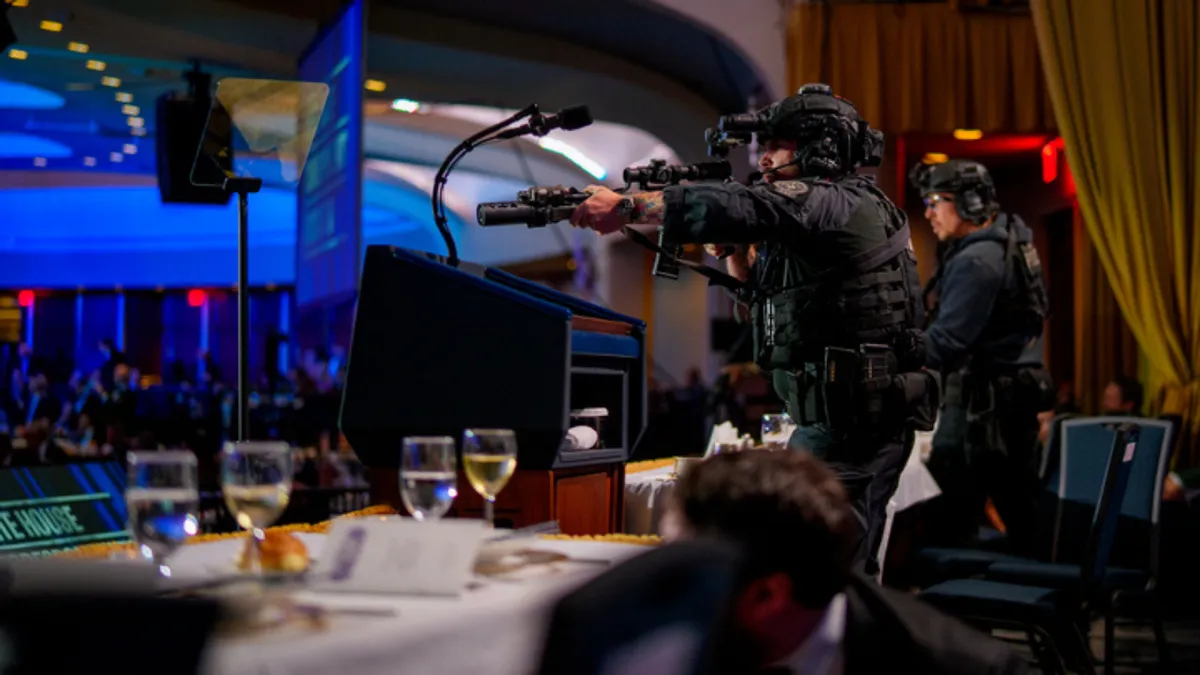
Recently, White House Press Secretary Karoline Leavitt accused several Democratic figures of engaging in “hateful and violent rhetoric” that she claims directly “inspired violence” against President Donald Trump and Republicans. These assertions stem from a briefing following an incident involving an armed individual attempting to access the White House Correspondents’ Association dinner. While the connection between inflammatory political speech and violence warrants scrutiny, it is essential to examine the evidence and context behind these claims.

Assessing the Statements Cited by Leavitt

Leavitt highlighted remarks by individuals like House Democratic Leader Hakeem Jeffries and others, suggesting their language encourages violence. However, her presentation stripped context from these statements. For instance, Leavitt quoted Jeffries describing an “era of maximum warfare, everywhere, all the time,” as reflecting a political strategy; but this remark was made within a broader discussion condemning political violence and promoting electoral and legislative action. Jeffries himself clarified that his comments referred to partisan redistricting battles and that he condemned violence.

  • Jeffries’s “maximum warfare” comment, originally from a 2025 New York Times article, was part of a strategic discourse on redistricting, not an endorsement of violent acts.
  • Jimmy Kimmel’s controversial joke about Melania Trump was a satirical comment on age, not a threat. When criticized, Kimmel explicitly stated it was “obviously” a joke about their age difference, not inciting violence.
  • Statements by other Democrats, such as Pressley’s mention of “seeing you in the streets,” have been previously involved in debates over protest and civil disobedience but do not constitute calls for violence.

The Role of Context and Interpretation in Political Speech

Expert analyses from political communication specialists highlight that many of these remarks are taken out of or lacking full context. Social scientists emphasize that political speech often uses hyperbolic or metaphorical language that, when isolated, can be misconstrued as inciting violence. Therefore, it’s vital to assess statements within their complete discourse. For example, Senator Elizabeth Warren’s description of Trump as making the country seem like a “fascist state” is a political critique, not a call to action.

Moreover, some remarks—such as Pritzker’s call for “mass protests and disruptions”—have been characterized by critics as provocative. But in speech analysis and legal standards, establishing intent to incite violence requires more explicit language than political rhetoric, which often remains within the bounds of protected free speech. The mere presence of heated language does not automatically translate into actionable threats or incitement, a point corroborated by First Amendment scholars.

Conclusion: Ensuring Accurate Discourse in a Democratic Society

While responsible citizens and policymakers must monitor rhetoric that could potentially escalate into violence, it is equally crucial to maintain accurate representations of political statements. Misrepresenting or decontextualizing remarks fosters division and undermines democratic dialogue. As experts from institutions like the Annenberg Public Policy Center and First Amendment think tanks assert, truth and context are foundational to a healthy democracy.

In a nation founded on free expression, it is imperative that accusations of inciting violence are based on clear evidence and comprehensive understanding. Falsely attributing violent intent to political rhetoric not only distorts reality but also risks weaponizing information against opponents. The path forward demands vigilance and integrity—core principles that uphold democratic governance and the responsible exercise of free speech.

Social Media Auto Publish Powered By : XYZScripts.com