Matox News

Truth Over Trends, always!

Am I Just Making a Statement? Why I’m Hitting the London Marathon in a Bold Badger Look

In the pursuit of pushing personal boundaries, a new wave of marathon runners is redefining what it means to participate in one of the world’s most grueling sporting events. These athletes aren’t just running for the finish line—they’re transforming the experience into a platform for self-expression, charity, and personal **impact**. Whether clad in a suit of armour, a giant polar bear, or a pair of symbolic testicles, these participants exemplify a lifestyle that champions **resilience**, **creativity**, and a commitment to causes larger than themselves. It’s a reminder that, for many, a marathon isn’t just about physical endurance but also about embracing the *boldness* needed to challenge societal norms and personal limitations.

The trend toward **fancy dress marathons** is gaining momentum, fueled by the desire to combine fitness with **lifestyle** shifts that emphasize *wellness*, *leisure*, and *meaning*. Legendary figures like Jonathan Acott, a resilient cancer survivor, plans to run the London Marathon dressed in a suit of armour, symbolizing his battle against cancer and his desire to inspire others navigating health challenges. Acott’s story demonstrates how personal health journeys often become catalysts for embracing a *lifestyle* rooted in hope and perseverance. On the other hand, Fiona Betts chose to run as a helicopter, raising funds for Air Ambulances UK. Her victory wasn’t merely crossing the finish line but also elevating awareness and community participation—a vital element of a **well-lived** life. These athletes show how creativity in fitness can foster a *sense of purpose*, turning physical challenges into opportunities for personal growth and societal contribution.

Alongside these charismatic runners, many are driven by deeply personal stories that underscore the power of **lifestyle change**. Jo Robinson, running as a lobster and later planning to be an inflatable elephant, exemplifies how **fun** and *meaningful* initiatives can bridge social gaps and foster community spirit. Her journey is about more than fitness; it’s about raising awareness for type 1 diabetes through her charity, Breakthrough T1D. Similarly, Toby Freeman, running as a giant pair of testicles, blends humor with purpose—raising awareness about testicular cancer inspired by personal loss. These stories highlight how **personal impact**—whether emotional, physical, or social—becomes intertwined with the **lifestyle shifts** that fuel their passions. They reflect a growing recognition that pushing physical limits can also nurture mental toughness, community, and a sense of *well-being*.

Living with Purpose and Facing Challenges Head-On

Beyond the spectacle, these runners teach a valuable lesson: embracing the *unexpected* and accepting discomfort are crucial to **personal growth**. Acott, despite his health battles, runs marathons as a symbol of surviving—not just living—beyond illness. His foundation, The Gift of Go, reminds us that **joy** and **hope** are **necessities** in life—values that are reinforced through *challenging* ourselves in meaningful ways. Likewise, Morris’s polar bear costume in 2025 taught him that **limitation is often self-imposed**, especially when external factors like weather turn arduous. It’s about redefining what’s possible, face adversity with a smile, and find joy in the journey.

Their stories echo the importance of setting **intentional goals** that push boundaries without sacrificing **wellness**. The lesson from these trailblazers is clear: *Discipline*, *creativity*, and a *sense of purpose* transform physical activity into a **lifestyle** pursuit that fosters resilience and inner strength. As the world’s challenges grow increasingly complex, these bold adventurers demonstrate that embracing our passions in unconventional ways is not only empowering but also vital for *personal fulfillment*. Life, like a marathon, is ultimately a journey of continuous discovery—an invitation to *dare greatly*, and in doing so, find a lasting *sense of self* that transcends the finish line.

Beyond the Buzz: Top THC Drinks for Chill Vibes and Good Times — Taste-Tested for the Modern Generation

Today’s lifestyle landscape is witnessing a significant shift, especially around the way younger generations approach leisure and wellness. Once dominated by traditional spirits and wine, social gatherings are increasingly embracing a new category: THC-infused beverages. This trend is about more than just flavor—it’s about inclusivity and redefining how we connect with social norms. While the legal landscape remains complex—marijuana still faces federal restrictions—an expanding number of states have opened the door for hemp-derived THC products, making these innovative drinks more accessible than ever before. Industry projections anticipate this category will reach $370 million in the coming years, a testament to how deeply embedded these products are becoming in millennial and Gen Z routines.

In this new era, infused drinks—ranging from seltzers to spirits—are hardly about simply getting high. Instead, they exemplify a \_shift in making wellness and leisure more thoughtfully crafted. Inspired by wellness experts such as Dr. Andrew Weil and cultural innovators like the founders of Houseplant, the focus is clearly on *quality, taste,* and *experience.* Many young consumers are replacing the excesses of traditional drinking with these low-dose, flavor-forward options. For example, brands like Wynk Juicy Mango and Cann’s Yuzu Elderflower are blending balanced doses of THC and CBD with refreshing flavors, offering a social-ready high that enhances relaxation or socializing without the usual haze or hangover.

The Leading Picks in THC-Infused Beverages

Wynk, for instance, has positioned itself as a nationwide accessible gateway into THC seltzers with its Juicy Mango flavor, a vibrant and refreshing choice that contains a modest 2.5mg to 10mg of THC, combined with CBD for a balanced experience. Its rapid onset time—roughly 10 to 15 minutes—allows users to enjoy social interactions and outdoor activities without the lengthy waiting associated with edibles. Meanwhile, brands like Cann focus on craft-flavored, *tasteful* options such as Yuzu Elderflower or Cranberry Sage, which are perfect for socializing or relaxing. With dosage ratios like 2mg THC to 4mg CBD, these drinks are engineered for a *smooth*, *mild high* that is ideal for daytime use or casual gatherings. Additionally, nonalcoholic spirits from companies like Nowadays offer flavorless, long-shelf-life tinctures that blend seamlessly into soft drinks, further expanding the options for those seeking a controlled, health-conscious alternative.

Beyond seltzers, the market has embraced nonalcoholic THC wines and spirits, such as Ayrloom Rosé, which channel the tart and bright flavors of traditional wines with the added bonus of controlled THC dosages. For aficionados seeking a genuine “spirits” experience without alcohol, MXXN’s Jalisco Agave offers a closer alternative to tequila—complete with natural flavor profiles and a 4mg THC inclusion per ounce, providing an easy way to craft nonalcoholic margaritas or tequila sunrises. Together, these options underscore a broader cultural shift \_where wellness, flavor, and social participation no longer rely solely on alcohol.\

While federal legality remains elusive, 24 states have legalized hemp-derived THC products, creating a patchwork of accessibility. From *California* and *Colorado* to *Vermont* and *Virginia*, young consumers are tapping into these legal provinces for new forms of social expression. Industry leaders hope that future federal regulations will streamline quality standards, preventing the market from being flooded with subpar or synthetic products that threaten the credibility of this burgeoning industry. Legalization is not just about compliance—it’s about integrity, safety, and ensuring that consumers can enjoy these innovative drinks confidently. As noted by wellness advocates such as Dr. Michael Moskowitz, responsible use is key, and education around dosage and effects remains paramount.

Ultimately, the rise of infused beverages represents more than a lifestyle tweak—it’s a cultural transformation. As younger audiences embrace these drinks as an inclusive way to enhance their social experiences and explore wellness, they are rewriting the traditional narratives of leisure. The ever-expanding options demonstrate that a *connected world* no longer relies solely on alcohol to facilitate community and relaxation. Instead, these products offer a pathway to *mindful enjoyment*, fostering a culture that values quality, flavor, and personal health. Lifestyle, like life itself, is a journey—an opportunity to explore, redefine, and embrace new horizons with confidence and clarity.

Is a Trash Bin the Next Art Trend? We Dug Into Caraway’s Sleek New Kitchen Containers

In a world where lifestyle shifts increasingly emphasize *intentional living* and *minimalist aesthetics*, even the most mundane aspects of daily life are being elevated to a form of art. The latest trend that encapsulates this movement? The emergence of thoughtfully designed, well-crafted household essentials. One prime example is a new wave of trash cans that do more than just contain waste—they blend function, form, and philosophy to create a holistic, almost spa-like experience in mundane chores. Brands like Caraway are championing this revolution, turning an everyday necessity into a statement of style and purpose.

At the forefront of this movement, Caraway’s recent range of trash cans and recycling bins exemplifies how elevating simple objects influences health and *well-being*. These pieces boast sleek, fingerprint-resistant finishes and intuitive design features like drawers for sorting recyclables. Despite carrying a premium price tag—$245 for their flagship trash can—they promise long-term durability and a *frictionless* experience that transforms a routine task into a moment of reflection or even joy. An expert like wellness guru and author Emily Nagoski emphasizes that *environmental harmony*—the feeling of beauty and order—can significantly uplift mental health and foster a *well-rounded lifestyle*.

How well does it do its job?

Beyond aesthetics, these products excel in practical performance. My recent test involved packing the Caraway trash can with food scraps—coffee grounds, moldy produce, onion peelings—plus some kitty litter, all within close proximity to my living space. The results? No offensive odors escaped, confirming how airtight the design truly is. When opened, a slight puff of smell briefly escaped, a minor trade-off for the solid containment when closed. Meanwhile, the recycling bin stayed odor-free, a testament to its airtight construction. For those mindful of maintaining *wellness at home*, controlling household odors contributes substantially to a *stress-free, inviting environment*. This commitment to function over mere form is what distinguishes brands like Caraway, which prioritize longevity and ease of maintenance—features that resonate with the rising segment of young consumers seeking value along with style.

Moreover, such durable design aligns with a sustainable philosophy—less waste, longer-lasting products, easier cleaning—all vital considerations for healthy living. The simplicity of a removable bin, easily rinsed in a bathtub or with a hose, underscores the importance of *mindful maintenance*. Wellness expert Dr. Mark Hyman notes that *clean, organized spaces* directly impact mental clarity, a principle that these products embody. By creating a space that not only looks clean but is actually hygienic, consumers reinforce a lifestyle rooted in intentionality and *personal empowerment*.

Will it last?

Durability matters immensely; a beautiful object that fails prematurely defeats its purpose. Caraway’s bins proved to be robust during my ‘stress test’: unboxed in my apartment’s vestibule, they withstood my attempts to bump and bang them—ramming a vacuum cleaner against the side with no dents or cracks. Routine use, including frequent emptying and rinsing, demonstrated their resilience. Such robustness offers both peace of mind and a subtle reminder that investing in quality is investing in oneself. The capacity for these pieces to withstand everyday wear aligns with a broader cultural narrative—one increasingly focused on *quality over quantity*, on “less but better” as advocated by lifestyle writers like William Morris and modern minimalist influencers.

As this movement evolves, it encourages a *redesign of life’s essentials*. Instead of relegating household chores to neglect, they become a chance for *mindful appreciation*—a chance to embrace a lifestyle centered on quality, durability, and aesthetic harmony. This journey, inspired by the quiet beauty of well-crafted objects and the philosophy of *living with intention*, underscores a profound truth: our surroundings shape our mindset. In taking care of the small, mundane details, we forge a path toward a more *balanced, inspired life*, affirming that style and function, when thoughtfully combined, can elevate even the simplest tasks into acts of purposeful living.

Top 10 Must-Have U.S. Gifts for New Moms: Fresh Voices Share Their Favorites

In an era where lifestyle shifts define our cultural landscape, the recent surge in wellness-focused gifts reflects a broader movement towards *embracing simplicity and practicality*, especially for new parents. While flowers and trinkets once took center stage during life’s milestones, today’s conscientious consumer recognizes the importance of wellbeing—prioritizing items that foster health, confidence, and comfort. As culture evolves, so too does the understanding that nurturing oneself during life’s most vulnerable moments can be a quietly revolutionary act, inspiring individuals to reclaim control over their health and happiness amidst the chaos of new parenthood.

For new moms, the *personal impact* of thoughtful, carefully curated products extends beyond mere convenience. It can mean the difference between feeling overwhelmed and feeling empowered. Recognized wellness experts like Dr. Ava Shamban emphasize that self-care practices rooted in comfort and mindfulness significantly influence mental wellbeing. Whether it’s the luxurious feel of Cozy Earth Bamboo Sleep Masks, which provides restorative relaxation, or the seamless convenience of the BabyBjörn Harmony Baby Carrier, these items serve to enhance resilience and restore energy levels. They embody a shift towards *mindful indulgence*, where investing in high-quality, practical essentials paves the way for a richer, more balanced life. It’s about embracing a lifestyle where confidence, resilience, and wellness are not just fleeting trends but enduring values.

Moreover, the modern lifestyle celebrates *intentional consumption*—choosing fewer, better things that elevate daily routines without excess. Travel tips like

  • Favor versatile, stylish maternity or postpartum wear such as the matching pajamas from Cozy Earth, which combine comfort with sophistication, perfect for night awakenings or quiet mornings.
  • Opt for ergonomic gear like the Lululemon New Parent Backpack, blending fashion with functionality—supporting a busy mom’s on-the-go lifestyle.
  • Prioritize wellness gadgets such as the Theragun Elite Bluetooth Massage Gun, offering relief from postnatal tension and rejuvenation after long nights.

these choices reflect a conscious effort to foster *wellness as a lifestyle*, emphasizing durability, style, and personal impact. Inspired by voices like Tim Ferriss’s emphasis on *micro-moments of self-care*, every purchase becomes part of a nurturing routine that affirms self-worth, resilience, and the pursuit of balance.

Ultimately, embracing a lifestyle centered around *wellness and purpose* transforms the mundane into the meaningful. As the journey of parenthood invites reflection and growth, it also calls for intentionality—choosing products and routines that mirror one’s values. The narrative of modern living is no longer solely about achievement but about *fostering a state of being*, where each decision echoes a commitment to health, happiness, and inspiration. The path to wellness is a voyage, an ongoing process of discovery, renewal, and embracing the beauty of life’s simplest, yet most profound, moments. So, let this be a reminder: true lifestyle mastery is rooted in the ordinary acts of nurturing ourselves and those we love—each day, a step toward embracing a better, more resilient version of ourselves.

Slow vacuuming’s the new move: Is it the secret to a cleaner, cooler home?

Embracing the New Culture of Slow Vacuuming: A Lifestyle Shift

In an age where rapid efficiency often defines our routines, a surprising trend is gaining momentum within the realm of healthy living and home maintenance: slow vacuuming. What began as a quirky social media experiment has evolved into a movement encouraging individuals to slow down and reclaim control over their environment. Videos of meticulous, deliberate vacuuming show enthusiasts spending twenty to thirty seconds on each section, aiming not just for superficial cleanliness but a *deeper level of dirt and allergen removal*. This method champions the idea that taking one’s time can significantly impact personal health and the overall comfort of one’s living space, an appeal resonating especially among younger audiences craving authenticity and mindfulness in everyday actions.

Rooted in notions of mindfulness and intentional living, slow vacuuming echoes a broader cultural shift that emphasizes appreciating small moments and making deliberate choices. Experts like Adrian Lini from Australian consumer advocacy group Choice suggest that “most people could probably slow down their vacuuming” without sacrificing efficiency. Lini emphasizes that a gentler, more deliberate approach allows vacuum heads to better agitate carpet fibers and dislodge embedded particles, resulting in a _more thorough clean_. Similarly, Sean Stanley, operations manager at Butler Carpet Cleaning in Sydney, points out that slower movements enhance the vacuum’s ability to lift and remove dirt effectively, transforming a mundane chore into a form of self-care. As these insights circulate, they challenge the consumerist narrative that fast and disposable is always better, advocating instead for a lifestyle where effort and attention lead to greater satisfaction and healthier environments.

Amidst this shift, it’s clear that slow vacuuming isn’t purely about cleaning but about redefining our approach to daily routines. It embodies a form of personal impact that extends beyond superficial tidiness, touching on mental clarity and intentional living. For many, adopting slow vacuuming symbolizes a conscious rejection of the hurried pace that often saturates modern life. As wellness authors like Sarah Wilson have championed, embracing simple, mindful practices—whether through slow TV, gardening, or even vacuuming—can foster better mental health and a sense of control. The movement also invites us to look inward; as Coulston recounts, she spends additional time vacuuming her home, transforming a chore into a meditative act that offers measurable cleanliness and a calming rhythm. Such small, deliberate actions can ripple outward, inspiring us to approach not only chores but life itself with greater patience and purpose.

  • Prioritize your environment: Keep shoes at the door to limit dirt ingress.
  • Vacuum with focus: Use slow, deliberate movements to maximize dirt removal.
  • Maintain your tools: Regularly clean filters and attachments to ensure optimal performance.
  • Transform chores into mindfulness: Use routine tasks as moments for reflection and calm.

Reflecting on this rising enthusiasm for slow household routines, one recognizes the importance of intentionality in everyday life. As the pace of modern living quickens, the act of vacuuming—once considered purely utilitarian—becomes a metaphor for embracing patience and presence. It encourages a re-evaluation of what it means to live well, not through speed or accumulation but through meaningful engagement with our surroundings. Like choosing to walk instead of drive or to cook from scratch rather than grab fast food, slow vacuuming embodies a commitment to quality and mindfulness. It’s a reminder that the journey to wellness isn’t always about grand gestures but often about the small, steady steps we take—each deliberate motion reinforcing a lifestyle where purpose and effort lead to genuine fulfillment.

From Glamorous Department Store to Cannabis Crackdown: Newport’s Wildings Shake Up the City’s Style Scene

Reviving the Spirit of Wildings: A Reflection on High Streets and Heritage

Once a glamorous hub of retail and community life, Wildings in Newport, Wales, stood as a testament to the golden age of department stores. For over 140 years, it was not just a shopping destination but a cultural landmark—a place where fashion shows, Christmas displays, and a sense of *theatre* made retail more than just transactions. Today, the building sits eerily silent, its marble façade boarded up, a symbol of broader economic shifts that have reshaped Britain’s high streets. Yet, behind this decay lies an opportunity, a chance to reimagine what our urban spaces could become in an era where wellness and community are increasingly prioritized.

With the decline of traditional retail, sites like Wildings have become battlegrounds of economic decline and potential revival. According to recent reports, the number of retail outlets has shrunk drastically—by 38% since 2019—with department stores suffering the most. Research underscores that areas like Newport have been hit particularly hard, with vacancy rates soaring compared to thriving cities like London or Cambridge. Yet, there is a growing consensus that the future of high streets depends less on mere retail and more on a *holistic approach*—one that merges residential living, entertainment, and buzzing community spaces. Visionaries like Peter James advocate for reshaping old department stores into mixed-use developments, introducing flats on the upper floors while maintaining vibrant ground-floor retail—an approach that marries heritage conservation with modern demand.

This shift toward *embracing change* is not without its challenges. The story of Wildings also reveals the darker side of urban decline—abandoned buildings repurposed into illicit farms and secret skate parks by wandering explorers or ne’er-do-wells. As recent police raids uncovered, these spaces can fall into disrepair or become canvases for illegal activity, illustrating the need for **proactive civic planning**. Still, the narrative is not solely one of loss. It’s also a reminder that these spaces are part of our shared history—tangible links to a bygone era of success and civic pride. Moving forward requires a delicate balance: respecting the past while fostering innovative, safe, and vibrant communities that promote both health and **well-being**.

In contemplating these stories, it becomes clear that high streets are more than just shopping districts—they are living stories, waiting to be rewritten. Places like Newport might have lost their traditional retail heart, but they still carry the soul of a community eager to rejuvenate that spirit. The challenge, then, is to see beyond the boarded-up windows and broken facades—to recognize the potential for, as Vrettos describes, “making Newport great again,” but in a way that preserves its history and nurtures its future. To cast aside nostalgia as mere sentiment is to miss the broader lesson: true revival begins with embracing heritage, fostering local enterprise, and cultivating spaces that enhance our lives physically, socially, and culturally. In this delicate dance of transformation, the high street is not a relic but a canvas—a story waiting for us to write anew.

Cleanse Your Kitchen: Six Stylish Upgrades to Keep Microplastics and PFAAs Out of Your Food

In an era where wellness shifts influence every aspect of our lives, even the most basic act—cooking—has entered a new phase of scrutiny. Gone are the days when preparing a meal was a simple, worry-free task. Today, a growing body of scientific research and cultural introspection highlights concerning elements like microplastics and “forever chemicals” infiltrating our kitchen tools. Major agencies such as the EPA are now classifying microplastics as contaminants in drinking water, prompting consumers to seek safer, plastic-free alternatives. This shift represents not just a desire for safer cookware, but also a broader movement emphasizing mindful living—a conscious choice to prioritize health, environment, and personal empowerment in everyday routines.

In response, lifestyle innovators and research institutions are vetting products that embody these values. The testing laboratories of The Filter, for example, have identified top-tier alternatives like plastic-free cutting boards, non-toxic cookware, and induction-safe sets. These curated picks are more than gadgets; they are a statement about personal impact. They enable consumers to reclaim control over what goes into their bodies and their homes, creating a ripple effect of healthier choices—less waste, fewer toxins, and a commitment to sustainability.

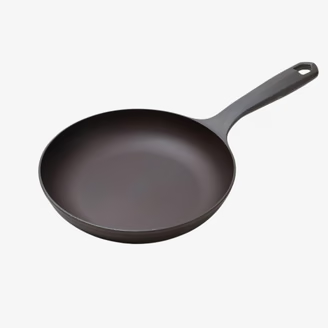
Leading the charge are brands like Our Place and Material Kitchen, offering innovative, microplastic-free kitchen tools built with safety and durability in mind. Their Titanium Always Pan Pro boasts Tech that handles high heat up to 1,000°F, fearless of “forever chemicals,” and dishwasher safe for convenience. Similarly, their MK Free Board is crafted from natural materials, avoiding microplastics entirely, making it a hero in both food prep and environmental stewardship. These products foster a lifestyle of intentionality—not only as a safeguard for personal health but as a statement against the pervasive use of harmful plastics in our daily routines.

Wellness isn’t only about what you eat but what you use to prepare and store it. Practical hacks like adopting glass food storage containers, such as those from Anyday, are revolutionizing kitchen hygiene, safety, and waste reduction. Crafted from durable, safe glass, these containers are suitable for oven, microwave, and even air frying—cutting down on toxins and disposable plastics. Food writer Emily Farris notes how such products transform the way families contribute to a healthy planet and a healthier home. Pairing these with lightweight cast iron pans from Field Company and Japanese Tawashi brushes for cleaning reveals a trend: embracing long-lasting, non-toxic essentials that elevate daily life and reduce reliance on synthetic, chemical-filled alternatives.

Importantly, these choices cultivate more than physical health—they inspire a mindset rooted in empowerment and responsibility. As wellness pioneers like Dr. Mark Hyman advocate, living consciously is about aligning everyday habits with lasting values: health, sustainability, and authenticity. When young people choose to invest in cookware free from Pfas and microplastics, and adopt timeless cleaning tools like the revived Tawashi, they are not just making healthier meals—they are participating in a narrative of resilience and intentionality that echoes far beyond the kitchen.

Ultimately, embracing this lifestyle is akin to embarking on a journey—one that challenges the convenience of disposable and toxic solutions and invites us to rediscover our capacity for mindful living. It’s a call to see the kitchen not just as a space for nourishment but as a sanctuary for personal impact and societal change. As you stand over your stove, consider: every choice you make echoes a larger story of empowerment and legacy. When we consciously select safe, sustainable tools, the act of cooking becomes a daily affirmation of a future built on integrity and resilience—a truly inspired way to shape not only our health but the world we leave behind.

The Fresh Style No One’s Talking About: ‘Euphoria’’s New Aesthetic Wave

In recent years, youth culture has undergone a fascinating transformation, fueled by the visual and thematic evolution of popular media. One standout example is HBO Max’s ‘Euphoria’, a series that has captured the zeitgeist of Gen Z with its raw depiction of adolescence, but now, the show is embracing a new aesthetic—a Western-inspired vibe that signals a broader shift in lifestyle and cultural expressions among young audiences.

Leading fashion and wellness experts have observed that this aesthetic shift is more than superficial style. It’s a reflection of *a desire for authenticity and individuality* amid a landscape saturated with rapid digital trends. The show’s recent season introduces a visual palette that combines rugged western motifs with contemporary streetwear, symbolizing a fusion of tradition and modernity. This blend encourages young viewers to embrace a lifestyle of adventure, resilience, and self-exploration—values that resonate deeply with the current wellness movement focused on **personal health, mental clarity**, and **outdoor leisure**. Such trends are echoed in the writings of wellness influencers like Dr. Josh Axe or author Jay Shetty, who emphasize that lifestyle choices rooted in nature and authenticity can foster a stronger sense of purpose.

Beyond fashion, this shift also prompts a reexamination of how youth engage with wellness. The wellness renaissance among young adults now champions outdoor activities—hiking, camping, and horseback riding—as essential components of mental health. They seek immersive experiences that reconnect them with nature, fostering resilience and emotional well-being in an increasingly digital world. This movement aligns with the broader cultural narrative that values *self-reliance* and *personal sovereignty*, reminiscent of frontier spirit but adapted for today’s digital age. Travel tips for embracing this lifestyle include exploring National Parks, engaging in community outdoor projects, and practicing mindfulness amidst natural surroundings.

Ultimately, the journey of embracing an evolving lifestyle in tune with cultural shifts offers more than mere aesthetics. It provides a framework for personal impact: health, leisure, inspiration, and the cultivation of an authentic identity. As young minds look to redefine what it means to be resilient and true to oneself, they’re shaping a future where values of freedom, exploration, and wellness are at the forefront. The story of ‘Euphoria’s’ new aesthetic isn’t just about style—it’s a mirror reflecting a generation unafraid to forge its own path, blending tradition with innovation. This narrative reminds us all that embracing change is, in itself, a form of empowerment, encouraging each of us to see our lifestyle as a continuous journey of reinvention and discovery.

  • Explore outdoor adventures that challenge and inspire you
  • Incorporate wellness routines rooted in nature—like mindful hikes or meditation outdoors
  • Stay authentic to your personal style, blending influences and traditions
  • Prioritize mental health and resilience as core aspects of your lifestyle journey
“They Tried to Break Me: My Bold Ride in the Speed Puzzling Showdown | Well, Actually”

In a world increasingly driven by instant gratification and digital entertainment, a fascinating lifestyle shift is quietly unfolding—one that champions patience, precision, and mental agility. Enter speed jigsaw puzzling, a burgeoning competitive sport that bridges the worlds of leisure and high-level skill. Originating in the US during the 1980s, the community experienced a renaissance during the COVID-19 pandemic, with online platforms like speedpuzzling.com propelling enthusiasts nationwide into a new kind of challenge. Today, national championships in places like Atlanta gather over 1,600 participants, proof that this hobby has transformed into a vibrant, fast-paced movement with a dedicated following across generations and backgrounds.

The phenomenon illustrates an unprecedented convergence of mindfulness and competition. Competitors—ranging from PhD students to middle schoolers—are discovering that, beyond casual pastimes, puzzles can serve as a tool for personal impact—sharpening cognition, fostering community, and even offering inspiration. The community is noted for its friendliness; amid fierce rounds, camaraderie shines through in fist bumps, high-fives, and supportive chatter. The diversity is striking: women constitute about 80-90% of puzzlers, yet the scene is rapidly welcoming new demographics, including kids like Conner from Texas, whose blistering times push the limits of speed and skill. As wellness expert Dr. Daniel G. Amen emphasizes, engaging in such focused, challenging activities nourishes mental health by cultivating patience and perseverance, essential virtues in today’s fast-moving age.

During these events, the intensity is palpable yet respectful; every piece placed is a victory shared with others, and each puzzle assembled is more than just a task—it’s a story of transformation and dedication. From initial nervousness to eventual triumph, participants experience an inspirational journey that underscores the value of deliberate practice and resilience. As spectators watch young prodigies like Alice Rowe or the spirited team “Three And A Half Men” claim victory, one realizes that the future of this sport may be brighter with youth divisions, fostering talent and enthusiasm. This rising trend reflects a universal truth: that embracing challenges, however simple they may appear, can lead to complex personal growth. The world of speed jigsaw puzzling shows us that amid the chaos of daily life, slow and steady—paired with a passionate community—can truly pave the way to a fulfilling lifestyle.

  • Seek out local or national competitions to experience the adrenaline firsthand.
  • Build a dedicated workspace—organized and distraction-free—to enhance focus and efficiency.
  • Follow wellness experts’ advice on mental agility activities to complement your puzzling journey.

As the story of speed jigsaw puzzling unfolds, it offers a profound reflection: in embracing a pastime that advocates patience, precision, and community, we embrace a journey to self-improvement. In a society often hurried, this movement encourages a beacon of calm and purpose. Every piece, every challenge, becomes a metaphor—an invitation to look more closely, think more deeply, and connect more meaningfully. Ultimately, the art of puzzle-solving reminds us that life itself is a complex mosaic—best appreciated one piece at a time, with dedication and passion guiding the way.

Breaking Boundaries: Rocking Grandma’s Heirlooms in a Bold Hot-Pink Cheongsam—A Teen’s Style Statement on Courage and Heritage

Rediscovering Style: The Power of Vintage Clothes in a Modern World

In an era dominated by fast fashion, the allure of vintage clothing is experiencing a renaissance among young, style-conscious individuals. With a focus on sustainability, individuality, and personal storytelling, many are turning to heirlooms and curated op-shop finds as a way to express their identity while honoring history. Standing at the crossroads of tradition and contemporary life, rediscovering older garments is more than a fashion statement; it’s a lifestyle shift that inspires confidence and connection to the past.

Take, for instance, the story of an 89-year-old woman’s wardrobe, which serves as a vibrant reminder of a life lived in bold, distinctive style. Her collection—featuring silk cheongsams, opulent coats, and heirloom accessories—embodies the shifting landscape of wellness and personal history. Style expert Chloë Felopulos highlights a vital perspective: “For many, passing on garments isn’t just about preserving fabric, but rather ensuring their stories continue.” This sentiment underscores an emerging cultural shift where the very act of passing on clothes becomes an act of legacy and self-expression.

Reimagining Vintage: How to Incorporate Old Styles into the Modern Wardrobe

Incorporating vintage pieces into everyday fashion requires a delicate balance of respect and innovation. Curator Cora Walters emphasizes the uniqueness of fabrics, labels, and craftsmanship that vintage clothing possesses—qualities that modern mass production struggles to replicate. A common challenge involves reconciling the physical constraints of heirlooms with the flexibility of contemporary tailoring. However, experts recommend playful approaches like play dress-up and mixing patterns as ways to breathe new life into old garments. For example, pairing a 60s cropped coat with gingham capri pants creates a visual harmony that feels both nostalgic and fresh, offering a fresh perspective on style that respects history while remaining practical.

  • Opt for pattern mixing to add energy to vintage outfits.
  • Experiment with color sandwiching—pairing contrasting, complementary hues for a polished look.
  • Consider alterations to modernize a piece without losing its historical essence.

Such methods showcase a confidence that transcends fleeting trends, aligning with a lifestyle that values pride in sustainability and authentic self-expression. As Felopulos suggests, whenever you wear a cherished piece with “pride,” you embed yourself into a story much larger than yourself, one woven through generations.

From Heritage to Daily Life: Setting the Scene with Vintage Accessories

Legacy accessories like a grandmother’s gold chain mail purse or ornate coat closures transform vintage clothes into versatile, meaningful elements of daily living. These items invite individuals to carry history as part of their identity, whether it’s through a weekend outing or a special dinner. The act of passing down and adapting heirlooms is underpinned by a sense of connection and continuity—a reminder that what we wear is rooted in personal history and cultural identity. As Isabella Lee demonstrates, trying on her grandmother’s cheongsam opens a dialogue about respect for tradition and the potential for reinvention, highlighting how heritage and modernity can coexist beautifully.

While the physicality of older clothes may pose practical challenges—such as sizing or comfort—the emotional and cultural impacts often outweigh these obstacles. Embracing heritage pieces requires a mindset open to adaptation and creativity. Whether through minor alterations or styling choices that honor their origins, it’s possible to craft a wardrobe that is both authentic and expressive, cultivating a sense of pride and continuity that resonates deeply in a fast-changing world.

In the end, this journey of rediscovery is more than just style—it is a narrative of resilience, connection, and the enduring value of history. Vintage clothing embodies a unique form of lifestyle activism, reminding us that embracing tradition can be a powerful act of personal and cultural reinforcement. As each piece finds its place in modern life, it’s a reflection of a broader acceptance: that style, like life itself, is an evolving story—one worth telling with pride and purpose.

Social Media Auto Publish Powered By : XYZScripts.com