Matox News

Truth Over Trends, always!

Governor Sherrill Defends State Police Deployment at ICE Facility Amid Left-Wing Outcry

New Jersey Governor Mikie Sherrill is navigating a contentious political landscape, defending her administration’s decision to deploy state police during recent demonstrations outside a Newark immigration detention facility. Governor Sherrill asserts the necessity of state police presence to maintain public order and prevent federal overreach, even as a prominent left-wing political commentator accuses her of aligning with national immigration enforcement policies.

Maintaining Order Amidst Protest

The controversy centers on the deployment of New Jersey State Police around Delaney Hall, an ICE detention center in Newark, where anti-ICE protests have been ongoing. Governor Sherrill publicly defended the police presence, stating her refusal to allow unrest to provide a pretext for expanded federal immigration operations within New Jersey. “I will not give ICE a pretext,” Governor Sherrill remarked, emphasizing her administration’s commitment to preventing federal overreach while upholding the state’s responsibility for public safety.

This measured response reflects a commitment to institutional integrity and orderly governance, characteristic of a state confronting complex social issues. The governor’s stance underscores a delicate balance between protecting the right to protest and ensuring that demonstrations do not devolve into disorder that could invite broader federal intervention.

Left-Wing Condemnation and Policy Accusations

The governor’s actions have drawn sharp criticism from figures such as Marxist political commentator and Twitch streamer Hasan Piker. During a recent livestream, Piker accused Governor Sherrill of effectively assisting the Trump administration’s immigration agenda. Reacting to the governor’s explanation, Piker reportedly mocked her defense, suggesting her administration was doing the work of federal agencies itself, according to a report from News Desk.

Piker broadened his critique, characterizing Sherrill’s approach as indicative of the “centrist wing of the Democratic Party.” Activists at Delaney Hall have also raised concerns about alleged poor conditions and inadequate provisions for detainees, claims which the Department of Homeland Security has disputed. Such allegations often fuel the intensity of these demonstrations, creating a challenging environment for state authorities.

“Maintaining public order and preventing pretexts for federal overreach are paramount responsibilities of state leadership in navigating complex social issues.”

Broader Implications for State Governance

The incident highlights the inherent tension for state leaders, particularly those in “blue states,” when confronting federal immigration policies. Governor Sherrill’s administration is tasked with upholding state law and order while also responding to a diverse electorate with varying views on immigration enforcement. Her decision to deploy state police can be seen as an effort to exercise state authority responsibly, preventing local unrest from escalating into a situation that might invite federal intervention on less favorable terms.

This episode serves as a reminder that state governors often find themselves at the intersection of local concerns, state responsibilities, and national policy debates. Balancing these demands requires a firm hand and a clear commitment to the foundational principles of governance: maintaining peace, protecting citizens, and asserting state sovereignty within the federal system.

The debate surrounding Governor Sherrill’s response at the Newark facility continues, underscoring the persistent challenges associated with immigration policy and public order in contemporary American politics.

Trump Warns Judge: White House Drone Base Crucial for National Security

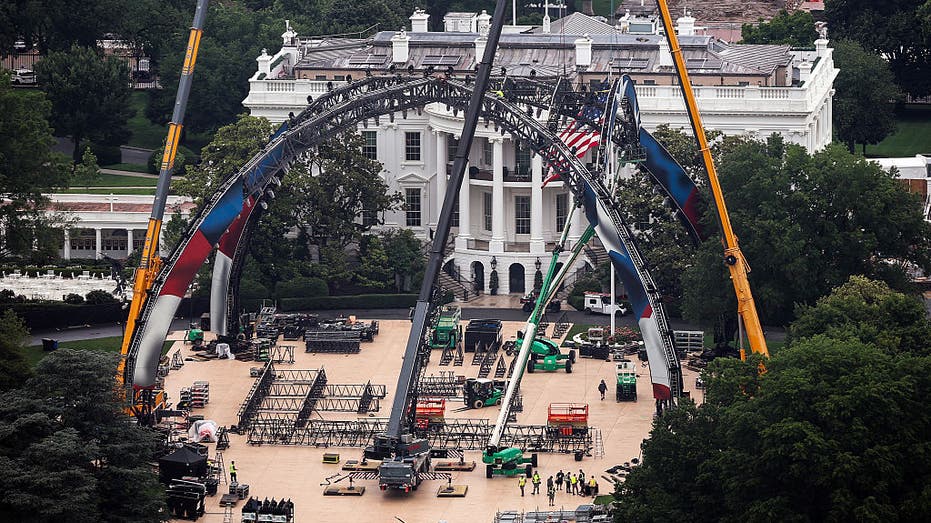
Former President Donald Trump has issued a stark warning regarding the ongoing legal challenge to a critical White House security project, directly criticizing U.S. District Judge Richard Leon. Trump argues that the judge’s injunction, which has halted the construction of a $400 million White House ballroom and rooftop drone base, places national security at grave risk.

The President’s Urgent Warning

In a recent post on Truth Social, President Trump emphasized the strategic importance of the proposed facility. He stated that the “DronePort at the White House Ballroom” is designed to be among the most sophisticated globally, crucial for safeguarding the nation’s capital, Washington, D.C., for the foreseeable future.

Trump directly called upon Judge Leon to cease what he termed “playing games with America’s Security,” urging the dismissal of a lawsuit he characterized as “ridiculous.” The former president described the plaintiff as a “highly litigious woman” with “absolutely no STANDING,” whose concerns about her “strolling” should not impede vital national defense infrastructure.

He issued a severe caution, stating that the judge would be “held responsible” for any “Death and Destruction” should an attack occur while the project remains stalled. This sentiment underscores the administration’s view of the project as an indispensable enhancement to the executive mansion’s defense capabilities against modern threats.

Legal Battle and Security Imperatives

The Justice Department has echoed these concerns, actively pressing Judge Leon to lift the injunction. In recent court filings, the department highlighted a shooting incident near a White House checkpoint earlier this month, using it as an example of why stronger, more advanced security measures are urgently needed at the executive mansion. This incident, as reported by Fox News, serves as a grim reminder of the persistent threats facing the nation’s leadership and capital.

The legal dispute centers on the balance between individual legal challenges and the broader imperatives of national security. Proponents of the project argue that modern weaponry demands a sophisticated, multi-layered defense system that traditional security methods alone cannot provide.

“Judge Richard Leon should stop playing games with America’s Security! If anything happens, he will be held responsible for the Death and Destruction caused to our Country.”

Defending the Capital with Modern Technology

The proposed rooftop drone base is envisioned as a state-of-the-art facility, designed to counter contemporary security threats that have evolved far beyond conventional means. Trump asserted that defending Washington, D.C., with “rifles and pistols, alone” is no longer sufficient given the advent of “highly sophisticated, and powerful, modern day weaponry.”

The project represents a significant investment in protecting the symbolic and operational heart of American governance. Its advocates argue that delays, especially those driven by what they perceive as frivolous lawsuits, directly undermine the nation’s capacity to defend itself against increasingly complex and unpredictable dangers. The Matox News editorial board believes that maintaining robust defenses for our institutions is paramount.

The outcome of this judicial standoff will have significant implications for how critical national security projects are handled in the face of legal challenges. As the Justice Department continues its efforts to move the project forward, the focus remains firmly on ensuring the comprehensive protection of the White House and the capital.

Trump Expands Ambassador's Diplomatic Role, Bolstering Middle East Strategy
Trump Expands Ambassador’s Diplomatic Role, Bolstering Middle East Strategy

President Donald Trump has announced a significant expansion of diplomatic duties for U.S. Ambassador to Turkey, Tom Barrack. Barrack will now serve as Special Presidential Envoy to both Syria and Iraq, a move that underscores the administration’s intensified focus on forging lasting peace and stability in a volatile Middle East.

The decision, conveyed by President Trump on Truth Social, praised Ambassador Barrack’s ‘outstanding job’ and highlighted the administration’s commitment to advancing ‘strategic cooperation’ with the governments of Syria and Iraq. This expanded diplomatic role places a single, experienced envoy at the center of critical U.S. engagement in a region fraught with geopolitical complexities.

A Unified Front in the Levant

Ambassador Barrack’s new mandate is designed to streamline American diplomatic efforts across Syria and Iraq, two nations central to regional security. By consolidating these responsibilities under one envoy, the administration aims to present a more cohesive U.S. strategy, particularly as Syria has shown recent willingness to engage with the Trump administration and Israel, reportedly with guidance from Turkey.

This strategic realignment seeks to foster improved relationships and advance U.S. interests in countries that have long been battlegrounds for proxy conflicts. The unified approach is expected to enhance coordination and effectiveness in diplomatic initiatives, reinforcing the American commitment to regional order and stability.

Navigating Regional Volatility

The expansion of Barrack’s role comes at a moment of heightened tension in the Middle East. Washington remains deeply engaged in high-stakes negotiations with Iran, whose Revolutionary Guards recently launched new attacks on separatist groups in northern Iraq. This backdrop makes the appointment particularly timely, as it positions Ambassador Barrack directly at the intersection of several critical regional issues.

His responsibilities will now encompass:

  • The future of U.S. engagement with Syria, especially concerning ongoing peace efforts.
  • Ensuring the stability of Iraq amidst internal and external pressures.
  • Leveraging Turkey’s role as a significant regional power broker and northern neighbor to both Syria and Iraq.
  • Addressing the broader fallout and implications of the U.S.-Iran conflict.

This multifaceted challenge requires an envoy with deep understanding and a clear mandate to navigate the intricate web of alliances and antagonisms.

“The expanded diplomatic role for Ambassador Barrack signifies a robust commitment to stabilizing a region critical for global security, consolidating U.S. influence where it is most needed.”

Continuity and Confidence

Crucially, Ambassador Barrack will maintain his position as U.S. Ambassador to Turkey, ensuring continuity in a vital bilateral relationship. President Trump’s announcement confirmed that Barrack will operate with the ‘full backing of the United States Department of State,’ indicating a strong institutional commitment to his success in these expanded duties. This dual role underscores the strategic importance of Turkey in facilitating regional dialogue and peace efforts.

Reports indicate that Barrack has already played a significant, albeit unofficial, role in Syria policy discussions, including direct engagement with President Trump. This prior involvement suggests a smooth transition into his formal, expanded responsibilities, building on existing relationships and a foundational understanding of the complex regional landscape.

The administration’s decision reflects a proactive approach to foreign policy, aiming to strengthen institutional diplomacy and promote order in a region that demands constant, measured engagement. This strategic appointment is a clear signal of Washington’s intent to remain a decisive force in shaping the future of the Middle East.

Arizona School Board Member Under Fire for Alleged Nazi Salute and Hitler Comparison

A recent meeting of the Deer Valley Unified School District Governing Board descended into controversy after board member Kimberly Fisher allegedly made a Nazi salute and subsequently compared board President Paul Carver Jr. to Adolf Hitler. The incident, captured on video, has ignited a firestorm of criticism and prompted calls for Fisher’s immediate resignation, highlighting serious concerns about decorum and the respect for public institutions.

Contentious Meeting Escalates

The contentious exchange occurred on May 26 during a dispute over scheduling a community study session. Board member Fisher reportedly objected to holding the session in the afternoon, arguing it would hinder community participation. Fisher stated the session’s purpose was to allow community input and discussion, as reported by News Desk.

The disagreement quickly escalated, leading President Carver Jr. to move for adjournment. He later explained in a Facebook video that continuing the discussion would have risked violating Arizona’s Open Meeting Law, which mandates transparency and adherence to posted agendas.

Allegations of Inappropriate Conduct

According to video footage from the meeting, after the motion to adjourn, Fisher allegedly raised her right arm in a gesture resembling a Nazi salute, while uttering “Heil, heil.” This was followed by her later remark, “All I could think of tonight was Hitler,” directly comparing President Carver to the infamous dictator. Such actions are widely condemned as deeply offensive and a profound disrespect to the victims of the Holocaust and the democratic principles public officials are sworn to uphold.

The immediate aftermath saw swift condemnation from various quarters, emphasizing the importance of maintaining a professional and respectful environment within governing bodies. The use of such symbols and comparisons is antithetical to the values of civil discourse and responsible leadership, especially in educational settings where children are present or affected.

“The use of symbols and rhetoric associated with totalitarian regimes has absolutely no place in American public discourse, particularly within our esteemed local institutions.”

Calls for Accountability and Institutional Integrity

The incident has sparked widespread outrage, with many community members and observers demanding accountability for Fisher’s conduct. Calls for her resignation underscore the public’s expectation that elected officials maintain a high standard of behavior and uphold the dignity of their office. Public service requires a commitment to order, respect, and a clear rejection of extremism in all its forms.

The integrity of local institutions, such as school boards, relies heavily on the professionalism and ethical conduct of its members. When such decorum is breached, it erodes public trust and distracts from the crucial work of governance. This episode serves as a stark reminder of the need for elected officials to engage in respectful debate, even amidst disagreements, and to avoid inflammatory rhetoric that undermines the very foundations of democratic participation.

Ensuring a stable and respectful environment for public servants to address community concerns is paramount. The focus should remain on effective solutions for education and local issues, rather than being overshadowed by inappropriate and divisive theatrics.

Corporate Exodus Reshapes U.S. Economy: Red States Lead in Headquarters Relocations

The economic map of the United States is undergoing a dramatic transformation as businesses increasingly opt to relocate their headquarters from traditional coastal hubs to burgeoning red-state territories. This pronounced trend of corporate relocations is fostering new centers of economic power, with states like Texas and Florida emerging as primary beneficiaries.

For years, concerns have mounted over the impact of high taxes and stringent regulations on business environments in historically dominant blue states. A recent report from News Desk highlights how this dynamic is now translating into tangible shifts, as companies seek environments more conducive to growth, lower operating costs, and lighter regulatory burdens.

Texas Emerges as a Business Magnet

Texas has firmly established itself as the leading destination for corporate headquarters seeking new homes. Between 2018 and 2025, the Lone Star State’s major metropolitan areas collectively attracted a significant number of these relocations. Dallas-Fort Worth led the nation with an impressive 111 headquarters moves, according to a CBRE analysis cited by News Desk. Austin followed closely with 88 relocations, while Houston added 31. This combined influx has solidified these three Texas hubs as formidable magnets for corporate America.

The appeal extends beyond mere numbers. Companies are drawn by the promise of robust growth opportunities and a business climate that prioritizes expansion over excessive governmental oversight. This trend underscores a broader narrative of economic vitality in states that champion fiscal responsibility and free-market principles.

The Economic Calculus: Taxes and Regulation

The reasons behind this corporate exodus are clear and consistent. Businesses frequently cite the desire to escape the financial pressures imposed by high-tax regimes and the operational complexities introduced by heavy regulation. Lower operating costs are a significant draw, allowing companies to reinvest more in their operations and workforce.

This strategic realignment is not merely about cost-cutting; it’s about positioning for future success. Executives are making calculated decisions to move to states where the economic framework supports rather than hinders their long-term objectives. The cumulative effect of these individual corporate decisions is reshaping the national economic landscape, challenging the long-held dominance of certain regions.

Florida’s Growing Appeal and California’s Losses

While Texas leads, Florida has also emerged as a major beneficiary of this relocation wave. Miami, in particular, has seen a surge in interest, attracting companies from high-cost areas like Los Angeles, the Bay Area, and Boston. Florida’s advantages include a competitive tax structure, a burgeoning tech sector, and strategic access to East Coast markets. The city’s expanding startup scene and growing pool of finance and tech talent are making it increasingly attractive to both domestic and international firms.

Conversely, states with high tax rates and extensive regulatory frameworks are experiencing significant outflows. California, once an undisputed economic titan, has suffered the nation’s steepest corporate losses during this period. The San Francisco Bay Area, for instance, recorded a net loss of 163 headquarters between 2018 and 2025. This capital flight raises critical questions about the sustainability of economic policies that may inadvertently drive away job creators and wealth generators.

“The flight of corporate headquarters to business-friendly states is a resounding testament to the power of lower taxes and streamlined regulation in fostering economic growth and opportunity across America.”

Implications for National Economic Policy

The ongoing shift in corporate headquarters from blue states to red states carries significant implications for national economic policy debates. It highlights a clear preference among businesses for environments that offer greater fiscal predictability and less governmental interference. This trend serves as a powerful indicator that policy choices regarding taxation and regulation directly influence a state’s economic competitiveness and its ability to attract and retain vital employers.

As the economic center of gravity continues to shift, policymakers in all states face the imperative of evaluating their approaches to business and investment. The success stories emerging from Texas and Florida offer a compelling case study for policies that prioritize economic freedom and foster a dynamic environment for job creation and prosperity.

Karen Bass Draws Scrutiny for Trump Comparison Amid Tight Los Angeles Mayoral Race

Los Angeles Mayor Karen Bass is navigating a surprisingly tight re-election campaign, with recent comments sparking considerable discussion. As the city prepares for Tuesday’s primary election, Mayor Bass appeared to draw a parallel between her challenger, former reality television star Spencer Pratt, and former President Donald Trump, intensifying the political discourse in a race that is widely expected to culminate in a runoff.

The incumbent mayor’s remarks, made during an Instagram livestream, underscore the competitive nature of the contest against Pratt and City Council member Nithya Raman. With no candidate anticipated to secure more than 50% of the vote, the top two contenders will advance to a November runoff, setting the stage for a prolonged battle for the city’s top office.

Incumbent’s Strategy and Sharp Rhetoric

Mayor Bass, backed by prominent Democratic figures such as former Vice President Kamala Harris and California Governor Gavin Newsom, has been actively campaigning across Los Angeles. Her weekend activities included a stop at Yosemite Recreation Center in Eagle Rock, where she was seen engaging with voters while serving tacos, an image emblematic of grassroots campaigning efforts.

However, it was her statement on social media that has garnered significant attention. During an Instagram livestream, Bass reportedly commented on Spencer Pratt, stating, “You have a failed reality TV star who wants to be famous.” She then appeared to reference former President Donald Trump, adding, “We know what it means if you put somebody who is a reality TV star in a seat of power.” This implicit comparison suggests a strategic move to frame her opponent in a light that might resonate with voters wary of non-traditional political backgrounds.

Challengers Press Ahead

While Mayor Bass focused on her challenger’s background, Spencer Pratt, known for his role on “The Hills,” has been busy critiquing City Council member Nithya Raman on social media platform X. Pratt’s campaign has leveraged his public persona to gain traction, contributing to the unexpected competitiveness of the race. His direct engagement with opponents’ platforms indicates a willingness to challenge established political norms, a characteristic that often appeals to a segment of the electorate.

Nithya Raman, for her part, has been actively rallying her base. In an Instagram video, she acknowledged the significant spending against her campaign while pointing to recent polling data to underscore her continued viability. “After millions of dollars of spending against us, we are still here and we are still competitive,” Raman stated, urging her supporters to vote and highlighting the resilience of her campaign despite financial disadvantages. This three-way contest ensures a dynamic and unpredictable outcome for Los Angeles.

Runoff Appears Imminent

Recent polling data, as reported by Fox News, suggests a highly fragmented electorate, making it increasingly probable that no single candidate will achieve the outright majority needed to win in the primary. This scenario sets the stage for a November runoff, where the political landscape will likely be redefined with only two candidates vying for the mayoralty.

The prospect of a runoff means Los Angeles voters will face an extended period of campaigning and debate, with candidates refining their messages and strategies for a head-to-head contest. The stakes are high, as the city grapples with critical issues ranging from homelessness to public safety and economic development. The outcome will shape the direction of the city for years to come, emphasizing the importance of informed civic engagement.

“We know what it means if you put somebody who is a reality TV star in a seat of power.”

As the final hours tick down to Election Day, the rhetoric employed by candidates like Mayor Bass will undoubtedly be scrutinized for its impact on public discourse and voter perception. The Los Angeles mayoral race has become a compelling study in modern political campaigning, where traditional governance meets the influence of media personality. Voters will soon decide which vision and leadership style they believe best serves the city’s future, with the likelihood of a decisive November showdown looming large.

Trump Suggests MAGA Rally for Nation's 250th Anniversary Amid Concert Withdrawals
Trump Suggests MAGA Rally for Nation’s 250th Anniversary Amid Concert Withdrawals

President Donald Trump has put forward a significant proposal regarding the upcoming nation’s 250th anniversary celebrations, suggesting that a large-scale “MAKE AMERICA GREAT AGAIN RALLY” could replace the originally planned “Freedom 250” concerts. This idea emerges as several musical artists have withdrawn from performances slated for the national jubilee, scheduled for this summer, prompting a re-evaluation of how this monumental occasion might be observed.

The Presidential Suggestion

In a detailed post on Truth Social, President Trump articulated his view that the traditional concert format, featuring “overpriced singers, who nobody wants to hear,” is not the appropriate way to mark the significant milestone of America’s quarter-millennium. He proposed a vibrant MAGA rally as an alternative, asserting it would be a more fitting and engaging commemoration, particularly for those who share his vision for the nation’s future.

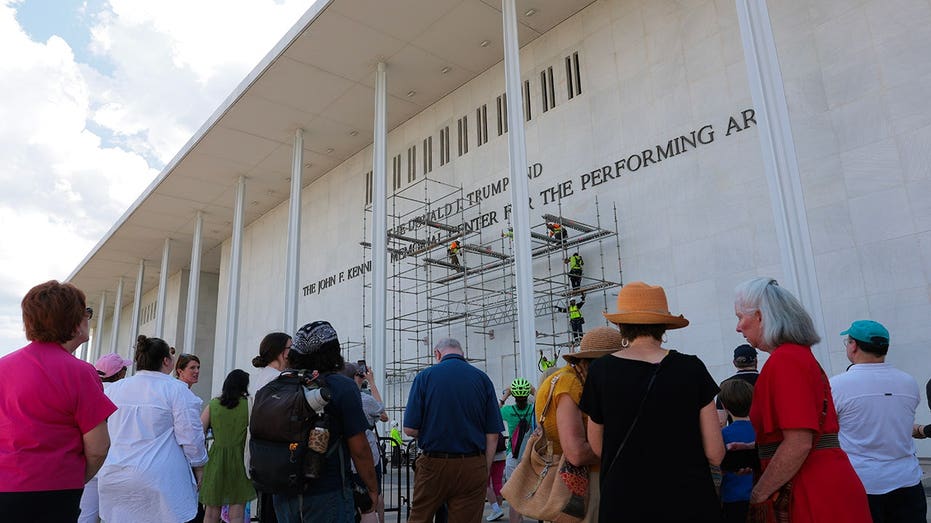
Trump’s comments also drew a parallel to a recent judicial decision concerning his involvement with the Kennedy Center for the Performing Arts. He stated, “Cancel it, just like I canceled my involvement with the failing and unsafe to be in Kennedy Center, because a Highly Conflicted, Crooked Federal Judge, said that I should not be allowed to spend my time and money in order to MAKE THE CENTER GREAT AGAIN, actually, far greater than it ever was before!” This statement underscores his broader critique of what he perceives as politically motivated decisions affecting cultural institutions, and suggests a preference for events aligned with his political movement over those organized by established cultural bodies.

The suggestion to pivot from a traditional concert to a political rally for such a pivotal national anniversary marks a departure from conventional approaches to unifying national celebrations. It reflects a growing trend of blending political messaging with public observances, raising questions about the role of partisan events in marking national milestones.

Setbacks for “Freedom 250”

The former president’s comments come amidst growing challenges for the “America 250” events. The Great American State Fair, a major component of the national celebration, is planned to unfold on the National Mall in Washington, D.C., from June 25 to July 10, 2026. This extensive event aims to offer what organizers describe as “once-in-a-lifetime” travel opportunities and cultural experiences across the nation’s capital, designed to engage citizens from all walks of life in commemorating American history and progress.

However, the “Freedom 250” concerts, a key attraction within the State Fair, have recently faced significant setbacks. After organizers released an initial list of performers, several prominent artists subsequently announced their withdrawal. These included notable names such as:

  • Martina McBride
  • Bret Michaels
  • Young MC
  • Morris Day and The Time
  • C+C Music Factory

The precise reasons for these withdrawals were not detailed in the reporting by News Desk, but their collective absence undoubtedly impacts the planned entertainment lineup and the overall appeal of the celebratory events. Such high-profile cancellations can complicate efforts to attract broad public participation and secure additional talent, potentially forcing organizers to reconsider the format or scale of the musical components of the jubilee.

“We should have a giant MAKE AMERICA GREAT AGAIN RALLY, for 250, instead of having overpriced singers, who nobody wants to hear, whose music is boring, and yet who do nothing but complain.”

Broader Implications for National Observance

President Trump’s proposal introduces a significant question about the nature of national celebrations, particularly how they should reflect the diverse sentiments and political landscape of the country. Traditionally, events marking national anniversaries, such as the upcoming 250th anniversary concert, strive to be inclusive and non-partisan, serving as platforms for unity and shared heritage. A large-scale political rally, while energizing for its supporters, could be perceived as divisive, potentially alienating other segments of the population who might otherwise participate in a more neutral civic observance.

The concept of replacing a broadly appealing cultural event with a politically charged gathering raises concerns among those who advocate for the preservation of institutions and traditions that transcend partisan divides. The integrity of national celebrations often relies on their ability to foster a sense of collective identity, rather than reinforcing political affiliations. This discussion highlights the ongoing tension between political expression and the need for national cohesion during moments of historical reflection.

As the nation approaches this monumental milestone, decisions on how to commemorate it will inevitably reflect ongoing discussions about national identity, civic participation, and the appropriate balance between political advocacy and public unity. The path forward for the America 250 celebrations remains a subject of considerable interest and debate.

The prospect of a national celebration potentially shifting from a cultural spectacle to a political demonstration offers a stark illustration of contemporary societal divisions. Whether organizers will adapt to these challenges by embracing alternative formats or seeking new talent to uphold traditional celebratory structures remains to be seen. The coming months will be crucial in determining the final shape of America’s quarter-millennium observance.

Newark's Delaney Hall Protests Marred by Far-Left Extremism and Outside Agitators
Newark’s Delaney Hall Protests Marred by Far-Left Extremism and Outside Agitators

The ongoing demonstrations at the immigration detention center have seen violent skirmishes and a clear ideological hijacking, raising concerns about public order and the integrity of legitimate protest.

Newark, N.J. — What began as a protest concerning conditions at the Delaney Hall detention facility in Newark has rapidly devolved into a stark ideological battleground, as far-left and communist-socialist activists converged with supporters of federal immigration enforcement. The escalating situation on Saturday transformed the site into a broader political spectacle, marked by the presence of outside agitators and calls for radical societal change, overshadowing the initial grievances.

Escalating Tensions and Ideological Divides

The unrest outside Delaney Hall has persisted for over a week, initially sparked by an open letter from illegal immigrant detainees alleging “physical and psychological torture,” along with claims of inadequate medical care and food. These serious accusations were swiftly addressed and denied by the Department of Homeland Security (DHS), which released facility menus to demonstrate that detainees receive three daily meals, including diverse options such as chicken fajitas and Salisbury steak. However, the focus of the demonstrations has shifted dramatically. On Saturday, a crowd estimated at 200 anti-ICE demonstrators, heavily intertwined with extremist organizations, openly chanted, “Stop ICE Gestapo! Communist revolution!” while distributing literature advocating “LONG LIVE COMMUNISM!”

Outside Instigators Fueling Disorder

The volatile environment at Delaney Hall has been exacerbated by individuals from outside the local community. Following earlier violent clashes where federal agents were reportedly bitten, kicked, and punched, New Jersey Governor Mikie Sherrill ordered the New Jersey State Police to assume security responsibilities. The Governor stated this move was necessary to “protect the demonstrators,” a decision that came as the detention center was fortified with barricades and fencing. State officials have openly acknowledged that much of the chaos is being driven by non-local actors. New Jersey Attorney General Jennifer Davenport confirmed that five of the six individuals arrested by state police earlier in the week were not residents of New Jersey. This pattern underscores a concerning trend of external groups exploiting local issues for broader ideological agendas, a point also highlighted in reporting by News Desk.

Allegations Met with Firm Denials

The initial allegations from detainees regarding their treatment remain a central, albeit increasingly overshadowed, component of the protests. Claims of torture and denial of basic necessities are grave and demand scrutiny. However, the DHS’s rapid and documented response, including the publication of menus, directly challenges these assertions. The presence of radical slogans and a distinct anti-institutional agenda from a significant portion of the demonstrators complicates the public’s ability to discern legitimate concerns from politically motivated disruption. The focus has undeniably shifted from verifying conditions to a broader confrontation between state authority and extremist ideologies.

“The chaos is being driven by outside instigators rather than local residents.”

As the situation at Delaney Hall continues to unfold, the involvement of radical elements and the confirmed presence of outside agitators pose significant challenges to maintaining public order and ensuring the integrity of protest. The events in Newark serve as a stark reminder of the complexities inherent when legitimate grievances become entangled with extremist political agendas, demanding a firm but measured response from institutional authorities to protect both citizens and the rule of law.

Trump $250 Commemorative Note Faces Congressional Hurdle

The United States Treasury Department has confirmed it is making preparations for a potential new $250 commemorative note featuring former President Donald Trump. This significant development, intended to coincide with the nation’s 250th anniversary in 2026, hinges entirely on a crucial legislative amendment by Congress. Currently, federal law strictly prohibits the depiction of living individuals on U.S. currency, creating a substantial hurdle for the proposed design.

Should the necessary legal changes be enacted, this would mark an unprecedented shift in American monetary tradition, which has historically reserved currency portraits for deceased figures of national significance. The proposal has already sparked considerable debate, highlighting the intersection of national commemoration, political symbolism, and long-standing institutional practices.

Legislative Push for a Historic Change

Republican Representative Joe Wilson of South Carolina introduced legislation in February 2025 aimed at paving the way for this historic currency change. The bill, formally known as the 250th Anniversary of the United States Commemorative Coin Act (though it addresses paper currency in this context), seeks to allow Trump’s portrait on the special $250 note, a denomination not currently in circulation. Wilson’s proposal is framed not only as a fitting tribute to America’s upcoming quarter-millennium milestone but also as a symbolic counterpoint to the current administration’s economic policies, reflecting a broader conservative push to honor the former president’s legacy. The legislation was referred to the influential House Financial Services Committee upon its introduction and remains under committee review, awaiting further action.

The committee’s deliberation will be critical, as any bill seeking to alter federal currency law typically faces rigorous scrutiny. Proponents argue that a special commemorative note for the 250th anniversary presents a unique opportunity to honor a contemporary leader, while opponents emphasize the importance of maintaining established protocols.

Treasury’s Proactive Stance Amidst Legal Constraints

A Treasury spokesperson, in comments to Fox News Digital, confirmed the department’s proactive approach to the potential currency. “In response to active legislation sponsored by Representative Joe Wilson, the Bureau of Engraving and Printing (BEP) is conducting appropriate planning and due diligence,” the spokesperson stated. This preparation indicates that while the Treasury adheres strictly to existing law, it is ready to move forward swiftly should Congress enact the necessary changes. The department emphasizes its commitment to following legal mandates, stating, “Should this legislative mandate be signed into law, the BEP is moving proactively to produce a $250 commemorative note which will appropriately recognize the 250th Anniversary of our great nation.”

This measured response underscores the institutional respect for the rule of law while anticipating potential legislative shifts. It highlights the intricate dance between executive agencies and the legislative branch, where preparedness often precedes policy enactment. The BEP, responsible for designing and printing U.S. currency, would undertake significant work to develop the design, security features, and production logistics for a new denomination, particularly one featuring a living person.

Political Divisions and Currency Symbolism

The prospect of placing a living former president on U.S. currency has naturally ignited considerable political debate. Democratic lawmakers and leaders have voiced strong opposition to the proposal, framing it as an escalation of partisan efforts and a departure from established norms regarding national symbols. The symbolic weight of currency, often seen as representing national unity and historical figures, makes any proposed change highly contentious, especially when it involves a figure as polarizing as Donald Trump.

Current U.S. currency denominations, which include $1, $2, $5, $10, $20, $50, and $100, exclusively feature deceased historical figures such as George Washington, Thomas Jefferson, Abraham Lincoln, Alexander Hamilton, Andrew Jackson, Ulysses S. Grant, and Benjamin Franklin. This tradition dates back to the very origins of the republic, aiming to ensure that currency represents enduring national values rather than transient political figures.

The push for the Trump $250 bill brings several key considerations to the forefront, underscoring deeper ideological divides:

  • Adherence to Tradition: Opponents argue strongly against altering a long-standing tradition of depicting only deceased figures, fearing it could politicize national symbols.
  • Commemorative Significance: Supporters view it as a unique and fitting tribute for a significant national anniversary, honoring a president who oversaw a period of economic growth and national pride.
  • Political Symbolism: Critics contend the initiative is primarily a direct political statement rather than solely a historical commemoration, designed to bolster a specific political narrative.
  • Precedent Setting: Changing the law could set a precedent for future administrations, potentially opening the door for other living presidents to appear on currency.

The Road Ahead for the $250 Note

As the nation approaches its 250th anniversary, the debate over the Trump $250 commemorative note will undoubtedly intensify. The outcome rests squarely with Congress, where the proposed legislation must navigate committee review and secure sufficient bipartisan support – a challenging prospect given the current political climate. This legislative journey will test both institutional norms and political will, ultimately determining whether a new chapter in U.S. currency history will be written. The decision will reflect not just a vote on a piece of legislation, but a broader statement on how America chooses to honor its past and present leaders on its most tangible symbols of national identity.

Former Biden Aide Warns of 'Dangerous Game' in Democratic Backing of Graham Platner
Former Biden Aide Warns of ‘Dangerous Game’ in Democratic Backing of Graham Platner

Former Press Secretary for First Lady Jill Biden, Michael LaRosa, has expressed deep concern regarding the Democratic Party’s continued endorsement of Maine Senate candidate Graham Platner, whose controversial past is sparking a significant internal party debate.

The political landscape in Maine is witnessing a contentious battle, not just between parties, but within the Democratic Party itself, as former First Lady Jill Biden’s Press Secretary, Michael LaRosa, publicly challenges the party’s backing of Senate candidate Graham Platner. LaRosa conveyed his astonishment at the fervent support for Platner, despite the candidate’s history of sexually explicit online posts, disparaging remarks about a Purple Heart veteran, and the deeply disturbing revelation of a Nazi symbol tattoo.

A Disquieting Unanimity Amidst Controversy

Michael LaRosa, who served as Press Secretary for First Lady Jill Biden, stated he was “shocked” by the level of Democratic support for Maine Senate hopeful Graham Platner. Speaking to Fox News Digital, LaRosa highlighted what he perceives as a significant divide within the party, noting that many Democrats he considers friends are adopting an “all-or-nothing” stance regarding Platner’s candidacy. He questioned how Platner could represent the values typically expected of a Democratic candidate, even by contemporary standards. This sentiment underscores a growing internal struggle over party identity and electoral strategy.

LaRosa believes the Democratic Party is engaging in a “dangerous game” by overlooking serious concerns about Platner’s controversial history. He suggested a selective memory pervades political circles, where past actions are often conveniently dismissed in pursuit of electoral victory. The former aide’s comments suggest a deep-seated worry that the party’s ambition to unseat five-term incumbent Republican Sen. Susan Collins might be compromising its foundational principles.

Platner’s Troubling Past Under Scrutiny

Despite widespread criticism from across the political spectrum, Graham Platner continues to maintain a lead in the polls for the Maine Senate seat. The candidate’s past has come under intense scrutiny for several highly problematic revelations:

  • Resurfaced sexually explicit and vulgar online posts.
  • A post mocking a Purple Heart veteran who was shot multiple times by the Taliban.
  • The revelation of a tattoo depicting a Nazi symbol on his chest.

These issues have drawn condemnation, yet the Democratic Party’s institutional support for Platner appears to remain robust. Critics argue that such endorsements signal a worrying shift in what is considered acceptable for a major party candidate, potentially normalizing behaviors and symbols that are antithetical to democratic values and public order.

Prioritizing Victory Over Values?

LaRosa drew a clear “line in the sand,” asserting his unwillingness to back a Democrat with a Nazi tattoo. He made it clear that while he desires a Democratic victory in the Senate and for Chuck Schumer to retain the majority leadership, he is not prepared to support just “anybody off the street” merely to achieve that goal. This stance highlights a critical dilemma facing the Democratic Party: the tension between pragmatic electoral strategy and adherence to moral and ethical principles.

His remarks suggest that the drive for power, in this instance, might be overriding a commitment to anti-extremist principles and respect for institutions. LaRosa pointed out that incumbent Republican Sen. Susan Collins, despite their political differences, aligns more closely with his expectations for a public servant than Platner does. This perspective from a former insider suggests a significant ideological rift within the Democratic establishment regarding the vetting and endorsement of candidates.

“Democrats are playing a really dangerous game… I’m not willing to take anybody off the street to run just because they arouse some vibes in a few portions of the Democratic Party.” — Michael LaRosa

The ongoing controversy surrounding Graham Platner’s candidacy for the Maine Senate seat poses a significant challenge for the Democratic Party. It forces a public reckoning with the party’s priorities, raising questions about the compromises it is willing to make in pursuit of electoral success. As voters in Maine prepare to cast their ballots, the debate over character, integrity, and the fundamental values represented by political candidates will undoubtedly intensify, shaping not only this election but potentially future political alignments.

Social Media Auto Publish Powered By : XYZScripts.com