Matox News

Truth Over Trends, always!

Facebook’s new AI-powered button previews your private photos before you even upload—are you ready?

Meta’s Latest Push into AI-Enhanced Camera Roll Features Sparks Industry-Wide Disruption

Meta continues to redefine the boundaries of artificial intelligence and user data integration with its latest feature rollout, raising significant questions about the future of data-driven innovation and digital privacy. Recently, the social media giant announced a new camera roll feature at Facebook that leverages AI to assist users in enhancing their photographs before posting. This development exemplifies disruption at the intersection of personal data and AI capabilities, offering both technical innovation and strategic market advantages that could reshape social media engagement.

Initially tested in June, the feature proposes to select media from users’ camera rolls and upload it to Meta’s cloud, ostensibly to generate creative suggestions. While Meta claims that private photos used solely for suggestions will not be used to train AI models unless explicitly authorized, industry experts such as Gartner analysts highlight that this transparency may be more perceived than actual. “The potential for future misuse or escalation in data harvesting practices remains a key concern,” warns Dr. Anne He, a prominent researcher in AI ethics and privacy. Today, Meta clarifies that media uploaded for suggestion purposes isn’t immediately used to improve AI, unless the user engages further—yet the underlying implication remains significant for industry-wide data policies.

Strategic Innovation and Industry Implications

Meta’s approach demonstrates a push for convenience-driven AI interfaces that blur the lines between personal privacy and technological convenience. As Meta trains its models on publicly available data since 2007, and potentially on user uploads in the future, industry leaders are recognizing the strategic value of this disruptive shift. The move positions Meta to lead the next wave of AI-powered content creation, aligning with the broader trend of companies leveraging user-generated data to fuel ever more sophisticated algorithms.

Furthermore, the company’s emphasis on avoiding advertising targeting using private media underscores a calculated attempt to mitigate backlash while maximizing data utilization for AI training. This tactical stance could set a precedent for industry standards, prompting rivals such as Snapchat or Twitter to accelerate similar innovations. The strategic deployment of AI-enhanced features like this signals a future where personalized, real-time content enhancement becomes a compelling differentiator in a crowded social landscape.

Disruption, Challenges, and the Road Ahead

The move marks a pivotal moment for digital innovation, yet it comes with significant challenges. Critics argue that any collection of private media for AI training could initiate a new era of privacy erosion, potentially undermining user trust. Industry insiders, including Elon Musk and Peter Thiel, warn that unchecked data aggregation could lead to unforeseen ethical dilemmas and regulatory crackdowns, ultimately disrupting long-term growth prospects for digital giants.

The core question remains: how will industry players balance cutting-edge innovation with user trust and regulatory compliance? As Meta advances in AI-driven content manipulation, the urgency for establishing clear ethical standards becomes evident. With the race to dominate AI-enabled social experiences intensifying, any hesitation or misstep risks falling behind in a market that is rapidly evolving beyond traditional boundaries. Looking forward, the convergence of AI, privacy, and business innovation will likely define the technology landscape for the next decade, requiring companies and regulators alike to act swiftly, decisively—and with vision.

October heat records at risk across multiple states as scorching heat moves east through central Australia

Australia Confronts Record-Breaking October Heatwaves and Severe Storms

In an alarming turn of climate patterns, Australia is experiencing unprecedented weather extremes that threaten to leave a lasting imprint on its environment and society. According to the Bureau of Meteorology, parts of South Australia, Queensland, New South Wales, and the ACT are set to endure temperatures soaring up to 15°C above average this weekend. These climatic anomalies are not only breaking historical records but also signaling a potential shift in global weather systems, prompting international concern about the evolving climate crisis.

Climate analysts and historians warn that these rapid temperature increases, especially in inland regions such as Oodnadatta and Birdsville, could constitute a harbinger of intensified extreme weather events caused by human-induced climate change. Dean Narramore, a senior meteorologist at the bureau, highlighted the severity of the situation, noting that some locations may approach or surpass their October temperature records. The forecast predicts 45°C in Oodnadatta on Monday, while the interior states could see their temperatures reach the low to mid 40s. Such conditions highlight an urgent consequence of a warming planet—a phenomenon that international organizations like the UN have described as a threat to global stability.

Global Implications of a Warming Australia

These extreme temperatures are not an isolated event but part of a larger narrative about the **accelerating impacts of climate change**. As Australia faces this unusual early summer heat, the geopolitical impact reverberates beyond its borders. Nations vested in climate diplomacy are watching closely, understanding that Australia’s weather patterns could serve as an early warning for broader global disruptions. The intergovernmental panels and international agencies emphasize that such irregularities threaten agricultural production, water security, and urban resilience, with ripple effects felt worldwide.

Meanwhile, severe thunderstorms loaded with potential for giant hail are predicted to strike eastern Queensland and northeastern New South Wales, areas already vulnerable to extreme weather. This unpredictable combination of heatwaves and violent storms underscores the fragile balance of Australia’s climate system, but it also exemplifies the how decisions made today shape the resilience of future societies. Historically, climate science experts like Dr. Jennifer Francis warn that failure to mitigate these rapid shifts could lead to irreversible environmental damage, challenging societies’ ability to adapt and survive.

Contemporary Challenges and International Response

As Australia grapples with these climatic upheavals, the international community faces a stark choice: intensify efforts to curb emissions or watch as the pattern of devastation accelerates. The recent weather upheaval underscores a fundamental truth voiced by global policymakers and historians alike—the window for meaningful action is narrowing. The recent intense heatwave, coinciding with the threat of deadly thunderstorms, exemplifies how local climate phenomena are intrinsically linked to global issues, urging nations to forge coordinated strategies to combat the crisis.

Yet, amidst warnings and predictions, the unfolding events serve as a reminder that history is not yet written. The choices made by governments, industries, and societies will determine the trajectory of this crisis. As the sun blazes hotter year after year, and as storms grow more ferocious, the question remains: will humanity rise to meet this challenge or be swallowed by an indifference that leaves future generations to bear the consequences of today’s inaction?

In the shadow of this climate upheaval, the weight of history bears heavily on the present—each decision a stroke on the vast canvas of the future. And as the story unfolds, one truth remains undeniable: **the unfolding climate crisis is not just the story of Australia but a universal chapter, demanding unwavering resolve before the pages of history close on our chance to act**.

Anti-migration activists deny healthcare access to foreigners

South Africa’s Humanitarian Crisis Deepens Amid Growing Migration Tensions

The unfolding situation near Johannesburg signals a troubling shift in South Africa’s internal stability and the country’s complex relationship with migration. In recent weeks, a grassroots movement known as Operation Dudula, initially emerging as a civic pressure group, has metamorphosed into a political entity with tangible influence in local governance. Their campaigns against foreign nationals accessing public healthcare reflect broader social fissures — and geopolitical impact that extends beyond national borders, impacting regional stability and South Africa’s standing on the world stage.

Operation Dudula advocates for prioritizing “South Africans first,” often citing perceived resource scarcity amid South Africa’s entrenched inequality. The operation’s tactics—picketing clinics, checking ID cards, and turning away migrants—have led to clashes with law enforcement and widespread condemnation from political parties and human rights advocates. Critics, including legal professionals like Fatima Hassan from the Health Justice Initiative, warn that such actions are a breach of constitutional guarantees and threaten law and order. Meanwhile, authorities admit their resources are overwhelmed, unable to curtail such lawless acts, enabling the group’s expansion into new terrains such as public schools — with substantial repercussions for social cohesion and regional diplomacy.

At the core of this turmoil lies a fragile social fabric layered with economic hardship, high unemployment, and historical xenophobia. With approximately 2.4 million migrants—many from Zimbabwe, Mozambique, and Lesotho—South Africa grapples with entrenched anti-foreigner sentiment that sometimes erupts into deadly violence. This is compounded by an overburdened healthcare system, where long queues characterize the daily struggle for essential services. Turned away due to their lack of South African IDs or citizenship papers, vulnerable migrants and even some citizens find themselves without critical medical care—highlighting the destructive combination of policy, social prejudice, and resource scarcity.

International analysts, including economists and historians, warn that the decision to condone or suppress Operation Dudula’s actions could shape the nation’s future. Some suggest that South Africa’s government faces a choice: uphold the constitutional rights that enshrine healthcare access, or capitulate to populist nationalism that seeks to scapegoat migrants. The regional geopolitical impact reverberates, as instability in South Africa risks destabilizing neighboring nations with similar struggles, and encourages further migration turbulence. Meanwhile, international organizations like the United Nations have expressed concern about rising xenophobia, urging South African authorities to restore law and protect human rights—all while nation-building efforts strain under these compounding pressures.

As the echoes of protest and repression continue to reverberate across Johannesburg’s streets, the weight of history presses down on this southern nation. The choices made today—about migration, resource management, and constitutional adherence—will determine whether South Africa can emerge stronger or fall further into chaos. With each passing day, the story remains unwritten, and the true impact of these tumultuous decisions continues to unfold—leaving the world to witness whether this nation can navigate its turbulent course toward stability and justice or succumb to a future defined by division and despair.

Rising Stars Shine in Thrilling Youth Sports Championships!

NBA’s Global Expansion: A New Era for Basketball

The NBA is on the verge of an exciting new chapter, as relationships with Abu Dhabi and its affluent neighbors are poised for significant deepening. This evolution in global basketball could manifest in increased investment and influence in the sport, leading to an exciting future for athletes and fans alike. As noted by basketball commentator and analyst Mark Jackson, *“The expansion of reach and resources will ultimately elevate the game.”*

As the league explores partnerships beyond its typical borders, attention has shifted to the potential for financial infusion into various teams. The opportunity for the NBA to tap into markets that are wealthy and eager for sports entertainment can be a game changer. Analysts suggest that contracts and sponsorships in the Gulf region could usher in unrivaled opportunities for players and franchises alike. Adam Silver, the league’s commissioner, emphasized that cultivating these international relations will help *“transform the NBA into a global powerhouse.”*

  • Global Partnerships: Possible sponsorships from wealthy Gulf corporations.
  • Player Development: Increased resources can nurture young talent and enhance training facilities.
  • Expanded Fan Base: Opportunities to engage with basketball fans across new territories.

These developments are not without their controversies, however. Critics argue that a focus on wealth-rich investors might overshadow the core values of the sport. Notable figures in the sports community have called for a balanced approach, as they emphasize the need for maintaining the integrity of the game while pursuing lucrative relationships. As former player and coach Larry Brown pointedly remarked, *“We must not forget the grassroots; the spirit of the game is its heart.”*

As the NBA forges these new pathways and builds powerful alliances, it retains its commitment to the unifying spirit of sports. From thrilling buzzer-beaters to the camaraderie shared between fans across continents, basketball transcends mere competition. In the end, the future of the NBA isn’t solely about scores but about the culture it cultivates, the relationships it fosters, and the communities it builds. Whether on the hardwood or in the stands, the essence of unity and passion for the game remains indomitable.

Source link

Trump Reveals Commutation of George Santos’s Federal Fraud Sentence

The recent decision by Donald Trump to commute the sentence of George Santos, the disgraced former New York representative, marks a significant moment in American political theatre with far-reaching geopolitical implications. Santos, once considered an up-and-coming star within the Republican Party, was sentenced to over seven years in prison following charges of wire fraud and identity theft—crimes that not only tarnished his personal reputation but also cast a shadow over the integrity of American governance. Trump’s intervention, announced via social media, underscores a long-standing pattern of political clemency that blurs the lines between justice and partisanship, and inevitably influences international perceptions of American law and order.

Notably, such pardons and commutations reach beyond American borders, signaling to allies and adversaries alike that the United States remains a nation where political loyalty can sometimes supersede the rule of law. Ensuing discussions among military strategists, international lawmakers, and historians emphasize how decisions within the American judiciary and executive branches ripple outward, shaping global perceptions of stability and fairness. Similar actions in the recent past—such as Trump’s pardons of other controversial figures like former Congressman Michael Grimm and Connecticut Governor John Rowland—are indicative of a broader pattern that raises questions about the rule of law’s resilience amid political tumult.

Meanwhile, the international community closely monitors these developments, understanding that trust in democratic institutions forms the bedrock of global geopolitics. Analysts from institutions like the International Crisis Group warn that such unilateral acts of clemency can be exploited by authoritarian regimes to justify their own abuses of power. The case of Santos, with its diplomatic echoes, reinforces a narrative that the United States remains a nation grappling with internal divisions—divisions that can either be healed or exploited in the ongoing contest for global influence. As historians note, these moments are pivotal; they serve as both mirror and magnifier of internal societal struggles with corruption, transparency, and justice.

In the broader scope, how the U.S. handles political scandals and clemencies significantly influences regional stability, especially in an era defined by shifting alliances and competing superpowers. While China and Russia observe with calculated interest, Western democracies watch with a mixture of concern and anticipation. The unfolding saga of Trump’s latest clemency decisions exemplifies how internal political decisions can become a battleground for international prestige and influence, setting precedents that shape the future of global diplomacy. As history continues to writ itself with every decision, the weight of these moments will echo through the halls of power for decades to come. The story of Santos, Trump, and their interconnected fates is far from over; it’s a testament to a nation still wrestling with its identity, and a reminder that history’s final judgment is yet to be written.

Polish judge refuses extradition of Nord Stream suspect, calls it a 'just act'
Polish judge refuses extradition of Nord Stream suspect, calls it a ‘just act’

In a development that underscores the escalating geopolitical tensions surrounding energy infrastructure and national sovereignty, a Polish court recently made a highly controversial ruling regarding the suspected sabotage of the Nord Stream pipelines—an incident that has reverberated across Europe and beyond. The court refused to extradite a Ukrainian suspect, Volodymyr Zhuravlyov, accused by Germany of involvement in the September 2022 detonation. The judge’s decision has ignited fierce debates about the legality, responsibility, and geopolitical ramifications, shifting the narrative in ways that threaten to unravel the fragile balance of international diplomacy.

Initially, blame for the explosions was pinned on Russia, given its major stake in the pipelines that crisscrossed the Baltic Sea, connecting Russia to Germany. However, signs of Ukrainian involvement emerged—an assertion vehemently denied by officials in Kyiv. The case takes on added complexity considering Poland’s own stance: a vocal critic of the pipelines, especially Nord Stream 2, which Poland viewed as a geopolitical tool used by Berlin to deepen Europe’s dependence on Moscow. Polish Prime Minister Donald Tusk vocalized support for the court’s ruling, stating that the case was “closed,” fostering speculation about whether political motives are intertwining with legal adjudication. Critics and experts contend that these events could stir a storm of diplomatic retaliation, as nations grapple with the blurred lines between what constitutes acts of war and legitimate resistance in a time of conflict.

The court’s ruling, which highlights the war in Ukraine as a backdrop, sparks provocative questions about international jurisdiction and national sovereignty. Judge Dariusz Lubowski’s passionate speech framed the incident within a context of “justified” acts of defense, citing historical figures such as Aristotle and Saint Thomas Aquinas to justify what, in peacetime, might be viewed as sabotage. His assertion that Ukraine’s alleged actions were a “rational and just” response to “Russia’s bloody and genocidal attack” reveals an underlying political commentary that critics argue could set a dangerous precedent—favoring the view that acts of sabotage during wartime are morally defensible. Such a stance resonates deeply with many analysts warning that it could embolden other nations to justify targeted attacks against strategic infrastructure, risking global destabilization in the pursuit of national interests.

The geopolitical impact of this legal saga extends to Europe’s energy security and alliance structures. Germany’s halting of the Nord Stream 1 pipelines and the delayed entry of Nord Stream 2 represent more than just economic shifts—they symbolize Europe’s grappling with energy dependency and the broader contest of influence between the West, Russia, and Ukraine. The case also exposes gaps in the EU’s legal framework, with judges questioning whether Germany has jurisdiction over acts carried out in international waters, with ownership and responsibility clouded by complex legal and political layers. Analysts warn that the verdict not only complicates efforts to hold perpetrators accountable but also deepens divisions within the European Union—divisions that could be exploited by adversaries seeking to weaken Western unity in the face of ongoing conflicts.

As history turns another page, the story of the Nord Stream sabotage continues to unfold, leaving a trail of questions that threaten to define the new era of international conflict. The decision in Warsaw is more than a legal verdict; it is a snapshot of a world where lines of morality and legality are blurred amid the chaos of war and power struggles. In the shadows of courtrooms and diplomatic corridors, nations are watching as the fabric of trust and sovereignty is tested—reminding us all that in geopolitics, the stakes are nothing less than the future of freedom and stability itself. The weight of history presses down, and the question remains: who will claim the next chapter—peace, or chaos?

Ex-Lidar Chief Makes Bold Move to Take Back Control

Emerging Disruption in Lidar Technology and the Future of Autonomous Vehicles

Recent developments in the autonomous vehicle sector underscore the relentless pace of innovation and disruption driving this high-stakes industry forward. Luminar Technologies, a leading name in lidar sensor manufacturing, faces a turbulent period following the unexpected departure of its founder and CEO, Austin Russell. The 30-year-old billionaire’s abrupt resignation earlier this year, amid an ethics investigation, sent shockwaves through the automotive tech landscape. Now, Russell is leveraging his entrepreneurial acumen to regain influence by launching a new venture aimed squarely at advancing lidar technology—a critical component of self-driving car systems.

In September, Russell co-founded a new enterprise alongside Markus Schaefer, CTO of Mercedes-Benz Group AG, and Murtaza Ahmed, a former managing partner at Softbank. This high-profile collaboration highlights a strategic shift that signals a broader industry pivot. By aligning with major automotive OEMs and top-tier investment firms, Russell’s startup is positioned to challenge incumbent providers like Luminar, which has encountered financial headwinds—including several layoffs and the threat of delisting from the NASDAQ. The move exemplifies how disruption is not limited to technological innovation but extends into reimagining business models and corporate governance at the core of emerging mobility ecosystems.

The landscape of lidar technology is rapidly evolving, with recent analyses from institutions like Gartner emphasizing its critical role in autonomous vehicle development. Innovations in sensor design, data processing, and AI integration are creating a competitive battleground where established players are pressured to sustain pace or risk obsolescence. Key features fueling this disruption include improved range, enhanced resolution, and reduced manufacturing costs, enabling scalable deployment for next-generation AV fleets. These advancements could catalyze a new era, democratizing access to autonomous mobility and forcing traditional automotive giants to rethink their strategies. As Elon Musk and other industry pioneers have warned, technology races like these have the potential to redefine the global automotive order in just a few short years.

The implications for automakers and investors are profound. The challenge now involves balancing innovation with financial stability, especially as market volatility and regulatory hurdles persist. For startups like Russell’s new venture to succeed, they will need to demonstrate not only technological supremacy but also sustainable business models that attract long-term capital. The industry’s trajectory suggests that those who can integrate cutting-edge lidar solutions with broader intelligent transportation systems could dominate the future mobility landscape. This is a critical moment—a defining juncture where future-forward companies are poised to reshape the automotive ecosystem and redefine what is possible with autonomous tech. Stakeholders across sectors must remain vigilant and agile, capitalizing on this disruptive wave to achieve strategic advantage.

As the industry hurtles toward what some analysts call a technological inflection point, the urgency of embracing innovation is clear. The next decade will reveal whether these startups can translate groundbreaking ideas into scalable, mainstream solutions that revolutionize transportation. For investors, policymakers, and tech entrepreneurs alike, the message is unmistakable: the race to dominate the future of mobility has begun, and only those willing to push boundaries and challenge assumptions will thrive in the new era of autonomous driving.

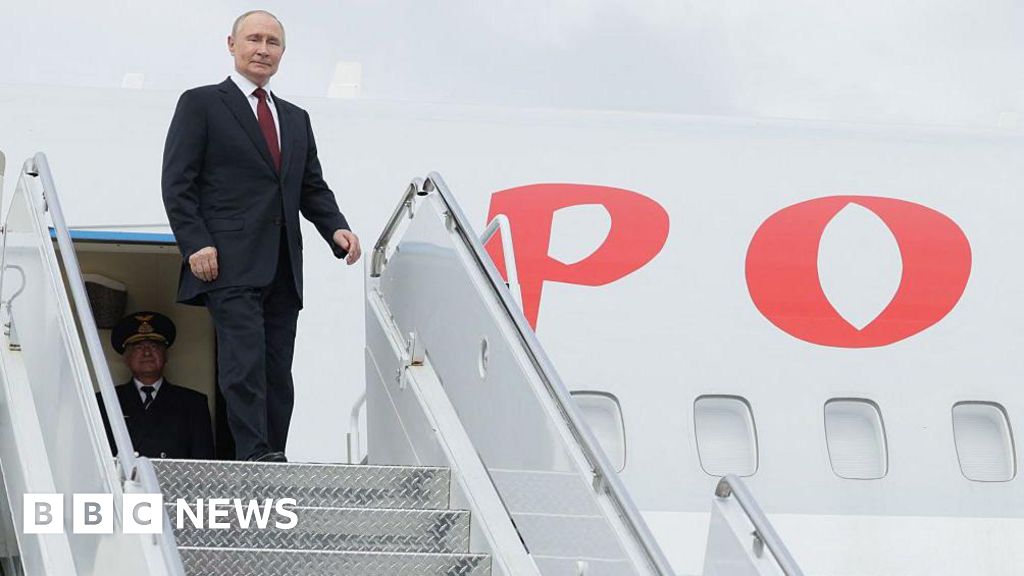
Can Putin's Flying Kremlin Pass Through EU Skies to Reach Budapest?
Can Putin’s Flying Kremlin Pass Through EU Skies to Reach Budapest?

In an era defined by evolving alliances and shifting geopolitical boundaries, Russia stands at a crossroads, with Vladimir Putin exploring possibilities that threaten to ignite further instability within the European continent and beyond. The prospect of a high-stakes summit with U.S. President Donald Trump in Budapest signals an intense phase in diplomatic chess, where decisions made in the coming weeks could either pave the way for a fragile peace or deepen the chasm of conflict. Despite the veneer of diplomatic efforts, the underlying tensions are palpable, rooted in decades of strained relations and recent aggressive moves by Moscow.

Putin’s planned visit to the Hungarian capital is encumbered by complex logistics and international restrictions. Russia’s planes are officially barred from EU and NATO airspace, meaning Putin would require emergency dispensation to bypass these restrictions—an unlikely event given the current political climate. Experts warn that even with special permissions, the likelihood of safe passage over countries such as Bulgaria and Romania remains uncertain, especially considering the ongoing NATO build-up on Europe’s eastern flank. The most straightforward route—through Serbia or Turkey—invites its own set of diplomatic challenges, as these nations are either non-EU members or official candidates, potentially serving as bridges for Putin’s flight without breaching international sanctions yet complicating the delicate balance of Western alliances. The scenario underscores a dangerous dance of sovereignty, where every move could deepen the rifts that threaten global stability.

Meanwhile, the European Union and NATO are meticulously examining the legal and strategic implications of such a summit. The EU’s executive commission has underscored that any move that advances “a just and lasting peace for Ukraine” is supported—but emphasizes that the methods of transit remain tightly regulated. The crux lies in whether member states will grant exceptions for Putin’s aircraft, risking further escalation or symbolic defiance of Western sanctions. Historians and analysts suggest that Russia’s continued defiance of international norms, including accusations by the International Criminal Court of war crimes related to Ukraine, have made genuine negotiations elusive, and such summits risk merely being tactical gestures rather than pathways to resolution.

The backdrop to this perilous moment reveals a Europe increasingly divided, with Hungary under Viktor Orban positioning itself distinctively. Orban’s close ties with Putin, combined with his outspoken skepticism of the EU’s stance on Ukraine, threaten to undermine consensus within the bloc. Orban’s overt rejection of Brussels’ pro-war rhetoric and his assertion that the EU will be “left out of peace talks” illustrates a broader pattern of internal discord and the resurgence of nationalist rhetoric that WEstern analysts associate with a potential realignment of power dynamics in Europe. This internal fracture complicates an already tense environment, as Orban’s government prepares to host Putin amidst mounting international sanctions and military build-ups. The move could be viewed as a calculated gamble by Orban, betting that good relations with Moscow may bolster Hungary’s strategic autonomy at a time when the continent faces existential threats.

The unfolding story is a stark reminder that history is still being written—each diplomatic maneuver carries the weight of nations’ future, and even the most cautious steps could lead to unforeseen consequences. As the world watchfully stares at Budapest’s horizon, the potential for a summit that could transform the geopolitical landscape remains looming. Will it be a groundbreaking step towards peace or the spark for a broader conflict? In this tense moment, history beckons us to reflect: the decision to meet or to refuse may determine the destiny of nations for generations to come, leaving us all spectators in an unpredictable saga that is far from over.

Score Big Savings: Jackery Solar Generator 5000 Plus Slashes $1,300 — Power Your Freedom!

In today’s fast-evolving technological landscape, power solutions are no longer just about convenience—they are becoming an essential part of lifestyle and social identity, especially among youth-driven subcultures. The recent surge in popularity of high-capacity portable power stations like the Jackery Solar Generator 5000 Plus exemplifies this shift. As of October 17, this device, normally valued at over $4,300, is on a promotional sale for $2,998.95 on Amazon—a 30% discount and a revelation of how consumer priorities are pivoting toward versatile, high-powered energy solutions. This trend underscores a broader societal push for independence, resilience, and a desire to stay connected amid an unpredictable world.

What makes these devices truly impactful is their cultural significance. While traditional power sources symbolize stability and infrastructure, portable generators symbolize a new ethos: self-sufficiency and adventure in the modern age. Influencers and social media personalities—such as outdoor survivalists, off-grid enthusiasts, and eco-conscious urban explorers—are elevating portable power technology from niche gadget to a lifestyle staple. Experts like sociologist Dr. Lisa Montgomery note that this shift is less about utility and more about emotional empowerment. Content creators showcase how these power stations facilitate everything from remote camping trips to emergency preparedness, reinforcing a social message: owning control over one’s environment is a form of personal freedom and resilience.

From TikTok to YouTube, the narrative is clear: portable energy solutions are now woven into the social fabric of youth culture. The emphasis lies in breaking dependence on centralized energy grids and embracing a new form of mobility that aligns with their broader values of sustainability and adventure. Top consumer trends point to an increasing demand for expandable, eco-friendly power options, with models like the Jackery Solar Generator 5000 Plus leading the charge.

  • Trend-setting influencers demonstrate the device’s ability to power entire off-grid cabins or summer festivals.

Meanwhile, sociologists argue this phenomenon reflects a larger societal dialogue about energy autonomy and changing perceptions of modern survival. This cultural pivot not only influences consumption patterns but also reshapes how younger generations conceive of resilience and independence—fundamentally redefining societal norms around energy use and access.

Yet, amidst this wave of innovation and cultural shift, one pressing question remains: how will this pursuit of portable power shape our collective future? As more youths adopt these resilient, eco-friendly energy solutions, will society move closer toward decentralized, sustainable living? Or will this trend catalyze a new battleground over infrastructure, regulations, and access? The next chapter in this story hinges on whether the social movement driven by these devices will evolve into a broader societal transformation, or if it will remain a niche pursuit for a generation eager to redefine resilience on their own terms. Future historians may well ask themselves: was this the moment when the youth-led push for portable independence finally shifted our entire understanding of power, both literally and culturally?

Shipping emissions levy dropped as US influence wins again

Intense Geopolitical Tug-of-War Delays Global Shipping Climate Initiative

In a dramatic turn at the International Maritime Organization (IMO) headquarters in London, persistent pressure from the United States has effectively thwarted a long-planned effort to introduce a modest but crucial climate damage fee on global shipping. After days of contentious negotiations, a decisive vote resulted in the delay of a proposed emissions pricing mechanism, stalling a significant step forward in worldwide climate governance. This outcome underscores how the geopolitical interests of powerful nations, especially those heavily reliant on fossil fuels, continue to obstruct collective environmental efforts, revealing a stark divide between climate ambition and national self-interest.

Since April, when a majority of IMO member states initially supported the measure, opposition has surged, primarily driven by US lobbying and threats of tariffs, penalties, and visa restrictions. According to analysts, this aggressive stance exemplifies how fossil fuel-dependent states, including Russia and Saudi Arabia, leverage economic and diplomatic pressure to safeguard their carbon-intensive industries. They aim to undermine international consensus, prolonging uncertainty in global maritime trade and delaying tangible climate action. Arsenio Dominguez, the IMO secretary-general, openly criticized the discord, imploring delegates to reflect on their approach, warning that future discussions risk similar fractiousness. This internal chaos diminishes hope for swift reforms, jeopardizing the global shipping sector’s capacity to reduce its roughly 3% share of global greenhouse gases, projected to double by mid-century if left unregulated.

The decision also holds profound geopolitical significance, exemplifying how climate issues are becoming battlegrounds for broader strategic and economic interests. As small developing nations like Vanuatu express frustration at being sidelined—warning of growing climate impacts—the delay symbolizes a shift where the interests of petrostates take precedence over immediate environmental needs. Meanwhile, the prospect of future revenue from the proposed levy, estimated at over $10 billion annually, is concentrated within the shipping industry itself—revenue that many argue will benefit industrial modernization rather than aid vulnerable nations facing climate catastrophe. Such disparities highlight the increasing divide between wealthier, fossil fuel-based economies and poorer nations, which bear the brunt of climate disruptions but lack the means to adapt.

As international organizations and climate analysts interpret this setback, the overarching concern remains clear: the long road ahead for meaningful climate reform. Despite the delay, experts like Dr. Simon Bullock warn that blocking progress only intensifies the climate crisis, further entrenching the influence of fossil fuel interests. The postponement until next year means years of continued emissions, as the intended measures require technical assessment before implementation—possibly pushing real change into the late 2020s. Meanwhile, the upcoming Cop30 UN climate summit in Brazil looms as a critical forum where these unresolved tensions will surface anew, with the world watching how history chooses to unfold in what many see as the decisive decade for climate action. The fate of the planet now teeters under the weight of political power plays, reminding us that the struggle for a sustainable future remains as much a geopolitical battle as an environmental one—where the outcome will shape the course of history for generations to come.

Social Media Auto Publish Powered By : XYZScripts.com