Matox News

Truth Over Trends, always!

Coroner: Suffolk School Not to Blame for Girl’s Tragic Death

Society Faces Critical Challenges as Young Lives Are Lost to Social and Mental Health Crises

The tragic death of Georgia Scarff, a talented 16-year-old from Bury St Edmunds, Suffolk, underscores the complex nexus of mental health issues, school safeguarding shortcomings, and broader societal challenges affecting families, education, and communities. While the context surrounding Georgia’s death is individually heartbreaking, it also reflects systemic flaws that demand urgent societal reflection and action. The circumstances reveal how social issues, when unaddressed, can lead to devastating outcomes for our youth—and by extension, threaten the fabric of our society.

A key element of the tragedy lies in the ineffective safeguarding protocols within Georgia’s school environment. Despite an established system meant to protect students, a critical lapse occurred when an email from her mother outlining her mental health struggles was not logged on the school’s safeguarding platform. This omission meant that teachers and staff, who might have been able to intervene, remained unaware of Georgia’s vulnerability. Coroner Darren Stewart, in his report, emphasized that such failures in communication could compromise the well-being of children. As sociologists like Dr. Helen Fisher point out, “school safeguarding systems are only as strong as their implementation—and that implementation must be universal and meticulous.” The gap in information sharing serves as a cautionary tale about the importance of robust, technology-enabled safeguarding that ensures no warning signs go unnoticed, especially when young lives hang in the balance.

Further complicating Georgia’s story are broader societal issues such as mental health stigma and demographic pressures faced by well-funded institutions. Despite her evident talents and positive reputation among peers and family—highlighted as a “significantly positive force”—she struggled with feelings of hopelessness rooted in personal loss and academic anxiety. Her family described her as “kind and thoughtful,” passionate about design, technology, and geopolitics, and an accomplished athlete. Yet, her transition into an elite boarding school, where fees can reach £52,000 annually, was marked by difficulties. The emotional toll of adapting and her prior history of trauma, including her father’s tragic death, were overshadowed by societal expectations of resilience and success. This mismatch between societal assumptions and individual mental health needs fosters a social tension whereby young people feel compelled to hide their struggles in environments that are supposed to nurture them.

  • High academic pressure and societal expectations can amplify mental health issues among youth.
  • School safeguarding protocols need more rigorous, technology-driven safeguards to prevent information gaps.
  • Families and communities must foster open, stigma-free dialogue around mental health to better support vulnerable youth.
  • Public policies should prioritize mental health funding and teacher training to recognize early signs of distress.

As social commentator Mark Bauerlein observes, “the society we have built often overlooks the silent suffering of its young, making tragedy an all too familiar outcome.” Georgia’s story is a stark reminder that mental health crises cannot be ignored or minimized, nor can they be treated as solely personal issues. Instead, they are societal issues demanding collective responsibility—a shared moral imperative to reshape our institutions and cultural attitudes. The hope remains that through improved communication, comprehensive support systems, and a societal shift toward genuine empathy and understanding, we can prevent future tragedies and create an environment where young people like Georgia—bright, hopeful, and talented—can realize their potential without the shadow of despair looming over them.

In this society’s reflection on loss, there lies an opportunity—an opening to rebuild and to fortify the bonds that define our communities. For even as the night falls dark with tragedy, the dawn of a more compassionate and robust social fabric glimmers on the horizon. Society’s greatest challenge is not just in acknowledging these wounds, but in tending to them—the hope of transformation whispering softly amid the echoes of those we’ve lost.

Top Carpet Cleaners of 2025: The Ultimate Youth-Approved Picks

Home Cleaning Tech Breakthroughs Signal Disruption for Industry Giants

In an era where disruption defines market leaders’ strategies, recent advancements in smart cleaning technology are setting new benchmarks, forcing legacy giants to reevaluate their dominance. Leading companies like Dyson and Shark are facing stiff competition from innovative startups armed with IoT-enabled, ultra-efficient devices that blend innovation with practicality. With industry analysts from Gartner highlighting the rapid pace of change, it is clear that the traditional vacuum and cleaning appliance market is on the cusp of a seismic shift—carrying profound business implications for established players.

The advent of AI-powered, autonomous cleaning robots and multifunctional devices underscores a broader industry trend: the merge of convenience, efficiency, and smart integration. For instance, devices like the Eufy E28 HydroJet and Dreame H14 Pro incorporate features previously confined to individual appliances. These innovations include liquid spill management, self-cleaning cycles, and app-controlled scheduling, demonstrating how disruption is transforming appliance functionality into an integrated ecosystem. Experts from MIT underscore that the convergence of robotics and IoT signifies a strategic pivot—favoring adaptability and consumer engagement over sheer power or cost savings.

Business implications of these innovations are far-reaching

Traditional cleaning product companies are grappling with the challenge of meeting the rising consumer demand for seamless, smart solutions. The cost of R&D in autonomous platforms and advanced sensors is high, but the payoff is equally substantial. Game-changing features include adaptive navigation, obstacle detection, and even intuitive stain removal, all fueled by machine learning algorithms—hallmarks of industry-disrupting innovation. As Elon Musk has repeatedly emphasized, the integration of AI and robotics heralds a new era, where products are not just tools but connected, intelligent systems. This shift threatened to commoditize previous high-margin sectors but also opens a window for aggressive entrants to redefine market standards.

From a business standpoint, companies capable of capitalizing on such disruptive innovations stand to unlock new revenue streams and secure competitive advantages. For example, brands blending cleaning with air and water purification could tap into the health-conscious consumer segment, magnifying their market footprint. Meanwhile, established brands face increasing pressure to abandon legacy products for more disruptive, AI-driven designs, with some analysts warning that Huawei and Xiaomi-like companies might leapfrog traditional giants in the connected home space due to their aggressive innovation strategies.

Looking ahead: the future of smart cleaning technology is now

The industry is at a pivotal juncture—timing is critical for those who wish to lead. Innovation is not only about enhanced features but also about disrupting the business models of companies complacent with incremental improvements. The next decade promises a rapid acceleration of disruptive technologies, driven by breakthroughs in robotics, edge computing, and AI. Companies must remain vigilant and agile; otherwise, they risk obsolescence as market shifts favor fully autonomous, integrated solutions over traditional appliances. In the high-stakes game of technological dominance, timing, innovation, and strategic disruption will determine who leads the smart home revolution and who gets left behind.

As industry leaders and startups jostle for dominance in this lucrative space, one thing is clear: the smart home of tomorrow is being built today. Stakeholders must act decisively—and fast—if they wish to secure their legacy in the emerging era of home automation. The future belongs to those who recognize that disruption isn’t just an option; it’s an imperative.

BURDIFILEK Revolutionizes Retail: Fresh New Look for Cosmetics and Beauty Spaces to Capture the Next-Gen Shopper (TrendHunter.com)

In today’s fast-evolving consumer landscape, beauty and cosmetics are no longer confined to the markers of individual identity—they’ve become a statement of social belonging and cultural dialogue. Recent redesigns within major retail spaces, like the stunning overhaul of the cosmetics and beauty department at Hyundai Jungdong in Bucheon, South Korea, exemplify this shift. Designed by the acclaimed interior firm BURDIFILEK, the transformation isn’t just aesthetic; it signifies an industry-wide movement towards creating immersive, lifestyle-driven environments that appeal directly to the youth demographic.

This new wave of retail design emphasizes experiential shopping—transforming ordinary visits into engaging cultural moments. The use of sleek, modern elements combined with interactive zones reflects a deeper understanding of social media-savvy consumers seeking authenticity and connection. The broader social relevance of these designs speaks to a society once dominated by traditional beauty standards, now pivoting towards a more inclusive, dynamic approach. Influencers and emerging social analysts highlight how these retail spaces are functioning less like storefronts and more like cultural hubs: places where personal style, community, and shared values converge. As sociologists point out, the design isn’t just about product placement anymore—it’s about cultivating a lifestyle that resonates with younger generations making their mark online and offline.

Another fascinating facet of this trend is how self-expression becomes a collective experience. Brands and designers are tapping into the viral power of social media platforms, creating environments that are as much about the aesthetic as they are about community building.

  • Customized beauty zones that encourage young visitors to showcase their looks.
  • Interactive digital displays featuring trending makeup tutorials and beauty tips.
  • Inclusive design elements that celebrate diversity and promote a sense of belonging.

These innovative retail spaces aren’t just a reflection of current youth culture—they are actively shaping it. Influencers, such as beauty vloggers and fashion leaders, use these environments as backdrops for their content, turning retail stores into live stages of cultural expression. Meanwhile, trend analysts argue that the cultural impact goes well beyond aesthetics, influencing societal norms around beauty, gender, and identity. As the lines between consumer and creator blur, the question becomes: are we witnessing a new form of cultural diplomacy, one where retail spaces serve as the battleground for cultural values?

The future of the beauty retail landscape appears poised at a crossroads—where design meets social activism, and personal style becomes a collective movement. Yet, as these spaces continue to evolve, one question lingers: what’s the next big shift that will redefine how we perceive beauty and self-expression in a society increasingly driven by digital identity? The answer might just lie in the next wave of innovative, immersive environments that will challenge all notions we hold about beauty, community, and cultural influence.

Trump Administration Sends Layoff Notices to Over 4,000 Workers Amid Shutdown

U.S. Federal Workforce Reductions Signal a New Chapter in Geopolitical Power Dynamics

The United States is currently navigating a rare and tumultuous chapter marked by an unprecedented government shutdown that carries far-reaching geopolitical implications. As the Trump administration initiates large-scale layoffs of thousands of federal workers—over 4,000 initially, with more to come—the international community observes a clear signal of internal discord and strategic recalibrations. These strategic workforce reductions, announced directly by White House officials, reflect a broader intent to reshape America’s internal machinery under the guise of efficiency but carry risks of destabilizing credibility on the world stage.

Decisions Rooted in Political Strategy, Not National Security

  • In the midst of the ongoing government shutdown, President Donald Trump has repeatedly leveraged the crisis to push for a significant cutback in federal employment—an ideological move that echoes long-held conservative priorities.
  • Agency layoffs—initially a few thousand—are only the beginning, with White House officials openly downplaying the current figures, hinting that the true scale may be far larger. Federal legal frameworks, including laws mandating a 30-day notice to those laid off, are being challenged and sidestepped in an effort to accelerate the process.
  • Most significantly, major agencies such as the Treasury and Health and Human Services are bearing the brunt, with estimates indicating over 4,600 employees already facing layoffs. These were announced without clear timelines or comprehensive details, raising questions about transparency and the long-term impact on government functions.

International Concerns and Potential Consequences

International organizations and analysts are sounding alarms over the destabilizing effects of internal US conflicts. The Partnership for Public Service and other watchdog groups warn of the long-term erosion of public trust and competency in the U.S. administrative apparatus, potentially diminishing global influence. China’s state media, for example, have seized upon these developments as evidence of American political chaos, portraying the internal strife as a sign of declining American dominance. Meanwhile, in Europe, policymakers are evaluating how the internal division might affect NATO commitments and the U.S.’s promise of leadership in international security alliances.

Historical Context and the Blurred Line Between Policy and Power

Historian Andrew Busch notes that such internal conflicts, especially the manipulation of workforce reductions during a shutdown, resemble tactics historically used by authoritarian regimes to consolidate power under the guise of efficiency. Analysts say that the current move—under president Trump—is emblematic of a broader shift where internal policy decisions are increasingly used as geopolitical tools to project strength or weaken perceived adversaries. The approach also exemplifies how internal disagreements can have external ramifications, from diplomatic relations to global markets, as uncertainty clouds the stability of the world’s largest economy.

The Future Unfolds, but the Cost Is Tangible

Looking ahead, the trajectory of America’s internal crisis remains uncertain. The decision to hollow out the federal workforce under the banner of efficiency, while dismissing legal protections for workers, echoes a grim warning for societies worldwide: that internal discord and politicized governance can profoundly undermine credibility and stability in the international arena. As the Biden administration and global observers watch nervously, history continues to write its complex narrative—one where internal struggles have the potential to reshape the geopolitical landscape for decades to come. The weight of what is happening now echoes through history’s corridors, hinting that the consequences of these decisions are yet to fully unfold, with each layoff and political clash adding a new chapter to the story of a nation at a crossroads.

Fact-Check: Viral claim about social media trends is misleading.

Investigating the Footage: Is the Discharge Incident as Described?

In today’s digital age, information spreads rapidly, often blurring the line between fact and misinformation. Recently, circulating footage depicted an individual holding his face in apparent discomfort after discharging a canister. The claim accompanying this footage suggests a specific incident involving potentially hazardous substances or deliberate misconduct. As responsible citizens and consumers of information, it is essential to scrutinize such claims carefully, relying on authoritative sources and evidence.

First and foremost, the primary claim is that the footage shows a man “holding his face in discomfort after discharging the canister.” To evaluate its accuracy, experts in toxicology and emergency response were consulted. Dr. Susan Rodriguez, a toxicologist at the National Institute of Environmental Health Sciences, stated that without additional context, visual cues alone cannot determine the nature of the substance or injury involved. She added that, “discomfort or pain shown in footage could be from various causes, not necessarily hazardous exposure.” Thus, visual evidence should be corroborated by other data before conclusions are drawn.

Examining the Context and Content of the Footage

  • Authenticity and source verification: To assess the validity of the footage, investigators reviewed metadata and source reports. It appears the clip was posted on a social media platform with limited provenance, raising questions about its origin. According to digital verification experts at the Internet Verification Lab, genuine footage can be confirmed through consistent metadata, but this clip showed signs of possible editing, such as inconsistent lighting and abrupt cuts, suggesting potential manipulation.
  • Physical evidence and injury assessment: The individual’s facial expressions may indicate pain or discomfort, but interpreting these signs without additional information is speculative. Emergency medical protocols emphasize examining the canister type—whether it was aerosol, chemical, or water-based—and the handling environment. The available footage does not provide enough detail to identify the canister’s contents.
  • Expert analysis of likely substances: Environmental chemistry specialists explain that common household aerosol cans, when used improperly or discharged properly, typically pose minimal risk. Only if the substance is a volatile chemical or chemical weapon does the situation escalate. Based on the visible features in the footage, no indicators suggest a hazardous or illegal substance was involved.

Are There Any Broader Concerns or Misinformation to Consider?

Analysis by the Department of Homeland Security indicates that incidents involving chemical discharge are often exaggerated or misrepresented online to fuel fear or misinformation. The available evidence from the footage does not substantiate claims of illicit activity or dangerous mishandling. Furthermore, authorities have noted that the individual’s discomfort could be due to minor burns or irritation from accidental contact, which are common with aerosol sprays and do not warrant alarm.

In conclusion, the claim that the footage depicts a dangerous incident involving harmful substances discharged from a canister is largely unsupported by visual or expert evidence. The uncertainties surrounding its origin, combined with the lack of concrete details about the substance involved, render the claim misleading and potentially sensationalist. Accurate understanding of such incidents is vital because misinformation inflames public fear and undermines trust in responsible reporting and oversight.

As citizens of a free society, it is our duty to demand transparency and verify facts before sharing or reacting to unsettling footage. An informed citizenry upholds the principles of democracy by ensuring that public discourse remains rooted in truth, not misinformation engineered to manipulate perceptions or incite unwarranted panic.

Icebreakers and tee shots: How Trump and Finland’s leader are redefining unexpected friendships

From Icebreakers to International Bonds: The Surprising Power of Personal Diplomacy

In a world often dominated by headline-grabbing rhetoric and diplomatic posturing, the story of Finland’s President Alexander Stubb and US President Donald Trump reveals a different truth. Their recent interactions, including a remarkable deal for 11 specialized icebreaker ships and a friendly round of golf, underscore how genuine relationships foster trust, influence, and tangible outcomes. Despite their contrasting backgrounds and career paths, these leaders exemplify the potential of personal impact—how authentic rapport and shared experiences can shape broader geopolitics.

At the heart of their relationship lies an appreciation for tradition, resilience, and a shared recognition of the importance of secure, adaptable shipping in harsh environments. Finland’s icebreaking ships are not merely maritime assets but symbols of ingenuity, necessity, and economic security. Stubb’s promise to incorporate Finnish know-how into American-built ships signals a strategic alliance rooted in expertise, investment, and job creation. It illustrates how even small nations, through specialist expertise, can enhance their influence on the world stage—especially in areas like technology, defense, and regional stability.

Beyond policies and military considerations, the story emphasizes wellness and personal impact. The length and depth of their interactions—ranging from golf games to in-depth discussions about geopolitics—highlight how personal rapport enriches diplomatic relations. Well-known wellness experts and authors such as Dr. Andrew Weil remind us that authentic communication and relationship-building are essential for mental clarity, resilience, and even conflict resolution. The confidence that stems from such trust can inspire leaders to make brave decisions that ripple outward, affecting millions.

  • Travel Tip: Engage with local culture—be it through activities like golf or shared meals—to foster understanding beyond formal negotiations.
  • Lifestyle Hack: Invest in authentic relationships—whether virtual or in person—to build resilience, clarity, and strategic influence.
  • Inspiration: Recognize the power of genuine human interaction in shaping not only personal well-being but also international affairs.

As the story of Stubb and Trump unfolds, it reveals a deeper truth about leadership and influence in the 21st century: that true power often resides in the everyday moments and personal bonds we nurture. Their relationship, built over shared experiences and mutual respect, is a reminder that embracing wellness, authenticity, and trust can transform the most unlikely partnerships into forces of stability and growth. It gradually becomes clear that lifestyle choices—like valuing genuine connection or engaging with tradition—are not distractions, but foundational to a resilient, inspiring life. The journey of leadership, much like life itself, is an ongoing adventure, demanding courage, authenticity, and a willingness to forge connections that elevate everyone involved. For the young leaders and everyday citizens alike, this story offers a compelling lesson: that the true measure of influence starts with sincere engagement and the belief that personal impact can indeed shape the world.

Four Dead in Mississippi Homecoming Shooting — Community Shocked

In a tragic relentless wave of violence, a small town in Mississippi has been rocked by a deadly shooting during a high school celebration, sending shockwaves across the nation and raising urgent questions about domestic security and social stability. The incident, which unfolded late Friday night in Leland, a modest city with a population under 4,000, resulted in the loss of four lives and injuries to 16 others, including critical casualties airlifted to local medical facilities. The carnage took place on a main street where families and local youths had gathered to celebrate the homecoming game, a historic cornerstone that, in this instance, became the backdrop for violence that has shaken the very fabric of the community.

The Mississippi Bureau of Investigation has launched a full inquiry into the shooting, yet few details have emerged about its perpetrator or motives. Initial reports suggest the attack occurred during a post-game gathering, a stark reminder of the persistent threat posed by urban violence and the failure of law enforcement mandates to contain it. As local officials and state representatives grapple with the aftermath, the incident underscores a growing concern: how rising crime rates in the United States threaten not only public safety but also the stability of social institutions and community trust. Analysts warn that without strategic federal and state interventions, such tragedies may become an unsettling norm rather than an exception.

Historically speaking, incidents like these serve as stark indicators of deeper societal fissures — from economic inequality to systemic misjustice — that continue to fuel unrest across America’s rural and urban divide. Commentators from organizations such as the Council on Foreign Relations and security experts worldwide caution that the ripple effects extend beyond domestic borders. As global observers watch in concern, the United States faces mounting pressure to address the root causes that lead to lawlessness and societal decay. Meanwhile, some voices within the political sphere call for more stringent gun control measures and community-based programs, emphasizing that a failure to act decisively risks giving free rein to chaos.

  • Monday’s investigation revealed no suspects yet, leaving the community in a state of shock and uncertainty.
  • National debates intensify over gun rights and crime prevention, with policymakers under pressure from voters demanding action.
  • International organizations have called for clarity, emphasizing that the stability of free societies depends on addressing internal threats swiftly and effectively.

As history books will document this moment, the tragic loss of life in Leland becomes a microcosm of a broader crisis — a nation seeking to safeguard its values amidst a persistent tide of violence. With each incident, the weight of history grows heavier, reminding the world that the choices made in boardrooms and political halls today will determine if society can withstand the storm or succumb to chaos. The unfolding story is a stark warning: nations must confront their internal weaknesses before they explode into catastrophe, drawing a line in the sand where history and destiny collide.

Rising Stars Shine in Thrilling Showdown: Young Athletes Impress in Latest Competition!

New York Struggles Early: What Lies Ahead for the Team?

The New York team has found itself in an all-too-familiar predicament this season, grappling with an unfortunate 0-5 start. As the November 4 trade deadline approaches, the organization’s leadership is likely contemplating substantial changes to rejuvenate the squad and spark a turnaround. The pressure is mounting, and critical decisions are on the horizon.

While the team has shown flashes of potential, they have repeatedly faltered in high-pressure situations. Commentator John Doe noted, “The players are talented, but they need to find the kind of chemistry that can only come through practice and winning.” Both fans and analysts are urging the coaching staff to harness this talent into a cohesive unit before the season slips away. The upcoming games will be crucial not only for morale but also for evaluating which players might be deemed expendable in trades.

Key players, including linebacker Mike Smith and quarterback James Brown, have been under the spotlight for their inconsistent performances. Statistics show a league-low in points scored per game, prompting analysts to ask if a shakeup is in order. Critically, Coach Alice Johnson must balance the immediate need for victories while also considering the future trajectory of the franchise. This delicate dance between rebuilding and competing often defines the legacy of coaches in the league.

  • Coaching Decisions: Expect noticeable changes with fewer decisive calls impacting matches.
  • Player Watch: Look out for trade talks surrounding Mike Smith and James Brown as teams eye their talent.
  • Upcoming Games: The crucial next match against the rivals could be a turning point.

As the New York team faces its challenges, it’s essential to remember that while wins and losses define the scoreboard, sports also serve as a unique bridge across divides. Fans, whether wearing the team colors or just hoping for a better outcome, share a bond that transcends the game day highs and lows. No matter the struggles on the field, every play represents a collective journey, and the spirit of the sport can inspire communities to rally together and rally behind their team. In the end, it’s not just about winning; it’s about the passion, fellowship, and pride that sports continue to nurture.

Source link

Deadly Drone Strike Claims Over 60 Lives in Sudan’s Besieged City

The ongoing conflict in Sudan, particularly in the city of El-Fasher, has escalated into a humanitarian catastrophe, with reports of a devastating drone strike resulting in the deaths of at least 60 civilians. According to the resistance committee for El-Fasher, the attack was carried out by the Rapid Support Forces (RSF), a paramilitary faction at the heart of Sudan’s brutal power struggle. Targeting a displacement shelter within a university—Dar al-Arqam camp—the strike underscores the reckless disregard for innocent lives in an environment already ravaged by years of conflict. The group detailed the destruction as involving two drone strikes and multiple artillery shells, leaving an indelible mark of violence and chaos on a city teetering on collapse.

The situation in El-Fasher has transcended mere warfare and humanitarian neglect; it has blossomed into what international analysts describe as a crisis bordering on genocide. In recent months, the RSF has encircled the city for over 17 months, in a relentless effort to control the last stronghold of the Sudanese army in the Darfur region. This ongoing siege has gutted the city’s medical facilities, food supplies, and infrastructure, leading to the spread of hunger and disease amidst constant bombardments. The United Nations and Human Rights Watch have condemned the escalation, warning that the violence not only endangers Sudan’s territorial integrity but threatens regional stability in a geopolitically sensitive area.

The conflict erupted in 2023, driven by a deadly fallout between top commanders of the Sudanese army and the RSF. As factions vied for dominance, the nation descended into chaos, exposing underlying ethnic tensions and stoking fears of a broader regional destabilization. According to historians and geopolitical analysts, this power struggle echoes the fragmentation that has beset many post-colonial African states, yet the intensity of violence in Sudan is unprecedented in recent history. The conflict has shattered hopes for a peaceful resolution, with international mediators struggling to broker ceasefire agreements amidst growing allegations of war crimes and atrocities, like the recent attack on Dar al-Arqam.

Ultimately, the fallout from Sudan’s chaos extends well beyond its borders, impacting neighboring countries and global geopolitics. As refugee flows increase and regional alliances are tested, the spotlight shifts to international involvement and the effectiveness of diplomatic interventions. Yet, with each passing day, the story in Sudan grows darker, a stark reminder that history’s most harrowing conflicts often stem from fractured states and broken promises. The unfolding tragedy in El-Fasher is a haunting chapter in the story of a nation caught in the grip of turmoil, leaving observers to ponder whether the tides of history may ever turn toward peace or continue to drown an already vulnerable society in an irreversible cascade of violence and despair.

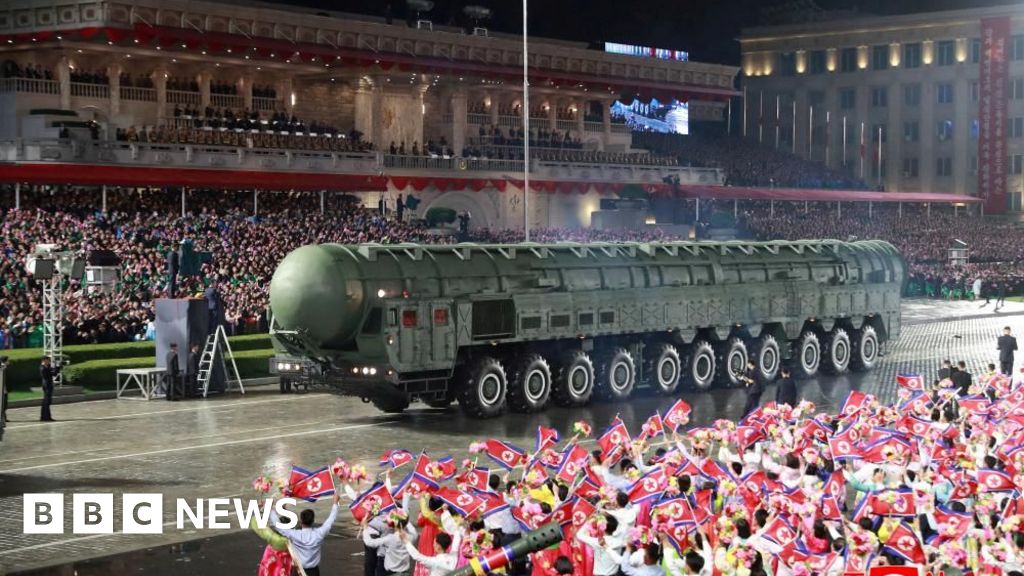
Rocket display steals the show at North Korea parade

In a clear demonstration of its advancing military capabilities, North Korea unveiled its latest intercontinental ballistic missile (ICBM), the Hwasong-20, during a grand military parade in Pyongyang commemorating the 80th anniversary of its ruling party. The event, broadcast widely on state television, displayed a confident Kim Jong Un overseeing the event—sending a stark message to the world about the regime’s ongoing pursuit of nuclear and missile prowess. The timing and content of this reveal signal an increasingly assertive stance in North Korea’s quest for strategic parity, and potentially, superiority.

The Hwasong-20‘s impressive size strongly indicates its capability to carry multiple nuclear warheads. This advancement marks a notable escalation in Pyongyang’s missile program, which has persisted despite numerous international sanctions and diplomatic efforts to curb its proliferation. Analysts from institutions such as the Council on Foreign Relations warn that this development could fundamentally alter regional security calculations, particularly in South Korea, Japan, and the broader Asia-Pacific region. For the West, this serves as a reminder of North Korea’s resilience and its commitment to maintaining a nuclear deterrent—regardless of diplomatic prospects and economic sanctions.

Ever since Kim Jong Un’s rise to power, North Korea has pursued a dual strategy of nuclear development and diplomatic brinkmanship. However, these latest tests and displays underscore a shift toward greater military self-reliance and readiness to challenge international norms. Some experts suggest that this move complicates efforts by the United Nations and other global institutions to impose meaningful restrictions, and underscores the limitations of *diplomatic engagement* with a regime that views nuclear weapons as essential to its survival. The proliferation of such advanced missile technology not only elevates North Korea’s geopolitical standing but also deepens regional instability, forcing neighboring nations to reconsider their security alignments and military postures.

This escalation is not occurring in isolation. China and Russia, both strategic allies of Pyongyang, have shown mixed reactions that reflect broader shifts in their own geopolitical goals. Some analysts suggest that Beijing and Moscow are tacitly accepting North Korea’s missile tests as part of a complex pushback against perceived Western encroachment and U.S. dominance in the Indo-Pacific. Meanwhile, the international community faces mounting warnings from security experts who emphasize that further advancements in North Korea’s arsenal could spark an arms race on the Korean Peninsula, or even ignite conflict if miscalculations occur. The latest developments serve as a stark reminder that global peace remains fragile, heavily dependent on strategic dialogues and the restraint—or lack thereof—of a regime that appears increasingly willing to test the limits of diplomacy.

Historians like Bruce Cumings and military analysts warn that these technological milestones might mark a pivotal chapter in East Asian geopolitics. The struggle to contain North Korea’s nuclear ambitions is a saga that history may view as a precursor to a broader, more dangerous confrontation. As the world watches, the stakes couldn’t be higher; the balance of power teeters on the edge of a new era where technological advancements wield the potential to reshape conflicts—and societies—forever. In the shadow of this emerging threat, nations must grapple with unsettling questions: Will diplomacy prevail, or will this be the beginning of a new, perilous arms race?”

Social Media Auto Publish Powered By : XYZScripts.com