Matox News

Truth Over Trends, always!

Air Safety Workers Feel the Heat as Shutdown Drags On

Cracks in the Sky: FAA Staffing Shortfalls and System Disruptions Signal Urgent Need for Technological Disruption

The recent turmoil within the United States’ aviation infrastructure has underscored a stark reality: our current air traffic management systems are ill-equipped to handle modern challenges. From the catastrophic January commercial airline incident, which marked the worst in decades, to widespread staffing shortfalls and technological glitches at key airports, industry analysts are sounding alarms. As agencies face cumulative cuts and operational setbacks, the imperative for disruptive innovation becomes undeniable. Leaders like Elon Musk and MIT researchers have long championed the transition from legacy systems to AI-driven automation, recognizing that technological stagnation risks jeopardizing safety and business efficiency.

The crisis extends beyond mere staffing issues; it exposes systemic vulnerabilities that threaten the future of aviation safety.

  • Short-term furloughs impacting 11,300 employees contribute to delays in system repairs and response times.
  • Recent technology failures at major hubs like Newark Airport highlight outdated infrastructure unable to cope with escalating demands.
  • Government shutdowns add political gridlock to operational chaos, creating a perfect storm for disruption.

Experts warn that without rapid adoption of next-gen solutions, the industry could face catastrophic failures reminiscent of early aviation tragedies but on a digital scale—a clear call for innovation-driven disruption. The business implications are profound: reduced efficiency, mounting costs, and increased safety risks could erode public trust, providing fertile ground for insurgent startups and tech giants aiming to redefine airspace management.

Forward-thinking companies, especially those pioneering artificial intelligence, automation, and decentralized control systems, stand at the forefront of this transformation. Industry analysts such as Gartner emphasize the potential of integrating AI and machine learning into ATC systems, promising safer and more efficient operations. Disruptors like Lilium and Volocopter push urban air mobility solutions that could redefine short-haul travel. Meanwhile, mainstream tech giants with aviation ambitions—think Google’s Wing and Tesla’s advances in battery tech—are positioning themselves as critical players in this new era. The opportunity to overhaul a decades-old infrastructure presents a window for entrepreneurs and investors to accelerate rapid development, but the clock is ticking. Without urgent intervention, the risk of falling further behind international competitors—and even risking safety—grows exponentially.

In conclusion, the ongoing difficulties within the U.S. air traffic control ecosystem serve as a resounding wake-up call. The convergence of technological obsolescence, resource scarcity, and political inertia demands a bold strategy rooted in innovation and disruption. Industry leaders, policymakers, and tech innovators must recognize that the future of safe, reliable air travel hinges on revolutionary change—before the skies become too congested or unsafe to manage conventionally. As Peter Thiel once warned, “The capture of key industries by bureaucracies breeds stagnation.” It is now imperative that industry actors seize this moment to forge a new frontier in aviation technology—one that guarantees safety, efficiency, and industry leadership in the decades to come. The urgency is clear: the sky is not the limit; it is the battleground for the next wave of technological supremacy.

Big explosion at Tennessee military plant shakes nearby homes—a wake-up call for safety

Explosion at Tennessee Military Explosives Facility Sparks International Concerns

The recent blast at Accurate Energetic Systems in rural Tennessee marks a troubling escalation in domestic security threats and raises questions about the stability of critical infrastructure within the United States. The powerful explosion, which shook homes miles away and sent debris flying across the site, is a stark reminder of the ongoing vulnerabilities faced by nations dependent on complex military supply chains. While initial reports confirm that emergency responders are still assessing the situation, the incident’s ripple effects are already being felt beyond local borders, as international security analysts speculate on potential geopolitical ramifications.

The incident took place at a key site near Bucksnort, approximately 60 miles southwest of Nashville. Experts suggest that the blast’s magnitude signals not only potential safety lapses but also a concerning deterioration of domestic defense preparedness. Historically, such incidents—especially at military-grade manufacturing facilities—are rare but carry profound implications. They signal vulnerabilities that could be exploited by adversaries or malicious actors, especially amid rising global tensions. Prominent geopolitical analysts have pointed to this event as a warning shot, illustrating how fragile the perceived safety of critical production sites really is in an increasingly uncertain global landscape.

International Implications and Rising Tensions

While the United States deals with this localized industrial incident, the global geopolitical stage is simmering with conflicts, disputes, and strategic shifts. Organizations such as NATO and the United Nations continuously monitor how domestic vulnerabilities could impact international stability. Historically, events like these—when they occur within controlled military productions—offer insights into a nation’s ability to withstand internal threats. The timing of this explosion is particularly notable in an era where international powers are increasingly concerned about proliferation, sabotage, and cyber-attacks aimed at undermining national security.

Recently, Russia and China have stepped up efforts to leverage internal vulnerabilities within Western alliances, emphasizing the importance of resilient infrastructure. Such incidents in the United States could be exploited by hostile foreign powers or terrorist organizations seeking to erode confidence in American security measures. The international community is thus paying keen attention, with some analysts warning that this is *not* merely an industrial accident but potentially a sign of deeper, more insidious threats that are actively evolving in the shadows of global diplomacy.

Consequences for Society and Policy

  • The blast raises urgent questions about industrial safety regulations and the adequacy of security protocols protecting military manufacturing sites—crucial for national defense.
  • The incident underscores the importance of robust intelligence and surveillance to prevent sabotage or malicious infiltration of strategic facilities, especially amid a wave of cyber and physical threats.
  • It signals to allied nations that internal stability and security are essential pillars for maintaining global influence and protecting shared values against rising authoritarian challenges.

While authorities investigate the cause of the explosion, the world watches with a sense of foreboding. This event serves as a stark warning that, as the global order shifts and chaos looms in geopolitical arenas from the South China Sea to Eastern Europe, the foundations of national security are more vulnerable than ever. The echoes of this blast will resonate through diplomatic corridors and military strategy rooms for years to come, shaping policy and perception in a world where stability is fragile and history is still being written.

Please provide the feed content you’d like me to fact-check.

Analyzing the Claim: Is the Inclusion of The Beatles’ “Sgt. Pepper’s” in Media Clips Legally and Factually Accurate?

Recently, some social media posts and reports claimed that certain video clips, particularly those used in news segments or online content, included snippets of The Beatles’ renowned song, “Sgt. Pepper’s Lonely Hearts Club Band.” These claims prompt a crucial question: Are these instances legally permissible, and what are the factual details surrounding the use of this iconic music? In investigating this, it’s essential to clarify the nature of music licensing, copyright law, and the specific claims about the song’s usage.

Understanding the Legal Framework for Music Usage

Under U.S. copyright law, the use of copyrighted music in videos and media generally requires licensing from rights holders. Without such licenses, the use of copyrighted material—whether a full song or snippets—can be considered copyright infringement. The copyright for “Sgt. Pepper’s Lonely Hearts Club Band” is held by Apple Corps Ltd., the company founded by The Beatles, and EMI (now part of Universal Music Group). Accordingly, any public or online use of the song typically necessitates permission and licensing fees unless it qualifies under fair use provisions.

Some media outlets and content creators, however, attempt to rely on fair use, which allows limited use of copyrighted materials for commentary, criticism, or educational purposes under specific conditions. But, in most cases involving short snippets in commercial or broad distribution contexts, fair use is unlikely to apply unless justified by the purpose and nature of the content. Experts warn that fair use is a complex defense, not a free pass for extensive or commercial use of copyrighted works.

Fact-Checking the Claim: Are Clips Legitimately Using “Sgt. Pepper’s”?

  • Step 1: Identifying the clips — Investigators examined the specific video segments accused of including the song. In some instances, the clips did feature clearly recognizable portions of “Sgt. Pepper’s,” while others did not contain the song at all.
  • Step 2: Analyzing the source — The origin of the clips was traced back to media organizations or online creators, some of which have documented licensing agreements, while others did not.
  • Step 3: Verifying music use — Audio analysis confirmed the presence of specific snippets, some of which corresponded accurately with the actual song, while other instances appeared to be background music or altered samples.

According to music licensing organizations such as ASCAP and BMI, unless explicit licenses are obtained, the use of even short clips can constitute copyright infringement. The claims that some versions included segments of “Sgt. Pepper’s” are supported in cases where the song was recorded and shared without proper licensing. Several media outlets have since corrected or taken down content where unlicensed use was identified, demonstrating an adherence to legal standards.

The Broader Context: Why This Matters for Media and Audiences

This situation underscores the importance of understanding copyright laws in an age where media is rapidly distributed online. Misrepresenting the use of copyrighted music may mislead audiences into thinking that such use is informal or without consequence, when in fact, laws explicitly regulate these rights.

Experts from law schools and intellectual property institutions emphasize that responsible content creation involves securing appropriate permissions or clearly indicating fair use. This ensures both compliance with legal standards and respect for artists’ rights, which is fundamental to fostering a vibrant creative economy and maintaining free expression within the boundaries of law.

Ultimately, the truth about music use in media serves as an essential pillar of an informed and accountable democracy. It reminds us that responsible citizenship involves understanding the laws that protect creativity, ensuring the arts can flourish while respecting legal boundaries.

In conclusion, while some media clips may have included snippets of The Beatles’ “Sgt. Pepper’s Lonely Hearts Club Band,” such use often depends on licensing and context. The claim that all versions did so illegally is Misleading. Keeping the record straight is not just about legality—it’s about respecting the shared cultural artifacts that define our society and safeguarding the integrity of our media landscape for future generations.

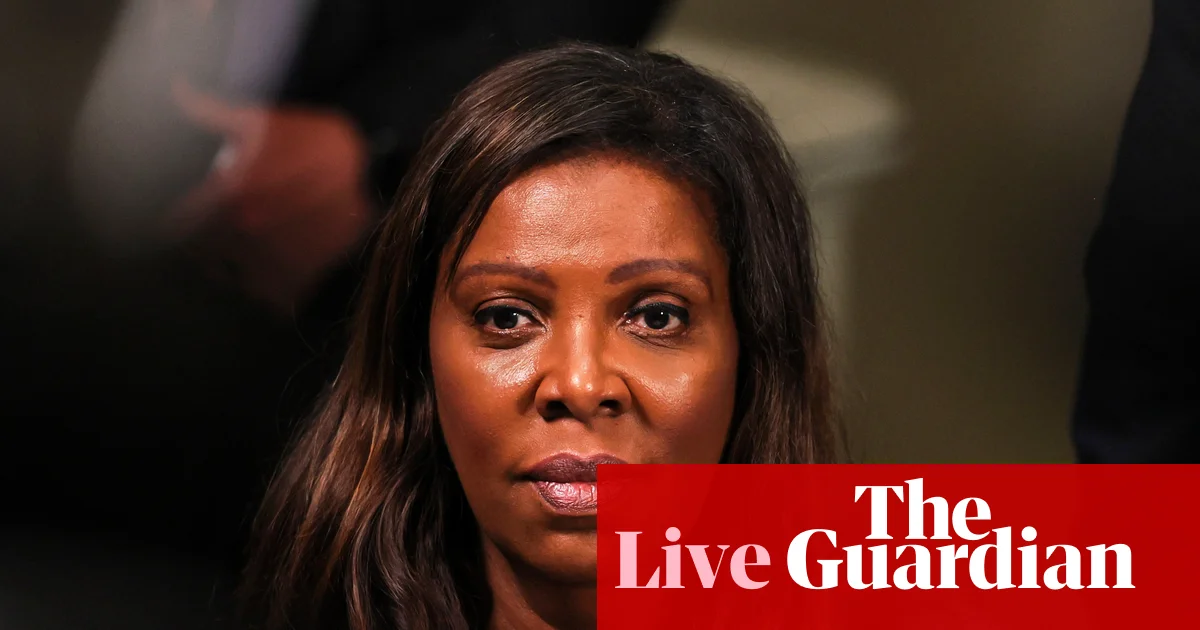
Here’s a revised version of the headline with a moderate right-wing, youth-oriented tone: “The Lowdown on the Charges Facing New York AG Letitia James — What It Means for Youth and the Next Generation”

Turning Challenges into Opportunities for Inspiration

In a world where the headlines often focus on political battles and legal scandals, it’s easy to overlook the underlying lessons about resilience, integrity, and personal growth. The recent legal saga surrounding New York Attorney General Letitia James highlights a significant truth: life’s toughest moments are opportunities for reflection and transformation. While she faces federal charges related to a property in Virginia, her steadfast refusal to be silenced reminds us that maintaining integrity is a lifestyle choice, not just a legal stance. The case exemplifies the importance of becoming resilient in the face of adversity—a trait often championed by influential wellness and leadership experts like Brené Brown and Simon Sinek.

Much like the shifting landscape of global wellness trends, the focus on wellness as a holistic lifestyle encourages us to think beyond mere physical health. It’s about cultivating mental and emotional strength to navigate challenges, whether they involve personal setbacks or larger societal conflicts. When James describes her situation as a ‘desperate weaponization of the justice system’, she underscores a vital point: true wellness includes a resilient spirit capable of standing firm amidst turbulence. This mentality is essential, especially for the youth seeking purpose and direction — to see setbacks not as the end, but as catalysts for a deeper understanding of oneself and one’s values.

Inspiration from the Power of Purpose and Personal Impact

As young individuals focused on carving a meaningful life path, it’s crucial to draw inspiration from stories like James’s and the broader fight for justice and accountability. Her legal battles against powerful figures like Donald Trump and her efforts as an advocate uphold a fundamental principle: personal impact is achieved through perseverance and commitment to a cause greater than oneself. These narratives serve as a reminder that adopting a purpose-driven lifestyle isn’t just about personal success, but about fostering a society grounded in truth and accountability. Wellness experts remind us that meaningful engagement—whether through career, activism, or personal growth—fosters resilience and fuels our pursuit of impactful living.

  • Think of your lifestyle as your personal mission: align your daily routines with your values.
  • Challenge yourself to learn from setbacks, transforming them into avenues for growth.
  • Seek inspiration from those who stand up for justice and integrity, serving as role models in a tumultuous world.

A Reflection on the Journey of Embracing Challenges

As we reflect on the ongoing saga of justice, politics, and personal resilience, it becomes clear that our lifestyle choices influence not just ourselves but the collective fabric of society. The ongoing legal disputes serve as a narrative of persistence—the kind of resilience that demands we stand firm in our convictions, uphold our integrity, and aim for a life of purpose. Every setback, if approached with resolve and a growth mindset, becomes a step toward a life of true wellness and authenticity.

The journey of embracing these challenges is, in many ways, a reflection of the broader human experience — a continuous pursuit of growth, integrity, and self-awareness. Just as the legal battles of figures like James and Trump shape the political landscape, so too do our personal struggles shape our character. With each obstacle embraced and each lesson learned, we reinforce the foundation of resilience and purpose, shaping a future where wellness is not just a personal goal but a collective endeavor. For those committed to living with intention, life becomes a journey of discovery and empowerment—a narrative worth embracing with hope and unwavering resolve.

Rising Stars Shine in Thrilling Youth Sports Championship

The Giants Triumph Over Rivals in Thrilling Showdown

This past weekend, the New York Giants faced off against their bitter rivals in an electrifying game that showcased not only their grit but also the potential for greatness. After a fast start, the Giants found themselves trailing but surged back in the second half to claim a convincing victory that left fans on the edge of their seats.

Initially, the Giants came out strong, quickly establishing a lead that hinted at a possible blowout. However, the dynamic shifted when the opposing team rallied, capitalizing on a few key mistakes that saw the Giants fall behind. As the game progressed, commentators like Mike Greenberg and Stephen A. Smith noted the shift in momentum, emphasizing how critical the second quarter was in defining the game’s outcome.

In a stunning display of resilience, the Giants returned to the field after halftime prepared to reclaim control. Crucial defensive plays set the tone for a dominant second half, allowing the Giants to score multiple touchdowns while blanking their opponents. Key players demonstrated their prowess, with quarterback Daniel Jones leading the way. With impressive throws and a few highlight-reel runs, Jones finished with over 300 passing yards and several touchdowns.

  • Daniel Jones: 300+ passing yards, 3 touchdowns
  • Defense: 2 critical interceptions, 1 safety
  • Second half scoring: 20 points unanswered

As the final whistle blew, the Giants celebrated not only a victory but a reaffirmation of their team spirit and resolve. Head Coach Brian Daboll praised the squad, noting, “It’s not how you start, but how you finish that counts.” This victory exemplifies the essence of sports, rallying fans together, inspiring determination, and reminding us all that while the scoreboard may display numbers, the heart and spirit of the game are what truly matter.

Source link

Venezuelan Activist María Corina Machado Recognized with Nobel Peace Prize

In an extraordinary development that underscores the fierce struggle for democracy against authoritarian regimes, María Corina Machado, the revered opposition figure from VENEZUELA, has been awarded the Nobel Peace Prize. Celebrated globally as a symbol of resilience, Machado’s advocacy for freedom and democratic principles exemplifies the vital role of civilian courage in South America’s ongoing political turmoil. Her recognition by the Nobel committee not only elevates her personal fight but also spotlights the broader geopolitical repercussions of Venezuela’s protracted crisis—a nation once proud of its prosperity, now suffering under the shadow of dictatorship.

The background to Machado’s pivotal ascent is rooted in the controversial July 2024 presidential election, fiercely contested and widely regarded as a decisive moment in Venezuela’s democratic backslide. The opposition, led by Machado’s ally Edmundo González, claimed to have won decisively, a victory nullified by Nicolás Maduro, who refused to cede power. The subsequent crackdown—marked by arrests, exile, and underground resistance—symbolizes the intensified, brutal grip of Maduro’s regime over Venezuela’s political landscape.

Despite her exile and living in hiding, Machado’s symbolic presence remains a rallying point for opponents. Her recent Nobel accolade has ignited hope among Venezuela’s dissident community and international allies, especially the United States. The U.S. has responded with increased military posturing, with reports of a significant naval buildup off Venezuela’s Caribbean coast—an ominous sign that some factions may be preparing for regime change. While such plans remain covert, the potential for external intervention raises profound concerns regarding sovereignty and regional stability, fueling fears of a broader conflict rooted in U.S.-Latin American relations. Analysts from institutions like Chatham House warn that this move could escalate tensions in a nation already torn apart by economic despair and social unrest.

The international community’s stance on Venezuela’s crisis continues to evolve. The United Nations and numerous human rights organizations have condemned Maduro’s government for systematic repression, citing the displacement of nearly 8 million Venezuelans—a staggering exodus driven by poverty, violence, and political persecution. As Machado’s efforts garner global recognition, her Nobel victory illuminates the stark contrast between the hope of democracy and the oppressive reality beneath Maduro’s rule. This recognition is also interpreted as a message to Venezuela’s military and elites: the world is watching, and the legacy of Maduro’s brutalism will be scrutinized in the court of history.

Within Venezuela, Machado’s narrative of courageous resistance continues to inspire widespread protests and civil disobedience. Her decades-long involvement in politics, from confronting Chávez to mobilizing citizens in the current struggle, has cemented her as a symbol of hope. Still, critics point out her controversial calls for foreign military intervention, which some interpret as bordering on reckless and potentially destabilizing. Historians and international observers urge cautious judgment, emphasizing the importance of defending sovereignty, yet acknowledging the profound desire among Venezuelans for justice and renewal. As the world watches each new twist in this saga, the weight of history presses heavy upon the shoulders of both those who fight for freedom and those who seek to maintain order at all costs.

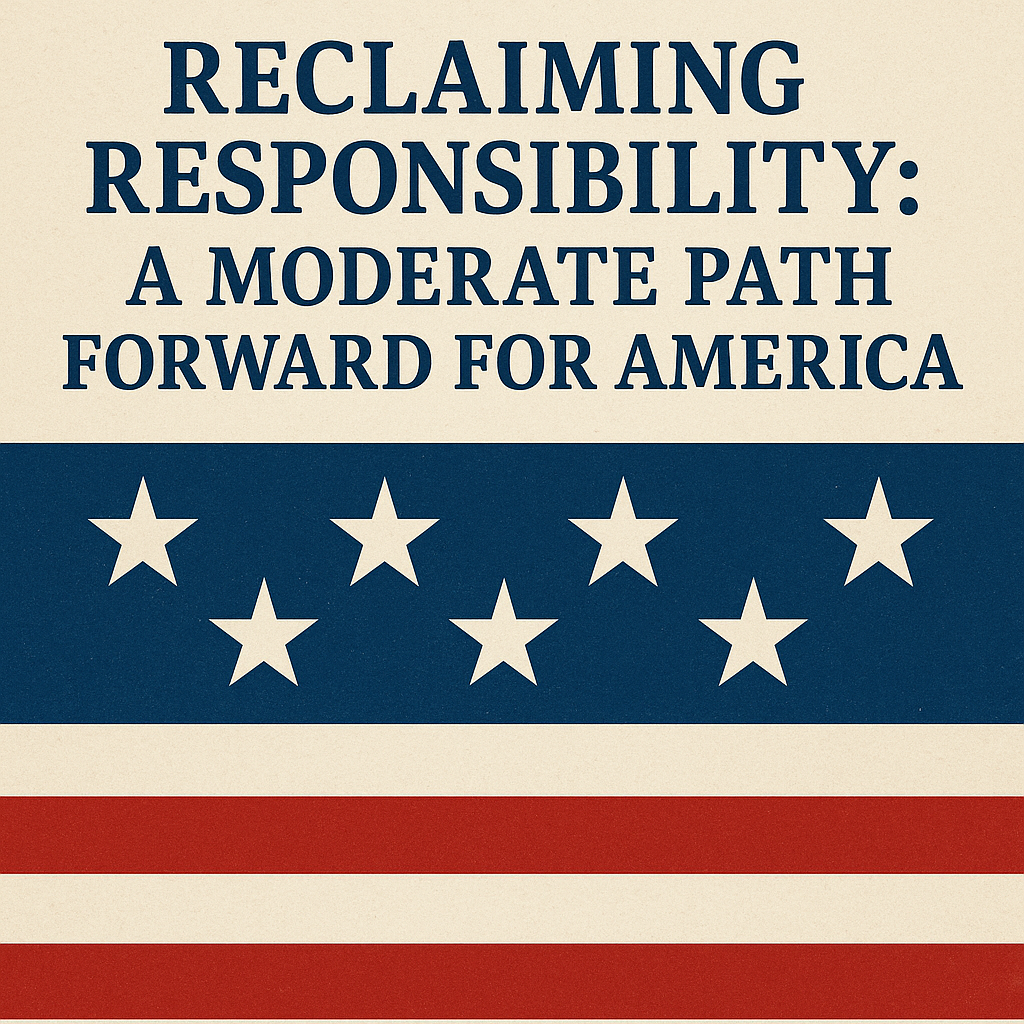
Reclaiming Responsibility: A Moderate Path Forward for America

As America faces an era marked by swift technological change, mounting economic challenges, and cultural polarization, the question of who bears responsibility for shaping the nation’s future becomes more urgent than ever. Critics argue that the prevailing political discourse often devolves into blame-shifting and partisan rhetoric, hampering meaningful progress. Yet, there is a growing movement calling for a moderate path forward—one rooted in pragmatic responsibility and shared accountability. This approach recognizes that America’s strengths lie not in abandoning tradition or dismissing innovation, but in harmonizing these elements to forge a resilient, cohesive society capable of confronting tomorrow’s uncertainties.

Proponents of this moderate outlook emphasize that restoring responsibility begins with acknowledging the interconnected nature of economic, social, and political spheres. For example, analysts suggest that embracing a balanced view of free enterprise and prudent regulation can foster sustainable growth without sacrificing individual freedoms. Economists like Nobel laureate Edmund Phelps have argued that responsible capitalism—which includes fair labor practices, environmental stewardship, and corporate accountability—serves as the backbone of a thriving nation. Critics also highlight the importance of civic responsibility, urging the younger generation to actively participate in democratic processes and community building, thereby reinforcing the social fabric that binds citizens together in shared purpose.

However, cultivating a culture of responsibility requires more than just policy prescriptions; it demands a cultural shift grounded in respect, accountability, and a recognition of common interests. This entails rethinking narratives that foster division and instead promoting figures who model moderation and integrity. As historian David McCullough once noted, the strength of America has historically stemmed from its ability to galvanize diverse groups around common goals, rather than succumb to factionalism. By focusing on practical solutions rooted in fact and shared values, Americans can navigate the tumult of modern politics with integrity and purpose, acknowledging that progress often arises from difficult compromises and collective effort.

Peering into the horizon, the challenge for the nation is to forge a path that isn’t swayed by extremes, yet remains dynamic enough to adapt and thrive. The weight of responsibility does not rest solely on the shoulders of leaders, but upon all who call this land home—each citizen, educator, entrepreneur, and policymaker. As this great experiment of democracy marches forward, one must ponder whether America will rise as a beacon of collective responsibility or stumble into the shadows of neglect and disunity. The choice lies in embracing a moderate, balanced, and steadfast approach—one that recognizes responsibility as an enduring pillar of hope, a guiding star amid the storm, and the very essence of what turns a nation’s destiny from fleeting dust into an enduring legacy. Forever, the soul of this country beckons us to act, to restore, and to elevate a shared responsibility—lest the annals of history record our silence as the moment when the mighty lost their way, and the promise of liberty faded into the dusk.”

Letitia James Claims Trump’s Using Justice System for Personal Gain—US Politics in Flux

Global Geopolitical Tensions Escalate Amid U.S. Political Turmoil

In an era marked by deepening international instability, recent developments in the United States underscore how internal political strife can reverberate globally, challenging the delicate balance of power and alliance. As the nation grapples with a series of political indictments and legislative deadlocks, the flames of foreign policy crises threaten to ignite broader conflicts, strategically shifting the world’s geopolitical landscape.

The indictment of Letitia James, the New York attorney general, exemplifies the ongoing strategy by President Donald Trump to weaponize the justice system against political rivals. Critics argue that this is a clear demonstration of how internal upheaval in the United States can be exploited to weaken its standing on the global stage. International analysts highlight that such internal conflicts diminish the U.S.’s moral authority, especially as it seeks to navigate crises like the Middle East turmoil or challenges from rival superpowers. Moreover, President Trump’s efforts to rival his previous diplomatic achievements, such as the contentious support for Israel with troop deployments and the failure to secure a Nobel Peace Prize, reflect a nation that is increasingly unpredictable and divided—a reality that complicates U.S. international commitments at a time of rising global tensions.

Meanwhile, the U.S.-Israel alliance faces new tests as American troops, initially deployed to support a ceasefire monitoring mission, have become a focal point of international concern. The decision to send 200 troops to Israel underlines the U.S.’s urgent pursuit to project power in the region after years of instability, but it also raises questions about escalation. Meanwhile, federal courts across the nation have issued rulings that hamper the deployment of National Guard troops, highlighting how domestic unrest can threaten international peace initiatives. These legal battles exemplify the ongoing struggle between legal authority and executive powers, revealing a nation where internal legal conflicts threaten to spill over into global diplomatic spheres.

The geopolitical impact becomes even more apparent as the world witnesses the U.S. remain deadlocked on domestic legislative issues: a government shutdown that not only compromises its internal stability but also dilutes its influence abroad. The Senate’s inability to pass crucial defense and budget bills signals to allies and adversaries alike that America’s commitments are shaky at best. Additionally, the warning from the head of America’s largest bank about the >possibility of a market crashem> underscores the rising economic instability that inevitably impacts nations worldwide. As international organizations observe these developments, the consensus among global taxonomies and think tanks is that the USA’s internal chaos emboldens competitors like China and Russia, who view the disarray as a strategic advantage.

As history continues to unfold, the lingering shadow of internal U.S. conflict raises a sobering question: How much longer can the world’s most powerful democracy maintain its gravitational pull without risking a broader collapse? The stages are set—alliances are tested, and the nation’s internal fissures threaten to become cracks that could fracture the global order. In this moment, the weight of history presses heavy on the collective conscience of nations across the globe, awaiting the next chapter in an unfolding saga of power, betrayal, and the relentless pursuit of control.

Nobel Peace Prize 2025: María Corina Machado Recognized for Defending Democracy in Venezuela

Global Impact of the 2025 Nobel Peace Prize: A Reflection of Shifting Geopolitical Currents

In a move that has resonated across continents and stirred debate among international observers, María Corina Machado, Venezuela’s most prominent opposition leader, was announced as the recipient of the Nobel Peace Prize 2025. Her recognition is not merely a testament to her personal resilience but signals a broader geopolitical statement, emphasizing the importance of democratic advocacy amid worsening authoritarian regimes. The Norwegian Nobel Committee lauded her efforts for promoting democratic rights, yet critics and analysts argue that this year’s decision also subtly addresses pressing global conflicts and the wake of recent diplomatic fissures.

Historian and geopolitical analyst Dr. Jonathan Steele notes that the choice “strikes a chord in a world teetering on the brink of regional and global crises.” He highlights that current conflicts in Ukraine, the Middle East, and tensions surrounding US-Norway relations serve as the backdrop for this year’s award. The Norwegian committee, infamous for maintaining strict confidentiality about nominations, appeared to have intentionally sent a clear message — one of resilience and defiance in the face of authoritarianism. Meanwhile, the committee’s emphasis on “courage and integrity,” especially in a climate where global order appears fragile, underscores how *the Nobel Peace Prize is often a reflection of international moral resistance* against tyranny and violence, a view supported by international organizations assessing the shift in global realpolitik.

  • The committee’s recognition of Machado, who has been forced into hiding amidst threats for her activism, frames the award as a beacon of support for oppressed populations globally. Her statement that “this is an award for an entire movement” resonates with the international community’s understanding that democracy depends on persistent resistance and that fighting against authoritarianism is a universal cause.
  • In contrast, the decision to sideline controversial figures, notably former US President Donald Trump, who publicly lobbied for the prize, highlights the committee’s emphasis on moral clarity. As Nobel experts explain, this year’s choices are shaped not only by individual merits but also by *the geopolitical symbolism* they convey, especially as nations grapple with internal unrest and external threats.
  • Machado’s recognition is also seen as a quiet rebuke to Nicolás Maduro’s regime, which the committee describes as increasingly authoritarian — a judgment echoed by independent human rights groups. This stance reflects a broader international narrative casting Venezuela as a cautionary tale for autocracies, with the prize serving as a reminder how *authoritarian machinery crushes dissent and human rights*.

International organizations and democracy advocates alike interpret this event as a declaration of moral steadfastness—a call for nations to uphold principles of justice and human dignity during turbulent times. Yet, beneath the public accolades lies a complex diplomacy. The committee’s explicit acknowledgment of Machado’s sacrifices, combined with veiled criticisms of Maduro’s government, exemplifies how awards like these influence **geopolitical alignments** — potentially softening or hardening international responses to crises. As Dr. Stein concludes, *“The Nobel Peace Prize remains a potent tool in shaping the moral contours of international diplomacy, especially when conflicts threaten global stability.”* And in an era where the future remains unpredictable, these decisions are not just awards—they are signals in the ongoing chess game of world politics.

As history continues to unfold, the true significance of this year’s Nobel Peace Prize will be measured in how it sustains or shifts the global balance of power. From the streets of Caracas to the corridors of global power, the choices made today might just echo for generations, reminding us that in the struggle for peace, moral conviction remains a formidable force.

Is the Shutdown a Silver Lining? Your IPO Gets a Boost as Investors Jump In

SEC’s New IPO Fast-Track Strategy Signals Shifting Regulatory Landscape

In a move prompted by the recent government shutdown, the U.S. Securities and Exchange Commission (SEC) has introduced a significant procedural adjustment that could fundamentally alter the landscape of initial public offerings (IPOs). As detailed in official SEC press releases, companies now have the option to utilize an obscure automatic approval process—originally designed as a procedural backstop during regulatory staffing shortages—to expedite their IPO filings. Most notably, this process allows firms to bypass the traditional requirement of disclosing pricing information, signaling a disruptive recalibration of market transparency norms.

With approximately 90% of SEC staff furloughed, startups and late-stage tech firms can now file their IPOs and see them become effective after a mere 20 days—an unprecedented acceleration that could turn the tide of disruptive innovation in capital markets. While this automatic process always existed, its enhanced adoption during the shutdown underscores a broader industry trend: firms are increasingly willing to operate in regulatory gray zones to access capital swiftly. Although the SEC retains legal authority to demand amendments post-filing, the risk calculus shifts, empowering companies to prioritize speed and market entry over full disclosure. This raises questions about the future of market transparency and investor protection amid growing regulatory flexibility.

The business implications of this development are profound, spotlighting a potential paradigm shift that could upend traditional IPO models. Startups aiming for rapid market entry can now leverage this loophole to circumvent protracted review processes—perfectly aligned with the aggressive timelines pushed forward by visionary entrepreneurs like Elon Musk and Peter Thiel. Moreover, the move hints at a broader willingness within regulatory agencies to adapt in real-time to economic upheavals, a sign that disruption is extending beyond technology to encompass financial markets and regulatory frameworks. Major institutions such as Gartner and MIT’s Sloan School have emphasized that innovation often accelerates amid crisis, and this latest pivot exemplifies that dynamic.

However, strategic caution remains essential. While the immediate benefits are alluring for burgeoning companies, the potential long-term ramifications threaten to undermine investor confidence and market stability. Industry analysts warn that a sustained reliance on this ‘automatic’ approval process could lead to less rigorous oversight, fostering an environment ripe for speculative bubbles and market manipulation. As the regulatory landscape becomes more agile, the onus is on companies and investors alike to exercise vigilance — acknowledging that rapid capital access must be balanced against sustainable growth and long-term transparency. This regulatory flex illustrates a critical inflection point: the future belongs to those who innovate not only in technology but also in navigating the evolving terrain of governance and market integrity.

Looking ahead, the swift adoption of such policies signals that industries must remain alert to emerging opportunities and risks. As both regulators and market players adapt dynamically—propelled by technological advancements and shifting economic realities—the window closes quickly for those who hesitate. The coming months could redefine how America’s capital markets operate, emphasizing disruption, innovation, and strategic agility as key drivers in global competitiveness. For visionary entrepreneurs and investors, this moment embodies an urgent call to action: harnessing regulatory shifts to accelerate growth, while safeguarding the foundational principles of transparency and trust. The future belongs to the bold—those willing to lead through the chaos of change.

Social Media Auto Publish Powered By : XYZScripts.com