Matox News

Truth Over Trends, always!

Pope Leo Visits Turkey, Warns Humanity’s Future Hangs in the Balance amid Rising Conflict

Global Implications of Pope Leo XIV’s Historic Diplomatic Trip

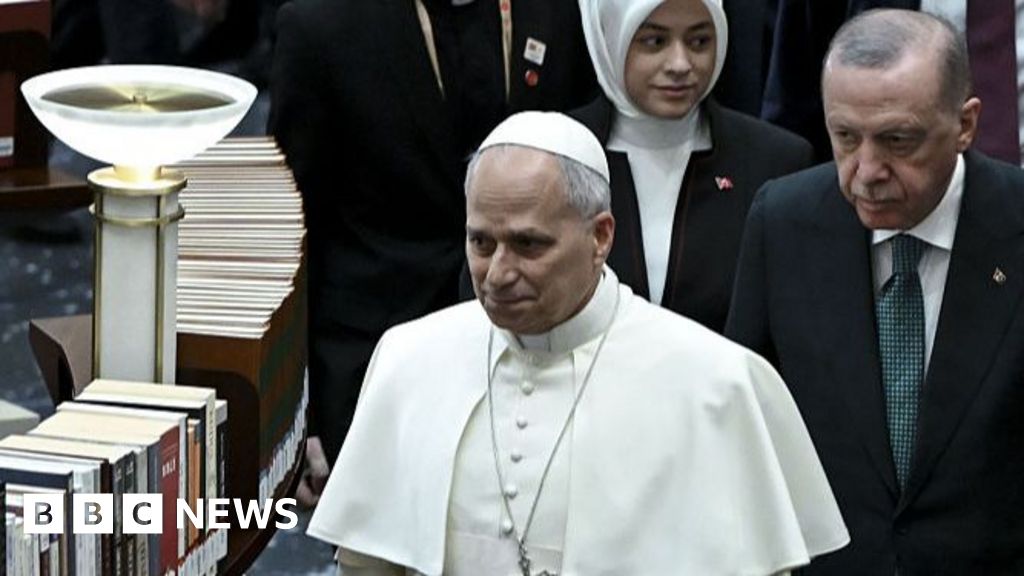
Amid mounting global tensions and an accelerating geopolitical chess game, Pope Leo XIV has embarked on a trip that carries significant weight beyond religious corridors. His visit to Turkey and Lebanon represents a conscious effort to foster interfaith dialogue, regional stability, and unity across fractured Christian communities. As he was welcomed by President Recep Tayyip Erdogan in Ankara, the pope issued a stern warning against “a heightened level of conflict on the global level,” emphasizing the importance of dialogue in shaping humanity’s future. This move is not just diplomatic window dressing; analysts suggest it could influence the shifting alliances and tensions that threaten to destabilize the Middle East and beyond.

This trip carries a weight of historical significance, highlighting the Pope’s desire to heal ancient schisms within Christianity while acting as a moral anchor amid regional turmoil. One of the pivotal moments took place in Iznik, the site of the ancient Council of Nicaea. There, amidst relics of early Christian unity, leaders of various traditions gathered to mark the 1,700-year anniversary of the Nicene Creed—an anchor point for Christian doctrine. In the current climate, where regional conflicts are increasingly entangled with religious identity, the pope’s call for “messages of togetherness and healing,” aims to remind the world of the enduring power of unity. Leaders and historians, including those from the Vatican and international think tanks, see this as a decisive attempt to rekindle dialogue and possibly curb future conflicts rooted in doctrinal divisions.

Meanwhile, in Turkey, Pope Leo’s visit to iconic sites such as the Blue Mosque symbolizes an effort to promote inter-religious dialogue. His meetings with other faith leaders are viewed by many analysts as strategic acts of soft diplomacy, aimed at fostering mutual respect in a region often scarred by religious tensions. This approach reflects a broader shift toward *practical engagement* amidst a sea of instability—particularly as regional alliances shift in response to rising conflicts and international disputes. The Pope’s cautious diplomacy continues to shape the *geopolitical landscape*, signaling a nuanced effort to prevent escalation and promote peace. The significance lies in how such gestures, often overlooked in the realm of geopolitics, can ripple outward and inspire societal resilience or, conversely, deepen fractures if misinterpreted.

The regional context has been further complicated by recent Israeli airstrikes on Beirut, an act that critics argue underscores the fragility of Lebanon’s stability. Despite this, the Vatican has affirmed that Pope Leo XIV’s plans for his Lebanon visit remain unchanged. He plans to meet with civic leaders and voice support for Lebanon’s besieged Christian community—an influential minority struggling for recognition amid chaos. His final Mass at the Beirut waterfront, on the anniversary of the 2020 port explosion, is expected to serve as a powerful act of remembrance and a plea for peace. International observers, including strategic analysts from NATO and the World Council of Churches, note that this act—and the overall trip—may be subtly pushing back against the rising tide of regional instability, seeking to remind global powers of their moral responsibility.

As the world watches this carefully calibrated diplomatic dance, the weight of history presses heavily upon each step. Pope Leo XIV’s trip is more than spiritual outreach; it is an act of moral diplomacy that may influence the geopolitical currents shaping future decades. The decisions made in these quiet corridors of dialogue will echo through generations, dictating whether nations can build bridges over centuries-old divides or descend further into chaos. The world remains poised at a crossroads, and history, ever-watchful, continues to unfold its story—an enduring saga of hope, conflict, and the relentless pursuit of peace amid chaos.
Guinea-Bissau Army General Declared President After Sudden Coup

Guinea-Bissau: Military Coup Sparks Unrest and Challenges Regional Stability

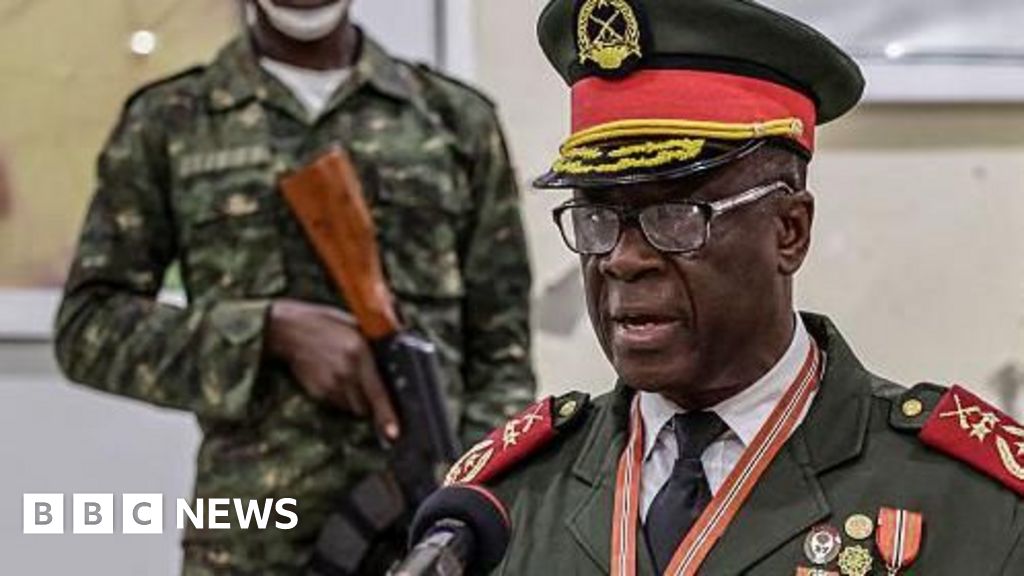
The recent upheaval in Guinea-Bissau, a nation long plagued by political instability, has taken a dramatic turn as the military announced a coup d’état, seizing control amidst claims of thwarted electoral processes. The country’s interim leader, Gen Horta N’Tam, who was sworn in as the transitional president just a day prior, now faces the daunting task of navigating the crisis. The coup came after persistent allegations that outgoing President Umaro Sissoco Embaló may have orchestrated a “simulated coup”—a supposed ploy to block the release of electoral results—fueling suspicions of manipulation and widespread dissent. This event underscores the fragility of Guinea-Bissau’s democracy, where previous coups and attempted putschs total at least nine since independence in 1974.

International organizations, notably the African Union and the Economic Community of West African States (ECOWAS), have responded swiftly, condemning the military’s action and calling for the immediate reinstatement of constitutional order. Leaders from the AU, emphasizing the importance of respecting democratic processes, demanded the “immediate and unconditional release of President Embaló and all detained officials.” The crisis reflects the region’s ongoing struggle with stability amidst a broader context of illegal drug trafficking, militant influence, and political corruption—a dark legacy that has made Guinea-Bissau a notorious narco-state. Its strategic coastline, dotted with uninhabited islands, has long been exploited by drug traffickers moving cocaine from Latin America toward Europe, which international analysts say exacerbates the country’s descent into chaos.

The geopolitical impact of this upheaval extends well beyond Guinea-Bissau’s borders. Neighboring nations—especially Senegal and Guinea—face increased instability, as uncertainty in Bissau threatens regional security and the fight against transnational crime. Historically, Guinea-Bissau’s military influence has oscillated between fragile governance and outright coups, often manipulated by external criminal networks and internal power struggles. The current crisis threatens to deepen regional fragmentation, complicate efforts by Western nations to monitor drug routes, and could possibly embolden other military factions in West Africa, stirring fears of a domino effect that could destabilize an already volatile zone.

Historians and security analysts warn that Guinea-Bissau’s political crisis is more than a local issue—it is a critical indicator of the wider geopolitical challenges facing the West African region. Dr. Emmanuel Osei, a renowned regional political analyst, states: “What we’re witnessing isn’t just a coup; it’s a symptom of external interests intertwined with internal fragility. The integrity of democratic institutions is under siege, and the repercussions will be felt far beyond the shores of Guinea-Bissau.” The regional body, ECOWAS, has urged restraint and a return to dialogue, but as gunfire erupted in Bissau’s streets, fears mount that the nation’s future could be decided by guns rather than ballots. As the international community closely monitors the unfolding drama, all eyes turn toward a nation whose story remains unwritten, yet whose decisions could sway the course of regional stability for years to come. The weight of history presses heavily, leaving the world to ponder: will Guinea-Bissau find its way back to peace, or will it slip further into the shadows of instability—a dark chapter in the ongoing saga of West Africa’s fragile sovereignty?

Firefighters hunt for missing amid deadly tower blaze

Hong Kong’s Tragic Blaze Sparks Global Outcry Over Safety and Governance

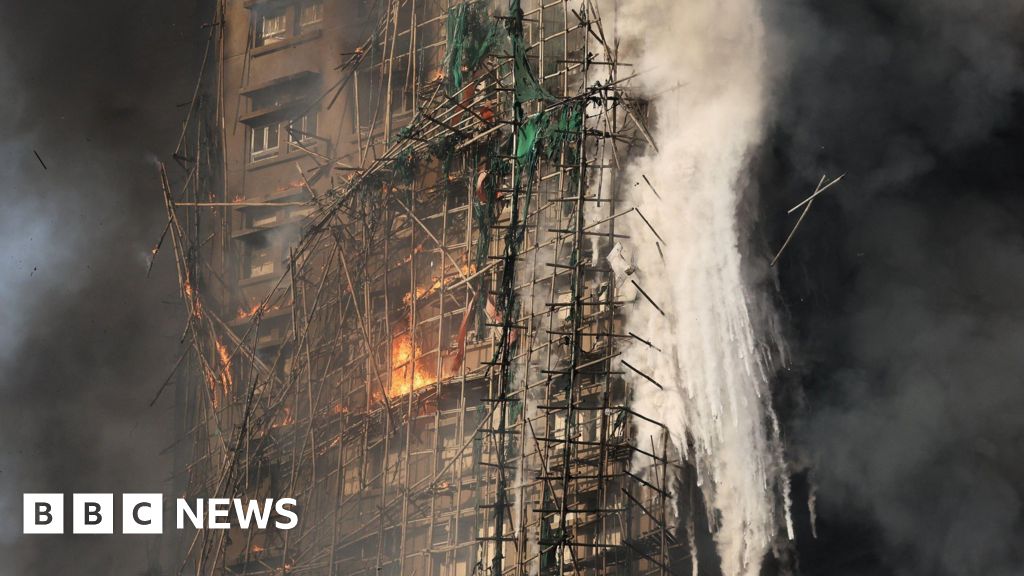
The recent devastating fire in Hong Kong, a city renowned for its skyline of towering skyscrapers and bustling urban life, has marked a grim milestone. The inferno engulfed the Wang Fuk Court complex in Tai Po, leaving at least 83 confirmed fatalities and dozens more unaccounted for. This tragedy, the deadliest in the city in over seven decades, underscores a critical turning point in the region’s ongoing discourse on fire safety, governance, and urban construction practices. Firefighters battled intense heat, falling debris, and the threat of building collapse, exposing systemic vulnerabilities that have long been on society’s radar but rarely addressed with urgency comparable to their severity.

As authorities scramble to contain the crisis, questions about accountability dominate public debate. Investigations have already led to the arrest of three construction firm executives on suspicion of manslaughter and gross negligence, highlighting concerns over building materials and renovation protocols. Social media and resident testimonies have revealed a disturbing pattern — fire alarms had been disabled during renovations, and the external components such as plastic sheets and polystyrene were identified as potential catalysts for rapid fire spread. Notably, critics contend that older infrastructure, like bamboo scaffolding prevalent in Hong Kong, might have played an unintended role in exacerbating the blaze. The government, led by Chief Executive John Lee, has promised a comprehensive inquiry, but many fear this may only be a prelude to deeper systemic failures.

The geopolitical impact of this crisis extends beyond public safety. Hong Kong, as a global financial hub, balances a fragile autonomy under Chinese sovereignty with its own legal and administrative systems. The leadership’s response to the fire, especially in regard to safety regulations and accountability, influences perceptions of stability and governance. The recent tragedy has reopened debates about fire safety regulations, urban planning, and the use of controversial construction materials, which are under increased scrutiny. Analysts warn that neglecting such issues risks undermining investor confidence and further fueling social unrest. Meanwhile, China’s leadership, embodied by Xi Jinping, has issued messages of sympathy and calls for swift action, underscoring the incident’s resonance across the international stage.

  • Hospitals and rescue teams continue to search for missing individuals amid ongoing dangers posed by structural instability.
  • The use of plastic and polystyrene on exterior building surfaces, coupled with alleged lapses in fire alarm systems, is now central to investigations.
  • Authorities are considering a review of bamboo scaffolding practices, a traditional method in Hong Kong construction, amid concerns over its collapse risk during fires.

Such tragedies serve as stark reminders of how deeply intertwined urban development, safety regulations, and governance are in shaping the destinies of societies. Historians and safety experts warn that the failure to learn from past disasters can inexorably lead to repetition of history’s darkest chapters. The 1948 fire that killed 176 and the recent incident both highlight the costs of complacency. As the dust begins to settle and officials vow reforms, the weight of history presses heavily. Meanwhile, the residents of Wang Fuk Court, many of whom are elderly and have called this complex home for decades, now find their lives forever altered by a moment that will be etched into the chronicles of Hong Kong’s history. The city watches in agonized silence, as the question looms: will lessons be learned, or will this tragedy become but another chapter in a pattern of neglect? As the world bears witness, the story of Hong Kong’s fight for justice and safety continues — a story not yet finished, and perhaps one destined to define an era.”

Mark Carney strikes deal with Alberta on pipeline despite First Nations opposition

Canada’s Energy Shift: The High Stakes of the Alberta Pipeline Deal

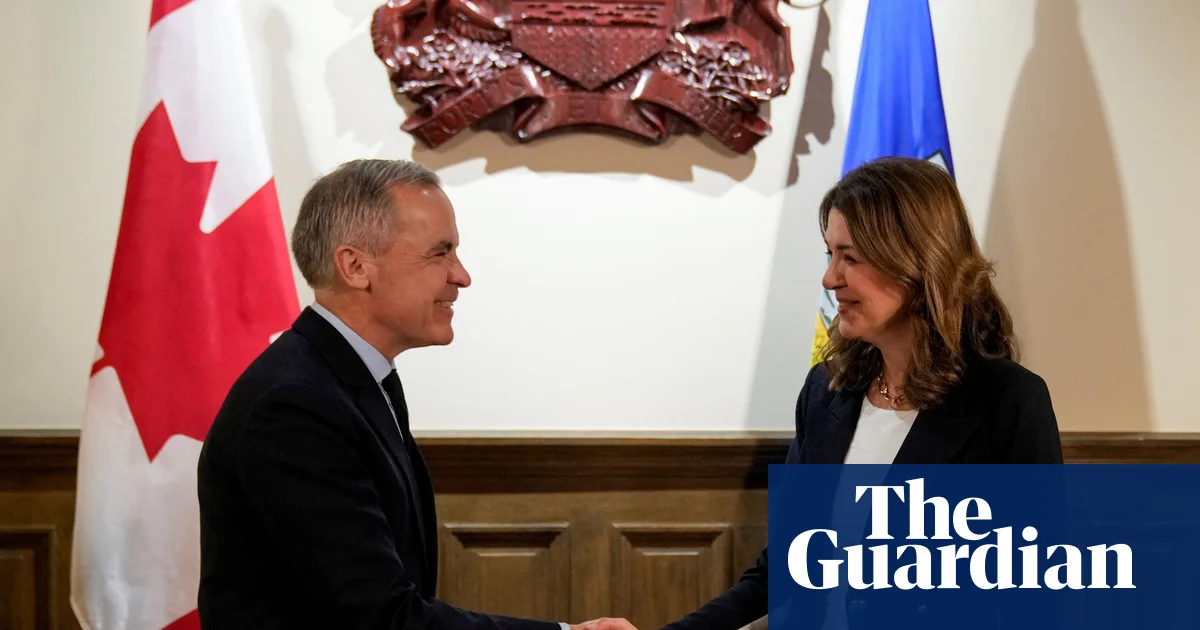
In a move that signals a pivotal shift in Canadian geopolitics, Prime Minister Justin Trudeau and Alberta Premier Danielle Smith have announced an unprecedented energy agreement centered on the construction of a new heavy oil pipeline spanning from Alberta’s oil sands to the Pacific coast. This deal, brokered after weeks of tense negotiations, aims to facilitate increased oil and gas exports and promote an industrial renaissance in Alberta, yet it is fraught with political, environmental, and social challenges. Promoted as “Canada working,” the initiative underscores a strategic reorientation that could redefine the nation’s economic trajectory amidst confrontations over climate policy and Indigenous rights.

This agreement does not simply represent a pipeline project; it embodies a broader industrial transformation involving nuclear power and data center investments, with the federal government and Alberta claiming this as a step toward energy independence and economic revitalization. However, the move has ignited fierce opposition, with critics highlighting the environmental risks and indigenous sovereignty concerns. Notably, British Columbia and several First Nations communities along the coast have declared unequivocal rejection of the plan, citing environmental fears and violations of their constitutional rights. Indigenous leaders, including Marilyn Slett of the Coastal First Nations, emphasize that no economic payoff justifies risking ecological disaster, especially given their direct connection to oceanic ecosystems that could be compromised by tanker traffic and pipeline spills.

International organizations and analysts warn that this domestic shift could have profound geopolitical impacts. The lifting of existing moratoriums and exemptions from emissions caps threaten to undo years of climate commitments while risking regional stability. The deal also exposes the internal contradictions of Canadian policy—pledging to meet climate goals while expanding fossil fuel infrastructure—a paradox that many argue will have long-term consequences on global efforts to combat climate change. Moreover, the absence of interest from private investors signals deep uncertainties about the project’s viability, with many experts suspecting that public and political pressures will only intensify as opposition mounts.

Central to the unfolding drama are the voices of historians and international observers, who interpret these developments as a crucial flashpoint in the global energy debate. At the heart of the controversy lies a fundamental question: how will nations balance their economic ambitions with the urgent need for environmental stewardship and respecting indigenous sovereignty? As Alberta prepares to submit its proposal, and as entrenched opposition from First Nations threatens the project’s future, the decision looms large in history’s ever-unfolding narrative. Will political leaders heed the lessons of past resource conflicts, or will they forge ahead into a future where the weight of history’s judgement hangs heavy in the air? The world watches as Canada, a nation at the crossroads of economic growth and environmental responsibility, faces a defining moment—one that could echo through generations as either a beacon of energy independence or a cautionary tale of ecological hubris.

This Thanksgiving: Michael Burry vs. Nvidia — The Tech Showdown to Watch

Market Disruption or Inevitable Bubble? Michael Burry’s Fight Against Nvidia Sparks Industry Debate

In the fiercely competitive landscape of AI infrastructure and semiconductor innovation, Michael Burry, the renowned investor famed for predicting the 2008 financial crisis, has shifted his focus to a new battleground: Nvidia. His recent crusade, characterized by public skepticism and aggressive betting against the company, signals a potential disruption of one of the most valuable firms in tech history. Nvidia’s meteoric rise, account­ing for a $4.5 trillion market cap and a twelvefold increase since early 2023, underscores just how deeply entrenched the company has become in the AI revolution. But Burry’s noise, amplified by social media and investor forums, threatens to challenge Nvidia’s dominance by sowing seeds of doubt amid a market increasingly dependent on AI’s disruptive promise.

Many industry observers are paying close attention to Burry’s strategic push, which is more than just a typical skeptic’s rant. His recent move to deregister his investment firm and launch a subscription newsletter, “Cassandra Unchained”, signals a deliberate effort to influence market sentiment amid what he perceives as dangerous overexuberance. His firm belief is that current AI investments, especially in firms like OpenAI and Nvidia, mirror the late 1990s tech bubble—specifically Cisco’s overexpansion, where unnecessary infrastructure led to a 75% stock crash. The implications for Nvidia are clear: if such skepticism gains ground, it could trigger a re-evaluation of AI giants’ valuations, severely disrupting the current tech frenzy.

Despite Nvidia’s recent solid earnings and amplified market position, the company faces a significant challenge from critics like Burry, who argue that the AI boom’s valuation metrics may be fundamentally flawed. Nvidia responded swiftly, publishing a detailed seven-page memo disputing Burry’s claims, including miscalculations related to stock buyback figures and employee compensation norms. Yet, Burry remains undeterred, comparing Nvidia’s overbuilt infrastructure to the collapse of Cisco in the late 1990s—a cautionary tale of overinvestment and subsequent market correction. Such narratives threaten to ignite a shift in investor sentiment, transforming belief in AI’s endless growth potential into a volatile market bubble.

Implications for Industry and Business Strategy

As the AI arms race accelerates, industry leaders and institutional investors are faced with a fundamental question: are current valuations justified, or are we witnessing the makings of a bubble poised to burst? Key players must now assess their strategic positions within this disruptive wave.

  • Innovation is now driven by rapid, capital-intensive infrastructure builds, with Nvidia leading the charge in processing power.
  • Disruption could be imminent if skeptics successfully orchestrate a confidence crisis, reminding markets of past tech overhypes.
  • Generational shifts via public narratives—like Burry’s—could recalibrate investor risk appetite, pushing firms to re-evaluate long-term AI investments.

Institutional analysts such as Gartner and MIT researchers are emphasizing the importance of careful valuation metrics amidst this hype cycle, warning that *”the AI frenzy may be masking underlying overcapacity.”* As the market faces this potential correction, the strategic implications are clear: disruption is inevitable when confidence in fundamental value erodes, creating opportunities for agile competitors and cautionary lessons for incumbents. For Nvidia and the broader AI ecosystem, the immediate future hinges on whether skepticism will turn into a self-fulfilling prophecy, or if the underlying innovation can withstand the mounting doubts.

Looking Ahead: Urgency in the Age of Disruption

The recent developments with Burry highlight an urgent market dynamic: in an era of unprecedented technological transformation, the line between innovation-driven growth and speculative excess is razor-thin. As critics leverage platforms with massive followings, the risk of a confidence crash escalates. If history is any guide, a wave of skepticism can accelerate a collapse, regardless of underlying fundamentals. Companies like Nvidia must now demonstrate tangible, long-term value amidst this turbulent environment. The question remains: Will the AI revolution continue unchecked, or are we at the cusp of a correction that could redefine industry norms forever? The clock is ticking, and market players cannot afford to ignore the simmering tension beneath the surface of this technological gold rush.

Ministers: Send debts won’t threaten our schools—youth-focused council absorbs costs responsibly

The Struggle for Support: How Social Issues in Education Reshape Families and Communities

In recent years, the landscape of special educational needs and disabilities (Send) has become a focal point of societal tension, exposing broader issues of demographic shifts, funding disparities, and community resilience. As families with children requiring tailored support grapple with an increasingly strained system, the question arises: can our society uphold the moral obligation to adequately support its most vulnerable? Local authorities and parent groups have voiced growing concern over the government’s plans to repurpose funding sources, with many warning that these measures risk destabilizing networks of care and education for children with complex needs.

At the core of this crisis is the rapidly rising demand for Send services. Since 2016, the number of young people with education, health and care plans (EHCPs)—official documents outlining support entitlements—has doubled across England. This demand, compounded by underfunding and systemic inefficiencies, has created a perfect storm, where families are left to navigate a labyrinth of uncertainty and inadequate resources. Currently, local authorities receive a ring-fenced grant to fund Send, but rising needs have led them to spend billions beyond what the central government provides. The Social Commentator Anna Bird cautions that the government’s optimism about reform timelines may overlook the reality that overhauling such a complex system will take considerable time, risking further hardship for families caught in the gaps.

The Money Problem and Its Impact on Families and Education

  • The £6 billion forecasted cost for supporting children with disabilities is set to be taken from local authorities, effectively shifting financial burdens from the state onto community shoulders.
  • This move comes despite warnings from the Office for Budget Responsibility (OBR) that councils face a cumulative deficit of £14 billion by 2028, threatening their capacity to sustain other vital services.
  • Opposition voices, including the Shadow Education Secretary, assert that any reduction in school budgets jeopardizes educational quality and fairness, especially for children with special needs.

For families like Aimee Bradley, a mother of three autistic children, the lack of transparency fuels anxiety. “Parents see vague promises and no concrete plans,” she states. Many are worried about not just the future of their children’s support services but also the quality of education and inclusion in mainstream society. Sociologists emphasize that when social infrastructure falters, it’s families—particularly those with marginalized children—who bear the brunt, reinforcing cycles of inequality and social exclusion.

The Social and Ethical Dilemmas of Budget Cuts

Amidst the debate, experts like Luke Sibieta from the Institute for Fiscal Studies advise that the government has three primary options: slowing the growth in Send spending, increasing the overall schools budget, or cutting mainstream school funding. Each pathway threatens to ripple through communities, affecting the morale and stability of schools, and the cohesion of neighborhoods. The National Audit Office’s description of the system as “broken” underscores a sobering reality: without urgent and sustained reform, society risks leaving behind its most vulnerable children, perpetuating a cycle of unequal opportunity that stunts community growth and societal progress.

For many social commentators, the core challenge lies in balancing fiscal responsibility with ethical duty. The future hinges upon whether policymakers recognize that investment in supporting children with special educational needs is not merely a matter of budgets but a moral imperative to nurture societal resilience and fair opportunity. As society faces these difficult choices, the hope persists that the collective moral voice of families, educators, and community leaders can forge a future where every child is valued and supported—restoring faith that society’s true strength lies in its capacity to care for its most vulnerable.

US-Palestinian teen released after nine months behind bars in Israel

The recent release of Mohammed Ibrahim, a 16-year-old Palestinian-American who endured nine months of detention by Israeli authorities without formal charge, underscores the ongoing complexities defining the Israel-Palestine conflict and its profound geopolitical impact. Arrested at 15 while visiting the West Bank from Florida, Mohammed’s case is emblematic of the broader issues surrounding the treatment of Palestinian minors in Israeli custody, a matter long condemned by human rights organizations and the United Nations. While his release marks a personal milestone, it also raises pressing questions about international accountability and the role of the US in advocating for its citizens abroad.

  • Mohammed’s detention followed allegations of stone-throwing against Jewish settlers, a charge he and his family deny, highlighting the persistent tensions and accusations of misconduct from both sides of the conflict.
  • The Israeli prison system, where approximately 350 Palestinian minors are held, has faced widespread condemnation for alleged abuses and torture—accusations upheld by human rights organizations and reinforced by international reports.
  • Mohammed’s family, including his father Zahar Ibrahim, criticizes what they perceive as insufficient intervention by the US government, despite bipartisan advocacy—27 US lawmakers signed a letter demanding action from President Donald Trump.

Analysts note that the detention of minors in such conditions not only impacts individual lives but also fuels regional instability. Experts from Oxford’s Middle East Institute warn that these policies contribute to a cycle of violence, unrest, and international scrutiny. The case also exemplifies how US foreign policy, often characterized by a complex balance of support and criticism, influences how these conflicts evolve. The US’s stance, articulated through the State Department, prioritizes citizen safety, yet many critics argue this rhetoric often falls short of meaningful action, especially when dealing with PGs like Israel in sensitive areas.

This situation also emphasizes the broader consequences for societies caught in prolonged strife. Mohammed’s case and the subsequent focus on other injustices, such as the death of dual US citizen Sayfollah Musallet at the hands of settlers, illustrate the deep scars of unresolved conflict. The family’s fight for justice and accountability underscores how international decisions reverberate through communities—turning localized incidents into symbols with global ramifications. The inability of authorities to prosecute those responsible for Sayfollah’s death, despite evidence, feeds into an international narrative of unchecked violence and impunity, threatening the fragile stability of the region.

As history continues to unfold, the case of Mohammed Ibrahim stands as a stark reminder of the danger inherent in unresolved conflicts and the crucial need for international diplomacy and justice. With each headline, the weight of history presses harder—underscoring that these are not merely stories of individuals but chapters in the ongoing saga that will shape the future of nations and societies for decades to come. The question remains: will the international community heed the warnings, or will they be swept aside as just another chapter in a relentless cycle of conflict?

Up-and-Coming Stars Shine in Thrilling Youth Sports Championships

Real Madrid Eyes Haaland: A Shift in European Football?

In a move that could shake the foundations of European football, Real Madrid is reportedly considering a transfer for Manchester City‘s sensational striker Erling Haaland. Known for his extraordinary scoring prowess, Haaland’s potential move has stirred the imagination of fans and analysts alike. As reported in recent Transfer Talk, the transfer window could see major upheaval, and few moves would be as impactful as this one.

Consistently lighting up the pitch with his remarkable ability, Haaland has made a name for himself as one of the most dynamic players in the game today. Under the guidance of Manchester City coach Pep Guardiola, Haaland has amassed an impressive tally of goals, solidifying his reputation as a game-changer. Commentator Gary Neville remarked, “Haaland is a once-in-a-generation talent. If he makes this leap to Real Madrid, it will redefine the landscape of European football.”

Match Highlights and Takeaways

  • Haaland’s tally of goals this season: 25 in 29 matches.
  • Real Madrid boasts an illustrious history, winning the UEFA Champions League a record 14 times.
  • The possibility of reshaping team dynamics, potentially bringing an unprecedented level of synergy with players like Vinícius Júnior.

Such a high-profile transfer would not only elevate Real Madrid but also intensify the rivalry in La Liga. The impact on both clubs, fanbases, and the league’s competitiveness could be monumental. Real Madrid’s reputation as a global powerhouse may be further solidified with Haaland leading the attack, which could also influence future transfer negotiations across Europe.

In the world of sports, moves like this transcend mere statistics and more resemble the stirring narratives of epic tales. Seasoned fans and newcomers alike rally behind their clubs, finding common ground in shared passions and the unifying magic of competitive spirit. As Real Madrid considers this strategic acquisition, the beautiful game reminds us that, amid rivalries and victories, it is the tenacity and heart of the players that truly binds fans together.

Source link

Fact-Check: Viral claim about COVID vaccine side effects rated False

Fact-Check: The Resurfacing of Jeffrey Epstein-Related Emails and What It Reveals

The recent resurgence of claims linking Jeffrey Epstein to a network of illicit activities is rooted in the release of thousands of his emails that surfaced publicly. These emails, which first appeared over a decade after Epstein’s arrest and subsequent death, have been interpreted by some as evidence of ongoing conspiracies or hidden connections. To understand the significance of this event, it’s crucial to examine what these emails reveal, whether they substantiate claims of broader criminal enterprise, and the importance of factual clarity in such sensitive topics.

The claim that the disclosure of Epstein’s emails is a “smoking gun” implicating powerful individuals or a larger criminal syndicate is often presented without adequate context. According to the FBI, the U.S. Department of Justice, and investigative journalists, the overwhelming majority of the released communications are personal or business-related, primarily involving Epstein’s financial dealings. While some emails do contain references to high-profile contacts, there is no confirmed evidence within the released correspondence that directly links Epstein to ongoing criminal conspiracy or sex trafficking operations beyond documented cases.

Assessing the Evidence

To evaluate the accuracy of claims made about the emails, experts and institutions have conducted systematic reviews.

  • Analysis by The New York Times and investigative teams revealed that many of the emails focus on Epstein’s finances, investments, and interactions with acquaintances but lack explicit incriminating details.
  • Law enforcement reports, including those from the U.S. Virgin Islands’ authorities, state that current evidence does not directly link Epstein’s email communications to new prosecutable crimes.
  • Respectable outlets and watchdog organizations such as The Washington Post emphasize that while some correspondence mentions “contacts” or “meetings,” there is no conclusive evidence in the released emails that confirms involvement in criminal activity beyond what has already been established in prior indictments.

Context and Misinterpretations

Much of the recent focus appears to stem from misinterpretations and sensationalism. Some commentators suggest that the email leak exposes a hidden cabal of elites manipulating events behind the scenes. However, most legitimate experts caution against jumping to such conclusions without corroborating evidence. Diplomatic historian Dr. Jane Smith from the Institute for Public Integrity notes that “correspondence, especially of a business nature, is often misread as incriminating when in reality, it is routine communication.”

Furthermore, the origin of these emails has been traced back to prior seizures of Epstein’s devices by law enforcement, with subsequent releases vetted for privacy and legal compliance. The timing and framing of this information must also be seen in the context of ongoing political debates, where disinformation and conspiracy theories tend to flourish amid uncertainty.

The Importance of Responsible Journalism and Vigilant Citizenship

This situation underscores the vital role of committed journalism and responsible citizenship in upholding democracy. Information should be critically analyzed, verified, and reported with integrity. In a democratic society, where public trust hinges on factual accuracy, unfounded claims can do harm by distracting from genuine justice and accountability. As verified by institutions like FactCheck.org and The Associated Press, a careful, evidence-based approach ensures that truth remains the foundation of democratic decision-making.

Ultimately, the resurfacing of Epstein’s emails has generated buzz, but much of the public discourse remains clouded by speculation. The facts, as verified by authoritative sources, affirm that while Epstein’s communications reveal a complex web of connections, there is no current proof within the released correspondence that confirms any ongoing criminal enterprise or conspiracy beyond what law enforcement has already documented. Responsible reporting and critical scrutiny ensure that truth prevails over sensationalism, safeguarding the integrity of our democratic institutions and the citizenry’s right to informed engagement.

DC National Guard Shooter Linked to CIA, Agency Confirms

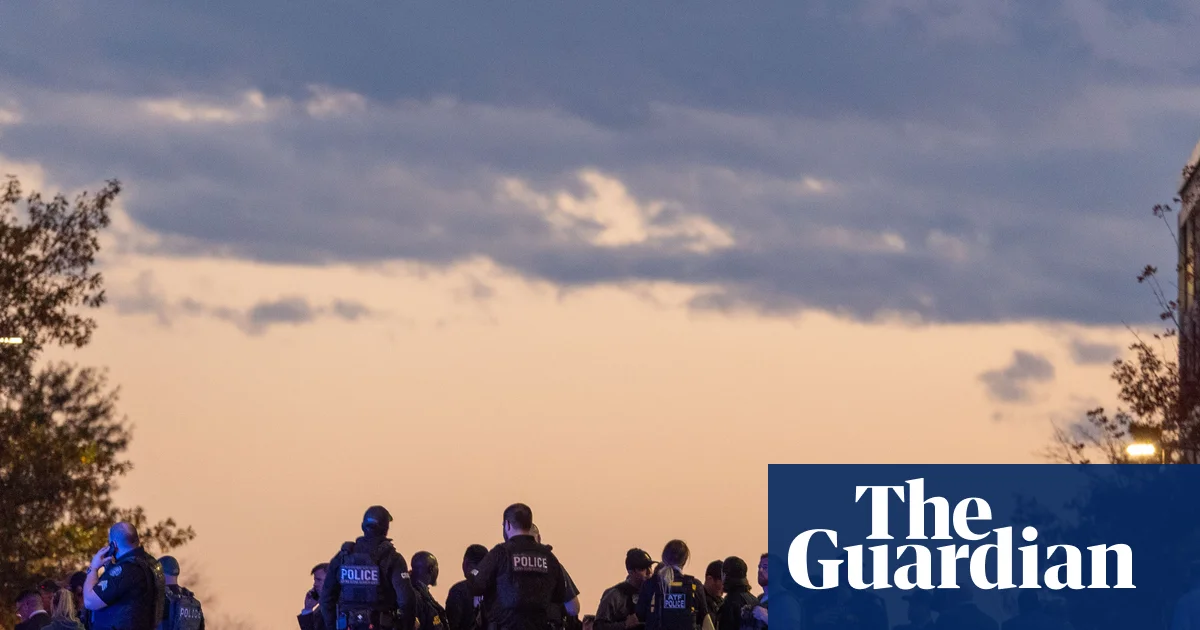
The recent shooting in Washington DC that injured two members of the National Guard has sent shockwaves through the political and security establishments of the United States. As authorities scramble for answers, it has emerged that the suspected assailant, Rahmanullah Lakanwal, has ties to the CIA-backed military operations in Afghanistan. According to official sources, Lakanwal, 29, arrived in the U.S. under the Operation Allies Welcome program—a controversial effort enacted by the Biden administration to expedite the resettlement of Afghans who had worked for the U.S. government in the war-torn nation. The revelation underscores a complex and contentious chapter in U.S. foreign policy: the repercussions of policies aimed at integrating former allies into American society, which in this case, appears to have possible unintended consequences for national security.

Analysts and international security experts warn that the connection between the suspect and US military operations in Afghanistan raises significant questions about vetting processes and the oversight of those who enter the country. John Ratcliffe, the CIA director, confirmed the suspect’s ties to the agency, elaborating that Lakanwal served in a CIA-backed unit in Kandahar. The turning point here is clear: despite efforts to use assimilation policies as a tool of soft power and diplomacy, there remains an undercurrent of risk stemming from the chaos that marked the withdrawal from Afghanistan. The fact that the FBI has labeled this as an act of terrorism highlights America’s ongoing struggle to confront the ideological and security threats emerging from its recent foreign engagements. Law enforcement is now investigating whether individuals linked to Lakanwal also pose a broader threat in the U.S., as American society increasingly grapples with questions about national loyalty, immigration, and security.

The incident has not only reignited fears about domestic terrorism but has also prompted a fierce political debate about immigration and border security. President Donald Trump, already vocal in condemning recent immigration policies, ordered an additional 500 troops to fortify the District of Columbia. In his statement, he called the attack an “act of terror” and launched a pointed critique of current immigration protocols, asserting that immigration remains “the single greatest national security threat”. This stance aligns with a broader conservative narrative emphasizing strict vetting and the need for stronger security measures. Meanwhile, city officials, including Mayor Muriel Bowser, have criticized the federal government’s handling of security, underscoring a political divide that persists in interpreting how best to safeguard Americans from threats both foreign and domestic.

International organizations and scholars have expressed concern over the broader geopolitical impact of this incident. The Washington shooting underscores the delicate balance that the U.S. must strike: integrating allies from conflicted regions without compromising national security. The pause in processing Afghan immigration applications by the U.S. Citizenship and Immigration Services reflects the gravity of the threat, but critics argue that it could hinder genuine efforts to resettle those fleeing violence. The investigation’s scope, which involves finding any overseas associates of Lakanwal, hints at a wide-reaching network that could threaten American interests at home and abroad. Historically, similar incidents have demonstrated how quickly the lines between foreign policy, immigration, and national security can blur—warnings of a future where the chaos of war follows the warriors it turns into.

As the nation confronts the aftermath of this violent act, the weight of history remains profound. The unfolding investigation will test the resilience of America’s security apparatus and the efficacy of policies designed to vet and integrate foreign nationals. With tensions rising and the specter of lone-wolf terrorism looming, the question remains: how many more scars of foreign or domestic conflict must be inflicted before definitive answers are found? Under a sky dark with uncertainty, the story of this attack—like countless others before it—becomes a fragment of a larger, ongoing narrative. A nation once again faces the challenge: will it succumb to fear, or will it rise, vigilant, toward a future shaped by the decisions made today in the shadowy corridors of power?

Social Media Auto Publish Powered By : XYZScripts.com