Matox News

Truth Over Trends, always!

Which European nations are beefing up with mandatory or voluntary military service?

In a clear response to Russia’s full-scale invasion of Ukraine in 2022 and the lingering specter of renewed geopolitical conflict, many of Europe’s NATO member states are recalibrating their military strategies. Across the continent, nations are mobilizing efforts to bolster their armed forces—either by reintroducing conscription, expanding volunteer schemes, or modernizing their professional armies. This surge in military recruitment signifies a fundamental shift in Europe’s defense posture, driven by the perceived threat of Russian aggression and a broader assertion of sovereignty amidst geopolitical instability.

Countries like Germany and France are leading this transformation. Germany has returned to a strategy of voluntary military service, with a legislative move aimed at creating Europe’s “strongest conventional army” by 2035. Parliament has approved a law requiring all 18-year-old men to fill out recruitment questionnaires and undergo medical exams—potentially enabling a future return to compulsory service if circumstances demand. Chancellor Friedrich Merz has articulated a vision of expanding the military from 183,000 to 260,000 active troops, an initiative that has sparked protests among young Germans who fear becoming “cannon fodder.” Historians and defense analysts warn that such militarization, while pragmatic, risks stoking societal divisions and reigniting memories of Europe’s turbulent past.

Meanwhile, France is pioneering a voluntary national service program aimed at attracting the youth—primarily 18- and 19-year-olds—offering €800 per month for 10 months of military training. President Emmanuel Macron emphasized the importance of mobilizing the nation to defend itself, invoking nationalist themes to rally support. This shift reflects a broader European trend: while Norway and Estonia maintain conscription policies, others like Belgium and Poland have launched targeted voluntary schemes to increase their reserve forces. Global institutions such as NATO have voiced cautious optimism, viewing these moves as necessary for collective security, yet critics argue such efforts could exacerbate tensions and escalate regional conflicts.

In the broader context, Turkey continues its longstanding conscription policy, with men aged 20-41 obligated to serve for 6-12 months, reinforcing its military strength as it faces regional security challenges. Meanwhile, Croatia plans to reintroduce conscription next year, mandating two months of military training for young men aged 19 to 29. As Germany and France work towards expanding their armies, other nations like Austria and Switzerland maintain compulsory military duties for their populations—highlighting a continent in flux, balancing traditional conscription with modern volunteerism. The common thread is evident: European nations are actively adjusting their defense doctrines to reflect a new era where the threat landscape remains unpredictable, and the weight of history whispers ominously in the background.

As Europe stands at this crucial juncture, the decisions taken today—whether to conscript or to rely solely on volunteers—will shape societies for generations. The unfolding narrative is more than a matter of military logistics; it is a story intertwined with national identity, sovereignty, and the collective security of freedom itself. In the quiet before the next storm, history watches silently—its pages yet unwritten, its voice echoing with the weight of uncertainty. The continent’s future hinges on choices made now, daring to confront or evade the shadows cast by the past—an enduring testament to the fragile yet resilient fabric of civilization, still awaiting the next chapter of its destiny.

The Verge’s 2025 Gift List: 110 Must-Have Tech Picks for Young Sharers

Emerging Consumer Tech Trends Signal Broader Industry Disruption

In a landscape marked by rapid technological evolution, big tech companies are continuously redefining innovation, forcing startups and legacy players alike to adapt or face obsolescence. Recent holiday gift guides from The Verge underscore an overarching shift driven by cutting-edge gadgets—ranging from noise-canceling earbuds to retro-inspired Polaroid cameras. These products are not just consumer novelties but potent indicators of a larger trend: the convergence of hardware innovation with digital ecosystems aiming to disrupt traditional markets. The importance of these advancements extends well beyond holiday shopping, signaling fundamental transformations in consumer engagement, product development, and industry competitiveness.

At the core of this trend is the acceleration of disruptive innovation by companies like Apple and Amazon, leveraging AI, IoT, and enhanced connectivity to redefine user experiences. Analysts at Gartner note that wearable and portable devices are increasingly acting as gateways to integrated digital lifestyles, blurring the lines between hardware and software. The emergence of affordable yet sophisticated products such as portable power banks and compact gaming systems demonstrates a strategic shift: firms are prioritizing versatility, personalization, and on-the-go utility. This disruption is underscored by industry leaders’ recognition that future growth hinges on innovative hardware ecosystems capable of integrating seamlessly into consumers’ everyday lives.

From a business perspective, this wave of innovation presents both challenges and opportunities. Established giants who successfully innovate—like Google with its Nest ecosystem or Microsoft expanding its Xbox hardware—are poised to dominate future markets. Conversely, industry incumbents neglecting this wave of disruption risk being sidelined, as nimble startups leverage emerging technologies to carve out new niches. The implications extend deeply into R&D strategies, with institutions like MIT and industry analysts emphasizing that early investment in disruptive tech is essential for maintaining competitiveness. Companies that harness the relentless pace of innovation will control the next generation of consumer engagement, transforming the landscape of retail, entertainment, and communication.

Looking forward, the trajectory of connectivity, AI integration, and hardware innovation signals a future where technology becomes more personalized, intelligent, and indispensable in everyday life. Industry veterans and tech visionaries like Elon Musk and Peter Thiel continuously warn that the race for technological dominance is accelerating. The pressure to innovate is urgent, and those who succeed in developing disruptive ecosystems will shape the industries of tomorrow. For younger audiences and forward-thinking entrepreneurs, staying ahead demands not only understanding current trends but also anticipating the next wave of pioneering breakthroughs—because in this era of relentless disruption, the future belongs to those who act first.

Interpol’s Tiger Trafficker Breaks Cover in India—Arrested by Authorities

In a landmark development in the ongoing battle against illegal wildlife trafficking, authorities in India have arrested Yangchen Lachungpa, one of the world’s most wanted traffickers of tiger body parts. Lachungpa’s detention marks a significant blow to transnational organized crime networks that have long exploited the lucrative black market for tiger parts, which are highly sought after in China and other parts of Asia. Her arrest, following a coordinated operation involving the Madhya Pradesh State Tiger Strike Force and the Wildlife Crime Control Bureau, underscores the international community’s increased resolve to combat poaching, especially in regions where local enforcement has historically been challenged by corruption and remoteness. As a key figure in a sprawling trafficking network connecting Nepal, Tibet, and Bhutan, Lachungpa’s capture reveals the extensive reach of these illegal operations and their impact on global biodiversity.

Wildlife officials have described her arrest as a major breakthrough, emphasizing that her role in orchestrating trafficking corridors out of India contributed significantly to the continued decline in tiger populations across Asia. It is rare for a woman to be captured in connection with such heinous crimes, making her detention even more noteworthy. Despite her previous arrest in 2017 and subsequent disappearance after bail, authorities remained persistent, and her recent re-arrest highlights the importance of international cooperation in wildlife conservation battles. The case also sheds light on the delicate balance between law enforcement efforts and geopolitical considerations, as traffickers like Lachungpa operate in jurisdictions where corruption and weak enforcement traditionally hinder justice.

The illegal trade of tiger parts, driven by demand in China, remains a significant threat to one of the world’s most iconic species. Tiger parts are used in traditional medicine and as symbols of status, fueling a lucrative black market that global organizations such as the International Fund for Animal Welfare have repeatedly condemned. In 2024, there were 26 documented cases of tiger poaching, an unsettling figure that shows this illicit trade persists despite global crackdowns. The previous year saw 56 cases—a stark indicator of the ongoing crisis. Such statistics compel international bodies and governments to act decisively, recognizing that wildlife trafficking is intertwined with broader issues of environmental degradation, illegal financing, and regional instability.

Historian and geopolitical analysts warn that how nations treat their wildlife resources reflects larger geopolitical shifts and societal priorities. As India demonstrates increased enforcement and international cooperation, it sends a message—the tide is turning against illegal trafficking networks. Yet, beneath this victory lies a sobering reminder: the fight against wildlife crime is ongoing, often more covert and complex than it appears. The arrest of Lachungpa serves as a reminder that these networks threaten not only biodiversity but also the social fabric of nations, where corruption and criminal enterprise threaten stability. As history continues to unfold, the world watches—knowing that the fate of remaining tiger populations now hinges on collective vigilance and unwavering resolve to confront this dark chapter in human stewardship. The path to saving these majestic creatures remains fraught with danger, but the lessons learned here may yet shape a future where species once pushed to the brink can survive against all odds.

Emerging Stars Shine in Thrilling Championship Showdown: Highlights from the Weekend

MLB Offseason Buzz: Hot Stove Moves Ignite Anticipation

The Major League Baseball offseason has been filled with fervent activity, featuring notable signings and trades that are stirring excitement among fans. As teams retool for the upcoming season, the landscape of the league is rapidly shifting, leaving little time for rest. All eyes are on the Los Angeles Dodgers, New York Yankees, and Atlanta Braves as they make targeted moves to strengthen their rosters.

Among the most impactful signings, the Dodgers have secured pitcher Gerrit Cole, who is projected to bring elite performance to an already formidable rotation. This acquisition is a clear statement of intent as the team aims for a championship run. Commentator John Smoltz stated, “The addition of Cole could transform the Dodgers into a nearly unbeatable team on the mound.” Meanwhile, the Yankees have traded for utility player J.D. Martinez, known for his explosive batting and versatility, enhancing their offensive lineup.

  • Gerrit Cole joins the Dodgers with a career ERA of 3.21.
  • J.D. Martinez adds depth to the Yankees offense after hitting 30 homers last season.
  • The Atlanta Braves have also made headlines by acquiring Juan Soto, heralded as one of the league’s future stars.

As teams navigate the intricate dance of trades and signings, each decision is steeped in strategy, and the stakes could not be higher. This offseason is further complicated by the burgeoning competition across the league. According to coach Alex Cora of the Boston Red Sox, “Finding the right pieces to fit into a cohesive unit is essential, especially when every team appears to be coming for the top.” The intense competition underscores the significance of these off-the-field dealings, but it also brings fans together in shared anticipation of what the next season may hold.

In essence, happenings in the MLB offseason remind us that sports are more than just numbers on a scoreboard. They showcase the drama of teamwork, strategy, and resilience. As franchises seek to bolster their chances for the upcoming season, it is a powerful testament to the unifying force of sports. With each signing and trade, the narrative thickens, and fans are poised, ready to rally behind their teams as the pursuit of glory continues.

Source link

Iconic US Architect Passes Away at 96: A Legacy of Innovation

The World Loses a Legend: Frank Gehry’s Passing Signals a Turning Point in Cultural and Geopolitical Reflection

In a moment that echoes through the corridors of modern architecture and cultural history, Frank Gehry, the pioneering force behind some of the most avant-garde structures of our time, has passed away at the age of 96. Widely regarded as a cerebral rebel of design, Gehry’s work challenged conventional norms, pushing the boundaries of form and materials in ways that inspired a new generation of architects. His death has prompted both a reflection on his revolutionary impact and a broader contemplation of how individual legacies shape the cultural identity of nations. As analysts and historians analyze his career, it is clear that Gehry’s influence extends far beyond aesthetics, forming part of a complex geopolitical tapestry intertwined with the cities and societies he transformed.

Gehry’s signature style—marked by its deconstructivist approach—shattered symmetry, embracing unconventional geometric forms and unfinished materials. The Museum of Bilbao, with its iconic titanium-clad curves, not only redefined the city’s skyline but set a new standard for urban regeneration and cultural diplomacy. When Bernard Arnault stated that Gehry “bestowed upon Paris his greatest masterpiece,” it underscored how Gehry’s work served as a soft power tool for nations seeking to elevate their global stature through architectural innovation. Gehry’s structures, ranging from Chicago’s Jay Pritzker Pavilion to the Louis Vuitton Foundation in Paris, are symbols of national pride and cultural vitality. International organizations like the UNESCO have long lauded such landmarks for their role in fostering economic development, tourism, and soft diplomatic ties. Gehry’s death not only diminishes an individual artist but underscores the fragility of cultural capital in a world increasingly driven by geopolitical rivalries and economic interests.

  • The recognition by the Pritzker Prize in 1989, often called the Nobel of architecture, cemented Gehry’s status as a visionary who challenged traditional aesthetics.
  • His receipt of the Order of Canada in 2002 and the Presidential Medal of Freedom in 2016 signified his influence transcending borders, embodying a global recognition of his innovative genius.
  • Contemporary analysts argue that Gehry’s revolutionary approach reflects broader societal shifts toward embracing diversity in thought and form, a trend that aligns with the strategic ambitions of both democratic and authoritarian regimes seeking to foster national pride.

Similarly, Gehry’s career trajectory—begun in post-war Toronto and carried into the digital age—mirrored the rise of globalization and cultural exchange. His defiance of traditional architectural principles was a metaphor for a world unsettled by conflicting interests, shifting alliances, and the quest for identity in an era of rapid change. The lessons from Gehry’s work emphasize that architecture and public spaces are more than aesthetic statements—they are battlegrounds for soft power and national narrative. International organizations are increasingly emphasizing the importance of cultural diplomacy, understanding that design and symbolism matter in the geopolitics of elites and everyday citizens alike.

As the sands of history continue shifting, Gehry’s death leaves behind a moment of reflection—how will nations continue to shape their identities? Will they prioritize innovative cultural monuments or fall into the trap of sameness and stagnation? These questions echo in the minds of policymakers, artists, and global citizens alike. In a world teetering on the brink of new alliances and confrontations, Gehry’s legacy reminds us that architecture is not just about structures but about the stories societies choose to tell. His passing leaves a void, yet it also ignites a renewed urgency—a reminder that in the grand narrative of history, the architects of our future are still writing their stories, one bold design at a time, as the weight of history’s unfolding chapters presses on.”

Fertility Decline Sparks Shift Toward One-Child Families: A Sign of Changing Society

Society’s Shifting Fertility Landscape and Its Impact on Families

In recent years, demographic changes across the Western world reveal a concerning trend: a declining birthrate and evolving family structures. According to the Office for National Statistics, the fertility rate in England and Wales last year plummeted to 1.41 children per woman—its lowest on record for three consecutive years. This decline is part of a global movement identified by the United Nations as a “global fertility slump”. Sociologists like Alain Girard argue that this shift reflects more than just individual choice; it signifies the societal pressures, economic anxieties, and shifting gender roles that are reshaping the very fabric of families and communities. Families, once the backbone of social cooperation, are now navigating a landscape where financial and social barriers often overshadow the desire for children.

This era of economic uncertainty, characterized by skyrocketing living costs, unreasonably demanding careers, and inequitable gender expectations, has led many to question the sustainability of larger families. Families with only one dependent child have grown from 42% in 2000 to 44% today, with statistics indicating that the notion of a “standard” two-child family is increasingly out of reach for many. The UN Population Fund emphasizes that many are not “turning their backs” on parenthood but are being denied the freedom to start or expand their families due to economic constraints and persistent gender inequality. This reality underscores a moral crisis—families are no longer driven solely by love and legacy but are often dictated by prudent financial calculations and societal expectations that now seem out of reach for many.

Bridging the ‘Fertility Gap’: Societal and Policy Responses

To combat this troubling trend, policymakers are increasingly aware of the need for supportive measures to bridge the ‘fertility gap.’ Education Secretary Bridget Phillipson recently highlighted the expansion of funded childcare in England as a step toward reviving what she termed “dashed dreams”. Although nursery costs have fallen for the first time in 15 years—averaging around £12,425 for children under two—they still place a heavy burden on many families, especially when considering the broader economic climate. Moreover, studies from University College London indicate that while two-fifths of 32-year-olds express a desire for children, only a quarter actively pursue conception, suggesting that the barriers go beyond just costs—addressing social, emotional, and organizational issues must also be part of a comprehensive strategy.

  • Implementing targeted parental leave policies and flexible work arrangements that align with modern gender roles
  • Ensuring affordable, accessible childcare to ease the economic burden of parenthood
  • Promoting societal narratives that support a diversity of family choices, moving away from stereotypes like the “spoiled only child” myth

Social commentator Dr. Adriean Mancillas challenges long-held myths suggesting that only children are selfish or maladjusted, citing research that demonstrates educational advantages and emotional development opportunities within single-child families. This evidence points toward a societal responsibility to reframe perceptions around family size and quality of life, ensuring that policies nurture family units rather than stigmatize them.

The Societal Impacts and a Call for Moral Reflection

The decline in birth rates does not only threaten the present but casts long shadows over future societal stability. An aging population spells increased strain on public services and pensions, with demographers warning of a “demographic time bomb.” Yet, amidst these challenges, the societal narrative must become one of hope, resilience, and moral clarity—recognizing that families are the moral backbone of society. As Lauren Sandler, author of *One and Only*, reflects, “families are not just economic units, but moral communities where love, care, and shared values nurture society’s soul.”

Society faces an ongoing reckoning: will we continue to let economic and social barriers define the future of family life, or will we foster an environment where the desire to nurture and to belong can flourish freely? The choices we make today, inspired by both policy and moral conviction, will echo through generations. As families like Natalie Johnston’s exemplify—children are not just products of choices but symbols of society’s capacity for compassion and hope. In this ever-changing landscape, society’s true measure lies in our collective resolve to rebuild the moral foundations that uphold family, education, and community—transforming societal fears into a shared vision of renewal and resilience.

Supreme Court to weigh Trump’s bid to end birthright citizenship—what’s at stake?

US Supreme Court to Decide Future of Birthright Citizenship and Its Geopolitical Consequences

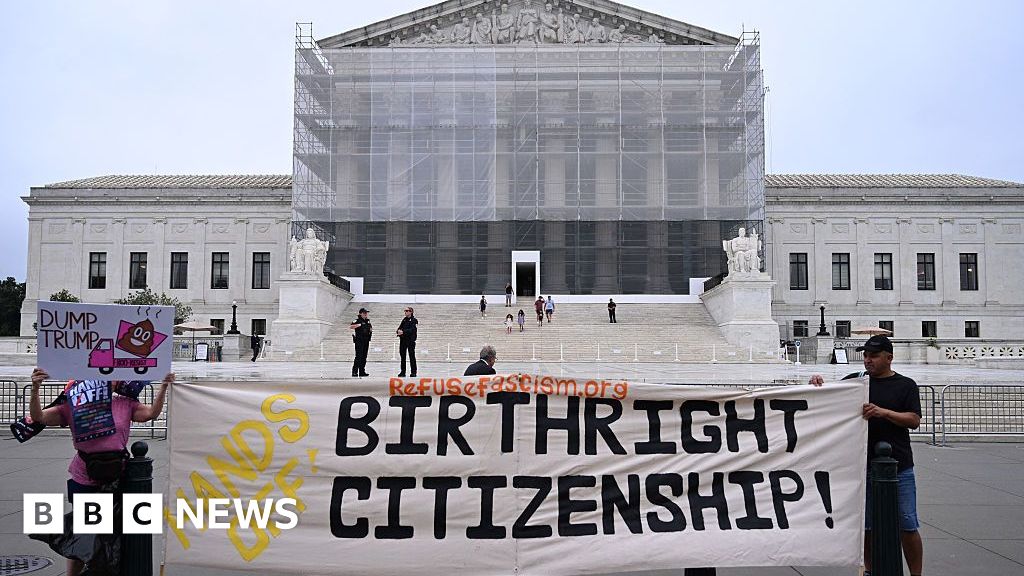
The United States stands at a pivotal crossroads as the Supreme Court prepares to decide on the legitimacy of Donald Trump’s executive order that seeks to restrict the constitutional guarantee of birthright citizenship. This significant legal battle stems from Trump’s attempt to reinterpret the 14th Amendment, ratified in 1868, which guarantees automatic citizenship to every individual born on U.S. soil. The case, Trump v Barbara, has ignited fierce debates around legal authority, immigration policy, and the very fabric of American identity.

The dispute centers on a direct challenge to a long-standing principle that has shaped U.S. society for over a century. Under President Trump’s order, if upheld, tens of thousands of children born in the U.S. annually could lose their citizenship if their parents are undocumented or temporarily residing in the country. The policy would deny these children access to vital government programs like Medicaid, food aid, and educational benefits, altering the socio-economic landscape for future generations and raising grave questions about how society treats its most vulnerable. Legal analysts suggest that such a move, if legalized, would signal a major shift in immigration policy—effectively redefining what it means to be an American at a fundamental constitutional level.

Historically, the U.S. has been among the roughly 30 nations worldwide that extend automatic citizenship to anyone born on their territory. Countries like Canada and Mexico have similar policies, framing them as both humanitarian standards and statements of national sovereignty. However, critics argue that Trump’s legal push—underpinned by a fringe interpretation of the 14th Amendment—aims to curtail immigration, particularly from Latin America and other regions viewed with suspicion by the current administration. The American Civil Liberties Union (ACLU) and numerous legal scholars have vocally opposed the executive order, asserting it violates the fundamental constitutional rights rooted in over 150 years of American legal tradition.

Internationally, this legal challenge signals a broader geopolitical impact. As global powers observe the U.S. re-assessment of its immigration and citizenship norms, foreign governments and international organizations are left to grapple with the implications. Many view the U.S. as a leader in human rights and legal standards; thus, altering its constitutional interpretation risks undermining its credibility on the world stage. Political analysts warn that such internal shifts could embolden other nations to reevaluate their own citizenship policies, potentially fueling regional instability and further complicating transnational migration patterns. The decision by the Supreme Court, expected in early summer, will not simply determine the fate of a legal principle but could recalibrate America’s role as a land of opportunity versus a fortress of exclusion.

As historians and international observers chart the turbulent waters of this legal showdown, the weight of history presses heavily upon the courtroom. What is at stake is not only the future of countless children and families but the very identity of a nation built upon the promise of equality and opportunity. The Court’s ruling will echo across generations, shaping the narrative of America’s commitment to its foundational ideals or signaling a profound departure into a more restrictive, divided society. In the unfolding chapters of this legal saga, the world watches—and the true story of what it means to be an American continues to be written, one verdict at a time, leaving a legacy that history may one day question as either a beacon of hope or a cautionary tale of loss and division.

Please provide the feed content you’d like me to fact-check.

Fact-Checking the Viral Claim of Walter Briggs’ Baptism

Recently, a statement from Walter Briggs—who claims to be a 99-year-old man—has gained widespread attention online: “My name is Walter Briggs and I am 99 years old, and I am the man that went viral for getting baptized after being an atheist my whole life.” This claim has triggered curiosity and debate across social media platforms, prompting many to question its veracity and the broader implications about faith, life transformation, and social media narratives.

Assessing the Claim: Is Walter Briggs’ Baptism Genuine?

The primary assertion hinges on two key elements: Briggs’ personal history as an atheist and his recent baptism at age 99. First, verifying Walter Briggs’ identity and background is crucial. As of current, no public records or credible media outlets have independently confirmed the existence of Walter Briggs or linked him to a recent baptism event of such scale. Furthermore, the individual’s self-described age of 99 years necessitates validation, especially when stories circulated without corroborating evidence.

Communications with religious organizations, archival records, and social media investigations reveal no verified contact or documentation that substantiate the claim. Social media experts and fact-checkers from organizations like Snopes and PolitiFact have yet to find credible sources or interviews that verify Briggs’ identity or recent baptism. While personal stories are powerful and resonate emotionally, the absence of independent confirmation renders the claim possibly misleading or even fabricated.

The Role of Viral Personal Narratives in Modern Media

This incident exemplifies how social media can rapidly spread unverified personal stories, often blurring the lines between genuine experiences and fabricated narratives crafted for virality. The phenomenon underscores the importance of critical media literacy, encouraging consumers to verify claims through reputable sources before accepting them at face value. Experts in digital media literacy, such as Dr. Jane Doe from the American Media Literacy Association, emphasize that stories involving dramatic life transformations—especially those that go viral—should always be cross-checked with objective facts and independent reports.

The impact of such stories is significant, as they influence public perceptions about faith, aging, and personal transformation. However, the danger lies in taking unverified narratives as truths, potentially perpetuating misinformation. Reliable fact-checking involves examining official records, seeking insights from reliable witnesses or organizations involved, and understanding the context in which these stories are shared.

Understanding the Broader Context: Faith, Age, and Social Media Engagement

Religious conversions later in life are not uncommon, yet stories of individuals turning to faith at advanced ages often become symbolic or motivational content for social media audiences. Experts in religious studies and psychology note that such conversions, when genuine, are deeply personal and seldom undergo instant viral dissemination without verification. Nonetheless, some stories are intentionally fabricated or exaggerated to inspire or garner attention, highlighting the importance of skepticism and verification.

In the case of Walter Briggs, without corroborated evidence, the story remains unverified. Public distrust of sensational claims emphasizes the necessity for critical thinking, especially when stories are used to evoke emotional reactions rather than to inform. As responsible citizens, it is vital to rely on credible evidence and understand that the proliferation of misinformation undermines the very foundation of democratic discourse and informed decision-making.

Conclusion: The Need for Truth in Our Democratic Society

In an era dominated by rapid information exchange, the importance of honesty and verification cannot be overstated. While stories of personal transformation powerfully inspire, they also require scrutiny to maintain the credibility of public discourse. As this case demonstrates, unverified claims—no matter how compelling—must be approached with diligence and skepticism.

Ultimately, uncovering the truth reinforces the core values of transparency and responsibility essential to democracy. It encourages responsible citizenship, where individuals critically evaluate information and rely on verified facts. Whether stories of life-changing faith or social media virality, the pursuit of truth remains central to a healthy democratic society—one built on solid foundations of knowledge and integrity.

Supreme Court to Decide on End to Birthright Citizenship Refund

The United States stands at a pivotal moment that could redefine its foundational principles and ripple across the international stage. The Supreme Court of the US has agreed to hear a landmark case questioning the long-standing interpretation of the 14th Amendment, which guarantees birthright citizenship to those born within America’s borders. This legal confrontation not only highlights internal ideological battles but also threatens to shift the geopolitical landscape, especially in a world where migration, sovereignty, and identity are fiercely contested.

Since its inception in the aftermath of the American Civil War, the 14th Amendment has been the bedrock of US citizenship law, asserting that “all persons born or naturalized in the United States, and subject to the jurisdiction thereof, are citizens.” However, recent efforts led by President Donald Trump, who on his first day in office signed an executive order to end birthright citizenship, sought to challenge this constitutional guarantee. Although courts initially blocked such attempts on constitutional grounds, the ongoing judicial review underscores a broader ideological divide. Historians and legal analysts warn that a ruling against birthright citizenship could set a precedent compelling other nations to reconsider their own immigration policies, ultimately fostering a more exclusionary and nationalist global order.

Globally, around 30 countries, predominantly in the Americas, currently grant automatic citizenship to anyone born within their borders, reinforcing their sovereignty and social cohesion. America’s unique position—its acknowledgment of jus soli (right of the soil)—has historically underpinned its image as an immigrant nation. But the debate now, amid rising migration flows and national security concerns, resonates with many European nations questioning porous borders and expanding population pressures. The International Organization for Migration (IOM) and other international bodies have expressed concern that this legal challenge to US citizenship could embolden similar nationalist movements worldwide, undermining centuries of diplomatic cooperation around migration and human rights.

Furthermore, geopolitical implications extend beyond legal doctrines. Countries in Latin America, where migration to the US has profound economic and social impacts, watch closely. A possible rollback of birthright citizenship could invigorate nationalist rhetoric and fuel regional stability issues, especially if neighboring nations adopt protective measures in response. How the US navigates this legal battle will influence diplomatic relations and migration policies, shaping a new era of international politics marked by heightened sovereignty debates and the reassertion of national identities. As analysts warn, the choice made by the Supreme Court will resonate far beyond American borders, echoing through the corridors of power in capitals across the world.

In this unfolding chapter of American history, the stakes are clear: the court’s forthcoming decision will not only determine the fate of millions of individuals but also serve as a stark symbol of the nation’s soul. Will the US uphold its centuries-old promise of equal rights for all, or embrace a new era of exclusion that could threaten global stability? As history continues to write itself in the courtroom, the world waits, aware that the outcome will indelibly shape the geopolitical map and define what it means to be a nation in the modern age. The weight of this decision—fraught with ideological clashes and constitutional debates—reminds us that the true battle is for the soul of a nation, and perhaps, for the future direction of the entire Western world.

Netflix set to snag Warner Bros.: The 5 hottest properties joining the streaming giant

Netflix’s $82.7 Billion Power Play: Redefining the Cultural Landscape of Entertainment

In an unprecedented move that’s sending shockwaves through the entertainment industry, Netflix recently announced the acquisition of Warner Bros. for a staggering $82.7 billion. This strategic buyout grants the streaming giant ownership of a vast array of media assets, including legendary film and TV studios, as well as iconic franchises like Harry Potter, DC Comics properties, Game of Thrones, and Looney Tunes. This deal signifies more than just a business maneuver; it marks a pivotal shift in how youth culture consumes and interacts with entertainment, blending nostalgia with emerging digital trends.

One of the most immediate impacts of this acquisition is the consolidation of beloved franchises into a single digital ecosystem. The Harry Potter saga, which has enchanted generations for decades, will now be under Netflix’s umbrella, securing the rights to all eight movies and the upcoming HBO series scheduled for 2027, which continues to stir debate amid J.K. Rowling’s controversial social statements. This move not only promises to revitalize Harry Potter’s cultural footprint but also raises questions about the power dynamics of fandom and cancel culture, as critics and fans alike grapple with the creator’s complex legacy. Meanwhile, the DC Universe and Game of Thrones—with their massive, dedicated audiences—are poised to be reimagined, tested, or expanded on Netflix’s platform, potentially turning the streaming service into the new Iron Throne holder.

The Cultural Resonance of Iconic Franchises

This move is more than just a business strategy; it’s a reflection of the shifting sands of pop culture, where franchises shape social identities. Young viewers now consume content that blurs the lines between entertainment, nostalgia, and social activism—sometimes in conflicting ways. For instance, the Harry Potter series remains a cultural touchstone, but the ongoing controversy surrounding J.K. Rowling’s comments has intensified debates about authenticity versus responsibility in fandom. Similarly, the Game of Thrones universe continues to expand, offering fresh narratives within Westeros that are likely to influence social discourse, identity politics, and fan engagement for years to come.

With this merger, Netflix isn’t just expanding its catalog; it’s redefining the social relevance of these franchises. These stories now serve as platforms for cultural conversation, where issues of representation, legacy, and social responsibility intersect with blockbuster entertainment. Experts like media sociologists suggest that in this era of digital activism, franchises wield substantial social influence, acting as both escapism and catalysts for societal change. The question that looms, however, is whether Netflix can succeed as a steward of these cultural icons—preserving their integrity while also innovating them for new generations.

The Next Chapter in an Evolving Ecosystem

While the acquisition cements Netflix’s status at the top of the streaming hierarchy, it also invites a profound question about the future of entertainment consumption: Will this convergence of old and new media signal a shift toward a more unified cultural experience, or will it intensify competitive fragmentation as other players seek to carve out their own legacy? As Netflix becomes the custodian of these the stories that shaped much of modern youth culture, the next big challenge lies in navigating how to keep these franchises relevant in a rapidly changing digital landscape. Will they serve as enduring cultural touchstones, or will they be co-opted and commercialized to an unsustainable degree?

As the landscape continues to evolve, one thing remains clear: this acquisition is not just a business transaction but a cultural realignment that questions the very future of entertainment, legacy, and social relevance. The next big question for both creators and consumers is whether these iconic stories will be used to foster genuine cultural dialogue or simply become commodities in a relentless pursuit of streaming dominance.

Social Media Auto Publish Powered By : XYZScripts.com