Matox News

Truth Over Trends, always!

Government Shutdown Sparks Urgent Cybersecurity Risks for the Future

US Government Faces Cybersecurity Breach During Ongoing Shutdown, Highlighting Industry Vulnerabilities

The recent six-week-long US government shutdown has unexpectedly exposed critical vulnerabilities within federal digital infrastructure. The Congressional Budget Office (CBO), tasked with providing unbiased economic data to policy makers, confirmed it suffered a cyber breach attributed to a suspected foreign actor. This event underscores a broader trend: even during periods of political paralysis, cyber threats to vital national security and economic data continue unabated, leveraging the digital systems that underpin government functions.

Disruption & Innovation in Federal Cybersecurity

  • Despite the shutdown, many federal agencies, including the CBO, maintain operational cloud infrastructures, illustrating a shift towards resilient, cloud-based security architectures.
  • In response to the breach, CBO has implemented enhanced security measures, including advanced monitoring tools and new controls.
  • However, cybersecurity experts warn that relying on cloud infrastructure, especially during operational disruptions, can be a double-edged sword, exposing vulnerabilities if not managed properly.

Industry leaders and analysts, citing research from institutions such as MIT and firms like Gartner, emphasize that government agencies and private corporations alike must prioritize disruptive cybersecurity innovation. Traditional perimeter security models are no longer sufficient in the face of sophisticated threat actors, and this breach epitomizes the critical need to adopt adaptive, AI-powered defenses that can react in real time to emerging dangers.

Business Implications & Broader Industry Impact

The breach at the CBO illustrates industry-wide vulnerabilities, reinforcing the importance for innovative cybersecurity solutions that blend automation, threat intelligence sharing, and resilience. As Peter Thiel and Elon Musk have long warned, “security is a competitive advantage in the digital age”, and the failure to innovate rapidly can spell disaster for both public institutions and private enterprise.

Moreover, the incident signals a paradigm shift in how government and business protect sensitive data: disruption in cybersecurity defenses during crises is unacceptable. Organizations must now view security as an ongoing battle, integrating next-generation AI, blockchain, and zero-trust architectures to outpace threat actors.

Looking Forward: The Urgency of Next-Gen Cybersecurity

Industry observers and government officials agree that the current breach is likely a wake-up call, stressing the necessity of proactive, innovative security strategies. As _cyberthreats continue to evolve_, companies and agencies must accelerate investments in disruptive technologies to safeguard critical infrastructure and maintain trust. The government’s ongoing shutdown underscores a fragile moment for national security, with industry pioneers poised to lead the charge in redefining cybersecurity resilience.

In this rapidly shifting landscape, the future will belong to those who innovate aggressively, disrupting old paradigms before they are exploited. The clock is ticking, and the stakes have never been higher for tech leaders to step into this digital frontier with urgency and foresight—because the next attack could be just one breakthrough away.
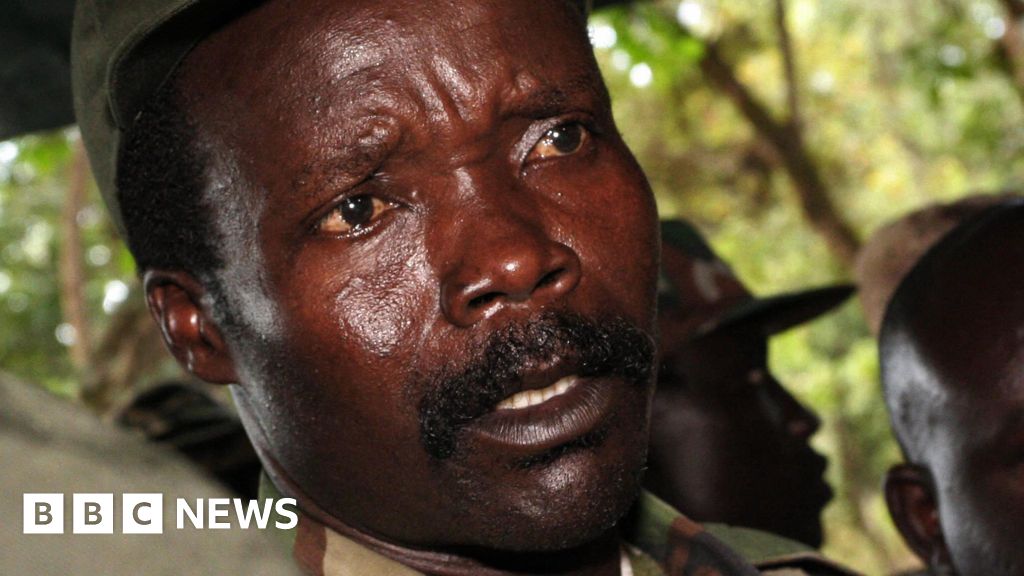
Ugandan youth cheer ICC charges against LRA boss, standing for justice

In a move that echoes decades of international diplomacy and military pursuit, the International Criminal Court (ICC) has officially confirmed charges against Joseph Kony—the notorious leader of the Lord’s Resistance Army (LRA). This militant group, infamous for perpetrating heinous crimes including limb hacking, sexual slavery, and child soldier conscription, has haunted the borders of Uganda, South Sudan, the Democratic Republic of Congo, and the Central African Republic for over thirty years. Despite mounting international pressure and efforts by the US and regional forces, Kony remains at large, hiding in the lawless corridors of Central African Republic, where he continues to symbolize a failure—yet also a warning—of global justice.

The ICC’s recent decision to charge Kony with 39 counts of war crimes and crimes against humanity marks a significant turning point in international accountability. The charges include murder, rape, and the forced use of child soldiers—a brutal blueprint that the international community hoped would finally bring a notorious warlord to justice. Despite an indictment issued in 2005 and a $5 million US reward announced in 2012, Kony’s ability to evade capture exposes the persistent gaps in enforcement among regional and global mechanisms. Analysts warn that unless Kony is physically apprehended and transferred to The Hague, these charges risk remaining symbolic rather than pragmatic, Birthing a moral victory rather than tangible justice.

The geopolitical impact of this prolonged pursuit extends far beyond Uganda’s borders. The LRA’s insurgency led to over 100,000 deaths, displacements of 2.5 million innocents, and leaving hundreds of children traumatized. Former victims like Evelyn Amon and Patrick Ochieng, now advocates for justice and reconciliation, underscore the importance of holding Kony and remnants of his group accountable. As regional conflicts intertwined with local rebellions, the pursuit of Kony became entangled with broader questions of sovereignty, regional stability, and international interventionism. Governments in the region have faced criticism for their inability or reluctance to fully dismantle the rebellion, highlighting the complex web of regional alliances, resource control, and diplomatic priorities that overshadow justice for victims.

International organizations, including the United Nations and humanitarian agencies, emphasize that the conviction and capture of Kony are more than mere symbolisms—they are a definitive step towards deterring future atrocities. Yet, how the international community responds moving forward will determine if justice can truly be served or if history’s darkest chapters risk being forever etched into the margins of a fractured continent. The global effort to bring Kony to trial serves as a chilling reminder: as long as unclaimed atrocities linger, the echoes of war and the cries of victims threaten to rewrite history and challenge the very pillars of justice.

As the weight of global attention converges on this saga, Kony’s expected arrest and subsequent trial in The Hague could serve as a watershed moment—not just for the victims, but for international law. Whether justice prevails remains a question that has haunted the region for decades, but what is undeniable is that the unfolding chapters in this relentless pursuit carry the profound potential to shape regional destinies and herald a new era of accountability. In the shadow of history’s ongoing pages, the pursuit of Kony is no longer just about capture; it becomes a test of the international order’s resolve to confront its most stubborn demons.

Israel Gets Coffin, Hamas Claims Contains Gaza Hostage

Emerging Tensions in Gaza: A Fragile Ceasefire Shattered

Emerging Tensions in Gaza: A Fragile Ceasefire Shattered

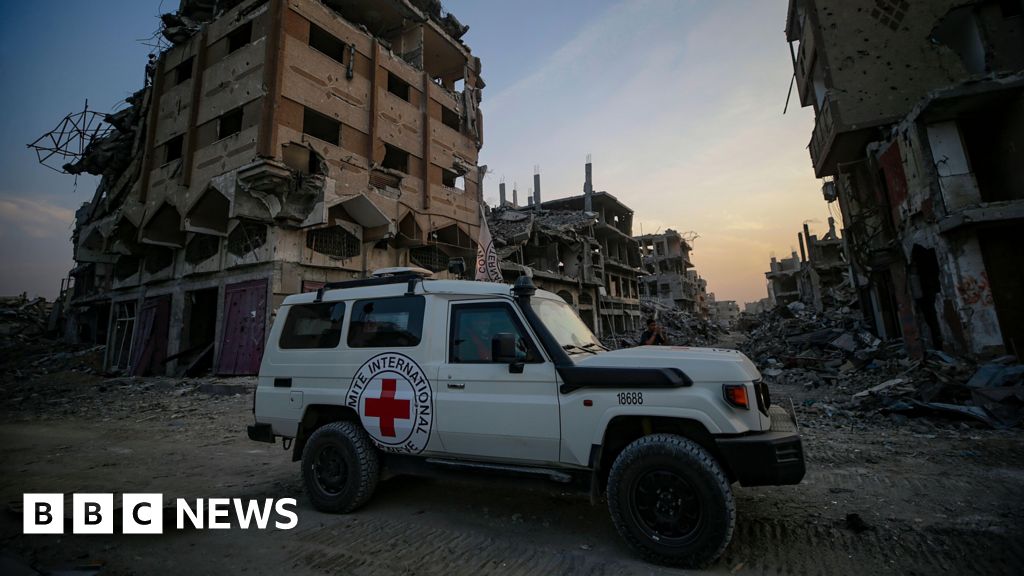
The ongoing conflict in Gaza has once again plunged the region into chaos, exemplifying the volatile nature of Middle Eastern geopolitics. Recently, Israel received what it claims to be the body of a hostage held by Hamas and the Palestinian Islamic Jihad, sparking renewed tensions. According to Israel’s military, the body, found in Khan Younis in southern Gaza, has been transported to Israel via the Red Cross for identification. This incident marks a critical escalation, especially as both sides accuse each other of violations and fragment the fragile peace brokered by the United States.

During the inaugural phase of a ceasefire deal that began on 10 October, motivated by international pressure, Hamas agreed to hand over all 20 living hostages and 22 of the 28 deceased hostages—mostly Israelis, with some foreign nationals such as a Thai—an encouraging but incomplete step towards de-escalation. Israel responded by releasing 250 Palestinian prisoners and handing over 285 Palestinian bodies—yet, critics argue that the process remains deeply compromised. The ongoing failure to retrieve all bodies underlines the imperfect and fragile nature of these ceasefire agreements, with Hamas citing difficulties in locating remains amidst the rubble, a clearly inadequate response that fuels suspicion and mistrust.

Shifting Alliances and the Geopolitical Ripples

  • The United States, acting as a key broker, has been pushing for a lasting peace, yet its efforts are faltering amid persistent violence. The UN and regional analysts warn that unless the cycle of hostilities is broken decisively, the conflict could spiral further, destabilizing neighboring states and drawing in global powers.
  • The Israeli military has launched series of air strikes following accusations of attacks by Hamas fighters, killing at least 241 people since the ceasefire began, according to the Hamas-run health ministry. These actions occurred despite the ongoing negotiations, illustrating how both sides remain engulfed in cycles of retaliation that threaten to undermine diplomatic progress.
  • The regional impact is profound, with escalation risking broader destabilization across the Middle East. Countries such as Egypt and Jordan watch anxiously, knowing that without a diplomatic breakthrough, the conflict could ignite further violence, refugee crises, and regional instability. International organizations have cautioned that failure to contain the violence jeopardizes peace and security far beyond Gaza’s borders.

The Broader Historical Context and Future Outlook

Historians and analysts observe that this episode highlights the persistent challenge of reconciling sovereignty, security, and humanitarian concerns in a region weary of war. The current dynamic resembles past cycles, where ceasefires are moments of temporary reprieve amid deep-rooted grievances. Experts warn that until meaningful negotiations address underlying issues—refugee rights, borders, and sovereignty—the threat of renewed violence remains imminent. The recent flare-ups serve as stark reminders that in the delicate balance of Middle Eastern geopolitics, decisions made today could shape the fate of decades to come. The already high human toll—over 68,875 killed in Gaza since the initial attacks—has cast a long shadow over hopes for a sustainable peace.

As history perpetually unfolds, the question remains: will diplomacy be enough to bridge the divide, or are we witnessing the early chapters of an enduring saga of conflict? The weight of the present moment underscores that the outcome will fundamentally alter the course of regional and global history—an unfolding narrative that demands vigilance, resilience, and unwavering commitment to peace by the international community.

High School Stars Shine Bright: Top Performers of the Week Light Up the Field!

Tragedy Strikes Dodgers’ Alex Vesia Off the Field

In a heart-wrenching development, Los Angeles Dodgers reliever Alex Vesia revealed on Friday that his daughter, Sterling, tragically passed away on October 26. At the time, Vesia missed the World Series due to what was described by the team as a “deeply personal family matter.” The news sheds light on the profound challenges athletes face beyond their performances on the field.

Vesia’s statement not only serves as a reminder of the, at times, underappreciated personal sacrifices that athletes make but also reinforces the human element intertwined with sports. The baseball community is rallying around Vesia during this unfathomable time, highlighting the importance of solidarity and empathy among players and fans alike. “Sterling was a light in our lives,” Vesia expressed, emphasizing the love and joy she brought to his family.

The Dodgers organization has been supportive, publicly expressing their condolences while reinforcing the notion that family and well-being take precedence over any game. Coach Dave Roberts echoed these sentiments, stating, “The health and happiness of our players and their families are paramount. Alex is part of our family, and we are here for him.” Such unity within the team underscores the realization that sports extend beyond the diamonds and into the fabric of personal lives.

As the Dodgers ready themselves for the upcoming season, Vesia’s tragedy serves as both a sobering moment and a rallying point. His resilience could inspire the team to channel their grief into a powerful motivation to succeed on the field. The camaraderie fostered during this difficult time can create an even stronger bond among teammates, enhancing their collective performance.

In a world constantly focused on statistics and victories, the real essence of sports lies in its power to unite people in times of joy and sorrow. Through support, shared experience, and collective strength, tragedies such as Vesia’s serve as a powerful reminder that, more than mere games, sports bring communities together, celebrating not just champions, but the human spirit itself. The true legacy of athletes like Alex Vesia is rooted not only in their athletic prowess but in their capacity to inspire resilience, reminding us that, in this game of life, together we can overcome any obstacle.

Source link

Remembering Kenya’s Unsung World War Heroes

A Historic Reckoning: Revisiting Africa’s Unsung Battlefronts

In a profound reminder that history’s shadows often conceal stories of sacrifice beyond privileged nations, recent revelations have cast a long-overdue spotlight on Kenya and the wider African continent. For decades, the role of African soldiers in the >international conflicts of the 20th century remained marginalized, their sacrifices buried in obscurity. Now, a groundbreaking initiative led by the Commonwealth War Graves Commission (CWGC) has begun unearthing military records that paint a fuller, more truthful picture. Yale-Historian and analysts emphasize that these discoveries challenge prevalent narratives, showing that **the fabric of world history is woven with the threads of African service**, often dismissed or forgotten in mainstream memory.

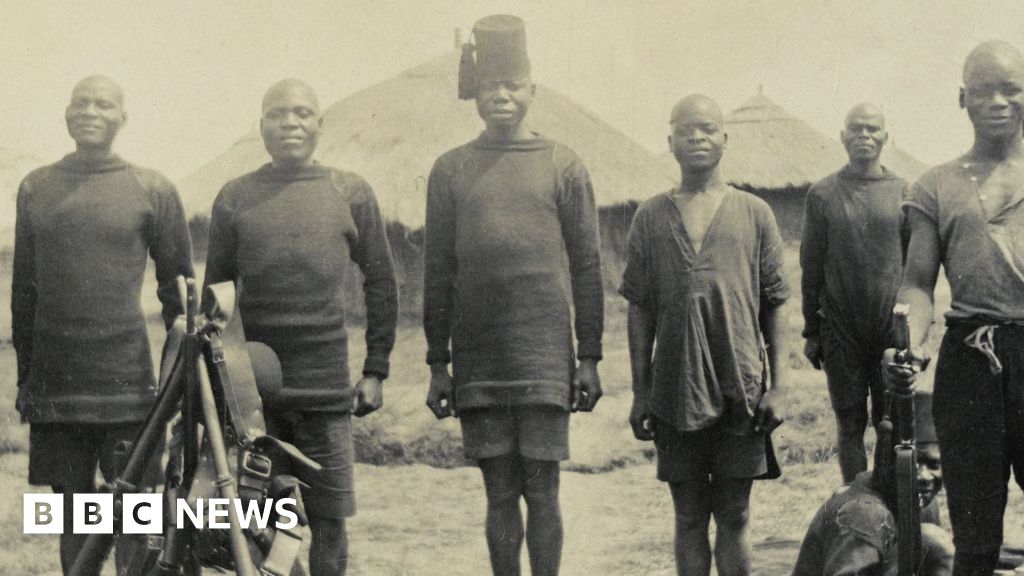
One poignant story disrupted the silence. Mutuku Ing’ati, a Kenyan man whose identity was lost to history for nearly 85 years, has recently been traced through colonial military archives. His family, from the Akamba ethnic group, had long mourned his mysterious disappearance, unaware of how far his service extended. In 1943, Ing’ati left his remote village of Syamatani, traveled hundreds of kilometers to Nairobi, and signed up as a private with the East African Scouts regiment. His death in action, verified by newly uncovered documents, underscores the silent sacrifices of thousands like him — men who responded to imperial calls and paid the ultimate price, often with no recognition or closure for their families.

Geopolitical Impact and Societal Consequences

This revelation allows us to reevaluate the geopolitical impact. The King’s African Rifles and other colonial units not only fought in key theaters in Tanzania and Mozambique during World War I, but also played roles in wider conflicts, including World War II. These African soldiers weren’t mere extras in a European or Asian war narrative — their efforts helped to shape global outcomes and challenged colonial borders and ideologies. As historian Patrick Abungu highlights, these stories are “not just dusty files,” but vibrant human experiences that have long been neglected in the West’s historical canon.

The recent recovery and preservation of thousands of colonial military records have underscored this point. They reveal a history where thousands of Africans enlisted, fought, and died, often without acknowledgment. The **CWGC’s** initiative to locate and commemorate these soldiers aims to give voice to their forgotten sacrifices. Such endeavors are vital because they challenge colonial-era narratives, fostering a sense of pride and identity among African nations. Moreover, how nations remember their history influences societal values and national unity. Reclaiming this past not only rectifies historical injustices but also empowers present-day youth with a sense of historical agency and resilience.

How Contemporary Decisions Reshape Future Legacies

As the CWGC and Kenya’s Defense Forces work tirelessly to trace these lost stories, their efforts have implications beyond memorials. They are laying the groundwork for a new, empowered narrative where African agency in global conflicts is recognized and celebrated. Education policies on the continent are beginning to integrate these revelations, ensuring future generations comprehend the __outsized contribution__ their ancestors made to world history. Such recognition could bolster a new pan-African identity rooted in sacrifice and resilience, redefining how Africa perceives itself on the international stage.

As one historian observed, “These records are not static; they are alive, telling stories that breathe anew relevance and purpose.” The ongoing process of remembrance, for many, is a confrontation with the past—one that refuses to let these stories fade away, no matter how many decades have passed. Nevertheless, the battle for historical truth continues, reminding us that the choices of yesterday ripple into the geopolitics of tomorrow, shaping societies and identities in ways we are only beginning to understand. This unfolding chapter in global history leaves us standing at a crossroads, where remembering the sacrifices of the past must propel us toward a more inclusive, truthful future—before these stories are lost to the inexorable tide of time, and history’s pen is permanently still.

Trump urges Supreme Court to step in as judges reject snap funding halt—US shutdown looms in 2025

The United States continues to grapple with the fallout from its ongoing federal government shutdown, revealing stark divisions not only within its political landscape but also with profound geopolitical implications. Central to this turmoil is the battle over distributing the November benefits for the Supplemental Nutrition Assistance Program (SNAP), commonly known as food stamps—a critical lifeline for millions of lower-income Americans. The Trump administration’s efforts to halt full payment amid congressional deadlock highlight a distinct shift in federal social policy, raising alarms among international observers and analysts about the erosion of social safety nets in a nation often seen as a global economic leader.

This controversy escalated last week when a federal district court ordered the government to continue full SNAP benefits despite the shutdown’s budget chaos. The administration responded with fervor—first attempting to block the order by appealing to the Supreme Court, claiming that fulfilling the court’s mandate could cause irreparable harm. The argument centered around the idea that once funds are disbursed, they cannot be recouped, and continued payments could set a dangerous precedent for future budgets, especially if the shutdown persists into December. This legal refusal to comply with court rulings exposes a fragile balance between judicial authority and executive discretion, with serious consequences for social stability and international reputation.

International organizations and geopolitical analysts have closely watched this domestic dispute, aware that such internal conflicts have the potential to ripple across borders, especially given the global economic interconnectedness these days. Historians warn that such standoffs threaten to undermine the perception of US stability, potentially weakening its position in international financial markets. The fact that this political and legal tussle revolves around providing basic needs—an essential element for societal stability—underscores the crucial role of national governance in shaping human lives and global relations. As the Trump administration presses for a stay on court orders, claiming it cannot “tap” funds for ongoing payments, critics argue this signals a dangerous turn towards austerity and social neglect.

The unfolding saga leaves the world with a stark reminder: the choices made within the halls of power are not isolated—they set precedents with far-reaching implications. The decision to prioritize political posturing over the well-being of vulnerable populations shapes the narrative of an America divided and weakened at its core. As history continues to write itself into the pages of the 21st century, the crisis surrounding SNAP benefits is emblematic of a nation at a crossroads, where internal conflicts threaten to define its global role and societal fabric for generations to come. Whether this chapter will culminate in a resolution that upholds the rule of law and social cohesion or deepen the fissures remains an open question—yet, one thing is clear: the weight of history presses relentlessly forward, shaping a future still shrouded in uncertainty.

Trump alleges foreign-owned meatpackers fueling U.S. beef price hikes | Donald Trump

The recent flurry of political rhetoric surrounding the U.S. meat industry underscores a broader geopolitical tension that extends far beyond domestic economic concerns. Donald Trump has accused foreign-owned meat packers of artificially driving up beef prices in the United States, prompting a demand for a Department of Justice investigation into what he claims is illicit collusion and price fixing. This sharp stance, announced days after electoral setbacks for the Republican Party, reveals how intertwined economic security and political narratives have become in the current global climate. While Trump has not provided concrete evidence, his claims resonate with longstanding fears of foreign influence and monopolistic practices in vital sectors, exacerbating doubts over the integrity of global supply chains.

What makes this controversy particularly significant is its potential geopolitical impact. The beef industry, a critical component of both the American economy and its food security, is now entangled with international trade dynamics. Trump’s earlier proposal to surge Argentinian beef imports to curb high prices exemplifies a broader strategy of leveraging trade policy to address domestic economic challenges. Such tactics could risk international partnerships, especially with nations like Argentina and Brazil, which are major global exporters of beef but may face increased tariffs or trade restrictions. These punitive measures could send shockwaves through international markets, prompting retaliatory tariffs and escalating tensions within transnational trade agreements, thereby undermining the stability of the *U.S.-Latin America* regional relations.

The ongoing debate over food security and trade policy also holds profound implications for geopolitical alliances. Critics, including international trade analysts and historians, warn that actions perceived as protectionist could weaken free trade principles and foster a cycle of economic nationalism. In the context of a world increasingly polarized by ideological conflicts and supply chain vulnerabilities, the U.S. is walking a fine line between protecting domestic industries and exposing itself to diplomatic fallout. Furthermore, global institutions like the World Trade Organization could be pushed into contentious disputes that threaten to erode the rules-based international order. As nations scramble to fortify their economic resilience, the decisions made in Washington could either catalyze a new era of cooperation or ignite a contest over resources and markets—a contest that history warns favor the more strategic and united actors.

Ultimately, as world leaders navigate these turbulent waters, the legacy of this moment will be shaped by whether they prioritize unilateral measures over multilateral diplomacy. The unfolding story of the U.S. beef industry dispute mirrors larger struggles for sovereignty, economic independence, and cultural identity in an interconnected world. Historians and geopolitical analysts observe that decisions made today—whether to escalate tariffs, impose sanctions, or foster cooperation—will, in time, define the geopolitical landscape for generations. As the smoke of political posturing begins to clear, the silent weight of history presses relentlessly onward, reminding us that every economic move carries the potential to reshape the fabric of international relations, forging new alliances or deepening old wounds. The world watches with bated breath, aware that in this arena of high stakes, not only cattle but entire nations are pawns on a chessboard of global power struggles.

Trailblazing DNA Scientist James Watson Passes at 97

The End of an Era: The Legacy of James Watson and Its Impact on Global Science and Society

The passing of James Watson, the Nobel Prize-winning scientist renowned for co-discovering the double-helix structure of DNA in 1953, marks a significant milestone in the history of molecular biology. His groundbreaking work laid the foundation for revolutionary advances in genetics, medicine, and biotechnology, reshaping our understanding of the very fabric of life. As historians and international scientists recognize his contribution—”We have discovered the secret of life,”—they also grapple with the profound implications of his later controversial views on race and intelligence that plagued his legacy.

Watson’s death, confirmed by Cold Spring Harbor Laboratory, where he dedicated decades of his career, exemplifies the complex ethical and societal debates surrounding scientific inquiry. His early discoveries opened an era of unprecedented knowledge, fueling the biotech revolution that now underpins modern economies. Yet, equally significant were his later remarks that suggested inherent racial differences in intelligence—comments that drew swift condemnation from the scientific community and led to his being stripped of honorary titles in 2019. This international conflict between scientific fact and social ideology underscores a broader societal fissure that continues to influence nations worldwide.

Analysts warn that such controversies do more than tarnish individual legacies—they threaten the integrity of scientific discourse at global institutions. Decisions made in the scientific and political realms ripple outward, affecting education policies, societal trust, and international alliances. For instance, U.S. and international organizations have increasingly emphasized the importance of separating scientific findings from personal biases but struggle with the limits of such delineations when influential voices propagate contentious views. This tension emphasizes how scientific authority can be exploited or undermined in geopolitics, particularly as nations compete for technological supremacy and influence.

As international leaders and historical analysts observe Watson’s life—his early brilliance, his pivotal discoveries, and his controversial slant—one is reminded that the narrative of science is intertwined with the fabric of society itself. The debate ignited by Watson’s remarks reveals underlying societal fractures concerning race, equality, and the role of science in shaping social policy. With the world watching, the ongoing struggle to reconcile scientific progress with social responsibility embodies the unstoppable march of history—unfolding with unresolved tensions and persistent questions about the nature of human identity. The story of Watson’s legacy serves as a stark reminder that the lessons of the past are never truly settled; instead, they serve as the raw material for future conflicts and revelations, leaving humanity standing at the precipice of history’s next chapter.

Rivian CEO RJ Scaringe Scores $5B Pay Package, Spotlight on EV Boom

Rivian Reshapes Executive Incentives to Accelerate Market Disruption

The EV startup Rivian has announced a strategic overhaul of its compensation strategy for founder and CEO RJ Scaringe, signaling a bold move to align executive incentives with future innovation and market dominance. According to a recent filing, Scaringe is being rewarded with a new performance-based stock award that could eventually be valued at approximately $5 billion, contingent on hitting ambitious growth benchmarks. This initiative underscores Rivian’s commitment to disruption, not just through its electric vehicles, but through a recalibrated business strategy that keeps pace with industry giants like Tesla and emerging players leveraging the latest in autonomous and clean tech innovation.

The company’s latest move follows a period marked by fluctuating market valuation, with Rivian’s stock soaring past $129 post-IPO in November 2021—only to slump to around $30 in subsequent months. Currently trading between $10 and $20, this volatility reflects broader industry challenges but also emphasizes why now more than ever, redefining incentives for leadership is critical in maintaining competitive advantage. Rivian’s decision to double Scaringe’s annual salary to $2 million and grant a significant 10% stake in its newest spinout, Mind Robotics, exemplifies an aggressive push towards technological diversification and integration. Such approach aims to unlock new revenue streams and deepen innovation pipelines, potentially changing the landscape of robotics and AI within the automotive sector.

By canceling Rivian’s previous 2021 performance grant, the company’s compensation committee aims to counteract what it calls a “lack of incentive,” replacing it with a more aggressive, goals-based equity scheme. This strategic pivot echoes trends seen across high-growth tech sectors, where disruption of traditional business models hinges on aligning executive rewards with technological milestones. The move also signals to investors and competitors alike that Rivian intends to accelerate R&D, especially as it prepares to launch its anticipated R2 model, a critical phase in its competitive push against legacy automakers and likes of Tesla’s autonomous vehicle empire.

Looking ahead, industry analysts like Gartner and think tanks such as MIT emphasize that the next wave of innovation in EVs and advanced automation is driven by relentless disruption in hardware, software, and business models. Rivian’s evolving incentive structure reflects a broader market recognition that attracting top-tier talent and incentivizing breakthrough performance is essential in a landscape where timing is everything. With the global push for cleaner transportation and autonomous tech accelerating, Rivian’s bold strategic incentives highlight a clear message: the race to redefine mobility is not just automation or electrification but the strategic mastery and vision of industry leaders prepared to disrupt the status quo at a moments’ notice. As the industry stands on the cusp of what may be a transformational decade, Rivian’s moves signal a clarion call—those who innovate fastest and incentivize effectively will shape the future of transportation.

Lenzie School Fire: Serious Risk to Students’ Safety, Report Warns

The state of student safety and school infrastructure continues to be a pressing societal concern, especially as recent reports reveal alarming deficiencies within Lenzie Academy, a prominent secondary school serving over 1,300 pupils in East Dunbartonshire. An independent fire risk assessment, conducted by the council’s fire safety team, uncovered a series of dangerous conditions that not only threaten the physical safety of students and staff but also highlight broader issues of underinvestment, neglect, and systemic failure in local education infrastructure. These findings concern the community at large, shedding light on the direct impact social issues have on families, educational equality, and community resilience.

Among the most critical issues identified in the report are fire safety hazards—notably, fire exits that are not immediately operable, fire doors with damaged self-closers, and missing or broken glass panes. Such deficiencies reflect more than technical oversights; they embody a perceived prioritization of administrative neglect that jeopardizes lives during emergencies. The report’s 25 recommendations, including upgrading fire doors to ensure at least 30 minutes of fire resistance and properly storing combustible materials, underscore the urgency with which these risks need to be addressed. Sociologists like Dr. Lisa Miller argue that inadequate safety measures in schools directly undermine the moral fabric of our society by signaling a disregard for the safety of future generations, eroding trust in our public institutions.

This situation is compounded by the decades of underinvestment and systemic neglect pointed out by parents and teachers alike. A parent, speaking anonymously, accused local authorities of ‘years of neglect and underinvestment,’ emphasizing that Lenzie Academy has been left in a state of disrepair while other schools have received rebuilding efforts. Teachers’ union representatives describe conditions within the school as dangerous and unacceptable, citing not only fire hazards but also water leaks, missing ceiling tiles, and poor building security. This entrenched neglect reveals the societal challenge of ensuring equitable investment in educational infrastructure — a fundamental responsibility that affects families’ access to safe, quality education and the community’s sense of social cohesion.

While officials from East Dunbartonshire Council assert that safety remains a priority and that immediate remedial actions are underway, critics contend that these measures are merely reactive rather than systemic. The challenge remains: how can local governments foster a culture of proactive maintenance and accountability when budget constraints and bureaucratic inertia hinder progress? Social commentators warn that such neglect fosters distrust and disengagement among youth, threatening societal cohesion over time. However, there remains hope. By prioritizing community involvement, transparent accountability, and targeted funding, it is possible to turn these failing infrastructures into symbols of resilience and hope. As the social fabric is woven through each brick and beam we invest in, society’s true strength will be measured in how we repair what is broken and nurture what is fragile. Society’s challenge—and its potential—is etched into the walls of Lenzie Academy; the question now is whether we will choose to rebuild with purpose, ensuring that no child’s safety is compromised in the pursuit of austerity.

Social Media Auto Publish Powered By : XYZScripts.com