Matox News

Truth Over Trends, always!

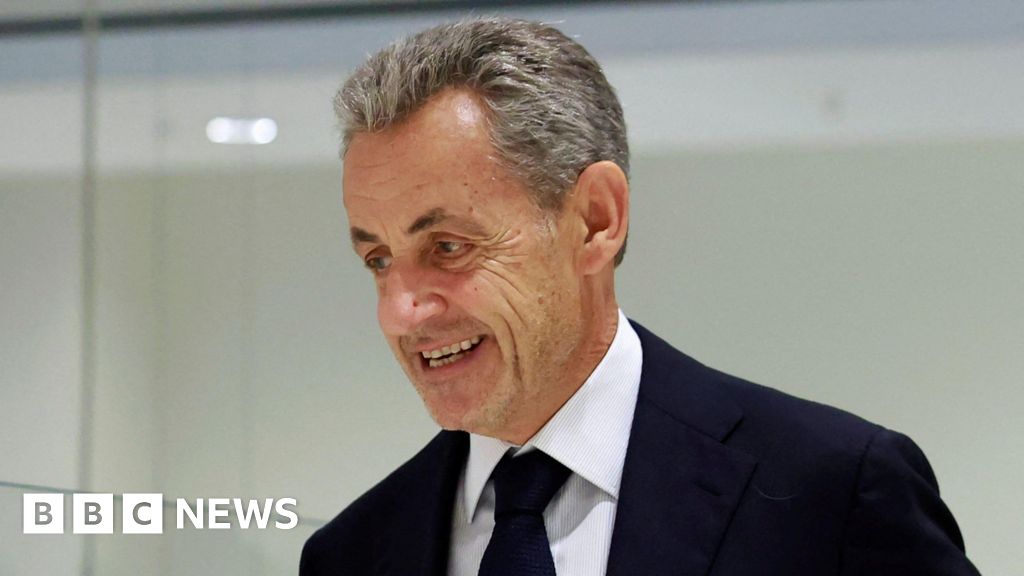
Sarkozy Convicted of Criminal Conspiracy: Justice Served for Our Country

In an unprecedented turn of events, former French President Nicolas Sarkozy has been found guilty of criminal conspiracy in connection with illicit funds received from the late Libyan leader Muammar Gaddafi. This verdict, delivered by the Paris criminal court, marks a significant milestone in France’s ongoing effort to address the shadows of political corruption that cast a long pall over its recent history. The case, rooted in allegations that Sarkozy used Libyan money to finance his 2007 presidential campaign—an accusation he strongly denies as politically motivated—has reverberated through Europe, prompting questions about accountability at the highest levels of governance.

Historians and international analysts point out that this development underscores the delicate balance of power between national sovereignty and international influence, especially in the context of foreign interference and clandestine geopolitical maneuvers. The European Union and various global watchdogs have long debated the influence of foreign regimes on Western democracies, but Sarkozy’s case exemplifies how such interference can directly threaten the integrity of the political process. While he was acquitted of other charges including passive corruption and illegal campaign financing, the conviction on conspiracy charges signals a shift towards greater scrutiny of foreign influence within Western political spheres.

How decisions made in the aftermath of Libya’s 2011 civil conflict ripple across nations is evident in the broader geopolitical landscape. Gaddafi’s fall and the ensuing chaos created a power vacuum that foreign actors, including France and other Western nations, sought to navigate through clandestine support and diplomatic maneuvers. The revelations that Sarkozy’s campaign may have been secretly financed by Gaddafi’s regime are viewed by many as a cautionary tale about the dangerous entanglements of international diplomacy. The international community—notably organizations such as Interpole and the United Nations—monitor these developments as potential precursors to further destabilization, emphasizing that international law and sovereignty are continually under threat from hidden agendas fueled by illicit financial flows.

As Sarkozy faces potential sentencing, the implications extend beyond individual accountability. The case epitomizes the ongoing struggle to maintain national sovereignty against a backdrop of complex, often covert, international influences. Tensions are mounting as investigations into other political figures and foreign ties continue to unfold across Europe, raising questions about the integrity of democratic institutions. Whispers of global power plays and the influence of state-sponsored clandestine funding highlight the fragility of Western democracies in an era of relentless geopolitical shifts. With this verdict, the stakes are higher than ever—nations must grapple anew with the warning that the foundations of their sovereignty are often vulnerable to unseen forces lurking behind diplomatic facades. Ultimately, history remains on the edge of another chapter in an ongoing saga of power, influence, and the relentless pursuit of truth amid shadows that threaten to reshape the global order.
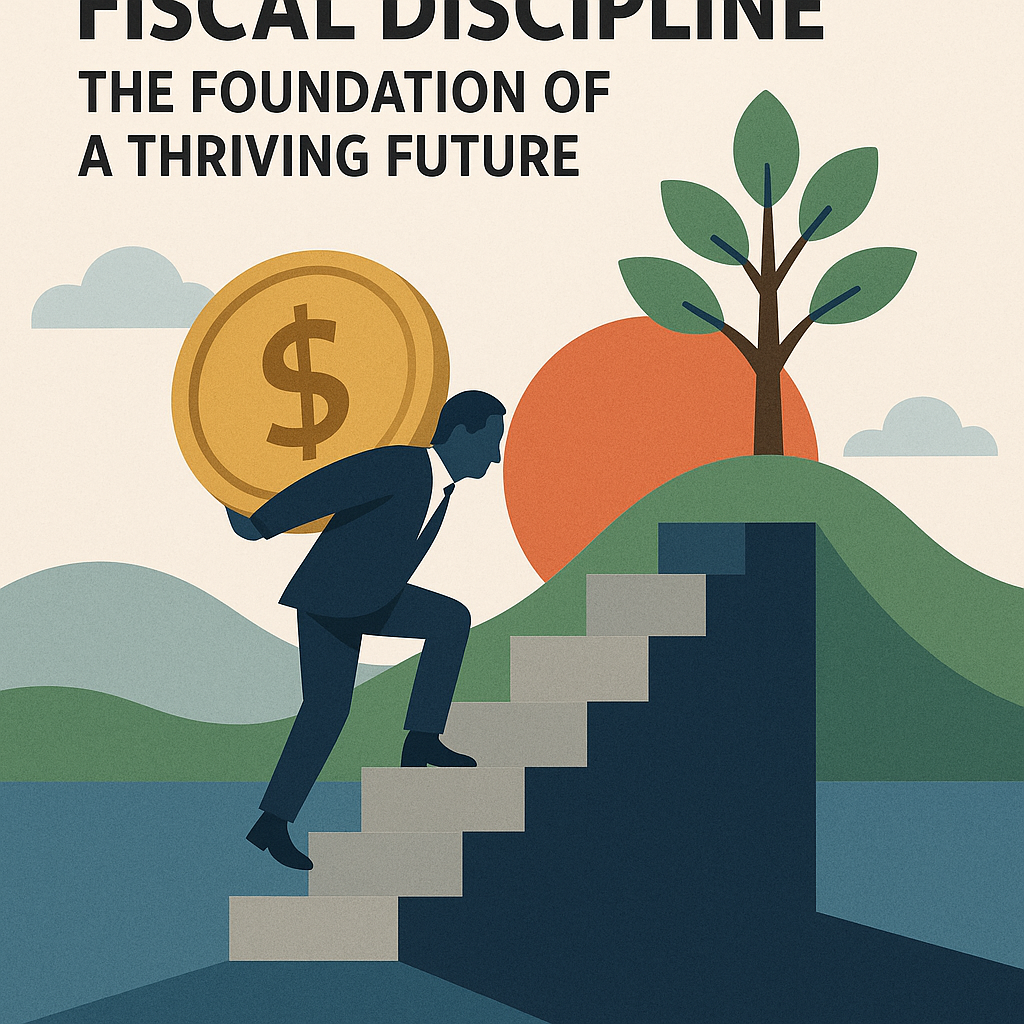
Fiscal Discipline: The Foundation of a Thriving Future

Fiscal discipline stands as the bedrock upon which a prosperous and resilient future is built. In a world of mounting economic uncertainties, governments that prioritize sound financial management can better navigate crises, foster sustainable growth, and secure opportunities for future generations. Critics often argue that expansive spending and loose fiscal policies are necessary to stimulate economic activity; however, history and economic analysis consistently demonstrate that overly ambitious deficits lead to long-term instability, inflation, and diminished investor confidence. As Nobel laureate Milton Friedman asserted, “The well-known fact that inflation is always and everywhere a monetary phenomenon underscores the importance of fiscal prudence in maintaining economic stability.” Ensuring fiscal discipline is not merely a moral choice but a pragmatic one rooted in empirical evidence and economic theory.

Proponents of fiscal discipline highlight key benefits that extend beyond immediate budgetary concerns. These include:

  • Lower interest rates, which reduce borrowing costs for both governments and private sectors.
  • Enhanced investor confidence, fostering an environment conducive to attracting domestic and international capital.
  • Reduced risk of debt crises, shielding economies from the destabilizing effects of excessive public debt—a message echoed by analysts such as Ray Dalio, who insists that debt sustainability is crucial for economic stability.
  • Greater flexibility in policy-making, allowing governments to respond proactively to unforeseen economic shocks without jeopardizing fiscal integrity.

Applying fiscal discipline also aligns with the principles of free-market economics, which emphasize limited government interference and the importance of personal responsibility. Economists like Adam Smith recognized that “the real engine of economic progress is the individual’s pursuit of self-interest”, made possible when governments impose constraints on their expenditure. Countries that have embraced these tenets, such as Hong Kong or Switzerland, showcase how disciplined fiscal policies create fertile ground for innovation, entrepreneurship, and economic resilience. Conversely, nations that indulge in unchecked spending often find themselves mired in cycles of debt and economic stagnation, as laid bare by historical episodes like the Latin American debt crisis of the 1980s. These lessons reinforce that fiscal discipline is a necessary condition—not merely a fiscal virtue—for achieving enduring growth.

Maintaining fiscal responsibility is undeniably a challenging endeavor, especially in an era of populist pressures and short-term political gains. Yet, it demands a strategic vision rooted in the realization that the true strength of a nation lies not just in its resources, but in its ability to manage them wisely. As the future unfolds, the nations that wield fiscal discipline as their guiding principle will be the architects of stability and innovation, forging pathways where others see only obstacles. With each prudent decision, they write a story not only of economic resilience but of hope—a testament to the idea that responsible stewardship can elevate a society from the chaos of reckless spending to the clarity of a thriving, sustainable future. The weight of this responsibility is immense, yet it holds within it the profound promise that, with disciplined fiscal policies, the aspirations of a brighter tomorrow can transcend the confines of today’s uncertainties—transforming fleeting dreams into enduring legacy, as enduring and profound as the very essence of progress itself.

Hit the Trails in Style: Hoka Ora’s Fall-Ready Footwear for the Adventure Seekers

In the ever-evolving world of sneakers, Hoka continues to prove that functionality and style can walk hand in hand. Their latest release, the Hoka Ora Primo “Squid Ink / Mineral Brown”, exemplifies a new chapter in footwear design—one that prioritizes subtle sophistication while maintaining peak performance. The shoes seamlessly blend technical features with a muted, understated color palette, making them a perfect fit for the modern, urban youth who refuse to sacrifice style for substance. Driven by a desire for versatile footwear that performs on both trail and city streets, this model showcases a strategic shift—an acceptance of minimalist aesthetics in the performance sneaker market, a domain historically dominated by bold logos and loud hues.

Designed with a keen eye on social relevance, the Ora Primo’s deep navy and mineral brown tones emanate a quiet confidence—appealing to a generation that values authenticity over flamboyance. Influencers such as Creative Revolt and Urban Explorer have championed these shoes not merely as athletic gear but as a statement of lifestyle, bridging outdoor adventure with urban minimalism. Its hybrid design, supporting light trail runs while blending into everyday life, signals a broader shift—sneakers as multi-functional pieces, essential tools for the active, style-conscious youth. Beyond aesthetics, the responsive foam cushioning, reinforced overlays, and durable gum rubber outsole reinforce that this is no ordinary sneaker; it’s a symbol of adaptability and resilience in a fast-paced, ever-changing society.

The cultural impact of this trend transcends footwear. It reflects a generation that values balance—between performance and quiet style, between outdoor exploration and inner city hustle. Sociologists such as Dr. Lisa Hernandez argue that this shift signifies a move away from superficial branding, steering toward a more authentic expression of identity. The rise of streamlined, discreet designs hints at a collective desire to redefine what it means to be fashionable in the age of social media, where efforts at self-expression are increasingly nuanced and sophisticated. As youth turn to influencers for guidance, the less-is-more mentality gains momentum, shaping a lifestyle that values purposefulness over flashy excess.

Looking ahead, the question remains: will this trend of understated, versatile sneakers continue to expand and influence other facets of youth culture? As brands like Hoka innovate with purpose-driven designs, and society pushes further towards authenticity, the next big question isn’t just about what we wear, but how these choices reflect our shifting societal values. In a world obsessed with status symbols, the real victory might lie in defining ourselves through that which is quietly powerful and genuinely meaningful.

Client Challenges Point to Need for Market Reforms

The international economic landscape is currently experiencing a pivotal phase, marked by mounting volatility and shifting power dynamics. As recent data reveals, the global economy faces multiple headwinds, including inflationary pressures, geopolitical tensions, and unpredictable market shifts. Major economies are recalibrating their strategies to navigate these turbulent waters, with the United States and China at the forefront of this transformation. These developments are not only shaping short-term market impact but are also setting the stage for long-term policy consequences that could redefine global economic order.

One of the most critical indicators remains inflation, which has surged in multiple regions, prompting central banks to tighten monetary policy. The Federal Reserve has signaled an aggressive approach to curb inflation, with rate hikes expected to persist through 2023. Economists such as Mark Zandi of Moody’s Analytics warn that this tightening could usher in a period of slower growth or even recession. Meanwhile, in China, efforts to stabilize the housing market and support manufacturing are underway, yet growth remains fragile amid ongoing geopolitical strain and disruptions in global supply chains. The market impact of these policies has been profound: stock markets fluctuate on central bank signals, currency exchange rates remain volatile, and investor confidence teeters on the edge of volatility.

Furthermore, the rise of geopolitical tensions, especially between the U.S. and China, has triggered a surge in economic nationalism and supply chain reshaping. Countries are increasingly prioritizing self-sufficiency, leading to innovations and investments in emerging sectors such as renewable energy, AI, and advanced manufacturing. Policy consequences are clear: international trade agreements are under reevaluation, and alliances are shifting as nations seek to insulate themselves from potential shocks. Think tanks like the Council on Foreign Relations emphasize that these strategic realignments could either strengthen a multipolar world or spark new conflicts, deeply influencing global market stability. For investors, this environment offers both risks and opportunities—those who adapt swiftly could position themselves at the vanguard of future economic power.

Looking ahead, it is evident that the economy is not merely a reflection of current policies and market behavior but the very **pulse of nations**, a dynamic force that shapes the future of global influence. As technological innovation accelerates and geopolitical boundaries shift, the next era of economic dominance will be forged in the crucible of resilience and adaptation. The stage is set for a future where economic prowess and strategic foresight become the defining elements of national power, echoing through the corridors of history and into the dawn of a new global order.

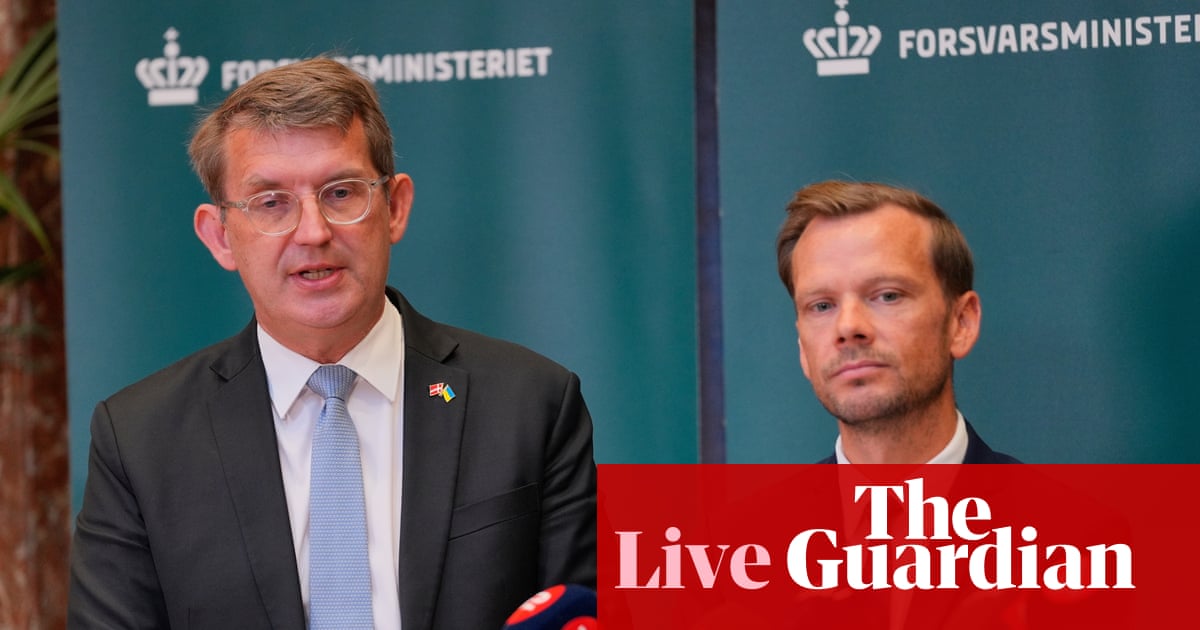
Danish Authorities Boost Security After ‘Actor’ Shuts Down Aalborg Airport—Europe News

Europe at a Crossroads: Denmark’s Drone Crisis Sparks Geopolitical Uncertainty

In recent weeks, Denmark has become the epicenter of a series of unsettling drone incursions in its airspace, exposing vulnerabilities that threaten not only national security but also the broader stability across Europe. Authorities now firmly believe that these attacks are orchestrated by a professional, hybrid entity rather than rogue private operators, marking a significant escalation in the use of drone technology as a tool of strategic disruption. Such systematic attacks, occurring at multiple locations including Aalborg airport, have prompted Danish officials to consider activating Nato’s Article 4 proceedings—an act of consultation that signals heightened concern about external aggression and regional destabilization.

Defense Minister Troels Lund Poulsen has emphasized the sophisticated nature of these operations, likening them to a hybrid attack using different types of drones. This assessment underscores a broader pattern of hybrid warfare—a strategy employed by state and non-state actors designed to create chaos and sow division, often without direct military confrontation. The incident comes amidst a crescendo of geopolitical tension that involves not just Denmark but the entire continent. Analysts from the European Union and global security think tanks warn that these incidents may portend a new era of covert conflicts, where technology-driven asymmetric warfare becomes the norm.

The strategic significance of Denmark’s response cannot be understated. The government’s consideration of requesting Nato Article 4 consultations indicates a potential shift toward collective security measures in the face of evolving threats. Although the country has yet to officially invoke the article, the ongoing engagement with Nato and the European Union reveals a deliberate effort to bolster defenses and establish a unified front. Historically, security experts like Dr. Emily Carter and notable organizations such as EUROPOL suggest that this escalation could serve as a precursor to intensified security cooperation across the Atlantic Alliance, redefining the geopolitical landscape even further.

While Denmark’s leadership states there is no evidence linking the drone incidents to Russia, fears persist over the broader implications of escalating tensions in Eastern Europe. The possibility that these attacks aim to undermine Denmark’s support for Ukraine aligns with patterns observed in recent European confrontations, where technological infiltration has played a tactical role. As the country gears up for a major diplomatic event—the upcoming EU summit—the emphasis on expanding defense capabilities and legal frameworks suggests a definitive move toward hardening national infrastructure against future hybrid assaults. This crisis, often dismissed as a mere technological nuisance, risks evolving into a catalyst for broader geopolitical realignments.

The unfolding story of Denmark’s drone crisis encapsulates a pivotal moment in international affairs—an era where the battleground extends beyond conventional borders into the skies, and where the decisions made today will resonate in the corridors of power for generations to come. The weight of history presses upon Europe’s fragile balance, as the specter of covert warfare clandestinely shifts the trajectory of global peace and security.

Exclusive: Under 1% fueling 40% of Victoria’s crime surge—youth crime on the rise

Victoria’s Rising Crime Wave: A Global Issue that Has Serious Geopolitical Repercussions

In the heart of Australia, Victoria is experiencing a daunting crime surge that extends beyond mere local concern—its ripple effects threaten broader societal stability and international perceptions. Recent data from the Crime Statistics Agency (CSA) reveals a 15.7% increase in criminal offenses for 2024-25, with nearly 639,000 recorded incidents. This trend, centered on escalating thefts, family violence, and youth offenses, has shocked analysts and security experts, prompting debates about the effectiveness of the state’s law enforcement strategies and the societal factors fueling this crisis.

Historically, the rise of organized crime, societal disconnection, and economic pressures have served as catalysts for surge waves of criminal activity—Victoria is no exception. Yet far beyond the state’s borders, this crisis raises questions about geopolitical impact: how do such local crises influence Australia’s international standing amidst regional disputes? Victoria’s crime escalation resonates as a warning for policymakers worldwide, highlighting the critical importance of strong, adaptable law enforcement and social programs in maintaining stability. Analysts like Dr. James Andrews, a senior researcher at the International Institute for Security Studies, warn that persistent crime storms could embolden regional adversaries and weaken a nation’s global image.

In response to these alarming statistics, Victoria’s government is adopting controversial measures, including the new “tough” bail laws that treat young offenders like adults under certain circumstances. Many experts believe these policies are a double-edged sword: while intended to restore order, they risk alienating youth and undermining long-term social cohesion. Moreover, the decision to intensify punitive measures—such as a “two-strike” rule for repeat offenders—aligns with a broader global trend among Shifting governments to prioritize harsh law enforcement tactics over community-based interventions. International organizations, including the United Nations, have long debated the balance between security and social justice, with varying degrees of success and criticism.

Victoria’s crisis underscores a broader truth: societal fragility cannot be mitigated solely through law enforcement. The surge in thefts from cars—up nearly 40%—and record-high family violence cases suggest a society under pressure from multiple directions. Beyond the immediate social implications, these trends could alter demographic compositions, economic stability, and investor confidence, further reshaping regional geopolitics. As global powers observe, the question arises: will Victoria’s response set a precedent or serve as a cautionary tale? Historians like Prof. Laura Cheng caution that neglecting root causes, such as economic disparity and mental health challenges, tends to prolong crises and invite international scrutiny.

As Victoria’s thriving society faces these upheavals, the weight of history presses down with an ominous presence— an unfolding narrative of social resilience tested by adversity. The decisions made in response, and their international echoes, could become a defining chapter in the long story of this nation’s struggle to reconcile order with freedom, security with justice. In a world where chaos often compounds, and stability is fragile, the true measure of a society’s strength lies in how it confronts its darkest hours—for now, the future remains unwritten, and history’s relentless hand continues to shape the outcome.

Please provide the feed content you’d like me to craft the headline from.

MLB’s Quiet Storm: Cal Raleigh Joins Baseball’s Elite with 60 Home Runs in a Single Season

By David Schoenfield | September 25, 2025

Baseball, a sport rooted in tradition and legend, continues to produce stories that captivate fans and redefine the game’s narrative. In a season characterized by improbable power displays and remarkable achievements, Seattle Mariners’ catcher Cal Raleigh has emerged as a true anomaly—an under-the-radar hero who defied odds to reach the elusive 60-home-run mark. Raleigh, a player best described as humble and unassuming, has delivered one of the most astonishing campaigns in recent history, solidifying his place among baseball’s immortals for seasons to come.

Raleigh’s journey from relative obscurity to the epitome of baseball power has been nothing short of extraordinary. He entered this season with little fanfare, having never been an All-Star before 2025 and signing a modest six-year extension worth $105 million— a deal that now looks like a bargain for the Mariners. His season began slowly, with a .184 batting average through his first 13 games. However, an April homer against Texas Rangers reliever Chris Martin ignited a tear that would see him homering six times in six games and ultimately tying the franchise record with 56 home runs—a feat that earned him the distinction as the first catcher in MLB history to hit 56 homers in a season. Such a feat is almost unthinkable, reminiscent of the legendary Babe Ruth or Hank Aaron but achieved quietly, almost humbly, by a player who insists he belongs in the shadows of Mantle and Griffey.

Throughout the season, Raleigh has continually defied expectations, steadily climbing the ladder of greatness. His late-season surge, especially the three homers he blasted in a single game— including his 60th— exemplifies his relentless pursuit of excellence. According to ESPN stats, Raleigh’s ability to pull fly balls— especially with the right hand— has been a pivotal factor in his power. His knack for timing pitches and driving them into the stands has turned the Mariners into a team of fireworks, thrilling fans every night while reminding the baseball world that talent and grit can triumph over traditional power profiles or media hype.

So, what makes Raleigh’s story resonate beyond the scoreboard? It’s the embodiment of baseball’s enduring spirit: a game of surprises, a sport where even the most modest player on the field can etch his name into history on any given night. As noted by Mariners manager Scott Servais, “Cal’s dedication is what truly makes this season special. It’s about the love for the game, and I think fans are inspired knowing that you don’t always have to be the loudest or most flamboyant to make a difference— sometimes, quiet perseverance does.” The Mariners’ pursuit of their first division title since 2001, combined with Raleigh’s historic power display, illustrates how sports can unite communities and inspire future generations.

In a league where records are meant to be broken and legends are born on the simple act of swinging a bat, Cal Raleigh’s season reminds us that greatness often comes from the most unexpected places. As the final games approach and the playoff chase intensifies, it’s clear that baseball’s true magic isn’t just about the scoreboard— it’s about the stories, the memories, and the enduring hope that every game awakens in fans. Raleigh’s journey from the quiet shadows to the loudest stadiums in the league stands as a shining testament: in baseball, as in life, the most powerful moments are often written in silence—but remembered forever in the roars of victory.

Colombia’s president slams U.S. crackdown on drug boats as a tyrannical move

The recent US military strikes in the Caribbean Sea have ignited a fierce international debate over sovereignty, legality, and the future of U.S.-Latin American relations. The Biden administration, continuing a contentious policy from the previous Trump era, launched airstrikes targeting alleged drug-trafficking vessels in what they frame as a necessary crackdown on narcotics entering the United States. However, Colombia’s President Gustavo Petro has denounced these strikes as an “act of tyranny,” warning that such unilateral military actions threaten regional stability and violate international laws. His outspoken opposition underscores a broader sense of Latin American mistrust toward U.S. interventions, especially when international norms appear to be sidestepped in pursuit of drug interdiction goals.

This confrontation is not merely about drug traffickers but reflects a deeper battle over sovereignty and the rule of law across the hemisphere. The Biden administration’s secrecy around the operation—failing to disclose targets, identities of those killed, or legal justifications—has prompted outrage among international legal experts and lawmakers. Many question whether such targeted killings in international waters contravene international human rights laws or if they constitute extrajudicial executions, as flagged by UN authorities. The lack of transparency fuels accusations that the U.S. is prioritizing aggressive tactics over diplomatic efforts, risking to alienate critical regional allies.

Analysts from various international organizations warn that these actions could set a dangerous precedent, transforming the Caribbean Sea into a theatre of shadow warfare where sovereignty is disregarded in the name of combating narcotics. Historians point out that the United States’ history of military interventions in Latin America has often led to long-term instability, interference that has historically favored strategic interests over regional welfare. The question remains: How will such policies reshape the geopolitical landscape? Already, Venezuela and other neighboring nations voice increasing apprehension, seeing the strikes as provocative attempts to destabilize their governments and economic systems.

Meanwhile, President Petro has clearly framed this conflict as an assault on national sovereignty. His call for criminal investigations into U.S. officials involved in these strikes underscores a broader warning—interventionism breeds resentment and undermines mutual trust. As tensions intensify, the implications extend beyond immediate security concerns: they threaten to fracture regional alliances, fueling anti-American sentiment and strengthening nationalist narratives. The international community, including dissenting voices within the UN, is watching closely, with some experts warning that this escalation could unravel decades of diplomatic progress and usher in a new phase of proxy conflicts and rivalries.

As the world grapples with this unfolding crisis, the echoes of history remind us that such decisive moments often _determine the fate_ of nations for generations to come. With the weight of sovereignty, legality, and societal stability hanging in the balance, the geopolitical impact of these decisions will ripple across continents. Public sentiment in Latin America, influenced by a legacy of intervention and resistance, hints at a rising tide of nationalistic resilience—an obstacle that the United States now faces as it navigates an increasingly complex and divided world stage. The pages of history are being written at this very moment—with each strike, each diplomatic rebuff, shaping a future where control is contested not just in the halls of government, but in the minds of nations and peoples threatening to forge their own destinies amid the chaos of international power struggles.

Honor Magic 8 Pro drops a new AI button — tech gets smarter for the next-gen user

Honor Launches the Magic 8 Series: Aiming to Disrupt the Premium Smartphone Arena

In a move highlighting ongoing innovation within the competitive premium smartphone segment, Honor has unveiled its flagship Magic 8 series, combining cutting-edge hardware with emerging AI functionalities. The Magic 8 Pro, set to debut initially in China before arriving in Europe, underscores the company’s ambition to challenge industry titans like Apple and Samsung through strategic innovation and disruptive design. Priced at over €1,000 ($1,200), the Magic 8 aims to deliver flagship-level performance with a focus on AI enhancements, camera prowess, and processing power.

Key to its disruptive approach is the phone’s integrated AI button, a feature that signals a shift in how smartphones prioritize user experience through AI-driven functionalities. Honor clarifies that this button is dedicated solely to AI-related tasks, suggesting a future where smartphones become more intuitive and personalized. Coupled with the latest Qualcomm Snapdragon 8 Elite Gen 5 processor—an upgrade also adopted by the upcoming Xiaomi 17 series—the Magic 8 Pro is positioned as a powerhouse built for high-performance AI applications and demanding workflows. Analysts from Gartner project that such hardware integrations will become industry standard, transforming mobile devices into portable supercomputers.

The business implications of this positioning are clear: Honor is not merely offering a smartphone but is disrupting the traditional flagship formula by emphasizing AI innovation and disruption in user interface paradigms. Additionally, new features like Magic Color, an AI-powered tool for dynamically restyling images and videos using different color palettes, exemplify how AI is being woven into core smartphone capabilities. These enhancements not only elevate the user experience but also open avenues for revenue through app ecosystem upgrades, AI-driven services, and possibly subscription models, echoing trends seen in tech giants like Apple and Google.

With plans to introduce a range of models—including the anticipated Magic 8 Ultra and Mini—Honor is betting on sustained innovation to consolidate its position in the high-end mobile space. The upcoming unveiling of the Magic Pad 3 Pro, also powered by the Snapdragon 8 Elite Gen 5, signals an integrated ecosystem push that could redefine consumer expectations for interconnected devices. Industry experts suggest that the rapid rollout of these advanced models may accelerate a broader industry shift towards AI-centric hardware, with firms like MIT and Stanford emphasizing AI’s role as the next major leap in mobile tech evolution.

Looking forward, the competitive edge for Honor and similar disruptors hinges on their ability to leverage disruptive AI applications and hardware innovations to outpace established incumbents. As giants continue to refine their own flagship offerings, the importance of AI-driven features and high-performance chips will only intensify. The coming months could mark a pivotal moment, where tactical innovation and bold business strategies determine the future landscape of premium mobile technology. For tech enthusiasts and industry watchers alike, the race to dominate the AI-powered mobile future has begun—and the speed of innovation is unlikely to slow down anytime soon.

[post_title]

Messi’s Impact Propels Inter Miami into Playoffs and Reinforces Pursuit of MLS Glory

In a stunning display of skill and leadership, Lionel Messi continues to redefine what it means to be a game-changer in Major League Soccer. On Wednesday night, at the historic Citi Field, the Argentine maestro led Inter Miami CF to a commanding 4-0 victory over New York City FC, sealing their spot in the 2025 MLS playoffs. This triumph marks a significant milestone for the Floridian club, symbolizing their resilience and ambition as they chase historic glory in the league’s competitive landscape.

Messi’s dominance was on full display as he scored twice in the second half, bringing his tally to five goals within just nine days—a testament to his unmatched attacking prowess. According to team head coach Javier Mascherano, Messi’s influence transcends mere goal-scoring. “He has done that too many times in his career,” Mascherano noted, emphasizing Messi’s selfless side. “Sometimes he looks at some teammates who haven’t scored and need a goal more than him.” In a remarkable show of team spirit, Messi passed up a chance for a hat trick in the 83rd minute, instead empowering Luis Suárez to net a crucial goal, exemplifying leadership and camaraderie that are elevating Miami’s collective performance.

Notably, Messi’s recent form places him among the elite in MLS history, becoming just the fourth player in league history to record multiple goals in eight different games in a single season. His contribution has been pivotal in Miami’s push for the Supporters’ Shield, awarded to the league’s top team. With 55 points in 29 games, Miami trails only the Philadelphia Union in the Eastern Conference standings. The team is now setting sights on their next challenge—an away match against Toronto FC—where victory could solidify their quest for league dominance. Mascherano highlighted the urgency, acknowledging the tight schedule. “We have less than 72 hours before facing Toronto,” he said. “We’ll try to rest and recover and play our best, knowing how difficult the game will be.”

Critical Moments and Rising Aspirations

  • Messi’s double in the second half showcased his relentless offensive ability, correcting any doubts about his MLS impact.
  • The decision to pass on a hat-trick opportunity demonstrated Messi’s leadership and team-first mentality, crucial elements for a squad seeking consistency and silverware.
  • Inter Miami’s recent streak—scoring multiple goals in eight of 12 matches—cements their reputation as a formidable, high-scoring team and puts opponents on notice.

As commentators and fans alike marvel at Messi’s extraordinary season, the Boca-born superstar’s influence is clear: he’s not just scoring goals, but inspiring a club and a city to dream big. His leadership has galvanised the team, turning Miami into a bastion of hope and high-performance in MLS. The club’s focus now sharpens on not only making a deep playoff run but also clinching the coveted Supporters’ Shield, the ultimate accolade for consistent excellence throughout the season.

Ultimately, this isn’t merely about the scoreboard—it’s a testament to how sports, especially football, serve as a unifying force, transcending boundaries and inspiring communities. The Miami fans, fueled by Messi’s magic, are embracing the hope of glory, rallying behind their team as a symbol of resilience and national pride. With every goal and every pass, Messi and Miami remind us that football is more than a sport; it’s a reflection of masterful talent, leadership, and the enduring human spirit poised for greatness.

Social Media Auto Publish Powered By : XYZScripts.com