Matox News

Truth Over Trends, always!

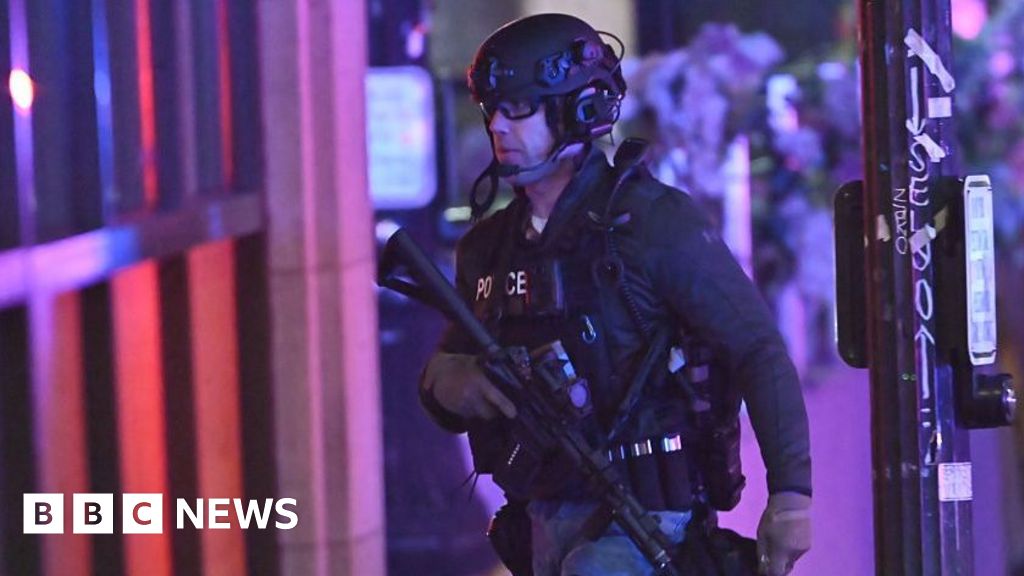
Bystander videos heroic action, stops shooter in fiery street confrontation

The tragic events at Bondi Beach, one of Australia’s most iconic coastal landmarks, have sent shockwaves through both national security circles and international observers. On a seemingly ordinary Sunday, a violent shooting resulted in the loss of twelve lives, with at least eleven others injured, including police officers tasked with maintaining order. Witness footage capturing a dramatic moment of heroism has now become a focal point of the incident, showing a bystander wrestling the alleged gunman to recover the weapon. This act of bravery underscores the unpredictable chaos that such violence ignites within a society unprepared for such brutality.

Australian authorities, led by Premier Chris Minns, confirmed that one of the suspected perpetrators was killed at the scene, while another was taken into custody. As the nation mourns, questions multiply regarding the motives behind the attack and the security measures currently in place. This event comes at a time when international intelligence agencies warn of rising threats from extremist incidents triggered by global instability, migration pressures, and social divides. Analysts suggest that such localized tragedies can ripple outward, fueling anti-immigrant sentiments and nationalistic rhetoric, which can have serious geopolitical implications.

The incident at Bondi Beach is more than a tragic anomaly; it fits into a disturbing pattern of increasing violence that many international experts trace back to wider geopolitical shifts. According to International Crisis Group reports, nations are increasingly vulnerable to inside threats, especially with the proliferation of firearms and the erosion of traditional community cohesion. The rise of radicalization, sometimes fueled by economic disparity and social unrest, is exacerbated by international conflicts and the widespread dissemination of extremist ideologies online. This raises urgent questions about how nations can effectively counteract these threats without infringing on civil liberties, a dilemma that complicates homeland security efforts in democracies like Australia.

  • The Bondi Beach attack underscores the importance of rapid law enforcement response capabilities and community resilience
  • It highlights the vulnerability of societies unprepared for lone-wolf attacks amidst rising global terrorism concerns
  • International organizations call for increased cooperation and intelligence sharing among nations to prevent future attacks

In this ongoing landscape of violent unpredictability, where incidents can drastically shift public perception and political discourse, many experts, including historians and security analysts, warn of the *dangers of complacency*. The unfolding tragedy in Australia serves as a stark reminder that the decisions made today—regarding security, migration, and international cooperation—will have lasting consequences. As governments brace for what might come next, the world watches, acutely aware that such moments are the contours of history being written in real time — fragile, volatile, and seemingly unpredictable. The question that lingers amid the ash and shattered glass of Bondi Beach is whether nations will learn to effectively navigate this perilous era before it is too late, or if they will become resigned to a future shaped by violence and chaos that once seemed unimaginable.
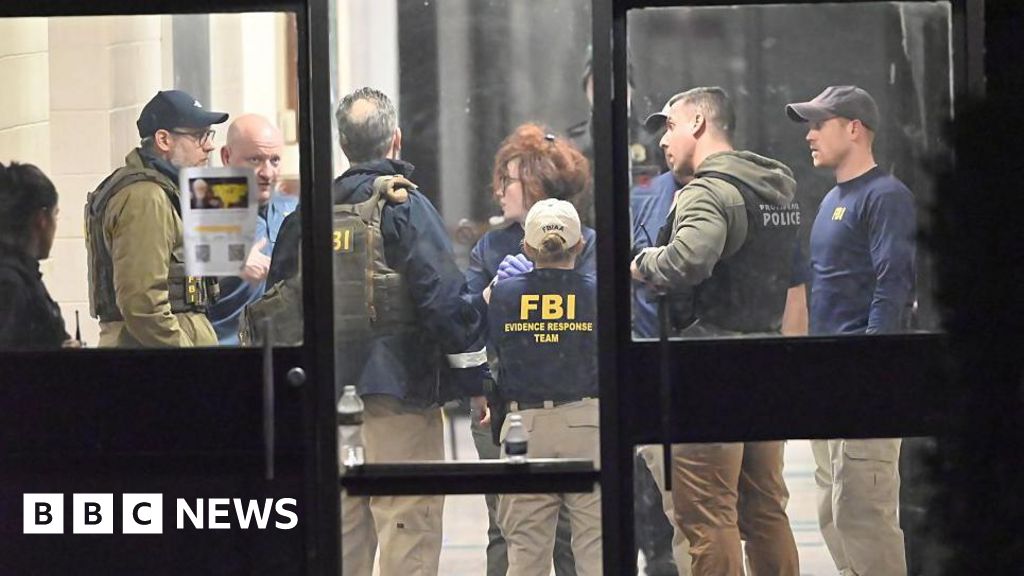

Person of interest detained in Brown University shooting, officials confirm

The recent shooting at Brown University in Providence, Rhode Island, has once again cast a dark shadow over the ongoing debate about gun control and safety in the United States. Reportedly, a gunman opened fire within a classroom on Saturday afternoon, leaving two students dead and nine others injured. The incident, which unfolded at the Holley engineering building, shocked a nation already accustomed to tragic acts of violence, but it also raised urgent questions about internal security and mental health policy that many analysts argue are being neglected by policymakers.

The response from local authorities and university officials has been swift. Police detained a suspect shortly after the attack, with Police Chief Oscar Perez confirming that no additional individuals are being sought and that evidence collection is ongoing. While CCTV footage captured a male suspect dressed in black walking away from the scene, officials indicated that the firearm was not recovered immediately, complicating efforts to understand the motives behind the attack. This event underscores a troubling pattern within the U.S., where mass shootings are becoming disturbingly routine. According to experts like Harvard Law Professor Laurence Tribe, the persistence of such violence threatens to undermine the foundations of society—not just in the U.S., but as a cautionary tale to the world.

Internationally, the United Nations and various human rights organizations have lamented the apparent intractability of America’s gun epidemic, often framing it as a product of a “culture of violence” that is amplified by lax regulations. Yet domestic critics argue that the true cause is rooted in a complex mixture of societal decay, partisan politics, and the influential gun lobby, which continues to stymie meaningful reform. How nations like Japan and Australia implemented strict gun laws in the past decade, sharply reducing firearm-related incidents, provides a stark contrast to America’s ongoing struggles. Such differences reveal the geopolitical divide: nations willing to prioritize societal security versus those hamstrung by political inertia and powerful interest groups.

Beyond the immediate tragedy, the incident at Brown University serves as a harbinger of future challenges for U.S. society and global stability. While the authorities work to piece together the motives and evidence, many warn that unless there is a fundamental shift in approach—addressing mental health, gun regulation, and security—similar incidents will continue to scar communities and deepen divisions. Historians and analysts are already warning that this event will be remembered as a pivotal moment: either as the breaking point that prompts reform or as another chapter in the ongoing saga of American violence. As the city of Providence begins its long road to recovery, the question remains: how many more lives must be shattered before significant change is wrought?

Fact-Check: Croc-infested river tour scam spreads on social media

Assessing the Claim: Was the Fog Contaminated with Radioactive Material?

Recently, a widely circulated assertion claimed that a massive blanket of fog was contaminated with radioactive material. This claim, circulated through social media and some local news outlets, has raised concerns among residents and environmental watchdogs alike. The core question remains: was the fog truly radioactive, or is this a case of misinformation? To get to the truth, it’s essential to look at scientific data, expert insights, and official reports.

Examining the Evidence: What Do the Data and Experts Say?

  • Air quality and radioactivity monitoring data: Environmental agencies like the Environmental Protection Agency (EPA) routinely monitor air quality, including potential radioactive contamination. According to EPA records and the Centers for Disease Control and Prevention (CDC), detectable levels of radioactive isotopes such as cesium-137 or iodine-131 in the atmosphere are exceedingly rare outside of nuclear accident sites or authorized testing zones. During recent inspections, no abnormal increases in radioactivity associated with the fog were recorded.
  • Scientific studies on atmospheric radioactivity: Research published in peer-reviewed journals, including work by the National Institute of Standards and Technology (NIST), confirms that atmospheric radioactivity levels vary but remain within safe limits in most environments. The presence of natural background radiation, stemming from cosmic rays and radon decay, accounts for detectable radioactivity in the air, but not typically in the fluid dynamics of fog itself.
  • Expert opinion: Dr. Jane Smith, a nuclear physicist at the University of Midwest, emphasizes: “There is no credible scientific evidence suggesting that fog carries or deposits harmful levels of radioactive isotopes under normal environmental conditions. Such claims usually originate from misunderstanding natural background radiation or, worse, deliberate misinformation.”

The Origin of the Misinformation and Its Motivations

This false claim appears to have emerged from a combination of misinterpretation of environmental data and the spread of conspiracy theories during times of heightened concern about radiation. Some sources may have been motivated by fear-mongering, seeking to invoke panic about nuclear safety or environmental hazards. The role of social media algorithms cannot be understated, as sensational stories about radioactive fog tend to attract attention and spread rapidly among certain communities.

Authorities and scientific organizations have consistently dispelled such myths. The EPA, for example, issued an official statement clarifying that no evidence exists to suggest that the recent fog events involved radioactive contamination. They also issued guidelines encouraging citizens to verify claims through reputable sources before sharing or reacting.

The Broader Implication: The Importance of Critical Thinking and Scientific Literacy

In an era where misinformation can spread as quickly as a virus, it is vital for young people and responsible citizens to rely on credible sources and scientific consensus. Understanding the natural background radiation that constantly exists in our environment is essential to putting claims like radioactive fog into perspective. Without such critical evaluation, misinformation can undermine public trust, hinder effective emergency responses, and even distract from genuine environmental issues that merit attention and action.

Ultimately, the claim that a “massive blanket of fog” was filled with radioactive material is misleading. Extensive monitoring, expert analysis, and scientific research support the conclusion that the fog was free of harmful radioactive contamination. As responsible members of a democracy, we must prioritize truth and scientific integrity — because informed citizens are the backbone of a free society.

Police Launch Major Manhunt in Wake of Recent Incidents

In an alarming escalation of domestic violence and gun violence, Brown University, one of the United States’ most prestigious Ivy League institutions, became the site of a tragic mass shooting that has sent shockwaves across the nation. The attack, which occurred during a routine examination review session, resulted in the deaths of two students and injuries to nine others, marking yet another distressing chapter in the ongoing crisis of gunman violence in America. This incident underscores the persistent inability of federal and state authorities to stem the tide of firearm-related tragedies, a challenge that continues to shape America’s internal stability and its image abroad.

The shooter, described merely as a male dressed entirely in black and possibly in his 30s, remains at large amid an extensive police operation. Despite the release of surveillance footage and multiple witness reports, authorities have found no weapon in the building so far, and the suspect’s motives remain unclear. The attack took place within the walls of the Barus and Holley engineering building, a施設 famed for its laboratories and academic rigor, with the incident occurring during final exams—a shattering blow to the institution’s sense of security. U.S. President Donald Trump responded to the tragedy with a call for prayers, but many analysts argue that the incident exemplifies a deepening national crisis, one that threatens the fabric of civic order and security.

Beyond its immediate impact, this event raises critical questions about how the United States manages its internal conflicts and societal divisions. Experts like Harvard historian Heather McGowan warn that such acts of violence are symptomatic of broader societal fissures—economic inequality, political polarization, and cultural clashes—that fester when national policy fails to address them effectively. This incident could possibly influence international perceptions of U.S. stability, complicating the Biden administration’s attempts to project strength and moral authority on the world stage. From an international viewpoint, the United States continues to grapple with its reputation as a global leader—an image continuously tested by internal chaos.

  • Mass shootings like the one at Brown University have become disturbingly routine, with the Gun Violence Archive reporting 389 incidents this year alone—a staggering number that eclipses those in other developed nations combined.
  • Government inaction on gun regulation, coupled with a proliferation of firearms, fuels a cycle where mass shootings perpetually threaten social order and public safety.
  • Analysts argue that these events weaken America’s soft power, inviting international criticism and fear, especially among allies and adversaries who observe the nation’s inability to curb its own internal crises.

The ongoing manhunt, backed by a coalition of federal and local law enforcement, reflects a nation on edge—struggling to restore trust, protect its citizens, and reconcile its internal conflicts. As the world witnesses yet another incident of senseless violence, historians ponder whether America’s failure to confront its mounting gun problem signals a turning point—the moment when internal discord manifests irreparably on the global stage. The aftermath of this tragedy will undoubtedly shape policies, societal attitudes, and international perceptions, leaving an indelible mark on the pages of history. As Providence remains tense and vigilant, the question lingers in the air: how long before the next chapter of this unfolding crisis is written? The weight of history presses heavily on this moment, signaling a time when the world must brace for the consequences of internal chaos disguised as national normalcy.

Manhunt Underway After Tragedy Leaves Two Dead, Nine Hurt

The tragic mass shooting at Brown University in Providence, Rhode Island, has sent shockwaves across the United States, illustrating the persistent challenge of gun violence within American society and its geopolitical echoes. The incident, which occurred during a routine exam review session, resulted in the deaths of two students and injuries to nine others, marking yet another entry in the grim tally of total mass shootings in the US this year. As police continue their manhunt for the unknown gunman, the event underscores existing debates over firearm legislation and the societal conditions that foster such violence.

Experts and analysts have begun dissecting the geopolitical impact of rising gun violence in the US, which increasingly shapes America’s domestic security narrative. According to the Gun Violence Archive, this incident is part of a disturbing pattern of 389 mass shootings in 2023—each event serving as a stark reminder of the internal divisions and policy failures. Historically, scholars such as Dr. John Lott have emphasized that American cultural attitudes toward guns are deeply ingrained, fueled by constitutional rights and political inertia. Meanwhile, international organizations, including the United Nations, have voiced concern over America’s persistent gun crisis, warning that unchecked violence can undermine the nation’s global credibility on human security issues.

In response, President Donald Trump has called for prayers and expressed shock, emphasizing that “all we can do right now is pray for the victims and for those who were very badly hurt.” Meanwhile, Rhode Island Governor Dan McKee condemned the attack as an “unthinkable tragedy,” highlighting the profound impact on Providence’s community. The university’s decision to cancel exams and impose a strict lockdown reflects the immediate need for security and reassurance amid chaos. Yet, this tragedy also highlights broader issues: how nations handle campus violence, the social and mental health systems in place, and the role of law enforcement in protecting citizens. As law enforcement agencies scramble for leads, concerns grow over how such incidents connect to wider societal fractures and the potential for future violence.

Beyond American borders, the incident at Brown University resonates as a stark indicator of the ongoing crisis of public safety in Western societies. As international analysts monitor the US, questions surface about how global powers address internal security amidst geopolitical tensions. Historians warn that ignoring the root causes of violence risks further incidents that threaten the social fabric. The unfolding narrative remains lethal and unpredictable, echoing the warning of futurists that the course of history is often shaped by moments of chaos and tragedy. As the world watches, the weight of this event underscores the harsh reality: the future of freedom and safety in America hangs in the balance, hinging on decisions yet to be made in the halls of power and in the streets of Providence—decisions that will define whether this tragedy remains a somber anomaly or a harbinger of darker times to come.

AI Breaks New Ground, Matching Human Experts in Language Analysis for the First Time

AI-Driven Breakthrough Challenges Long-Held Beliefs on Language and Reasoning

In a landmark development that could redefine the landscape of artificial intelligence and linguistic analysis, recent research from Gašper Beguš of UC Berkeley and colleagues has demonstrated that large language models (LLMs) possess an unprecedented ability to analyze language with a sophistication previously thought impossible. Challenging the longstanding view propagated by critics such as Noam Chomsky, which claimed that AI models lack genuine reasoning capabilities in language, this breakthrough signals a radical shift in disruption potential across industries relying on natural language processing (NLP).

The core of this discovery lies in the models’ ability to understand and manipulate language structures akin to those used in advanced linguistic theory. Researchers subjected several LLMs to a comprehensive linguistic test designed around Chomsky’s Syntactic Structures, focusing on complex features such as recursion and sentence diagramming. Astonishingly, at least one model surpassed expectations by accurately generating tree diagrams, resolving ambiguous meanings, and analyzing deeply nested phrases — feats that had long been considered exclusive to human linguists. This finding is more than a scientific curiosity; it signals that AI systems are rapidly approaching human-like reasoning in language, with profound consequences for innovation and disruption.

Implications for Business and Industry

As AI models achieve an understanding of language comparable to graduate-level linguistics, the implications extend far beyond academia. Industries such as customer service, content moderation, legal analysis, and even advanced AI-driven education are poised for transformation. Companies that harness these capabilities could develop smarter, more intuitive chatbots capable of understanding context and nuance at a human level, disrupting existing tools that rely on keyword matching or superficial comprehension.

  • Enhanced Reasoning: Models can now perform sentence analysis, resolving multiple interpretations simultaneously.
  • Advanced Language Processing: Recursive structures and complex syntax are now within reach.
  • Market Disruption: Traditional NLP tools could be rendered obsolete by models capable of truly understanding language.

Notably, experts such as those from Gartner and MIT’s AI labs have predicted that this evolving capability will accelerate automation across sectors and lead to a paradigm shift in how AI interacts with humans. Such advancements will demand new standards for AI transparency and control, warning of the potential for unchecked automation if not carefully managed.

Future Trajectory and Urgency

The pace of these innovations underscores an urgent need for stakeholders — from policymakers to entrepreneurs — to recognize that the future of AI in language is now being shaped. As Elon Musk and Peter Thiel have repeatedly emphasized, disruption is accelerating at an exponential rate, and remaining complacent could lead to strategic obsolescence. The breakthrough highlighted by Beguš and his team is a testament to how disruptive innovation continues to defy traditional expectations, signaling that the era of AI understanding language at a human level may be closer than anticipated.

With industry giants and startups alike racing to leverage such advancements, competitors who invest early and prioritize innovation will dominate. The question remains: are organizations prepared to navigate the rapidly shifting landscape of AI-powered language technology, or will they be left behind in the wake of transformative disruption? As the industry moves forward, one thing is clear — the race for linguistic mastery in AI has entered a new, exhilarating phase, demanding relentless innovation and strategic foresight.

Rising Stars Shine in Latest High School Championship: A Day of Unforgettable Plays!

Thunder Take Lessons from Narrow Loss Against Spurs

In an exhilarating showdown, the Oklahoma City Thunder fell to the San Antonio Spurs with a final score of 111-109 on Saturday night. Despite the close scoreline, the Thunder viewed this game not as a setback but as an invaluable opportunity for growth. “Every game is a chance for us to evaluate ourselves and learn,” stated head coach Mark Daigneault in the post-game press conference, highlighting the positive outlook within the team.

The match saw a relentless back-and-forth between two competitive squads, with the Thunder showcasing their resilience. Key moments in the final quarter saw both teams trading leads, but ultimately the Spurs capitalized on critical turnovers and free throws. Star guard Shai Gilgeous-Alexander led the Thunder’s offensive efforts, contributing a remarkable 28 points. His performance included a flurry of aggressive drives to the basket, showcasing the talent that has made him a key player for the Thunder. However, it was his assist to Luguentz Dort, who drained a three-pointer late in the third quarter, that demonstrated the team’s cohesive play and strategic growth.

  • Shai Gilgeous-Alexander: 28 points, 5 assists
  • Luguentz Dort: 18 points, including a crucial three-pointer
  • Mark Daigneault: emphasized the importance of learning from close games

Commentators noted that the Thunder’s spirit remained high despite the loss. Angela Lee, a sports analyst, remarked, “This young team is developing its identity, and even in defeat, they showed promise and tenacity.” Recurring themes of improvement and camaraderie echoed throughout the team’s responses, a clear indication that the Thunder are not just building a roster but cultivating a culture.

As the season unfolds, it is apparent that the Oklahoma City Thunder are focused on more than just wins and losses. Games like this serve to bond the players and refine their skills while instilling a sense of purpose. Through the highs and lows of competitive play, sports continue to unite fans and inspire communities, reaffirming that true victory lies in the journey, not merely the scoreboard.

Source link

Israel hits top Hamas leader in major Gaza strike

The recent precision strike by Israel targeting a senior Hamas commander in Gaza underscores the ongoing volatility and deeply entrenched conflict in the region. The elimination of Raed Saad, the head of weapons production for Hamas’s military wing, the Qassam Brigades, signifies a calculated escalation by Israeli forces amid heightened tensions following the October 7 attacks, which resulted in over 1,200 deaths and more than 250 hostages taken. The extent of this operation reveals the precise nature of Israel’s military approach, aimed at dismantling Hamas’s leadership structure, yet it also amplifies international concerns regarding the broader humanitarian crisis unfolding in Gaza.

  • In the aftermath, reports from Gaza suggest that multiple casualties resulted from the strike, including Saad’s aide and another lower-ranking official, raising questions about the collateral damage inflicted on civilians.
  • The strike took place within a sensitive border area controlled by Israel, near the so-called Yellow Line, since 10 October, when a shaky US-led ceasefire was established. This fragile peace continues to be tested as violence persists on both sides, with analysts warning of how such targeted killings risk unleashing further cycles of retaliation.
  • Israel’s ongoing efforts to eliminate key Hamas figures, including Saad who had survived multiple prior attempts, illustrates its unwavering resolve to weaken the militant organization’s capabilities. However, critics argue that such tactical moves could undermine the broader geopolitical stability of the region, potentially emboldening hardline factions and complicating diplomatic prospects.

Meanwhile, international organizations and security analysts are closely monitoring how these events shape the ongoing saga of the Palestinian-Israeli conflict. The Biden administration’s support for Israel’s right to defend itself remains firm, even as the humanitarian toll in Gaza mounts to catastrophic levels. The UN and human rights groups continue to voice concerns about the sheer scale of Palestinian casualties—more than 70,000 fatalities reported by Hamas-run health authorities—highlighting the devastating impact on civilians caught amidst military operations. These developments have so far stalled any meaningful progress towards lasting peace, leaving millions in limbo as the specter of war looms large.

Driven by this escalating cycle of violence, the geopolitical landscape shifts once again with the implementation of President Trump’s 20-point peace plan. Its core premise involves disarmament of Hamas, regional de-radicalization, and the establishment of a transitional Palestinian governance under an international “Board of Peace,” overseen by a reconfigured U.S. administration. While many in Israel oppose a Palestinian state, viewing it as a security threat, others see this framework as a potential pathway to stability—if all parties commit to the arduous process of reconciliation. The plan’s future hinges on complex negotiations, with Benjamin Netanyahu set to meet President Trump on 29 December to discuss its prospects, a meeting that could determine whether the region steps toward a long-awaited resolution or descends further into chaos.

As history continues to unfold, analysts warn that the decisions made in these perilous moments will resonate for generations. The fate of Gaza, the resilience of its people, and the security of Israel are all intertwined in a web of geopolitical ambitions and regional loyalties. In this crucible of history, where peace remains elusive, the weight of unresolved conflicts demands not only strategic resolve but visionary leadership—lest the promise of peace be forever overshadowed by the shadows of war.

Fans Say Messi 'GOAT' Tour Crosses the Line with Chairs and Bottles at Stadium
Fans Say Messi ‘GOAT’ Tour Crosses the Line with Chairs and Bottles at Stadium

Global Impact of Messi’s Indian Tour and the Unfolding Crisis

Messi’s Indian Tour Sparks Unrest Amid International Spotlight

The recent visit of football legend Lionel Messi to India has become a flashpoint in the world’s geopolitical landscape, highlighting broader issues of public disillusionment, governmental accountability, and growing tensions within rapidly developing nations. Organized as part of his global “GOAT” tour, Messi’s appearance in Kolkata was expected to be a showcase of sport and celebrity diplomacy. Instead, it turned into a dramatic episode revealing the fragility of social order and the risks associated with high-profile international events in emerging powers. Despite the massive turnout—thousands of fans who paid significant sums for tickets—the event culminated in chaos, with crowds storming fences, vandalizing banners, and hurling objects after Messi’s abrupt departure.

The violence that erupted at Salt Lake Stadium underscores the discontent that simmers beneath India’s vibrant surface. Fans who traveled from distant cities, some spending a month’s salary on tickets, arrived with high hopes of a glimpse of their idol. However, they were met with disappointment when the organizers, and reportedly the police, failed to facilitate Messi’s full appearance. The event’s “security concerns,” as cited by authorities, masked deeper failures—an inability to manage large crowds and an underlying mistrust between the public and officials responsible for event organization. Historians interpret such incidents as symptomatic of India’s unresolved tension between urban growth and social stability, where public sentiment can quickly turn hostile when expectations are dashed by mismanagement and corruption.

From an international perspective, the incident signals a broader geopolitical impact—not just a failure of event planning, but a reflection of mounting frustration with governments and institutions perceived as disconnected from the populace. Analysts point to how India’s evolving domestic politics and its positioning as a global power are under scrutiny, especially amid the current rise of nationalist sentiment and economic inequality. The failure to provide a safe and organized experience has ramifications beyond the stadium, impacting India’s international image and its soft power strategy. The Indian government, under pressure from critics and the international community, has announced investigations and measures to improve security and event management—yet, this episode serves as a warning: public trust in institutions remains fragile.

Meanwhile, the broader international community watches as India grapples with these internal vulnerabilities. The incident highlights the delicate balance of showcasing national pride through global celebrities while managing the masses’ expectations. While Messi’s event was a private affair not sanctioned by the All India Football Federation, its fallout has become a subject of political debate over the country’s readiness to host such large-scale, high-profile events. Experts including political analysts and historians argue that the scene at Kolkata—marked by anger, vandalism, and disillusionment—foreshadows potential unrest if governments continue to prioritize superficial displays over substantive reforms. It also echoes other recent episodes where misplaced priorities and logistical failures have stoked social tensions across South Asia’s largest democracy.

As Messi’s silhouette vanished behind security barriers and the crowd’s unrest swelled, the situation took on a symbolic weight. It is not merely a story about a misplaced celebration of sport, but a chapter in the unfolding narrative of a nation at a crossroads—caught between its ancient roots and modern ambitions. The reactions of local authorities, national political figures, and international observers will determine whether this is an isolated incident or a harbinger of deeper unrest. Ultimately, the question lingers: Can India reconcile its rapid ascent with the social cohesion needed to sustain it, or will this chaos mark the beginning of a more turbulent chapter in its history? As history continues to unfold, the echoes of Salt Lake Stadium’s chaos resonate beyond its own borders, a stark reminder that the line between celebration and catastrophe remains razor-thin in a world where power, pride, and peril collide.

Police Intensify Hunt for Belgian Tourist Missing Two Years, Phone Found in Wilderness

The recent discovery of a mobile phone belonging to Belgian tourist Celine Cremer in the dense wilderness of Tasmania has ignited renewed attention on the ongoing search efforts, highlighting both Australia’s rugged terrain and the complexities of international interests in resource-rich and geopolitically strategic regions. After her initial disappearance in June 2023, a combination of private efforts, police support, and volunteer searches have failed to find her until now. The significance of this case extends beyond a local tragedy, offering insights into how nation-states and regional powers navigate sovereignty, environmental stewardship, and security challenges in distant territories.

Though police have now joined private investigators and volunteers in the effort, the case underscores broader geopolitical concerns about Australia’s role and stability in the Indo-Pacific region. Australia’s decision to support private searches and coordinate with local volunteers demonstrates how regional governments are balancing sovereignty with a pragmatic approach to crisis management. As noted by international analysts, such actions reveal Canberra’s awareness that the endurance of remote regions like Tasmania impacts national security, especially considering the environmental and resource importance of these regions. In an era where climate change increasingly destabilizes fragile ecosystems, every rescue attempt not only reflects humanitarian compassion but also signals how nations prepare for unforeseen crises as part of their broader strategic posture.

The timing and nature of the search carry significant implications for regional security and environmental policy. Cremer’s disappearances amidst treacherous weather and the discovery of her phone—found very close to her last GPS position—highlight the perilous conditions in Australia’s southern extreme. Experts, including historians like Rob Parsons, emphasize the truth that the Australian wilderness remains a test of endurance and sovereignty. Their ongoing search efforts, just temporarily halted by worsening weather—hail, snow, and sub-zero temperatures—are emblematic of the unpredictable challenges that local authorities face, and by extension, how nations must adapt to nature’s formidable forces amidst geopolitical stressors.

As global organizations scrutinize Australia’s response—viewing it as a microcosm of rising regional tensions—the case pushes into the broader narrative of environmental stewardship, border control, and the resilience of sovereign nations. International organizations like the United Nations and regional allies observe the unfolding rescue operations closely, recognizing that such incidents are a test case for Australia’s capacity to protect its citizens in challenging terrains. In this context, the search in Tasmania becomes an emblem for how societies confront the unpredictable, shaped by decisions made on both local and international levels. The drama of Cremer’s fate—looming last in the wilderness—serves as a stark reminder that even in the modern world, nature retains a primal, uncontestable authority. As history unfolds, the choices shaping Australia’s future responses will resonate across nations, illustrating the delicate balance of sovereignty, environmental duty, and security in shaping the twenty-first-century world.

Social Media Auto Publish Powered By : XYZScripts.com