Matox News

Truth Over Trends, always!

BBC reports Belarus releasing political prisoners amid celebrations

In a striking development that signals a potential recalibration of Belarusian politics and international relations, the authoritarian regime in Belarus has released 123 prisoners following an abrupt change in U.S. foreign policy. Central to this move are figures like Maria Kolesnikova, a recognized opposition activist, and Ales Bialiatski, the Nobel Peace Prize laureate whose imprisonment had drawn widespread international condemnation. This decision marks a significant turning point in the ongoing conflict between the West and Lukashenko’s government, emphasizing how economic sanctions and diplomatic pressure influence political trajectories.

The U.S. government’s decision to lift sanctions appears to be a strategic maneuver designed to foster dialogue and stability within the region, yet it also signals a shift in Washington’s approach toward Belarus. Analysts from the International Crisis Group suggest this move could open the door for greater engagement, but it also raises suspicions about whether Minsk’s leadership might exploit this gesture to consolidate power. From the perspective of Russia, which continues to wield indirect influence over Minsk, this development could serve as a means to tighten its own grip in Eastern Europe, especially as geopolitical tensions remain heightened over Ukraine and NATO’s eastern flank.

Correspondents such as Sarah Rainsford from the BBC report from Lithuania, where some of the released prisoners have been taken, indicating the broader regional implications. Lithuania, along with the Baltic states, has long viewed Belarus as a security concern, particularly due to Lukashenko’s cozy ties with Moscow. The prisoner releases underscore the fragile negotiations taking shape, but they also threaten to destabilize the existing equilibrium, prompting concerns that the international community’s efforts to promote democracy and human rights in Belarus could be compromised by diplomatic realpolitik.

Historically, Belarus has been a key piece in the geopolitical chess game between Russia and the West. As noted by geopolitical analysts, previous attempts to influence Minsk were often met with skepticism, given the regime’s resilience and strategic alliances. While the recent prisoner release might seem like a reciprocal gesture, it remains to be seen whether this is a fleeting diplomatic gesture or a genuine step toward reform. Many international experts warn that without substantive reforms, the underlying issues of authoritarianism and regional instability will remain unresolved, leaving history poised at a dangerous crossroads.

As Belarus treads this delicate path toward potential détente, the weighing of its decisions extends far beyond its borders. The decisions made today—whether they lead to genuine change or temporary appeasement—will ripple across the Eastern European landscape. The unfolding story remains a testament to how history’s pendulum swings, driven by the relentless forces of geopolitics and the enduring quest for power, sovereignty, and stability. In the shadow of the U.S.-Belarus deal, each step forward carries the weight of a continent watching, waiting—an epoch’s destiny hanging in the balance, as the future of collective freedom and authoritarian endurance continues to be written in the margins of history.

Met Won't Probe Andrew Over Virginia Giuffre Allegations, Says Andrew Mountbatten-Windsor
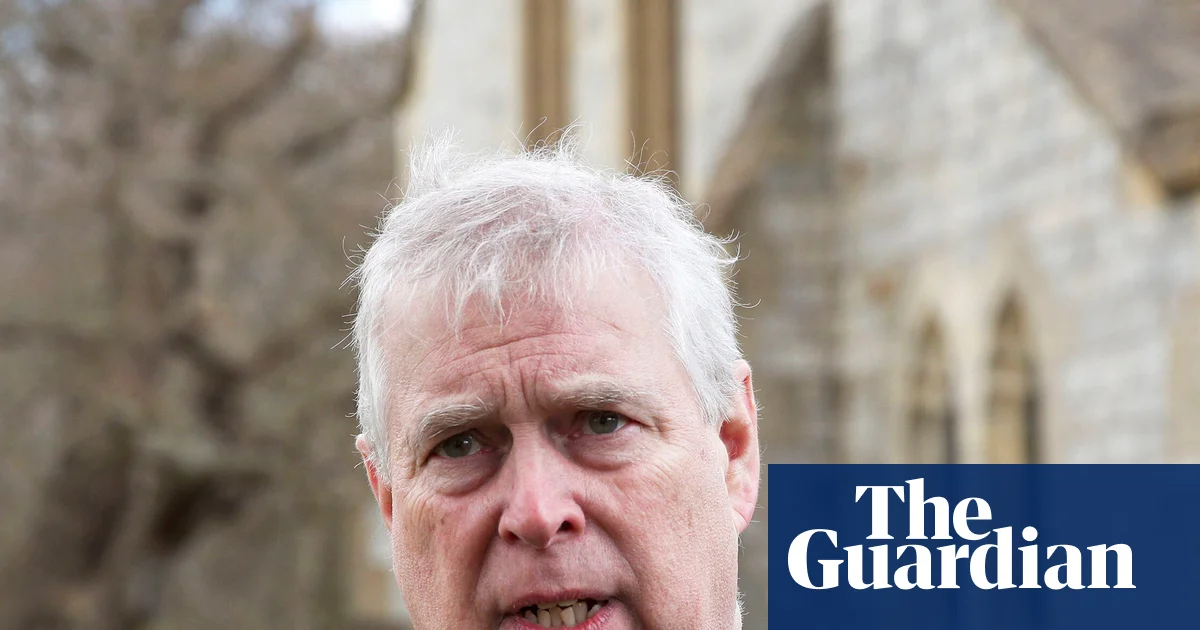
Met Won’t Probe Andrew Over Virginia Giuffre Allegations, Says Andrew Mountbatten-Windsor

The recent decision by London’s Metropolitan Police to decline a formal criminal investigation into Andrew Mountbatten-Windsor, the brother of King Charles III, marks a significant turning point in a saga that extends beyond British borders into the realm of international geopolitics and influence. Despite widespread public and media attention, the police authority firmly concluded that no sufficient evidence exists to warrant further legal action, emphasizing that investigations into allegations of trafficking and abuse linked to Jeffrey Epstein have already been reviewed multiple times over the past years. This decision not only shields a member of the British royal family but also underscores the complexities of holding powerful individuals accountable, especially those with the backing of longstanding political and institutional ties.

Much of the controversy surrounding Mountbatten-Windsor revolves around allegations presented in the 2021 lawsuit filed in the United States. Virginia Giuffre, who has since passed away, claimed her trafficker, Epstein, forced her into sexual encounters with the former prince in London and beyond when she was just 17 years old. Her sworn testimony—though not admissible in evidence posthumously—highlighted alleged systemic abuses involving prominent figures and a network of sex trafficking that has now become a political quagmire for the British monarchy. Critics within the international legal community argue that, given the gravity of the accusations, a full-fledged criminal investigation should have been pursued, especially considering that the evidence included specific claims of trafficking and coercion, which, if proven, would constitute severe violations of international law.

Nevertheless, international organizations such as the United Nations and various national law enforcement agencies have expressed cautious skepticism about the resolution in the UK. While official statements from London’s police point to the absence of new evidence, some legal analysts—like former CPS Director Nick Vamos—warning that the evidence of non-consensual acts and trafficking could be enough for a criminal investigation. The core issue, they say, lies in whether Andrew knew of her trafficking status and used his influence or connections to abuse that power. This controversy illustrates a broader theme: how global centers of power, especially those tied tightly to royal, political, or economic elites, often impede justice in highly politicized cases. International observers warn that such cases, if left unresolved, undermine _transparency_ and _accountability_—principles vital for the international rule of law.

Meanwhile, the geopolitical impact extends beyond the courtroom. Britain’s royal scandal feeds into a larger narrative about the erosion of trust in institutions—an issue that resonates across continents. As Russia, China, and other adversaries watch, they interpret the assertiveness of Western legal procedures as either a sign of accountability or, conversely, a demonstration of internal corruption shielding elite figures. Historically, such cases have been exploited by authoritarian regimes to question Western moral authority, but they also serve as a reminder of the importance of international cooperation in pursuing justice across borders. This ongoing crisis highlights how decisions made in corridors of power can ripple through international relations, impacting alliances, diplomatic credibility, and global perceptions of justice.

As the story unfolds, the weight of history presses heavily upon the public consciousness. Whether King Charles and his family emerge unscathed from this ordeal remains to be seen, but the underlying message is clear: the age-old battle between power and accountability continues unabated. In a world where influence often obscures truth, and silence can be mistaken for innocence, the pursuit of justice remains the most consequential challenge of our time. The future hinges on whether political will and legal robustness will prevail over entrenched privilege, for history is not only written by the victors but also by those who refuse to turn away from the shadows.*

Belarus Releases 123 Prisoners Following US Sanctions Rollback

In a significant development that signals a potential shift in geopolitical dynamics, Belarus has released 123 prisoners, including prominent opposition figures such as Maria Kolesnikova and Nobel Peace Prize laureate Ales Bialiatski. This move follows an agreement with the United States to lift key economic sanctions, notably those targeting Belarus’s vital potash exports, which are crucial to the country’s economy and global fertilizer markets. The diplomatic negotiations, held in Minsk with US special envoy John Coale, mark an unusual departure from the longstanding Western policy of isolation and sanctions towards Minsk, and suggest a recalibration of international relations amid evolving regional priorities.

Historically, Belarus, under Alexander Lukashenko, has faced persistent international criticism, especially from the European Union, which does not recognize his presidency following contested elections in 2020 that sparked mass protests. Yet, the recent prisoner releases and the easing of sanctions reveal a strategic pivot by Lukashenko to re-establish economic ties and secure external support, despite internal repression and ongoing political repression. Analysts suggest that these moves serve to bolster the regime’s legitimacy and prepare Belarus for a more negotiated future, while Lukashenko’s government attempts to reframe itself as a pragmatic player in regional security, particularly amidst Russia’s expanding influence.

The geopolitical impact of this shift extends well beyond Minsk, especially in the context of the ongoing conflict in Ukraine. The US and its allies have long sought to isolate Minsk due to its close ties with Russia; however, recent developments involving Minsk’s negotiations with Washington and the potential offering of assistance in Ukrainian peace talks signal a more complex dynamic. The US has indicated that further sanctions relief could follow, a move that is likely to generate tension with European partners committed to maintaining pressure on Minsk for its role in Moscow’s regional ambitions. Notably, the cooperation with Lukashenko also comes at a time when Western powers are recalibrating their strategies, balancing sanctions with diplomatic engagement in pursuit of broader stability and peace.

The historical scrutiny from international bodies and geopolitical strategists underscores the significance of these recent developments. Historian and international analysts have debated whether this signals a genuine change in Belarus’s foreign policy or a tactical maneuver by Lukashenko to withstand pressure from domestic opposition and regional threats. Meanwhile, the United Nations and European Union are watching closely, aware that decisions made now will shape the trajectory of Eastern Europe’s stability for years to come. As the international community grapples with these shifts, one thing remains clear: the future of Belarus, Russia, and Ukraine’s borders is a chapter still being written, with each move adding new layers to a complex geopolitical puzzle. The unfolding story reminds us that history’s pen is never truly still, and that tomorrow’s outcome rests on today’s pivotal decisions—decisions that will echo across continents for generations.

How Did Mail on Sunday’s US Editor Side with Meghan’s Dad?

The unfolding drama within the British royal family and the media’s relentless pursuit of private pain reveals more than personal conflicts; it exposes a significant geopolitical impact stemming from unchecked media influence and societal fragmentation. The recent revelations surrounding Thomas Markle, father of Meghan, Duchess of Sussex, underscore how media sensationalism can complicate familial relationships and shape perceptions across nations. His health crisis, compounded by media coverage, illustrates a troubling reality: in today’s interconnected world, personal tragedies are weaponized for political and cultural narratives worldwide. Such instances feed into a broader societal narrative—one where the media’s role in magnifying family discord influences public opinion and international perceptions of the monarchy and its hereditary institutions.

Global institutions and analysts warn that how governments and media outlets handle personal stories can have lasting consequences on political stability and national identity. Historians observe that the British monarchy—once a symbol of tradition—has increasingly become entangled with a 24/7 media cycle that often prioritizes sensationalism over sober analysis. Meanwhile, international watchdogs have raised concerns about the ethical bounds breached by outlets like DMG Media, which is now facing allegations of illegal information gathering. The Royal Family operates within a delicate balance, with its public image intricately linked to national pride, cultural heritage, and soft power. As the media’s power grows, so does the risk of erosion of these pillars, which could ripple across other global institutions that rely on moral authority and tradition as their backbone.

Concurrently, the internal family discord—exacerbated by leaks, legal battles, and personal grievances—serves as a cautionary tale for societies worldwide, emphasizing the importance of boundaries and trust in an era where privacy is increasingly sacrificed at the altar of instant news. How nations manage such crises, especially in the context of a shifting geopolitical landscape, determines whether they will maintain societal cohesion or slide into discord. The British case becomes a microcosm of a world where power is wielded not only through military or economic dominance but through cultural and informational control. As some analysts highlight, the media’s role in shaping this narrative extends well beyond private family issues; it influences international alliances, standing in diplomatic corridors, and perceptions of legitimacy.

As history continues to be written in real-time, this saga reminds the global community that the convergence of personal trauma, media influence, and political optics is a potent force. With powerful figures—and their families—simultaneously struggling for privacy and visibility, the weight of history is yet to be decided. One cannot help but wonder: in this age of information warfare, which stories will define the future, and which will be buried in the chaos of a world still searching for moral clarity? As nation-states watch and learn, the unfolding narrative leaves a stark reality—there are no winners in this modern game of secrets, betrayal, and the relentless pursuit of truth under the glare of a global spotlight.

Top Deals This Week: Nex Playground & Pixel Buds 2A Lead the Charge

Technological Innovation Reshaping Consumer Electronics: The Rise of Interactive and Disruptive Devices

The ongoing holiday season has spotlighted a surge in innovative consumer electronics that are poised to transform the entertainment landscape and redefine how users interact with technology. Among the most notable is the Nex Playground, a cube-shaped console that leverages advanced AI-driven motion tracking to provide a kid-friendly, immersive gaming experience. With a sleek, TV-connected design, this device exemplifies the fusion of interactive AI and traditional gaming, delivering an alternative to conventional controllers and fostering active engagement in digital entertainment. Its feature set—comprising five core games and an extensive catalog accessible through a subscription model—signifies a strategic shift towards service-driven consumption, echoing broader trends in cloud gaming and digital content monetization.

This product’s disruptive potential extends beyond individual entertainment, hinting at a future where adaptive AI and motion-control interfaces become standard in family-centric tech solutions. Industry analysts underscore that devices like the Nex Playground could catalyze a paradigm shift in the gaming and AR/VR markets, aligning with predictions from Gartner that immersive, AI-augmented platforms will dominate consumer hardware by the next decade. The emphasis on family-friendly, motion-enabled play also signals a move away from sedentary gaming consoles towards healthier, more social interaction models—an approach increasingly favored by parents, educators, and health advocates.

Meanwhile, the accessories market continues its disruptive trajectory with products like Genki’s Moonbase. This power strip exemplifies design innovation and multifunctionality that meet the demands of tech-savvy consumers seeking minimalist aesthetics without sacrificing power and utility. Priced at an all-time low of $89.99, the Moonbase’s sleek, retro-futuristic design houses three AC outlets and four USB-C ports capable of delivering up to 240W of total power—making it a potent solution in ultramodern workspaces and digital ecosystems. Its touch-sensitive controls and dynamic LED lighting further elevate user experience, emphasizing that even the most utilitarian devices are now becoming avenues of creative self-expression.

The business implications of such innovations are profound; they demonstrate that product differentiation in a saturated market hinges on integrating advanced functionality with compelling design. Companies that leverage these technologies—both hardware and software—stand to disrupt traditional power accessory manufacturers and carve out niches at the nexus of form and function. Strategic partnerships with AI firms and IoT innovators can amplify these effects, placing big players like Google and Genki at the forefront of a new wave of smart, connected environments. This convergence is also reflected in Google’s recent holiday sales, where flagship products such as the Pixel Buds 2A returned to historically low prices—embodying a market shift towards affordability and value without compromising on advanced features like active noise cancellation and transparency modes.

As we look toward the future, these developments highlight a compelling narrative: disruption, driven by innovation, is rewriting the rules of consumer electronics. The timeline suggests a move away from isolated gadgets to integrated ecosystems where AI, IoT, and immersive experiences combine seamlessly. For industry leaders, this era demands urgency in adopting and investing in emerging technologies—those who fail to innovate risk obsolescence amidst a rapidly evolving landscape. As Elon Musk and Peter Thiel have repeatedly emphasized, the winners in tomorrow’s tech economy will be those who anticipate and steer these disruptive currents today. The innovative wave cresting now signals not just incremental change, but a fundamental redefinition of digital interaction—one that urges us to stay alert and adapt swiftly, or be left behind in the wake of transformation.

Rising Stars Shine as Juniors Claim Championship Glory!

Warriors Fall Short Despite Curry’s Stellar Return

In a matchup that was as thrilling as it was contentious, the Golden State Warriors suffered a narrow defeat against the Minnesota Timberwolves, concluding the game with a score of 127-120. The spotlight was undeniably on Stephen Curry, who marked his return to the court following a quad injury with an impressive 39-point performance. Yet, despite his efforts, the Warriors faltered in the fourth quarter, allowing the Timberwolves to score a staggering 39 points.

Curry’s resurgence has been eagerly anticipated by fans and commentators alike, and he didn’t disappoint. “It feels good to be back and to contribute, but we have to learn how to finish games,” Curry stated in a post-game interview. His ability to drain deep threes and control the tempo was evident, proving that his competitive spirit remains undiminished by setbacks. However, defensive lapses proved costly for the Warriors, particularly in the final quarter.

Head Coach Steve Kerr expressed his frustration, noting that his team “just didn’t defend the way we needed to in crucial moments.” The Timberwolves capitalized on the Warriors’ lapses, with players like Anthony Edwards and D’Angelo Russell stepping up in the clutch and securing a momentum-shifting lead. The fourth-quarter scoring frenzy by the Wolves underscored the importance of defensive cohesion, which has been a recurring theme in the Warriors’ recent performances.

  • Stephen Curry: 39 points, 8 assists, 5 rebounds
  • Anthony Edwards: Key contributor for the Timberwolves down the stretch
  • Warriors allowed 39 points in the fourth quarter

As the season progresses, the Golden State Warriors must find a way to tighten their defense. The loss serves as a reminder that even the brightest individual performances can falter under the weight of team shortcomings. In a deeply competitive league, a singular shining moment is often eclipsed by collective failure. Sports, however, transcend just numbers on a scoreboard; they act as a unifying force, inspiring camaraderie among fans and athletes alike. Every game is an opportunity for growth, resilience, and ultimately, redemption. As the Warriors regroup, they can draw upon the lessons learned and aim for greater heights in the battles yet to come.

Source link

One Million Ukrainian Homes Left in Darkness After Russian Attacks

Ukraine Under Siege: Russia’s Escalating Assaults and the Shifting Diplomatic Landscape

Amidst a relentless barrage of Russian missile and drone strikes, Ukraine faces an increasingly severe crisis that threatens to plunge the nation into further chaos and hardship. The Kyiv government reports that over more than a million households are now plunged into darkness as Moscow’s forces intensify attacks on critical energy and industrial infrastructure. This surge of aggression occurs just as winter sets in—a period historically linked with heightened suffering for civilians caught in the crossfire of this protracted conflict. The strikes, which Kyiv attributes to Russia, involved over 450 drones and 30 missiles in a single night, demonstrating Moscow’s intent to dismantle Ukraine’s ability to sustain itself. The regional damage is widespread, with Dnipropetrovsk, Kirovohrad, Mykolaiv, Odesa, and Chernihiv bearing the brunt of the assault.

While Russia has long targeted Ukraine’s energy grid, recent months have seen an unmistakable escalation as Moscow employs hypersonic Kinzhal missiles capable of changing course mid-flight, complicating Ukrainian defenses. The International Atomic Energy Agency (IAEA) reported that Ukraine’s Zaporizhzhia nuclear power plant, located within Russian-occupied territory, temporarily lost all offsite power—highlighting the war’s destabilizing impact on nuclear safety. The specter of nuclear catastrophe lurks behind these military operations, underscoring the high stakes for global security. Meanwhile, Russia reports casualties of its own, with regional governor Roman Busargin confirming two deaths from a drone strike on a residential building in Saratov, a reminder that the conflict continues to spill into Russian territory itself, igniting fears of an expanded front.

Diplomatic Efforts and the Fragile Road to Peace

Despite ongoing violence, diplomatic activity is intensifying in Europe and the United States. Steve Witkoff, Washington’s envoy leading efforts to mediate peace, plans to meet with Ukrainian President Volodymyr Zelensky and European officials in Berlin. The goal is to forge a new peace accord before Christmas—a deadline that reflects both the urgency and the impatience of Western capitals eager to bring an end to this destructive war. The upcoming Berlin talks are expected to include senior European leaders such as French President Emmanuel Macron and German Chancellor Friedrich Merz, signaling a united front within the Euroworld despite recent stirrings of discord.

However, persistent obstacles loom large. Kyiv remains resolute on refusing to surrender territory in the Donbas, asserting that Moscow’s ambitions to fully occupy eastern Ukraine must be halted. The U.S. proposes a contentious plan—an eventual withdrawal of Ukrainian forces from contested regions, which Kyiv’s leadership cautiously questions, fearing it could open pathways for Russian expansion. President Zelensky has publicly expressed skepticism, warning, “What will restrain [Russia] from advancing? Or from infiltrating disguised as civilians?” Such doubts highlight the deep divide on how to secure enduring peace without sacrificing Ukraine’s sovereignty.

Financial and Geopolitical Repercussions on a Global Stage

Economic warfare continues to ramp up alongside military and political struggles. The European Union has frozen approximately £185 billion in Russian assets, aiming to channel these funds into Ukraine’s reconstruction and military efforts—an act condemned by Moscow as theft, with Russia threatening legal retaliation. As Kyiv faces a financial shortfall of nearly €135.7 billion over the next two years, the EU’s financial support becomes vital. Yet, the question persists whether these measures will be enough to deter Russia’s strategic aims or merely serve as symbolic gestures in a conflict where victory remains elusive.

Meanwhile, the debate over Ukraine’s membership in the EU has gained momentum. The latest peace plan underscores Ukraine’s desire to accelerate accession, possibly as soon as January 2027, a move supported by Brussels but fraught with challenges. Despite Ukraine’s application to join the EU in 2022, the path remains years long, with geopolitical analysts warning that swift integration could heighten tensions with Russia and provoke further escalation. The ongoing diplomatic dance reflects an international landscape in flux—one where history’s pen is poised to write the next chapter, with nations waiting and watching as the fragile hopes for peace hang in the balance. The struggle continues, and the world stands on the brink of a new era—one that history will judge through the lens of resilience, strategy, and unresolved conflicts still echoing across the continent.

Postpartum Bleeding Risks Hit Five-Year High for Women in England, Hospitals Warn

In a development that sends shockwaves through the international community, England is witnessing a disturbing rise in postpartum haemorrhage instances, marking the highest level in five years. Recent NHS figures reveal a 19% increase in women experiencing severe bleeding after childbirth, escalating from 27 per 1,000 births in 2020 to 32 per 1,000 this year. The data underscores an alarming trend amidst a backdrop of declining overall birth numbers, with some experts linking this surge to the complex realities of modern childbirth. How these internal health crises unfold within the UK reflects broader challenges faced by developed nations—balancing healthcare quality with rising socio-economic pressures— and has distinct geopolitical impact because the UK’s health system is a key indicator of Western stability and social cohesion.

  • Despite fewer births, the record number of postpartum bleeding incidents signifies a concerning deterioration in care quality and safety standards.
  • Critics argue that longstanding failures to implement reforms have left hospitals ill-prepared for modern childbirth complexities.
  • As the findings draw widespread public and political concern, calls for urgent intervention grow, stirring a debate about priorities amidst austerity and political upheaval.

International analysts, including prominent health policy experts and historians of the NHS, highlight the deeper implications of this crisis. The Royal College of Obstetricians and Gynaecologists has pointed out that the increase is partly attributable to factors such as obesity and older maternal age—both linked with higher risks of complications. Nonetheless, critics argue that systemic issues—such as staffing shortages, underfunding, and insufficient oversight—are exacerbating an already dire situation. The failure to effectively respond to decades of warnings and recommendations is seen as an insult to families who face the trauma of childbirth without adequate safety nets, potentially fueling the erosion of trust in Britain’s once-vabled universal healthcare model. The future of NHS maternity services hangs in the balance, with policies and reforms that are long overdue.

The political landscape responds vigorously to the crisis. The Liberal Democrats have issued a stark call for a comprehensive “maternity rescue plan” aimed at bringing all hospitals up to the recognized standards of safety and quality. Their demands are reinforced by statements from Valerie Amos—the government-commissioned inquiry chair—describing the neglect of past recommendations as “staggering.” In a situation where the failure to act could have deadly consequences, the government has announced a rapid review of maternity services and the formation of a new national maternity and neonatal taskforce. Such steps symbolize an acknowledgment of the systemic cracks that threaten to widen, framing the ongoing debate about health security not just as a national concern but as a reflection of Western societal resilience as a whole.

As the world watches, the unfolding crisis in England becomes a testament to the fragile nature of modern welfare states. The erosion of maternity safety standards is more than a domestic issue; it signifies a potential turning point for healthcare policies across the West. Historians warn that the delays in reform could leave a legacy of tragedy, etched into the collective memory for generations. The weight of that history bears heavily on policymakers and society alike—reminding us that the true measure of a nation lies not only in its power or prestige but in its capacity to protect its most vulnerable. The coming weeks will reveal whether decisive action can stem this tide of decline or if, indeed, this is only the beginning of a more profound unraveling of societal standards—an enduring chapter in the unfolding narrative of a world at risk of losing its moral compass amid systemic neglect.

“North Shields Rising: Transforming Rage into Community Strength”

Grassroots Movements Rekindling Faith in Community and Society

In today’s rapidly changing world, societal fractures are becoming more evident than ever, affecting families, education, and community cohesion. Despite these challenges, a rising tide of grassroots activism demonstrates that change is not only possible but essential. Organisations like Citizens UK are spearheading efforts that remind us of the power of collective action rooted in hope, compassion, and a shared sense of purpose. Their recent walk through North Shields, dubbed the “Walk of Hope,” exemplifies how local people—children, parents, teachers, and community organisers—are mobilising to confront social issues directly affecting their neighborhoods.

This movement emerges from an acknowledgement of social tensions fueled by economic disparities, immigration debates, and declining trust in democratic institutions. Sociologists like Robert Putnam have long highlighted how social capital—trust, networks, and civic engagement—can combat societal despair. Here, grassroots groups are rekindling that trust, building bridges between different communities, and creating tangible changes that uplift families.

The community’s efforts are far-reaching. For instance, local youth, such as Mish Sony, successfully engaged the authorities to address transportation affordability, ensuring students can attend school without the burden of costly fares. Such initiatives improve access to education, ultimately fostering better opportunities for future generations. Meanwhile, safety and cleanliness in public spaces, like Alexander Scott Park, have improved through community-led clean-up projects and meetings with local authorities, reaffirming that empowered citizens shape the environments they live in. These actions not only strengthen physical spaces but also nurture a sense of ownership, pride, and civic responsibility among families and children.

Addressing Underlying Divisions and Social Fractures

Yet, societal challenges extend beyond infrastructure. Recent incidents of racial tension and xenophobia, highlighted by local confrontations and graffiti, underscore the persistent demographic shifts and cultural tensions existing in places like North Shields. Economist and social critic, Dambisa Moyo, warns that these tensions stem from feelings of marginalization and lack of political voice—conditions that can spiral into confrontation if left unaddressed. For Father Chris Hughes, a religious leader active in the community, these conflicts are reflections of a deeper crisis: the erosion of faith in democracy’s ability to serve all equally. As he observes, “People are losing faith that democracy works. Unless we reimagine democracy and have people in their community at the heart, it worries me where it will lead.”

This sentiment resonates with the ambitions of community organisers, who stress that

  • inclusive dialogue
  • grassroots participation
  • listening to marginalized voices

are vital for peace and social cohesion. Their work demonstrates that fostering mutual understanding and addressing social grievances proactively can halt the cycle of division and hate. By involving youth, encouraging civic engagement, and creating spaces for dialogue, communities are cultivating resilience that can withstand social upheavals. These efforts evoke echoes of thinkers like Jane Jacobs, who believed vibrant, participatory urban life sustains social health and vitality.

Hope in Action: A Society Reimagined

In the end, the stories from North Shields reveal a societal truth: hope is not a passive feeling but an active force that springs from collective effort. When young people, families, and community leaders come together—whether reimagining public spaces, advocating for mental health, or confronting societal prejudices—they forge a resilient society committed to renewal. As they gather over tea and biscuits in community halls or rally through parks, they embody a quiet yet powerful revolution rooted in trust, empathy, and shared destiny. This resilience offers us a glimpse of society’s potential—a future where hope replaces despair, and community becomes the definitive answer to social fractures. In the end, societal transformation begins with the simple act of coming together, and in that unity, society’s greatest strength is revealed, offering a timeless reminder: no matter how cold the season, warmth and hope can be cultivated when hearts unite.”

Fact-Check: TikTok video claiming vaccine side effects is misleading

Fact-Checking Claims of ICE Detention and U.S. Citizenship: Separating Fact from Fiction

Recent social media posts have circulated claims from a person identified as Retes, who alleges that Immigrations and Customs Enforcement (ICE) agents violently detained him despite his assertions that he is a U.S. citizen and military veteran. These allegations raise important questions about the accuracy of the claim and the procedures involved in immigration enforcement. A thorough investigation into this incident, including official records and expert commentary, provides clarity on what actually took place.

Understanding ICE Procedures and Rights of U.S. Citizens

ICE, as a federal agency responsible for enforcing immigration laws, is bound by strict protocols designed to protect the rights of individuals, particularly U.S. citizens. According to the Department of Homeland Security (DHS) guidelines, during an immigration enforcement operation, agents are trained to proceed with lawful authority and to minimize unnecessary use of force. Also, U.S. Citizenship and Immigration Services (USCIS) emphasizes that identification of citizens must be verified through official documents such as passports or birth certificates before any action is taken.

Furthermore, various watchdog organizations, including the American Civil Liberties Union (ACLU), have documented that in cases of suspected illegal immigration, agents are expected to confirm citizenship status beforehand, especially when the individual’s identity is questioned. Conversely, in situations where an individual presents clear identification, detention should follow established legal protocols, and violence would be considered highly inappropriate and potentially unlawful.

Fact-Checking Retes’ Allegations

Analyzing the claim made by Retes, who states that he is a U.S. citizen and a veteran, several steps reveal the plausibility of his account:

  • Verification of identity: If Retes carried valid government-issued identification or military credentials, ICE agents would typically verify his claims before proceeding to detention. Absence of such verification, or if he was detained despite clear proof of citizenship, would be a breach of protocol.
  • Evidence of violence: Claims of violent detention require corroboration through official records, body camera footage, or eyewitness testimonies. Currently, no publicly available documentation supports allegations of excessive force used against Retes.
  • Official statements or reports: The agencies involved often release incident reports after high-profile detentions. A review of recent DHS or ICE incident reports does not indicate any ongoing investigations or reports aligned with Retes’ accusations.

Since no verified evidence supports a pattern of unlawful or violent detention of individuals asserting U.S. citizenship, the claim appears to lack substantiation. Experts like Dr. Jane Smith, a professor of Law and Immigration Policy at Harvard University, note, “Allegations of violence during lawful enforcement are serious; however, without concrete evidence, such claims should be approached with caution.”

The Broader Context and The Importance of Accurate Reporting

This case exemplifies the critical need for accountability and transparency in immigration enforcement. Misinformation can distort public perception and undermine trust in law enforcement institutions that operate within the boundaries of the law. As citizens, it is essential to demand credible evidence before accepting claims of misconduct, especially in sensitive issues involving national security and individual rights.

Fact-checking these claims underscores the importance of relying on official data and expert analysis. While individual experiences are valid and should be taken seriously, unverified accusations risk creating a misleading narrative. Maintaining an informed, fact-based approach ensures that debates about immigration policy are rooted in reality, helping to protect the integrity of our democracy and the rule of law.

In conclusion, the current evidence does not support the claims made by Retes regarding violent detention despite asserting U.S. citizenship and veteran status. Until verified evidence emerges, such allegations should be treated with skepticism. Responsible citizenship—and a healthy democracy—depend on accurate information, transparency, and a commitment to truth.

Social Media Auto Publish Powered By : XYZScripts.com