Matox News

Truth Over Trends, always!

RBA Raises Rates, Won’t Let Recession Hit Australia, Bullock Warns

The Reserve Bank of Australia has announced a significant increase in its interest rates, signaling a firm stance against persistent inflation amid a backdrop of international turmoil. The central bank lifted the cash rate target to 4.1%, erasing previous relief measures last year, and left room for additional hikes in the future. Michele Bullock, the RBA governor, emphasized that robust employment growth and ongoing consumer spending continue to exert upward pressure on prices. While rising petrol costs contributed to inflationary concerns, Bullock clarified that the primary drivers remain the excess demand within the economy and price volatility linked to Iran’s ongoing conflict.

This decision signals a cautious yet assertive approach by Australia’s monetary authorities, driven by a broader international trend among central banks facing the specter of inflation. Unlike the United States, United Kingdom, and the European Union, which anticipated holding their rates steady, the RBA opted for a rate hike, highlighting Australia’s unique vulnerability to both domestic economic momentum and geopolitical instability. The ongoing war in Iran has aggravated fears of fuel shortages and higher energy costs globally, adding fuel to the inflationary fire. The World Bank and international analysts warn of the potential for the conflict to ripple across markets, amplifying inflationary pressures while complicating policy responses.

The Middle East conflict, particularly the escalation in Iran and the broader regional destabilization, has sharpened the geopolitical stakes. With global crude oil supplies threatened, energy-importing nations like Australia find themselves caught in a tightening vise: inflationary prices rising alongside a resilient labor market. The Australian Treasury and security analysts concur that the developing regional crisis will likely exacerbate inflation, forcing central banks to enact more aggressive monetary tightening. Meanwhile, Jim Chalmers, the Australian treasurer, acknowledged that the regional conflict has worsened inflation challenges, emphasizing ongoing fiscal measures to mitigate household and business impacts. These international shifts underscore the fragility of economic recovery in an era increasingly defined by geopolitical volatility.

Some experts argue that Australia’s rising rates are a warning sign for the global economy — a sign that the era of easy monetary policy is definitively waning. Dr. Brendan Rynne, chief economist at KPMG, warned that economic activity in Australia was already vulnerable before the regional conflict, and recent rate hikes merely accelerate the risks. The narrow vote within the RBA—five in favor of raising rates and four against—illustrates the delicate balancing act policymakers face: curtailening inflation without triggering a recession or soaring unemployment. As history marks a pivotal point, the financial future remains uncertain, yet the heavy hand of geopolitics continues to impact the economic fabric of nations worldwide. The decisions made today will echo through generations, shaping the resilience of societies in a world where the shadows of war threaten to unravel economic stability.

English women report feeling pressured during maternity care, charity warns

Addressing the Erosion of Informed Consent in Modern Maternity Services

In recent reports, the disturbing reality of coercive practices within maternity care has come to the forefront, exposing a troubling gap between medical standards and the lived experiences of many women. The charity Birthrights gathered testimonies from 300 individuals across England, revealing how authoritative language and systemic pressures undermine a woman’s *basic right* to make informed decisions about her body and her childbirth experience. These reports serve as a stark reminder that the fabric of equitable and respectful healthcare is fraying, especially for vulnerable communities.

One recurring theme, highlighted by women such as Megan Rogerson from Hull, indicates that mothers often feel pressured or coerced into medical procedures like caesarean sections, without clear explanations or genuine consent. Rogerson’s account of being scheduled for a C-section during her second birth, with no prior discussion, exemplifies a systemic failure to uphold patient autonomy. Such practices erode the trust between families and healthcare providers, impacting not only individual wellbeing but also broader societal perceptions regarding respect for human rights, especially among marginalized groups. When families lose confidence in the system, the societal ripple effects threaten the cohesion and moral fabric of our communities.

The Roots of Coercion and Its Impact on Society

The racial disparities and social inequalities in maternity care further complicate this picture, with Hazel Williams, CEO of Birthrights, emphasizing that Black and Brown women face the highest risks of rights violations and loss of bodily autonomy. These disparities mirror historic societal inequities that sociologists and historians have long studied: systems of marginalization create persistent barriers, undermining the fundamental ethical principle that all women should receive personalized and respectful care. The consequences transcend individual health; they threaten societal trust in institutions and deepen the cycle of inequality.

Organizations like the Royal College of Obstetricians and Gynaecologists acknowledge these systemic issues, advocating for more investments in training to ensure that medical staff are equipped to support genuine informed choice. Without this, societal instability persists, as families see their hopes for safe, respectful, and equitable care dashed by systemic shortcomings. It is a moral imperative, as Dr. Alison Wright asserts, that healthcare not only be safe but respectful of individual voices and rights, fostering a culture where bodily autonomy is sacrosanct and protected.

Rebuilding Trust and Cultivating a Society of Respect

The challenge now lies in transforming these systemic issues into opportunities for societal renewal. Addressing cultural shifts and demographic changes requires concerted effort from policymakers, healthcare leaders, and communities alike. The goal must be to rebuild trust — to create an environment where families feel empowered rather than intimidated, where informed consent is a true standard, and where every child’s right to a safe and dignified beginning is protected. Investing in cultural competence, increasing transparency, and holding institutions accountable are steps in the journey towards societal healing.

As history teaches, societal change often begins with the recognition of its deepest wounds. In this moment, society stands at a crossroad: continue down a path of neglect and systemic injustice, or forge a new path towards respect and justice. The hope lies in the possibility that future generations will look back on this era not with shame, but with pride — knowing that society chose to listen, to reform, and to heal its most vulnerable members. The challenge is monumental, yet within it lies the potential for a society more aligned with its highest ideals of dignity, respect, and human rights.

Rising Stars Shine as Local Teams Battle for Championship Glory!

NBA Draft Prospects: Future Stars on the Horizon

As the excitement builds for the upcoming NBA draft, league insiders are buzzing about potential game-changers like Darryn Peterson and AJ Dybantsa. Both players are generating significant interest among teams looking to strengthen their rosters for the upcoming season. With their impressive skill sets and athleticism, they are being touted as foundational pieces for any franchise willing to invest in their development.

Scouts are particularly impressed by Darryn Peterson, whose dynamic playing style has made waves this season. His ability to control the tempo of the game and deliver awe-inspiring assists has left many analysts scratching their heads, wondering how a young player can have such a profound understanding of the game. According to former NBA coach, Mike Brown, “Peterson has the kind of court vision you rarely see. He’s not just a player; he’s a facilitator. Teams will take notice.”

On the other hand, AJ Dybantsa, with his versatile scoring ability and fierce defense, is shaping up to be another high-demand pick. Commentators note that his incredible work ethic sets him apart from the competition. “Dybantsa is the sort of player any team would be lucky to have. His dedication is unmatched, and he thrives in high-pressure situations,” stated Stephen A. Smith, a prominent sports analyst. His stats illustrate that he has consistently performed under challenging circumstances, making him a worthy candidate for an early selection.

  • Darryn Peterson: Exceptional court vision; praised for facilitating plays.
  • AJ Dybantsa: Versatile scorer; remarkable defensive skills and work ethic.
  • Both players are viewed as essential building blocks for future NBA teams.

As the date for the draft approaches, the stakes only continue to rise. These prospects symbolize the drive and promise that the NBA embodies. With the potential to change the fortunes of franchises and bring passionate fans back to their seats, Peterson and Dybantsa remind us how sports transcend mere statistics and gameplay. They embody hopes and dreams, reinforcing the notion that basketball is not just a contest on the hardwood, but a unifying force, bringing people together in shared excitement and community spirit.

Source link

Michael B. Jordan Celebrates Oscars Win with Classic In-N-Out Burger Feast

Across the world, cultural phenomena often transcend national borders, influencing geopolitical strategies and societal values in subtle but profound ways. The American fast food chain, In-N-Out Burger, has long been associated with Hollywood glamour and elite social events, particularly its longstanding connection with the Academy Awards. Since 1994, this brand has been a staple at Vanity Fair’s renowned Oscar afterparty, symbolizing how American pop culture continues to wield soft power—a phenomenon that many analysts see as a manifestation of cultural diplomacy. Such events exemplify the way entertainment and consumer brands serve as tools for international influence, shaping perceptions of the United States while reinforcing its cultural dominance worldwide.

However, the implications of these cultural exports extend beyond mere entertainment. Many world leaders and diplomatic circles observe how American lifestyle branding, exemplified by iconic brands like In-N-Out, contributes to a covert form of influence that can sway public opinion and societal aspirations. Historians argue that the pervasive reach of American media—bolstered by corporations and Hollywood—acts as a catalyst in shaping national identities and elevating Western ideals across diverse societies. Meanwhile, international organizations such as the United Nations increasingly recognize the need to balance cultural exchanges with the preservation of local traditions and sovereignty, particularly in regions where Western influence is perceived as a threat to indigenous values.

The global geopolitical impact of these cultural intersections is complex. In an age where information and cultural content are rapidly disseminated via digital platforms, the dominance of American brands and media creates a form of soft power that can undermine traditional regional power centers. Some geopolitical analysts warn this dynamic fuels the tension between Western liberalism and emerging authoritarian regimes that seek to assert their own cultural narratives. As nations grapple with this tension, international institutions like the World Trade Organization and regional alliances are tasked with managing the delicate interplay between economic interests and cultural sovereignty. The decisions made today—whether in trade policy, censorship, or cultural promotion—will determine the contours of the global order for generations to come.

Ultimately, these developments underscore how choices by corporations, governments, and cultural icons reverberate through the fabric of society. From the glamour of Hollywood to the corridors of diplomatic power, the ongoing saga of influence and resistance unfolds. Historians and international analysts warn that the trajectory of this cultural imperialism could either cement Western values as universal or spark a resurgence of regional identities and sovereignties. As the world watches, the fading echoes of history’s past struggles—between empire and independence, tradition and change—persist, reminding us that the unfolding story of geopolitics is as much about ideas as it is about power. The future remains uncertain, yet one certainty endures: history’s grand narrative continues to be written, and its next chapters are yet to be revealed.

Fact-Check: Claim about global warming impact rated Mostly True

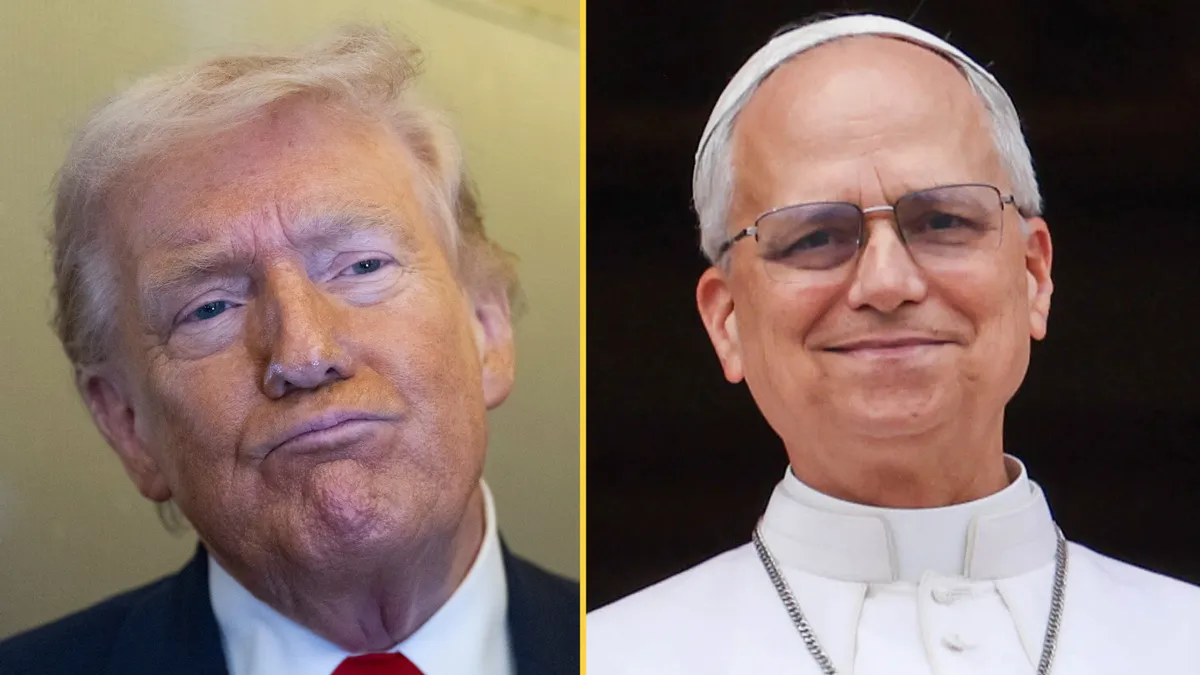
Unmasking the Truth: The Claim of a Presidential-Papal Confrontation and the Role of AI-Generated Misinformation

Recently, circulating claims alleging a confrontation between the president and the Pope gained traction on social media platforms, particularly Facebook. These assertions, accompanied by sensational images and fabricated quotations, have sown confusion among the public. A close examination by independent fact-checkers, experts, and reputable institutions reveals that these claims are **misleading and fabricated**. As responsible citizens committed to truth and informed discourse, we must understand how such false narratives spread and why verifying information is crucial for safeguarding democracy.

According to comprehensive investigations carried out by fact-checking organizations such as PolitiFact and FactCheck.org, the so-called presidential-papal confrontation originated from a series of AI-generated images and text simulations that exploited the public’s trust and curiosity. These organizations have demonstrated that the images depicting the president and the Pope in a heated exchange are digitally manipulated, with no basis in real events. Moreover, analyzed communications attributed to the Pope or the president have been found to be **completely fabricated**, created by AI algorithms designed to mimic human speech and imagery without factual grounding.

The Role of AI in Spreading Misinformation

  • Experts from MIT’s Media Lab and Stanford’s Center for Research on Foundation Models have identified AI models capable of generating realistic yet fake images, videos, and texts — often termed “deepfakes.”
  • These tools can craft believable scenarios, sometimes indistinguishable from authentic content, especially when shared without critical scrutiny.
  • The shared content on Facebook, which included manipulated images and AI-generated dialogues, was analyzed by cybersecurity specialists and found to be **artificially produced** and not based on any verified interaction or event.

Verifying Sources and Recognizing Fabrications

In assessing claims like these, credible sources are essential. Recognized fact-checking institutions recall that the Pope’s communications are thoroughly vetted by the Vatican and the media outlets directly affiliated with or authorized by the Holy See. No credible reports or reputable news agencies have ever documented such a confrontation between the president and the Pope. Additionally, social media posts claiming firsthand accounts often lack verifiable evidence or credible witnesses, which is a red flag for misinformation.

Furthermore, experts highlight that the proliferation of AI-generated content underscores the importance of media literacy today. As Dr. Emily Chen, a digital literacy researcher at Johns Hopkins University, notes: *“Fake images and texts can circulate rapidly, and without fact-checking, the public risks being misled into believing false narratives. Critical evaluation of sources and cross-referencing with trusted outlets are more vital than ever.”*

The Broader Impact and Responsibility

It is essential to recognize that false claims—such as fabricated confrontations between high-profile figures—do more than spread confusion; they undermine public trust and distort democratic discourse. Responsible journalism and active verification play crucial roles in maintaining an engaged and informed citizenry. Social media platforms, while offering unprecedented reach for information dissemination, also bear responsibility for flagging and removing deceptive content, especially content generated by AI tools optimized for misinformation.

In conclusion, the claim about a presidential-papal confrontation being a real event is thoroughly discredited as AI-generated misinformation. This episode exemplifies the importance of vigilance and discernment in the digital age. As responsible individuals, recognizing the signs of synthetic content and relying on verified sources uphold the integrity of our democratic processes. Truth remains the cornerstone of a free society, and combatting misinformation is a collective effort towards safeguarding our shared future.

Cuba’s power grid fails, leaving millions in the dark and highlighting urgent needs ahead

Amid growing economic discontent, Cuba faces an acute energy crisis intensified by a prolonged U.S. blockade on oil shipments. For decades, the island has struggled with economic hardships, but recent developments have thrust the fuel shortage into the international spotlight. The blockade, which prohibits the sale of oil and related goods to Cuba, has significantly limited the island’s access to vital energy supplies, thus crippling its capacity to sustain both industry and everyday life. Analysts warn that this ongoing embargo not only hampers Cuba’s domestic stability but also exemplifies the enduring effectiveness of U.S. economic leverage in the Caribbean region.

The geopolitical impact of this crisis extends beyond Cuba’s borders, demonstrating how economic sanctions serve as powerful tools in the broader U.S. strategy to influence regional politics. According to geopolitical experts and international organizations like the United Nations, the blockade’s consequences ripple across neighboring nations, affecting trade routes, regional security, and diplomatic posturing. Historically, commentators such as Dr. James Roberts of the International Institute of Geopolitical Studies argue that such measures underscore a continued effort by the U.S. to curtail Cuba’s alliances with adversarial states, notably Venezuela and Russia, thereby maintaining regional dominance. The energy shortages risk destabilizing Cuban society further, as essential services—healthcare, transportation, and food supply—suffer under the weight of fuel scarcity.

Meanwhile, the international community remains divided in its response. While some nations scrutinize the U.S. embargo, arguing it violates principles of sovereignty and economic development, others uphold it as a necessary measure to pressure Havana into political reform. The European Union and various Latin American countries have called for a reassessment of the sanctions, emphasizing the humanitarian toll and the need for constructive engagement. However, critics contend that these measures serve to entrench authoritarian practices and prolong Cuba’s economic stagnation. The United States, under the current administration, pledges to maintain the blockade, asserting that only through continued pressure will Cuba be compelled to undertake reforms. This stance, viewed by many analysts as a strategic move, ensures that the geopolitical chessboard remains tightly controlled by Washington’s interests.

As history unfolds, the situation in Cuba exemplifies a broader struggle: how global powers wield economic tools to shape the destiny of nations. The ongoing crisis underscores a fundamental question—whose interests are served when the economic lifelines of countries are severed? With each passing day, the weight of history presses down, and the choices made by leaders echo in the future of the Caribbean and beyond. In this volatile arena, the delicate balance of power and influence continues to shift, leaving observers and participants alike wondering—how long can the flames of conflict and sanctions burn before the entire regional fabric is forever altered?

Afghanistan Blames Pakistan for Deadly Hospital Attack in Kabul

Escalating Tensions in South-Central Asia: Cross-Border Conflict and Humanitarian Crisis

The recent escalation of hostilities along the Afghanistan-Pakistan border has alarmed international observers and reignited fears of a broader regional conflict. Reports of airstrikes targeting a hospital in Kabul, reportedly causing hundreds of casualties, have fueled accusations and denials, with Afghanistan alleging Pakistani military strikes as the cause of the devastating attack. Conversely, Pakistan has dismissed these claims, asserting that its military operations only targeted militant infrastructure without causing civilian casualties. This diplomatic standoff underscores a deeper geopolitical crisis, where accusations of cross-border terrorism and territorial infringements threaten to destabilize an already fragile region.

International organizations and analysts are raising alarm over the potential for a wider conflict that could destabilize the entire South Asian subcontinent. The UN Security Council recently adopted a resolution urging Taliban-ruled Afghanistan to combat terrorism more effectively while condemning all forms of terrorist activity. However, the underlying accusations of harboring militant groups such as the Pakistani Taliban continue to poison bilateral relations. Experts warn that persistent cross-border clashes—fueled by a complex web of militant networks, historical grievances, and strategic interests—could lead to an all-out regional war if not managed swiftly and judiciously. The breaking point remains fragile, and the lines between warfare and diplomacy are dangerously blurred.

History studies and international analysts like those at the International Crisis Group highlight that such tensions are not new but are exacerbated by recent political shifts. The Taliban’s return to power in Afghanistan, coupled with Islamabad’s persistent accusations of Kabul providing safe havens for militants, creates a perfect storm of mistrust. Additionally, Pakistan characterizes its military operations as necessary measures against terrorist threats, asserting that their target sites are precise and without collateral damage. Meanwhile, Afghanistan responds with devastating images of hospital ruins and mass casualties, which further galvanize internal outrage and international concern. As both sides dig in, the risk of unintentional escalation grows—a dangerous game that could ignite a much larger conflict with unpredictable consequences for global security.

Ultimately, this crisis exemplifies the dangerous intersection of geopolitics, militant extremism, and national sovereignty shaping the 21st century landscape. The world watches with mounting trepidation as the consequences of diplomatic failures threaten to spiral into the chaos of prolonged warfare and human suffering. The weight of history hangs heavily on the shoulders of international leaders, who must navigate these treacherous waters—not merely for regional stability but for the future of global peace itself. As the shadows deepen over Kabul and Islamabad, the unfolding story continues to write itself in the blood of innocents and the decisions of nations—an ominous reminder that in this shattering era, history remains an unfinished, all-consuming narrative, waiting for its next chapter.

SEC Mandates Biannual Earnings Reports to Boost Transparency and Investor Confidence

SEC Advances Proposal to Relax Quarterly Earnings Reporting, Paving the Way for Industry Shift

The U.S. Securities and Exchange Commission (SEC) is on the brink of a seismic reform that could reshape the landscape of corporate transparency and market dynamics. According to recent reports from the Wall Street Journal, the SEC is preparing a formal proposal to allow publicly listed companies to dispense with the rigid quarterly earnings reports, opting instead for semiannual disclosures. This potential policy shift signifies not just a regulatory change but a disruptive force that could realign the fundamental expectations of transparency, investor engagement, and corporate strategy in the American market.

The push for less frequent reporting stems from mounting concerns over the costs and operational burdens that accompany quarterly filings — a requirement rooted in historical regulatory frameworks dating back over five decades. Industry insiders, including executives and market analysts, argue that this outdated model inhibits innovation by compelling companies to prioritize short-term earnings over long-term strategic growth. “The quarterly reporting requirement remains a barrier for startups and tech giants alike who seek agility and less distraction,” notes Dr. Lisa Johnson, a leading analyst at MIT’s Sloan School of Management. The potential move toward semiannual reporting could lower compliance costs and encourage more companies to go public, especially in the fast-evolving tech sector, where rapid innovation often conflicts with bureaucratic reporting cycles.

Prominent voices such as SEC Chairman Paul Atkins and former President Donald Trump have expressed support for reconsidering the annual burden on corporations. Discussions with stock exchanges about next steps are already underway, signaling an intent to modernize the regulatory infrastructure to foster greater industry agility. However, the process remains in an early stage, with any substantive change subject to a public comment period and approval vote. Historically, similar reforms have taken hold in the European Union and the United Kingdom, where mandatory quarterly reports were phased out roughly a decade ago, giving companies the opportunity to opt for semiannual disclosures. Yet, many firms in those markets still voluntarily report quarterly, driven by investor demand for near-real-time data, emphasizing the tension between transparency and innovation.

The implications of this regulatory evolution are significant. For disruptive technology firms and emerging startups eyeing public markets, reduced compliance overhead could serve as a catalyst for faster scaling and increased investment. It may also inspire a broader trend of disintermediation—where dominant players leverage agility to outpace competitors mired in bureaucratic inertia. On the flip side, some market advocates warn of potential downsides: less frequent reporting might reduce transparency, potentially increasing market volatility or eroding investor confidence if not carefully managed. Nonetheless, the broader industry must grapple with the undeniable fact that innovation often demands regulatory frameworks attuned to the pace of technological change.

Looking ahead, the proposed shift to semiannual reporting underscores an urgent need for stakeholders—including regulators, investors, and tech entrepreneurs—to adapt quickly. As Gartner and other forecasting services emphasize, the next wave of business disruption hinges on whether regulatory bodies can strike a balance between fostering innovation and ensuring market integrity. The clock is ticking: this potential policy change could serve as a catalyst for a radical transformation in corporate governance, signaling a new era where agility and innovation take precedence over outdated reporting conventions. The question remains: will U.S. markets follow Europe’s lead in driving reform or cling to legacy practices at a time when being first to adapt could determine the winners in the global technological race? The future of corporate transparency will be written in the coming months — and its impact could ripple through every corner of the business world.

Judge mandates ICE to free Minneapolis man after unjust 50-day detention

United States immigration enforcement practices have once again become a focal point of debate following a recent historic ruling by a federal judge that condemned the apparent excesses and misconduct of ICE. Elvis Joel TE, an asylum seeker from Equador, was unlawfully detained for 50 days amidst a harrowing series of events that highlight the increasingly aggressive posture of U.S. immigration authorities. His case underscores a broader shift in immigration policy, which threatens to irreparably damage not only the legal integrity of the system but also the societal fabric of immigrant communities. This incident has ignited international concern, especially given the disturbing treatment of Elvis TE’s two-year-old daughter during the raid in Minneapolis, an incident that drew protests and sparked widespread outrage across human rights circles.

The judge’s ruling, issued by Judge Katherine Menendez, explicitly declared that Elvis TE’s detention was “not proper” under existing laws, exposing unconstitutional actions by federal agents. The case gained global prominence after the arrest—carried out without a warrant, amidst chaos—saw agents break into the family home, shattering a car window, and forcibly removing the father and his child. Such actions, legal experts warn, signal a dangerous escalation in the authority wielded by immigration enforcement agencies, particularly as international organizations like the United Nations scrutinize America’s approach to asylum and refugee rights. The brutal treatment and unlawful detention of Elvis TE serve as a stark warning that the erosion of civil liberties and due process within the U.S. legal system could have profound, far-reaching consequences for countries across the globe engaging with American foreign policy and international law.

Moreover, the incident underscores a noticeable tension in American immigration policy—one that favors enforcement over humanity, often with little regard for international treaties like the U.N. Refugee Convention. Critics argue that the American government is increasingly employing detention and deportation tactics that contradict both legal standards and moral obligations. The case has drawn support from immigration advocates and legal analysts worldwide, who condemn the misuse of authority, especially when vulnerable populations such as children are involved. Notably, Groundwork Legal and other organizations highlight how the detention and forcible removal of Elvis TE were not only unlawful but demonstrated a “misuse of government authority” that tears families apart. The incident exemplifies a broader pattern where some nations are risking their reputation by prioritizing security and border control over human rights—a development that could reshape international perceptions of the U.S. as a defender of justice.

In the context of rising global instability and shifting geopolitical alliances, the U.S. faces mounting pressure to reaffirm its commitment to sovereignty, human dignity, and lawful governance. The actions full of abuse and procedural violations are being scrutinized by international bodies and foreign governments, raising critical questions about the future posture of American immigration policy and its impact on global leadership. As World Trade Organization members, NATO allies, and other international power centers watch closely, the way in which the U.S. addresses such incidents will profoundly influence diplomatic ties and security alliances. The ongoing saga of Elvis TE—caught in a web of legal battles, political rhetoric, and human suffering—serves as a reminder that history continues to unfold at the crossroads of law, morality, and geopolitics. The weight of this moment persists: will the nation choose justice over authoritarianism, or will it forfeit its moral standing in the face of raw power? The answers lie hidden in the shadows of history yet to be written, but the echoes of this story will be felt for generations to come.

Young woman nearly caught in fiery lava as Reunion volcano erupts

Global Events Signal Shifts in Power Dynamics

Amidst recent upheavals in natural phenomena, international geopolitics continues its relentless march toward a new chapter. On Reunion Island, an island territory of France, the eruption of the Piton de la Fournaise volcano has captured world attention. After over a month of eruptive activity, lava has now reached the Indian Ocean for the first time in 19 years—a stark reminder of the unpredictable forces shaping our planet. While this geological event may seem insular at first glance, it underscores larger themes of environmental instability and the geopolitical repercussions of climate change, which influence resource security and migration patterns across nations.

In the geopolitical arena, the eruption’s impact extends beyond natural upheaval. As the volcano’s lava cuts off vital transportation routes, it exemplifies how environmental disruptions can exacerbate regional vulnerabilities.

  • The interruption of the national highway linking parts of the island highlights the fragility of infrastructure in remote regions.
  • Such events serve as microcosms of resilience and the mounting pressure on governments worldwide to adapt to changing environmental conditions.

Underpinning this natural crisis is a broader narrative: how nations respond to environmental challenges will significantly shape their geopolitical standing. Analysts observe that increasingly, environmental events are not isolated but are catalysts for broader systemic upheavals, impacting local communities and global stability alike. Historically, societies that fail to adapt to environmental stresses risk long-term decline, a warning echoed by experts from institutions like the United Nations.

Broader International Ramifications of Environmental and Political Shifts

The volcanic activity on Reunion Island occurs at a time of tense international relations, where strategic interests are often intertwined with environmental realities. Major powers are vying for resource dominance, access to critical raw materials, and influence over emerging economic zones. China’s Belt and Road initiative, the United States’ Indo-Pacific strategy, and Russia’s Arctic ambitions exemplify how environmental shifts open new geopolitical frontiers. As ice melts in the Arctic, new shipping lanes and resource deposits are emerging, drawing nations into a renewed scramble for influence and control.

While some skeptics dismiss environmental issues as secondary to traditional geopolitics, the expert consensus indicates otherwise. Leaders and security analysts warn that ignoring the environmental flashpoints could lead to conflicts over water, land, and energy sources—consequences that threaten the stability of global order. Historical perspectives, such as those from British historian Paul Kennedy, emphasize that economic and environmental vulnerabilities often precede military conflicts. Today, we witness a new kind of warfare—one fought over climate resilience and strategic dominance, with progress or collapse hinging on decisions made now.

As the world watches the spewing lava over Reunion, it serves as a potent symbol of the unpredictable forces that can unsettle even the most advanced nations. The eruption acts as a stark reminder that the long-term stability of societies depends on their ability to adapt to changes, whether natural or man-made. The international community must not only respond to current crises but also anticipate future challenges rooted in environmental shifts and the resurgence of geopolitical rivalries. The course of history continues to be written in these moments of crisis—each decision, each alliance, each conflict leaving an indelible mark on our shared destiny.

Social Media Auto Publish Powered By : XYZScripts.com