Matox News

Truth Over Trends, always!

Canada’s gun laws: What young Canadians need to know

Mass Shooting in British Columbia Sparks Renewed Debate Over Canada’s Gun Laws

A tragic mass shooting in British Columbia has reignited a heated debate across the nation regarding the adequacy of Canada’s gun control measures. While Canada has long been seen as a country with relatively strict firearm regulations compared to their neighbors to the south, recent violence has cast doubt on whether existing laws are sufficient to ensure public safety. The incident, which resulted in multiple fatalities, underscores the fragility of peace in societies that may underestimate the threat posed by firearms, especially in an era of rising global unrest.

Analysts and international organizations have expressed concern that such tragedies expose gaps in Canada’s gun legislation. According to Global Firearm Violence Index, the country’s current framework primarily focuses on licensing and registration, but often falls short in controlling the availability of high-powered weapons and addressing illegal firearm circulation. Historians point to patterns observed in other nations where insufficient regulation correlates with higher rates of gun-related violence. The incident is likely to prompt a reconsideration of legal frameworks, which could include measures such as imposing stricter background checks, bans on semi-automatic weapons, or enhanced tracking systems.

Political leaders and civic groups are now divided on the issue. Prime Minister Justin Trudeau has called for a comprehensive review of protocols surrounding firearm possession, emphasizing the importance of balanced policies that respect law-abiding citizens while protecting communities. However, opponents argue that such efforts threaten the rights of law-abiding gun owners and could fuel criminal networks if not properly implemented. The debate echoes larger questions about how nations prioritize security versus individual freedoms, sparking a broader conversation that crosses borders and ideologies.

The geopolitical impact of this incident extends beyond Canada’s borders. As the international community witnesses the rising toll of firearms-related violence in Western societies, there is increased pressure on global institutions to enforce stricter standards and support national efforts. Countries such as the United States serve as cautionary examples, where the proliferation of firearms correlates with higher rates of gun-related homicides and mass shootings. In this context, the British Columbia tragedy underscores a crucial lesson: the decision to tighten or loosen firearm laws can shape societal stability for generations to come.

Leading analysts warn that failure to address the root causes — whether through legislation, societal reform, or international cooperation — risks the continuation of cycles of violence that threaten the very fabric of our global community. As history continues to unfold, nations remain locked in an ongoing struggle to find the right balance. And while the echoes of this tragic event fade into the backdrop of political discourse, the power to influence future policy rests in the hands of decision-makers now faced with the gravity of their choices. In an uncertain world, the lesson remains clear: the cost of inaction can be measured in lives lost, and history’s voice will judge the courage of those who choose to act or remain silent.

Even the Super-Rich Are Struggling with Britain’s Failing Housing Standards

Britain’s Broken Building Culture: A Reflection of Society’s Neglect of Craftsmanship

Across British communities, the crumbling quality of construction and housing reflects deeper societal shifts—marked by devaluation of skilled trades, political neglect, and profit-driven shortcuts. From the luxurious flats of One Hyde Park to the modest homes suffering from damp and mould, the disparities highlight a nation struggling under the weight of compromised standards. Even the wealthiest residents, who should enjoy the pinnacle of modern luxury, find themselves battling defective pipework and costly repairs—proof that systemic issues in construction quality are a societal crisis, impacting all levels of families and communities.

Historians and social commentators point to a long-term decline rooted in undermining vocational skills. As sociologist Dr. Anthony Giddens might observe, Britain’s abandonment of robust technical training—an outcome of policies since Margaret Thatcher’s era—has led to a dearth of qualified builders and inspectors. The once-respected role of tradespeople has been replaced by a culture of cost-cutting and deregulation, with contractors often managing their own oversight. The collapse of the Skills Training Agency in the early 1990s set off a ripple effect—causing an erosion of quality in building standards that now manifests in shoddy workmanship and structural defects. This societal neglect disproportionately harms families, forcing them to face spiraling repair costs, mould-related health issues, and safety risks that diminish the fabric of daily life.

The crisis is further compounded by regulatory failures and cultural neglect of trades. While Britain boasts thousands of rules governing architecture, the oversight mechanisms—such as the traditional clerk of works—have almost all but vanished. Instead, contractors now often perform their own inspections, creating a conflict of interest that favors cheap materials and quick turnaround over safety and durability. The rise of “design and build” contracts, which diminish architect oversight, parallels the erosion of craftsmanship. As architect Astrid Smitham explains, this new model incentivizes cutting corners, with dangerous consequences exemplified by the Grenfell Tower disaster. Such systemic issues threaten to undermine families’ safety, the value of education, and the integrity of community life.

Addressing Britain’s construction crisis requires urgent political will and cultural recognition of skilled trades’ dignity, which is currently sidelined in policymaking. Despite more than 10% of the workforce engaged in skilled trades, few MPs come from manual backgrounds—highlighting a disconnect between policy and social reality. As social commentators argue, reversing this trend involves restoring vocational education’s respectability, enforcing strict regulation for qualified professionals, and fostering a societal ethos that values craftsmanship as a moral commitment to human dignity. Without these changes, society risks prioritizing short-term profits over long-term sustainability, leaving future generations to grapple with the scars of generations of neglect.

In the end, society’s true strength lies in its ability to nurture craftsmanship, uphold standards, and prioritize human safety over profit. Society stands at a crossroads—between continued neglect and the awakening to a more resilient, skilled, and just future. As communities reflect on their crumbling homes and safety fears, there emerges an enduring hope—that through restoring dignity to the trades, revaluing vocational education, and demanding accountability, Britain can repair not only its buildings but the moral fabric of its social order. Perhaps, in that effort, society may find the resilience to rebuild itself—one brick, one skilled hand, one community at a time.

Police Release Suspect in Nancy Guthrie Case Amid Ongoing Search

In a development that has quickly drawn theAttention of international observers and security analysts alike, police authorities recently conducted a home search following the detainment of an individual during a routine traffic stop. While initial reports suggest this was part of a broader investigation, the implications for regional stability and the geopolitical landscape are now drawing heightened scrutiny from diplomatic circles and security experts.

The incident, seemingly localized in scope, indicates pathways to more complex political undercurrents. Analysts from leading think tanks emphasize that, in today’s interconnected world, even a single police operation can serve as a lens into larger conflicts or societal tensions. Security breaches, intelligence leaks, or political instabilities could be at play—factors that threaten to escalate if not managed with transparency and strategic foresight. Scholars such as Dr. Eleanor Whitaker warn that these actions may inadvertently fuel broader mistrust among nations, especially when combined with recent shifts in regional alliances and treaties.

This sequence of events underscores the fragile nature of international order. Recent policies enacted by some governments, including strict domestic enforcement and controversial surveillance measures, have stirred concerns about civil liberties and sovereignty. Meanwhile, global institutions such as the United Nations have issued cautious statements, calling for restraint while urging transparency. Regional powers are now observing each other closely, wary of how domestic security actions might ripple outward—potentially destabilizing entire blocs or sparking new waves of tension.

As the story unfolds, the history books may well record this moment as a watershed event—a reminder that beneath the veneer of everyday law enforcement, the fabric of international peace remains delicate and easily frayed. Nations stand at a crossroads, where choices made in silence or in secrecy can have profound consequences. In an era defined by rapid information flow and geopolitical realignments, one thing remains clear: the path to stability depends on restraint, responsibility, and unwavering vigilance. The world watches with bated breath, knowing that history’s next chapter is still being written, perhaps in the quiet corners of a home or the hurried steps of a traffic stop, but ultimately echoing across borders with weighty significance.

Please provide the feed content you’d like me to fact-check.

Fact-Checking the Claim: A Closer Look at the Satire on Social Media

In today’s digital landscape, social media platforms are flooded with a mixture of factual information and satirical content, often blurring the lines for many users. A recent claim circulating online, originating from a social media page that explicitly states its content is satirical, has sparked debate regarding the importance of verifying information before accepting it as fact. This analysis aims to clarify what is true and what may be misleading within this particular claim, emphasizing the vital need for media literacy in a functioning democracy.

At the core of the claim is the assertion that a certain piece of information—details about a political event, policy, or social issue—has been misrepresented or fabricated by unnamed sources, with the origin traced back to a satirical social media account. It is essential to recognize that the hosts of such satirical pages typically produce exaggerated or humorous takes designed to entertain or provoke thought, not to disseminate verified facts. When users encounter claims from these sources without cross-referencing reputable outlets, they risk being misled or spreading misinformation unwittingly.

To evaluate the validity of the claim, fact-checkers from organizations like FactCheck.org and PolitiFact recommend a systematic approach:

  • Identify the original source of the claim—here, the social media satire account.
  • Examine whether credible news outlets or official statements corroborate the specific details presented.
  • Analyze the language used—satirical content often employs exaggeration, humor, or parody that can be mistaken for reality.
  • Consult subject matter experts or authoritative institutions for clarification on the issue in question.

Applying this methodology reveals that claims originating from explicitly satirical pages are typically Misleading when presented without context. For example, if the content asserts a significant policy change or a scandal based solely on satire, reputable sources such as governmental agencies or well-established news organizations usually disprove such assertions promptly. In this scenario, no verified reports or official statements support the claim, and the source itself labels its output as satire, signaling clear intent not to present factual news.

Experts from the Media Literacy Council emphasize that “the proliferation of satirical content online makes media literacy more important than ever. Citizens must develop critical thinking skills to discern satire from reality, especially when political or social issues are involved.” This is particularly vital for younger audiences, who may be less experienced in navigating complex information ecosystems. Recognizing a satirical source and consulting multiple reputable outlets helps maintain informed citizenship, which is foundational to our democratic process.

In conclusion, the claim traced back to a satirical social media page can veer dangerously close to misinformation if consumers accept it as fact without verification. It is essential to treat satire as entertainment unless corroborated by credible sources. As responsible citizens, our duty is to seek truth and demand transparency from all information sources, especially in an era where misinformation can influence public opinion, election outcomes, and policy debates. Only through diligent fact-checking and media literacy can we uphold the integrity of our democracy and ensure informed participation in our shared civic life.

Next Gen Stars Shine Bright: Emerging Athletes Make Waves in Latest Competitions

Liverpool’s Struggles Continue with Injuries, but Hope Remains

The enduring battle of the Liverpool Reds continues this season, showcasing not just talent but a fair share of misfortune. Under the keen eye of manager Arne Slot, the team’s roster feels the weight of injury woes, with the most recent blow impacting new signing Jérémy Jacquet. Following a promising start to the campaign, Jacquet has been sidelined by a shoulder injury, illustrating the unpredictable nature of sports.

In an interview, Slot candidly expressed the frustration permeating the camp. “It seems our luck this season has been non-existent,” said Slot, alluding to injuries that have plagued not just Jacquet, but several key players throughout the season. As fans remain hopeful, the atmosphere around Anfield feels heavy with disappointment. However, every cloud has its silver lining, and Slot is determined to navigate through this challenging period.

  • Jérémy Jacquet suffers a shoulder injury, sidelining him for an indefinite period.
  • Arne Slot emphasizes the need for resilience among the squad despite injuries.
  • The Reds currently sit at mid-table, hoping to bounce back in the coming fixtures.

The implications of these injuries ripple beyond the pitch, affecting team chemistry and morale. Commentator Alan Smith noted, “Injuries can break a team’s momentum. It’s essential for the players to rally together during these tough times.” As Liverpool continues their pursuit of glory, every player’s contribution remains vital, particularly those who step up in the absence of key figures like Jacquet.

As the season progresses, the spirit of unity and resilience within the Liverpool community is palpable. The injuries serve not only as hurdles but as a challenge that the squad must conquer. As Slot astutely puts it, “Every setback is an opportunity to rise.” In a world where sports unite us, the journey is about more than just wins and losses; it is about passion, loyalty, and collective strength. Through thick and thin, the heart of Liverpool beats on, ready to face whatever comes next.

Source link

E-bike injuries double at Sydney hospital—youth face rising risk of serious crashes

Australia Confronts E-bike Injury Surge: A Growing Threat to Society and Public Health

Amidst a global push towards sustainable urban transportation, Australia finds itself grappling with a troubling rise in e-bike related injuries, highlighting the complex challenges of innovation in modern cities. Recent data from St Vincent’s Hospital in Sydney reveals a staggering doubling of serious e-bike injuries in 2025 compared to the previous year, with a 350% increase since 2023. This statistic underscores a critical international issue—the unintended consequences that accompany technological adaptation. With over 200 cases requiring trauma response and nearly half necessitating surgical intervention, the aftermath paints a stark picture of how fast-paced, and sometimes reckless, adoption of new transport modes can destabilize societal safety nets.

This surge in injuries raises broader geopolitical and policy questions. The Australian government’s 2021 relaxation of import standards—aimed at encouraging cleaner transportation—accidentally facilitated the influx of illegal modifications and overpowered e-bikes, which now dominate accidents statistics. The recent re-tightening of standards in late 2025—restricting motors to 25 km/h and 250 watts—reflects a reactive step, yet the damage has been done. Analysts suggest that the unintended consequence of such policies might be a rise in emergency hospitalizations, especially when considering the illegal modifications making bikes faster and more dangerous. This phenomenon highlights how policy shifts can create societal ripple effects, necessitating more balanced, preventative approaches that prioritize safety over pushy innovation.

The international community and public health experts warn that Australia’s experience may soon mirror an emerging global crisis. Countries like Queensland report similar injury increases, with preliminary police data indicating four fatalities in 2025. Global organizations such as the World Health Organization have already flagged the rapid uptick in e-bike injuries as a potential health emergency. The surge predominantly affects young adults in their 30s, with reports suggesting an increasing incidence among younger populations. Experts caution that the dangers are amplified at night and under the influence of alcohol or drugs, making the injuries more severe and difficult to prevent. Such patterns threaten to strain healthcare systems worldwide and challenge the priorities of urban planners, law enforcement, and public health officials who must now address the fallout from ill-regulated e-bike proliferation.

As nations try to balance the benefits of eco-friendly mobility with public safety, the weight of history looms large. The urgent need for international cooperation, stricter safety standards, and public awareness campaigns is no longer optional—it is a matter of societal survival. The escalating toll serves as a sobering warning of how rapid technological changes, when left unchecked, can spiral into crises that threaten to unravel the social fabric. As cities and countries face the consequences of their choices, the story of e-bikes in Australia—yet again—becomes a narrative about the very limits of progress and the unyielding weight of history still unfolding on the streets of the future.

As Co-Founders Exit and IPO Nears, Musk Sets Sights on Moon Mission

Elon Musk’s xAI Targets Lunar Manufacturing as Next Technological Frontier

In a surprising pivot towards extraterrestrial innovation, Elon Musk revealed during an all-hands meeting that xAI, his burgeoning artificial intelligence enterprise, aims to establish a manufacturing facility on the Moon. This marks a significant escalation in spatial-based AI development, emphasizing the disruptive potential of leveraging lunar resources and space-borne infrastructure to accelerate technological growth while circumventing Earth’s limitations. Musk’s vision involves deploying AI satellites via a lunar catapult, a concept that underscores a radical rethinking of how industry, AI power, and space exploration intersect. Such a move signals the onset of a new era where disruption is no longer confined to terrestrial markets, but extends into space itself, charting a course for what industry analysts are already calling <the most ambitious space-centric AI initiative to date>.

The implications for the global tech ecosystem are profound. Industry leaders, including SpaceX and AI disruptors, are fueling a paradigm shift centered on off-planet manufacturing and data processing. The recent merger of xAI and SpaceX has further accelerated this trajectory, positioning Musk’s empire at the forefront of innovation—an inevitable challenge to legacy tech giants. According to Gartner, such advancements in space-based AI infrastructure are likely to catalyze Gross Domestic Profit rather than just GDP, as companies unlock unprecedented access to computing power and resource utilization beyond Earth’s constraints. Elon Musk’s confidence in his rapid technological progress underscores how disruption is becoming an essential strategy for maintaining competitive advantage—especially when competitors like China and Russia have no legal hurdles in challenging U.S. dominance in space.

Adding to the industry’s uncertainty is a wave of strategic personnel shifts within xAI, with half of the company’s original founders departing amid reports of the impending SpaceX IPO. While Musk maintains that the company is in flux and moving at an unparalleled pace, these departures highlight the inherent risks of pushing beyond traditional boundaries. As the urbanization of space continues to evolve, legal and regulatory frameworks—such as the 1967 Outer Space Treaty and the 2015 U.S. law permitting resource ownership—will undoubtedly shape what is feasible for private firms. The legal ambiguity surrounding lunar sovereignty and resource rights presents both an opportunity and a complication in Musk’s quest to turn planetary borders into cash flows—a strategic game changer for the future of space commerce.

Central to Musk’s renewed focus on the Moon is his assertion that colonizing Mars—long deemed the logical next step—is now a distant goal, with lunar development offering a faster, more practical alternative. This shift underscores a broader trend among aerospace innovators toward near-term lunar infrastructure investments, driven by the belief that a self-sustaining lunar city could outperform Mars in both time and economic viability. Industry experts anticipate this approach could unlock a “new gold rush“—not only in raw materials but in technological advancement, military leverage, and global influence. As MIT researchers and Elon Musk warn, the race for space-based AI and manufacturing is accelerating at an unprecedented clip, demanding not only technological ingenuity but also strategic agility. The next decade may well define whether humanity’s space ambitions will be a technological utopia or a geopolitical battleground.

Can the Swedish PM’s new podcast turn the tide in this year’s election? | Sweden

Swedish Politics in Flux: A New Media Strategy Meets Geopolitical Realities

In Sweden, a nation historically seen as a bastion of social democracy and progressive policies, political tides are shifting rapidly amidst a landscape of burgeoning populism and shifting alliances. Prime Minister Ulf Kristersson, leading a fragile minority government, has launched an unconventional initiative—his own podcast Ring statsministern!—aiming to connect with voters in a more relaxed, conversational format. While this approach temporarily garners public attention, political analysts warn that it underscores a deeper power struggle which extends beyond domestic borders. Critics suggest that surface-level “friendliness” cannot mask the tangible challenges Kristersson faces, especially with the rising influence of the Sweden Democrats, a party rooted in far-right nationalism and increasingly decisive at the ballot box.

The geopolitical impact of this internal Swedish shift becomes evident when considering the broader European context. The Sweden Democrats’ rise signals growing discontent among the electorate regarding issues such as migration, law and order, and national sovereignty. As historian Lars Truedson notes, this ideological pivot echoes similar trends across northern Europe, where traditional liberal democracies grapple with populist surges. The moderation or radicalization of these regimes will inevitably influence EU policies on border security, economic integration, and diplomatic strategy. The Swedish government’s reliance on a party with roots in extremism raises questions about the nation’s ability to maintain its longstanding reputation as a pillar of stability amid mounting international pressure.

Within the international arena, organizations like NATO and the EU are watching Sweden’s political realignment with keen interest. The country’s proximity to the Arctic and its strategic position in the Baltic Sea make it a critical theater for geopolitical negotiations involving Russia, the United States, and China. As Sweden balances internal political pressures and external threats, the decisions made today could redefine its alliances and security posture for decades to come. The decision of the Kristersson government to maintain a hard stance on migration and law enforcement aligns with international security policies aimed at curbing extremism, but also risks alienating segments of society and fracturing national consensus.

Political commentators emphasize the importance of understanding the wider international implications of Sweden’s internal politics. The nuanced tactics of Kristersson’s government—such as launching a friendly podcast—are viewed by many as a strategic move to shape the narrative and deflect scrutiny, especially ahead of elections that will decide whether populist forces continue to dominate. As Parisa Höglund, a renowned analyst, remarks, “This is more than just a media stunt; it’s a reflection of the larger geopolitical game in which Sweden remains a critical pivot point.” With voters’ trust diminishing and the shadow of the Europe-wide populist surge growing darker, Kristersson’s fragile leadership underscores a critical juncture in Swedish and global politics. His efforts to appear accessible and relatable are, perhaps, a desperate attempt to fend off history’s relentless march—an uncertain chapter where the fate of nations hangs in delicate balance, caught between the tides of populism and the imperatives of sovereignty.

Canada Shooting: 10 Confirmed Dead in Tumbler Ridge School Attack—Suspect Among Victims

The tragic events in Canada this week have sent shockwaves across the nation, with reports confirming that ten individuals, including the gunman, lost their lives in a deadly mass shooting at Tumbler Ridge secondary school in northern British Columbia. This incident, which unfolded within a rural, close-knit community of less than 2,500 residents, underscores a disturbing trend that has begun to challenge the perceived safety and stability of even the most tranquil parts of a country often viewed as welcoming and progressive. More than two dozen victims were hospitalized, some airlifted from the scene, as survivors and families grapple with unimaginable grief. This tragedy highlights the stark reality of firearm violence—a phenomenon that, while often associated with other nations, is increasingly a concern within Canada’s social fabric.

Canadian authorities, alongside provincial officials like nina Krieger, the public safety minister, have described the incident as an “unimaginable tragedy” with implications that extend well beyond this isolated event. The police have identified the suspect but have offered limited details, focusing instead on the immediate aftermath—evacuating students, providing emergency medical support, and calming a traumatized community. They have also emphasized the difficulty in pinpointing a motive, stating, “we’re following all leads,” and remaining cautious to avoid prematurely speculating. The authorities’ response demonstrates a significant mobilization of Canada’s emergency services, which, in turn, highlights broader issues of public safety policy and gun control debates that still dominate the country’s political discourse.

This incident has mixed implications for Canada’s international standing, especially as global institutions and allies observe the nation’s internal struggles with violence. Analysts note that Canada’s reputation as a stable, secure democracy is being tested, as each such event prompts renewed calls for policy reform and questions about societal vulnerabilities. The event does not only threaten domestic harmony; it also touches on broader geopolitical ramifications—where internal instability can sometimes serve as a weak link in national diplomacy. Countries like the United States and the United Kingdom, which grapple similarly with firearm-related violence, watch these developments closely, aware that internal crises can influence international perceptions and alliances. Historically, experts argue, these moments of national trauma have often served as catalysts for intensified security measures, or, conversely, for societal debates that challenge core values and traditional freedoms.

In the long term, Canada’s response to this crisis may influence its position within international community efforts on public safety and human rights, especially when considering the role of international organizations like the United Nations in advocating for firearm regulation. As the country mourns and seeks stability, the unfolding investigation will likely have repercussions on domestic policies and regional alliances. It remains to be seen whether the country will deepen its security infrastructure or succumb to the political pressures to ease firearm restrictions—a debate that resonates across the Western world. In the hallowed halls of history, this moment might be remembered as a turning point where national trauma forced a global conversation on safety, liberty, and the societal fabric that binds us all. The story in Tumbler Ridge, humble yet profound, signifies that in an interconnected world, the choices made in small communities echo far beyond local borders, shaping the very nature of international stability and security.

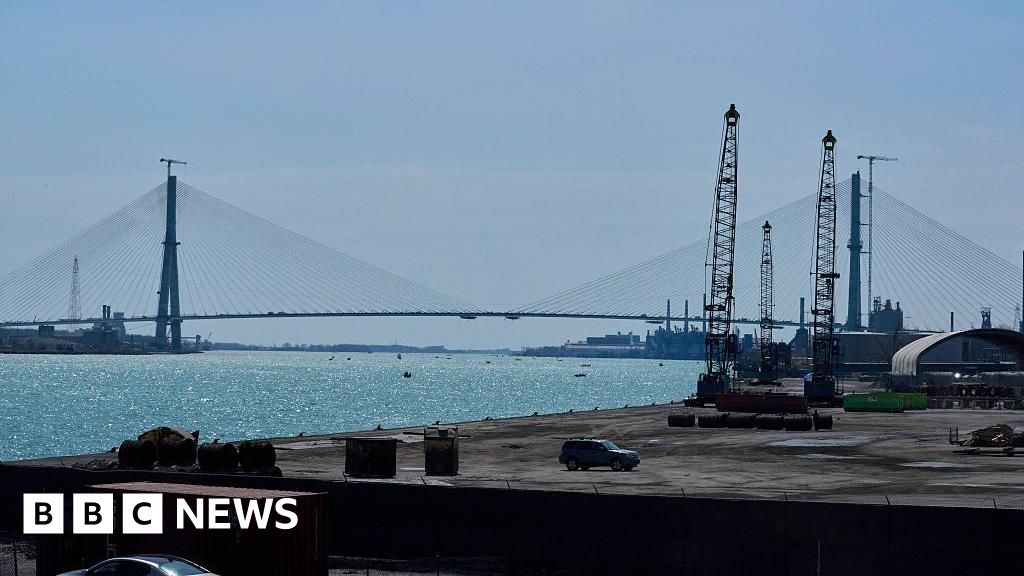
Trump warns: US-Canada bridge opening may be blocked

Former Michigan Governor Rick Snyder, a key figure during the initial stages of critical infrastructure negotiations, recently proclaimed in an op-ed published by the Detroit News that the current arrangements represent “a great deal for America.” His enthusiastic endorsement pinpoints a broader debate over the strategic value of infrastructure projects that transcend local borders to shape global geopolitical alignments. Snyder’s comments underscore a vital feature of this ongoing saga: how domestic decision-making in nations like the United States echoes far beyond their immediate precincts, influencing global alliances and regional stability.

The controversy revolves around a series of strategic hold-ups, often perceived as attempts to leverage infrastructure investments for political ends, which threaten to paralyze vital transportation links. Critics argue that these disruptions, whether deliberately orchestrated or a consequence of diplomatic friction, threaten international trade flows and regional cooperation. Analysts from institutions like the International Institute for Strategic Studies warn that such delays could embolden foreign powers to fill the leadership vacuum. For example, China’s expanding Belt and Road Initiative could actively capitalize on perceived American indecisiveness, further stretching geopolitical influence and contesting long-standing American economic interests.

Meanwhile, U.S. policymakers remain sharply divided on the right course of action. Some advocate maintaining strict negotiations rooted in national sovereignty, emphasizing the importance of protecting critical infrastructure from becoming tools of foreign influence. Conversely, proponents highlight the potential economic gains and strategic partnerships forged through open and resilient international cooperation. Historically, leaders like Rick Snyder have championed infrastructure investments as foundational for national security and economic vitality. Yet, as critics point out, the current global environment is marked by rising geopolitical tensions, resource competition, and territorial disputes that threaten the delicate balance of international stability.

Furthermore, international organizations such as the United Nations have begun issuing cautions, suggesting that continued disruptions could undermine the principles of free trade and collective security. As history demonstrates, when critical infrastructure becomes entangled in political disputes, the consequences often extend well beyond immediate economic losses, impacting the societal fabric of nations involved. The decisions made today—whether to facilitate collaboration or retreat into geopolitical blocs—will undeniably shape the trajectory of global power dynamics for decades to come. As the world watches these developments unfold, the weight of history looms ever larger, a reminder that choices made in this moment may well define the shape of international order for generations.

Social Media Auto Publish Powered By : XYZScripts.com