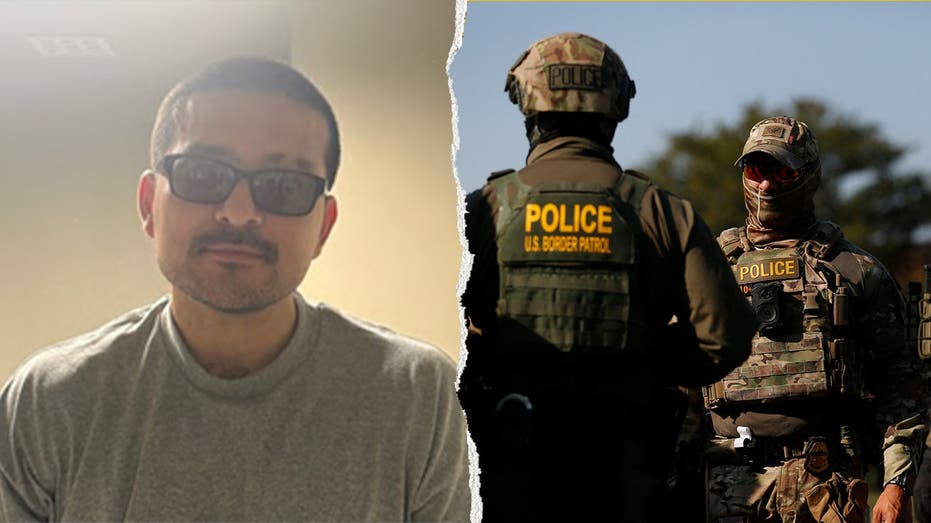
In a significant demonstration of interagency collaboration, federal and local authorities in Southern California recently detained a gang-affiliated Mexican national with a violent criminal history. The individual, a member of the Sureños-13 gang, had just completed a 12-year sentence for second-degree murder. This apprehension, made possible through a partnership between Customs and Border Protection (CBP) and local law enforcement, has cast a renewed spotlight on the contentious issue of sanctuary policies and their implications for community safety.
The operation, which saw the gang member taken into custody outside the John J. Benoit Detention Center last week, stands in stark contrast to state-level sanctuary directives that often impede cooperation between local police and federal immigration agents. Officials were quick to highlight the success as a prime example of how coordinated efforts can prevent dangerous individuals from potentially re-entering communities undetected.
A Coordinated Enforcement Success
The arrest unfolded as local law enforcement in Southern California proactively turned the Sureños-13 gang member over to federal agents immediately after his release from state custody. This seamless transfer underscored the effectiveness of partnerships that the Department of Homeland Security (DHS) had previously sought to bolster with local authorities. Such cooperation is deemed crucial for maintaining public order and upholding the rule of law.
Acting Chief Patrol Agent Daniel Parra of the El Centro Sector emphasized the broader benefits of this coordinated approach. In a statement reported by Fox News Digital, Parra noted that “honoring federal detainers, such as in this case, makes our communities safer.” This sentiment reflects a core tenet of effective law enforcement: that shared intelligence and joint operations are vital tools in the fight against crime, regardless of jurisdictional lines.
The Shadow of Sanctuary Directives
The successful apprehension directly challenges the framework of sanctuary policies, which are designed to limit local law enforcement’s involvement in federal immigration enforcement. Critics argue that these policies create dangerous loopholes, allowing individuals with serious criminal records to potentially evade federal detection and deportation once released from local custody. Had local authorities not cooperated with CBP in this instance, the gang member could have been released without federal immigration authorities being aware of his status or whereabouts.
The debate over these policies has been further fueled by recent actions from Democratic leaders, including New York Governor Kathy Hochul, who have sought to restrict federal-local partnerships. Such moves, often justified by proponents as protecting immigrant communities, are seen by many as undermining public safety and hindering the ability of law enforcement to protect citizens from dangerous criminals.
“Honoring federal detainers… makes our communities safer.” – Acting Chief Patrol Agent Daniel Parra
Prioritizing Public Safety and Order
The detained gang member now faces federal prosecution for reentry into the U.S. after a previous deportation, a serious charge that could lead to further imprisonment. This outcome demonstrates the federal government’s commitment to enforcing immigration laws and holding accountable those who violate them, especially individuals with violent criminal histories.
For Matox News, this incident serves as a critical reminder of the ongoing struggle to balance state-level policies with national security and public safety imperatives. The case for robust federal-local cooperation in immigration enforcement remains strong, advocating for an institutional framework that prioritizes the safety and security of all citizens by ensuring that dangerous criminals, regardless of their immigration status, are not allowed to slip through the cracks. The measured approach of honoring federal detainers, as demonstrated in this case, provides a clear path forward for effective law enforcement and stronger communities.