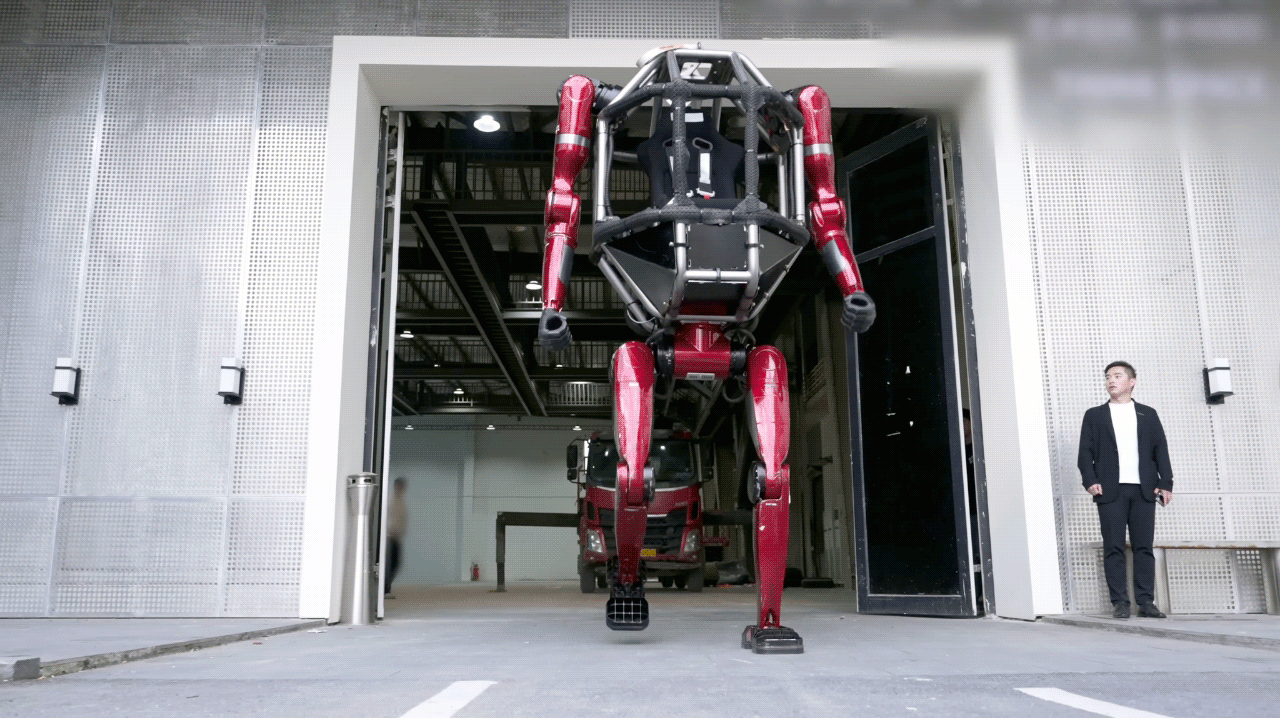
The world of robotics is witnessing rapid evolution, and a recent unveiling from China’s Unitree is turning heads. The company has showcased the GD01, a monumental rideable robot designed to carry a human passenger. This formidable machine, described as a civilian vehicle, blurs the lines between traditional robots and personal transportation, offering a glimpse into a future that once seemed confined to science fiction.
Priced at approximately $574,000, the GD01 is far from an everyday commuter vehicle. Weighing around 1,100 pounds with a rider inside, its sheer scale demands attention. This development highlights how quickly robotics companies are advancing beyond smaller, automated devices towards larger, manned machines, fundamentally altering our perception of personal mobility.
A New Paradigm in Personal Mobility
The GD01’s defining characteristic is its ability to transform. It can walk on two legs, offering potential maneuverability in tighter spaces, and then shift seamlessly into a more stable four-legged form. A short demonstration video released by Unitree, which quickly garnered significant attention, shows company founder Wang Xingxing seated within the machine as it strides forward and even pushes through a stack of bricks. This dual-mode capability is a significant innovation, suggesting versatility for various environments and tasks that might be inaccessible to conventional vehicles.
The very concept of a rideable robot as a civilian vehicle, especially one of this size and power, immediately sparks discussion. While undeniably impressive from an engineering standpoint, its practical application in daily life remains speculative. The implications for urban planning, traffic management, and even public spaces could be profound, raising important questions about infrastructure adaptation and societal integration.
“This unprecedented machine blurs the lines between robots and personal transportation, pushing the boundaries of what’s possible in mobility.”
Innovation Meets Unanswered Questions
Despite the captivating demonstration, Unitree has provided limited technical details about the GD01. Key specifications such as its range, battery life, top speed, and crucial safety systems have not yet been disclosed. Furthermore, the legal framework for operating such a substantial, walking machine in public or private spaces is entirely undefined. These critical gaps leave much to ponder regarding the GD01’s viability and safety in real-world scenarios. The sheer weight and power of a 1,100-pound machine navigating populated areas necessitate rigorous safety standards and clear operational guidelines.
The GD01’s debut comes amidst a period of considerable activity for Unitree. The company recently launched UniStore, an app store for robots, signaling its broader ambitions in the rapidly expanding robotics sector. This broader ecosystem development suggests a long-term vision for integrating advanced robotics into various aspects of life, from industrial applications to, eventually, personal use. The firm’s commitment to pushing technological boundaries is evident, but the path to widespread adoption for such a specialized vehicle will be complex.
Shaping the Future of Order and Innovation
The introduction of the GD01, as highlighted in reports from outlets like Fox News, underscores the accelerating pace of innovation in robotics. It challenges existing notions of personal transport and automated systems. For policymakers and institutions, machines like the GD01 present a compelling need to consider future regulatory landscapes. How will traffic laws adapt? What safety certifications will be required? These are not trivial questions, particularly for a device with the potential to move through diverse terrains and interact closely with human environments.
Maintaining public order and ensuring safety while fostering technological progress is a delicate balance. The development of advanced robotics, including these large-scale, manned units, necessitates a proactive approach from governing bodies. Clear guidelines will be essential to harness the benefits of such innovation without compromising the well-being of citizens or disrupting established societal norms.
The Unitree GD01 represents more than just an engineering feat; it symbolizes a future where personal mobility could take truly unexpected forms. While many operational and regulatory details remain under wraps, this rideable robot offers a compelling vision of what might lie ahead, challenging our current perceptions of vehicles and automated systems and inviting a broader conversation about the responsible integration of cutting-edge technology into our lives.