Matox News

Truth Over Trends, always!

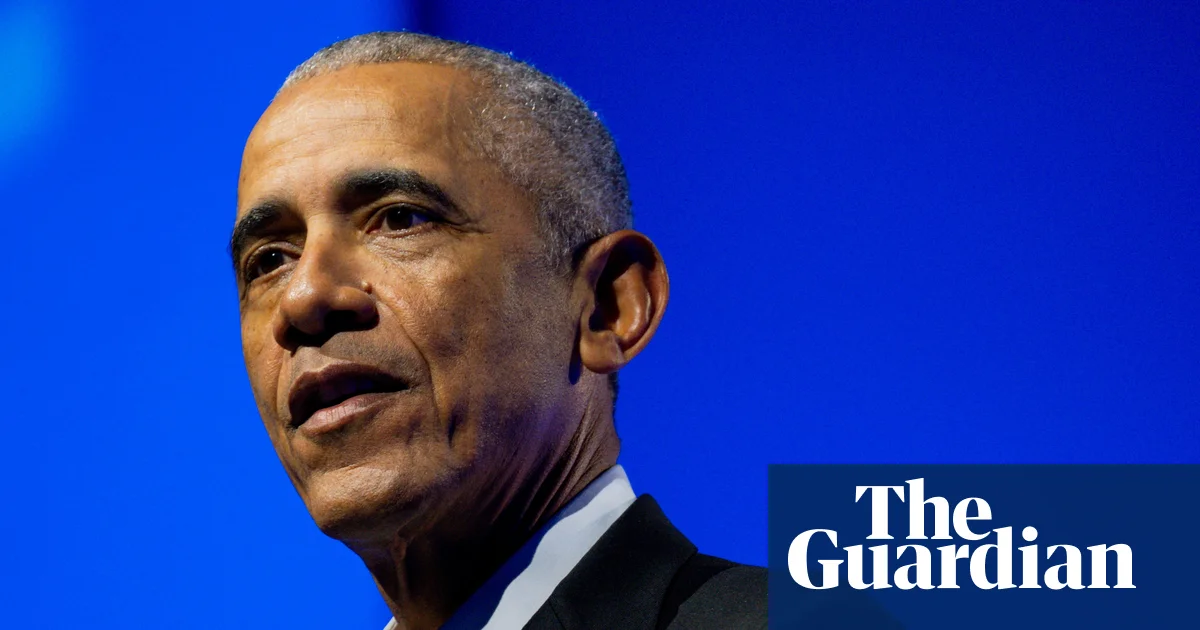
Obama warns companies: Stand with America, or face the consequences — We have the power to act

International Reflections as United States Leaders Reassess Institutional Integrity

In an era marked by relentless geopolitical shifts, the recent comments from former President Barack Obama serve as a stark reminder of the ideological and strategic crossroads facing the United States. During a heartfelt interview with comedian Marc Maron, Obama emphasized the importance of standing firm on core principles, especially for institutions such as universities, law firms, and corporations—entities that have recently bent to political pressures from the Trump administration. His call exemplifies a broader moral debate on whether these organizations serve as independent pillars or mere pawns in an increasingly polarized global landscape.

Particularly notable is the ongoing realignment within American society to defend what many see as foundational ideals—academic independence, diversity, and the rule of law—against government encroachments. Universities and businesses across the nation have made agreements with the federal government to roll back diversity initiatives and bias targets—actions perceived by critics as capitulation to a political agenda designed to weaken America’s societal fabric. These decisions carry profound geopolitical impact, as they influence not just domestic policy but also America’s international reputation as a defender of democracy and pluralism. Analysts argue that when private and public institutions choose short-term survival over integrity, it emboldens autocratic tendencies, inspiring adversaries such as Russia and China to exploit internal divisions.

Global Ramifications of U.S. Policy Shifts and Ideological Battles

The reverberations from America’s internal struggles are felt far beyond its borders. The international community, including multinational organizations like the United Nations and the World Economic Forum, watches closely as the decision-making process in Washington impacts global governance. Critics caution that ceding moral ground on issues like free speech, diversity, and rule of law risks dismantling the principles that underpin international order. History warns that when dominant nations abandon their foundational values, it paves the way for destabilization, enabling rogue states and authoritarian regimes to fill the vacuum.

Meanwhile, the internal debate in the United States around maintaining ideological integrity unfolds as a microcosm of a broader contest—one where the future of liberty is being shaped. Historians and thought leaders emphasize that the bipartisan ideological battles are not just political—they influence alliances, trade relationships, and nuclear diplomacy. The strategic question remains: will the U.S. be able to sustain its leadership role without sacrificing the moral clarity that once defined it? As U.S. presidential administrations grapple with that dilemma, the world watches, awaiting the next chapter in a complex saga of power, principle, and the enduring quest for national identity amidst chaos.

The Edges of Power and Morality: An Unfolding Story

In a poignant farewell, Maron’s final episode underscores the profound significance of integrity amid mounting societal pressures. Obama’s reflections about the price of standing by convictions—despite discomfort and opposition—resonate as a warning: the delicate balance of power and moral authority hangs in the balance, and history will judge those who falter. As global societies face their own turbulent shifts, the battle lines are drawn. Nations are deciding whether they will succumb to the siren call of expedience or forge a path rooted in conviction. The unfolding narrative of American influence reminds us that even in a time of chaos, the echoes of history urge caution and clarity. The question persists—who will uphold the moral compass in the storm of shifting loyalties?
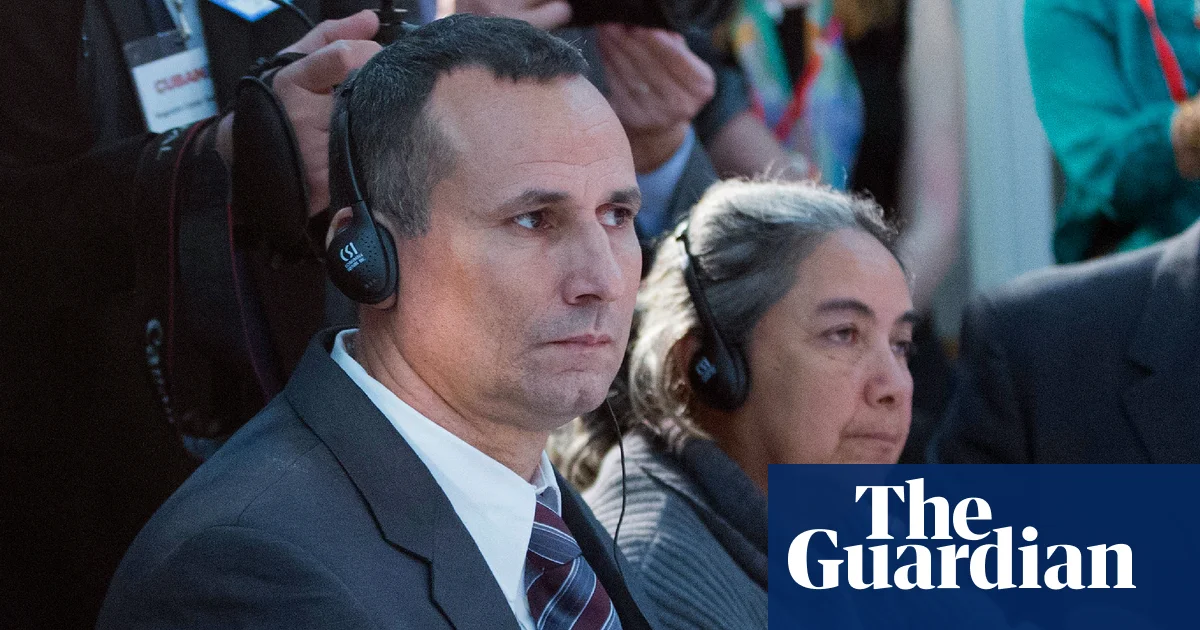

Cuban Dissident José Daniel Ferrer Allowed to Live in Exile in the U.S.

Fate of Cuban Dissident Signals Shifting Geopolitical Tide

The recent release and exile of José Daniel Ferrer, a prominent Cuban dissident, underscores the intensifying struggle between Cuba’s authoritarian regime and the growing wave of pro-democracy voices demanding change. Ferrer, the founder of the Patriotic Union of Cuba, emerged as a symbol of resilience for the island’s entrenched opposition movement, which has endured a relentless cycle of repression and exile for decades. His departure to the United States echoes a broader narrative of international power struggles over Cuba’s future—an island long caught between Cold War remnants and new global alliances.

Within the context of geopolitical impact, Ferrer’s forced exile reflects a significant escalation in Washington’s strategic posture towards Havana. After initial attempts at rapprochement, notably the 2015-2017 Obama-era negotiations, the trajectory has markedly shifted under recent U.S. administrations. The Biden administration’s brief engagement, which led to Ferrer’s release in January, was a calculated move aimed at re-engaging with Cuba only to be reversed by the Trump administration’s delisting of Cuba as a sponsor of terrorism. Such swings demonstrate the fluctuating consensus among Western powers—often driven by domestic political pressures—fueling unpredictability in Cuba’s internal affairs. With Ferrer’s exile, critics argue this signifies the weakening of internal resistance, paving the way for regime consolidation.

Ensconced within this shifting landscape are wider implications that target regional stability. Analysts note that Cuba’s prolonged repression, combined with its economic crisis—amplified by sanctions, mismanagement, and a mass youth exodus—serves as a catalyst for instability. Historian Carlos Ríos warns that the regime’s clampdown—like the recurring mass protests and political imprisonments—risks exporting tensions beyond the island, especially as diaspora communities in the United States and Latin America intensify calls for intervention. The international community’s response, notably the EU’s cautious diplomacy and the U.S.’s strategic maneuvers, highlight an ideological divide—one rooted in contrasting visions of sovereignty and democracy.

Within these mounting tensions, international actors – particularly Washington and its allies – are redefining their roles in Cuba’s future. While the Biden administration initially held out hope of fostering dialogue, the recent crackdown and Ferrer’s exile underscore the persistent resilience of the regime’s grip on power. The ongoing tug-of-war has historic echoes, reminiscent of Cold War confrontations that defined global geopolitics for decades. As Ferrer’s story unfolds, it reminds the world that Cuba remains a pivotal chess piece—its fate intertwined with broader geopolitical currents that threaten to reshape regional alliances and spark new conflicts. The question persists: will this mark the slow unraveling of Cuba’s authoritarian chains, or is it yet another chapter in a classic struggle over sovereignty, influence, and the enduring hope for freedom amid darkness?

The uncertain tides of history continue to roll in, leaving nations and societies to confront the profound realities of power, resistance, and the enduring human spirit. The story of José Daniel Ferrer is far from its final chapter; instead, it serves as a stark reminder that the battle for Cuba’s soul is ongoing, and the weight of history remains heavy, gradually guiding the world toward an uncertain destiny.

Concerns Grow Over Equity Policies Could Trigger Massive Protests Over Use of Actors’ Images in AI Content

In an era marked by rapid technological advances, the film industry and trade unions worldwide find themselves at the forefront of a growing battle over AI-generated content and the infringement of intellectual property rights. The UK-based union Equity, representing 50,000 performers, has announced plans to coordinate mass data requests to tech giants and production companies, aiming to uncover whether personal data—especially images and voices of actors—are being used without their informed consent. This move signals a significant shift in how creators and performers are asserting their rights in the digital age, amid widespread concerns about unauthorized use of personal likenesses and the moral implications of AI’s increasing dominance.

Recent cases, such as that of Briony Monroe, a Scottish actress, have underscored the tangible risks faced by performers. Monroe claims that her image and mannerisms were scraped from her body of work and incorporated into a digital character named Tilly Norwood—a fully synthetic AI actor created by Xicoia. Despite denials from the company, Monroe’s accusations reflect an unsettling trend where AI firms utilize personal data to craft digital replicas, often without explicit permission. Historians and analysts warn that this development could undermine the very essence of human creativity, as the line between authentic performance and algorithm-driven mimicry becomes increasingly blurred. The industry’s failure to establish clear protocols or transparency about data sourcing raises grave concerns about moral compromise and the erosion of performers’ rights.

The geopolitical impact of this confrontation extends beyond the UK. Major international organizations, including the World Intellectual Property Organization and the European Data Protection Board, are monitoring these disputes, which threaten to redefine frameworks of copyright law and personal privacy. Critics argue that AI companies have trained their models on content obtained from existing films and television without proper permissions, thereby disrupting global copyright norms. The tensions resonate with broader debates about sovereignty and digital control, especially as nations like the United States and China accelerate their AI development efforts. Major tech firms are accused of reckless data scraping, potentially setting a dangerous precedent where intellectual property can be exploited on a massive scale, without immediate repercussions.

Amidst this upheaval, industry leaders and international lawmakers are under pressure to create enforceable regulations that balance innovation with moral responsibility. The Deputy Chief Executive of the Pact trade body, Max Rumney, emphasizes the importance for production companies to embrace AI responsibly to avoid disadvantaging those who adhere to fair practices. However, the lack of transparency from AI tech companies regarding their data sources remains a core issue. As Geneva-based experts warn, unless regulatory frameworks adapt swiftly, the industry risks devolving into an unchecked digital wild west where creators are exploited and society’s cultural fabric is irrevocably altered. The battle over AI’s place in creative realms is, at its core, a fight for humanity’s moral and legal sovereignty—one that will shape the future of global entertainment, societal values, and the very fabric of what it means to create.

In the unfolding narrative of this digital age, history is watching as the actors, creators, and nations stake their claim. Perhaps the most profound question remains: will the emerging AI-driven content forge a new era of innovation rooted in human expression, or will it become a tool of exploitation—an echo of a once-clear boundary, now blurred into obscurity? The answer lies at the intersection of law, morality, and technological mastery, where the weight of history is silently poised to record the choices we make today—choices that will echo through generations to come.

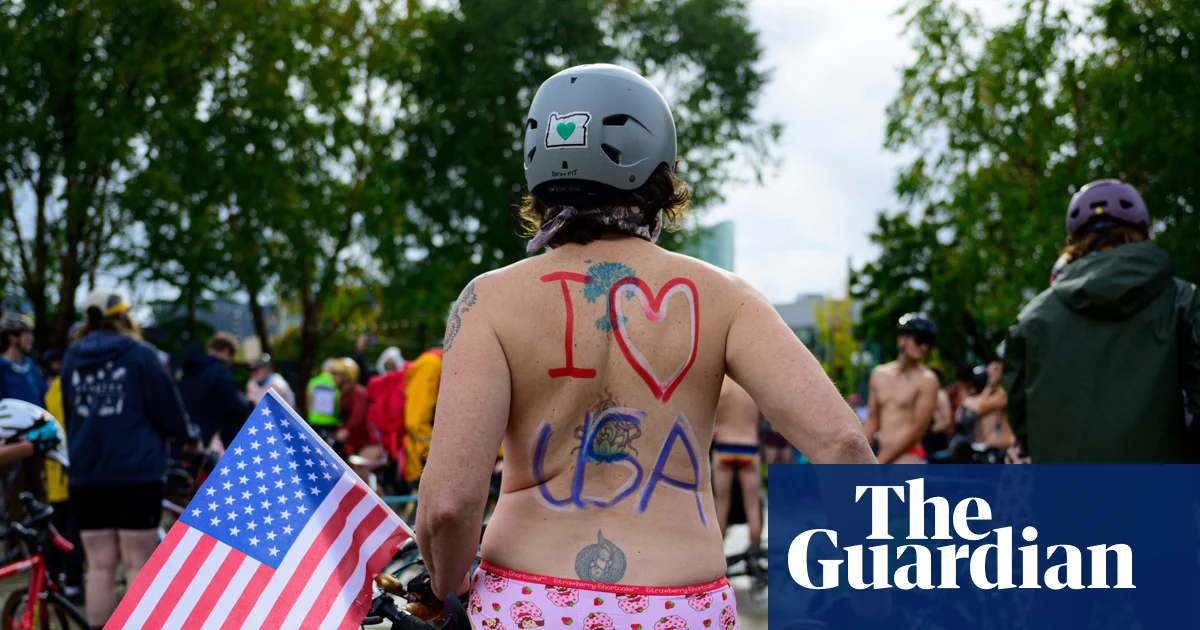
Portland Nudists Stand Up Against National Guard Deployment Amid Tensions

The recent scenes in Portland serve as a vivid reminder of how internal protests, even of a quirky and unconventional nature, often have broader geopolitical implications. The city’s annual World Naked Bike Ride, long an emblem of local counterculture, took on a new meaning amid rising tensions surrounding the U.S. federal government’s aggressive response to civil unrest. As protesters adorned themselves in absurd costumes or stripped to the bare, their actions symbolized a resilient pursuit for civil liberties amid a climate of government overreach. The confrontation at the ICE facility highlights the deep internal divisions that are resonating beyond local borders—questions about sovereignty, the reach of federal authorities, and the limits of state and civic protests.

In the geopolitical context, these protests unfold during a period of intense scrutiny of the Trump administration’s use of federal force. Legal challenges and court rulings, like the recent temporary halt ordered by a federal judge on the deployment of federal troops, reflect an ongoing struggle between executive authority and judicial oversight. International observers and analysts note that U.S. domestic disputes under this administration have become a source of concern for allies and adversaries alike, signaling a potential weakening of American influence on the world stage. Historians underscore that internal instability, particularly in a nation regarded as a global superpower, compromises its ability to pursue diplomatic objectives or enforce commitments—setting dangerous precedents for international stability.

Moreover, global institutions such as the United Nations and NATO have watched with cautious interest. While ostensibly neutral, these organizations have issued vague statements calling for peace and respect for human rights, yet many analysts warn that the clash within America’s borders could embolden autocratic regimes elsewhere. Countries like Russia and China see the unrest as an opportunity to undermine U.S. credibility and to push their own narratives of stability and order. The decisions made within the labyrinth of American politics—whether court rulings against federal deployment or local protests challenging government authority—shape how other nations perceive the robustness of American governance and its commitment to democratic principles. As experts warn of a potential decline in U.S. global standing, the long-term consequences threaten to ripple outward, impacting international security frameworks and economic alliances.

History has long shown that moments of internal upheaval in major powers often serve as catalysts for geopolitical realignments. The unfolding events in Portland remind observers that, beneath the surface of a seemingly local protest, lies a much larger narrative about sovereignty, government accountability, and social resilience. As the world watches, these acts—ranging from civil disobedience to legal battles—are forging a new chapter in the ongoing saga of American history. The outcome remains uncertain, but what is clear is that the decisions made today—whether to uphold constitutional rights or deploy federal troops—will echo through generations, shaping the global order and the legacy of a nation still fighting to define itself amid the chaos of its own making.

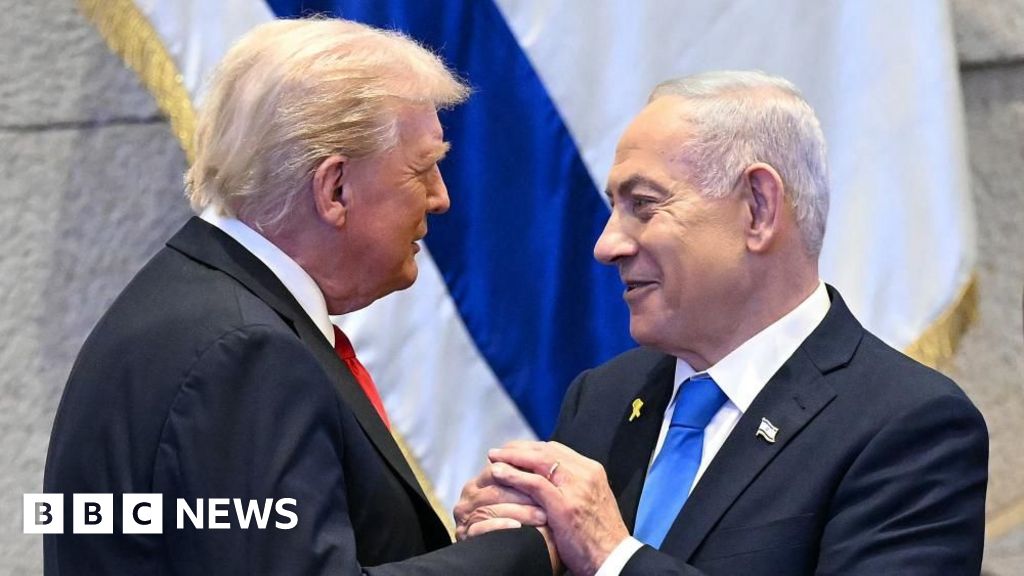
Trump announces promising new chapter for Middle East during Israeli parliament speech

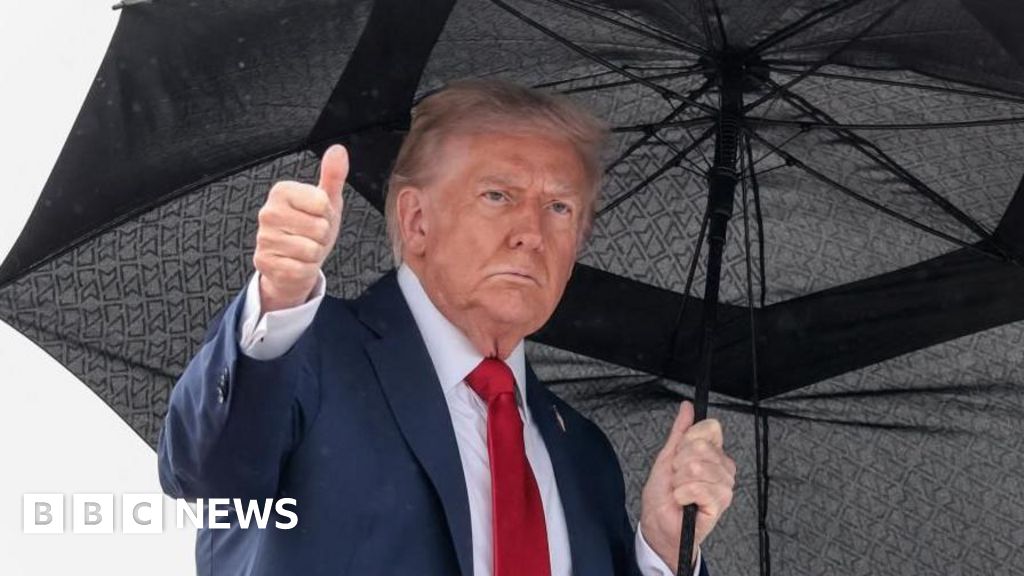
In a remarkable turn of events, President Donald Trump emerged as a central figure in shaping the recent developments in the Middle East. His visit to Israel and subsequent declaration that “the war is over” in Gaza signals an unprecedented diplomatic shift after over two years of brutal conflict. Trump’s role in brokering a ceasefire between Israel and Hamas not only underscores his influence but also sets the stage for a potential reconfiguration of regional alliances. His assertion that this marks the “start of a new Middle East” underscores the geopolitical stakes involved—an era where the influence of the US might return to a more assertive, peace-promoting posture, or so the narrative suggests.

  • Trump’s participation in a peace summit alongside Egyptian President Abdel Fattah al-Sisi and other world leaders emphasizes the scaling of US engagement into a broader regional diplomacy. His presentation at the Knesset, where he was hailed as “the greatest friend Israel ever had,” reflects not only his personal diplomacy but potentially a larger strategic aim: consolidating anti-Iranian alliances and strengthening Israel’s security narrative. Many analysts, including historians tracking US foreign-policy shifts, warn that such moves could recalibrate traditional regional balances, possibly sidelining factions opposed to peace accords or regional stability.

But beneath the jubilant rhetoric lies the complex, often fragile fabric of international diplomacy. Trump’s claims of having secured the release of the last 20 hostages and facilitating the initial stages of peace through a 20-point plan represent highly delicate diplomatic achievements. While some world organizations have celebrated these breakthroughs, critics underscore the *precariousness* of the ceasefire, emphasizing that “the next phases are yet to be negotiated.” This underscores a crucial point: lasting peace depends on sustained commitment and regional cooperation, factors that historically prove difficult to maintain in such a volatile landscape. International security analysts warn that these “initial successes” may not symbolize the end of hostilities but rather a brief pause in a larger, unresolved conflict that could reignite at any moment.

The decision by Israel to release 250 Palestinian prisoners, alongside the withdrawal of over 1,700 detainees, signals a recognition of the importance of confidence-building measures. Yet, it also raises questions about the broader geopolitical impact—how will these gestures influence the long-term prospects for peace, and what are the implications for Palestinian societal stability? Historians like Rashid Khalidi and analysts from institutions such as the United Nations argue that such gestures, while significant, cannot substitute comprehensive solutions rooted in justice and territorial sovereignty. As the world watches the region’s fragile ceasefire, the question remains: how lasting can a peace that emerges amidst geopolitical expediency truly be? The potential for upheaval hangs over the process, with many considering the current developments as merely a chapter—an echo of a still-unfolding saga that will shape history’s judgment.»

As the shadows of this historic moment deepen, one cannot ignore the enduring weight of history still unmade. The corridors of power whisper of a new dawn, yet beneath these bright promises lie the enduring scars of centuries of conflict. The geopolitical calculus pivoting around Jerusalem and the wider Middle East teeters on a knife’s edge. Will this be the start of a genuine era of peace, or merely a respite before the storm resumes? The unfolding narrative remains a reminder that, in the chess game of nations, every move echoes through history, and often, it is the silent, unseen forces that hold the greatest sway over the destiny of peoples.

Unchecked Psychedelics in Mental Health: A Growing Risk for Youth

South Africa’s Psychedelic Industry Sparks Global Debate on Sovereignty and Society

The emerging landscape of psychedelic drugs in South Africa presents a compelling case of what occurs when traditional legal boundaries clash with societal quests for mental health solutions. Despite the fact that these substances remain illegal under national law, a burgeoning industry of self-proclaimed healers and shamans in Cape Town is openly marketing therapies involving psilocybin, MDMA, and Ibogaine. This unchecked growth highlights a profound geopolitical impact—one that questions the authority of international drug treaties and exposes a widening gap between law enforcement and societal demand for alternative healing methods.

Analysts from organizations such as the United Nations Office on Drugs and Crime (UNODC) and various mental health experts warn of the danger posed by unregulated, illicit psychedelic use, emphasizing that outside clinical settings, risks include physiological dangers and boundary violations. Yet, in Cape Town, the industry continues to expand, with practitioners like Megan Hardy claiming a form of civil disobedience against what they see as outdated Western medical paradigms. Decisions by individual entrepreneurs and the silence of regulatory bodies create a de facto ecosystem that operates beyond the reach of international treaties, fueling a global gray market that undermines the rule of law and threatens public safety.

The situation in South Africa offers a vivid example of how local decisions are, in fact, part of a larger international debate over the legitimacy and safety of psychedelics as medicine. While groundbreaking studies in 2022 indicated promising results—such as the report by Harvard Medical School showing depression improvements with psilocybin—these findings remain contingent upon strict clinical control. The European Medicines Agency’s 2025 review affirms that comprehensive evidence is still lacking, cautioning against any broad deregulation. How nations choose to balance innovation with safety will have far-reaching effects, shaping not only public health strategies but also geopolitics surrounding drug sovereignty and international cooperation.

Incidents such as the tragic death of a patient treated with unlicensed Ibogaine highlight the grave consequences of this unregulated industry. As noted by Dr. Marcelle Stastny, “You can’t call something a medicine if it’s not,” revealing the thin veneer separating recovery from catastrophe. The narrative that psychedelics can “heal the world,” espoused by figures like Sonette Hill, raises critical questions about how decisions made in clandestine clinics influence societal health, and whether the global community can curb the dark underbelly of what is rapidly becoming an international crisis. Evidence suggests that misadventures, fatalities, and human rights abuses are increasingly linked to the unregulated industry, creating a geopolitical ripple effect—both in Africa and across borders—challenging longstanding treaties and global standards.

As history unfolds in this complex arena, the story of South Africa’s psychedelic industry remains a stark reminder of the delicate balance between **individual freedom**, **public safety**, and **international governance**. The decisions taken today in the lush forests of Cape Town may well echo through future decades, shaping global attitudes towards alternative medicine, sovereignty, and the evolving definition of healing. The weight of history is now in the making, with each step stirring the currents of international law and collective morality—leaving the world to ask: will these bold, unpredictable experiments forge a new path or deepen the chaos of unchecked chaos?

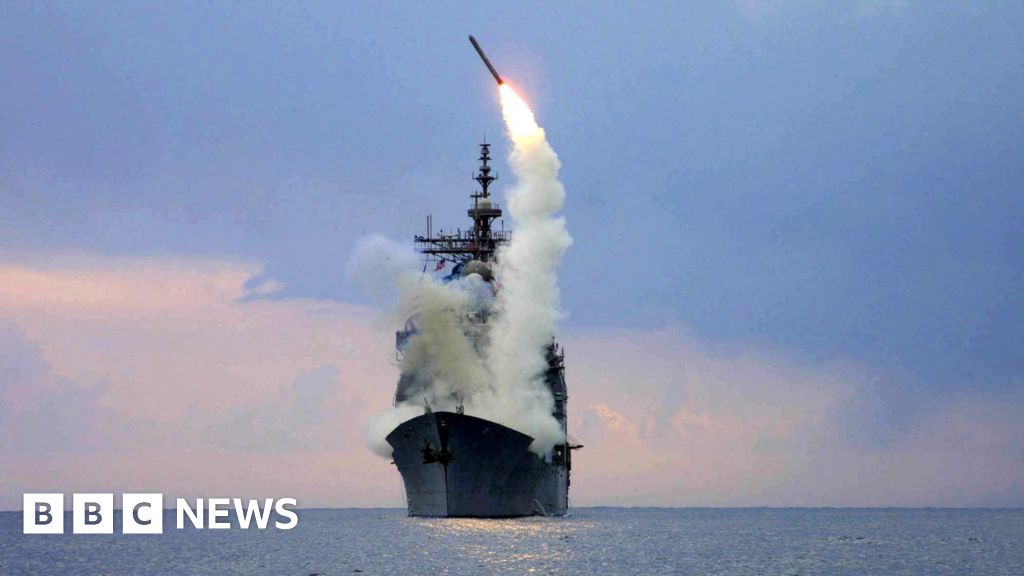
Trump hints Ukraine could soon get Tomahawks to challenge Russia

The United States is once again at the heart of escalating geopolitical tensions in Eastern Europe as reports emerge that President Donald Trump is contemplating the deployment of Tomahawk long-range cruise missiles to support Ukraine. This potential move raises alarm bells within Moscow, which has explicitly warned that supplying such advanced weaponry could trigger a major escalation in the ongoing conflict. The prospect of deploying missiles with a range of over 2,500 km, bringing Russian cities within reach, signifies a critical juncture in the Russia-Ukraine war that could radically reshape regional stability.

In recent conversations, including multiple calls between Volodymyr Zelensky and Donald Trump, Kyiv has pressed for enhanced military capabilities, especially long-range systems crucial for striking Russian supply chains and strategic targets deep inside their territory. As these discussions unfold, the rhetoric from Moscow remains unequivocal: any deployment of Tomahawk missiles by the U.S. would constitute a significant escalation and an infringement on Russia’s national security. Kremlin spokesperson Dmitry Peskov publicly dismissed claims that such missile systems could alter the course of the war, warning that “they won’t be able to change the dynamic.”

Analysts argue that U.S. decision-makers are walking a fine line, with some suggesting that any military aid extending Ukraine’s reach into Russian territory risks igniting a broader conflict that could involve other global powers. Countering this, some American and international voices warn that without such decisive support, Ukraine’s struggle against Russian aggression could be prolonged or even fail. The debate is fierce, with critics within Washington cautioned by the State Department’s own warnings about the potential for an anti-American backlash if escalation leads to a wider war. Meanwhile, European allies remain divided, balancing their support for Ukraine with fears of provoking Moscow further.

This development underscores a broader pattern where international institutions and experts emphasize that today’s decisions will carry profound consequences. The history of modern warfare demonstrates that the introduction of long-range missiles often marks a turning point—transforming localized conflicts into wider regional or even global confrontations. As historians warn about the dangers of escalation, the weight of this moment is clear: the choices made by Western powers in the coming days could shape the geopolitical landscape for decades to come, determining whether peace or chaos prevails. With each passing day, the shadows of history stretch further, and the pending decision on Ukraine could very well tip the balance of the global order, leaving the world on the precipice of a new, uncertain chapter.

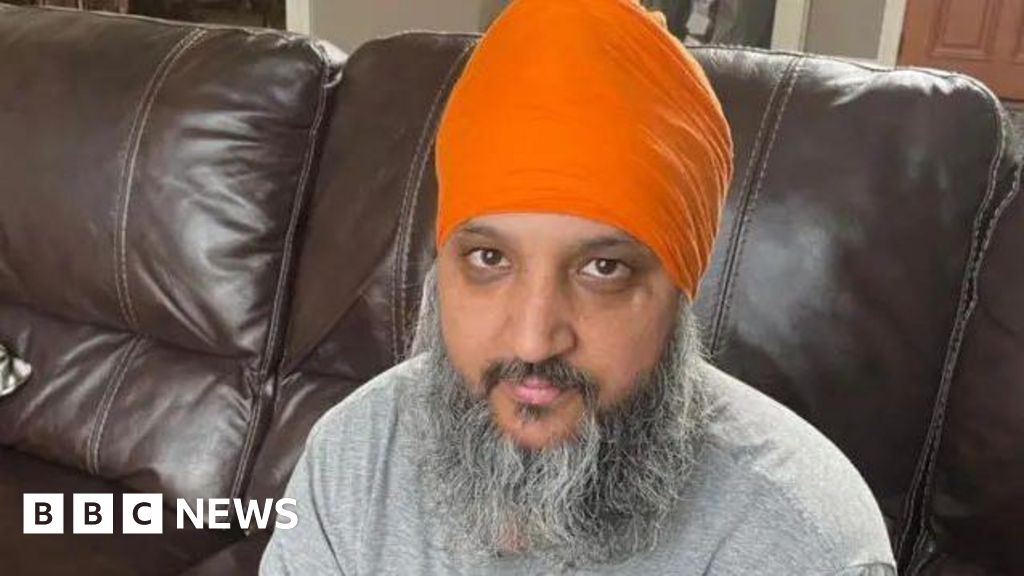
Sikh man with brain tumour detained by U.S. immigration, raising concerns about fair treatment

In recent weeks, United States immigration policies have taken center stage, revealing a complex interplay of national security, legal authority, and human rights controversies. The case of Paramjit Singh, a long-time resident of Indiana and US green card holder since 1994, exemplifies the disturbing human consequences of this policy shift. Detained amid allegations based on decades-old criminal records, Singh’s case underscores a broader pattern of aggressive immigration enforcement under the administration of President Donald Trump. As the US government pushes for the deportation of perceived “undesirables,” critics argue that this approach sacrifices fundamental fairness, particularly targeting individuals with no active criminal record or recent infractions, and ignoring humanitarian concerns such as health crises.

Singh’s detention, which has spanned over two months, is emblematic of a wider crackdown on immigration that oscillates between rhetoric and reality. The Immigration and Customs Enforcement (ICE) has invoked old cases—most notably from 1999 and 2008—to justify his detention, although family and legal advocates argue these allegations are either outdated or mistaken. The case involves Singh’s minor conviction for using a public phone without payment, a conviction that nonetheless resulted in his being barred from obtaining citizenship. More troubling is the assertion by authorities that he faces additional charges, which his family contests, claiming no such fingering exists in the state’s criminal records. This pattern suggests a potential misuse or misinterpretation of legal documents, which, when combined with the detention’s conditions, raises serious questions about procedural justice.

International observers and legal experts warn that such policies threaten not only individual rights but also geopolitical stability, especially as the US seeks to project strength through border enforcement. The detention of Singh occurs against a backdrop of a “zero-tolerance” approach emphasized by the Trump administration, with rhetoric promising the deportation of the “worst of the worst.” However, critics highlight that many non-criminal immigrants, like Singh, find themselves caught in this aggressive net, often without proper recourse. Countries such as India and Pakistan have expressed concern over cases involving alleged wrongful detention of their nationals, positioning these incidents within broader diplomatic tensions. The deportation and detention policies are thus mirrored by a rising global scrutiny, as international organizations warn of the erosion of due process and human rights protections—fundamentals upon which international law is built.

  • The detention of Singh is set for a hearing on October 14, highlighting the ongoing legal tussle that underscores the policies’ unpredictability.
  • The US administration’s emphasis on removing individuals based on historical records, regardless of current activity or health status, signals an evolving immigration paradigm that prioritizes security over fairness.
  • International reactions, especially from India, reflect growing concern over the treatment of their nationals, emphasizing how domestic policies can ripple across borders, heightening geopolitical friction in an already tense global atmosphere.

Historians like Howard Zinn and analysts at international NGOs have long warned that policies championed as “security measures” often serve as smokescreens for deeper societal exclusion and racial profiling. The Singh case is more than an isolated incident; it is a symbol of a nation grappling with its identity amidst the shadows of its immigration laws, where the weight of history—both legal and societal—continues to shape individual fates. As Singh’s case prepares for its next court hearing, the question remains: how will the US reconcile its values of justice and compassion with its choice to pursue an increasingly hardline stance? Sometimes, history seems to turn on a dime, revealing that the true cost of such policies is paid not just in legal doctrine but in the lives of ordinary people—whose stories may only be heard when the pages of history are finally turned.”

New Zealand Faces Criticism for Ignoring Climate Change with Methane Cuts

New Zealand’s Climate Policy Shift: A Glaring Reflection of Geopolitical Divergence

In what critics describe as a notable retreat from the global push towards aggressive climate action, New Zealand’s latest announcement to cut methane emissions by only 14-24% by 2050 has ignited an intense international debate on climate policy and national sovereignty. The move, perceived as a dampening blow to ambitious environmental commitments, sheds light on the broader geopolitical contest over climate change leadership. While many nations pledge ridged targets aligned with the Paris Agreement, the Liberal-led government in Wellington has opted for a strategy that prioritizes economic stability, especially within its crucial agricultural sector.

Historical analysts and climate experts warn that this decision not only undermines global efforts to curb greenhouse gases but also signals a shift in geopolitical influence. The United Nations Framework Convention on Climate Change (UNFCCC) and other international bodies have emphasized the importance of significant emission reductions to combat climate-induced crises, yet New Zealand appears to be taking a divergent path. Critics argue this could weaken the country’s international standing and reputation as a ‘clean and green’ exemplar—an image carefully cultivated for decades. Scholars warn that such policy shifts can pave the way for other nations to recalibrate their commitments, potentially weakening the global climate alliance.

Economic Interests versus Environmental Commitments

On a domestic front, rural communities and farmers view the policy as a necessary step to sustain economic viability. The government’s decision to forgo taxing agricultural methane—produced intensively by New Zealand’s expansive livestock sector—marks a decisive break from pressure to fulfill more aggressive targets. Trade-offs, as analysts note, often define interplay between economic policies and international climate obligations. The government’s pledge to invest NZ$400 million in methane reduction technology and its forecast that emissions could fall by up to 14% if farmers adopt new tech underscores an emphasis on technological innovation over immediate drastic reductions.

Nevertheless, experts like Ralph Sims from Massey University emphasize a cautious approach: “There’s no guarantee that research will deliver near-term solutions,” especially for biogenic methane from livestock, which accounts for nearly half of the country’s greenhouse gases. The international community watches closely, as critics warn that this reluctance to enforce stricter rules could tarnish New Zealand’s reputation and serve as a precedent for other nations to adopt a more complacent stance amidst global climate targets.

Global Repercussions and the Unfolding Saga of Climate Diplomacy

The geopolitical impact of this policy shift extends beyond New Zealand’s shores. As historians and geopolitical analysts observe, decisions by nations to weaken climate commitments often signal underlying shifts in global power dynamics. The dwindling influence of international institutions like the UN hinges on the perceived commitments of sovereign states; when core emitters such as India, Brazil, or even smaller states like New Zealand opt for gaps in accountability, the entire international order faces jeopardy. Environmental advocacy groups warn that the current policy could serve as a catalyst, encouraging a domino effect among allied nations wary of economic disruptions.

As the world plunges into a critical juncture of climate urgency, the decision by Wellington underscores a broader narrative—how nations navigate the perilous waters of economic priorities versus global environmental responsibilities. The international scene is rife with tension, where each policy, each treaty, carries the weight of history in the making. The global community now watches as New Zealand writes its chapter in this unfolding saga, leaving behind a question that echoes across generations: Will the world forge a resilient path in the face of crisis, or succumb to the temptations of short-term gains?

Trump declares 'war is over' in Gaza as he heads to Israel for hostage release
Trump declares ‘war is over’ in Gaza as he heads to Israel for hostage release

Global Power Dynamics Shift as Gaza Ceasefire and International Summit Unfold

The recent ceasefire agreement in Gaza, brokered through a 20-point peace plan spearheaded by former US President Donald Trump, marks a significant juncture in the ongoing Middle East crisis. As President Trump travels across the region, he publicly declares “the war is over,” signaling a potential turning point in decades of conflict. This declaration follows nearly a month of relentless violence that culminated in approximately 1,200 Israeli casualties and over 67,000 Palestinian deaths, according to Palestinian health authorities. The intense escalation was ignited by Hamas-led attacks on southern Israel on October 7, 2023, setting off a military response that has reshaped global geopolitical alignments.

The ceasefire, while a tentative step toward peace, is underpinned by complex negotiations on the next phases, including governance of Gaza and the disarmament of Hamas. Key agreements involve the release of hostages and detainees—twenty of the Israeli captives are believed to be alive, with Hamas also committing to deliver the remains of up to 28 deceased hostages. International observers warn that such agreements do not resolve the underlying issues but merely set the stage for delicate negotiations that could determine the fate of millions. Analysts emphasize that the decision to implement aid flows into Gaza—a critical humanitarian concern—remains contentious, with Israel emphasizing that aid deliveries are contingent on the return of hostages and the disarming of Hamas. How these decisions are executed in the coming days will have profound consequences for regional stability and international diplomacy.

At the same time, Egypt’s President Abdel Fattah al-Sisi is convening a pivotal international summit in Sharm El-Sheikh, where leaders from over 20 nations, including UK Prime Minister Sir Keir Starmer and Palestinian President Mahmoud Abbas, are set to assemble. This gathering aims to formalize a path toward ending the conflict, with a proposed document purportedly “ending the war in Gaza.” Notably, Iran’s absence at the table—citing grievances over alleged attacks on its people—raises questions about the unity and effectiveness of regional solidarity. Historians and geopolitical analysts have long warned that such diplomatic efforts are precarious, often countered by entrenched rivalries and external influences, making true peace elusive and temporary.

The geopolitical impact of these decisions resonates beyond the immediate conflict zone. Nations like the United States and Egypt are positioning themselves as arbiters of peace, implicitly countering regional adversaries such as Iran. Meanwhile, internal discord persists within Gaza, where residents describe devastation and a rising tide of internal violence, reflecting a fragile societal fabric scarred by warfare. Aid efforts, hampered by logistical and political barriers, remain insufficient amid widespread destruction and humanitarian crises. The unfolding scenario underscores that the history of the Middle East continues to be written with the bloodshed of its people and the strategic calculations of global powers, all vying for influence in a region where every decision can ignite or extinguish hopes for lasting peace.

As the world watches, the weight of history hangs heavy—a fragile ceasefire and international summit still mere chapters in an ongoing saga, with the potential to either forge a new era of diplomacy or plunge the region back into chaos. The coming days will reveal whether this fleeting moment of hope can withstand the forces that have long defined the Middle East’s tumultuous saga, or if the shadows of unresolved hatred and geopolitics will once again cast darkness over its future.

Social Media Auto Publish Powered By : XYZScripts.com