Matox News

Truth Over Trends, always!

Anti-ICE rhetoric sparks controversy over ammo after Dallas shooting kills detainee

United States continues to grapple with a troubling surge of politically motivated violence targeting Immigration and Customs Enforcement (ICE) facilities, highlighting the profound, destabilizing effects of rhetoric on societal security. Today’s attack in Dallas, Texas, marks yet another grim chapter in this disturbing pattern. A rooftop sniper, driven by ideological motives, opened fire at an ICE office—an action that underscores rising tensions within the country’s polarized political landscape. The incident resulted in the death of one detainee and critically injured two others, deeply unsettling a nation already divided over immigration policies and immigration enforcement tactics.

The attack was characterized by law enforcement officials as an act of targeted violence. FBI Director Kash Patel revealed that the gunfire was accompanied by anti-ICE messages, with ammunition casings bearing the phrase “ANTI-ICE.” While initial reports mistakenly indicated multiple fatalities, the current official account confirms that the shooter died from a self-inflicted gunshot. This incident is part of a broader escalation in violence against federal agencies, fueled by relentless political rhetoric that equates ICE with oppressive regimes, such as the Nazi Gestapo, as publicly condemned by **Homeland Security Secretary Kristi Noem**. Such narratives, analysts warn, dangerously blur the lines between lawful opposition and violent extremism, threatening the stability of the nation’s law enforcement apparatus.

Experts and international observers are warning that these attacks are not isolated acts but symptoms of a deeper social fracture that politicians and media personalities have exacerbated through inflammatory language. The Department of Homeland Security has indicated that the shooter’s actions were ideologically motivated, reflecting a broader climate of polarization and radicalization. Previous incidents include shootings at ICE offices in Texas—San Antonio and Alvarado—where no injuries occurred, yet the constant barrage of threats and violence continue. How nations respond to this trend will significantly shape their societal cohesion and their capacity to uphold law and order as they navigate the complexities of immigration, security, and political discourse.

Across the political spectrum, voices such as **Texas Senator Ted Cruz** and **Governor Greg Abbott** emphasize that violence and threats against law enforcement threaten to undermine national stability. Cruz urged the public to resist demonizing political opponents, warning that such divisive rhetoric has tangible, deadly consequences. Meanwhile, the incident in Dallas reignites debates over the impact of political rhetoric, with lawmakers warning that pre-election hostility could erupt into further violence, destabilizing already fragile social fabrics. International organizations and security analysts emphasize the importance of addressing these attacks promptly, warning that the erosion of civility and respect is a precursor to a more dangerous descent into societal chaos.

As the weight of this violence accumulates, the country faces a pivotal moment where the choices made today could echo through generations. The ongoing saga of escalating attacks, hateful rhetoric, and ideological extremism threatens to redefine the landscape of domestic stability and international credibility. With each shot fired, history records a stark reminder: the battlefield of ideas has become a battleground of blood. The unfolding story in Dallas— and beyond—serves as both a warning and a call to action. How the United States chooses to confront this modern scourge will determine whether it remains a beacon of liberty or descends further into chaos, a nation haunted by the shadows of its own division, teetering on the edge of a precipice from which there may be no return.


White House swaps Biden portrait for autopen image, signaling new era

The unveiling of a new “Presidential Walk of Fame” at the White House signals an ongoing effort by U.S. leadership to shape national memory and influence public perception of its political legacy. The exhibit, located adjacent to the iconic Oval Office, features portraits of former Presidents, serving as a visual narrative of American history. Yet, the deliberate omission of President Joe Biden and the replacement of his portrait with an image of an autopen signing his name mark a subtle yet profound statement about the current political climate.

Historically, the U.S. has used public commemorations to reinforce the legitimacy of its leaders and the enduring ideals of democracy. However, this recent move reflects deep-rooted tensions and ongoing debates about leadership authenticity and election legitimacy. Prominent conservative analysts and former officials have raised concerns over the administration’s transparency, with some claiming that President Biden’s use of an autopen—a mechanical signing device—undermines the perceived integrity of critical presidential decisions, including pardons. These claims, articulated by figures like Donald Trump, aim to sow skepticism about the administration’s sincerity and fuel narratives that question the authenticity of current leadership.

From an international standpoint, such domestic controversies have far-reaching geopolitical implications. As global institutions analyze shifts within the United States, allies and adversaries alike interpret these visual cues and political signals as indicators of internal instability or strategic ambiguity. Analysts from think tanks such as the Council on Foreign Relations warn that these internal divisions, if left unresolved, could weaken the U.S. position on the international stage, affecting alliances, trade negotiations, and military commitments. The strategic calculus by which nations gauge the reliability of the world’s superpower hinges upon these symbolic acts—acts that now cast shadows over the endurance of American leadership in the 21st century.

Indeed, the actions surrounding the “Presidential Walk of Fame” come at a critical juncture. As the world watches, global institutions monitor whether internal turmoil within America precipitates broader instability. The current landscape underscores a profound truth: decisions made within the corridors of power—whether symbolic like portraits or procedural like signing documents—are inseparable from their consequences on society. It is a reflection of a nation grappling with its identity, legacy, and future under the weight of history still yet to be written.

Unlock Your Home’s Cash: Smart Options to Consider!

Home Equity: Exploring Cash-Out Options for Homeowners

In an era where financial flexibility is becoming increasingly crucial, homeowners are considering various ways to unlock the value of their properties. Among these methods, cashing out home equity stands out as a popular option. This practice enables homeowners to access funds for various needs while maintaining ownership of their homes. As mortgage rates remain relatively favorable, the appeal of cash-out refinancing and other financial strategies is growing.

Cash-out refinancing allows homeowners to replace their existing mortgage with a new one that has a larger principal amount. The difference between the new loan total and the old mortgage is disbursed to the homeowner in cash. This method not only provides immediate funds but can also secure a lower interest rate compared to the original mortgage, depending on market conditions. However, homeowners must be cautious, as this option increases the overall debt on the property, which may have long-term financial implications.

Another avenue for accessing home equity is through home equity lines of credit (HELOCs). Unlike cash-out refinancing, a HELOC operates more like a credit card, allowing homeowners to borrow funds as needed up to a predetermined limit. Typically, these loans offer flexibility and can be utilized for various purposes, from home renovations to debt consolidation. However, as with any borrowing option, careful consideration is necessary to ensure that the repayment structure aligns with the homeowner’s financial strategy.

In addition to cash-out refinancing and HELOCs, some homeowners may opt for home equity loans. These loans offer a lump sum amount that is paid back in fixed monthly installments, generally over a term of 5 to 15 years. Home equity loans can be particularly effective for substantial expenses, such as funding a college education or starting a business. However, homeowners need to weigh the costs associated with these loans, including fees and closing costs, against their financial goals.

While tapping into home equity can provide much-needed liquidity, it is essential for homeowners to remain vigilant about the potential risks. Increased indebtedness can lead to a higher monthly mortgage payment and may contribute to financial strain if not managed properly. Moreover, fluctuations in the real estate market can affect property values, potentially leaving homeowners with negative equity should they need to sell. Properly assessing one’s financial literacy and risk tolerance is crucial in determining the right path forward.

As the landscape of home financing continues to evolve, it is vital for homeowners, particularly younger individuals entering the housing market, to remain informed about their options. Financial decisions regarding home equity can significantly impact one’s future, making it crucial to carefully evaluate all available options, understand the implications of borrowing, and consult with financial advisors when necessary. Ultimately, the ability to tap into home equity offers powerful opportunities for those looking to enhance their financial situation, provided they approach it with diligence and forethought.

Source link

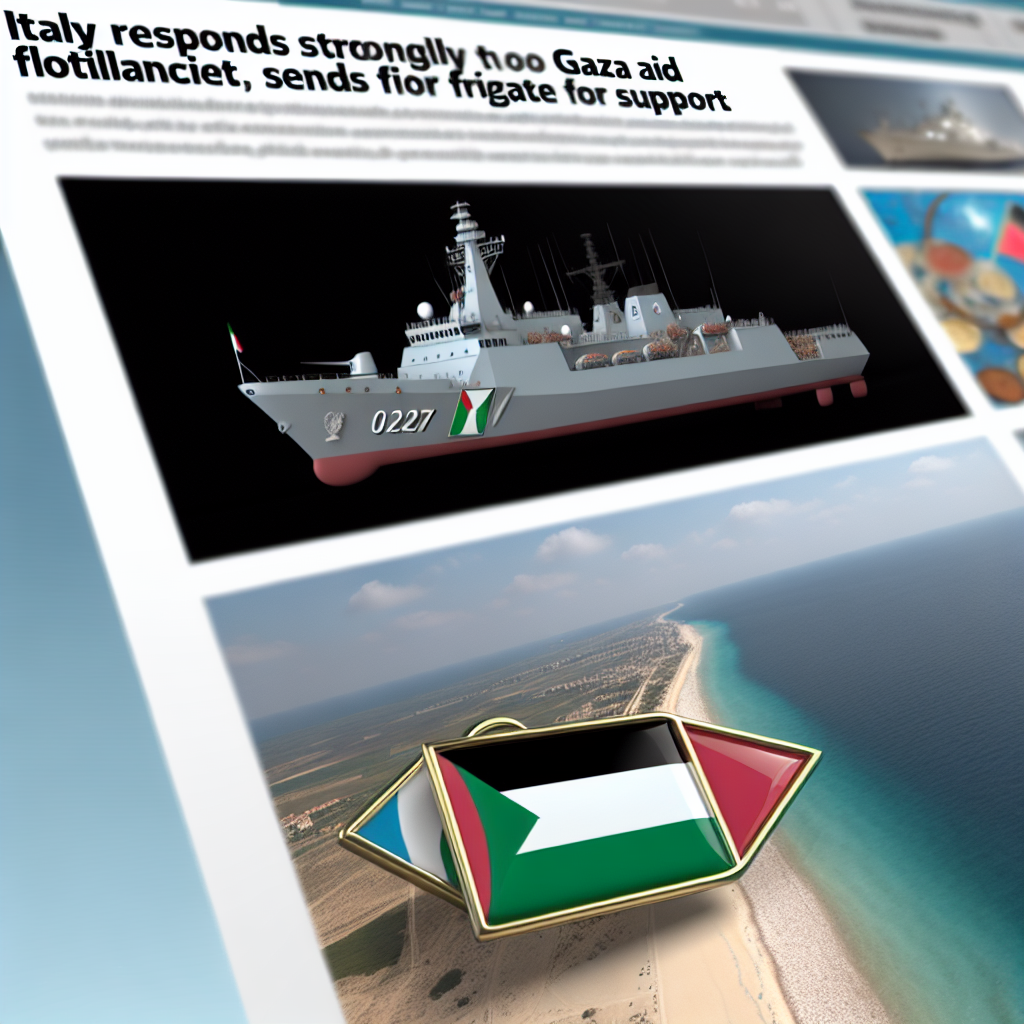
Italy Responds Strongly to Gaza Aid Flotilla Incident, Sends Frigate for Support

Drone Attack on Global Sumud Flotilla Sparks International Controversy

Italy’s Defense Minister, Guido Crosetto, condemned a recent drone attack on the Global Sumud Flotilla (GSF), which attempted to breach Israel’s naval blockade of Gaza to deliver humanitarian aid. The incident occurred approximately 50 kilometers south of Crete, in what has been characterized as an aggressive escalation by unidentified forces. To safeguard Italian citizens aboard the flotilla, Crosetto announced the deployment of an Italian Navy frigate to the region.

The GSF, comprising 52 vessels, reported multiple explosions and indicated that drones were present during the incident. The organization accused Israel of increasing tensions in an already volatile area. This has led to repercussions not just for passengers on the boats, but also raises broader questions about international intervention and the risks associated with navigating contested waters.

Israeli authorities have maintained a strict stance on the flotilla’s activities. While the Israeli government has refrained from commenting on the latest incident, it has previously declared its intent to prevent the flotilla from reaching Gaza. The Israeli foreign ministry has characterized the mission as being organized by Hamas, urging the ships to deliver their supplies to the port of Ashkelon instead. Israeli officials have reiterated that vessels attempting to breach the blockade would face legal action, citing national security concerns.

Adding further layers to the unfolding situation, environmental activist and prominent pro-Palestinian figure Greta Thunberg, who is involved in the flotilla, labeled the drone attacks as “scare tactics.” This perspective echoes sentiments among supporters of the flotilla who argue for the necessity of humanitarian assistance in Gaza. In response to the crisis, the United Nations has echoed demands for unrestricted humanitarian access, asserting that Israel’s obligation under international law includes providing sufficient aid to those in need.

The backdrop to this incident is a complex humanitarian crisis unfolding in Gaza, exacerbated by ongoing conflict, which has led to severe malnutrition and widespread famine. Reports indicate that since the outbreak of hostilities following the Hamas-led attack on Israel earlier this month, approximately 440 Palestinians have died from malnutrition-related causes. In light of these statistics, the GSF claims its mission is critical for breaking what it refers to as an “illegal siege” and for opening a humanitarian corridor to support the beleaguered population of Gaza.

The implications of the drone attack extend beyond immediate concerns for those aboard the flotilla. It raises critical questions about the legality of naval blockades, the role of international observers in conflict zones, and how countries like Italy choose to respond in complex geopolitical scenarios. As the situation continues to unfold, the international community remains watchful, closely monitoring responses from both governmental and non-governmental organizations in the context of human rights, international law, and humanitarian efforts.

Source link

Unlock Your Dreams with a Home Equity Loan!

Empowering Futures: Home Equity Loans as a Pathway to Dreams

In today’s economic landscape, many young adults are searching for innovative ways to achieve their financial dreams, especially when it comes to homeownership and personal investment. One accessible financial tool that has gained attention in recent years is the home equity loan. These loans allow homeowners to tap into the equity built in their properties, providing essential funding for various personal endeavors and investments.

Home equity is defined as the difference between a property’s current market value and the outstanding balance on the mortgage. For many homeowners, especially those who purchased their homes in a favorable real estate market, this equity can represent a significant financial resource. Home equity loans typically offer lower interest rates compared to personal loans or credit cards, given that the loan is secured by the property. This can make them an attractive option for financing large purchases or consolidating debt.

The ability to access capital through a home equity loan can serve multiple purposes. For young adults, leveraging home equity can facilitate a down payment on a new home, enabling them to transition from renting to owning—a significant milestone in financial independence. Additionally, these loans can cover education expenses, home renovations, or even investment opportunities. By harnessing the value of their properties, homeowners can invest in their futures in a way that aligns with their long-term aspirations.

The implications of home equity loans extend beyond personal financial strategies; they also affect community economic development. When individuals invest in their homes or local businesses by utilizing home equity loans, they stimulate local economies and contribute to the overall growth of their communities. This is particularly relevant in areas where young adults are often looking to make their mark—a trend that underscores the importance of financial literacy and responsible borrowing practices.

Despite the benefits, potential borrowers should approach home equity loans with caution. Careful consideration of the terms and conditions is essential, as is an assessment of one’s financial stability. In an era of fluctuating interest rates and economic uncertainty, maintaining a solid understanding of personal finances will allow young adults to make informed decisions. Educational resources and financial advisement are vital in helping young homeowners navigate these choices and maximizing the potential advantages of home equity loans.

As the landscape of personal finance continues to evolve, home equity loans stand out as a viable option for young adults aiming to achieve their dreams. With the right knowledge and strategic planning, tapping into home equity can represent a stepping stone towards homeownership, investments, and overall financial wellness. Emphasizing education and prudence can empower the next generation to make confident financial choices, translating home equity into impactful life experiences.

Source link

Game-Changer: New Deal Slashes Cost of HIV/AIDS Prevention Shot!

Landmark Agreement Brings Affordable HIV Prevention Drug to Low-Income Countries

In a significant development in the global fight against HIV/AIDS, a new prevention drug called Lenacapavir will soon be made available at drastically reduced prices in over 100 low-income countries. This initiative, which aims to extend access to millions, was announced on Wednesday and promises to bring the world closer to ending the HIV/AIDS epidemic. The reduced-cost rollout is set to begin in 2027, with the drug costing as low as $40 per person annually, compared to its original price of $28,000.

Lenacapavir, which offers biannual injections for six months of protection against HIV, has gained attention for its efficacy in clinical trials. Earlier this year, it received support from the World Health Organization (WHO), marking a critical endorsement for its use in HIV prevention strategies. The drug not only serves to protect individuals from contracting HIV but can also be utilized for those already diagnosed with the virus, highlighting its dual capabilities. By simplifying the administration process, Lenacapavir aims to replace current daily oral prophylaxis medications that many users find stigmatizing and difficult to access consistently.

The deal to provide cheaper versions of antiretroviral drugs stems from negotiations led by former U.S. President Bill Clinton. The agreement was facilitated by the Clinton Health Access Initiative in collaboration with the Gates Foundation and the South African research institution, Wits RHI. Such cooperative ventures exemplify the importance of public-private partnerships in addressing pressing health issues, with an emphasis on making essential medications accessible to populations that typically struggle with healthcare access.

Current statistics underscore the urgent need for initiatives like this. According to UNAIDS, over 40 million individuals are living with HIV worldwide, with 1.3 million new infections reported last year alone. South Africa, notably home to nearly eight million people living with HIV, will be one of the countries significantly impacted by the introduction of Lenacapavir. The new initiative could lead to a reduction of up to 20% in new HIV infections if just 4% of the population gains access to the drug.

The announcement arrives amidst ongoing challenges in the fight against HIV/AIDS, which have been exacerbated by funding cuts in U.S. foreign aid programs in recent years. As nations grapple with both economic and healthcare difficulties, timely access to affordable medications could alter the course of the epidemic. The embrace of innovative solutions such as Lenacapavir represents a hopeful advance in global health initiatives, providing a pathway to potentially mitigate the impact of HIV/AIDS in regions that have borne the brunt of this public health crisis.

Source link

Blackpink Turns Heads at Coachella in Traditional Hanboks

Blackpink’s Historic Coachella Performance and the Rising Role of Korean Culture in Global Politics

In a moment that transcended entertainment and echoed across the geopolitical landscape, Blackpink, the iconic K-Pop girl group, made history at Coachella 2023 by becoming the first Asian act to headline the festival. Their performance, attended by over 125,000 fans, was not merely a display of musical talent but a deliberate assertion of cultural pride. The group honored their Korean heritage by debuting on stage in stunning hanboks, traditional Korean garments richly embroidered with symbolic motifs. This act was a potent statement, intertwining fashion, culture, and geopolitics, highlighting how nations leverage cultural diplomacy to elevate their influence on the international stage.

The significance of this moment extends far beyond the festival grounds. By incorporating hanboks into their performance, Blackpink subtly challenged Western-centric narratives that have historically marginalized Asian cultures in global pop and political spheres. According to cultural analysts, such displays of cultural pride serve as a form of soft power—an assertion of identity in a world often dominated by Western hegemony. The group’s ability to seamlessly fuse traditional Korean elements with modern pop iconography exemplifies the rising influence of South Korea as a cultural powerhouse, capable of shaping international perceptions and expanding its soft power reach.

The Cultural and Political Roots of Korea’s Expanding Global Influence

In recent years, South Korea has steadily ascended as a major player in both global culture and geopolitics. From the global dominance of K-Pop to Korean cinema’s critical success, the country’s cultural exports have become vital tools for shaping international narratives. Historians and geopolitical commentators argue that this cultural ascent correlates with South Korea’s strategic state policies aimed at fostering national pride and leveraging cultural diplomacy as a counterbalance against North Korea’s persistent threat. The use of traditional garments like hanboks during such high-profile events signals an intentional effort to promote Korea’s rich heritage, making cultural identity a cornerstone of their nation-branding strategy.

Furthermore, the appearance of hanboks with intricate embroidery or modern adaptations at major fashion events—such as Seoul Fashion Week or Milan Fashion Week—demonstrates a deliberate attempt by Korean designers to present their culture globally. International organizations and industry analysts alike recognize this as a calculated move that consolidates Korean soft power, bolster ties with diaspora communities, and perpetuate a narrative of cultural resilience. This is especially critical considering the regional tensions in East Asia, where soft power becomes an essential tool for diplomacy and influence without direct confrontation.

Fashion as an International Language of Power and Identity

The spectacle at Coachella was not only cultural but also deeply political. Internationally renowned fashion brands like Dolce & Gabbana and local artisans contributed to the group’s look, transforming their stage into a visual manifesto of Korean cultural resurgence. As historians note, fashion has long served as an expression of power and identity—witness Madonna’s Jean Paul Gaultier cone bras or Geri Halliwell’s Union Jack mini dresses—each moment capturing a turning point in cultural history. The use of hanboks, embroidered with symbols of royalty like peonies, underscored a refusal to let traditional culture be confined to the past, instead presenting it as a living, breathing force shaping Korea’s future aspirations.

As the world watches this evolution, the message is clear: nations are increasingly aware that soft power through culture can reconfigure global narratives, shape alliances, and influence societal perceptions. The cultural diplomacy embodied by Blackpink’s groundbreaking performance, therefore, marks not just a moment of teenage fanfare but a pivotal junction in the ongoing contest for influence—where tradition meets modernity on the grand stage of geopolitics.

If history is any guide, the echoes of this event will resonate through generations, a testament that when nations harness their cultural symbols at moments of global visibility, they carve their names into the fabric of history. As we stand on the brink of further shifts, one thing remains undeniable: the stages of the world are the new battlegrounds for influence, where tradition and innovation collide amid the relentless tide of change.

Last-Minute Tax Tips Every Young Patriot Should Know

Global Geopolitical Shifts and Domestic Crises: A Turning Point in World Affairs

In an era marked by rapid international upheaval, geopolitical alliances are continually reshaping, and the repercussions are felt across nations and societies worldwide. Recent developments underscore this dynamic, as major powers respond to what analysts describe as a series of *“turning points”*—moments that could redefine the global order for decades to come. According to the International Crisis Group, the world is at an inflection point, where old paradigms are disintegrating, and new geopolitical realities are emerging.

Particularly significant is the escalating tension in Ukrainian conflict zones, which has become emblematic of the broader *new Cold War* shaping the 21st century. While Western nations continue to supply arms and exert economic pressure, Russia remains resolute, signalling that these confrontations are not merely regional but part of a larger contest for influence. Meanwhile, China expands its footprint through both economic initiatives and military assertiveness, challenging the existing *U.S.-led order*. International analysts warn that the shifting alliances carry profound geopolitical impact—altering trade routes, control over natural resources, and regional stability.

Shifts in Global Power and the Erosion of Traditional Alliances

In response to these global shifts, North Atlantic Treaty Organization (NATO) faces its own existential questions, with some member states expressing concern over the alliance’s future effectiveness. Historian Michael Novak notes that these tensions, coupled with the instability in Eastern Europe, reflect the rekindling of old rivalries that threaten to resurrect a *“geopolitical Cold War,”** reminiscent of the 20th-century power struggles. Similarly, U.N. Security Council debates increasingly revolve around how to manage conflicts in a multipolar world where consensus is elusive, and unilateral actions threaten to undermine collective security frameworks.

Over the last year, a series of *international treaties and agreements* have attempted to stem the tide of conflict and maintain stability. Yet, many experts contend that these diplomatic efforts are often superficial—piecemeal responses to deep-seated tensions rooted in economic disparities and military rivalries. The World Economic Forum warns that unless nations recognize the interconnectedness of their fates, escalation risks spiraling out of control, leading to widespread societal upheaval and economic collapse.

How Nations and Societies Are Impacted

At the forefront of the domestic impact are millions of citizens caught in the crossfire of international proxy conflicts and economic sanctions. *In the United States,* the ongoing debate over domestic policy and foreign intervention remains tense, with youth increasingly questioning the cost of global engagements. On the economic front, inflation, energy shortages, and supply chain disruptions threaten to aggravate social unrest, forcing governments to act with caution amid mounting public discontent.

The global economy faces an uncertain future, with experts from the International Monetary Fund warning of possible stagflation if geopolitical tensions persist. In many developing countries, economic hardship amplifies social grievances, fueling unrest and migration crises. Historians warn that history teaches us—without careful diplomacy and strategic foresight, these tensions could catalyze a new cycle of conflict, one where the victim is not just geopolitics but the very fabric of society itself.

Conclusion: The Unfolding Chapter of Humanity’s History

As the world stands on the brink of what could be a new era of global rivalry, the decisions made today bear the weight of history. The international community faces an urgent challenge: to navigate these turbulent waters, balancing power with prudence, ambition with restraint. The stakes are monumental, and the outcome remains uncertain. The movements of superpowers, the unraveling of traditional alliances, and the struggles of ordinary citizens are all threads woven into the grand tapestry of history—an ongoing story of hope, conflict, and resilience. In the end, what is written today will echo through the corridors of history, shaping a future that is still unwritten—and yet, inevitable.

Retail Spending Slumps in March as Young Consumers Tighten the Belt

The United States economy is experiencing a crucial inflection point that could have profound geopolitical repercussions in the coming years. Recent data from the Commerce Department reveal a decline in retail sales for March, with spending dropping by 1% compared to the previous month. While seemingly small, this decline exceeds analysts’ expectations and signals a potential slowdown in the world’s largest consumer market. The fall in consumer expenditure, particularly in departments such as general merchandise and gas stations, underscores a broader shift driven by retreating income expectations and lingering recession fears. Central to this economic shift is the impact of recent banking crises, which have fundamentally shaken investor confidence and prompted households to curb spending.

Economists and analysts note that this decline is not solely a short-term anomaly. Bank of America analysts suggest that the lull in refunds issued by the IRS—down by approximately $25 billion relative to last year—has dampened household liquidity, further constraining consumer activity. Simultaneously, the expiration of pandemic-era benefits has taken a toll on disposable income and spending power. How these decisions ripple through society becomes evident as household savings rates potentially decline and the specter of an impending recession looms larger. Despite these setbacks, some resilient fundamentals remain—such as a 2.9% year-over-year rise in retail spending and steady wage growth, albeit at a slower pace—yet the overall picture indicates signs of faltering consumer confidence.

The Federal Reserve and other global institutions watch these signals with caution. The latest employment figures do not indicate a collapsing labor market; employers added 236,000 jobs in March, yet the pace of growth is diminishing, and the Job Openings and Labor Turnover Survey reflects a 17% decrease from last year’s peak. Additionally, higher inflation expectations, fueled by rising gas prices, threaten to erode real wages and consumer purchasing power. This combination of tightening labor markets and inflationary pressures is forcing policymakers into a delicate balancing act, trying to stave off a recession while combatting inflation. Historian analyses point out that history shows such periods often precede significant geopolitical shifts, as economic downturns tend to strain international alliances and domestic stability.

The international community remains alert to the potential geopolitical fallout of America’s economic trajectory. Declining consumer confidence and rising inflation could prompt China and other rival powers to accelerate their strategic ambitions, sensing for opportunity as the U.S. grapples with internal uncertainties. Major global institutions like the IMF warn that a U.S. recession could destabilize emerging markets, which rely heavily on American trade and investment. This delicate web of interconnected economic and geopolitical forces underscores the vital importance of decisions made today. As analysts warn that the effects of recent banking turmoil and fiscal policies are still unfolding, the specter of history—where economic tremors evolve into full-blown crisis—serves as a stark reminder: the world’s balance of power is increasingly defined by these subtle yet profound shifts. The narrative of this ongoing chapter is written in the language of uncertainty, and only time will reveal whether the U.S.—and indeed the global order—can navigate this turbulent period without succumbing to the chaos of the fall.

Fox News is gearing up to bring real talk to the No Spin Zone—no more fluff!

The Dominion Voting Lawsuit: A Turning Point in Media Accountability and Global Power Dynamics

In Wilmington, Delaware, a judicial spectacle is unfolding that transcends the courtroom, hinting at a seismic shift in the intersection of media influence, legal accountability, and geopolitical leverage. The upcoming trial of Fox News—a media titan with global reach—charges the network with defamation over false claims about the 2020 US presidential election. The staggering $1.6 billion lawsuit filed by Dominion Voting Systems signals an unprecedented challenge to the narrative control wielded by major media outlets, especially those aligned with right-wing political factions seeking to maintain their influence amidst growing scrutiny.

Historically, Fox News has survived institutional crises by deploying a blend of legal maneuvering and strategic ambiguity. Yet, this time, the case threatens to expose a pattern of misinformation that has shaped public opinion for years. Legal analysts and media scholars warn of a watershed moment in how truth and accountability are conceptualized in the digital age, recognizing that global political stability depends increasingly on media honesty. As this high-profile trial approaches, the international community watches closely, aware that any verdict favoring Dominion could set a legal precedent with far-reaching implications, potentially curbing the unchecked power of sympathetic networks to distort facts, undermine democracy, and influence geopolitical stability.

The trial also underscores a broader shift in geopolitical power dynamics. U.S. domestic politics, often seen as a microcosm of global tensions, are now intertwined with international interests. Countries that are allies of the Western bloc are increasingly concerned about the spread of disinformation that emanates from influential American media, capable of destabilizing democracies worldwide. Critics, including international organizations such as the United Nations, warn that unchecked misinformation can accelerate conflicts and erode the fabric of international law. Conversely, nations challenging the dominant narratives—like Russia and China—see these legal proceedings as a symbolic battleground for ideological confrontation, testing the resilience of free societies against authoritarian influence.

For historians and geopolitical analysts, the current moment is reminiscent of critical junctures that define eras—when legal bodies serve as arenas for larger ideological conflicts. The future of American media, and by extension the stability of the Western world, hinges on the trial’s outcome. As legal proceedings unfold amid mounting political tensions, the world stands at a crossroads—where truth and justice are being redefined, and where the weight of history is silently sifting through the cracks of a fractured narrative.

In the end, the trajectory of this case—whether it results in accountability or further impunity—will shape the legacy of our times. The courtroom in Wilmington might seem a local dispute, but the ripples it generates extend far beyond national borders, echoing through the corridors of power and shaping the stories that societies tell themselves. As history waits in the shadows, the question remains: will this be a turning point that restores the dignity of truth in journalism, or merely another chapter in the ongoing saga of global disinformation—a story still being written, with the weight of the future hanging delicately in the balance?

Social Media Auto Publish Powered By : XYZScripts.com