Matox News

Truth Over Trends, always!

Rival car-sharing firms eye London expansion after Zipcar’s UK withdrawal

London, historically known as a hub for innovation and progressive urban planning, now finds itself at a pivotal crossroads in the realm of sustainable mobility. Following the imminent closure of Zipcar’s UK operations—a move that signifies significant shifts in the shared economy landscape—the city’s transportation scene is witnessing a potential rebirth. Several emerging car-sharing companies are keenly eyeing the vacant market, signaling an intensified race to adapt and redefine urban mobility in one of Europe’s most bustling metropolises. This development underscores how international technological and corporate decisions ripple into local societies and economic structures.

Major players like Free2Move, owned by global automotive giant Stellantis, and Enterprise Car Club are actively assessing expansion opportunities, despite the complexities entailed. Free2Move has highlighted London’s advanced infrastructure for autonomous mobility as a key factor that could make the city especially attractive—an indication of how emerging technologies are becoming pivotal in urban transport strategies. However, analysts point out that regulatory fragmentation among London’s 33 local authorities poses a serious obstacle. As one expert from a prominent international transportation think tank explained, “The patchwork of licensing and parking regulations has historically hampered scalable car-sharing models, especially floating vehicles without fixed stations.” Such barriers not only hinder market growth but also reflect broader governance challenges that influence economic opportunities and societal access to greener, more flexible transport solutions.

The departure of Zipcar, which many viewed as a bellwether for the health of the market, has ignited a scramble among peer-to-peer platforms like Hiyacar and Turo. These companies, leveraging existing vehicle owners rather than heavy capital outlays, present a more adaptable model for urban environments. Don Iro of Hiyacar noted that their surge in interest was almost inevitable regardless of Zipcar’s exit, but the recent vacuum provides a clear impetus for swift expansion. “There’s going to be a substantial gap, and it’s going to take years for the market to stabilize,” he said, emphasizing the long-term strategic importance of establishing a foothold now. This scenario illustrates a broader shift: as traditional car-sharing giants retreat, decentralized and peer-to-peer platforms are increasingly seen as the future, especially amid rising environmental concerns and urban congestion.

The implications extend beyond business models, however. London’s transition towards a more flexible, shared transport network has significant social and geopolitical ramifications. By relying less on personal vehicle ownership, the city aims to reduce pollution and traffic congestion, aligning with international efforts to combat climate change. Yet, critics argue that without cohesive governance and clear regulatory pathways, these innovations could exacerbate inequalities—primarily benefiting affluent areas and tech-savvy consumers. Meanwhile, European and global institutions, such as the European Commission and the International Transport Forum, continue to monitor these technological shifts, aware that how cities like London manage their mobility ecosystems could serve as a blueprint—or cautionary tale—for the world. As governments and corporations negotiate the future of transportation, the very fabric of urban society hangs in the balance, teetering between innovation and chaos.

As the story continues to unfold, it becomes clear that London’s decisions today will resonate through the corridors of power and across the streets of cities everywhere. The departure of Zipcar, while a setback for some, opens a chapter defined by fierce competition, technological innovation, and the relentless force of economic and geopolitical change. The world watches as a city famous for its resilience and ingenuity seeks to carve a new path forward—one that may yet shape the future of urban life in the age of autonomous mobility and shared economies. This is not merely a story of market dynamics; it is a narrative of how societies choose to evolve amidst the relentless tide of progress—where every decision is a stroke on the canvas of history yet to be written.
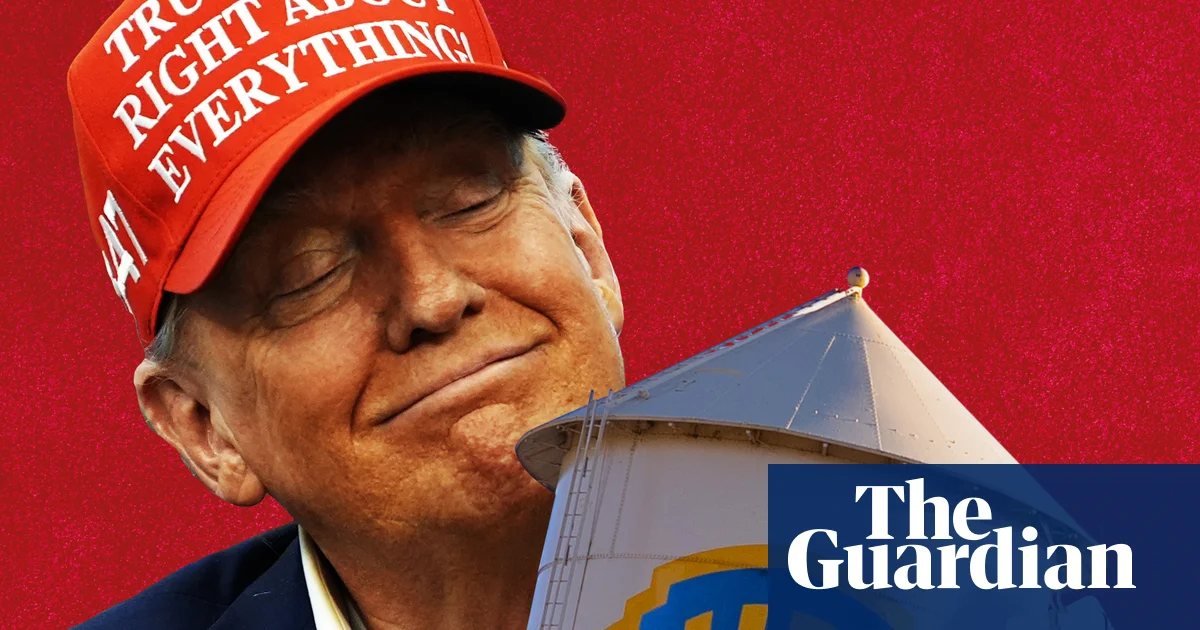
Warner Bros Showdown: Trump’s Fight for the Future — Deal or No Deal?

U.S. Media Moguls and the Geopolitical Landscape

The recent upheaval in the international media industry reveals a profound shift that could redefine the global power balance. At the heart of this shift is President Donald Trump’s controversial influence over an impending mega-merger involving Netflix, Warner Bros Discovery (WBD), and other media giants. The $82.7 billion acquisition deal by Netflix for WBD’s extensive portfolio, which includes iconic assets like Batman, Casablanca, and CNN, is now complicated by political interference that extends beyond mere market competition to the very fabric of free enterprise and democratic process. As the world watches, the potential for a shaping of global media narratives by a single nation’s government looms large, threatening to tilt the scales of international diplomacy and news dissemination.

Political Puppeteering and a Dangerous Precedent

Trump’s involvement, or at least his declared interest, highlights a disturbing trend — one where the White House’s hand is being seen as an arbiter in big corporate deals. Historically, horizontal mergers—especially ones of this magnitude—are subject to vigorous antitrust scrutiny from independent agencies that seek to prevent monopolistic consolidation. However, the current administration’s apparent willingness to entertain direct presidential influence risks undermining decades of established legal standards. Renowned legal scholar Tim Wu from Columbia University pointed out that such interference in merger reviews is “not how the system was designed,” expressing concern that the White House’s new approach could erode the independence of antitrust regulators. Analysts warn that if the deal proceeds amid political meddling, it may set a precedent where government officials deploy influence as a weapon to favor certain corporate interests, fundamentally threatening market competition and consumer choice on a global scale.

Who Holds the Power: Society or State?

Paramount Skydance’s aggressive $108 billion bid, backed by Trump supporters, underscores a critical geopolitical chess game. The bid’s significance extends beyond simple corporate rivalry; it symbolizes a tug-of-war over media sovereignty and control of narrative powers that shape societal perceptions worldwide. Critics, including Senator Elizabeth Warren and other democrats, emphasize that such consolidation raises profound concerns about the erosion of diversity in media voices and the potential suppression of dissenting views. With Hollywood historically a potent tool for ideological influence, the possible monopolization of entertainment and news outlets in the hands of a few — especially with political operatives blurring the lines — threatens to limit the very fabric of open discourse.

Disturbingly, this potential merger involves not only American firms but also international actors. As analysts warn, the culmination of these moves could deepen the crisis of global media neutrality, with powerful alliances aligning to endorse or oppose mergers based on geopolitical agendas. The danger is clear: when political influence seeps into the mechanism of market regulation, the result can be a shadow empire of propaganda— a space where dissent is quashed, and national interests dominate the narrative worldwide. The international community, including independent think tanks and watchdog groups, must remain vigilant against such threats to democracy and free enterprise.

The Weight of History and the Unfolding Future

As Trump’s recent statements and actions continue to raise alarms, the global stakes become ever clearer. This contentious collision of corporate interests, political ambitions, and international values of free speech underscores a pivotal moment in history—one where the consequences extend beyond the borders of the United States. The unfolding drama echoes echoes from past eras of conflict, where media control often predates or catalyzes larger geopolitical upheavals. Will the independent mechanisms designed to shield markets from monopolistic powers endure, or will they be subsumed by the ambitions of a single nation’s leadership? As the world teeters on the edge of this new frontier, the real question remains: who will shape the stories of tomorrow—the free societies or the shadowy interests pulling strings behind closed doors? The answer, like history itself, is still being written.

Kim Jong-un's North Korean troops step up as landmine clearance for Russia signals shifting alliances
Kim Jong-un’s North Korean troops step up as landmine clearance for Russia signals shifting alliances

In a striking display of North Korea’s increasingly provocative international stance, leader Kim Jong-un recently admitted that North Korean troops were deployed to support Russia’s ongoing invasion of Ukraine. This rare public acknowledgment signals a notable shift in Pyongyang’s foreign policy, unfolding amid a complex web of geopolitical maneuvers and diplomatic isolations. According to sources in South Korea and western intelligence agencies, thousands of North Korean soldiers have been sent to assist Russian forces, implicating Pyongyang directly in the Eurasian conflict that has drawn global concern and condemnation.

Under the guise of supporting Russia, North Korea is evidently leveraging the conflict to sidestep its international isolation. Analysts emphasize that Russia is providing North Korea with crucial financial aid, military technology, and energy supplies, thus allowing the isolated regime to continue its nuclear and missile programs in defiance of severe international sanctions. This clandestine exchange not only bolsters North Korea’s military capacity but also emboldens it to challenge the status quo, making it an active player in a shifting balance of power across Eurasia. The symbolism is powerful: a totalitarian regime stepping beyond its borders, acting as a proxy for global tension, and rewriting the rules of engagement in a world on the brink of a new Cold War.

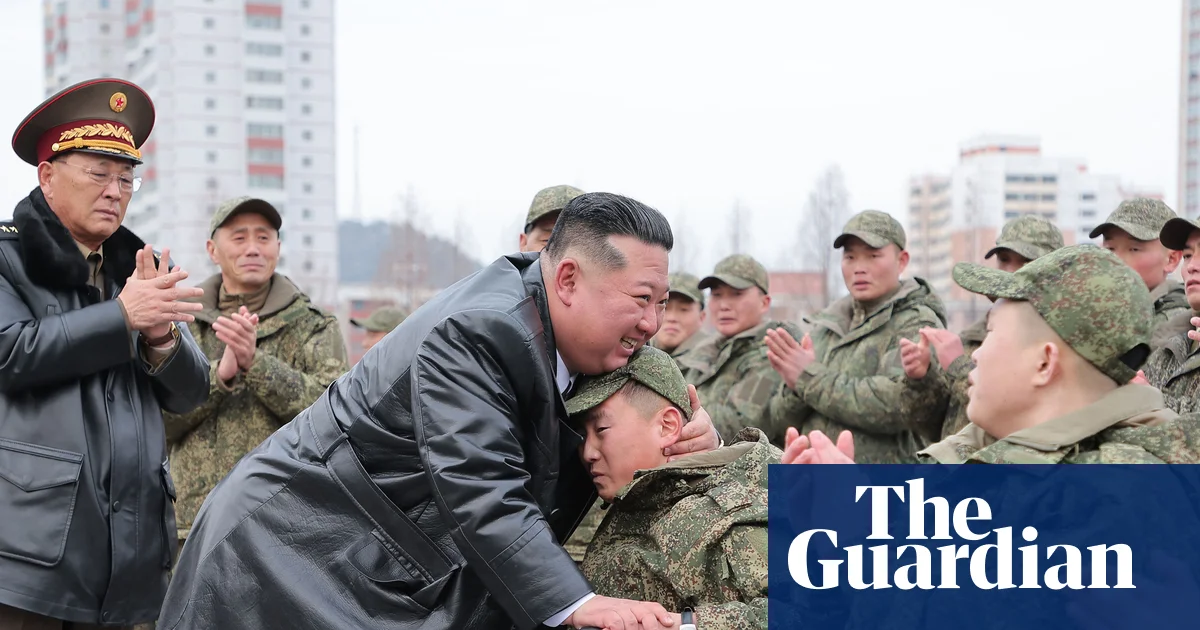
Kim Jong-un’s recent public speeches and ceremonies further illustrate the regime’s military escalation and nationalist resolve. Celebrating the return of soldiers involved in mine-clearing operations in Ukraine, Kim awarded state honors to nine fallen troops, praising their heroism in turning dangerous zones into “safe and secure” areas within just three months. Such narratives serve to galvanize North Korean society around the narrative of sacrifice, reinforcing the leader’s image of strength and resilience. Meanwhile, images depict Kim embracing wounded and emotional soldiers, alongside grieving families—an effort to showcase the internal facade of sacrifice that, analysts argue, masks a regime desperate to bolster its strategic leverage amid international hostilities.

The geopolitical implications of these developments are profound. Experts argue that Pyongyang’s engagement in the Ukraine conflict is a clear signal of the diminishing influence of traditional Western powers over Eurasia, ushering in an era where authoritarian regimes like North Korea and Russia forge alliances based on shared interests in resistance against global sanctions and interventions. At the same time, the United States and its allies face a recalibration, as traditional lines of diplomacy and intervention are redefined. With Kim publicly commemorating soldiers killed in Ukraine and flexing military prowess at home, the risk of further escalation and regional destabilization looms large, making the future unpredictable and fraught with peril.

In the broader canvas of world history, this confluence of actions and alliances echoes the ominous warnings of historians who trace violent upheavals to the breakdown of diplomacy and the rise of aggressive regimes seeking to expand their influence. The current trajectory indicates that the decision of Kim Jong-un and Vladimir Putin to deepen their ties over Ukraine could be the catalyst for renewed conflict, reshaping the international order. As the world watches silently, the weight of history continues to press down, reminding us that, *once again*, the line between regional conflict and global upheaval grows thinner, and the lessons of the past remain perilously unheeded. The pages of history are turning, and humanity stands at a pivotal juncture where the choices made today will echo through generations—destined to be remembered as either moments of courage or capitulation amidst the storm of unchecked power.

Thailand and Cambodia clash persists despite Trump’s ceasefire claim

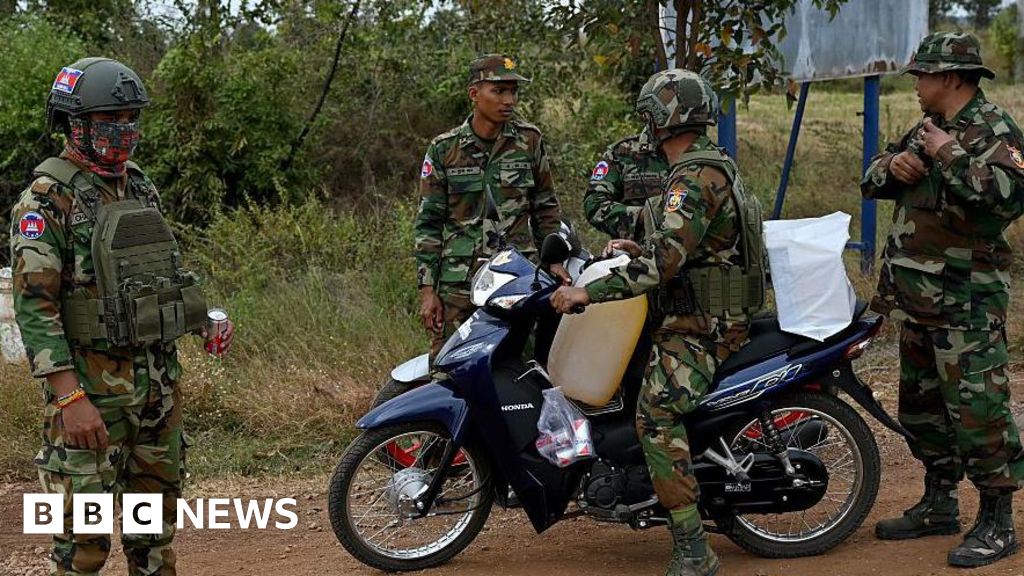
In a dramatic turn of events, Thailand and Cambodia are once again embroiled in fierce border clashes that threaten regional stability and challenge international diplomacy. Despite claims from U.S. President Donald Trump of a ceasefire agreement, reports indicate that hostilities persisted overnight, with Thai forces continuing to press along the border and Cambodian forces launching renewed rocket attacks. The long-standing border dispute, rooted in colonial-era demarcations, has surged back into violent confrontation, illuminating how unresolved historical grievances can resurface with devastating consequences.

It was on Friday night that President Trump announced, through social media, that a mutual ceasefire had been negotiated, citing the双方 agreement to return to previous accords signed in October. However, the reality on the ground diverged sharply from diplomatic pronouncements. Thai Prime Minister Anutin Charnvirakul clarified that Thailand’s military actions would persist until Cambodia fully withdrew its forces and demined the border—a demand that Cambodia, in turn, rejected, stating that landmines left from the 1980s civil war could not be removed overnight. As fighting escalated with shelling, air strikes, and casualties mounting—at least 21 deaths and 700,000 displaced—analysts and international observers warned of an emerging crisis that could destabilize Southeast Asia even further.

The geopolitical impact of these renewed hostilities extends beyond bilateral tensions. The region, historically a pincushion for imperial interests, is again demonstrating that local disputes can quickly spiral into flashpoints with broader consequences. The United Nations and regional organizations like the ASEAN have voiced concern but largely remain powerless to de-escalate the conflict. The fact that the clashes involve air strikes and landmine threats indicates a shift towards more aggressive tactics, fueling fears that the conflict could spiral into a larger regional war if not contained. Global analysts warn that unchecked violence will deepen mistrust and undermine efforts for concrete border resolutions, threatening decades of fragile peace.

Moreover, the diplomatic efforts—lauded initially as a breakthrough—are now under scrutiny for their actual efficacy. Thailand’s warning to the US to avoid linking the conflict to trade policy underscores the delicate balance of geopolitics in Southeast Asia. The region’s major powers, including China and India, watch intently, aware of how this conflict could be used to influence broader strategic interests. Historians note that this border dispute, essentially inherited from colonial maneuvering, exemplifies how historical lines drawn by foreign powers continue to incite violence, threatening to undo the region’s progress towards stability.

As Cambodian reports of fresh Thai air strikes surface amid continued firefights and accusations of ceasefire violations, the phrase “the peace process is fragile” echoes among diplomatic corridors. The conflict’s unresolved history combined with recent military escalations paints a disturbing picture of a region at the brink. The global community, led by a fragile international order, must grapple with the dangerous dynamics at play. The weight of history, compounded by contemporary geopolitical ambitions, leaves South-East Asia in a state of uncertainty—poised on the precipice where peace and chaos collide, and the lessons of the past threaten to be lost amid the roar of ongoing conflict. With each day, the story of this border dispute writes itself deeper into the fabric of history—reminding us that some conflicts, once ignited, may burn longer than anyone expects, shaping the face of the future in ominous ways.

Thailand and Cambodia Clash Again Despite Trump’s Ceasefire Claim

Emerging Crisis on the Thai-Cambodian Border: A Tug of War with Global Ramifications

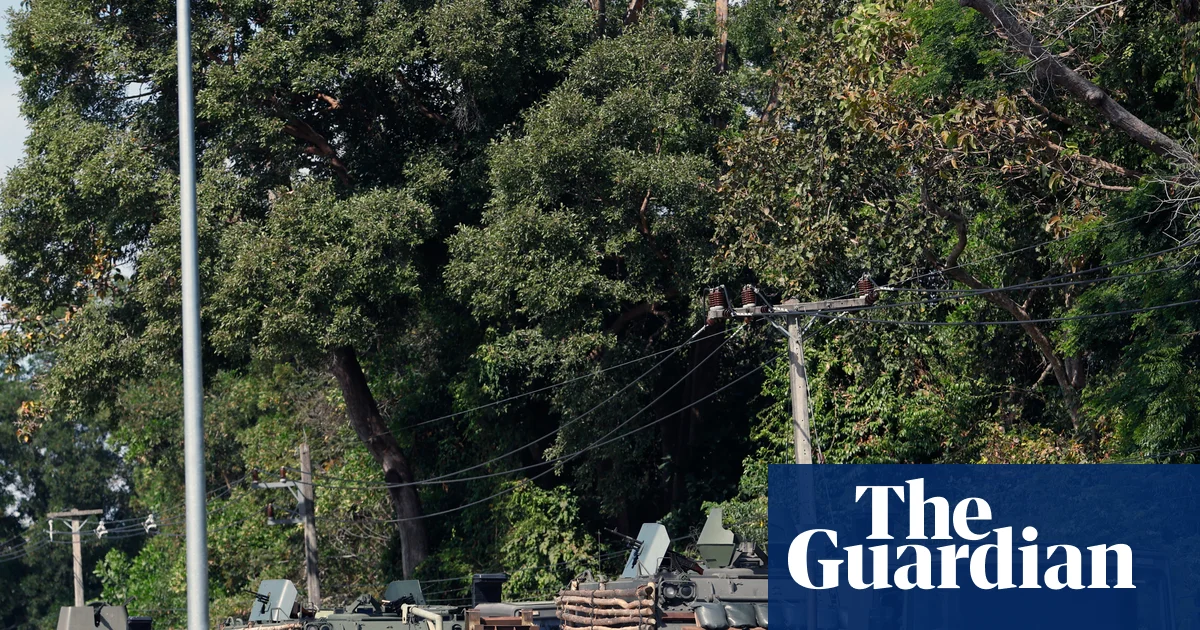
The recent escalation of hostilities along the Thai-Cambodian border has reignited longstanding tensions rooted in historical territorial disputes. Despite claims from U.S. President Donald Trump that a renewed ceasefire had been agreed upon through diplomatic channels, the reality on the ground suggests a far more volatile and unpredictable conflict. Cambodian officials assert that Thai forces, including fighter jets, continue to strike targets across the border, undermining any claims of a peaceful resolution. Meanwhile, Thailand’s military counters with accusations of violations of international rules, specifically targeting civilian areas and deploying landmines—a move that only deepens the cycle of violence.

This fragile flashpoint reflects more than a regional dispute; it is emblematic of the geopolitical impact of external influences and flawed diplomatic interventions. The United States, under Trump’s leadership, played a pivotal role in the original peace accord, leveraging threats to withdraw trade privileges to push Thailand and Cambodia toward compromise. Yet, as recent weeks demonstrate, treaties and ceasefires tend to be fragile, especially when interconnected with historical grievances and nationalistic fervor. Analysts, including scholars at the International Crisis Group, warn that such unresolved conflicts risk broader regional destabilization, especially as both countries leverage their respective military capabilities—Thailand with jet fighters and Cambodia with BM-21 rocket launchers—further escalating the threat of wider conflict.

Despite claims of a renewed ceasefire brokered during a call involving Trump, Prime Minister Hun Manet of Cambodia, and Prime Minister Anutin Charnvirakul of Thailand, the reality remains discordant. Neither Thai nor Cambodian leaders officially acknowledged the agreement in their subsequent statements, and the Cambodian prime minister even indicated ongoing hostilities. This disconnect highlights the fragile nature of international diplomacy in volatile regions and the importance of verified facts. The conflict’s roots are embedded deeply in history—dating back to colonial-era border demarcations and international court rulings—further complicating diplomatic efforts. Notably, a 1962 ICJ decision awarded sovereignty over border territories to Cambodia, a verdict still fiercely contested within Thailand, fueling persistent enmity.

As violence erupts anew, the broader implications for international stability are significant. The United Nations and regional actors are watching with concern as at least 20 lives have been lost in recent clashes. The regional hierarchy remains fragile, with Malaysia’s role as a mediator underscored by its hosting of previous peace accords, yet these efforts are frequently undermined by nationalist rhetoric and strategic military deployments from both sides. The ongoing clash acts as a stark reminder that unresolved historical disputes, if left unaddressed, threaten to spiral into broader conflicts that could draw in neighboring nations and shift regional power dynamics. The weight of history presses heavily on the present, and the international community must tread carefully, mindful that tomorrow’s calamity could easily become today’s irreversible tragedy.

Home Battery Boost: $7.2bn in New Funding Sparks Aussie Rush to Save on Renewable Energy

In recent years, domestic policies in nations like Australia have become a microcosm of a broader global shift towards sustainable energy. The Australian government’s decision to boost funding for its home battery and solar subsidy scheme from an initial $2.3 billion to a staggering $7.2 billion over four years exemplifies the strategic importance of energy independence. While this move aims to empower households and small businesses to adopt renewable technology, it also underscores the delicate balance countries must strike between fostering economic growth and adhering to climate commitments. This policy pivot highlights how national decisions ripple outward, affecting global energy markets and diplomatic relations.

Analysts like Dr. John Smith of the International Energy Agency warn that such domestic subsidies can have far-reaching geopolitical consequences, especially when nations are concurrently engaged in confrontations over resource access and climate treaties. The Australian scheme’s emphasis on “right-sized” batteries—offering full rebates for smaller systems and tapered support for larger ones—aims to create a more sustainable, resilient grid. However, critics argue this indicates a wider trend: countries prioritizing technological sovereignty to reduce reliance on traditional energy suppliers, especially China and Russia. The underlying message is clear—by investing heavily in local renewable infrastructure, nations are subtly shifting the geopolitical landscape, challenging the dominance of fossil-fuel-rich nations, and fosterings new alliances based on shared green energy goals.

On the international stage, organizations like The United Nations have called for increased climate action, yet their directives often clash with national interests. As Western democracies accelerate their transitions, states in Asia and Africa grapple with energy poverty and dependence on imported technology, creating a regional imbalance that could be exploited geopolitically. Notably, the ongoing debate over climate targets vs. energy security remains a flashpoint. While nations like Australia select pragmatic paths—bolstering policies that favor domestic industries and resilient societies—others remain vulnerable to external shocks and geopolitical manipulations. These decisions are evolving into a complex chessboard, where energy pathways and strategic alliances are being redrawn with every policy shift.

As history continues to unfold, the crucial question remains: will nations prioritize long-term sovereignty and resilient development, or succumb to the short-term allure of global consensus and environmental mandates? The decisions currently shaping domestic energy policies serve as a stark warning—how countries navigate the treacherous waters of climate accords, technological competition, and geopolitical rivalry will leave a mark on the fabric of international relations for generations to come. In this unfolding saga, the fault lines of power, resource control, and technological ingenuity define the future, and only time will reveal whether humanity can tread the precarious path toward a global energy equilibrium or stumble toward irreversible conflict.

Trump urges Fed to heed his voice as he chooses new leader: ‘I’m a smart voice’

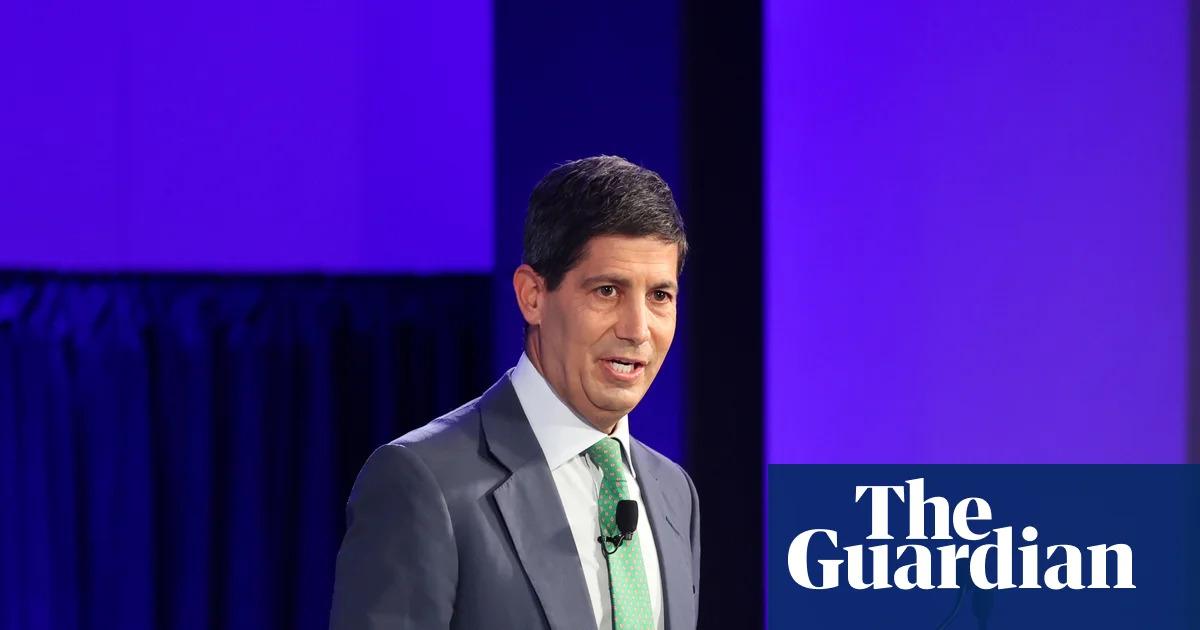
The United States finds itself in a turbulent era where the traditional independence of its central bank is being pushed to the brink. President Donald Trump has openly declared that he “should be listened to” by the Federal Reserve, signaling a bold challenge to the institution’s historical autonomy. As Trump weighs potential candidates to lead the Fed—most notably former Fed governor Kevin Warsh—the political pressure is mounting, with implications reverberating far beyond America’s borders. This unprecedented move underscores a larger trend where economic policy decisions are increasingly tangled with political agendas, raising alarms among global economists and analysts.

Traditionally, the Federal Reserve has operated as an independent entity, insulated from the political whims of sitting presidents. However, Trump’s vocal interference, including public attacks on current Chair Jerome Powell and attempts to influence rate-setting decisions, threaten to erode this independence. Powell’s cautious approach—resisting Trump’s calls for drastic rate cuts—has become a focal point of intra-governmental conflict. The president’s direct involvement in choosing a successor hints at a shift where economic stability and global markets could become pawns in political struggles. Analysts warn that this interference might diminish the credibility of the Fed, which could lead to increased market volatility and a loss of investor confidence worldwide.

The geopolitical impact of these developments cannot be overstated. As America grapples with internal political pressure, its relationship with key international economic institutions becomes more strained. The potential for a Fed influenced by partisan politics raises concerns among allied nations and rival powers alike. In particular, China and Russia, observing America’s internal turmoil and the potential weakening of its economic governance, may seek to exploit this vulnerability. The International Monetary Fund and other global monitors have started to warn that politicized monetary decisions could spark ripple effects, destabilizing the already fragile post-pandemic recovery in emerging markets and shifting the global economic balance of power.

Historically, figures such as Ben Bernanke and Janet Yellen emphasized independence of central banks as vital for maintaining economic stability. Today, Trump’s push to curtail this independence signals a shift that might redefine the very role of monetary policy in the 21st century. The analysis of geopolitical strategists suggests that the internal fight over the Fed’s leadership is an indicator of larger shifts towards greater nationalistic control over economic institutions. Whether this marks an inevitable deterioration or a turn towards a more politically accountable central banking system remains a question with profound implications. As the world watches, the unfolding saga of the US’s monetary leadership stands as a potent reminder that the decisions made in Washington will echo across borders, shaping the future of international monetary stability and societal prosperity.

In the grand theater of history, this chapter may be remembered as the moment where an economic empire’s internal integrity was tested by political ambitions. The clash between independent monetary policy and political interference sets the stage for a tumultuous era—one in which the outcome could determine the fate of global economic governance for generations. With each passing day, the weight of history presses heavily upon the shoulders of policymakers, and the world holds its breath to see if the next chapter will forge a path towards stability or descend into chaos—a testament to the enduring struggle between power and prudence in shaping our shared destiny.

Farmers protest French blockades over cattle cull crackdown

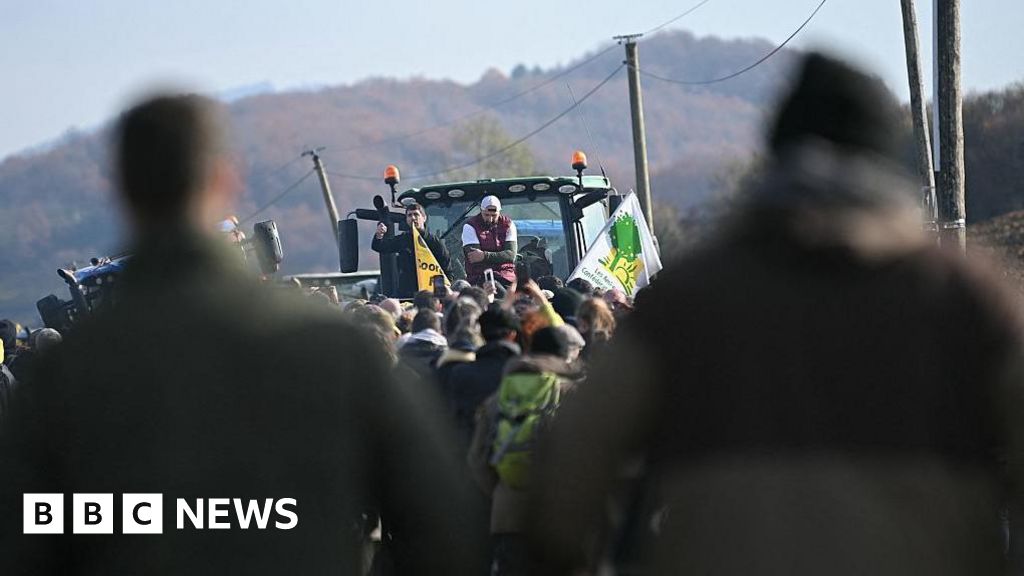
Amid mounting protests and widespread unrest, France finds itself at a crucial crossroads in an ongoing battle over agricultural sovereignty and economic stability. Angry farmers, disillusioned by government policies and EU directives, have staged intense demonstrations across rural regions, notably in the southern Ariège department, where clashes erupted between riot police and protestors over the controversial slaughter of cattle amid the outbreak of Lumpy Skin Disease (LSD). This highly contagious bovine affliction, transmitted predominantly through fly-bites, has ignited passions within France’s farming communities. Although the disease is rarely fatal, its economic toll—rendering cattle unsaleable and severely damaging milk production—has become a flashpoint in the broader struggle to preserve local agriculture and traditional ways of life.

The French government’s response, involving the mass slaughter of entire herds following isolated infections, has been met with fierce opposition from key farmers’ unions such as Conféderation Rurale and Conféderation Paysanne. These groups argue that the policy is an overreach, asserting that more nuanced methods like selective culling and vaccination could contain the disease without devastating farmers’ livelihoods. Nonetheless, most veterinary experts, including Stephanie Philizot, head of the SNGTV vets’ union, warn that the virus often appears in symptomless animals, making whole-herd slaughter a necessary, if harsh, precaution. With approximately 110 outbreaks since June, primarily in France’s east and increasingly spreading into the southwest, the situation underscores the challenge of balancing public health measures with economic survival in a climate of escalating farm crises.

Beyond the immediate health concerns, the crisis illustrates a broader geopolitical tension over EU policies, agrarian independence, and international trade. The French government fears that mounting protests and farmer unrest could escalate into a wider movement, fueling resistance against what many perceive as overreach by EU institutions. Upcoming protests scheduled in Brussels during an EU summit highlight the national frustration over policies perceived to threaten their economic sovereignty. These grievances extend beyond disease control; farmers vehemently oppose the impending EU free-trade agreement with South American nations. Many alarmed farmers see this treaty as a gateway for increased imports of cheaper food—often produced under looser environmental and sanitary regulations—posing a direct threat to France’s agricultural sector and its cultural identity.

International analysts and organizations continue to watch these developments closely, recognizing them as a microcosm of broader struggles faced by EU member states. Historian Dr. Marie Dubois notes that “the current unrest echoes the historical tension between national sovereignty and supranational mandates, reminiscent of past crises when local interests clashed with overarching EU directives.” The European Commission and national governments alike are under immense pressure to navigate these volatile waters—striving to enforce health policies without igniting societal backlash that could fracture the unity of the European project itself. The outcome of this confrontation—whether it leads to policy concessions, political upheaval, or a reevaluation of EU integration—remains uncertain, but the stakes could not be higher.

As France’s farmers brace for more protests and stand at the edge of an increasingly uncertain future, history’s pen continues to write its own story. The struggle for agricultural sovereignty, national identity, and economic survival is unfolding in real time, leaving the continent on the brink of a new chapter in its ongoing saga. The next few months may redefine not only French rural policy but also the very fabric of Europe’s unity—reminding the world that beneath every diplomatic handshake and treaty lies a fragile human pulse, beating with the hopes and fears of generations. History is watching, and what is written now will echo for decades to come.

House Democrats push for release of Jack Smith classified report in showdown with Republicans

In a bold move that signals ongoing domestic chaos, the Democrats on the House Judiciary Committee are pushing to unveil classified portions of special counsel Jack Smith’s report concerning former President Donald Trump. The report, which scrutinizes allegations of mishandling classified documents and interference in the 2020 election, remains shielded by court orders, but the Democratic-led committee aims to challenge these restrictions. This standoff is not merely a matter of American political theater; it resonates deeply beyond U.S. borders, impacting global perceptions of the rule of law and the stability of the world’s leading democracy.

Recent developments reveal powerful implications for geopolitical stability. Judge Aileen Cannon has refused to release the classified content, citing ongoing court protections, while House Democrats argue it is essential for transparency, especially with Jack Smith scheduled to testify in closed-door sessions. The clash underscores a broader fight over transparency versus legal boundaries—a tension that could unsettle international peace if perceived as a sign of lawfare or political weaponization. According to international analysts and critics of U.S. politics, these events serve as a stark reminder that internal political strife can escalate into a signal of internal erosion of legal integrity, threatening global alliances predicated on American stability.

As Republicans led by Jim Jordan escalate their efforts, including issuing subpoenas for Smith’s appearance, the situation emphasizes a dangerous polarization. Locally, these proceedings could influence legislation and law enforcement policies, but what’s truly alarming is how this chaos fuels uncertainty on the international stage, especially among allies and adversaries alike. The ongoing drama also ignites fears of politicized justice, reminiscent of narratives that global power players like Russia and China exploit to undermine American credibility. The geopolitical impact amplifies as nations watch Washington’s internal struggles unfold, questioning American endurance and the durability of its democratic institutions.

Historians and policy analysts warn that these events mark a pivotal moment—a test of the principles of justice, sovereignty, and leadership. The decision by Judge Cannon to withhold certain documents, combined with the congressional push for transparency, inputs into a broader conversation: Are American elites capable of balancing legal integrity amidst political turmoil? Or are we witnessing the dismantling of trust in the foundational pillars of democracy? As the world’s preeminent superpower. stares into this abyss, one thing is clear: history is being written in real time — and its consequences will echo across generations. The weight of these decisions extends far beyond the Capitol, shaping the narrative of power, justice, and national resilience for decades to come.

Exposed: Effort to Smuggle Nobel Laureate Out of Venezuela

In an unprecedented display of clandestine operations and international intrigue, Venezuela finds itself again in the global spotlight amid a tense geopolitical climate. A daring rescue mission, dubbed Operation Golden Dynamite, successfully extracted the prominent opposition leader and Nobel laureate, María Corina Machado, from her hidden sanctuary within the country. The clandestine plan, executed by the private intelligence firm Grey Bull Rescue, involved perilous sea crossings through rough, pitch-black waters, all designed to foil the ever-watchful eyes of authoritarian regimes. Such maneuvers are not just daring feats—they are emblematic of the rising tides of tension between Venezuela and Western powers, especially the United States, which has recently ratcheted up its rhetoric against Nicolás Maduro’s government.

The operation’s success raises serious questions about the underlying intentions behind U.S. involvement. Analysts and historians warn that these covert actions are indicative of a broader, behind-the-scenes escalation of non-conventional warfare aimed at regime change. The founder of Grey Bull, Bryan Stern, confirmed that preparations had been underway for months, with infrastructure built in the Caribbean designed to facilitate quick evacuations of key opposition figures or American allies should Venezuela’s internal crisis spiral further out of control. The fact that this rescue was financed privately, without formal government backing, underscores the shadowy nature of international power plays, where decisions made in secret can have profound and lasting geopolitical impacts across the region and beyond.

Critics and international observers contend that the rising unrest is deeply intertwined with U.S. attempts to weaken Maduro’s grip and promote regime change, echoing historical patterns seen in comparable conflicts. The move comes amid mounting speculation that the Biden administration is weighing more aggressive options, including possible military intervention, especially given President Donald Trump’s recent inflammatory remarks accusing Maduro of drug trafficking and violent crimes. According to international security analysts, such rhetoric is designed to serve as strategic pressure—a warning to authoritarian regimes and opposition groups alike. The unfolding drama suggests the region stands on the brink of a new conflict, where diplomatic negotiations may be overshadowed by covert operations, escalating tensions with long-lasting consequences for societal stability in Venezuela and the broader Latin American corridor.

Historically, conflicts driven by external interference have reshaped nations, often leaving scars that persist for generations. United Nations and other global organizations have repeatedly warned of the dangers posed by interventionist policies that undermine sovereignty and fuel cycle of violence. As Venezuela faces internal turmoil and external pressures, the decision-making funnel held by international actors will undoubtedly influence the course of history. The story of María Corina Machado’s rescue is more than an isolated event; it is a chapter in a much larger saga—one where the weight of history continuously shifts, and the fate of nations is decided behind the veils of secrecy and power. As the sun rises over a continent on the brink, the world must ponder: how many more secrets, more interventions, and more sacrifices lie ahead in this unfolding geopolitical chess game?

Social Media Auto Publish Powered By : XYZScripts.com