Matox News

Truth Over Trends, always!

European Central Bank Poised for Rate Hike Amid Persistent Inflation

The European Central Bank (ECB) is reportedly preparing to raise its key interest rates, a significant move that would mark the first such increase since September 2023. This anticipated action comes as Europe grapples with persistent and elevated inflation, largely fueled by disruptions in energy markets.

This decisive shift in monetary policy underscores the central bank’s commitment to restoring price stability across the Eurozone. For households and businesses already navigating a complex economic environment, these higher European interest rates will inevitably reshape financial planning and investment strategies.

Addressing Mounting Inflationary Pressures

The primary catalyst for the ECB’s impending decision is the relentless rise in consumer prices. Energy disruptions, exacerbated by geopolitical tensions such as the Iran war, have sent commodity costs soaring. This has translated into higher operational expenses for businesses and increased living costs for families, eroding purchasing power.

Policymakers at the ECB face the delicate task of curbing inflation without stifling economic growth. Raising interest rates is a traditional, yet powerful, tool designed to cool an overheating economy by making borrowing more expensive, thereby reducing demand and price pressures.

Maintaining economic stability amidst global energy shocks requires decisive action, even if it means tightening the purse strings for households and businesses.

Implications for European Households and Businesses

A hike in European interest rates will have wide-ranging effects. For consumers, it typically means higher costs for mortgages, car loans, and other forms of credit. Savers, however, may see a modest increase in returns, though often not enough to fully offset the impact of inflation.

Businesses will also feel the pinch of increased borrowing costs, potentially leading to slower investment and expansion plans. This could affect job creation and overall economic dynamism. Key sectors particularly vulnerable include:

  • Real Estate: Higher mortgage rates may cool housing markets.
  • Manufacturing: Increased financing costs for capital expenditures.
  • Small and Medium-sized Enterprises (SMEs): Often more reliant on accessible credit.
  • Export-oriented industries: A stronger euro, potentially resulting from higher rates, could make exports more expensive.

These adjustments are part of the necessary, albeit challenging, process of reining in inflationary forces that threaten long-term economic stability.

Navigating a Shifting Economic Landscape

The ECB’s move reflects a broader global trend among central banks to combat inflation. While essential for long-term economic health, the immediate impact can be felt across all segments of society. The challenge for policymakers, as highlighted in reports by News Desk, is to communicate these changes effectively and guide the economy through this transitional period with minimal disruption.

As Europe enters a new phase of monetary policy, vigilance and adaptability will be paramount for individuals and enterprises alike. The focus remains on fostering a stable economic environment where free markets can thrive and families can plan for the future with greater certainty.


UK Regulator Probes Ryanair Over Family Seating Charges

The UK’s Competition and Markets Authority (CMA) has launched a significant investigation into Ryanair’s policy of charging parents to sit alongside their young children. This probe scrutinizes whether these mandatory fees, which the watchdog notes can typically cost £8 each way, are in violation of consumer protection laws, potentially impacting countless families traveling with the budget airline.

The CMA’s inquiry centers on whether Ryanair’s approach to seat reservations effectively charges parents for the airline to meet its own child safety and disability-related obligations, as stipulated under existing aviation rules. This development marks a critical moment for consumer rights within the airline industry, especially concerning ancillary charges that affect family travel budgets and the principle of fair market practices.

The Core of the CMA’s Inquiry

The Competition and Markets Authority, a key UK institution dedicated to ensuring fair markets and consumer protection, is meticulously examining Ryanair’s specific terms and conditions. These widely publicized terms state that a parent must sit with their child if the child is aged between two and eleven years old. Ryanair facilitates this through what it explicitly terms a “mandatory family seat,” for which a fee is consistently levied. The CMA’s central concern is whether this practice exploits a necessary safety requirement for financial gain, thereby imposing an unfair burden on families.

Investigators will delve into whether these charges are “unfair” under comprehensive consumer law, particularly focusing on the complex intersection of commercial practices and established aviation safety regulations. The outcome of this detailed investigation could set a significant precedent for how airlines structure their pricing, especially when it comes to services that appear to be intrinsically linked to safety protocols or regulatory compliance rather than genuine optional upgrades.

  • Mandatory Fees: Parents reportedly face charges of around £8 per flight segment to secure seating with their children.
  • Age Group: The policy specifically targets children aged two to eleven years, necessitating a parent’s proximity.
  • Legal Focus: The CMA is assessing compliance with fundamental consumer law and aviation rules regarding child safety and fair pricing.

Ryanair’s Stance and Industry Context

In response to the unfolding investigation, Ryanair has vociferously defended its practices, unequivocally labeling the CMA’s inquiry as “bogus.” The airline maintains that its family seating policy “fully complies with all relevant laws,” asserting its steadfast adherence to established regulations. This firm rebuttal highlights the often-contentious relationship between regulatory bodies and budget carriers, which frequently rely on a diverse array of ancillary charges to maintain their highly competitive base fares in a challenging market.

Ryanair’s innovative business model, like many low-cost airlines, is fundamentally built upon offering competitive base fares and then providing a range of optional extras for travelers to choose from. While this approach undeniably benefits many travelers seeking affordability and flexibility, the current investigation questions the inherent fairness when these “optional” extras become effectively mandatory for safety reasons, thereby placing an unavoidable and potentially undue financial burden directly on families.

“This investigation could redefine the boundaries of airline ancillary fees, ensuring that basic safety obligations are not leveraged as an additional cost for families.”

Implications for Families and Consumer Rights

For families across the United Kingdom, the outcome of this pivotal investigation holds significant weight. Traveling with children already presents various logistical and financial challenges, and the addition of mandatory fees for essential seating arrangements can significantly increase the overall cost of a trip, sometimes unexpectedly. This situation underscores the critical importance of transparent pricing and fair business practices, particularly for services that consumers might reasonably perceive as non-negotiable for safety or comfort during air travel.

As reported by the BBC, the CMA’s work in this area is part of a broader commitment to protecting consumers from unfair trading practices across various sectors. Should the investigation find against Ryanair, it could prompt a significant re-evaluation of similar policies across the wider airline industry, potentially leading to clearer guidelines for what constitutes a legitimate optional extra versus a mandatory charge disguised as such. This probe serves as a crucial reminder that while businesses operate vigorously in a free market, they must also consistently uphold their responsibilities under consumer protection statutes and prioritize the welfare of their customers.

The resolution of this important inquiry will undoubtedly shape future expectations for airline pricing, particularly concerning family travel arrangements. It reinforces the enduring principle that fundamental safety requirements should not become an additional financial burden for passengers, ensuring that institutions like the CMA continue their vital role in safeguarding the interests of the public against potentially unfair or exploitative commercial practices within the travel sector.

US Inflation Surges to Three-Year High, Fueling Consumer Strain Amid Geopolitical Tensions

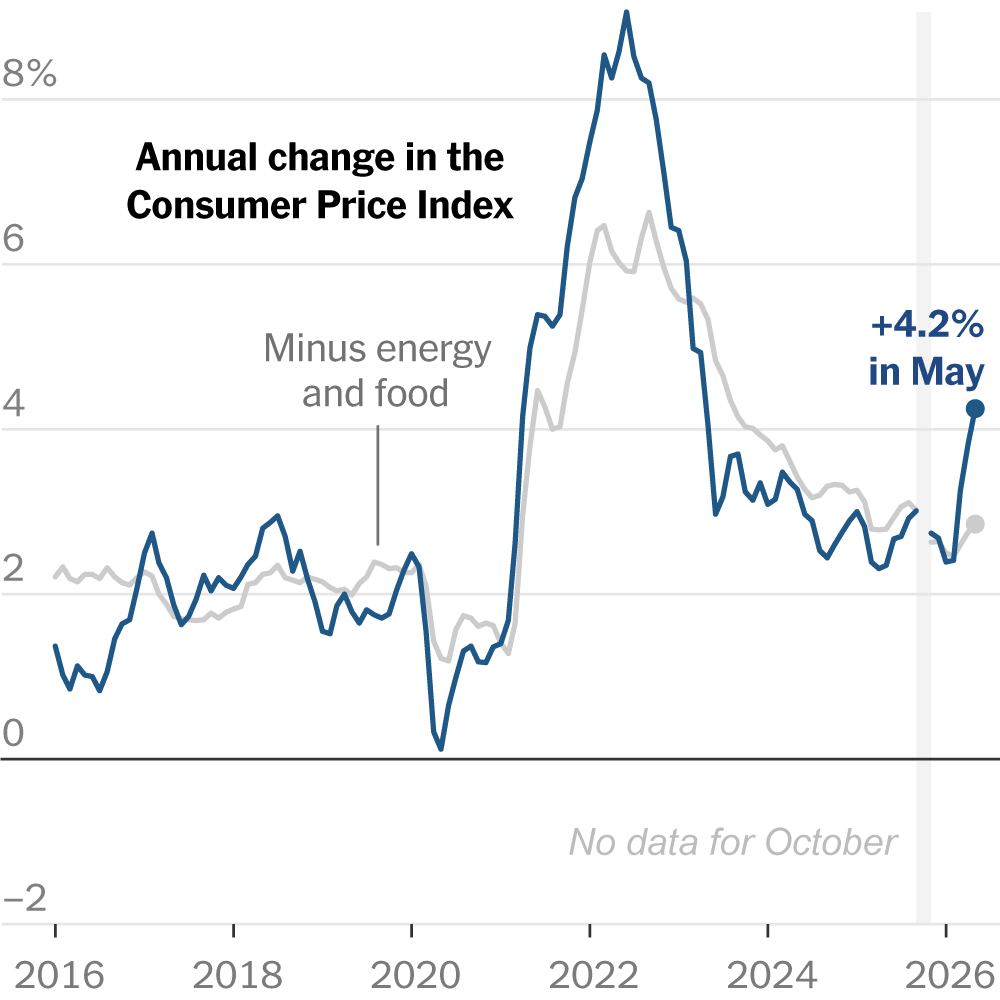
American consumers are feeling the pinch more acutely as US inflation reached its highest point in three years last month. Official figures from the Bureau of Labor Statistics (BLS) indicate that prices climbed by 4.2% in May compared to a year earlier, a notable increase from April’s 3.8% rise. This acceleration underscores the mounting financial pressure on households and businesses across the nation.

The primary catalyst for this inflationary surge has been the significant uptick in energy costs. Global markets have reacted sharply to the ongoing US-Israel war in Iran, with the conflict directly impacting oil prices and, consequently, the cost of fuel and transportation for everyday Americans.

Rising Costs Squeeze Household Budgets

The latest BLS data paints a clear picture of an economy grappling with persistent price increases. While some sectors have seen moderation, the energy component continues to exert upward pressure on the overall cost of living. For many families, this translates into:

  • Higher gas prices at the pump
  • Increased utility bills
  • Elevated costs for goods and services reliant on transportation

These cumulative effects erode purchasing power and necessitate careful budgeting, particularly for those on fixed incomes or with limited financial flexibility. The sustained upward trend in consumer prices poses a considerable challenge to economic stability and household prosperity.

Geopolitical Instability Drives Energy Volatility

The connection between geopolitical events and domestic economic conditions has rarely been clearer. The US-Israel war in Iran has directly disrupted global oil supplies and expectations, leading to heightened volatility in energy markets. This instability is a major factor in the current inflationary environment.

Amidst these economic challenges, former President Trump offered a surprising take on the situation. Speaking at the White House, he stated, “I love it. The numbers were great. You know what I really love? I love the inflation.” He simultaneously assured the public that these rising prices would “come down like a rock” once the conflict with Iran concludes.

“I love it. The numbers were great. You know what I really love? I love the inflation.”

Later the same day, reports indicated that the US military had conducted operations in Iran, which Trump claimed had secured “millions of barrels” of oil, contributing to a slight dip in oil prices. However, the immediate impact on broader consumer prices remains a concern for many economists and American families.

Navigating Economic Headwinds

As the nation navigates these economic headwinds, policymakers face the delicate task of addressing inflation without stifling economic growth. The interplay between international conflicts, energy policy, and domestic fiscal decisions will be critical in determining the future trajectory of consumer prices. Matox News will continue to monitor these developments, providing factual and professional analysis on their impact on American households and the broader free market.

Ensuring stability and mitigating the burden on families requires a clear-eyed approach to both economic policy and international relations. The current environment demands prudent leadership focused on long-term prosperity and order.

Sweet Resilience: New York Candy Stores Thrive Amid Economic Uncertainty

Amidst historic lows in consumer sentiment, the enduring appeal of affordable indulgences offers a surprising counter-narrative to broader economic anxieties.

As American households grapple with inflationary pressures and economic uncertainty, a peculiar trend is emerging from the bustling streets of New York City: its candy stores are not just surviving, but expanding. This surprising resilience in a sector often deemed discretionary offers a fascinating glimpse into consumer psychology during challenging times, as highlighted by a recent News Desk report.

A Historical Sweet Spot

The phenomenon is perhaps best exemplified by Economy Candy, a venerable establishment on Manhattan’s Lower East Side. Mitchell Cohen, its third-generation owner, offers a compelling theory: people continue to purchase candy when economic times are tough. “The dollar isn’t going as far these days,” Cohen observed, acknowledging the pervasive impact of inflation and uncertainty. Yet, he asserts, “there’s always candy.”

This insight is rooted in history. Economy Candy first opened its doors in 1937, towards the close of the Great Depression. Initially a hat and shoe repair shop, candy was sold from a cart outside as an additional revenue stream. This historical context underscores the enduring nature of such small, accessible pleasures, proving their market value even in the most severe economic downturns.

The Psychology of Affordable Indulgence

The continued success of New York candy stores points to a broader consumer behavior pattern: the search for affordable comfort. When larger purchases or grand vacations become unfeasible, small indulgences fill the void. Candy, with its relatively low cost, offers a momentary escape and a sense of normalcy without straining household budgets. This market dynamic reflects a fundamental aspect of human psychology, where accessible treats provide a psychological lift.

“The dollar isn’t going as far these days. Inflation, uncertainty, all that, but there’s always candy.”

This trend highlights several key characteristics of such markets:

  • Accessible Comfort: Candy offers an affordable way to seek pleasure and reduce stress.
  • Resilient Demand: Consumer desire for small treats often persists, even when discretionary spending tightens significantly.
  • Entrepreneurial Adaptability: Businesses like Economy Candy demonstrate the ability to pivot and thrive by understanding fundamental consumer needs.

Entrepreneurial Spirit in Challenging Times

The expansion of these sweet shops is a testament to the resilience and adaptability inherent in the free market. Small businesses, often the backbone of local economies, frequently find innovative ways to navigate economic headwinds. Their ability to identify and cater to enduring consumer desires, even those as simple as a craving for sweets, showcases a robust entrepreneurial spirit. This focus on providing value and comfort, particularly during periods of economic strain, reinforces the importance of diverse market offerings and responsive business models.

As the nation continues to monitor economic indicators, the humble candy store stands as an interesting case study. It reminds us that while large-scale economic forces shape our world, the steady demand for simple, affordable joys can still fuel growth and offer a measure of stability in unexpected corners of the market.

Consumer Burden Grows as Inflation Surges to Three-Year High

The latest economic data reveals a concerning trend of rising prices, placing significant pressure on household budgets and challenging the stability of the free market.

American households are grappling with a significant increase in living costs as inflation accelerates to its fastest pace in three years. Fresh economic figures, reported by the News Desk, indicate that consumers are facing mounting financial pressure, largely fueled by a sharp rise in energy prices. This unwelcome development poses a considerable challenge to family budgets and signals a potential dampening of consumer confidence across the nation.

The Accelerating Cost of Living

For many families, the daily reality of rising prices is becoming increasingly difficult to ignore. From the grocery store to the gas pump, the cost of essential goods and services continues its upward trajectory. This sustained inflationary pressure erodes the purchasing power of the dollar, meaning that every paycheck buys less than it did just a few months ago. The cumulative effect is a squeeze on discretionary spending and, for some, a struggle to cover basic necessities.

The current economic climate demands careful stewardship and sound policy to protect the financial well-being of the average American. Unchecked inflation not only burdens individual households but also introduces instability into the broader economic framework, making long-term planning difficult for both families and businesses.

Businesses Under Pressure, Wages Stagnate

While consumers bear the brunt of higher prices, businesses are also navigating a complex environment. Many companies find themselves in a challenging position, hesitant to fully pass on their own increased operational costs to an already weary consumer base. This reluctance, while understandable, can compress profit margins and potentially stifle investment and job creation. The delicate balance of the free market is tested when input costs rise significantly, but market conditions prevent corresponding price adjustments.

Adding to the concern is the lagging pace of wage growth. Despite the rising cost of living, average wages are simply not keeping pace with inflation. This disparity creates a widening gap between income and expenditure for many working families, diminishing their economic security. The labor market, while showing signs of resilience in some areas, is clearly struggling to provide adequate compensation in the face of persistent price increases.

Energy Prices: A Persistent Driver

A primary catalyst for the current inflationary surge is the sustained climb in energy prices. Whether it’s the cost of gasoline for daily commutes, heating bills for homes, or the energy required to transport goods, these increases ripple throughout the entire economy. Higher energy costs directly impact consumer pockets and indirectly raise the price of almost everything else, as businesses incur greater expenses for production and distribution.

The volatility in energy markets underscores the need for robust domestic energy policies that prioritize stability and affordability. Over-reliance on external factors or restrictive regulations can exacerbate these price shocks, ultimately harming the consumer and hindering economic growth.

Families across America are feeling the squeeze, as unchecked inflation erodes their purchasing power and threatens financial security.

The current inflationary trend demands serious attention from policymakers. Protecting the purchasing power of American families and fostering a stable environment for businesses are paramount for sustained economic health. Addressing the root causes of rising costs, particularly in the energy sector, and ensuring that fiscal policies support rather than undermine economic stability, will be crucial in restoring confidence and easing the burden on households nationwide.

President Trump's 'Love' for Inflation Raises Economic Concerns as Prices Soar
President Trump’s ‘Love’ for Inflation Raises Economic Concerns as Prices Soar

New data from the Bureau of Labor Statistics (BLS) indicates that US inflation accelerated to its fastest rate in three years during May, with consumer prices climbing by 4.2% from a year earlier. This significant increase, up from 3.8% in April, is largely attributed to surging energy costs exacerbated by the ongoing US Israel war in Iran. The announcement has placed renewed focus on the economic pressures facing American families and businesses.

Adding a layer of complexity to the economic discourse, President Trump offered a surprising take on the figures. Speaking from the White House, the President stated, “I love it. The numbers were great. You know what? I really love the inflation.” His comments have sparked considerable debate, prompting questions about the administration’s understanding of, and approach to, the rising cost of living.

Inflation’s Grip Tightens on American Wallets

The 4.2% year-over-year increase in May marks a substantial acceleration in price growth, the most rapid pace recorded in three years. This trend directly impacts the purchasing power of every dollar earned by hardworking Americans. The primary catalyst for this surge has been the dramatic rise in energy prices.

  • Energy Costs: Geopolitical tensions, particularly the US Israel war in Iran, have significantly disrupted global energy markets. While President Trump claimed US forces have conducted operations to remove millions of barrels of oil from Iran, contributing to a “slight drop” in oil prices, the global benchmark, Brent crude, remains substantially higher than its pre-war levels. This persistent elevation in energy costs translates directly into higher prices at the pump and for household utilities, squeezing family budgets.

The broader implications of such sustained inflation are profound, affecting everything from groceries to housing. Businesses, too, face increased operational costs, which they may eventually pass on to consumers, creating a challenging cycle.

Presidential Rhetoric Meets Economic Reality

President Trump’s declaration of ‘love’ for the inflation figures has drawn sharp reactions from various economic observers and the public alike. While some may interpret the President’s remarks as an attempt to project confidence in the economy or to highlight specific, perhaps positive, underlying trends he perceives, the statement stands in stark contrast to the daily financial struggles many Americans are experiencing.

A recent report highlighted by the BBC News Desk detailed the growing strain on consumers. For many, rising prices erode savings and make essential goods and services less affordable. A transparent and empathetic approach to economic challenges is crucial for maintaining public trust and stability.

“I love it. The numbers were great. You know what? I really love the inflation.”

— President Trump

The Road Ahead: Stabilizing the Economy

Addressing persistent inflation requires a clear-headed strategy focused on fostering economic stability and supporting free markets. For families grappling with higher costs, the focus must be on policies that encourage sustainable growth without fueling further price increases. This includes monitoring global supply chains, promoting domestic energy production where feasible, and ensuring fiscal discipline.

The current economic climate underscores the need for sound financial management and a commitment to policies that protect the value of the dollar. As policymakers navigate these complex challenges, the impact on everyday Americans must remain paramount. The goal should be to restore price stability, enabling households and businesses to plan for the future with greater certainty.

Gluten-Free Staples Now a Luxury Amidst Soaring Food Prices

The ongoing inflationary environment is increasingly turning dietary necessities into prohibitively expensive luxuries, a trend acutely felt by individuals requiring gluten-free diets. Basic items, once just a premium, are now pushing the boundaries of affordability, with a small branded loaf of gluten-free bread reportedly nearing £4. This development, highlighted by recent reporting in The Guardian, underscores the growing pressure on households managing specific health needs amidst a broader cost-of-living crisis.

For millions, a gluten-free diet is not a choice but a medical necessity, primarily for those diagnosed with coeliac disease. The rising cost of these specialized products, which have historically carried a higher price tag, is now creating significant financial challenges for families and individuals already navigating complex dietary requirements.

The Premium Becomes Prohibitive

Consumers have long accepted paying a premium for gluten-free alternatives to everyday staples like bread, biscuits, and pasta. However, the current economic climate is exacerbating this price disparity. While a standard 800g loaf of supermarket white bread can often be purchased for less than £1, a smaller 550g gluten-free equivalent typically costs around £1.90. The situation becomes even more stark with branded products; a 480g branded gluten-free loaf is now priced at £3.90 in many retail outlets.

This widening gap means that the cost of simply feeding a family with specific dietary needs is escalating far beyond general food inflation. It forces households to make difficult choices, potentially compromising health or significantly stretching budgets.

Impact on the Coeliac Community

The coeliac community is particularly vulnerable to these price hikes. Access to affordable gluten-free options is not merely about convenience but about managing a serious autoimmune condition. When these essential items become luxury goods, it places an undue burden on individuals who cannot deviate from their prescribed diet.

“For many, what were once essential dietary items are now becoming a luxury, forcing difficult choices for households already stretched thin.”

Beyond just price, reports also suggest a shrinking range of available gluten-free products in some stores. This reduction in choice further limits options for consumers, potentially leading to less diverse diets or increased difficulty in finding suitable foods, especially in rural areas or smaller shops.

Broader Economic Implications for Households

This trend in gluten-free pricing reflects a broader concern about consumer pressure and the affordability of basic goods across the economy. While Matox News champions free-market principles, the welfare of consumers, particularly those with critical needs, remains paramount. Stable and accessible markets are crucial for societal order and family well-being.

The rising cost of specialized foods highlights the need for vigilance against inflationary pressures that disproportionately affect vulnerable groups. Policymakers and industry leaders must consider the cumulative impact of these increases on household budgets and explore avenues to ensure that medical necessities do not become financially out of reach.

Ensuring that essential dietary products remain affordable and accessible is vital for the health and economic stability of countless families. As inflation continues to bite, the challenge of maintaining a healthy, necessary diet without significant financial hardship becomes increasingly pronounced, demanding careful consideration from all sectors.

Soaring IPO Valuations Spark Caution for Main Street Investors

The financial world is abuzz with anticipation as high-profile companies, including Elon Musk’s SpaceX, OpenAI, and Anthropic, reportedly prepare for initial public offerings (IPOs) at staggering valuations. While the allure of investing in groundbreaking technology is undeniable, a closer look at historical trends suggests that these sky-high IPO valuations may not bode well for the average Main Street investor.

When companies hit the public market with valuations already in the trillions, as SpaceX is rumored to do, the room for significant upside growth for new shareholders often shrinks considerably. This dynamic raises important questions about fairness and accessibility within our free-market system, particularly for those looking to secure their family’s financial future.

The Allure and the Reality of Tech IPOs

Companies like SpaceX, with its ambitious space exploration and satellite internet ventures, and AI leaders OpenAI and Anthropic, represent the cutting edge of innovation. The excitement surrounding their potential public debuts is palpable, drawing attention from seasoned institutional investors and individual savers alike. Many hope to capture a piece of the future, driven by the narratives of rapid technological advancement and visionary leadership.

However, the reality of investing in such highly anticipated IPOs can often diverge sharply from expectations. According to a recent analysis by News Desk, when newly public companies have been valued as richly as SpaceX, OpenAI, and Anthropic seem likely to be, the outlook for ordinary investors has historically been poor. This suggests that much of the initial growth and profit potential may already be priced into the stock before it even becomes available to the general public.

Understanding the Investor’s Disadvantage

For individual investors, participating in a high-valuation IPO can present a unique set of challenges. Often, by the time shares are publicly traded, institutional investors and early backers have already reaped substantial gains. This leaves later entrants with less potential for significant returns relative to the initial risk taken. It’s a critical consideration for prudent financial planning, emphasizing the need for robust research over speculative fervor.

  • Limited Upside: When a company is already valued in the trillions, its future growth potential, while still present, may not translate into the same percentage gains seen in earlier-stage investments.
  • Increased Volatility: Highly publicized IPOs can be prone to significant price swings post-debut, driven by market sentiment rather than fundamental value.
  • Information Asymmetry: Retail investors often lack the comprehensive data and analytical resources available to large institutional players, creating an uneven playing field.

“Prudent investors understand that true long-term value is built on solid fundamentals, not just speculative valuations. Protecting household savings requires a discerning eye.”

Prudence in a Speculative Market

In an environment where market hype can often overshadow fundamental value, a conservative approach to investment remains paramount. Families and individuals building their wealth are best served by focusing on companies with clear business models, sustainable growth prospects, and reasonable valuations. While innovation is vital for economic progress, sound financial decisions are rooted in realism and a commitment to long-term stability.

The lessons from past market cycles repeatedly underscore the importance of due diligence and avoiding the siren song of speculative bubbles. For the free market to truly benefit all participants, transparency and accessible opportunities for genuine value creation must be upheld. Encouraging responsible investment practices ensures that capital is allocated efficiently, fostering genuine economic growth that supports institutions and strengthens our communities.

Bank of England Prioritizes Stability, Holds Interest Rates Amid Uncertainty

The Bank of England has signaled a continued cautious approach to monetary policy, opting against immediate interest rate hikes despite inflation remaining above its target. Governor Andrew Bailey emphasized that borrowing costs, currently at 3.75%, are likely to hold steady through the summer, prioritizing economic stability amidst a weak growth environment and ongoing geopolitical tensions surrounding the Iran war. This stance reflects a measured strategy to support the real economy during uncertain times.

Navigating Economic Headwinds

The decision to maintain the current interest rate level comes as the UK economy grapples with sluggish growth and significant external pressures. The protracted conflict in Iran introduces a layer of global uncertainty, impacting supply chains and investor confidence. This environment, Bailey suggested, necessitates a prudent hand on the monetary tiller.

The central bank’s primary mandate is price stability, typically aiming for a 2% inflation target. However, the current strategy acknowledges a temporary deviation from this target as a necessary compromise. This flexibility is designed to prevent further contraction in economic activity during a period of considerable flux.

The Inflationary Trade-Off

Governor Bailey articulated that tolerating inflation above the 2% target is permissible for now, particularly “given the context of softness in the real economy.” This indicates a careful balancing act: allowing prices to run slightly hotter temporarily, rather than stifling an already fragile economy with higher borrowing costs.

However, this tolerance is not open-ended. The central bank remains vigilant. Should a more permanent or entrenched increase in prices begin to take hold, the policy stance would swiftly change. The BoE is committed to addressing any structural inflationary pressures that could destabilize the long-term economic outlook. This nuanced approach was highlighted in recent reporting by The Guardian.

  • Weak domestic economic growth.
  • Uncertainty surrounding global geopolitical events.
  • The desire to provide some support for businesses and households.
  • The temporary nature of current inflationary pressures.

“Tolerating temporarily above-target inflation… is an appropriate way to approach the trade-off [between inflation and activity].”

— Andrew Bailey, Governor of the Bank of England

Implications for Households and Businesses

For British households and businesses, the Bank of England’s decision offers a degree of predictability. Stable interest rates mean borrowing costs for mortgages, loans, and business investments are unlikely to rise immediately. This provides a measure of relief, allowing for better financial planning in an otherwise unpredictable economic landscape.

While inflation continues to erode purchasing power, the central bank’s focus on supporting the “real economy” aims to safeguard jobs and maintain business viability. The long-term objective remains to return to stable prices, but not at the expense of immediate economic collapse. This demonstrates a commitment to maintaining order and fostering a stable environment for free markets to operate.

The path ahead for the UK economy remains complex, with global events casting a long shadow. The Bank of England, under Governor Bailey, appears committed to a steady hand, prioritizing economic stability and supporting growth where possible, even if it means a temporary deviation from its inflation target. Future policy adjustments will undoubtedly hinge on how both domestic economic indicators and international geopolitical situations evolve, with the institution ready to adapt as circumstances demand.

French Inflation Surges to Two-Year High, Fueling ECB Rate Hike Expectations

France’s consumer prices have climbed significantly, driven by a sharp rise in energy costs, putting renewed pressure on the European Central Bank to consider further interest rate adjustments amidst broader economic concerns.

French inflation has accelerated to its fastest pace in two years this May, a development that is intensifying expectations for potential interest rate hikes from the European Central Bank (ECB). This surge in consumer prices highlights the persistent challenges facing European households and policymakers in maintaining economic stability.

Energy Costs Drive Inflationary Pressures

Data released this week reveals that consumer prices in France rose by 2.8% compared to a year ago in May. This notable acceleration marks the highest inflation rate recorded since 2024, signaling a renewed inflationary trend within one of the eurozone’s largest economies.

A significant contributing factor to this unwelcome increase is the sharp rise in energy prices. According to analysis from Pantheon Macroeconomics, French energy costs surged by 16.8% in May, following a 14.3% increase in April. Claus Vistesen, chief eurozone economist at Pantheon Macroeconomics, observed that consumers in France are now facing “a much more severe inflation shock” than many of their counterparts in other major eurozone economies.

This sustained upward trajectory in energy expenses directly impacts household budgets and business operating costs, eroding purchasing power and potentially stifling economic growth. The consistent rise underscores the vulnerability of the economy to external price shocks and the critical need for prudent energy policies.

Broad Implications for Consumers and the European Central Bank

The escalating inflation rate has immediate consequences for French citizens. Higher prices for essential goods and services, particularly energy, mean that families have less disposable income, affecting their ability to save and invest. This pressure on consumer finances is already evident, with reports indicating that consumer spending in France dipped at the start of the second quarter.

For the European Central Bank, these figures present a complex dilemma. While the ECB aims to maintain price stability across the eurozone, persistent inflation in key member states like France could necessitate a more hawkish stance. The prospect of further interest rate increases, while intended to cool inflation, also carries risks for economic growth and stability across the continent. Policymakers must carefully weigh these factors to avoid undue strain on businesses and employment.

As reported by business live, the broader economic picture shows European stock markets opening higher, yet the underlying inflationary currents in France remain a significant point of concern for investors and central bankers alike. The balancing act between controlling inflation and fostering growth is becoming increasingly delicate.

Safeguarding Economic Order Amidst Price Volatility

From a conservative perspective, sustained inflation represents a direct threat to economic order and the financial well-being of families. It erodes the value of savings, increases the cost of living, and introduces uncertainty for businesses planning future investments. A stable economic environment, characterized by predictable prices and sound monetary policy, is fundamental for fostering prosperity and ensuring long-term financial security.

The current situation in France underscores the importance of institutional vigilance in protecting the free market and ensuring that policy decisions support sustainable growth without compromising fiscal discipline. The ECB’s response will be critical in demonstrating its commitment to its mandate of price stability and restoring confidence among consumers and investors.

Key concerns arising from the latest data include:

  • The disproportionate impact of energy prices on overall inflation.
  • The potential for eroded consumer sentiment to dampen economic activity.
  • The looming pressure on the European Central Bank to adjust its monetary policy.
  • The broader implications for eurozone economic recovery and stability.

“French consumers now face a more severe inflation shock, depressing sentiment across major eurozone economies.”

As policymakers assess the path forward, the focus remains on mitigating the effects of rising prices on households and businesses while safeguarding the foundations of a stable and prosperous economy. The coming weeks will reveal how the ECB chooses to navigate this intricate economic landscape, with significant implications for the entire eurozone.

Social Media Auto Publish Powered By : XYZScripts.com