Matox News

Truth Over Trends, always!

Nvidia Surges Into Model Market with Nemotron 3 Breakthrough

Nvidia’s Bold Move: Revolutionizing Open AI Models and Industry Disruption

In a significant strategic pivot, Nvidia has transitioned from primarily supplying chips for artificial intelligence development to becoming a frontrunner in open model innovation. The chipmaker’s recent release of the Nemotron series signals an ambitious push towards democratizing AI technology, emphasizing transparency, customization, and scalability. This move has profound business implications—it challenges the traditional proprietary approach championed by major US tech firms and hints at a new epoch of open, disruptive AI ecosystems rooted in innovation acceleration.

Unlike its Western rivals that lean toward closed, tightly guarded models, Nvidia’s approach with Nemotron embodies a disruptive openness that seeks to empower developers and startups. By releasing the training data and tools alongside the models, Nvidia aims to lower the barriers for AI experimentation and fine-tuning. The platform supports a hybrid latent mixture-of-experts architecture designed to facilitate scalable AI agent creation capable of interacting with web environments or executing complex computer actions. The models arrive in three configurations—Nano (30 billion parameters), Super (100 billion parameters), and Ultra (500 billion parameters)—highlighting Nvidia’s commitment to flexibly address a vast spectrum of enterprise needs. This scale of transparency and accessibility moves against industry norms and could set a new standard in how AI development is conducted globally.

Industry analysts, including those from Gartner and MIT, recognize Nvidia’s initiative as a potential game-changer that disrupts the status quo of AI R&D. As Kari Ann Briski, Nvidia’s vice president of generative AI software, emphasizes, “Open source is making AI more adaptable, fostering innovation, and ultimately powering the global economy.” This stance contrasts sharply with the recent trend among US firms, exemplified by Meta’s open models which have recently shifted towards secrecy. The move toward proprietary models reflects a strategic effort to safeguard competitive advantages, but it may also hinder rapid innovation and collaboration essential for maintaining technological leadership.

Looking forward, the industry faces a critical juncture. Traditional AI giants may find themselves increasingly marginalized if they fail to leverage open innovation channels or adopt more transparent practices. Nvidia’s model suggests the future perhaps belongs to ecosystems where open collaboration accelerates breakthroughs—yet it also exposes the risks of commoditizing advanced AI and breaking the barriers that once protected innovation. As Elon Musk and Peter Thiel have often warned, the real disruptive power lies in harnessing the energy of open, competitive industries. The race is on, and the stakes couldn’t be higher for those who want to dominate the next frontier of technological progress. Companies that embrace this new paradigm—focusing on transparency, customization, and scalable innovation—will shape the future of AI and economic growth in the era ahead.

iRobot Declares Bankruptcy Amid Tech Shakeup

iRobot Declares Bankruptcy Amid Industry Disruption and Competitive Pressures

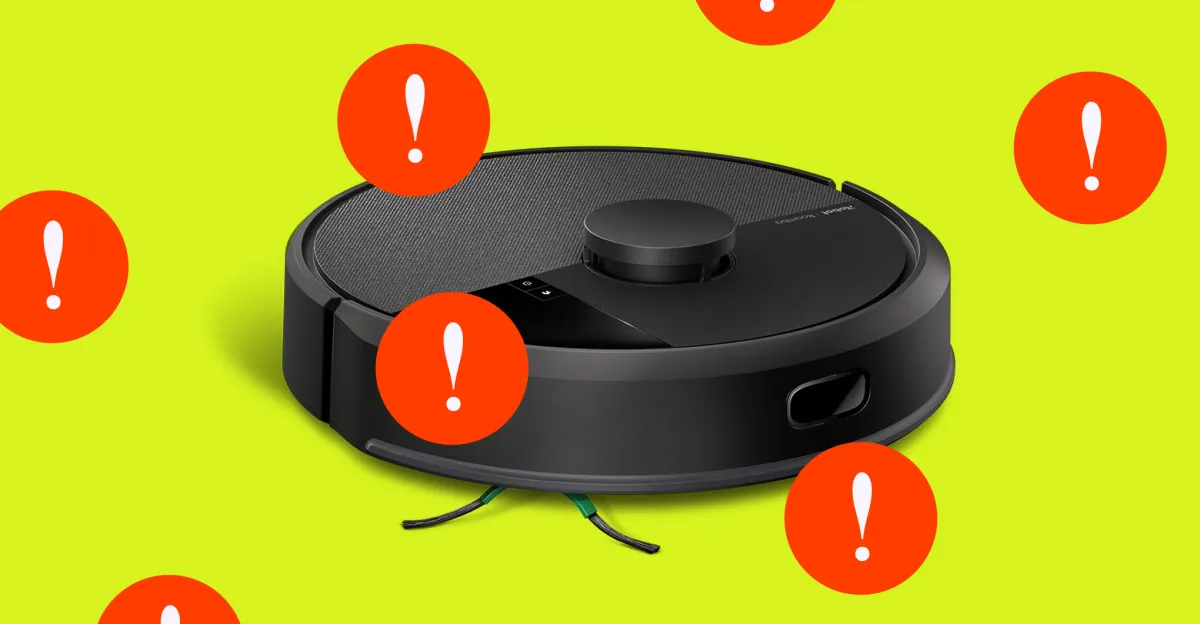
After 35 years of pioneering household robotics, iRobot has announced it is filing for Chapter 11 bankruptcy protection. This significant development marks a transformative moment in the smart home market—highlighting the intense industry disruption caused by emerging Chinese competitors and increasing geopolitical tariffs. The company’s decision to be acquired by Picea Robotics, a Chinese-based contract manufacturer, underscores the shifting landscape of global manufacturing and technological power. Despite this upheaval, iRobot assures consumers that existing products and services will remain unaffected for now, allowing the popular Roomba series to continue cleaning homes uninterrupted.

The decline of iRobot illustrates the challenges faced by established tech innovators in an increasingly competitive environment. Since its founding in 1990 and the launch of the Roomba in 2002, the company has continuously reinvented its product line through innovative features such as lidar mapping and advanced app integrations. However, these efforts have been outpaced by a surge of Chinese manufacturers, eager to disrupt the market with lower-cost, feature-rich alternatives. Industry giants like Xiaomi and Roborock have flooded the space, leveraging mass production to undercut US and European rivals. According to Gartner analysts, this rapid commodification poses a significant threat to the profit margins of legacy brands, leading to the financial instability faced by iRobot.

  • Milestones in innovation: Integration of lidar mapping tech, smarter navigation, and increasingly affordable pricing models.
  • Challenges: Tariffs, rising manufacturing costs, and aggressive Chinese competition.
  • Implications: Disruption in household robotics, with potential shifts in market leadership towards Asia-based firms.

The strategic move by Picea Robotics signals a broader trend of industry consolidation amid geopolitical tensions and supply chain vulnerabilities. Such acquisitions could accelerate the adoption of advanced robotic systems across various sectors, transforming the traditional landscape of domestic automation. Leading industry observers like Elon Musk and Peter Thiel have long emphasized the importance of innovation in maintaining competitive advantage. In this context, the merger presents an opportunity for Chinese firms to leverage manufacturing efficiency and technical expertise to redefine global standards and consumer expectations.

Furthermore, the financial strain on legacy firms such as iRobot signals a pivotal moment for startups and established players alike. No longer can companies rely solely on incremental improvements; innovation must now focus on disruptive innovations, such as AI-driven autonomous systems and IoT integration. As MIT researchers highlight, the future of household robotics hinges on the seamless integration of smart tech with everyday life—a frontier where American companies risk losing dominance unless bold strategic shifts are undertaken.

Looking ahead, the field of robotics is poised for rapid evolution. The convergence of AI, material science, and 5G connectivity suggests that the next decade could witness unprecedented breakthroughs. For industry leaders and entrepreneurs, this signals both an urgency and an imperative: to harness the disruptive potential of emerging technologies or risk becoming obsolete. With global market shifts accelerating, those who act decisively today will shape the future—making it essential to anticipate and adapt to the technological upheaval that lies ahead.

You gotta hear Sudan Archives’ viral violin banger for the club

Emerging Innovator Sudan Archives Ushers in a New Era of Sonic Disruption

In a landscape where digital technology continually transforms the entertainment industry, Sudan Archives exemplifies how groundbreaking innovation can redefine musical boundaries. Her latest album, The BPM, not only showcases her cutting-edge artistry but also underscores a pivotal trend in the broader shift toward immersive, genre-blurring soundscapes. As industry analysts from Gartner and leading tech think tanks observe, the future belongs to artists who integrate sophisticated electronic elements and unconventional structures—traits that Sudan Archives exemplifies with striking authenticity.

Building on her experimental roots, Archives has continuously expanded her sonic palette, deploying a blend of organic violin passages and modern electronic elements. Her earlier works, such as Athena and Natural Brown Prom Queen, leaned into sound collage, sampling, and experimental pop. But with The BPM, she ventures into fully technological terrains, weaving autotune, drum ’n’ bass breaks, house stabs, and techno synths into her distinctive violin-forward aesthetic. This innovation resonates with the disruptive spirit full of industry shifts towards AI-driven production and algorithmic curation, reflecting a broader move where artists harness tech for unprecedented creative control and sonic depth.

The album The BPM epitomizes the volatile, eclectic essence of contemporary dance music, bouncing unpredictably across genres—four-on-the-floor funk, trap influences, Irish jigs, and more—daringly defying conventional pop song structures. Industry experts note that this approach fosters a hyper-competitive environment, demanding artists innovate relentlessly to engage audiences. If we consider insights from institutions like MIT Media Lab, this kind of sonic experimentation signifies a fundamental disruptor to traditional music paradigms, shifting power from major labels to independent creators empowered by digital distribution platforms such as Bandcamp and streaming giants like Spotify and Apple Music.

Business Implications: A New Paradigm for Disruptive Creativity

  • Decentralized distribution enhances artist control and revenue streams
  • Genre-blurring and sonic unpredictability increase listener engagement, cultivating niche markets
  • Technological innovation, including AI-assisted production and immersive experiences, are becoming standard tools for emerging artists

This evolution signifies more than just artistic experimentation; it signals a fundamental industry shift towards democratization and technological disruption. Emerging talents like Sudan Archives are leveraging these tools to carve distinct identities outside traditional commercial frameworks, aligning with futurists like Elon Musk and Peter Thiel, who champion disruptive innovations spanning beyond automotive and finance into cultural sectors.

Looking ahead, the trajectory suggests that artists who embrace technological adaptability and cross-genre experimentation will become the new vanguard of the industry. In a world where AI, virtual reality, and blockchain technology are redefining value creation and distribution, the pace of innovation accelerates. The urgency for existing industry players to adapt or face obsolescence is palpable. Sudan Archives’ pioneering approach exemplifies a broader trend that promises to reshape not just music, but the entire entertainment and creative economy—an exciting, if tumultuous, frontier dominated by those willing to disrupt entrenched norms and push sonic boundaries.

India’s Spinny raises $160M to boost, acquire GoMechanic—sources

In a bold move reflecting the rapid evolution of India’s automotive landscape, Spinny, a rising titan in the online used-car marketplace, is set to raise approximately $160 million in its latest Series G funding round. Valued at around $1.8 billion post-money, Spinny’s strategic move to acquire GoMechanic underscores its aggressive pursuit of dominance in the disruptive automotive tech space. The infusion of capital—with notable contributions from existing investors like Accel, WestBridge Capital, and venture firms such as Fundamentum and Blume Ventures—sets the stage for an industry-shaking expansion.

This funding signifies more than just a financial boost; it emphasizes a move into a broader, more integrated automotive ecosystem. Spinny’s acquisition of GoMechanic, a distressed startup which faced financial irregularities and was acquired by Lifelong Group in 2023 after high-profile backing from Sequoia Capital, Tiger Global, and SoftBank, highlights a strategic pivot towards consolidating control over India’s burgeoning used-car market. With the country’s market projected to grow at a compound annual growth rate of about 10%, reaching an estimated 9.5 million units by 2030, the implications for disruptors and traditional players are profound.

  • Integration of services: Spinny aims to leverage GoMechanic’s extensive servicing platform to bring after-sales and vehicle refurbishing in-house, positioning itself as a full-spectrum automotive player.
  • Market expansion: The acquisition introduces a dual funnel—servicing vehicles bought and sold—intensifying customer acquisition strategies while lowering costs.
  • Innovation at core: Spinny’s recent diversification into auto publications and vehicle financing via Spinny Capital points to a broader vision—disrupting not just sales, but the entire automotive value chain.

Industry analysts, including Gartner and MIT’s automotive innovation labs, recognize this trend as part of a larger pattern—digital-first platforms are redefining industry paradigms. This shift is driven by disruptive technologies such as AI, IoT, and advanced analytics, which are enabling companies like Spinny to streamline operations and expand margins. The strategic acquisition could give Spinny a critical competitive edge, rivaling traditional dealerships and other online marketplaces by controlling more of the lifecycle—from initial sale to after-sales service. However, with market shifts comes increased pressure for transparency and financial accuracy, especially after GoMechanic’s recent financial irregularities, which serve as a cautionary tale for emerging tech disruptors.

Looking ahead, Spinny’s aggressive expansion signifies more than just a regional play; it signals the global automotive industry’s transformation towards integrated, tech-driven ecosystems that prioritize consumer experience and operational efficiency. The confluence of innovative funding, disruptive technology, and strategic consolidation is setting the stage for a new era—one where traditional industry boundaries are rapidly dissolving. Industry leaders and investors must act decisively, recognizing that the window for disruptive entry is closing, and the future belongs to those who innovate, adapt, and lead in the digital age. The clock is ticking for incumbents to rethink their strategies—failure to do so could mark the end of legacy dominance in favor of tomorrow’s tech-powered automotive giants.

AI Breaks New Ground, Matching Human Experts in Language Analysis for the First Time

AI-Driven Breakthrough Challenges Long-Held Beliefs on Language and Reasoning

In a landmark development that could redefine the landscape of artificial intelligence and linguistic analysis, recent research from Gašper Beguš of UC Berkeley and colleagues has demonstrated that large language models (LLMs) possess an unprecedented ability to analyze language with a sophistication previously thought impossible. Challenging the longstanding view propagated by critics such as Noam Chomsky, which claimed that AI models lack genuine reasoning capabilities in language, this breakthrough signals a radical shift in disruption potential across industries relying on natural language processing (NLP).

The core of this discovery lies in the models’ ability to understand and manipulate language structures akin to those used in advanced linguistic theory. Researchers subjected several LLMs to a comprehensive linguistic test designed around Chomsky’s Syntactic Structures, focusing on complex features such as recursion and sentence diagramming. Astonishingly, at least one model surpassed expectations by accurately generating tree diagrams, resolving ambiguous meanings, and analyzing deeply nested phrases — feats that had long been considered exclusive to human linguists. This finding is more than a scientific curiosity; it signals that AI systems are rapidly approaching human-like reasoning in language, with profound consequences for innovation and disruption.

Implications for Business and Industry

As AI models achieve an understanding of language comparable to graduate-level linguistics, the implications extend far beyond academia. Industries such as customer service, content moderation, legal analysis, and even advanced AI-driven education are poised for transformation. Companies that harness these capabilities could develop smarter, more intuitive chatbots capable of understanding context and nuance at a human level, disrupting existing tools that rely on keyword matching or superficial comprehension.

  • Enhanced Reasoning: Models can now perform sentence analysis, resolving multiple interpretations simultaneously.
  • Advanced Language Processing: Recursive structures and complex syntax are now within reach.
  • Market Disruption: Traditional NLP tools could be rendered obsolete by models capable of truly understanding language.

Notably, experts such as those from Gartner and MIT’s AI labs have predicted that this evolving capability will accelerate automation across sectors and lead to a paradigm shift in how AI interacts with humans. Such advancements will demand new standards for AI transparency and control, warning of the potential for unchecked automation if not carefully managed.

Future Trajectory and Urgency

The pace of these innovations underscores an urgent need for stakeholders — from policymakers to entrepreneurs — to recognize that the future of AI in language is now being shaped. As Elon Musk and Peter Thiel have repeatedly emphasized, disruption is accelerating at an exponential rate, and remaining complacent could lead to strategic obsolescence. The breakthrough highlighted by Beguš and his team is a testament to how disruptive innovation continues to defy traditional expectations, signaling that the era of AI understanding language at a human level may be closer than anticipated.

With industry giants and startups alike racing to leverage such advancements, competitors who invest early and prioritize innovation will dominate. The question remains: are organizations prepared to navigate the rapidly shifting landscape of AI-powered language technology, or will they be left behind in the wake of transformative disruption? As the industry moves forward, one thing is clear — the race for linguistic mastery in AI has entered a new, exhilarating phase, demanding relentless innovation and strategic foresight.

Nex Playground Takes Over: Outpacing Xbox as the Must-Have Holiday Toy

Disruption and Innovation Drive Growth of Nex in the Gaming Industry

In an era marked by rapid technological evolution, Nex exemplifies how strategic pivots and innovative products can redefine industry benchmarks. Just two years ago, Nex was a niche player, shipping approximately 5,000 units of its flagship product, the Playground. Fast forward to today, and the company’s trajectory is nothing short of extraordinary: sales have surged to an estimated 600,000 units this year, representing a 12,000% increase within a short span. Such explosive growth not only exemplifies the disruptive potential of innovation-driven companies but also signals a significant shift in consumer engagement and market dynamics.

Underlying this ascendancy is Nex’s bold pivot from unprofitable beginnings—where it posted about $3 million in annual revenue—to a strategic focus that has yielded an anticipated over $150 million in sales this year. With smart scalability measures and breakthrough hardware design, Nex is on track to achieve profitability, a milestone that many startups in the consumer tech space aspire to but seldom reach this swiftly. Industry analysts, including Gartner and MIT experts, emphasize how such rapid scaling underscores a broader trend impacting the gaming and experiential technology sectors—namely, a move toward immersive, community-driven digital entertainment that resonates profoundly with youthful audiences.

This transformation highlights a broader market shift: consumer preference is shifting toward integrated, high-engagement hardware experiences. The Playground’s commercial success underscores how disruption fueled by innovation can turn previously niche products into mainstream catalysts. Notably, the integration of AI, extended reality, and social connectivity features in Nex’s offerings has positioned the company ahead of competitors, challenging legacy giants resistant to rapid change. Such progress echoes the strategic insights of Elon Musk and Peter Thiel, who have long championed the importance of technological turbulence as a driver of entrepreneurial advantage.

Looking ahead, the implications are profound. The rapid rise of Nex signals that businesses willing to pivot and harness emerging technologies can capture market share at an unprecedented pace. As younger generations demand more immersive digital experiences, incumbent players must innovate or face obsolescence. The success story of Nex serves as a clarion call to investors, entrepreneurs, and industry leaders: leveraging disruptive innovation is no longer a competitive advantage but an imperative for survival. The coming years promise even more dynamic shifts, as new entrants and tech giants race to harness the next wave of technological breakthroughs that will shape the future of interactive entertainment. It is a time for bold moves, swift adaptation, and relentless pursuit of breakthrough ideas.

Top Deals This Week: Nex Playground & Pixel Buds 2A Lead the Charge

Technological Innovation Reshaping Consumer Electronics: The Rise of Interactive and Disruptive Devices

The ongoing holiday season has spotlighted a surge in innovative consumer electronics that are poised to transform the entertainment landscape and redefine how users interact with technology. Among the most notable is the Nex Playground, a cube-shaped console that leverages advanced AI-driven motion tracking to provide a kid-friendly, immersive gaming experience. With a sleek, TV-connected design, this device exemplifies the fusion of interactive AI and traditional gaming, delivering an alternative to conventional controllers and fostering active engagement in digital entertainment. Its feature set—comprising five core games and an extensive catalog accessible through a subscription model—signifies a strategic shift towards service-driven consumption, echoing broader trends in cloud gaming and digital content monetization.

This product’s disruptive potential extends beyond individual entertainment, hinting at a future where adaptive AI and motion-control interfaces become standard in family-centric tech solutions. Industry analysts underscore that devices like the Nex Playground could catalyze a paradigm shift in the gaming and AR/VR markets, aligning with predictions from Gartner that immersive, AI-augmented platforms will dominate consumer hardware by the next decade. The emphasis on family-friendly, motion-enabled play also signals a move away from sedentary gaming consoles towards healthier, more social interaction models—an approach increasingly favored by parents, educators, and health advocates.

Meanwhile, the accessories market continues its disruptive trajectory with products like Genki’s Moonbase. This power strip exemplifies design innovation and multifunctionality that meet the demands of tech-savvy consumers seeking minimalist aesthetics without sacrificing power and utility. Priced at an all-time low of $89.99, the Moonbase’s sleek, retro-futuristic design houses three AC outlets and four USB-C ports capable of delivering up to 240W of total power—making it a potent solution in ultramodern workspaces and digital ecosystems. Its touch-sensitive controls and dynamic LED lighting further elevate user experience, emphasizing that even the most utilitarian devices are now becoming avenues of creative self-expression.

The business implications of such innovations are profound; they demonstrate that product differentiation in a saturated market hinges on integrating advanced functionality with compelling design. Companies that leverage these technologies—both hardware and software—stand to disrupt traditional power accessory manufacturers and carve out niches at the nexus of form and function. Strategic partnerships with AI firms and IoT innovators can amplify these effects, placing big players like Google and Genki at the forefront of a new wave of smart, connected environments. This convergence is also reflected in Google’s recent holiday sales, where flagship products such as the Pixel Buds 2A returned to historically low prices—embodying a market shift towards affordability and value without compromising on advanced features like active noise cancellation and transparency modes.

As we look toward the future, these developments highlight a compelling narrative: disruption, driven by innovation, is rewriting the rules of consumer electronics. The timeline suggests a move away from isolated gadgets to integrated ecosystems where AI, IoT, and immersive experiences combine seamlessly. For industry leaders, this era demands urgency in adopting and investing in emerging technologies—those who fail to innovate risk obsolescence amidst a rapidly evolving landscape. As Elon Musk and Peter Thiel have repeatedly emphasized, the winners in tomorrow’s tech economy will be those who anticipate and steer these disruptive currents today. The innovative wave cresting now signals not just incremental change, but a fundamental redefinition of digital interaction—one that urges us to stay alert and adapt swiftly, or be left behind in the wake of transformation.

2025 Tech Layoffs: The Must-Know List for Young Innovators

2025 Tech Layoff Wave: Disruption and Opportunities in a Shifting Industry Landscape

The persistent wave of layoffs across the technology sector in 2025 has set an unmistakable tone of disruption, signaling fundamental shifts in how industry leaders are navigating innovation and market pressures. Despite the narrative of progress driven by artificial intelligence and automation, over 150,000 tech workers faced job cuts in 2024 alone, with this troublesome trend continuing into 2025. As companies recalibrate their strategies amidst macroeconomic uncertainties and regulatory constraints, the implications for innovation, business models, and market dominance are profound. Forward-looking analysts and industry insiders caution that while layoffs may seem like setbacks, they often precede transformative breakthroughs—forcing companies into leaner, more agile frameworks that could accelerate disruptive innovations.

A closer look at the industry reveals a strategic pivot among tech giants and emergent startups alike. Companies such as Google and Meta are trimming hundreds of roles—specifically in AI and cloud infrastructure—to reallocate resources toward next-generation AI projects and infrastructure. These companies recognize that disruption is the new normal—leaving outdated business models behind in favor of intelligent automation and data-driven services that promise superior scalability and global reach. Notably, Google has cut design positions in its cloud division, signaling a focus shift that could redefine cloud-native solutions, while Meta is streamlining its Reality Labs division, potentially restructuring VR and AR markets altogether. Such moves reflect a market that demands rapid iteration, emphasizing innovation at the expense of legacy operations.

The business implications extend far beyond the layoffs themselves. Disruption is reshaping competitive dynamics, forcing smaller firms and startups to either innovate relentlessly or risk obsolescence. Disruptive startups like GupShup and Wicresoft are shedding significant parts of their workforce—up to 40% in some cases—to position themselves more strategically in emerging AI and cybersecurity landscapes. The wave of consolidation and restructuring, exemplified by Oracle, Siemens, and Brightcove, as well as the collapse of venture-backed ventures like Level, highlights an industry recalibration where only the most adaptable will thrive. Experts such as Peter Thiel emphasize that “survivability in tech künftig demands agility and relentless innovation.” This moment calls for a new breed of entrepreneurs and business leaders who leverage these disruptions as catalysts for breakthrough technologies and new business models.

Looking to the future, the industry is at a critical juncture—posturing itself either to lead or to lag behind. The significant layoffs serve as a stark warning for the importance of innovation, disruption, and strategic foresight. Companies that harness AI, automation, and digital transformation as catalysts rather than mere cost-cutting measures will determine the next wave of market dominance. With institutions like Gartner projecting that AI-driven automation will fundamentally transform customer engagement, supply chain management, and product development, the urgency for industry stakeholders to accelerate R&D investments cannot be overstated. The ongoing layoffs might be viewed as painful, but they are also a signal: the era of incremental innovation is over, and disruption is the new foundation for long-term success. For courageous entrepreneurs and investors, the window of opportunity is now—those who act swiftly in this volatile environment will define the future of tech leadership in the coming decade.

Rivian’s Drive to Autonomy: The Future of Youth-Led Tech

Rivian’s Bold Push Toward Autonomous Driving Disrupts Future of Electric Vehicles

In a paradigm-shifting move, Rivian has announced its accelerated transition into the realm of fully autonomous vehicles, promising a future where “hands-off” driving becomes a reality by 2026. The company’s recent Autonomy & AI Day revealed a series of groundbreaking developments rooted in innovation and disruption—aimed squarely at redefining the EV and autonomous market landscape. This move places Rivian ahead of many traditional automakers, demonstrating how a fresh approach to AI-centric design, powered by transformer-based architectures, can potentially overhaul existing automotive paradigms.

Central to Rivian’s strategy is the development of its Large Driving Model (LDM), a product of a shift from deterministic rule-based systems to a data-driven, AI-first platform. As CEO RJ Scaringe explained, Rivian’s earlier models relied heavily on prescriptive control strategies, but his team quietly pivoted in 2021, adopting a comprehensive transformer-based AI structure similar to innovations pioneered by Tesla with its Full Self-Driving (FSD). This new platform leverages Nvidia’s Orin processors and accumulates data from its fleet to rapidly enhance vehicle autonomy capabilities.

The implications for the automotive business are profound: Rivian’s focus on AI-centric systems is surprising industry veterans who traditionally favored rule-based automation. The company’s goal to achieve “Universal Hands-Free” driving by early 2026, covering over 3.5 million miles in North America, demonstrates a committed disruption to the traditional automobile manufacturing timeline. Should Rivian successfully train its LDM in this tight window, it could establish a new standard for disruptive innovation—shifting consumer expectations from semi-autonomous systems to fully autonomous, driverless operations significantly earlier than competitors.

Advancements in lidar technology and custom hardware, including the unveiling of a new autonomy computer, are set to facilitate this transformation. However, the industry remains cautious. The challenge of transitioning from “eyes-on” to “eyes-off” driving is non-trivial, and even with a state-of-the-art system, safety remains a paramount concern. Nevertheless, Rivian’s transparent communication about product timelines aims to differentiate itself in a crowded market by setting realistic expectations, potentially giving it a competitive edge in consumer trust and brand loyalty.

The broader market impact could be revolutionary. Industry analysts from Gartner and MIT acknowledge that this integration of AI and hardware signifies a fundamental shift—foreshadowing a future where traditional automakers are forced to rethink their strategies. Companies like Tesla have pioneered this space, but Rivian’s approach, emphasizing clarity on timelines and customer choices, signals a new era of agile innovation in the EV sector. Such disruption threatens established giants, paving the way for smaller, nimble challengers leveraging cutting-edge AI to accelerate autonomous capabilities.

Looking ahead, Rivian’s focus on AI-driven software and hardware advancements points toward a future where autonomous mobility is not a distant dream but an imminent reality. The company’s roadmap to roll out progressively capable driver assistance systems, culminating in fully hands-free and eyes-off driving, features a dynamic mix of **innovation, disruption**, and relentless business pragmatism. The industry’s next few years will dictate whether Rivian’s aggressive push can succeed in transforming the automotive landscape—an urgent call for competitors to innovate or risk obsolescence in a rapidly evolving tech-automotive ecosystem.

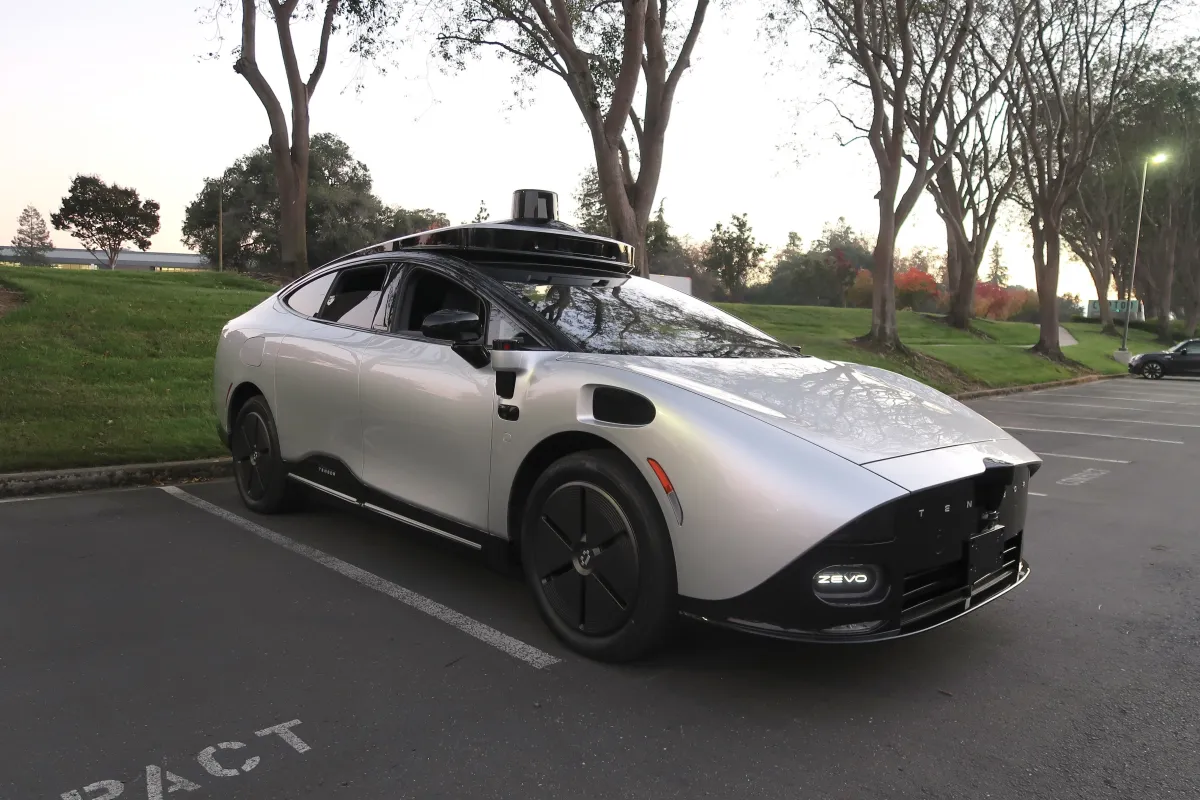
Zevo Ventures plans to boost its car-share fleet with robotaxis, kicking off with fresh face Tensor

Emerging Autonomous Vehicle Startups Disrupt Traditional Automotive Industry

In a landscape increasingly defined by **innovation** and **disruption**, startups like Tensor are challenging the conventional automotive giants with groundbreaking visions of autonomous mobility. Emerging from the China-based firm AutoX, Tensor boldly claims it will be the first to market fully autonomous vehicles to mainstream consumers as early as 2026. Such momentum signals a clear **shift** toward a decentralized, AI-driven transportation ecosystem with significant business implications, including the dawn of **personal AVs** and **peer-to-peer mobility services**.

Tensor’s vision aligns with a broader trend identified by analysts at Gartner and MIT, where the barrier to entry for **robotaxi** networks is lowering, bolstered by startups willing to embrace **risk** and innovation. The company’s forthcoming partnership with Zevo—which intends to deploy up to 100 Tensor AVs—serves as a testbed for **decentralized mobility solutions**. This move hints at a future where individual ownership extends beyond traditional vehicles, ushering in a new era of **personal AI-enabled** transportation, with owners possibly deploying their cars for income-generating services, like ride-sharing—a concept advocated by visionaries such as Elon Musk.

However, the road ahead is lined with formidable **challenges**. Trust in **scaling** autonomous technology remains a critical hurdle, as recent history has shown that many startups faltered when trying to standardize reliable manufacturing processes. Tensor’s limited track record and the **technological gaps** faced by legacy automakers reveal the **competitive landscape’s volatility**. Yet, the startup ecosystem’s agility—coupled with the increasingly supportive regulatory environment—places high-stakes bets on rapid **deployment** and **market capture**. Zevo’s willingness to invest in **software integration** and the potential for **peer-to-peer sharing** platforms exemplifies the industry’s move toward a **networked** model that could redefine how mobility and business intertwine.

As industry leaders and tech innovators forecast, the next decade will be pivotal. Observers like Peter Thiel warn that *”those who control the underlying AI infrastructure will dominate the new economy,”* emphasizing the importance of early bets on companies like Tensor. The convergence of **entrenched tech giants**, **startups**, and **venture capital** signals a **bidding war** for AI supremacy in mobility. This new wave of **disruption** will likely favor those who prioritize **software innovation**, **cost reduction**, and **scalable manufacturing**. With the **driverless revolution** expected to reshape urban transport, logistics, and even personal ownership, every stakeholder must act swiftly to avoid obsolescence.

The future of autonomous vehicles is not merely about safer, more efficient transport—it’s about **changing the very fabric of urban living and commerce**. Innovation-oriented startups are **pushing the boundaries** of what’s possible, prioritizing **flexibility**, **adaptability**, and **user empowerment**. As these **disruptive players** continue to challenge traditional automakers, the industry must adapt or risk being bypassed. With **technological leaps** accelerating, and **business models** evolving at an unprecedented rate, the coming years will be critical. Stakeholders who act with **urgency** and **vision** will determine who emerges as the true **pioneers** of this autonomous future—and those who hesitate may find themselves left in the dust of a **metamorphosing** mobility landscape.

Social Media Auto Publish Powered By : XYZScripts.com