Matox News

Truth Over Trends, always!

Benchmark Pumps $225M into Cerebras to Power Next-Gen AI Breakthroughs

In an era dominated by rapid technological disruption, Cerebras Systems has emerged as a leading force redefining AI infrastructure with its groundbreaking chip architecture. The California-based company recently announced a significant injection of $1 billion in fresh equity—a move that elevates its valuation to a staggering $23 billion. This impressive leap from an earlier valuation of $8.1 billion signals the critical role of innovation and strategic capital infusion in disrupting traditional semiconductor markets, especially as displacement by specialized AI hardware accelerates.

What sets Cerebras apart is its revolutionary Wafer Scale Engine (WSE)—a processor that pushes the boundaries of what silicon can achieve. Unlike conventional chips, the WSE encompasses nearly an entire silicon wafer, measuring about 8.5 inches per side, and packs 4 trillion transistors. This design yields 900,000 cores working in harmony, enabling AI calculations to run more than 20 times faster than competing options, such as those from Nvidia. The hardware’s architecture eliminates data bottlenecks by processing AI inference tasks on a single, colossal chip, a feat that significantly challenges the dominance of traditional GPU clusters. Analysts from Gartner and MIT agree that this approach could redefine the scalability and efficiency of AI systems, leading to a potential paradigm shift in advanced computing.

The company’s strategic moves extend beyond hardware innovation. Cerebras recently inked a multi-year partnership worth over $10 billion with OpenAI—a testament to its fast-growing influence in the AI ecosystem. This agreement involves providing 750 megawatts of compute power, primarily aimed at accelerating the delivery of complex AI models while reducing latency—a crucial advantage in an AI-driven marketplace. Such high-stakes collaborations underscore the escalating demand for specialized hardware that outperforms existing GPU-centric models, and signal a disruptive trend that could shift the landscape of AI deployment in enterprises globally.

However, Cerebras’ journey to market leadership is not without hurdles. Its closely watched relationship with G42, a UAE-based AI firm, accounted for 87% of its revenue through the first half of 2024. Due to G42’s alleged connections with Chinese tech entities, U.S. security regulators initiated a review, causing the startup to postpone its planned IPO—an example of the increasing geo-political risks associated with AI hardware supply chains. Nonetheless, with G42’s departure from its investor list, Cerebras is now positioned to re-enter the IPO arena, targeting a public debut in the second quarter of 2026, according to industry sources. This move indicates an aggressive pursuit of business autonomy and market expansion amid the growing competition for dominance in AI infrastructure.

Looking ahead, the explosive growth of AI hardware innovation underscores a clear message: the race to dominate next-generation computing is reaching a critical inflection point. With industry giants and insurgent startups alike investing heavily in disruptive architectures—such as Cerebras’ wafer-scale processors—this battleground is shifting towards ultra-scalable, high-performance systems capable of handling the world’s most complex AI challenges. As Elon Musk and Peter Thiel have long warned, the future of AI depends not only on algorithms but on the hardware that powers them. The strategic importance of this technological arms race is undeniable; those who lead now will control not just markets but the trajectory of global innovation for decades to come.


20 Must-Have Gadgets for Valentine’s Day, Selected by Verge—On Sale Now

Tech Disruption Accelerates as Consumer Gadgets Redefine Industry Standards

In an era where rapid innovation and strategic disruption fuel the consumer electronics landscape, industry leaders are unleashing a wave of next-generation devices that promise not only to redefine user experience but also to reshape the very fabric of technological business models. As market dynamics shift, driven by cutting-edge features and strategic pricing, giants like Apple, Google, and Sonos are capitalizing on emerging trends to maintain dominance while startups innovate with disruptive products that appeal to digitally savvy youth audiences.

One visionary staple, Aura, has revolutionized digital photo sharing in the form of the Aura Aspen — a sleek, 12-inch LCD digital frame that transforms static memories into dynamic displays accessible from anywhere via companion apps or email. The device exemplifies how disruption in traditional photo framing merges seamlessly with digital connectivity, offering a product that’s both nostalgic and hyper-connected. The tech industry recognizes this as a clear indicator of industry-wide shifts towards interconnected, AI-enabled home décor, which stands to unlock new streams of revenue while challenging entrenched offline paradigms.

Smart and Connected Devices: Elevating Consumer Engagement and Business Strategies

Meanwhile, the smart home ecosystem is further invigorated by products like Amazon’s Echo Dot Max and Google TV Streamer (4K). Experts from Gartner note that smart speakers and streaming devices are transitioning from novelty items to essentials for millennial and Gen Z consumers. The Echo Dot Max, now priced at an attractive $79.99, features advanced sound quality and support for Matter, Thread, and Zigbee protocols, enabling smoother integration with a broader range of smart home devices.

In the visual content realm, the Google TV Streamer pushes the boundaries of streaming innovation by combining exceptional interface design with built-in Ethernet and smart home compatibility. Disruption occurs not only in content delivery but also in how consumers control their entertainment and smart environments, supported by industry reports highlighting the shift toward integrated, user-centric smart ecosystems. These platforms are increasingly becoming critical for businesses to foster brand loyalty while progressing toward more intelligent, anticipatory home environments.

Gaming, Health & Personalization: New Frontiers of Business Opportunity

In wearable tech, products like Amazfit Active 2 and Google Pixel Watch 4 serve as proof points for how health and fitness tracking deeply integrate into youth-centric lifestyles. Analysts from MIT highlight that wearables are evolving from simple fitness aids into comprehensive health monitoring platforms with embedded AI and personalized insights — opening lucrative avenues for health-tech startups and established players alike. The Pixel Watch 4 also exemplifies hardware design that prioritizes *repairability*, signaling an industry shift towards sustainability and longer product lifecycles, which investors see as a key strategic move to sustain brand loyalty amid fierce competition.

In the audio space, Sonos advances with the Era 100 and Arc Ultra. These devices cater to a consumer base demanding immersive entertainment experiences, blending high fidelity sound with smart speaker capabilities. The disruption here lies in the integration of Dolby Atmos technology and multi-platform support, forcing competitors to leapfrog with innovation if they wish to stay relevant in this highly competitive segment.

Looking Ahead: Innovation as the Lifeblood of Tech Giants and Startups Alike

Collectively, these industry shifts reveal a powerful underlying trend: disruption driven by innovation, smart integration, and consumer-centric business models. With strategic discounts and feature upgrades, companies are positioning themselves for market dominance in a future where connected, intelligent devices are woven into daily life. Experts like Peter Thiel warn that companies slow to innovate will quickly fall behind as startups leverage emerging tech to carve out new niches, intensifying competitive pressures.

With consumer expectations accelerating, the imperative for brands to innovate fast and disrupt the status quo has never been clearer. As technological advancements continue to cascade into every facet of daily life, industry stakeholders must recognize that standing still equates to falling behind. The future will belong to those who harness the power of innovation, disrupt entrenched markets, and continuously push the boundaries of possibility. The urgency to adapt and lead in this rapidly evolving environment is now greater than ever—disruption is here to stay, and the clock is ticking.

AI founder envisions ‘March for Billionaires’ in showdown over California’s wealth tax

Disruption on the Horizon: California’s Billionaire Tax Sparks Tech Exodus and Unprecedented Mobilization

The debate over California’s Proposed Billionaire Tax is escalating into a disruptive force with profound implications for the tech sector and the state’s economic landscape. Originally introduced to address widening revenue gaps, the legislation would impose a one-time 5% tax on billionaires’ total wealth—an initiative backed by powerful institutions like the SEIU and anticipated to generate significant public funds. However, within the industry, it is perceived as a misguided overreach that could stifle innovation and drive wealth and talent out of California, one of America’s most vital technology hubs. The controversy has culminated in an unlikely protest—the “March for Billionaires”, which is scheduled for this coming Saturday.

This surprising mobilization has caught the attention of tech leaders and analysts alike, illustrating how regulatory measures can disrupt not only tax strategies but the very fabric of Silicon Valley’s entrepreneurial ecosystem. The event’s founder, Derik Kaufmann, an ex-accelerator participant and AI startup innovator, emphasizes that the march isn’t driven by outside interests but by his deep concern over the bill’s potential to damage California’s business climate. Kaufmann has explicitly linked the proposed law to a broader trend of increasing government overreach that threatens to unsettle the delicate balance between regulation and innovation—an issue that experts from MIT to industry analysts warn could set a dangerous precedent.

The business implications are stark. As noted by Gartner analysts and industry veterans like Elon Musk and Peter Thiel, the threat of punitive taxation prompts many talented entrepreneurs to reconsider their domiciles and investments. Instances of talent flight are already underway, with some of California’s most coveted tech billionaires contemplating or executing relocation to more welcoming jurisdictions. Such a trend would not only diminish California’s economic advantage but potentially accelerate its decline as a global tech hub—disrupting the innovation engine that has driven the US economy for decades.

Innovation and Disruption in the Face of Political Headwinds

The legislation, which draws criticism for its potential to impose disproportionate tax burdens on founders—many of whom would face complex, unprecedented tax obligations—has faced significant opposition. Critics argue that a disruptive exodus of wealth and innovation could weaken the state’s ability to sustain its technological dominance. Still, some advocates view the measure as a necessary step toward leveraging private wealth for public good, drawing comparisons to successful European models. However, as Kaufmann points out, “Sweden eliminated their wealth tax 20 years ago to foster entrepreneurship, resulting in more billionaires per capita than the US.” This serves as a warning that heavy-handed policies might undermine long-term economic resilience.

The real concern for futurists and policymakers is the industry’s mounting uncertainty—where radical shifts in tax policy threaten to upend established growth trajectories. The event signifies a growing awareness among young entrepreneurs and tech elites that the industry faces a decisive juncture: whether to accept regulatory overreach or innovate around it. With the future of Silicon Valley’s innovation ecosystem hanging in the balance, stakeholders are increasingly recognizing that technological disruption isn’t just about new gadgets—it’s about reshaping the entire landscape of economic power and influence .

As the tech world watches these unfolding events, one thing is clear: the coming months will be pivotal. Breakthroughs in artificial intelligence, blockchain, and other revolutionary sectors threaten to redefine industries, but only if a conducive environment persists. The urgency stems from the growing realization that policy decisions today will decide whether the US maintains its competitive edge or becomes a cautionary tale of overregulation and fiscal flight. The ongoing controversy in California underscores the broader imperative for policymakers, entrepreneurs, and investors to act swiftly and decisively—else the rapid pace of technological progress risks becoming a casualty of political fiasco.

Alexa’s Flop Pushes Me Back to Siri—Time to Reconsider the Tech Giant’s Voice Power

Amazon’s Alexa Reimagined: Innovation Meets Consumer Frustration

In a bold move to elevate its voice-enabled ecosystem, Amazon has recently intensified its integration of generative AI technologies into the Alexa platform. With the debut and subsequent expansion of Alexa Plus, the company aims to transform Alexa from a basic voice assistant into a generalist AI companion capable of more complex interactions, drawing parallels to industry leaders like ChatGPT and Google’s Gemini. The recent shift is part of Amazon’s strategic pivot to disrupt the smart assistant market, leveraging AI to embed itself deeper into users’ daily routines and the broader smart home sector.

This aggressive push is not without growing pains. As shown by early feedback and internal updates, the user experience has faced significant turbulence. The new app interface and Alexa Plus functionalities prioritize a conversational AI experience, but consumer response has been mixed — with many pointing out the increased clutter, intrusive advertisements, and convoluted workflows. As analysis from Gartner highlights, disruption of traditional UX paradigms— especially through AI-driven redesigns— can lead to *initial alienation*. Nonetheless, Amazon appears committed to reshaping the ecosystem, with Alexa’s front page now prominently featuring an AI chatbot that pervades every interaction, blurring lines between utility and personalization.

  • Redesigned app layout places Alexa chat front and center, aiming for a seamless conversational interface.
  • Introduction of targeted prompts and personalized suggestions enhances AI contextual understanding.
  • Shift to ad-sponsored content and cluttered shopping list interface erodes user satisfaction according to some early adopters.
  • Features like Favorites & cross-platform accessibility signal a strategic move to become a ubiquitous AI assistant.

From a business perspective, Amazon’s drive towards disruption signifies a serious attempt to corner the broad AI-powered smart assistant market, challenging entrenched players and reshaping consumer expectations. The company’s announcement that Alexa Plus has moved out of Early Access and is freely accessible in the US demonstrates its goal to rapidly scale AI adoption. The new interface, which emphasizes seamless chat and contextual responsiveness, aligns with trends forecasted by MIT’s Media Lab that suggest AI will increasingly serve as an all-encompassing digital concierge— albeit with the risk of alienating users if usability is compromised.

Industry analysts like Peter Thiel caution that over-automation and invasive UI changes can backfire if not perfectly aligned with consumer needs. Yet, Amazon’s strategic gamble indicates that innovation and disruption in AI are inevitable, underlining the importance of balancing technological advances with user-centric design. As the AI landscape evolve, rapid iteration and consumer trust will be paramount. Amazon’s willingness to overhaul its app, despite setbacks and criticisms, underscores the emerging reality: in the race for AI dominance, those who innovate fastest will shape the future, and the clock is ticking.

Looking ahead, the attention now shifts toward the next chapters in this technological saga. Will Amazon refine its approach, mitigate user frustrations, and fully harness AI’s potential? Or will it face the peril of consumer pushback, ceding ground to rivals? The disruption unleashed by Amazon’s latest initiatives signals a pivotal moment—where innovation, disruption, and business agility will determine the leaders of tomorrow’s AI-powered digital world. The future of intelligent assistants hinges on a delicate balance: relentless innovation tempered by intuitive design, and in this high-stakes game, every second counts.

Sapiom Bags $15M to Empower AI Agents in Buying Their Own Tech Gear

AI Payment Infrastructure Disrupts Enterprise Tech Landscape

In an era defined by rapid innovation and pervasive disruption, startups like Sapiom are pioneering a vital transformation in the way artificial intelligence (AI) agents interact with financial services. Founded by Ilan Zerbib, a former payments engineer at Shopify, Sapiom emerges as a leader in creating a seamless financial layer that enables AI systems to independently acquire software, APIs, and compute resources—an industry-first move that could redefine enterprise automation. This development underscores a fundamental shift in enterprise infrastructure, positioning the financial backbone as a critical enabler of autonomous AI agents capable of handling complex transactions.

For years, prompt-to-code tools have exploded the innovation landscape, empowering developers and entrepreneurs to prototype rapidly. However, bridging these prototypes into scalable, production-ready applications remains fraught with backend challenges, especially when integrating external tech services such as SMS, email, or payment gateways. Zerbib’s Sapiom aims to eliminate these hurdles, creating a financial infrastructure that automatically manages payments for API calls, message services, or cloud resource provisioning. As Amit Kumar, a partner at Accel, notes, “every API call is a payment,” exemplifying how disruptive this financial layer could become in AI-driven automation.

The implications for businesses are profound: this infrastructure paves the way for AI agents to operate with less human oversight, effectively creating a revolution in enterprise agility. Leading VC firms such as Accel, Gradient Ventures, and Menlo Ventures have recognized the potential, funneling $15 million into Sapiom’s seed round, with participation from major players like Coinbase Ventures and Anthropic. This influx of capital signals a robust confidence in the technology’s capacity to disrupt traditional API economy models, shifting the industry towards autonomous, financially enabled AI systems. Industry giants and startups alike are watching closely as this innovation could catalyze an ecosystem where AI agents securely purchase services, manage transactions, and operate independently in both enterprise and consumer markets.

While the current focus remains on B2B solutions—particularly in vibe-coding and digital platform ecosystems—experts warn that these innovations herald a future where consumer-facing AI agents will handle personal transactions, from ordering rides to managing online shopping. Such a scenario, envisioned by industry visionaries like Elon Musk and Peter Thiel, would represent a massive leap in AI autonomy. Nonetheless, Zerbib emphasizes a cautious approach, prioritizing the creation of a stable, secure financial backbone for businesses rather than chasing speculative consumer applications. This strategic focus underscores the importance of building foundational technologies that can ensure security and trust in autonomous financial decision-making, a key prerequisite for broader societal adoption.

As the tech industry accelerates toward this new frontier, stakeholders must recognize that the future belongs to those who innovate at the intersection of AI and financial infrastructure. The rapid evolution of such layers signals not only an era of unprecedented disruption but also compels businesses to adapt swiftly or risk being left behind. With tech giants, venture capitalists, and visionary entrepreneurs lining up to capitalize on this shift, the countdown to AI-powered autonomous finance has begun. The pressing question remains: how soon will this technology become mainstream, and who will lead the next wave of disruption? Forward-looking investors and developers should pay close attention—as the velocity of innovation won’t wait for anyone.

Loyalty Fades as Silicon Valley Embraces the Next Shift

Silicon Valley’s AI Talent Race Reshapes Industry Dynamics

In recent months, Silicon Valley has witnessed an unprecedented surge in high-stakes AI acquisitions and talent moves, signaling a seismic shift in the industry’s landscape. Major players like Meta, Google, and Nvidia have committed billions to acquiring cutting-edge AI startups, demonstrating that disruption in AI capabilities is accelerating at an exponential pace. These strategic investments are not merely about acquiring technology—they are about shaping the future battleground of artificial intelligence, where the contest for talent determines technological supremacy.

Meta’s bold move to invest over $14 billion in Scale AI, coupled with onboarding its CEO, Alexandr Wang, marks a clear signal that the social media giant is positioning itself as a dominant force in AI development. Meanwhile, Google spend a cool $2.4 billion to license Windsurf’s innovative technology, integrating its research teams into DeepMind. Not to be outdone, Nvidia wagered a staggering $20 billion on Groq’s inference platform and has aggressively hired its leadership, underscoring that hardware and inference capabilities remain pivotal in AI’s evolution.

Yet, this aggressive hunt for talent extends beyond mere investment. The industry has entered what analysts are calling a “great unbundling” of talent, with top researchers and founders bouncing between firms in a rapid, fluid market. The recent rehire of ex-OpenAI researchers by their former employer, along with Poaching activity from competing startups like Thinking Machines and Anthropic, underscores an intense war for intellectual capital. This talent mobility signals a fundamental shift in how AI innovation will be driven in the coming decade.

Still, these developments carry profound implications for the broader tech ecosystem. As investor Max Gazor points out, “deal structures are evolving to protect against talent flight,” with measures such as requiring board approval for key strategic moves. Moreover, the war for AI intelligence is not just about securing the best minds but also fundamentally redefining the landscape of AI innovation—favoring agility, bidirectional talent flows, and strategic acquisitions over traditional startup stability. As tech giants and emerging contenders race forward, the industry stands at a crossroads, where the winners of this AI arms race will define the technological and economic landscape of the future. For startups, investors, and developers alike, the message is clear: in the world of AI, timing, talent, and strategic disruption are the new currencies of success.

Moto Watch Review: The Power Moves of Polar-Inspired Tech

Motorola’s CMF Watch 3 Pro: A New Challenger in the Competitive Wearables Space

The wearable technology sector continues to demonstrate remarkable innovation, with industry giants and startups alike pushing the boundaries of what consumer electronics can achieve. Recently, Motorola entered this fiercely competitive landscape with its latest offering, the CMF Watch 3 Pro. Billed as an affordable, stylish, Android-compatible smartwatch, it aims to challenge established players like Apple, Samsung, and Garmin. According to early reviews from tech analysts, the device showcases the disruptive potential of hardware integration paired with modern software, although it still has some notable limitations that could influence its market penetration.

One of the core advantages of the CMF Watch 3 Pro lies in its strategic cost positioning combined with solid functionality. It features parameters such as sleep tracking, heart rate monitoring, and stress measurement, with initial comparisons indicating close accuracy to premium models like the Oura Ring 4. Analysts, including Gartner and MIT’s Media Lab, note that major players in the wearables market are increasingly focusing on data integration and seamless user experience to disrupt traditional fitness devices. Motorola’s choice to incorporate a well-designed, yet affordable product underscores this trend—offering consumers a “good enough” device that does not compromise essential features, yet is accessible.

However, despite its innovative intent, the device’s hardware limitations could hinder its disruptive prospects. Especially glaring is the onboard GPS functionality. The device’s slow satellite connection and inconsistent performance outside diminish its appeal as a true fitness companion—particularly when reliable location tracking is a key market differentiator. The device’s processor, deliberately undisclosed by Motorola, appears to struggle with rapid satellite acquisition, a flaw that consumer reviews describe as frustrating, impacting the overall user experience. Such hardware inefficiencies—common in lower-tier wearables—highlight a critical business challenge: balancing cost constraints with performance demands in an industry that is rapidly evolving toward precision.

The experience of review analysts further underscores this disruptive tension. Despite the device’s attractive design and promising feature set, issues like overly sensitive screens and accidental activations threaten user satisfaction. This emphasizes an overarching industry trend: hardware refinement is crucial for establishing market dominance amidst fierce competition. Companies like Apple and Samsung continually push advancements in sensor sensitivity and UI design, setting high standards for emerging competitors. Motorola’s potential in this space hinges on addressing these hardware issues swiftly and innovating beyond mere feature inclusion—further reinforcing that disruption requires not only price competitiveness but also technological excellence.

Looking ahead, the wearables industry is poised for a significant shift driven by the convergence of AI, sensor technology, and 5G connectivity. Industry experts like Peter Thiel have predicted that next-generation devices will serve as the nexus of lifestyle, health, and AI-powered analytics, transforming how consumers interact with their personal data. Motorola’s move into this space signals the beginning of a new wave of disruptive innovation, where smaller players can challenge dominant incumbents by leveraging cost-effective yet capable hardware and sophisticated software integration. The market’s future will depend on how effectively manufacturers can resolve hardware shortcomings and harness emerging technologies to offer compelling, breakthrough features—turning these devices into indispensable health and productivity tools.

Stakeholders across the tech ecosystem must remain vigilant, as the race to dominate this space intensifies. With major innovations around the corner, it’s clear that the current state of wearable technology is just the beginning. With upcoming advancements in AI, sensor innovation, and connectivity, the industry is on the cusp of a transformation—where disruption will be measured not just in features, but in the quality and reliability of the user experience itself. For companies willing to innovate and iterate rapidly, the opportunity to redefine health, fitness, and lifestyle tracking has never been greater—and time is of the essence for stakeholders eager to secure market leadership in this fast-evolving technological frontier.

Sam Altman Bristles Over Claude’s Super Bowl Ads—Tech War Heats Up

AI Industry Shakeup: Anthropic’s Bold Moves and the Future of Disruption

The AI landscape is swiftly evolving, driven by fierce competition and relentless innovation. Anthropic, a rising star founded by former OpenAI experts dedicated to “responsible AI,” has made headlines with a provocative Super Bowl commercial that takes direct aim at OpenAI’s ChatGPT. This campaign underscores a shifting industry dynamic—the emergence of disruptive advertising strategies that highlight not just technological prowess but also evolving market narratives and competitive positioning. By boldly mocking targeted ads within AI chatbots, Anthropic is signaling its intent to redefine expectations for transparency, user trust, and responsible innovation amidst heated rivalry.

The commercials themselves are an innovative form of tech marketing, leveraging humor and cultural commentary to resonate with a younger, tech-savvy audience. One ad depicts a man seeking relationship advice from a chatbot, which then abruptly interjects with an outlandish ad for a fictitious dating site, Golder Encounters. Another features a young man receiving a height-increasing insole ad after asking for fitness tips. These narratives cleverly highlight concerns over advertising saturation in AI, a topic that has sparked significant debate since OpenAI announced plans to integrate targeted ads into ChatGPT. Analysts from Gartner warn that such moves could either enhance user engagement or erode trust if not executed transparently, making the strategic stakes higher than ever.

Business Implications and Industry Disruption

The disruption caused by Anthropic’s campaign extends beyond marketing tactics—raising pertinent questions about industry standards and the future of AI monetization models. While OpenAI maintains that its planned ads will be clearly labeled and non-intrusive, critics argue that the mere testing of conversation-specific ads could blur lines of user trust and lead to **”surveillance capitalism”** in AI interactions. “The core concern lies in how these ads could influence or manipulate conversations,” warns Dr. Lisa Smith, AI policy expert at MIT. The industry faces a fork in the road: pursue monetization aggressively or prioritize ethical considerations, a debate that will define the next decade.

  • Anthropic’s ads exemplify a shift toward limited yet impactful marketing—mocking the very strategies of its competitors to carve out market identity.
  • OpenAI’s commitment to ‘separate and labeled’ ads reflects a cautious approach that aims to balance revenue generation with user trust.
  • The rising importance of AI-driven advertising signals a potential industry-wide change—one where monetization becomes embedded within conversational AI’s very fabric.

Looking Ahead: The Need for Strategic Vigilance

The rapid growth of AI tools has attracted investment from industry giants like Elon Musk and Peter Thiel, emphasizing the massive business potential replacing traditional tech sectors. Yet, with this opportunity comes a critical responsibility: to innovate ethically and maintain user trust, even amid cutthroat competition. As AI firms scramble to out-innovate each other, the industry must navigate the fine line between disruption and regulatory oversight. The next chapters in this story will test whether companies like Anthropic can lead with responsible innovation or capitulate to the allure of quick profits at the expense of integrity.

The future of AI is unmistakably **fast approaching**, where technological disruption is intertwined with profound societal implications. Business leaders, policymakers, and technologists must act decisively—embracing innovation without compromising fundamental principles. The trajectories set today will determine whether AI remains a tool for progress or devolves into a new frontier of manipulation and control. For the ambitious, poised and strategic action in this space is no longer optional but essential—because the clock is ticking, and the future waits for no one.

Nintendo’s new Virtual Boy — a visual thrill, but not quite a game-changer

Revolutionizing Retro: Nintendo’s Virtual Boy Revival Signals Industry Disruption

In an era dominated by cutting-edge AI, virtual reality, and cloud gaming, Nintendo is strategically leaning into retro nostalgia with its latest innovation: a reimagined Virtual Boy. Originally launched in the ’90s, this console was a commercial flop, primarily due to its limited library and monochromatic display, but Nintendo’s latest move signals a significant shift towards leveraging nostalgic assets to disrupt current gaming paradigms. By re-creating aspects of the classic console while smoothing over its past challenges, Nintendo aims to capitalize on the emerging market for vintage gaming experiences, now delivered with modern convenience through the Switch Online + Expansion Pack subscription service.

The company’s approach exemplifies a broader trend of integrating nostalgia-driven innovation into mainstream platforms, targeting the young, digitally-native demographic eager for unique experiences rooted in gaming history. Scheduled for release on February 17th, Nintendo will offer 14 Virtual Boy titles as part of its subscription lineup, accessible via a new peripheral priced at $100, alongside an affordable $25 cardboard VR alternative. This move isn’t just about nostalgia; it’s a calculated disruption that refocuses industry attention on hybrid hardware models capable of blending the old with the new, positioning Nintendo ahead in a fiercely competitive landscape. Such integrations may redefine subscription-based models as the dominant delivery method for diverse gaming content, fundamentally shifting how business models evolve in the digital age.

“This initiative exemplifies disruption through innovation, turning historical failures into strategic advantages,” says industry analyst Lee Patterson from Gartner. While critics could dismiss this as mere fan service, the underlying implications are profound: leveraging archival content in a way that garners both revenue and brand loyalty. Furthermore, it signals a potential shift for other legacy tech and entertainment companies, emphasizing the importance of blending heritage with futuristic design to spark new revenue streams. The Virtual Boy revival underscores how established corporations are redefining value propositions through post-modern product iterations, effectively forcing competitors to reevaluate their traditional development and monetization strategies.

Moreover, this move is aligned with broader industry movements championed by visionaries like Elon Musk and Peter Thiel, who advocate for relentless innovation and disruption as essential for maintaining market dominance. The fusion of nostalgia with technological advancement presents a compelling blueprint for disrupting entrenched, often stagnant, segments of the gaming industry.

  • Potential to revitalize dormant IPs and tap into underserved markets.
  • Shift towards highly personalized, immersive experiences combined with low-cost peripherals.
  • Enabling legacy content to generate ongoing revenue streams from an engaged gaming community.

As technology continues to advance at a rapid clip—from AI-enhanced gaming to immersive XR experiences—industry leaders and investors must recognize that post-modern innovation will be characterized by this convergence of the past and future. The Virtual Boy revival is more than a nostalgic nod; it’s a decisive move that underscores the importance of disruptive thinking and aggressive adaptation to stay relevant. With industry giants already eyeing similar models, the next wave of gaming innovation is imminent, and those who fail to adapt risk falling behind in this dynamic, competitive landscape. The future belongs to those bold enough to reimagine their legacy assets as catalysts for growth and transformation—marking a new era of industry disruption driven by innovation, nostalgia, and strategic foresight.

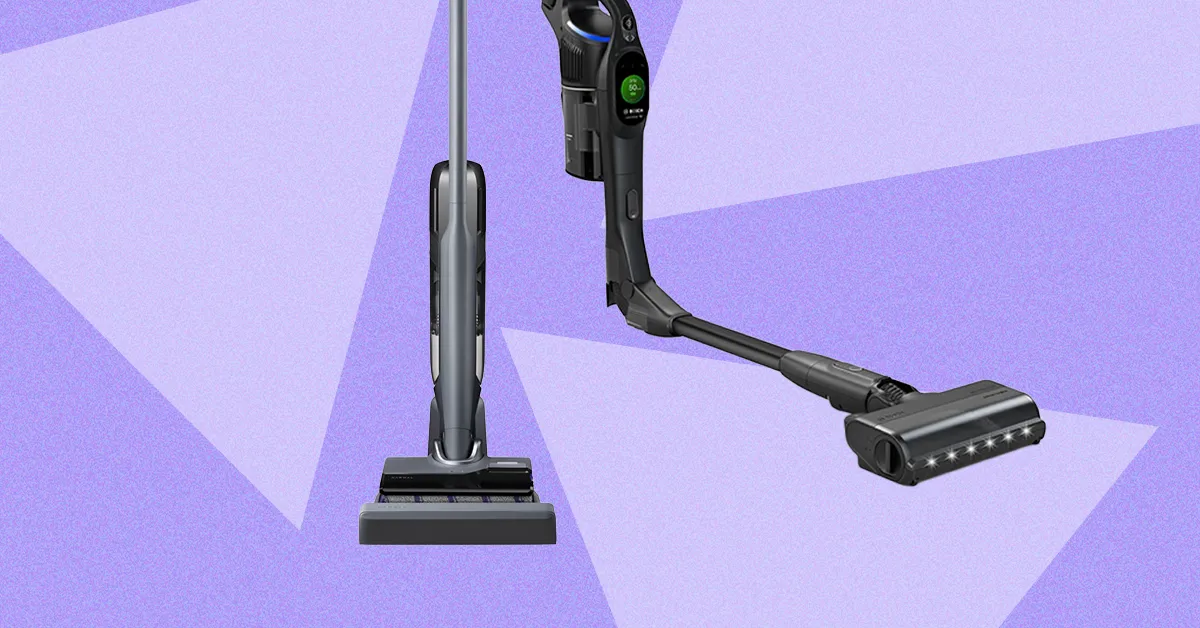
Top Cordless Vacuums for a Clean, Modern Home in 2026

Tech Industry Spotlight: Disruptive Innovations Reshaping Consumer and Business Markets

The landscape of consumer technology continues its relentless evolution, with robotic vacuum cleaners exemplifying how innovation drives industry disruption. Companies like Dyson and Bosch are pushing boundaries with models boasting multi-mode cleaning, cyclonic filtration, and advanced sensors. The emergence of affordable yet capable devices like the Eufy Robot Vacuum signals a seismic shift, making AI-powered cleaning accessible to a broader demographic. Such advances not only elevate consumer convenience but also challenge traditional home-care paradigms, prompting established brands to innovate or risk obsolescence.

In parallel, the business implications of these advances are profound. As market leaders incorporate machine learning and IoT connectivity into everyday appliances, real-time data collection enables manufacturers to optimize product performance, anticipate market demands, and innovate in service models. Industry analysts, such as Gartner, emphasize that the integration of AI and IoT in the appliance sector accelerates the transition from product sales to data-driven services, creating a hybrid revenue stream that can sustain competitive advantage amid fierce market entries.

Beyond cleaning tech, the broader disruption extends to the home and personal gadgets ecosystem. The rise of cordless vacuums like the Worx 20V Stick and premium models such as Dyson’s V12 Detect illustrates a trend toward portability, lightweight design, and heightened user control. Despite some persistent flaws—such as dustbin maintenance or battery longevity—these innovations lay the groundwork for smarter, more adaptive devices. Industry insiders note that the ability to seamlessly integrate AI, robotics, and user feedback into mass-market products will define the next wave of consumer electronics, positioning companies that lead in these domains for aggressive market share gains.

Looking ahead, industry experts like Elon Musk and Peter Thiel warn of the necessity to stay ahead of the disruption curve. The rapid pace of technological leaps demands that businesses not only innovate but also adapt their entire operational models. AI-driven manufacturing, customizable user experiences, and integrated ecosystem services will be critical for sustaining growth in a market increasingly defined by smart, interconnected appliances. As Gartner predicts, those who capitalize on these opportunities early will dominate the digital home landscape, setting a new standard for consumer engagement and business agility. The race is on, and those lagging behind risk becoming relics in the age of technological renewal.

Social Media Auto Publish Powered By : XYZScripts.com