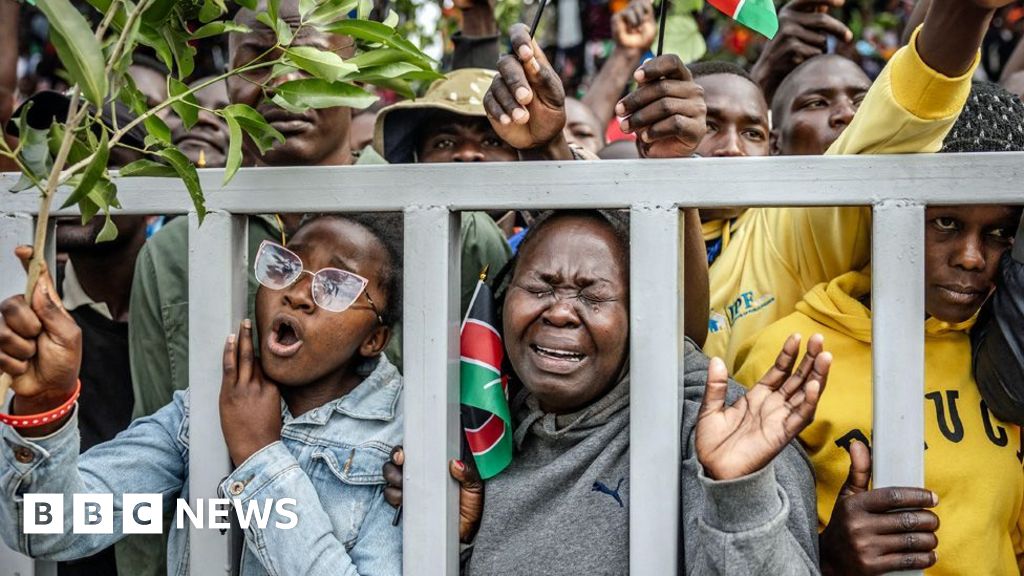
The passing of Kenyan opposition leader Raila Odinga has sent waves across the continent and beyond, highlighting the enduring influence of his political legacy in East Africa. Odinga, regarded as a symbol of resilience and democracy, drew massive crowds at his funeral in Kisumu, underscoring the deep-rooted support he cultivated over decades. His death at age 80 marks not only a personal loss but a significant juncture for Kenya’s political landscape and its position within the broader African Union. Former US President Barack Obama, echoing a sentiment shared by many, recognized Odinga as a “true champion of democracy,” a title that resonates with his hard-fought political career that spanned multiple electoral cycles, often marred by allegations of manipulation and violence.
Odinga’s political journey was characterized by his unwavering advocacy for self-governance and electoral transparency. Despite losing five presidential campaigns, he remained a potent force, embodying the aspirations of millions for democratic reform. The 2007 election crisis demonstrated his resolve, leading to a fragile but vital unity government aimed at curbing electoral violence. Analysts from respected international think tanks emphasize that Odinga’s legacy laid the groundwork for Kenya’s ongoing political reforms, even as intra-ethnic tensions persist. The geopolitical impact of his death extends beyond national borders—it underscores the fragile stability in a region frequently affected by political unrest, and the importance of regional diplomacy in fostering peace.
The death of Odinga coincides with a broader shift in African politics, where youthful populations and burgeoning economies demand greater representation and accountability. Historians such as Terence Ranger have noted that leaders like Odinga are vital in navigating post-colonial challenges, balancing traditional influences with the aspirations of new generations. The post-Odinga era presents a critical test for Kenya’s political institutions as they attempt to maintain peace and stability. The measures taken to prevent chaos during the funeral—warnings from Odinga’s family and the organization of orderly private burials—highlight the acute awareness of how fragile societal cohesion can be in times of leadership transition. The international community’s recent calls for calm stress the significance of regional stability—any upheaval risks destabilizing a vital economic hub and disrupting East African trade networks.
As history continues to unfold amidst these shadows of change, the legacy of Raila Odinga remains a powerful reminder of the thin line leaders walk between progress and chaos. His life encapsulates the ongoing story of African resilience—a continent where the struggle for justice persists amidst growing pains. While his body is laid to rest, the trajectory of Kenya’s democracy hangs in the balance. The desire for true reform, resilience, and regional stability fuels the hope that Odinga’s sacrifices will not be in vain. The echoes of his journey serve as both a warning and a source of inspiration—calling nations and societies to face the turbulent tide of history, aware that their actions today are the foundations upon which future generations will either build or unravel the complex tapestry of African nationalism and sovereignty.