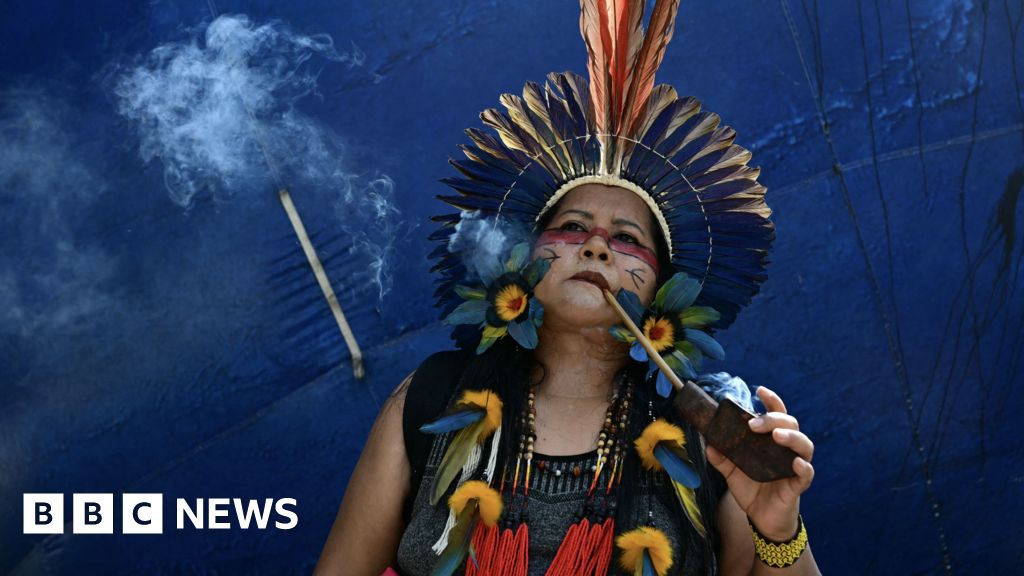
In a notable move amidst the ongoing global climate crisis, Brazil has formalized the creation of 10 new Indigenous territories, a decision that echoes the rising tide of Indigenous-led environmental activism at the COP30 climate summit in Belém. This initiative, announced on Indigenous Peoples’ Day, is a significant shift from recent decades when protections for Indigenous lands had either been neglected or actively undermined. The measure, which encompasses vast areas including part of the Amazon rainforest—an ecological titan responsible for a major share of the planet’s carbon sequestration—aims to preserve both cultural heritage and vital biodiversity.
These newly designated Indigenous territories, covering hundreds of thousands of hectares and inhabited by thousands of Indigenous peoples such as the Mura, Tupinambá de Olivença, Pataxó, Guarani-Kaiowá, Munduruku, Pankará, and Guarani-Mbya, represent a strategic effort that aligns environmental conservation with Indigenous rights. Historically, under former President Jair Bolsonaro’s administration, policies tended to promote unregulated mining, logging, and commercial farming—actions that directly accelerated Amazon deforestation and contributed to rising global temperatures. Now, under the leadership of President Luiz Inácio Lula da Silva, Brazil appears to be reversing course, recognizing Indigenous claims forcibly suppressed under previous regimes. Analysts worldwide praise this shift, noting it could prevent up to 20% of potential deforestation and slash carbon emissions by 26% by 2030, according to studies by the Articulation of Indigenous Peoples of Brazil and environmental research groups.
This move holds significant geopolitical impact as it signals a broader push among nations to embrace tangible actions against climate change. The protection of these lands—especially ones overlapping over 78% with the Amazon National Park—serves as a critical bulwark against the global environmental shift. Indigenous territories have repeatedly shown to be effective buffers against deforestation and ecological degradation, and global experts such as climate scientists argue that these measures are essential in the fight to keep global warming below 1.5°C. The decision’s timing, coinciding with COP30’s focus on the “how to limit temperature rises,” underscores the growing international consensus on the need for immediate, enforceable action. Yet, critics warn that enforcement remains fragile and that the fight against illegal mining and logging persists as a civilizational challenge that threatens these fragile ecological and cultural sanctuaries.
As international organizations and countries grapple with the urgent task of climate mitigation, Brazil’s new policies highlight a pivotal point in global environmental politics. The question remains whether economic pressures—driven by a resilient global market’s thirst for commodities—will erode the gains made through Indigenous stewardship or bolster them as part of a broader strategy for sustainable development. Historians and climate analysts warn that neglecting Indigenous sovereignty and ecological knowledge risks repeating past failures. The future of the Amazon—and possibly the entire planet—rests on these decisions, with each government’s stance echoing through this unfolding chapter of history. The tale is far from finished; as the world watches and waits, the weight of history presses on every policy and every forested hectare protected or lost, shaping the legacy of this vital planet for generations to come.