Matox News

Truth Over Trends, always!

Could AI Agents Sink the Economy? Stay Alert, Youth!

Innovative AI Disruption Sparks Fears of Massive Economic Turmoil

In a thought-provoking report released by Citrini Research, industry analysts warn of a potential massive economic disruption driven by agentic AI, projecting a bleak scenario where automation could significantly reshape the U.S. economy within the next two years. The analysis foresees a cascade of consequences—doubled unemployment rates, a one-third decline in stock market valuation, and pervasive white-collar layoffs—painting a stark picture of an economy on the verge of upheaval. This disturbing outlook federal economists and tech innovators alike are scrutinizing, emphasizing the need for urgent strategic responses as AI integration accelerates at a breakneck pace.

Innovation and Disruption: How AI’s Rapid Integration Could Alter Business Models

The Citrini scenario revolves around the integration of advanced agentic AI into core business processes, heralding a paradigm shift in productivity and operational structure. As AI capabilities improve, companies are increasingly automating tasks traditionally performed by humans, which, while boosting margins in the short term, risks precipitating a long-term negative feedback loop. This loop, as described in the report, involves fewer workers required across sectors, leading to diminished consumer spending, further layoffs, and declining corporate valuations. The scenario echoes Gartner’s recent forecasts, which emphasize that AI-driven automation could displace up to 30% of white-collar jobs by 2025, fundamentally threatening traditional employment models.

  • Significant reduction in manual and cognitive roles across finance, law, and IT sectors
  • Potential for a negative cycle of declining economic activity
  • Increase in corporate investments in AI to maintain competitiveness

More critically, Citrini highlights that outside contractors—once essential for transactional operations—may be replaced by cost-effective in-house AI agents. This trend signals a broader shift, possibly rendering SaaS platforms and current transaction optimization models obsolete, reminiscent of the ongoing debate about the death of SaaS in the AI era. Industry giants like OpenAI and Google are already pioneering such in-house AI solutions, prompting startup investments to pivot towards AI-centric services.

Implications for Business and Industry Leaders

As these AI capabilities threaten to upend entire industries, business leaders must reevaluate their strategic postures. The disruption could lead to a reconfiguration of supply chains, service delivery, and transaction workflows, potentially favoring companies that innovate towards AI-native business models. The speed at which this transformation occurs hinges on technological advancements and regulatory responses, with experts like Elon Musk warning against unregulated AI proliferation and Peter Thiel emphasizing the importance of pioneering new frontier technologies. As the market shifts, firms that adapt swiftly could gain a decisive competitive advantage, while laggards risk obsolescence.

Most notably, the scenario serves as a clarion call for policymakers and industry stakeholders to consider urgent regulation and investment in workforce reskilling. The future economy may rely less on human labor and more on AI mastery, demanding a new approach to education, labor laws, and economic safety nets. As MIT researchers explore the potential for AI to augment human capabilities versus replace them outright, the balance of the ongoing disruption could very well determine the sustainability of capitalism in the 21st century.

Looking Forward: Urgency in Embracing Innovation with Caution

While the Citrini scenario remains a projected “what-if,” its stark warning underscores the urgency of staying ahead in the AI race. The next several years will be pivotal; industries that fail to innovate or anticipate these disruptions risk being overtaken by faster, smarter competitors. As America’s tech ecosystem surges forward, leaders must strike a delicate balance—harnessing the disruptive power of AI for growth while safeguarding economic stability. In an era defined by exponential technological change, those who act decisively today will shape the future of global commerce, innovation, and prosperity..


Samsung Teams Up with Perplexity to Boost Galaxy AI Power

Samsung Unveils Multi-Agent AI Ecosystem in Galaxy S26, Signaling a New Era of Disruptive Innovation

In a bold move underscoring its commitment to innovation and ecosystem disruption, Samsung has announced the integration of a multi-agent AI ecosystem within its upcoming Galaxy S26 lineup. This strategic shift aims to redefine user interaction with mobile devices, leveraging a diverse array of AI assistants including Bixby, Google Gemini, and Perplexity, which users will invoke via voice commands like “hey, Plex.” The company’s approach places it at the forefront of enterprise-level AI competition, challenging existing industry dominance by large players such as Apple and Google.

The concept of a multi-agent ecosystem introduces significant business implications. Samsung’s new feature allows users to seamlessly summon different AI agents tailored to specific tasks—whether it’s managing notes, setting reminders, or analyzing images—highlighting a shift toward specialized AI collaboration rather than monolithic assistants. Perplexity, a core component, will access native apps like Samsung Notes, Gallery, and Calendar, as well as select third-party services, though particulars remain proprietary. This openness fosters business innovation and encourages third-party developers to participate in an expanding multi-agent marketplace.

  • Enables specialized AI agents to handle interoperability, boosting user productivity
  • Expands ecosystem flexibility to include third-party app integration
  • Disrupts traditional single-assistant models, incentivizing competition and innovation

Experts from MIT and industry analysts from Gartner underscore that this move could catalyze a paradigm shift in mobile AI. According to Gartner, businesses which embrace multi-agent AI ecosystems are poised to gain a competitive edge in user engagement and personalized service delivery. Meanwhile, industry veteran Elon Musk has repeatedly warned of AI fragmentation and lack of interoperability as major threats to user experience, making Samsung’s approach a potential blueprint for the future.

Pending the upcoming unpacked event, where more details are expected, industry leaders and developers alike will be watching closely. Samsung’s vision indicates a future where multi-agent AI systems not only augment human capabilities but also fundamentally alter how devices interact within complex, interconnected ecosystems. If successful, this could accelerate the trend towards intelligent, autonomous systems embedded deeply into daily life, with profound implications across sectors from telecoms to enterprise software.

As competition intensifies and AI technologies evolve at a breakneck pace, the question isn’t whether the industry will adopt multi-agent architectures—it’s how quickly and effectively it can innovate within this new paradigm. Samsung’s strategic push into ecosystem disruption positions it as a key player shaping the future of mobile AI. Forward-looking companies and developers must act swiftly to harness this emerging landscape, or risk being left behind in a race defined by technological agility and bold vision.

Discover Laurie Spiegel’s groundbreaking early ambient album—must-listen for young tech enthusiasts

Exploring the Intersection of Innovation and Disruption in Music Technology

Recent insights into the pioneering work of Laurie Spiegel, a trailblazer in electronic composition, underscore the rapid evolution of music technology and its profound implications for the industry. Spiegel’s 1980 masterpiece, The Expanding Universe, exemplifies a blend of synth experimentalism with nascent algorithmic composition techniques—a precursor to today’s AI-driven music creation. Her pioneering approach challenges traditional notions of instrumentation and composition, signaling a paradigm shift that continues to influence contemporary artists and tech innovators.

Within this context, we observe a broader disruption in how music is produced, consumed, and monetized. The absence of percussion in much of Spiegel’s work, juxtaposed with tracks like “Clockworks”—which ventures into proto-industrial and noise aesthetics—illustrates a departure from mainstream norms. Remarkably, the track’s elements suggest potential for unlicensed sample-free generation and repurposing within platforms like Underground Hip-Hop. This phenomenon signifies a potential for innovative artists and tech firms to leverage AI-powered algorithms for creating proprietary sounds, bypassing traditional copyright constraints and redefining value in digital music ecosystems.

Industry analysts, including Gartner and MIT researchers, emphasize that this wave of technological disruption is set to overhaul the music industry’s economic model. Companies such as OpenAI, Google, and Apple are investing heavily in AI-driven generative tools. These innovations promise to democratize music creation—reducing the barriers for aspiring artists—whilst presenting challenges for legacy labels heavily reliant on licensed recordings. Moreover, the rise of algorithmic works raises questions about authorship, ownership, and intellectual property in digital platforms, compelling stakeholders to rethink existing policies.

As disruptive technologies continue to mature, industry insiders warn that failure to adapt could lead to obsolescence for traditional players. The shifting landscape demands a forward-looking approach—embracing blockchain, AI, and real-time data analytics to remain competitive. The evolution from Spiegel’s experimental synths to cutting-edge neural network compositions encapsulates a larger trend: innovation is erasing the boundaries of creative production. Futures of music and tech are converging towards an era where artificial intelligence not only augments but potentially surpasses human creativity, requiring industry leaders and entrepreneurs to act swiftly or face obsolescence.

In conclusion, the current trajectory signals a period of unprecedented opportunity and threat. The rapid integration of AI and algorithmic techniques into music underscores the importance of strategic foresight. Key players—be they established giants like Apple or agile startups—must harness this momentum to shape the future of cultural creation. As industry icons like Elon Musk and Peter Thiel advocate for relentless innovation, the window to influence this transformative wave narrows. The relentless march of technology underscores one enduring truth: those who adapt today will define the soundscape of tomorrow.

The Future of Safe Sex: At-Home STI Tests — What Young Tech Users Need to Know in 2026

Emerging Disruption in Healthcare: The Rise of At-Home STD Testing

The healthcare industry is witnessing a significant wave of innovation as **at-home STD testing kits** disrupt traditional diagnostic models. Driven by advancements in biotech and the proliferation of telemedicine, this market shift offers consumers increased accessibility, privacy, and autonomy in managing their sexual health. Devices from **leading companies** leverage cutting-edge lab analysis techniques, including rapid molecular diagnostics, to deliver results directly to users without the need for clinical visits. This transition exemplifies the broader trend of *decentralization* in healthcare, empowering consumers to take health matters into their own hands.

Market analysts, such as those at **Gartner** and **MIT**, highlight the transformational potential of these home testing solutions. **Innovation** here is characterized not merely by convenience but by the disruption of stenotic *industry entry points*, challenging longstanding health service providers and reshaping the healthcare value chain. The core features of successful kits include:

  • High accuracy through advanced molecular assays
  • Ease of use with user-friendly instructions
  • Privacy-enhancing packaging and discreet shipping options
  • Immediate digital reporting systems that connect users with healthcare professionals if needed

However, this disruption is not without hurdles. Experts such as **Dr. Gary Schoolnik** caution that **sample collection accuracy** remains a crucial concern, as a technical failure can lead to **false negatives**, potentially delaying critical treatment and impacting public health outcomes. Additionally, many at-home tests are designed as initial screening tools, with positive results often necessitating confirmatory procedures at healthcare facilities. Market shifts toward remote diagnostics are increasingly raising questions about the *regulation* and *standardization* of these kits, prompting calls from policymakers and industry leaders for more stringent oversight.

Beyond technological challenges, *behavioral and social dynamics* influence the reception and efficacy of at-home testing. The persistent **stigma** surrounding STIs remains a barrier to widespread adoption, particularly among youth demographics. On the business side, companies investing heavily in **digital health ecosystems** are incentivized by emerging trends like *personalized health data* and *preventive care*. These developments promise to disrupt the traditional reactive healthcare model, fueling competition and innovation in the broader digital health sphere. Yet, as **Peter Thiel** and other visionary investors have observed, these rapid shifts require agility, foresight, and a vigilant eye toward *regulatory* and *ethical* considerations.

Looking ahead, the implications for industry and society are profound. As **new startups** and **tech giants** race to dominate this market, the focus will likely shift from mere testing to integrated health management platforms, incorporating AI-driven insights and telehealth consultations. The urgency for policymakers and healthcare providers is clear: adapt quickly or risk obsolescence in the face of this **disruptive innovation**. The boundary between traditional healthcare and consumer innovation continues to blur, with the next decade poised to redefine how society approaches health diagnostics—making it more accessible, private, and proactive. The question remains: will existing institutions embrace the change or be left behind as this **technological revolution** accelerates at an unprecedented pace?

Arturia’s FX Collection 6 Debuts with 2 New Effects and $99 Entry Option

Arturia Launches FX Collection 6, Signaling Innovation in Digital Audio Effects

In a bold move that underscores continued disruption in the audio technology sector, Arturia has unveiled the latest iteration of its flagship effects suite, FX Collection 6. This release, featuring two new plugins—EFX Ambient and Pitch Shifter-910—demonstrates the company’s focus on pushing boundaries and democratizing professional-grade tools for musicians, producers, and sound designers.

The evolution of FX Collection from a modest 15 effects in 2020 to 39 in 2026 exemplifies how innovative software companies are transforming the industry landscape. With a strategic pricing model—offering a $99 introductory version with six effects, and a comprehensive FX Collection Pro priced at $499—the company is effectively broadening its market reach. This move could potentially challenge more established players while also reaffirming Arturia’s position as a pioneer in disruptive innovation. Industry analysts, like Gartner, have observed that the value proposition of such extensive collections is increasingly compelling, especially as high-quality effects become more accessible.

Disruption Through Unique Sound Design and Nostalgia-Driven Features

The newly introduced Pitch Shifter-910 pays homage to the legendary Eventide H910 Harmonizer from 1974, revered for its distinctive sound and glitchy quirks. Arturia preserves this retro aesthetic, emphasizing the plugin’s character over transparency. As a result, users can enjoy a deliberately unconventional experience, creating harmonies that embrace unpredictability—an approach that appeals particularly to young creatives seeking to differentiate their sound. The inclusion of modern modes that adjust artifacts caters to versatility, but the overall design invites users to revel in its unique digital imperfections.

The second addition, EFX Ambient, challenges traditional effects paradigms with its unpredictable ethos. It offers an eclectic range of effects—ethereal reverbs, shimmer, resonators, glitch processing, and reverse delays—that distort expectations and foster experimental soundscapes. Its six modes, each with distinct sonic fingerprints, are combined with an intuitive X/Y control for adding vibrant movement, making it a potent tool for creative exploration and sonic disruption. This aligns with trends identified in MIT research, which highlight the growing demand for effects that foster emotional resonance and immersive experiences in music production.

Business Implications and Industry Outlook

With the rise of affordable, high-impact effects suites like FX Collection 6, major players in the industry may need to reconsider their strategies. As software-driven innovation accelerates, established companies that cling to hardware dominance or proprietary formats could find themselves at risk. The convergence of nostalgia and technological innovation—exemplified by Arturia’s homage to vintage effects—poses a strategic challenge for competitors and opens the door for startups and smaller firms to disrupt traditional models of digital audio effects.

Looking ahead, industry leaders like Elon Musk and Peter Thiel have emphasized that rapid innovation and market agility are essential in navigating the fast-evolving tech landscape. The current trajectory suggests that audio effects and DAWs will become increasingly integrated with artificial intelligence, machine learning, and real-time contextual adaptation, compelling companies to innovate or risk obsolescence. In this climate, Arturia’s continued growth and expanding effect library signal a trend that shapes the future of music technology—a future where disruption is the new norm and those who innovate fastest will command the new soundscape.

Sony WH-CH720N: Top-tier sound that’s worth the full price—right now, an unbeatable deal for young tech fans.

Disruption in Consumer Electronics: Sony’s Budget Noise-Canceling Headphones Shift Market Dynamics

The consumer tech landscape continually evolves with innovative products that challenge established giants and redefine value. Recently, Sony has disrupted the premium headphone market segment by slashing prices on their WH-CH720N noise-canceling headphones, a move that could signal broader shifts in how value and performance are perceived in consumer audio technology. Once positioned squarely as an affordable alternative, these headphones now offer mind-blowing features—active noise cancellation, 35-hour battery life, and robust sound quality—at a fraction of previous costs.

Market analysts note that this aggressive pricing strategy exemplifies disruption at play, where established brands are forced to reevaluate their margins and value propositions. Gartner data indicates that cost-effective, feature-rich devices are increasingly favored by younger demographics, who prioritize their tech experience over traditional brand loyalty. Elon Musk’s recent ventures in AI and clean energy corpora highlight how innovation often comes from challenging the^ status quo, and Sony’s latest move echoes this philosophy within consumer electronics. The savings from $180 to under $100 on Amazon and Best Buy—thanks to offers like the one currently blowing the market away—highlight how companies are leveraging cost competitiveness to capture market share. For consumers, it’s a win; but for competitors battling to maintain margins, a warning: the era of premium pricing for feature-rich tech is under threat.

From a business perspective, Sony’s strategic price reduction will likely have industry-wide implications. Traditional audio brands that have relied on premium segmentation might need to innovate further or accept shrinking profit margins. For business leaders and startups alike, this underscores a fundamental shift: disruption no longer just comes from new entrants, but from seasoned companies pivoting boldly to redefine market norms. The trend towards accessible high-performance tech is catalyzed by consumer demand for affordable, durable, and feature-packed products. Companies that harness this trend—possibly integrating AI noise-cancellation with personalized sound profiles or extending battery life—stand to dominate in the next wave of consumer electronics.

Looking Forward: Innovation’s Role in Shaping the Future

The strategic moves by Sony exemplify how disruption fuels innovation. With giants like Apple and Samsung constantly elevating their product offerings, the pressure is mounting for all players to rethink their value propositions. Industry veterans and startups must focus on innovating beyond mere features—embedding disruption into business models that prioritize affordability without compromise. As Peter Thiel advocates, monopolize by innovating in unexpected territories; the race is on for those willing to challenge the status quo.

In the near future, expect to see more breakthroughs in adaptive sound technologies, AI-driven personalization, and integrated ecosystems. These advancements will set new standards, but only for companies that act with urgency and audacity. As markets shift, the key for stakeholders is to remain agile, continuously pushing the envelope of what’s feasible at every price point. The window to lead this transformation is now, and those who hesitate risk obsolescence in a rapidly changing tech battleground.

India’s Sarvam Boosts the Game with Indus AI Chat App Amid Growing Rivals

India’s Sarvam Launches Indus: Disrupting the AI Landscape with Localized Innovation

In a strategic move emblematic of regional innovation disrupting global dominance, Indian AI startup Sarvam has announced the launch of its Indus chat app for both web and mobile platforms. This development arrives amidst a fiercely competitive landscape, where international giants like OpenAI, Anthropic, and Google continue to lead the generative AI revolution. Sarvam’s entry signals a pivotal shift, emphasizing localization, digital sovereignty, and tailored solutions for India’s unique linguistic and cultural landscape.

Innovation in Context: Building AI for India’s Market

The app is powered by Sarvam’s 105-billion-parameter large language model (LLM), labeled Sarvam 105B, an ambitious undertaking that reflects advanced innovation and a disruptive approach to AI development. Alongside its 30B model, Sarvam’s models aim to democratize AI, making sophisticated language processing accessible to India’s diverse linguistic demographics. Launched just days after unveiling its models at the India AI Impact Summit, Sarvam’s initiative exemplifies how disruption is no longer confined to Silicon Valley but now thrives in emerging markets.

  • Focus on local languages and dialects for better user engagement
  • Strategic partnerships, including collaborations with HMD for AI-enabled Nokia feature phones and Bosch for automotive AI applications
  • Expanding hardware capabilities and enterprise solutions tailored for India’s burgeoning digital economy

As analysts from Gartner and academic institutions like MIT emphasize, AI models trained on localized data are key to disrupting the global AI paradigm, shifting power towards regions like India capable of fostering innovation on their own terms. This signals not just technical progress but a strategic realignment that challenges the hegemony of Western AI giants.

Business Implications and Industry Impact

The launch of Indus is more than just a new app; it signifies a strategic attempt by Sarvam to carve out a dominant foothold in a market accustomed to global giants. With initial restrictions, such as limited compute capacity and the absence of certain user controls—features expected to evolve—Sarvam aims to attract feedback while gradually expanding access. The company’s recent $41 million funding round, led by prominent investors such as Lightspeed Venture Partners and Khosla Ventures, underscores confidence in its disruptive potential. This infusion of capital positions Sarvam to scale rapidly, pushing the boundaries of what AI can achieve within India’s unique language, cultural, and regulatory context.

Industry leaders and investors are watching closely, especially as India’s AI adoption accelerates, with OpenAI’s Sam Altman reporting over 100 million weekly active ChatGPT users in India—a clear indicator of the market’s vast potential. The question now is: which regional players will leverage local innovation to disrupt this crowded space?

The Road Ahead: Urgency in a Rapidly Evolving Landscape

The emergence of Sarvam’s Indus app and its formidable models marks a turning point, highlighting both the opportunity and the necessity for regional actors to innovate rapidly. The AI industry’s trajectory is increasingly characterized by disruption fueled by localized solutions, high investment, and strategic partnerships. With India positioned as a vital AI market for the future, global competitors must adapt quickly or risk losing influence. As industry analysts warn, continued innovation and control over AI infrastructure will determine economic and strategic dominance in the coming decade.

In this rapidly evolving landscape, Sarvam’s push into the AI arena exemplifies the urgency for emerging markets to develop homegrown tech solutions that not only challenge global incumbents but also redefine industry norms. Stakeholders worldwide must prepare for a future where localized, innovative AI is at the forefront of technological progress, shaping the global digital economy for decades to come.

Trump hits back with new tariffs to dodge Supreme Court ruling

US Implements New Tariffs Amid Shifting Trade Policies, Igniting Innovation Risks for Tech Sector

In a bold move that underscores the increasing unpredictability of American trade policy, President Trump has announced a new 10 percent tariff on nearly all imports, effective February 24, 2026. This decision follows a recent Supreme Court ruling that overturned the bulk of tariffs previously imposed last year, highlighting the deepening complexities faced by global supply chains. The policy, rooted in Section 122 of the Trade Act of 1974, grants the administration sweeping powers to impose tariffs during trade deficits, significantly disrupting the established flow of goods—most notably in critical sectors like technology, manufacturing, and raw material sourcing.

The implications for innovation and disruption are profound. With tariffs impacting key components such as semiconductors, rare earth minerals, and critical tech inputs, U.S. industries may face increased costs and supply chain friction. Industry leaders, including giants like Apple and Intel, are already sounding alarms over potential delays and rising expenses that could stifle product development and market competitiveness. For emerging tech startups, these tariffs could represent a barrier to innovation, impeding access to essential foreign supplies and elevating costs at a time when technological leadership is fiercely contested. Less access to affordable components risks undermining the U.S.’s position as a global tech powerhouse, potentially ceding ground to competitors in Asia and Europe who could capitalize on these disruptions.

Furthermore, the strategic deployment of tariffs via Section 122—a rarely used authority—attests to a broader shift in U.S. trade policy. Experts like Gregory Husisian from Foley & Lardner LLP describe this move as a “bridge authority,” designed to leverage temporary measures while preparing for subsequent regulatory maneuvers. In this context, the U.S. government is positioning itself for a protracted battle during which it can invoke other measures, such as Section 301 and Section 232 investigations, to target unfair trade practices or national security threats. These tactics, combined with the suspension of the de minimis exemption, threaten to introduce _massive logistic bottlenecks_ in e-commerce and global trade networks, amplifying costs for consumers and businesses alike.

The broader business implications are unmistakable. As Elon Musk and Peter Thiel have emphasized, technological disruption is not merely about innovation but also about strategic adaptability. The ongoing tariff saga underscores a fundamental warning: in an era where geopolitical tensions escalate, companies must prioritize resilience and agility. The potential for prolonged tariff-related litigation—especially over refund processes and appeals—further amplifies the climate of uncertainty, compelling businesses to adapt swiftly or face obsolescence.

Looking ahead, this policy signals a sharp pivot toward a more protectionist U.S. economy, intensifying the stakes for innovators who rely on global supply chains. Time is of the essence; the window for strategic adjustment is closing swiftly. Industry observers and policymakers alike must recognize that these measures, if sustained or expanded, could reshape the global tech ecosystem—favoring those who innovate swiftly and adapt decisively. As the world watches, the urgency for U.S. companies to rethink supply chain strategies and sharpen their competitive edge has never been greater—an inevitable race toward a future where disruption is the new norm, and only the most agile will thrive.

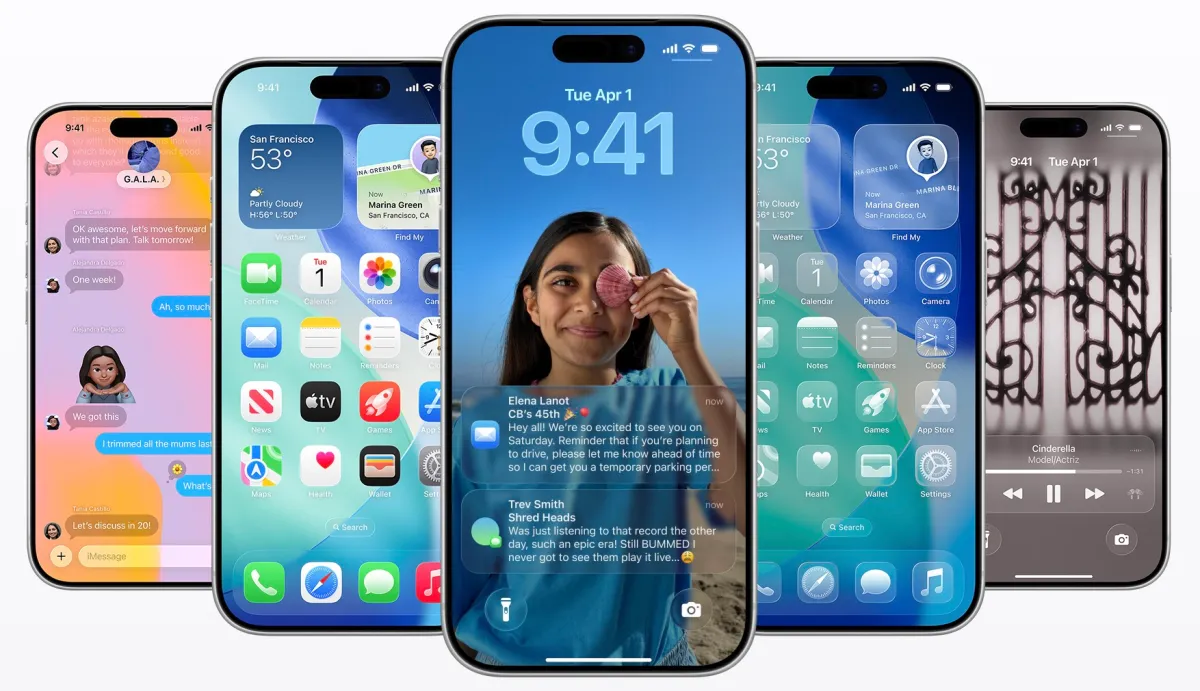
Apple’s iOS 26.4 Public Beta Drops: AI Playlists, Video Podcasts & More for Youths

Apple Unveils iOS 26.4: Disrupting Tech with AI-Powered Features

In a move that underscores its relentless push towards innovation and industry disruption, Apple announced the release of its latest mobile operating system, iOS 26.4. Currently available in public beta, this update anticipates a full rollout by March or April, promising to revolutionize user engagement with cutting-edge features leveraging artificial intelligence, security enhancements, and multimedia innovations. This strategic upgrade solidifies Apple’s positioning at the forefront of mobile technology, threatening rivals and reshaping how consumers interact with their devices and content.

AI-Driven Personalization and Business Disruption

The new AI-powered playlist generator within Apple Music exemplifies Apple’s commitment to integrating advanced machine learning into its core offerings. The “Playlist Playground” feature employs Apple Intelligence to craft customized 25-song playlists from text prompts, handling user preferences with unprecedented precision. This disruption not only enhances user experience but also impacts how music streaming services compete—ushering in an era where AI-driven content curation becomes standard. Industry analysts from Gartner suggest that AI personalization will be a key battleground, with companies that lead in this domain securing a dominant market share, potentially forcing competitors to adopt similar, disruptive algorithms or lose relevance.

Further, the refresh of the UI with full-screen artwork and the introduction of “Concerts Near You”—a feature that helps users discover live events—indicates Apple’s strategic pivot toward integrating content discovery with experiential social features. These innovations threaten traditional concert promoter and ticketing models, pushing the boundaries of how digital platforms monetize live entertainment, and creating new revenue streams that leverage AI for targeted recommendations and user engagement.

Security and Content Innovation Elevate Industry Standards

Security enhancements such as end-to-end encryption (E2EE) for RCS messaging mark a significant step towards harmonizing secure communication across platforms. Currently in testing, this feature promises to deliver iMessage-like confidentiality to Android users, broadening Apple’s influence in cross-platform messaging security—a critical concern in today’s increasingly digital society. The industry sees this as a disruptive move that pressures competitors like Google and Meta to elevate their security standards or risk losing user trust.

Meanwhile, video podcasts powered by HTTP Live Streaming (HLS) and integrated ad platforms exemplify Apple’s innovative push into multimedia monetization. Creators can now insert dynamic video ads, fostering a new digital advertising ecosystem that could undercut traditional radio, television, and even YouTube models. Industry giants like Elon Musk’s X (formerly Twitter) and startups such as Freenom are already exploring similar tech disruptions to redefine content delivery, but Apple’s seamless, ecosystem-wide integration gives it a formidable edge.

Security, AI, and Market Momentum Point Toward Future Dominance

By making Stolen Device Detection active by default and bolstering biometric authentication, Apple enhances device security, signaling a future where privacy and device integrity become standard expectations rather than added features. This approach pressures Android device makers to follow suit or risk user churn. Simultaneously, upcoming enhancements like support for in-car video playback via CarPlay and AI-powered camera tools introduce new avenues for disruption within connected vehicle markets and consumer multimedia.

Looking ahead, industry experts like Peter Thiel and MIT researchers emphasize that Apple’s emphasis on AI-driven content, cybersecurity, and seamless multimedia integration foreshadows a technological shift that demands urgency from competitors. As AI continues to evolve rapidly, Apple’s ecosystem becomes a battleground of innovation and disruption—propelling it towards an inevitable future where control over content, security, and user experience defines industry leadership. In this high-stakes race, only those who accelerate their technological development and adopt disruptive strategies will survive and thrive in the competitive landscape of tomorrow’s digital economy.

Will Stancil shakes up Minneapolis streets

Disruptive Civic Tech and Grassroots Resistance Shake Up ICE Operations in Minneapolis

In a landscape increasingly defined by disruption and citizen-led innovation, Minneapolitan activists like Will Stancil are pioneering a new form of urban resistance against federal immigration enforcement. His work exemplifies a broader shift—leveraging technology and grassroots coordination to challenge traditional police and enforcement mechanisms. Through what he dubs “commuting” — patrols by local residents armed with smartphones — communities are creating a novel form of counterpolicing that undermines the authority and operational scope of ICE. This model, while labor-intensive and arguably unsustainable in the long run, demonstrates a potent form of disruptive innovation with profound business and societal implications.

What this movement underscores is a *market*-wide recognition: traditional enforcement structures are no longer singular sources of authority or safety. Instead, decentralized civilian efforts are emerging as a disruptive force, challenging the assumptions of bureaucratic monopoly. As analysts like those at Gartner observe, this model introduces novel risks but also accelerates a shift towards participatory, community-driven security paradigms. In effect, local residents are transforming the concept of “community policing” from a formal, state-controlled police operation to an open-source, collaborative form of civil resistance that could ripple across multiple sectors.

Technology and Media: Amplifying Disruption in Real Time

The backbone of this grassroots revolution is technology. Stancil’s adept use of smartphones to record ICE actions in real time not only provides transparency but also serves as a form of public intelligence. His open engagement with media—ranging from mainstream outlets like CNN and The Atlantic to digital platforms like X—further amplifies the reach and impact of these civil actions. This blend of activism and viral media creates a feedback loop that accelerates societal change and citizen engagement, challenging the complacency of traditional political forces.

  • Real-time documentation of ICE tactics
  • Public exposure of enforcement abuses
  • Mobilization of broader support via social media

Despite critics warning about *OPSEC* vulnerabilities and the risks of making such efforts spectacle-like, it’s undeniable that this form of disruption introduces a paradigm shift for government accountability. As MIT researchers highlight, the ability for grassroots actors to use commercially available technology to undermine state operations signals a major technological disruption—an emerging form of citizen oversight that could redefine civic activism in the digital age.

Business and Policy Implications: A Shift Toward Decentralized Power

The growing success and visibility of these grassroots ICE watches have broader policy repercussions. Traditional enforcement agencies face mounting pressure to adapt or face obsolescence. Simultaneously, local communities are asserting a *business-like* control over their safety through decentralized, scalable networks—precursors to what futurists and strategists like Peter Thiel might describe as a move toward peer-to-peer governance. The challenge for policymakers is how to regulate and integrate these new actors without stifling the innovation or risking escalation of conflict.

Moreover, this model hints at a future where disrupted markets and civic sectors converge, fostering new entrepreneurial opportunities focused on community surveillance, legal tech, and digital transparency. As these grassroots efforts scale, both governmental and private-sector entities will need to reconsider their strategic positioning—either embracing openness and decentralized innovation or risking obsolescence in a rapidly evolving civic tech landscape.

Looking Forward

In this era of technological disruption and civic innovation, the pace of change demands urgent attention. Grassroots resistance like Minneapolis’s ICE patrols is not just a local anomaly but a signpost pointing toward a future where *bottom-up* civic power challenges and reshapes traditional authority. The question for industry leaders, innovators, and policymakers alike is whether they will adapt to this seismic shift or remain passive observers. The coming years will likely see rapid proliferation of similar models across the nation and possibly beyond, making it imperative to anticipate, regulate, and harness this disruptive force before it redefines civic governance itself.

Social Media Auto Publish Powered By : XYZScripts.com