Matox News

Truth Over Trends, always!

Loyalty Fades as Silicon Valley Embraces the Next Shift

Silicon Valley’s AI Talent Race Reshapes Industry Dynamics

In recent months, Silicon Valley has witnessed an unprecedented surge in high-stakes AI acquisitions and talent moves, signaling a seismic shift in the industry’s landscape. Major players like Meta, Google, and Nvidia have committed billions to acquiring cutting-edge AI startups, demonstrating that disruption in AI capabilities is accelerating at an exponential pace. These strategic investments are not merely about acquiring technology—they are about shaping the future battleground of artificial intelligence, where the contest for talent determines technological supremacy.

Meta’s bold move to invest over $14 billion in Scale AI, coupled with onboarding its CEO, Alexandr Wang, marks a clear signal that the social media giant is positioning itself as a dominant force in AI development. Meanwhile, Google spend a cool $2.4 billion to license Windsurf’s innovative technology, integrating its research teams into DeepMind. Not to be outdone, Nvidia wagered a staggering $20 billion on Groq’s inference platform and has aggressively hired its leadership, underscoring that hardware and inference capabilities remain pivotal in AI’s evolution.

Yet, this aggressive hunt for talent extends beyond mere investment. The industry has entered what analysts are calling a “great unbundling” of talent, with top researchers and founders bouncing between firms in a rapid, fluid market. The recent rehire of ex-OpenAI researchers by their former employer, along with Poaching activity from competing startups like Thinking Machines and Anthropic, underscores an intense war for intellectual capital. This talent mobility signals a fundamental shift in how AI innovation will be driven in the coming decade.

Still, these developments carry profound implications for the broader tech ecosystem. As investor Max Gazor points out, “deal structures are evolving to protect against talent flight,” with measures such as requiring board approval for key strategic moves. Moreover, the war for AI intelligence is not just about securing the best minds but also fundamentally redefining the landscape of AI innovation—favoring agility, bidirectional talent flows, and strategic acquisitions over traditional startup stability. As tech giants and emerging contenders race forward, the industry stands at a crossroads, where the winners of this AI arms race will define the technological and economic landscape of the future. For startups, investors, and developers alike, the message is clear: in the world of AI, timing, talent, and strategic disruption are the new currencies of success.


Moto Watch Review: The Power Moves of Polar-Inspired Tech

Motorola’s CMF Watch 3 Pro: A New Challenger in the Competitive Wearables Space

The wearable technology sector continues to demonstrate remarkable innovation, with industry giants and startups alike pushing the boundaries of what consumer electronics can achieve. Recently, Motorola entered this fiercely competitive landscape with its latest offering, the CMF Watch 3 Pro. Billed as an affordable, stylish, Android-compatible smartwatch, it aims to challenge established players like Apple, Samsung, and Garmin. According to early reviews from tech analysts, the device showcases the disruptive potential of hardware integration paired with modern software, although it still has some notable limitations that could influence its market penetration.

One of the core advantages of the CMF Watch 3 Pro lies in its strategic cost positioning combined with solid functionality. It features parameters such as sleep tracking, heart rate monitoring, and stress measurement, with initial comparisons indicating close accuracy to premium models like the Oura Ring 4. Analysts, including Gartner and MIT’s Media Lab, note that major players in the wearables market are increasingly focusing on data integration and seamless user experience to disrupt traditional fitness devices. Motorola’s choice to incorporate a well-designed, yet affordable product underscores this trend—offering consumers a “good enough” device that does not compromise essential features, yet is accessible.

However, despite its innovative intent, the device’s hardware limitations could hinder its disruptive prospects. Especially glaring is the onboard GPS functionality. The device’s slow satellite connection and inconsistent performance outside diminish its appeal as a true fitness companion—particularly when reliable location tracking is a key market differentiator. The device’s processor, deliberately undisclosed by Motorola, appears to struggle with rapid satellite acquisition, a flaw that consumer reviews describe as frustrating, impacting the overall user experience. Such hardware inefficiencies—common in lower-tier wearables—highlight a critical business challenge: balancing cost constraints with performance demands in an industry that is rapidly evolving toward precision.

The experience of review analysts further underscores this disruptive tension. Despite the device’s attractive design and promising feature set, issues like overly sensitive screens and accidental activations threaten user satisfaction. This emphasizes an overarching industry trend: hardware refinement is crucial for establishing market dominance amidst fierce competition. Companies like Apple and Samsung continually push advancements in sensor sensitivity and UI design, setting high standards for emerging competitors. Motorola’s potential in this space hinges on addressing these hardware issues swiftly and innovating beyond mere feature inclusion—further reinforcing that disruption requires not only price competitiveness but also technological excellence.

Looking ahead, the wearables industry is poised for a significant shift driven by the convergence of AI, sensor technology, and 5G connectivity. Industry experts like Peter Thiel have predicted that next-generation devices will serve as the nexus of lifestyle, health, and AI-powered analytics, transforming how consumers interact with their personal data. Motorola’s move into this space signals the beginning of a new wave of disruptive innovation, where smaller players can challenge dominant incumbents by leveraging cost-effective yet capable hardware and sophisticated software integration. The market’s future will depend on how effectively manufacturers can resolve hardware shortcomings and harness emerging technologies to offer compelling, breakthrough features—turning these devices into indispensable health and productivity tools.

Stakeholders across the tech ecosystem must remain vigilant, as the race to dominate this space intensifies. With major innovations around the corner, it’s clear that the current state of wearable technology is just the beginning. With upcoming advancements in AI, sensor innovation, and connectivity, the industry is on the cusp of a transformation—where disruption will be measured not just in features, but in the quality and reliability of the user experience itself. For companies willing to innovate and iterate rapidly, the opportunity to redefine health, fitness, and lifestyle tracking has never been greater—and time is of the essence for stakeholders eager to secure market leadership in this fast-evolving technological frontier.

Sam Altman Bristles Over Claude’s Super Bowl Ads—Tech War Heats Up

AI Industry Shakeup: Anthropic’s Bold Moves and the Future of Disruption

The AI landscape is swiftly evolving, driven by fierce competition and relentless innovation. Anthropic, a rising star founded by former OpenAI experts dedicated to “responsible AI,” has made headlines with a provocative Super Bowl commercial that takes direct aim at OpenAI’s ChatGPT. This campaign underscores a shifting industry dynamic—the emergence of disruptive advertising strategies that highlight not just technological prowess but also evolving market narratives and competitive positioning. By boldly mocking targeted ads within AI chatbots, Anthropic is signaling its intent to redefine expectations for transparency, user trust, and responsible innovation amidst heated rivalry.

The commercials themselves are an innovative form of tech marketing, leveraging humor and cultural commentary to resonate with a younger, tech-savvy audience. One ad depicts a man seeking relationship advice from a chatbot, which then abruptly interjects with an outlandish ad for a fictitious dating site, Golder Encounters. Another features a young man receiving a height-increasing insole ad after asking for fitness tips. These narratives cleverly highlight concerns over advertising saturation in AI, a topic that has sparked significant debate since OpenAI announced plans to integrate targeted ads into ChatGPT. Analysts from Gartner warn that such moves could either enhance user engagement or erode trust if not executed transparently, making the strategic stakes higher than ever.

Business Implications and Industry Disruption

The disruption caused by Anthropic’s campaign extends beyond marketing tactics—raising pertinent questions about industry standards and the future of AI monetization models. While OpenAI maintains that its planned ads will be clearly labeled and non-intrusive, critics argue that the mere testing of conversation-specific ads could blur lines of user trust and lead to **”surveillance capitalism”** in AI interactions. “The core concern lies in how these ads could influence or manipulate conversations,” warns Dr. Lisa Smith, AI policy expert at MIT. The industry faces a fork in the road: pursue monetization aggressively or prioritize ethical considerations, a debate that will define the next decade.

  • Anthropic’s ads exemplify a shift toward limited yet impactful marketing—mocking the very strategies of its competitors to carve out market identity.
  • OpenAI’s commitment to ‘separate and labeled’ ads reflects a cautious approach that aims to balance revenue generation with user trust.
  • The rising importance of AI-driven advertising signals a potential industry-wide change—one where monetization becomes embedded within conversational AI’s very fabric.

Looking Ahead: The Need for Strategic Vigilance

The rapid growth of AI tools has attracted investment from industry giants like Elon Musk and Peter Thiel, emphasizing the massive business potential replacing traditional tech sectors. Yet, with this opportunity comes a critical responsibility: to innovate ethically and maintain user trust, even amid cutthroat competition. As AI firms scramble to out-innovate each other, the industry must navigate the fine line between disruption and regulatory oversight. The next chapters in this story will test whether companies like Anthropic can lead with responsible innovation or capitulate to the allure of quick profits at the expense of integrity.

The future of AI is unmistakably **fast approaching**, where technological disruption is intertwined with profound societal implications. Business leaders, policymakers, and technologists must act decisively—embracing innovation without compromising fundamental principles. The trajectories set today will determine whether AI remains a tool for progress or devolves into a new frontier of manipulation and control. For the ambitious, poised and strategic action in this space is no longer optional but essential—because the clock is ticking, and the future waits for no one.

Nintendo’s new Virtual Boy — a visual thrill, but not quite a game-changer

Revolutionizing Retro: Nintendo’s Virtual Boy Revival Signals Industry Disruption

In an era dominated by cutting-edge AI, virtual reality, and cloud gaming, Nintendo is strategically leaning into retro nostalgia with its latest innovation: a reimagined Virtual Boy. Originally launched in the ’90s, this console was a commercial flop, primarily due to its limited library and monochromatic display, but Nintendo’s latest move signals a significant shift towards leveraging nostalgic assets to disrupt current gaming paradigms. By re-creating aspects of the classic console while smoothing over its past challenges, Nintendo aims to capitalize on the emerging market for vintage gaming experiences, now delivered with modern convenience through the Switch Online + Expansion Pack subscription service.

The company’s approach exemplifies a broader trend of integrating nostalgia-driven innovation into mainstream platforms, targeting the young, digitally-native demographic eager for unique experiences rooted in gaming history. Scheduled for release on February 17th, Nintendo will offer 14 Virtual Boy titles as part of its subscription lineup, accessible via a new peripheral priced at $100, alongside an affordable $25 cardboard VR alternative. This move isn’t just about nostalgia; it’s a calculated disruption that refocuses industry attention on hybrid hardware models capable of blending the old with the new, positioning Nintendo ahead in a fiercely competitive landscape. Such integrations may redefine subscription-based models as the dominant delivery method for diverse gaming content, fundamentally shifting how business models evolve in the digital age.

“This initiative exemplifies disruption through innovation, turning historical failures into strategic advantages,” says industry analyst Lee Patterson from Gartner. While critics could dismiss this as mere fan service, the underlying implications are profound: leveraging archival content in a way that garners both revenue and brand loyalty. Furthermore, it signals a potential shift for other legacy tech and entertainment companies, emphasizing the importance of blending heritage with futuristic design to spark new revenue streams. The Virtual Boy revival underscores how established corporations are redefining value propositions through post-modern product iterations, effectively forcing competitors to reevaluate their traditional development and monetization strategies.

Moreover, this move is aligned with broader industry movements championed by visionaries like Elon Musk and Peter Thiel, who advocate for relentless innovation and disruption as essential for maintaining market dominance. The fusion of nostalgia with technological advancement presents a compelling blueprint for disrupting entrenched, often stagnant, segments of the gaming industry.

  • Potential to revitalize dormant IPs and tap into underserved markets.
  • Shift towards highly personalized, immersive experiences combined with low-cost peripherals.
  • Enabling legacy content to generate ongoing revenue streams from an engaged gaming community.

As technology continues to advance at a rapid clip—from AI-enhanced gaming to immersive XR experiences—industry leaders and investors must recognize that post-modern innovation will be characterized by this convergence of the past and future. The Virtual Boy revival is more than a nostalgic nod; it’s a decisive move that underscores the importance of disruptive thinking and aggressive adaptation to stay relevant. With industry giants already eyeing similar models, the next wave of gaming innovation is imminent, and those who fail to adapt risk falling behind in this dynamic, competitive landscape. The future belongs to those bold enough to reimagine their legacy assets as catalysts for growth and transformation—marking a new era of industry disruption driven by innovation, nostalgia, and strategic foresight.

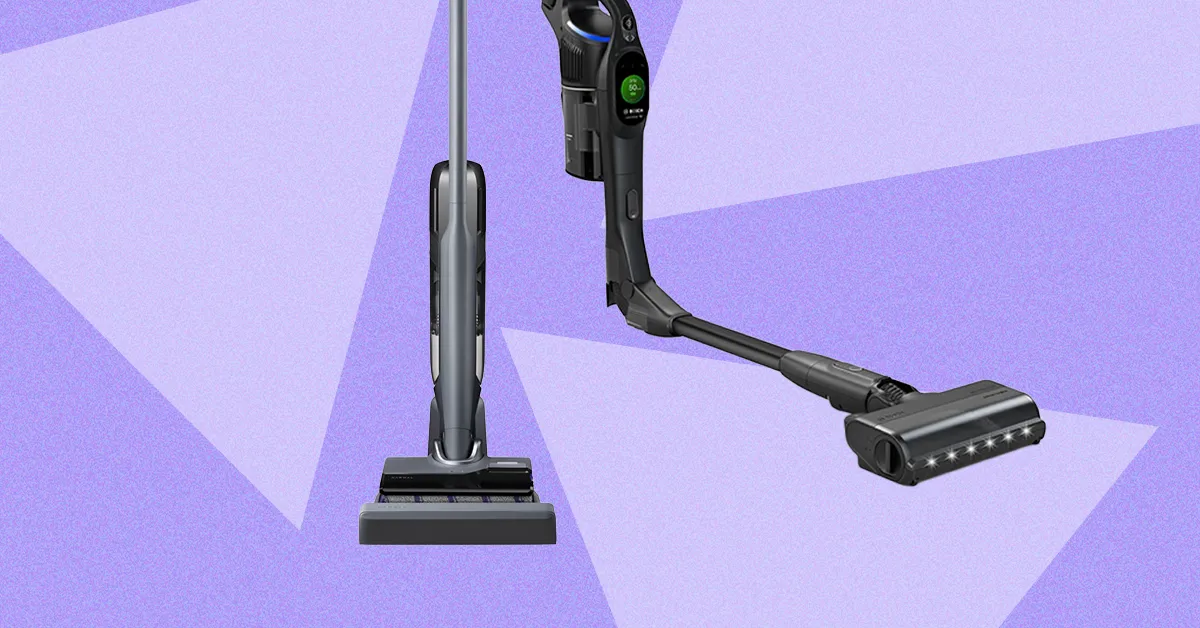
Top Cordless Vacuums for a Clean, Modern Home in 2026

Tech Industry Spotlight: Disruptive Innovations Reshaping Consumer and Business Markets

The landscape of consumer technology continues its relentless evolution, with robotic vacuum cleaners exemplifying how innovation drives industry disruption. Companies like Dyson and Bosch are pushing boundaries with models boasting multi-mode cleaning, cyclonic filtration, and advanced sensors. The emergence of affordable yet capable devices like the Eufy Robot Vacuum signals a seismic shift, making AI-powered cleaning accessible to a broader demographic. Such advances not only elevate consumer convenience but also challenge traditional home-care paradigms, prompting established brands to innovate or risk obsolescence.

In parallel, the business implications of these advances are profound. As market leaders incorporate machine learning and IoT connectivity into everyday appliances, real-time data collection enables manufacturers to optimize product performance, anticipate market demands, and innovate in service models. Industry analysts, such as Gartner, emphasize that the integration of AI and IoT in the appliance sector accelerates the transition from product sales to data-driven services, creating a hybrid revenue stream that can sustain competitive advantage amid fierce market entries.

Beyond cleaning tech, the broader disruption extends to the home and personal gadgets ecosystem. The rise of cordless vacuums like the Worx 20V Stick and premium models such as Dyson’s V12 Detect illustrates a trend toward portability, lightweight design, and heightened user control. Despite some persistent flaws—such as dustbin maintenance or battery longevity—these innovations lay the groundwork for smarter, more adaptive devices. Industry insiders note that the ability to seamlessly integrate AI, robotics, and user feedback into mass-market products will define the next wave of consumer electronics, positioning companies that lead in these domains for aggressive market share gains.

Looking ahead, industry experts like Elon Musk and Peter Thiel warn of the necessity to stay ahead of the disruption curve. The rapid pace of technological leaps demands that businesses not only innovate but also adapt their entire operational models. AI-driven manufacturing, customizable user experiences, and integrated ecosystem services will be critical for sustaining growth in a market increasingly defined by smart, interconnected appliances. As Gartner predicts, those who capitalize on these opportunities early will dominate the digital home landscape, setting a new standard for consumer engagement and business agility. The race is on, and those lagging behind risk becoming relics in the age of technological renewal.

Young Americans Face an ‘Intimacy Gap’ Widening the Dating Divide

Innovation Confronts the Growing Crisis of Human Connection

In an era defined by breakneck technological evolution, the landscape of human relationships is facing unprecedented disruption. According to recent data from the U.S. Census, nearly half of all adults are single, with a significant quarter of men suffering from loneliness—a crisis highlighted by experts such as Justin Garcia, executive director of the Kinsey Institute. As digital platforms proliferate and alter social behaviors, many are questioning whether innovative technologies can address or deepen the so-called “intimacy crisis.” The trend indicates that, despite an explosion of online connectivity, the quality and depth of real human connections are degrading.

Disruptive Technologies Reshape the Quest for Closeness

At the core of this evolution are digital dating apps and social media platforms—tools heralded for democratizing access to partners but also accused of fostering cognitive overload and superficial interactions. Experts like Gartner analysts warn that these platforms, while disruptive, may inadvertently contribute to a phenomenon termed by Garcia as the “intimacy deficit.” The predominant use of algorithms and instant messaging has conditioned a generation to expect quick gratification, often at the expense of genuine bonding. AI chatbots and virtual companions are emerging as contemporary replacements for human intimacy, but industry leaders question whether they can fulfill or even threaten the traditional bonds that sustain human society.

From a business vision, organizations like Match Group continue to refine their AI-driven matchmaking technologies, aiming to capture the rapidly evolving needs of a generation less interested in traditional relationships. Yet, the challenge remains: to truly innovate in a way that balances technological disruption with the timeless need for authentic intimacy. The stakes are high, for if the trend persists, the very fabric of human connection could be irreparably altered, with profound implications for mental health, societal stability, and economic productivity.

Business Implications and the Urgency for Forward-Thinking Innovation

The business realm must navigate this landscape carefully. As MIT and other research institutions warn, the current trajectory risks creating a loneliness epidemic that could dampen workforce productivity and innovation. Companies that understand the changing social norms and invest in technologies promoting genuine connection have a unique opportunity to lead. This involves integrating biometric data and neuroscientific insights into product design, creating experiences that foster authentic bonds rather than superficial interactions. The next decade will be pivotal: those who fail to innovate with empathy and scientific rigor risk falling behind as societal needs shift from merely connecting to truly communicating.

Looking ahead, industry leaders must recognize that disruption is not solely about technological advancement but also about reshaping the very understanding of human nature. As Garcia emphasizes, the human desire for deep intimacy remains a fundamental force—one that technological progress must support, not suppress. Urgent innovation in this space could turn the tide, fostering healthier, more resilient connections that catalyze societal progress well into the future. Failure to act swiftly may usher in a new era of social fragmentation with severe consequences; the opportunity for disruption is as immense as it is urgent.

Intel gears up to disrupt GPU market from Nvidia’s grip

Intel’s Strategic Shift: Entering the GPU Arena to Challenge Nvidia’s Dominance

Despite ongoing efforts to streamline its core operations, Intel has announced a bold initiative to develop a new line of graphics processing units (GPUs), signaling a strategic disruption in an industry long dominated by Nvidia. With the leadership of Kevork Kechichian, an industry veteran from Intel’s data center group, the company is aiming to leverage its vast manufacturing capabilities to carve out a significant share in the rapidly evolving AI and gaming markets. This move marks a crucial pivot toward innovation and diversification that could reshape the competitive landscape, forcing incumbents like Nvidia to revisit their market strategies.

The company’s efforts have attracted attention from industry analysts and tech insiders, noting that Intel’s expansion into GPU development is not just a technological upgrade, but a calculated disruption aimed at challenging Nvidia’s market leader position. The hiring of Eric Demmers, formerly a senior VP at Qualcomm with over 13 years in engineering, underscores Intel’s commitment to building a high-caliber team capable of innovating at the chip level. As the project is in its early stages, Intel intends to align its development with customer demands and industry needs, signaling a pragmatic approach rooted in both technological prowess and strategic market positioning.

This move by Intel is more than just a product development milestone; it is a response to industry-wide shifts towards AI acceleration, cloud computing, and high-performance gaming—areas where GPUs are pivotal. While Nvidia’s GPUs have revolutionized AI and machine learning, with their advanced AI systems and market Command, recent market analyses from Gartner illustrate a fragile balance as Nvidia begins to face increased competition.

  • Intel’s entry could intensify market competition
  • Potential to lower prices and accelerate technological innovation
  • Possible reshuffling of market share among semiconductor giants

Historically, Intel has focused primarily on CPUs, but as industry disruptions accelerate, merging CPU and GPU innovations could unlock new business models and revenue streams. Disruptive technologies like integrated processing units and advanced chip architectures are reshaping industry standards—experts from MIT and other leading institutions predict that within the next five years, the semiconductor industry will see unprecedented levels of convergence and innovation. This shift presents both a challenge and an opportunity for Intel—a chance to disrupt established players and redefine the semiconductor landscape.

As the industry stands on the cusp of this technological evolution, the urgency for firms to innovate is paramount. With AI chips and high-performance graphics becoming critical to future tech ecosystems, Intel’s move signals the beginning of a new battleground—one where agility, innovation, and strategic disruption will determine supremacy. The upcoming TechCrunch event in Boston, scheduled for June 2026, will be a pivotal platform to observe Intel’s latest advancements and assess whether its gamble will reshape the future of computing. The race is on, and between the giants, only the most innovative will survive—and thrive—in this fierce new era.

Model S Revolutionizes the Game—The Future is Here

The Electric Vehicle Revolution: Tesla’s Enduring Impact and Industry Disruption

After a 14-year legacy, the Tesla Model S marks the end of an era that fundamentally reshaped the automotive landscape. Launched with ambitious visions in 2012, Tesla’s flagship luxury EV emerged as a disruptive force against entrenched automotive giants and set the stage for a seismic shift toward electrification. Its pioneering innovation, combined with a software-centric approach, has not only redefined consumer expectations but also forced legacy automakers to reconsider their strategies in an increasingly electrified world.

At its debut, the Model S challenged conventions, blending cutting-edge design with advanced digital technology. Its interior, characterized by a large touchscreen interface, represented the first truly software-defined vehicle, injecting a new revenue stream through over-the-air updates and digital features. Innovative design, performance, and digital capabilities simultaneously raised the bar, making the electric car not just environmentally conscious but also aspirational and luxurious. This combination helped Tesla carve out a substantial market share, forcing European luxury automakers like Porsche, Lucid, and Rolls-Royce to accelerate their EV initiatives, signaling a broad industry acknowledgment of the transformative potential of Tesla’s approach.

However, as Musk shifts his focus toward robotics and AI, questions arise about Tesla’s future in automotive innovation. The decline in enthusiasm for fully autonomous vehicle adoption and the stagnation of EV market growth—exacerbated by policy shifts such as the removal of federal subsidies—highlight a slower tempo of progress than initially envisioned. According to industry analysis, electric vehicles still represent only 1.4 percent of total vehicles on the road as of 2024, underscoring the monumental challenge in reaching Musk’s 2012 prediction of half of all cars being electric in two decades. Yet, Tesla’s decade-long influence persists, inspiring a new generation of designers and entrepreneurs committed to reshaping mobility.

  • Disruption in industry standards through innovative vehicle design and software
  • Market shifts with established automakers catching up in luxury EV offerings
  • Challenges in scaling EV adoption amidst policy and economic headwinds
  • Transition toward AI and robotics signaling a new frontier beyond traditional mobility

In the broader context, Tesla’s path exemplifies the power of innovation to catalyze industry disruption. As the industry navigates a slower but persistent shift towards EVs, the importance of visionary leadership and technological excellence becomes even more critical. The company’s evolution from a luxury pioneer to a catalyst for change has inspired stakeholders and competitors alike, shaping a future where disruptive innovation will define the trajectory of transportation technology in the 21st century. For industry watchers, the question remains: can Tesla maintain its legacy of disruption while navigating internal and external challenges? The coming years will be pivotal in determining whether this titan of tech and mobility continues to lead or cedes ground to others eager to redefine autonomous and electrified transportation. With the industry at a crossroads, the urgency to innovate is greater than ever—no one wants to be left behind in the fast-approaching era of AI-driven, sustainable mobility.

Adobe Animate shutters next month—what’s next for creators?

Adobe Ends Era of Animate: Industry Faces Major Disruption

In a move signaling significant shifts within the digital content creation landscape, Adobe has officially announced the discontinuation of Adobe Animate. As detailed on the company’s FAQ, the animation software will cease sales from March 1, 2024, with users retaining access to existing files until March 1, 2027 (or 2029 for enterprise). This decision underscores Adobe’s strategic pivot away from legacy platforms that, while historically pivotal, no longer align with the company’s vision for a future driven by disruptive, emerging technologies.

Founded on the pioneering vector animation platform originally launched in 1996 by FutureWave Software, Animate’s evolution reflects the broader shift in web and media design. From its roots as FutureSplash Animator, through acquisition by Macromedia and later Adobe, the platform became a cornerstone for artists, indie creators, and industry powerhouses. Yet, with the decline of Flash technology and the rise of cloud-based, AI-driven creative solutions, Adobe’s move appears aligned with a broader industry trend: disruption is redefining the core tools of digital storytelling.

Innovation and Market Shifts Are Reshaping Content Creation

As Adobe transitions away from Animate, many visionaries in the industry are voicing concern over the repercussions. Creators behind influential short-form animated series like Chikn Nuggit emphasize that Animate remains vital to their workflows. Likewise, David Firth, creator of the cult classic Salad Fingers, notes that he continues to rely on Animate. From high-budget TV productions to indies, thousands of professionals and hobbyists argue that Adobe’s decision could hinder creative innovation and stall ongoing projects.

  • Animation studios depend on Animate’s unique vector tools for production efficiency.
  • Many legacy assets are incompatible with newer software, risking the loss of invaluable media assets.
  • The industry’s shift to AI-enhanced tools like Adobe After Effects and emerging platforms signals a transformative era in digital content creation.

Market analysts highlight that this upheaval presents a critical inflection point. As Gartner and MIT researchers observe, disruption fueled by artificial intelligence, cloud computing, and blockchain is accelerating industry consolidation. Major players like Google, Apple, and Microsoft are poised to capitalize on this transition, leveraging innovative platforms to redefine content creation pipelines, interactive media, and virtual production. Consequently, smaller studios and independent creators face mounting pressure to adopt new tools that can outpace legacy systems in speed, versatility, and integration.

Looking Forward: Industry on the Brink of Fundamental Transformation

The discontinuation of Adobe Animate does not merely mark the end of a software but signals a broader industry renaissance—one rooted in disruption, innovation, and the relentless pursuit of more integrated and intelligent creative workflows. As companies accelerate investment in AI-assisted animation, real-time rendering, and immersive media, those who adapt quickly will secure competitive advantages in the fast-evolving digital economy. The question remains: will legacy tools and traditional paradigms survive this upheaval, or will they give way to a new generation of disruptive technologies that reshape the nature of digital storytelling forever?

For industry leaders and emerging creators alike, the message is clear: embrace innovation now or risk obsolescence. The future belongs to those who can leverage emerging technologies — and the time to act is now. The disruption unfolding around Adobe’s Animate reflects a broader movement towards a new era of digital creativity, where agility, innovation, and strategic foresight will determine the winners in the next chapter of media evolution.

Dyson Deals: WIRED’s Pick for Sleek Pet Vac & Smart Air Purifier Heater

Dyson’s Winter Sale Signals Innovation and Market Disruption in Smart Home Appliances

In an era where technological innovation is reshaping household environments, Dyson continues to establish itself as an industry leader with game-changing products that blend high-performance hardware with smart functionalities. This winter, Dyson’s strategic pricing on premium vacuums and air-treatment devices, including discounts exceeding $350 on flagship models, exemplifies how disruptive business models are disrupting traditional retail paradigms. The timing of these sales coincides with a broader industry shift towards integrated, IoT-enabled appliances, pressing competitors to innovate faster or risk obsolescence.

The Dyson V11 and Gen5 Detect pet hair vacuums, along with the premium HP01 Hot + Cool purifier-heater, are demonstrating the tangible benefits of innovation-driven differentiation. Industry analysts from Gartner and MIT emphasize that such products are not merely appliances—they represent the convergence of AI, sensor technology, and user-centric design. With features like accurate thermostats, monitoring apps, and aesthetics that appeal to tech-savvy youth, Dyson’s devices are disrupting the market’s traditional reliance on legacy brands and low-cost imports. This disruption forces incumbents to either accelerate their R&D efforts or cede market share to specialized, premium players—an industry dynamic Peter Thiel’s venture insights underscore as “the power law of innovation”.

  • Key features fueling disruption include: adaptive sensing technology, air quality monitoring, seamless app integration, and eco-efficient power consumption.
  • Pros for consumers: enhanced convenience, improved air and hygiene, and future-proofed hardware with software updates.
  • Business implications: brands adopting IoT-enabled health tech could escalate profit margins while commanding premium pricing—an enticing prospect for investors and entrepreneurs alike.

Notably, industry experts point to Dyson’s strategic integration of IoT as a blueprint for future market success. As Elon Musk and others have asserted, the era of “dumb” gadgets is waning; innovation must be coupled with disruption to redefine consumer expectations. Dyson’s use of sensor-rich devices that monitor pet hair accumulation or air quality exemplifies the trend—pushing competitors to reconsider the very essence of what a household appliance can deliver. Institutions like Gartner forecast that by 2030, most high-end home gadgets will incorporate AI and real-time data analytics, transforming the industry from simple hardware to personalized, predictive environments.

Looking ahead, the combination of disruptive innovation and strategic pricing—particularly during major consumer-sale events—signals that agility in product development and pricing strategies are crucial for staying ahead in this dynamic landscape. As the market consolidates around smart, connected appliances, startups and legacy brands face mounting pressure to invest heavily in R&D or risk being overshadowed by new contenders leveraging digital transformation. The race for market dominance in this space has become a matter of speed and agility, pressing the entire industry into an innovation arms race that shows no signs of slowing.

In conclusion, Dyson’s current sales are more than temporary deals—they mark a pivotal moment for an industry on the cusp of significant transformation. With consumers demanding smarter, more efficient, and stylish appliances, the future belongs to those who blend innovation with disruptive business models. Stakeholders who recognize and act on this shift today will shape the household ecosystems of tomorrow, where agility, AI, and consumer-centric design dominate the landscape. The countdown has begun—technology leaders and entrepreneurs must accelerate their innovation cycles and business strategies if they are to stay relevant and competitive in this rapidly evolving market.

Social Media Auto Publish Powered By : XYZScripts.com