Matox News

Truth Over Trends, always!

Nex Playground Takes Over: Outpacing Xbox as the Must-Have Holiday Toy

Disruption and Innovation Drive Growth of Nex in the Gaming Industry

In an era marked by rapid technological evolution, Nex exemplifies how strategic pivots and innovative products can redefine industry benchmarks. Just two years ago, Nex was a niche player, shipping approximately 5,000 units of its flagship product, the Playground. Fast forward to today, and the company’s trajectory is nothing short of extraordinary: sales have surged to an estimated 600,000 units this year, representing a 12,000% increase within a short span. Such explosive growth not only exemplifies the disruptive potential of innovation-driven companies but also signals a significant shift in consumer engagement and market dynamics.

Underlying this ascendancy is Nex’s bold pivot from unprofitable beginnings—where it posted about $3 million in annual revenue—to a strategic focus that has yielded an anticipated over $150 million in sales this year. With smart scalability measures and breakthrough hardware design, Nex is on track to achieve profitability, a milestone that many startups in the consumer tech space aspire to but seldom reach this swiftly. Industry analysts, including Gartner and MIT experts, emphasize how such rapid scaling underscores a broader trend impacting the gaming and experiential technology sectors—namely, a move toward immersive, community-driven digital entertainment that resonates profoundly with youthful audiences.

This transformation highlights a broader market shift: consumer preference is shifting toward integrated, high-engagement hardware experiences. The Playground’s commercial success underscores how disruption fueled by innovation can turn previously niche products into mainstream catalysts. Notably, the integration of AI, extended reality, and social connectivity features in Nex’s offerings has positioned the company ahead of competitors, challenging legacy giants resistant to rapid change. Such progress echoes the strategic insights of Elon Musk and Peter Thiel, who have long championed the importance of technological turbulence as a driver of entrepreneurial advantage.

Looking ahead, the implications are profound. The rapid rise of Nex signals that businesses willing to pivot and harness emerging technologies can capture market share at an unprecedented pace. As younger generations demand more immersive digital experiences, incumbent players must innovate or face obsolescence. The success story of Nex serves as a clarion call to investors, entrepreneurs, and industry leaders: leveraging disruptive innovation is no longer a competitive advantage but an imperative for survival. The coming years promise even more dynamic shifts, as new entrants and tech giants race to harness the next wave of technological breakthroughs that will shape the future of interactive entertainment. It is a time for bold moves, swift adaptation, and relentless pursuit of breakthrough ideas.


Top Deals This Week: Nex Playground & Pixel Buds 2A Lead the Charge

Technological Innovation Reshaping Consumer Electronics: The Rise of Interactive and Disruptive Devices

The ongoing holiday season has spotlighted a surge in innovative consumer electronics that are poised to transform the entertainment landscape and redefine how users interact with technology. Among the most notable is the Nex Playground, a cube-shaped console that leverages advanced AI-driven motion tracking to provide a kid-friendly, immersive gaming experience. With a sleek, TV-connected design, this device exemplifies the fusion of interactive AI and traditional gaming, delivering an alternative to conventional controllers and fostering active engagement in digital entertainment. Its feature set—comprising five core games and an extensive catalog accessible through a subscription model—signifies a strategic shift towards service-driven consumption, echoing broader trends in cloud gaming and digital content monetization.

This product’s disruptive potential extends beyond individual entertainment, hinting at a future where adaptive AI and motion-control interfaces become standard in family-centric tech solutions. Industry analysts underscore that devices like the Nex Playground could catalyze a paradigm shift in the gaming and AR/VR markets, aligning with predictions from Gartner that immersive, AI-augmented platforms will dominate consumer hardware by the next decade. The emphasis on family-friendly, motion-enabled play also signals a move away from sedentary gaming consoles towards healthier, more social interaction models—an approach increasingly favored by parents, educators, and health advocates.

Meanwhile, the accessories market continues its disruptive trajectory with products like Genki’s Moonbase. This power strip exemplifies design innovation and multifunctionality that meet the demands of tech-savvy consumers seeking minimalist aesthetics without sacrificing power and utility. Priced at an all-time low of $89.99, the Moonbase’s sleek, retro-futuristic design houses three AC outlets and four USB-C ports capable of delivering up to 240W of total power—making it a potent solution in ultramodern workspaces and digital ecosystems. Its touch-sensitive controls and dynamic LED lighting further elevate user experience, emphasizing that even the most utilitarian devices are now becoming avenues of creative self-expression.

The business implications of such innovations are profound; they demonstrate that product differentiation in a saturated market hinges on integrating advanced functionality with compelling design. Companies that leverage these technologies—both hardware and software—stand to disrupt traditional power accessory manufacturers and carve out niches at the nexus of form and function. Strategic partnerships with AI firms and IoT innovators can amplify these effects, placing big players like Google and Genki at the forefront of a new wave of smart, connected environments. This convergence is also reflected in Google’s recent holiday sales, where flagship products such as the Pixel Buds 2A returned to historically low prices—embodying a market shift towards affordability and value without compromising on advanced features like active noise cancellation and transparency modes.

As we look toward the future, these developments highlight a compelling narrative: disruption, driven by innovation, is rewriting the rules of consumer electronics. The timeline suggests a move away from isolated gadgets to integrated ecosystems where AI, IoT, and immersive experiences combine seamlessly. For industry leaders, this era demands urgency in adopting and investing in emerging technologies—those who fail to innovate risk obsolescence amidst a rapidly evolving landscape. As Elon Musk and Peter Thiel have repeatedly emphasized, the winners in tomorrow’s tech economy will be those who anticipate and steer these disruptive currents today. The innovative wave cresting now signals not just incremental change, but a fundamental redefinition of digital interaction—one that urges us to stay alert and adapt swiftly, or be left behind in the wake of transformation.

2025 Tech Layoffs: The Must-Know List for Young Innovators

2025 Tech Layoff Wave: Disruption and Opportunities in a Shifting Industry Landscape

The persistent wave of layoffs across the technology sector in 2025 has set an unmistakable tone of disruption, signaling fundamental shifts in how industry leaders are navigating innovation and market pressures. Despite the narrative of progress driven by artificial intelligence and automation, over 150,000 tech workers faced job cuts in 2024 alone, with this troublesome trend continuing into 2025. As companies recalibrate their strategies amidst macroeconomic uncertainties and regulatory constraints, the implications for innovation, business models, and market dominance are profound. Forward-looking analysts and industry insiders caution that while layoffs may seem like setbacks, they often precede transformative breakthroughs—forcing companies into leaner, more agile frameworks that could accelerate disruptive innovations.

A closer look at the industry reveals a strategic pivot among tech giants and emergent startups alike. Companies such as Google and Meta are trimming hundreds of roles—specifically in AI and cloud infrastructure—to reallocate resources toward next-generation AI projects and infrastructure. These companies recognize that disruption is the new normal—leaving outdated business models behind in favor of intelligent automation and data-driven services that promise superior scalability and global reach. Notably, Google has cut design positions in its cloud division, signaling a focus shift that could redefine cloud-native solutions, while Meta is streamlining its Reality Labs division, potentially restructuring VR and AR markets altogether. Such moves reflect a market that demands rapid iteration, emphasizing innovation at the expense of legacy operations.

The business implications extend far beyond the layoffs themselves. Disruption is reshaping competitive dynamics, forcing smaller firms and startups to either innovate relentlessly or risk obsolescence. Disruptive startups like GupShup and Wicresoft are shedding significant parts of their workforce—up to 40% in some cases—to position themselves more strategically in emerging AI and cybersecurity landscapes. The wave of consolidation and restructuring, exemplified by Oracle, Siemens, and Brightcove, as well as the collapse of venture-backed ventures like Level, highlights an industry recalibration where only the most adaptable will thrive. Experts such as Peter Thiel emphasize that “survivability in tech künftig demands agility and relentless innovation.” This moment calls for a new breed of entrepreneurs and business leaders who leverage these disruptions as catalysts for breakthrough technologies and new business models.

Looking to the future, the industry is at a critical juncture—posturing itself either to lead or to lag behind. The significant layoffs serve as a stark warning for the importance of innovation, disruption, and strategic foresight. Companies that harness AI, automation, and digital transformation as catalysts rather than mere cost-cutting measures will determine the next wave of market dominance. With institutions like Gartner projecting that AI-driven automation will fundamentally transform customer engagement, supply chain management, and product development, the urgency for industry stakeholders to accelerate R&D investments cannot be overstated. The ongoing layoffs might be viewed as painful, but they are also a signal: the era of incremental innovation is over, and disruption is the new foundation for long-term success. For courageous entrepreneurs and investors, the window of opportunity is now—those who act swiftly in this volatile environment will define the future of tech leadership in the coming decade.

Rivian’s Drive to Autonomy: The Future of Youth-Led Tech

Rivian’s Bold Push Toward Autonomous Driving Disrupts Future of Electric Vehicles

In a paradigm-shifting move, Rivian has announced its accelerated transition into the realm of fully autonomous vehicles, promising a future where “hands-off” driving becomes a reality by 2026. The company’s recent Autonomy & AI Day revealed a series of groundbreaking developments rooted in innovation and disruption—aimed squarely at redefining the EV and autonomous market landscape. This move places Rivian ahead of many traditional automakers, demonstrating how a fresh approach to AI-centric design, powered by transformer-based architectures, can potentially overhaul existing automotive paradigms.

Central to Rivian’s strategy is the development of its Large Driving Model (LDM), a product of a shift from deterministic rule-based systems to a data-driven, AI-first platform. As CEO RJ Scaringe explained, Rivian’s earlier models relied heavily on prescriptive control strategies, but his team quietly pivoted in 2021, adopting a comprehensive transformer-based AI structure similar to innovations pioneered by Tesla with its Full Self-Driving (FSD). This new platform leverages Nvidia’s Orin processors and accumulates data from its fleet to rapidly enhance vehicle autonomy capabilities.

The implications for the automotive business are profound: Rivian’s focus on AI-centric systems is surprising industry veterans who traditionally favored rule-based automation. The company’s goal to achieve “Universal Hands-Free” driving by early 2026, covering over 3.5 million miles in North America, demonstrates a committed disruption to the traditional automobile manufacturing timeline. Should Rivian successfully train its LDM in this tight window, it could establish a new standard for disruptive innovation—shifting consumer expectations from semi-autonomous systems to fully autonomous, driverless operations significantly earlier than competitors.

Advancements in lidar technology and custom hardware, including the unveiling of a new autonomy computer, are set to facilitate this transformation. However, the industry remains cautious. The challenge of transitioning from “eyes-on” to “eyes-off” driving is non-trivial, and even with a state-of-the-art system, safety remains a paramount concern. Nevertheless, Rivian’s transparent communication about product timelines aims to differentiate itself in a crowded market by setting realistic expectations, potentially giving it a competitive edge in consumer trust and brand loyalty.

The broader market impact could be revolutionary. Industry analysts from Gartner and MIT acknowledge that this integration of AI and hardware signifies a fundamental shift—foreshadowing a future where traditional automakers are forced to rethink their strategies. Companies like Tesla have pioneered this space, but Rivian’s approach, emphasizing clarity on timelines and customer choices, signals a new era of agile innovation in the EV sector. Such disruption threatens established giants, paving the way for smaller, nimble challengers leveraging cutting-edge AI to accelerate autonomous capabilities.

Looking ahead, Rivian’s focus on AI-driven software and hardware advancements points toward a future where autonomous mobility is not a distant dream but an imminent reality. The company’s roadmap to roll out progressively capable driver assistance systems, culminating in fully hands-free and eyes-off driving, features a dynamic mix of **innovation, disruption**, and relentless business pragmatism. The industry’s next few years will dictate whether Rivian’s aggressive push can succeed in transforming the automotive landscape—an urgent call for competitors to innovate or risk obsolescence in a rapidly evolving tech-automotive ecosystem.

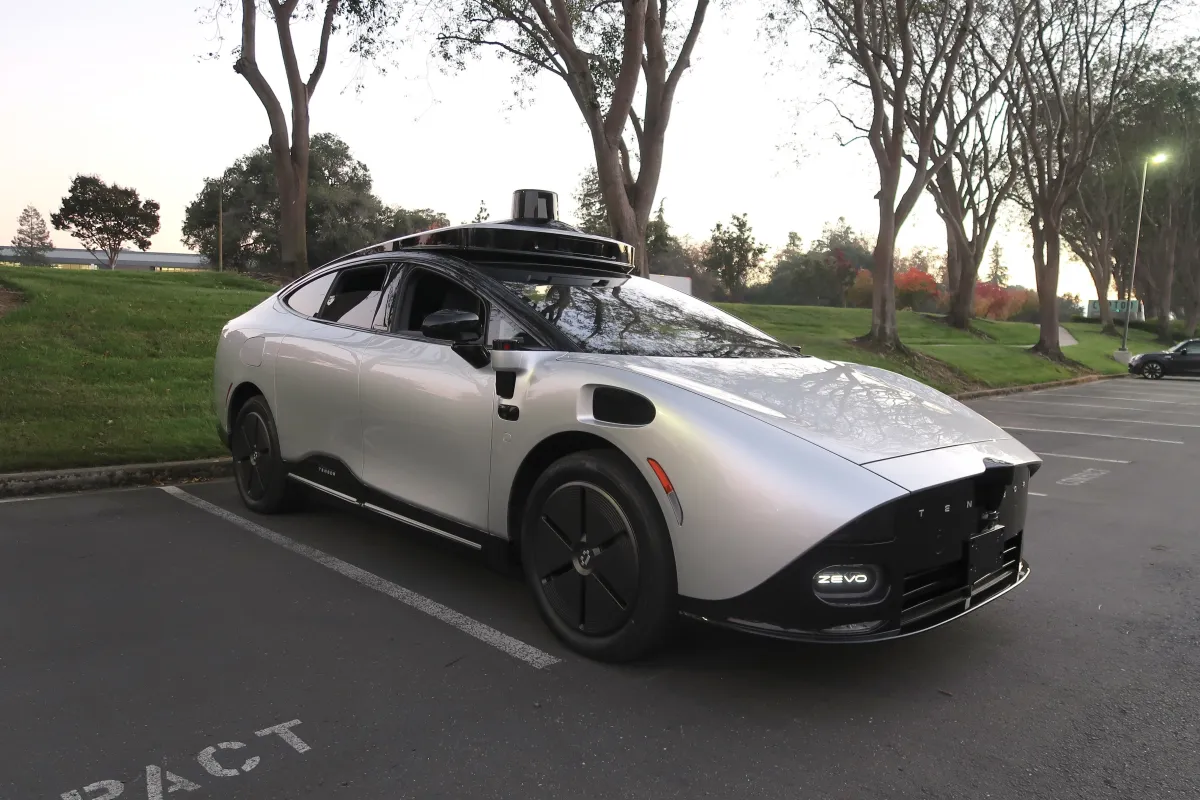
Zevo Ventures plans to boost its car-share fleet with robotaxis, kicking off with fresh face Tensor

Emerging Autonomous Vehicle Startups Disrupt Traditional Automotive Industry

In a landscape increasingly defined by **innovation** and **disruption**, startups like Tensor are challenging the conventional automotive giants with groundbreaking visions of autonomous mobility. Emerging from the China-based firm AutoX, Tensor boldly claims it will be the first to market fully autonomous vehicles to mainstream consumers as early as 2026. Such momentum signals a clear **shift** toward a decentralized, AI-driven transportation ecosystem with significant business implications, including the dawn of **personal AVs** and **peer-to-peer mobility services**.

Tensor’s vision aligns with a broader trend identified by analysts at Gartner and MIT, where the barrier to entry for **robotaxi** networks is lowering, bolstered by startups willing to embrace **risk** and innovation. The company’s forthcoming partnership with Zevo—which intends to deploy up to 100 Tensor AVs—serves as a testbed for **decentralized mobility solutions**. This move hints at a future where individual ownership extends beyond traditional vehicles, ushering in a new era of **personal AI-enabled** transportation, with owners possibly deploying their cars for income-generating services, like ride-sharing—a concept advocated by visionaries such as Elon Musk.

However, the road ahead is lined with formidable **challenges**. Trust in **scaling** autonomous technology remains a critical hurdle, as recent history has shown that many startups faltered when trying to standardize reliable manufacturing processes. Tensor’s limited track record and the **technological gaps** faced by legacy automakers reveal the **competitive landscape’s volatility**. Yet, the startup ecosystem’s agility—coupled with the increasingly supportive regulatory environment—places high-stakes bets on rapid **deployment** and **market capture**. Zevo’s willingness to invest in **software integration** and the potential for **peer-to-peer sharing** platforms exemplifies the industry’s move toward a **networked** model that could redefine how mobility and business intertwine.

As industry leaders and tech innovators forecast, the next decade will be pivotal. Observers like Peter Thiel warn that *”those who control the underlying AI infrastructure will dominate the new economy,”* emphasizing the importance of early bets on companies like Tensor. The convergence of **entrenched tech giants**, **startups**, and **venture capital** signals a **bidding war** for AI supremacy in mobility. This new wave of **disruption** will likely favor those who prioritize **software innovation**, **cost reduction**, and **scalable manufacturing**. With the **driverless revolution** expected to reshape urban transport, logistics, and even personal ownership, every stakeholder must act swiftly to avoid obsolescence.

The future of autonomous vehicles is not merely about safer, more efficient transport—it’s about **changing the very fabric of urban living and commerce**. Innovation-oriented startups are **pushing the boundaries** of what’s possible, prioritizing **flexibility**, **adaptability**, and **user empowerment**. As these **disruptive players** continue to challenge traditional automakers, the industry must adapt or risk being bypassed. With **technological leaps** accelerating, and **business models** evolving at an unprecedented rate, the coming years will be critical. Stakeholders who act with **urgency** and **vision** will determine who emerges as the true **pioneers** of this autonomous future—and those who hesitate may find themselves left in the dust of a **metamorphosing** mobility landscape.

Global ‘Super App’ Debuts with Crypto Payments and Private Chat Features for the Next Generation

Revolutionizing Digital Identity and Payments: Tools for Humanity Launches Next-Gen World App

The digital landscape is entering a new era of security, authenticity, and decentralization, driven by Tools for Humanity‘s innovative World App—marketed as a “super app” with disruptive potential for social interaction and financial services. Launched by the startup in 2023, this platform is positioning itself at the forefront of the identity verification and cryptocurrency integration revolution, directly challenging marquis players like WhatsApp and PayPal by integrating web3 principles into everyday social and financial activities. In a time when AI-generated disinformation and digital fakery threaten online authenticity, the company’s core mission—creating verifiable “proof of human” — signals a shift toward a more trustworthy, privacy-preserving digital future.

The latest iteration of the World App introduces groundbreaking features designed to disrupt the status quo. At the heart of this innovation is the verification network, which leverages a proprietary iris-scanning system called the Orb. This biometric verification technique produces a highly secure, encrypted unique digital identity—the verified World ID. As AI-driven misinformation proliferates, this behind-the-scenes cryptographic shield aims to establish a trusted digital ecosystem where users can distinguish genuine humans from bots with ease. During a recent event in San Francisco, Altman explained that the company’s vision centers on balancing privacy with identification, creating a new economic model based on web3 principles that could redefine online interactions.

The app’s new World Chat feature exemplifies this approach, providing end-to-end encrypted messaging comparable to Signal, while offering color-coded speech bubbles to verify user identity visually and intuitively. Designed to foster social connectivity, it aims to fill a critical market gap for secure, social communication. In addition, the platform’s expanded digital payment capabilities integrate cryptocurrencies directly into users’ virtual wallets, enabling peer-to-peer transactions, salary deposits, and seamless bank account integration—regardless of verification status. Such features signal a disruptive move toward financial sovereignty and peer-based economies, aligning with industry forecasts highlighted by institutions like Gartner, which emphasize AI and blockchain as the twin pillars of tomorrow’s tech ecosystem.

Industry analysts such as MIT’s Kevin Esvelt and venture capitalists like Peter Thiel are paying close attention. They see Tools for Humanity’s model as a blueprint for a future where *digital trust* is anchored in cryptographic verification—a crucial component often missed in traditional social and financial platforms. While critics warn of privacy concerns, the company emphasizes that its encryption standards match or exceed industry leaders like Signal. The key business implication is clear: disruption is underway, and existing giants that rely on opaque verification methods risk obsolescence. The integration of biometric identity with decentralized finance creates a formidable competitive advantage, especially for startups and incumbents who overlook the urgency of evolving trust and security in digital spheres.

Looking forward, the rapid advancement of AI, blockchain, and biometric verification points to an increasingly dynamic and competitive landscape. Time is of the essence for traditional players to innovate beyond outdated KYC systems and siloed social platforms. As user demand for privacy and authenticity grows, and regulatory frameworks evolve, companies like Tools for Humanity are positioned to lead a fundamental shift in digital identity and commerce. The question remains: who will seize this disruptive wave and shape the future, or be left behind in the wake of rapid technological evolution? The spotlight is on innovators to accelerate the deployment of trustworthy, privacy-centric platforms that could redefine human interaction in the digital age.

Crypto mogul Do Kwon gets 15 years behind bars—big win for accountability

South Korean Crypto Entrepreneur Do Kwon Sentenced to 15 Years in U.S. Court Amid Industry Disruption

In a landmark ruling that underscores the high-stakes nature of cryptocurrency innovation and the risks tied to speculative assets, Do Kwon, the South Korean crypto pioneer and founder of Terraform Labs, was sentenced to 15 years in prison by a U.S. federal court in Manhattan. This case not only marks a significant legal milestone but also signals a stern warning to emerging disruptive financial technologies that threaten to reshape traditional markets. Kwon’s conviction was rooted in the collapse of TerraUSD (UST), a supposedly algorithm-backed stablecoin that aimed to revolutionize digital finance but ultimately became a cautionary tale of overconfidence in unregulated innovation.

The fallout from the breakup of TerraUSD in May 2022 was catastrophic—wiping out an estimated $40 billion from the crypto ecosystem and destabilizing numerous startups and investors worldwide. Kwon’s aggressive marketing of UST, a stablecoin purportedly pegged to the U.S. dollar via a complex algorithm involving the LUNA token, exemplifies what industry analysts describe as the misplaced trust in algorithmic financial mechanisms. By offering a supposedly tamper-proof peg, Terraform Labs promised a new frontier of stable digital assets. Instead, the system’s failure exposed vulnerabilities inherent in decentralized finance (DeFi), revealing the hazards of unchecked entrepreneurial zeal.

  • Disrupted Market Dynamics: The collapse led to market panic, triggering a cascade that affected dozens of crypto firms and investors.
  • Regulatory Clarity: The case marks a pivotal step towards more rigorous oversight, as authorities aim to curb fraud and promote responsible innovation.
  • Innovation vs. Risk: The incident emphasizes the importance of balancing disruptive advancements with sustainable, transparent frameworks—an area where industry leaders like Elon Musk advise caution.

Among industry observers, analysts at Gartner and MIT emphasize that this high-profile case could accelerate regulatory actions worldwide, compelling blockchain developers to adopt more rigorous security standards and compliance protocols. The case also ignites a broader debate on the future of stablecoins, which are seen as vital for mainstream adoption of digital currencies and decentralized financial services. However, critics warn that the reliance on complex algorithms without adequate safeguards can lead to systemic failures, threatening the integrity and sustainability of the crypto economy.

The sentencing underscores a challenging but inevitable trajectory for crypto innovators—those who push the boundaries of digital finance must now reconcile with growing regulatory scrutiny and the imperative for sound risk management. The industry’s future hinges on the ability of entrepreneurs and institutions to learn from these failures, fostering innovation that not only disrupts but also endures. As the sector heads into a new era marked by increased oversight and technological maturation, stakeholders are urged to act swiftly—those who adapt and innovate responsibly will lead the next wave of digital transformation, while complacency risks catastrophic fallout. The next chapter in crypto innovation will be shaped by how the ecosystem responds to this historic judgment, with urgency and strategic foresight taking center stage.

AT&T’s Connected Life: A Fresh Play in the Smart-Home Arena

AT&T Reimagines Smart Home Market with Connected Life Launch

The telecommunications giant AT&T is making a bold second move into the smart home ecosystem with its newly announced Connected Life platform. After the company’s earlier effort, Digital Life, was phased out in 2022—owing largely to the obsolescence of its underlying 3G network—AT&T is now leveraging a strategic partnership with Google and Abode to disrupt traditional home security and automation markets. This move highlights a growing trend among established tech and telecom giants eager to integrate connected devices into a unified, user-friendly ecosystem that capitalizes on existing customer bases and facilitates rapid adoption.

At the core of Connected Life is a focus on innovation and disruption. The platform bundles Google Nest smart devices—though not the latest versions—and security sensors into two different kits: the Starter Kit at $11 per month (or $399 upfront) and the Advanced Kit at $19 per month (or $699 upfront). The Advanced Kit expands on features with additional sensors, a security keypad, and a Nest Cam security camera, providing an integrated end-to-end smart home experience designed to simplify user setup and management. This market shift towards turnkey solutions is driven by consumer demand for seamless integration, together with the rise of professional installation services that reduce barriers for less tech-savvy users. Google’s API integration through the Google Home platform ensures devices are manageable via a single app, emphasizing the importance of interoperability—a principle championed by MIT’s recent research on smart ecosystems.

From a business perspective, AT&T’s move signifies a strategic disruption of incumbents in smart home security. Given that AT&T has over 119 million wireless mobile customers and more than 10 million fiber optic internet subscribers, its potential reach to pitch a unified smart home solution is unprecedented. This business model consolidates multiple lines of service: telecommunications, internet, and smart devices—creating an ecosystem that fosters customer retention and opens new revenue streams. Industry analysts from Gartner suggest that such integrated platforms could redefine consumer expectations, forcing competitors like Amazon, Apple, and smaller startups to accelerate their own innovation cycles. What remains to be seen is whether AT&T can leverage its scale to deliver on reliability and user experience, critical factors for disruption success in this crowded space.

Looking to the Future: Innovation as the New Norm

The launch of Connected Life signals an industry-wide pivot towards consolidated, AI-enhanced smart environments. With ongoing advancements in AI, sensor technology, and 5G connectivity, the industry is on the cusp of a new era where homes will become autonomous, predictive, and deeply integrated with daily life. It’s a call to industry leaders and innovators alike: innovation and disruption are no longer optional but essential for survival in this rapidly evolving market.

As Elon Musk and Peter Thiel have often noted, disruption is the engine of progress. Falling behind in this race risks obsolescence, especially as consumer expectations shift toward ease and security. With AT&T’s formidable scale coupled with strategic partnerships, the company is clearly positioning itself to be a market leader—not just in connectivity but in the digital transformation of the smart home. The next few years will be crucial in determining whether this initiative can sustain innovation and truly disrupt industry giants. The future belongs to those who accelerate—this is the moment for bold moves, rapid iteration, and relentless pursuit of the cutting edge.

Next-Gen Carbon Removal Tech Fails to Make a Splash

Innovative Ocean Geoengineering Firm Fades Amidst Unforeseen Risks and Funding Woes

In a striking example of the volatile intersection between technological innovation and environmental risk, Running Tide, a pioneer in marine geoengineering, has effectively shut down its operations following mounting financial challenges and unresolved scientific concerns. Despite promising early commitments from industry giants such as Stripe, Shopify, Microsoft, and the Chan Zuckerberg Initiative, the company’s ambitious plan to utilize ocean-based wood-chip dumping to sequester atmospheric carbon has encountered fundamental scientific obstacles and public skepticism. Odlin, the company’s CEO, publicly confirmed in June 2024 that “there simply isn’t the demand needed to support large-scale carbon removal,” marking a sobering end to a venture that once captured the imagination of climate tech advocates.

The core innovation behind Running Tide was its attempt to leverage natural ocean processes by sinking biomass—primarily wood chips—in hopes of accelerating carbon sequestration. However, scientific feedback from oceanographers and deep-sea experts reveals that such interventions may have unpredictable and potentially devastating ecological effects. For instance, Odlin himself admitted that monitoring the fate of Wood-chip deposits proved impossible after just a few hours post-release, raising serious questions about the viability of accurately assessing the environmental impact of such efforts. Environmental scientists, including Samantha Joye of the University of Georgia, warn that biomass dumping could create “dead zones,” where oxygen deprivation obliterates aquatic life, and could also irreparably damage deep-sea ecosystems that are vital for medical research and understanding Earth’s early history.

This uncertainty underscores a critical challenge: the disruption of seabed ecosystems may hinder the ocean’s ability to naturally absorb carbon rather than enhance it. A recent carbon flux report from the Convex Seascape Survey warns that disturbing seabed sediments can inhibit their capacity to sequester carbon, which runs counter to the intended purpose of biomass sinking initiatives. Such revelations expose the significant *business risks* associated with ocean geoengineering ventures — assets often backed by well-meaning, yet under-informed investors, now faced with mounting scientific doubts and regulatory hurdles.

The demise of Running Tide signals a wider industry reckoning about the *disruption* and *unpredictability* inherent in emerging climate tech solutions. While the promise of harnessing oceans for climate mitigation is enticing, the ultimate challenge remains: merging cutting-edge technological innovation with rigorous scientific validation. As the global community grapples with *climate change*, these failures highlight that “disruption” in green tech cannot come at the cost of ecological stability or scientific integrity. Industry leaders, research institutions like MIT, and forward-thinking investors must now prioritize transparent, interdisciplinary research that refuses to sacrifice ecological health for techno-optimism.

Looking ahead, the rapid acceleration of ocean-based techniques should serve as a warning to policymakers and entrepreneurs alike: true disruption for the sake of innovation demands a cautious approach—one that recognizes the limits of current science and the urgency of ethically responsible innovation. With climate change pressing ever more urgently, the future of technological solutions depends on our capacity to develop methods that are both effective and ecologically sustainable. The path forward must balance youthful ambition with sober scientific scrutiny, ensuring that technological progress does not unwittingly unleash irreversible damage beneath the waves.

Score 25% Off Classic Crew Necks This Holiday Season!

Consumer Apparel Innovation Sparks Industry Disruption

In a clear demonstration of how consumer preferences are shifting towards comfort and simplicity, True Classic has disrupted the saturated apparel market with its versatile black crew-neck shirts. Highlighting the growing demand among young consumers for familiar, high-quality basics, the company’s targeted marketing emphasizes the appeal of “virtue” in wardrobe staples, aligning with a broader cultural push towards authenticity and practicality. This shift marks a notable departure from fast fashion’s obsession with rapid turnover and disposable trends, signaling a move towards sustainable, well-made essentials.

Analysts observing the space, including those at Gartner and MIT’s Sloan School, note that disruption in apparel is increasingly driven by innovation in direct-to-consumer business models and dynamic pricing strategies. True Classic’s success stems from leveraging limited-time offers, such as their current “58 percent off” flash deal—effectively an additional 25 percent discount on bulk purchases—demonstrating the power of aggressive pricing tactics to redirect consumer spending away from traditional retail giants. Such models challenge established retailers, prompting a reevaluation of supply chain logistics and marketing strategies in a highly competitive environment.

The business implications are profound. With brands like True Classic appealing to younger demographics that prioritize authenticity and value, traditional apparel retailers face increasing pressure to innovate. Disruptive technologies, such as AI-driven customer insights and supply chain optimization, are now core tools for staying relevant. As Elon Musk often emphasizes, “Innovation is about solving problems faster than your competitors.” This ethos is driving smaller brands to leverage data analytics for targeted offers, creating a more personalized shopping experience that encourages brand loyalty in a market heavily influenced by social media marketing and influencer endorsements.

Looking ahead, the apparel industry must navigate a landscape where consumer expectations for rapid innovation and ethical manufacturing are converging. The next wave of disruption is poised to incorporate emerging technologies like sustainable fabrics, 3D printing, and blockchain-based supply transparency. As Peter Thiel advocates, “Control of the means of production and distribution is the ultimate power.” Moving forward, companies that master these innovations will dominate market share, while others risk obsolescence. The urgency for established players to adapt swiftly is clear: the future belongs to those who disrupt or are disrupted, making it an exhilarating time for tech-driven fashion entrepreneurs willing to challenge the status quo.

Social Media Auto Publish Powered By : XYZScripts.com