Matox News

Truth Over Trends, always!

US cancels Colombian president’s visa following UN trip

International Tensions Escalate: Colombia’s President Gustavo Petro Faces US Visa Revocation Amid Bold Calls for Disobedience

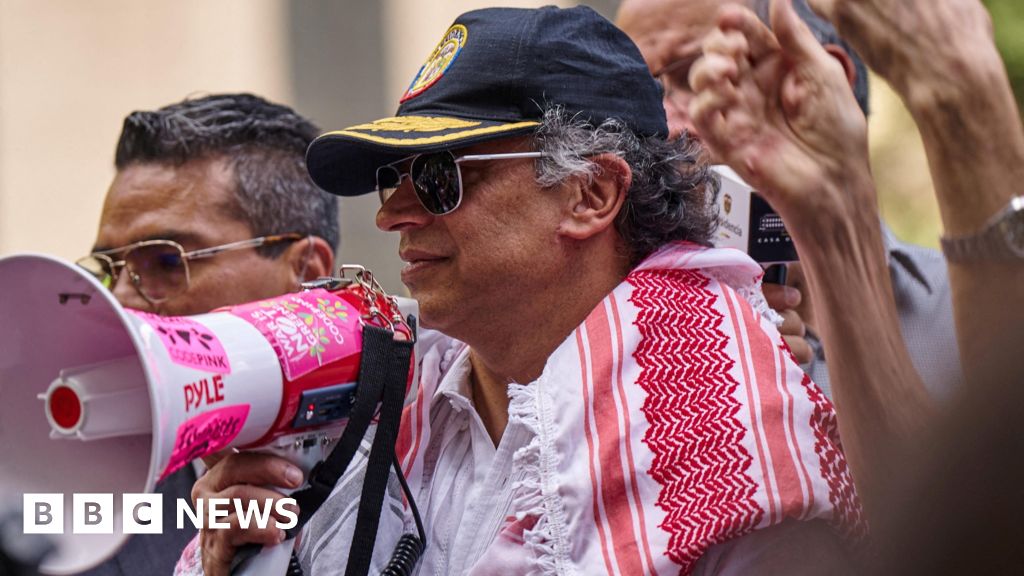
In a striking move that underscores the shifting sands of global geopolitics, Colombia‘s President Gustavo Petro has found himself at the center of an intense diplomatic storm after urging US soldiers to disobey orders from Donald Trump. The former senator and leader of Colombia’s first left-wing government made incendiary remarks during a speech at the UN in New York, calling for a “world salvation army” to liberate Palestine. As Petro implored US soldiers to “disobey Trump’s order,” the US State Department responded swiftly, vowing to revoke his visa—an action that marks a rare diplomatic escalation within the hemispheric relationship.

Petro’s remarks, delivered amidst a pro-Palestinian protest, were characterized by American officials as “reckless and incendiary,” sparking outrage at the highest levels of US diplomacy. His plea to soldiers to “not point rifles at humanity” and to turn their guns instead toward “tyrants” echoes a broader narrative that challenges the existing US-led order. Historically, such rhetoric—particularly when it involves urging soldiers to disobey commands—can threaten diplomatic stability and alter perceptions of US influence in Latin America. Analyzing this development, experts like geopolitical analyst Dr. Karen Mitchell suggest that Petro’s speech reflects a growing dissatisfaction with US foreign policy—especially its aggressive anti-drug operations in Latin America, which Petro has criticized as tools of American domination rather than genuine efforts to combat narcotics. This exchange reveals a possible turning point as Latin American leaders become increasingly vocal in opposing US interventions, risking diplomatic isolation to assert their sovereignty.

The diplomatic fallout extends beyond mere rhetoric.

  • Petro’s visa revocation, announced as he was returning to Bogotá, sets a precedent of punitive measures against leaders critical of US foreign policy.
  • Colombia’s Interior Minister, Armando Benedetti, went further, claiming that Israeli Prime Minister Benjamin Netanyahu should have faced similar visa restrictions—a pointed comment aimed at highlighting perceived double standards.
  • Relations between Colombia and Washington have been strained, especially after Petro’s recent critical comments at the UN, alleging that US strategies in Latin America serve to “control through violence” rather than genuine development. These sentiments echo a broader skepticism rooted in historical grievances over interventionist tactics and the US’s role in shaping Latin America’s political landscape.

Meanwhile, the global stage is witnessing a wider contest for influence, with international organizations and historians warning that these disputes transcend diplomatic rhetoric. The US’s decision to deny visas to Palestinian President Mahmoud Abbas and several officials—despite customary diplomatic privileges—further exemplifies the ongoing shift in US engagement, marking a move toward more aggressive stances on its perceived adversaries. This diplomatic tug-of-war underscores how political decisions here have the power to reshape alliances, fuel regional instability, and redefine sovereignty. As Petro’s calls for disobedience reverberate through international corridors, the world watches, realizing that these acts of defiance, while seemingly isolated, threaten to fracture the current global order. In the unfolding narrative of history—bit by bit, decision by decision—the stage is set for a new era of contestation over sovereignty, influence, and the future trajectory of international relations. The question remains: will the currents of change turn toward chaos or renewal? The answer lies ahead, in the unresolved chapters of a world still waiting to be written.

British Youth Snaps Up Flavored Butter: Affordable Luxury Gains Traction

Britain’s Gourmet Revolution: Flavoured Butter Transcending Tradition

In a clear reflection of shifting cultural paradigms, Britain has witnessed a remarkable transformation in everyday food consumption, notably marked by the burgeoning popularity of flavoured butters such as chocolate and truffle varieties. Once considered mere culinary condiments, these spreads are now central to a broader geopolitical tapestry driven by social media dynamics, changing consumer behaviours, and economic influences. Figures from Worldpanel reveal a 24% annual increase in sales of flavoured butters, underscoring a rising appetite among young, digitally connected populations for experimentation and convenience in their home cooking. Meanwhile, online grocery giant Ocado reports a staggering 184% rise in searches related to flavoured butters in just one year—highlighting how digital culture influences consumer trends, even in traditional markets.

Leading brands such as Lurpak continue to dominate the market with garlic butter sales surpassing £5.6 million, yet the scene is increasingly competitive with emerging players like All Things Butter. Launched during the COVID-19 pandemic as a social media-driven project, the newer firm has experienced exponential growth, especially with its innovative flavors such as cinnamon bun, chocolate, and truffle, reflecting a resilient desire for affordable luxury amidst ongoing economic pressures. Analysts and food industry experts explain that this trend signifies more than culinary indulgence; it is a socio-cultural phenomenon that reveals how young consumers seek to redefine home cooking as an act of experimentation and identity formation.

International Implications: Flavoured Butter as a Reflection of Geopolitical and Cultural Shifts

The escalating interest in flavour-enhanced butters in the UK is emblematic of broader geopolitical shifts, as nations adapt their cultural identities in a fast-changing world. Some analysts draw parallels with similar culinary trends seen in other Western nations, where social media continually fuels lifestyle revolutions. Historians and cultural commentators warn that such small shifts in consumer preferences often carry deeper signals—indicators of society’s evolving tastes, economic resilience, and the resilience of local industries amid global upheaval.

More broadly, these culinary trends play into a larger narrative of global cultural exchange and domestic innovation. While some view flavoured butter as a symbol of youthful rebellion and entrepreneurial spirit, others see it as part of an unending race for consumer attention, driven by technological shifts and social media algorithms. International organizations such as the United Nations Food and Agriculture Organization monitor food consumption patterns as critical indicators of economic health and cultural export strategies. The decision of Britain to embrace such innovations could influence regional markets, challenging or reinforcing traditional culinary hierarchies, especially in the context of post-Brexit economic strategies.

The Future of Food: A Tipping Point in Cultural Identity and Global Power Dynamics

As flavoured butters become commonplace, they symbolize more than taste—this is a reflection of a society increasingly driven by fast-paced consumption and social media influence, shaping national identities and global perceptions. Historians warn that the choices of today’s youth—what they eat, what they promote online—are shaping the cultural landscape for decades to come. In an era where every bite and byte carries geopolitical weight, the humble flavoured butter could be a small yet poignant marker of a new cultural and economic era. With international powers vying for influence, and societies struggling to balance tradition with innovation, the future remains uncertain. Yet, one reality remains clear—these tiny jars of flavoured fat are more than mere ingredients; they are symbols of a world in flux, where the scent of truffle could echo far beyond the kitchen, whispering the stories of nations, society, and history still unfolding.

UN sanctions on Iran to resume after banned nuclear activity emerges

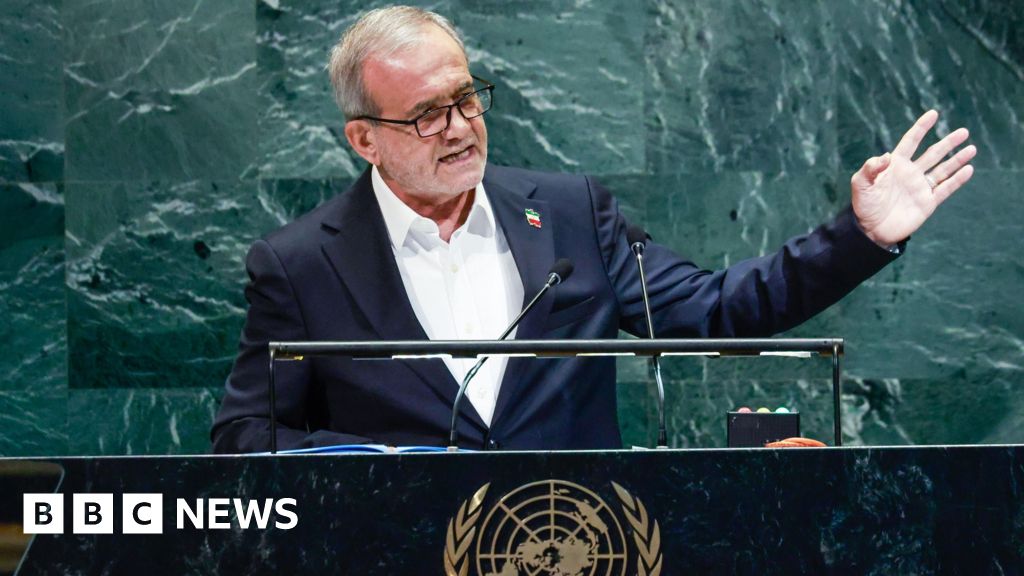
As Iran faces the looming reimposition of UN economic and military sanctions, the international community stands at a pivotal crossroads in Middle Eastern geopolitics. Nearly a decade after the landmark 2015 Joint Comprehensive Plan of Action (JCPOA) temporarily curtailed Iran’s nuclear ambitions, recent developments suggest a significant departure from diplomatic détente. The United Nations is poised to reinstate a broad set of sanctions—spanning arms embargoes, uranium enrichment bans, and asset freezes—that threaten to plunge Iran back into economic hardship, echoing the tumult of the pre-deal era. This move follows a letter from Britain, France, and Germany accusing Iran of violating its commitments—a step that has galvanised efforts by Russia and China to delay the measures, but with limited success.

Historians and analysts observe that the reimposition of sanctions is more than just about nuclear proliferation; it underscores a fundamental shift in international power dynamics. Russia and China have positioned themselves as strategic counterweights to Western influence, with Moscow signing a $25 billion deal to construct four nuclear reactors in southern Iran. Such moves are viewed by Western nations as a bid to deepen Iran’s energy independence while undermining U.S. sanctions. Meanwhile, Tehran insists that its nuclear program remains civilian, condemning any accusations of weaponization as “unfair, unjust, and illegal.” However, the International Atomic Energy Agency (IAEA) has reported a resumption of inspections, highlighting ongoing concerns about Iran’s nuclear trajectory—concerns that are unlikely to be mollified without significant diplomatic breakthroughs.

Despite Tehran’s claims of peaceful intent, the European Union and Western powers have intensified efforts to uphold the sanctions, emphasizing that Iran’s continued enrichment activities threaten regional stability. The regional tension is further exacerbated by Israel’s repeated threats to strike Iran’s nuclear facilities, threatening a broader conflict in the Middle East. Iranian Foreign Minister Abbas Aragchi’s assertion at the UN that “the negotiation with the United States is in fact a pure dead end” signals Tehran’s growing distrust of Western diplomatic motives. Nonetheless, Iran maintains it is bound by international treaty obligations to cooperate with the IAEA, even as the possibility of resumed negotiations appears increasingly fragile, and the prospect of conflict edges closer.

The geopolitical impact of these developments extends beyond the borders of Iran. The re-imposition of sanctions could further destabilize the already volatile region, prompting countries across Europe, Asia, and beyond to recalibrate their strategic calculations. International organizations warn that prolonged sanctions may push Iran closer into the embrace of authoritarian allies, reshaping alliances and intensifying the arms race. The looming sanctions serve as a stark reminder that the corridors of diplomacy are narrowing, and that the unfolding drama in Iran could be a significant chapter in a larger story—one written in the language of power, resilience, and the relentless pursuit of national sovereignty. As history continues to unfold, the question remains: will diplomacy prevail, or will this chapter usher in a new era of conflict that tests the very fabric of international peace?

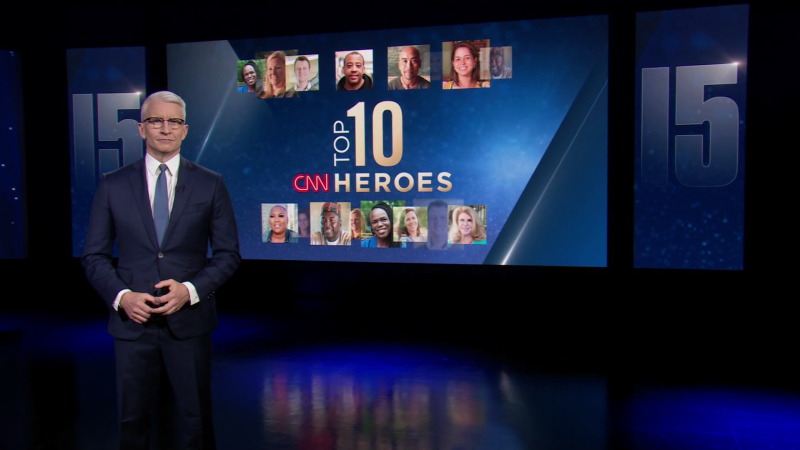
Support a Top 10 CNN Hero—Give Now!

In an era defined by shifting alliances and a tumultuous geopolitical landscape, the role of civil society and international humanitarian efforts remains crucial. The recent emphasis by media outlets such as CNN on promoting donations to 2021 Top 10 Heroes underscores a broader recognition of grassroots activism in shaping global futures. As international organizations like the United Nations stress, *citizen-led initiatives* are increasingly shaping the narrative of resilience and recovery amid ongoing crises. These actions, while often viewed through local lenses, carry profound geopolitical impact—reverberating across borders and influencing diplomatic relations.*

Recent analyses from leading think tanks highlight that *the rise of philanthropic contributions from individuals and communities worldwide acts as a counterbalance to some governments’ insufficient responses to crises.* Such grassroots initiatives frequently focus on issues like health, education, and social justice, fostering a sense of agency beyond traditional power structures. The focus on donor-driven projects continues to challenge the old paradigms of foreign aid, emphasizing “bottom-up” approaches that resonate with young populations worldwide eager for change. These efforts bring to light how societal engagement can sway national policies, especially as geopolitical tensions escalate, and states face internal and external pressures.

Historian and geopolitical analyst Samuel Richards emphasizes that *these movements reveal a critical shift in global power dynamics.* He notes, “How nations respond to the growing chorus of civil society is increasingly determining their place on the international stage.” The recent recognition of humanitarian heroes such as those supported by CNN exemplifies the importance of public diplomacy—a soft power that strengthens national identities and informs global perceptions. Countries that harness this wave of civic engagement effectively can bolster their soft power and redefine diplomatic interactions in a world where traditional military and economic strength no longer sole indicators of influence.

However, these developments do not come without warning. Many experts caution that the rise of decentralized activism could threaten the existing international order if left unchecked. As global institutions grapple with *how to integrate these grassroots movements into formal policy frameworks,* questions arise about sovereignty, accountability, and the potential for increased polarization. For instance, analysts stress that the quest for influence through bottom-up initiatives may muddy lines between local activism and global geopolitics, complicating efforts to maintain stability. As the world witnesses this ongoing transformation, the importance of strategic foresight and diplomatic agility becomes more evident. History has shown that when society’s voice is amplified—whether through donations, activism, or civic engagement—it can catalyze a seismic shift in international relations. The next chapter of history remains unwritten, and the weight of its story will depend on how nations and societies choose to respond to these emerging forces.

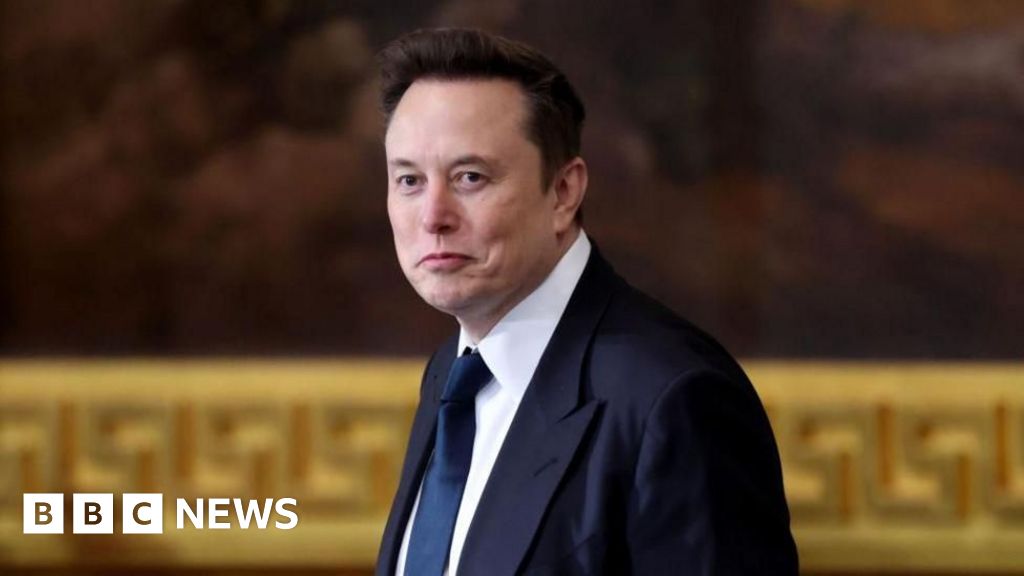
Elon Musk and Prince Andrew linked to new Epstein documents — what’s really at stake?

Geopolitical Reckoning: Epstein Files Unveil Ties to Power Elites

The recent release of documents linked to the late financier Jeffrey Epstein has ignited a storm of controversy that extends far beyond the sordid allegations. These files, handed over by Epstein’s estate to the House Oversight Committee, illuminate a network of connections among some of the most prominent figures from the worlds of business, politics, and royalty. Among those named are billionaire technology mogul Elon Musk, Prince Andrew of the United Kingdom, and other influential personalities like Peter Thiel and Steve Bannon. As the world grapples with these disclosures, the geopolitical impact of such revelations cannot be overstated, as they threaten to reshape public perceptions of power, influence, and the true extent of the clandestine alliances that often operate in darkness.

Historically, Epstein’s web of connections has been a cautionary tale about the complicity and silence surrounding elite misconduct. Legal scholars and international analysts have long argued that Epstein’s relationships with key figures exposed a fragile veneer of morality maintained at the highest levels. New documentation suggests that Elon Musk had been invited to Epstein’s infamous private island in December 2014—an invitation Musk has reportedly declined—raising questions about whether oversight and accountability extend into the realms of technology’s most powerful. Similarly, Prince Andrew features prominently, with records indicating he flew on Epstein’s flight from New Jersey to Florida in May 2000, an event that has long haunted the royal figure. These revelations come amidst growing suspicion about the collusion between the global elite and criminal networks, as international watchdogs urge for thorough investigations. The United Kingdom and U.S. authorities now face mounting pressure to reckon with these covert links that could threaten the foundations of public trust and diplomatic relations.

The files also detail planned meetings with other influential figures, including the Microsoft founder Bill Gates and Steve Bannon. Such connections compound the narrative that Epstein’s influence transcended mere criminal activity, seamlessly intertwining with the fabric of global power structures. As political analysts warn, these associations could have far-reaching implications, potentially impacting international policy, economic negotiations, and diplomatic alliances. The geopolitical impact of this knowledge is profound—drivers of global stability and peace, as well as the credibility of international institutions, hang in the balance. Critics argue that these relationships illustrate a disturbing pattern where personal ambition and wealth supersede justice, exposing how elite immunity shields some from legal repercussions.

Although some figures, like Musk and Prince Andrew, have denied any knowledge of illegal activities, the public outrage remains untamed. The Democrat-led committee has called for expanded transparency, emphasizing that “every new document provides vital clues” towards understanding the extent of Epstein’s influence. The historical significance of these disclosures reflects a turning point: an awakening of public consciousness concerning unchecked power. As the dust begins to settle on these revelations, society must grapple with the unsettling truth that the corridors of influence often hide darker realities—realities that, once uncovered, threaten to rewrite the narrative of global leadership,” warns renowned historian Dr. Margaret K. Howell. The world remains on the precipice of a potential upheaval, where the revelations of today could serve as the catalyst for a reckoning that echoes through the corridors of history—perhaps, the moment when the shadows cast by the powerful finally begin to recede, unveiling truths long suppressed beneath layers of secrecy and complicity.

Join the Unlocking the World newsletter—empower your future today!

As the world stage shifts rapidly in 2023, international alliances and strategic interests are once again at the forefront of global affairs. The resurgence of confrontations and realignments among major powers signals a new era in geopolitics, challenging the post-Cold War order established over the past three decades. Experts like Dr. Matthew Johnson, a renowned historian, argue that these trends underscore a fundamental reassertion of national sovereignty in face of what many perceive as an overreach by international institutions. Nations across the globe are recalibrating their security policies, economic strategies, and diplomatic outreach, prompting intense debates about the future of global stability and leadership.

The United States continues to assert its influence through renewed military commitments and strategic partnerships, notably in the Indo-Pacific region. Its efforts aim to counterbalance the expanding assertiveness of China, whose policymakers are pursuing aggressive territorial claims and economic diplomacy under the umbrella of the Belt and Road Initiative. Meanwhile, Russia remains entrenched in conflicts in Ukraine and asserts its role as a speculative titan, challenging Western dominance and complicating NATO’s stability. The Russian leadership, citing geopolitical necessity, views NATO’s eastward expansion as a direct threat. These tensions have rekindled fears of a broader conflict, compelling analyst think-tanks like the International Institute for Strategic Studies to warn of a fragile peace that requires vigilant management.

In this climate, international organizations such as the United Nations are often criticized for their perceived inability to adapt swiftly to evolving threats. Some analysts argue that the UN’s structural limitations hinder effective conflict resolution, leading nations to pursue bilateral or regional agreements instead. The recent uprising of nationalist movements in various nations further complicates the global balance, with governments prioritizing sovereignty over international cooperation, especially in areas like trade, military alliances, and climate policy.

  • Major economies are revisiting trade treaties, emphasizing self-reliance over multilateral agreements.
  • Strategic autonomy is gaining precedence among rising powers questioning existing global governance frameworks.
  • Military modernization efforts are intensifying as states prepare for a possibly more turbulent era.

The geopolitical impact of these decisions is profound: societies are experiencing a shift toward heightened nationalism, with doubts about the efficacy of supranational institutions. Historian Carl Jensen points out that history suggests periods of intense nationalism often foreshadow global conflicts, urging caution in the current climate. Nations are increasingly reasserting their sovereignty, internal policies are aligning with external pressures, and the global order appears to be leeched into a new, unpredictable phase. As the world watches these developments unfold, the question remains: will diplomacy prevail, or are we walking into a confrontation that history might judge as inevitable? The weight of this moment, thus, is not merely measured in treaties or wars but in the enduring legacy of how nations choose to shape their destinies amidst the storm of change.

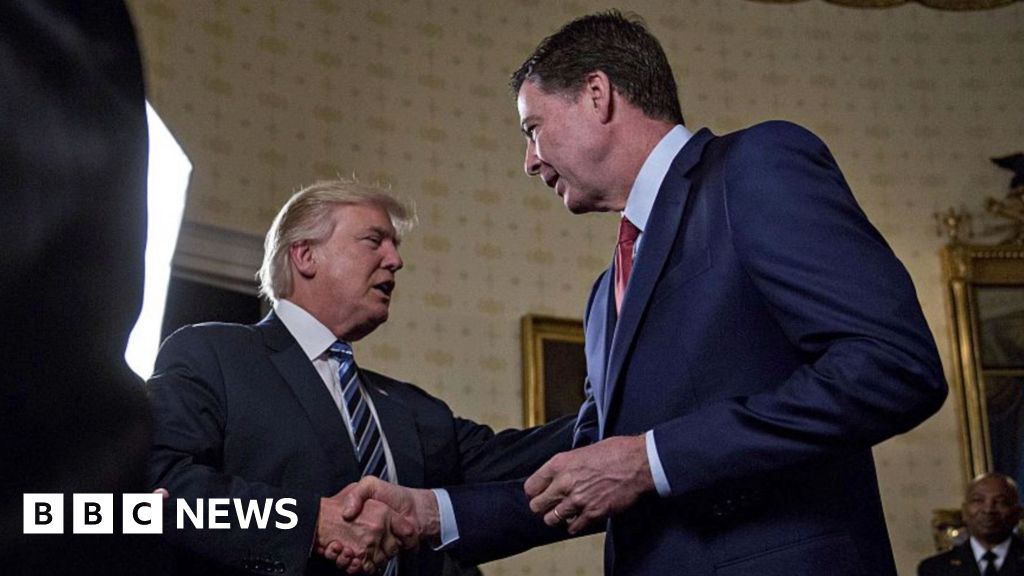
How Trump and Comey’s Bond Broke Down Years Before the Indictment

Former FBI Director James Comey’s Legal Troubles Spark Political and International Repercussions

In a development that reverberates through the corridors of power in Washington and beyond, James Comey, the former FBI Director who once played a pivotal role during the tumultuous years of the Trump administration, has been formally charged with making false statements during a 2020 Senate hearing. While Comey insists on his innocence, the indictment signals a deliberate attempt by the current political establishment to hold accountable figures associated with the previous administration’s controversial tactics.

This legal action is not merely an internal US matter; it has significant geopolitical implications. The case garners attention from international analysts who observe how it fits into a broader narrative of American political stability and institutional integrity. Critics argue that the pursuit of Comey is emblematic of the ongoing partisan battles that threaten to undermine confidence in U.S. legal systems. Meanwhile, President Donald Trump has publicly supported the charges, framing them as validation of longstanding claims of political bias against him. Trump’s rhetoric underscores how internal U.S. conflicts march onto the world stage, influencing diplomatic relations and America’s image as a bastion of the rule of law.

From Allies to Foes: The Evolving Relations Between Trump and Comey

Historically, the relationship between Trump and Comey was marked by high-profile confrontations and complex alliances. Once, President Trump publicly expressed admiration for Comey, calling him a “career man,” but that rapport quickly dissolved amid revelations of FBI investigations into political sensitive topics. The BBC’s Bernd Debusmann highlights that the souring of their relationship exemplifies broader shifts within U.S. politics—shifts that resonate on an international level. As analysts dissect the fall from grace, some international observers see patterns of power struggle and institutional friction that are now characteristic of American governance in the 21st century.

According to geopolitical experts and historians, these internal conflicts are not isolated phenomena—they reflect and influence how nations perceive American sovereignty and stability. The United States, long regarded as a beacon of democracy, faces questions about its internal cohesion and the legitimacy of its legal processes, especially as political figures leverage criminal proceedings to advance their agendas. The unfolding drama surrounding Comey’s indictment may serve as a turning point, shaping how foreign nations and economic partners interpret American political resilience in an era of global instability.

Implications for Global Power Dynamics and Civil Society

  • Emerging alliances and rivalries are affected as nations observe the US internal strife. Countries such as China and Russia perceive internal chaos as an opportunity to advance strategic interests, often criticizing the U.S. as lacking stability and coherence.
  • European allies watch closely, questioning whether emerging domestic crises threaten America’s commitments to NATO and international agreements, including the Transatlantic Trade and Investment Partnership.
  • Meanwhile, the broader international legal community debates what this case reveals about accountability, transparency, and the rule of law amid political upheaval.

As historians and analysts analyze the trajectory of this drama, the question remains: Will this internal conflict serve as a catalyst for constitutional renewal or further erosion of democratic norms? The decisions made today by individuals and institutions could redefine the global order, echoing through history with profound consequences. The ongoing saga of Comey’s indictment is not merely a chapter in American politics but a reflection of a world grappling with upheaval—where the balance of power is shifting, and the weight of history waits silently on the horizon.

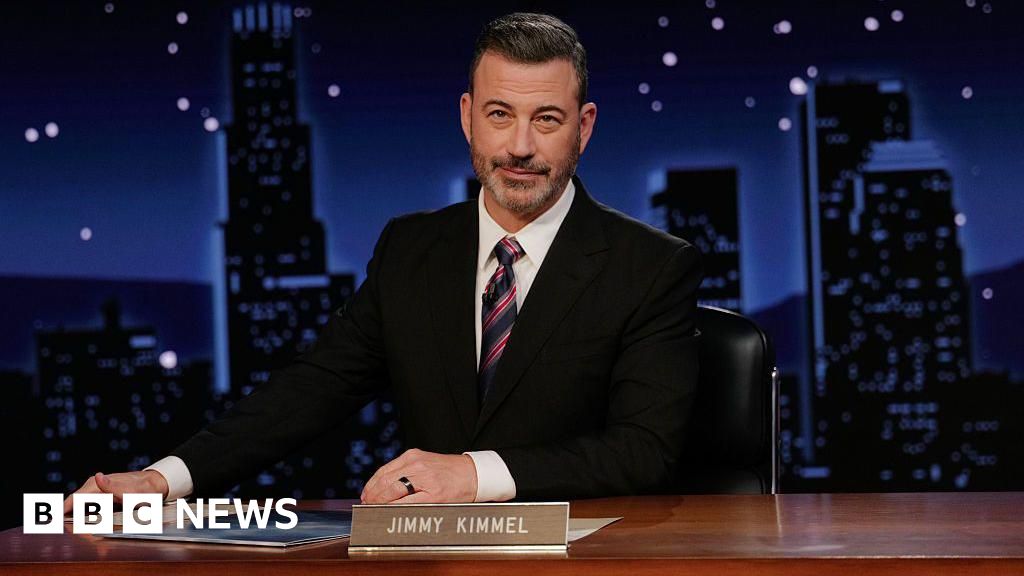
Sinclair and Nexstar Bring Back Kimmel on ABC Stations Amid Conservative Pushback

International politics is increasingly shaped by cultural conflicts and the struggle over free speech—a terrain that, in recent weeks, has erupted into a highly visible clash involving U.S. media giants, government agencies, and public figures. The controversy centers around Jimmy Kimmel’s return to ABC, after a brief suspension and removal from several affiliated stations, amid accusations of censorship and political suppression. This incident underscores a broader, global debate on how societies manage free expression in the era of digital activism and political polarization.

It began when Kimmel made controversial comments on his show about the death of Charlie Kirk, a prominent conservative figure. His remarks, which some interpreted as crossing boundaries of political decency, provoked a chain reaction that saw Sinclair Broadcast Group and Nexstar Media Group, major U.S. media conglomerates, pull his show from hundreds of local ABC affiliates. The move was justified by the companies as responses to public and advertiser feedback. However, critics, including conservative commentators and international analysts, argued that this was a clear case of cancel culture suppressing dissent and undermining First Amendment rights. The ensuing debate has rapidly spread beyond national borders, fueling protests over the erosion of media independence and free speech as the political weaponization of broadcast platforms intensifies, in line with historian Samuel Huntington’s warnings about “clash of civilizations” extending into cultural and media spheres.

The reinstatement of Kimmel’s show on all ABC channels signals an ongoing tension within the United States’ media landscape. Disney’s decision to allow Kimmel back on air, despite ongoing opposition from Sinclair and Nexstar, represents a nuanced shift—an internal conflict between corporate free expression and local broadcasters’ political sensitivities. According to international observers and global press watchdogs, such as Reporters Without Borders, these events highlight a concerning trend: how political and corporate interests influence what gets broadcast, often disproportionate to public debate’s true scope and importance.

Looking beyond America, the episode serves as a case study in the geopolitical impact of media governance. Countries worldwide grapple with similar issues—balancing state-controlled narratives against international standards of free speech. The episode hints at a shift where narrative control is shifting from traditional state censorship towards corporate censorship, which can be equally stifling, especially when media moguls align with political agendas. As analysts warn, the ongoing power struggle over media content is shaping the global information environment, influencing societal perceptions and, ultimately, international diplomacy. Just as the Cold War defined the ideological contours of the last era, it appears the battle over narrative control is becoming a defining feature of the current geopolitical order, where media outlets act as battlegrounds for ideological dominance and societal control.

The conflict remains unresolved, with history yet to be written. As nations and societies continue to navigate these turbulent waters, the outcome will determine whether free expression remains a cornerstone of democracy or becomes a casualty of political expediency. The unfolding drama surrounding Kimmel, ABC, and the broader dispute over speech censorship exemplifies a pivotal moment—an epoch where the world watches whether the ideals of free discourse can survive the relentless march of political interests, or if a new, more controlled era of information will take hold. The future of free speech, and with it the very essence of open societies, hangs precariously in the balance, as history’s next chapter begins to unfold amidst the echoes of a global struggle for truth and transparency.

Big-box stores could cut emissions and save millions with rooftop solar—so why aren't they making the switch?
Big-box stores could cut emissions and save millions with rooftop solar—so why aren’t they making the switch?

Global Shift Toward Rooftop Solar in Big-Box Retail: A Geopolitical Turning Point

Amid escalating concerns over energy security and climate change, the United States is witnessing a quietly revolutionary trend: the transformation of its largest retail giants into decentralized energy producers. As nations grapple with the implications of their reliance on fossil fuels, the potential of rooftop solar on big-box stores like Walmart, Target, and Home Depot emerges as a game-changing strategy to harness renewable energy at an unprecedented scale. The figures are staggering: these retail behemoths possess enough rooftop space to power nearly 8 million average homes—enough to have a tangible impact on national emissions and geopolitical stability rooted in energy dependence.

While critics allege that regulatory hurdles, high labor costs, and infrastructure challenges hinder progress, industry experts and environmental advocates argue that the current global crisis demands bold action now, not later. “Every rooftop in America that isn’t producing solar energy is a rooftop wasted,” asserts Johanna Neumann of Environment America. Analyzing developments across the country, she highlights how solar installations on retail giants’ rooftops could, in aggregate, eradicate emissions equivalent to removing 11.3 million gas-powered cars from congested urban corridors. Such initiatives symbolize more than just environmental progress—they threaten to shift the global power dynamics profoundly, reducing dependency on Middle Eastern or Russian fossil fuels, and thus, diminishing the geopolitical leverage exercised through energy markets.

The numbers speak volumes:

  • Walmart, with over 5,000 stores and a rooftop space larger than Manhattan, could theoretically generate enough electricity to power more than 842,000 homes.
  • Target’s 542 locations with rooftop solar currently support 15% to 40% of their energy needs, with tremendous room for expansion.
  • Home Depot, Kroger, and Costco also hold significant untapped solar potentials—highlighting a strategic opening for national and global power shifts.

This transformation is driven by a confluence of economic necessity and environmental urgency. Many analysts, including Cornell University’s Edwin Cowen, warn that the U.S. has been “behind the eight ball” in adopting such solutions, hamstrung by outdated policies that favor fossil fuel subsidies and complicate renewable deployment. Historic opportunities have been missed, and the window for meaningful climate action is now closing rapidly, especially under the mounting pressure of UN reports and international commitments. The reluctance of corporations to adopt rooftop solar is compounded by structural issues like aging buildings and inconsistent regulations, yet those barriers are increasingly viewed as surmountable—if policymakers and industry leaders align their priorities.

As the energy landscape transforms, the geopolitical impact becomes clear: a decentralized, community-integrated renewable network could weaken authoritarian regimes that leverage energy exports for influence, while empowering local economies. Advocates emphasize that the move towards rooftop solar isn’t just about emitting less CO2 but about reimagining how societies generate and share power—ushering in a new era of energy independence. The stories of workers trained to install these systems, often from marginalized communities, reveal a broader social dimension—one where local jobs and economic empowerment collide with global climate ambitions. The future hangs in the balance, and as history continues to unfold, the question remains: will global leaders seize this opportunity before the window closes, or will they let a vital chapter of energy sovereignty and environmental renewal slip through their fingers?

Lake Powell’s shrinking capacity hits critical levels, new report reveals

Lake Powell, the second-largest human-made reservoir in the United States, exemplifies the mounting hydrological crisis threatening the American Southwest and beyond. Since the construction of Glen Canyon Dam in 1963, this vital water resource has seen an alarming decline, losing nearly 7% of its storage capacity. New reports from the US Geological Survey and the Bureau of Reclamation reveal an ongoing, relentless reduction primarily driven by an intense multiyear drought. This decline isn’t just a matter of water levels but a seismic shift that exposes the fragile relation between natural resource management and national security in a climate-stressed era. As Lake Powell’s capacity diminishes, falling to just about 25% full, the consequences ripple across the geopolitical landscape, affecting millions, economic stability, and regional power dynamics.

Historian Harald Malmgren and analysts at international organizations warn that such environmental distress is more than just a regional concern. Lake Powell’s shrinking is a stark warning about the growing stress on transboundary water systems. The reservoir’s waters—crucial for over 40 million people across seven American states and northern Mexico—serve as the lifeblood for drinking, agriculture, and hydroelectric power. The report highlights sediment accumulation from rivers like the Colorado and San Juan, further diminishing capacity—an internal degradation echoing a broader systemic failure in managing natural resources amid changing climate patterns. This crisis escalates as Lake Powell and nearby Lake Mead — the nation’s largest reservoir — continue to drain at an alarming rate. Lake Mead even triggered the historic declaration of a water shortage in August, the first in history, with mandatory water cuts beginning in January, directly impacting urban centers, industry, and agriculture.

The geopolitical stakes extend beyond mere water rights. The implications threaten regional stability, especially as water scarcity fosters tensions among states and native communities. Analysts argue that, unless federal or international interventions occur, conflicts over access and sustainable management will intensify. Countries like Mexico rely heavily on the Colorado River’s water, introducing diplomatic pressure and potential border tensions. According to United Nations reports, such transboundary resource conflicts could destabilize diplomatic relations and threaten cooperation under international treaties like the 1944 Water Treaty between the U.S. and Mexico. The scenario forewarns a future where scarcity becomes a catalyst for instability, with nations vying for control over dwindling resources. Echoing statements from climate experts, if present trends persist, the Southwest may soon face severe social upheaval, rural depopulation, and environmental degradation that could span generations.

As the crisis deepens, climate change and mismanagement are often cited as primary culprits; however, many critics emphasize that policy failures and insufficient infrastructure investments compound the crisis. With experts warning that drought conditions could worsen in the coming months, the future of this vital water system remains uncertain. The unfolding story of Lake Powell mirrors a broader historical lesson: that ignoring environmental realities in favor of short-term gains can leave societies vulnerable to devastating consequences. The narrative of water scarcity in the American West is nothing less than a dramatic chapter in global geopolitics — a stark reminder that, as the pages of history turn, humanity’s ability to adapt will determine whether societal resilience endures or succumbs to the relentless forces of nature.

Social Media Auto Publish Powered By : XYZScripts.com