Matox News

Truth Over Trends, always!

Ex-GTA Boss's Bold Vision Falls Flat in £200m Failure
Ex-GTA Boss’s Bold Vision Falls Flat in £200m Failure

Global Industry Crisis Highlights Geopolitical Shifts and Societal Impacts

In a striking display of how the cutthroat world of technology and video game development intersect with international power dynamics, recent events in Scotland underscore a broader narrative of industry instability and societal upheaval. The downfall of Build a Rocket Boy (Barb), a rising star in the gaming universe led by renowned ex-Rockstar Games figure Leslie Benzies, exemplifies the precarious balance between innovation and chaos in an increasingly competitive global landscape.

Critics initially heralded Barb’s ambitious project, MindsEye, as a potential flagship of Europe’s burgeoning gaming hub. Yet, the game’s disastrous launch—littered with bugs, performance issues, and broken promises—has triggered a wave of industry introspection. According to analysts, this failure is more than a singular setback; it signals a broader shift in the international gaming industry and tech investments. International organizations warned that such collapses threaten to undermine regional economic prospects and regional influences in the digital economy, especially as foreign investors and governments take note of internal mismanagement and lackluster results.

Decisions and Discord: The Tech Realm’s Reflection of Global Power Struggles

Amid the turmoil, former employees and industry commentators highlight a pattern of poor leadership, mismanagement, and internal conflicts that have profound geopolitical implications. The studio’s internal struggles, especially around the alleged “knee-jerk” decision-making and micromanagement by Leslie Benzies—whose reputation as a gaming pioneer was eclipsed by reports of toxic work culture—mirror the broader decline in trust towards leading Western tech corporations. The allegations of “internal and external” sabotage, alongside the heavy layoffs and union disputes, echo concerns raised by international watchdogs about corporate governance and transparency in digital industries.

The staff’s candid revelations about their frustration with top-down decisions and their accusations of dismissing worker feedback resonate with wider concerns about the decline of autonomous innovation and worker rights. Historians note that such internal chaos within major firms can precipitate a shift in global influence, as emerging markets and non-Western tech hubs seek to capitalize on Western industry’s leadership vacuum. Meanwhile, the European Union and other international bodies are stepping up efforts to regulate and influence the digital space, with some analysts warning that instability in key players like Barb could accelerate a decentralization of technological power.

The Future of Innovation and the Weight of History

As Losses mount—more than £200 million over four years and hundreds of jobs evaporate, the shadow of lost potential looms large over Scotland’s tech sector and beyond. Industry veterans warn that such failures threaten to erode the credibility of regions aspiring to lead in the next wave of technological transformation. The story of Barb, a company once celebrated for its visionary ambitions, is now a stark reminder that vision without discipline and accountability often leads to collapse. The external forces and internal turmoil continue to shape a future where innovation cannot be divorced from governance and societal responsibility.

In the echoes of this story, the weight of history persists—reminding us that nations and societies stand at a crossroads. The choices made in boardrooms and government chambers today will echo through generations. As the industry grapples with its failures, the lesson remains crystal clear: the true power of technology is rooted in its ability to uplift societies or plunge them into chaos. The unfolding narrative, still written in the digital sands of Redrock City and beyond, holds a warning: the future belongs to those who can learn from the past, lest the tide of history sweep us into uncharted depths.

Catalonia town bans Black Cat adoptions this Halloween, citing safety concerns

Shadows of Tradition and Modern Morality: The Black Cat Ban in Terrassa

In a world increasingly attuned to the nuances of culture, animal welfare, and security, Terrassa, a historic town in Catalonia, has taken a controversial step that underscores the global tension between tradition and modern-day safety concerns. The town’s decision to temporarily ban the adoption of black cats during Halloween—set to last from October 6 to November 10—has sparked debates that reach far beyond its provincial borders. This measure, justified by local authorities as a safeguard against potential ritualistic abuse, embodies a broader societal shift where concerns for animal welfare increasingly influence policy-making amid fears of exploitation.

While Terrassa’s city council reports no local record of cruelty toward black cats, the decision aligns with a rising wave of precautionary policies motivated by incidents elsewhere—an approach reinforced by warnings from international animal rights organizations. European and Western communities have long associated black cats with superstitions rooted in witchcraft and misfortune, yet in many other cultures, such as in Japan and Egypt, these animals symbolize prosperity and good luck. The contrasting symbolism underscores how cultural perceptions can influence policy decisions that, ostensibly, aim to protect animals but also reflect societal fears and prejudices. Prominent historians and analysts suggest that such actions are frequently reactions to heightened societal anxieties, especially amid cultural shifts emphasizing safety and morality over centuries-old traditions.

Geopolitical Impact and Society’s Response to Cultural Shifts

The black cat ban in Terrassa could be viewed as emblematic of a larger global trend in which local authorities adapt policies based on perceived threats—whether they stem from cultural misunderstandings or real incidents—meanwhile influencing international standards. Such measures might appear minor, but they carry significant geopolitical implications. When a European town adopts an anti-\u201crituals\u201d stance without evidence of actual abuse, it adds to the narrative of a continent increasingly cautious—or perhaps afraid—of its own cultural rituals and symbols. Analysts warn that this could set a precedent, encouraging other jurisdictions to implement similar restrictive policies rooted in moral panic rather than factual crime rates.

Organizations like the World Animal Protection have expressed concerns about such bans, emphasizing that they often obscure deeper societal issues of superstition and misinformation. Yet, the decision’s impact on society reaches beyond animal welfare, touching on broader matters of cultural identity, immigration, and the ongoing clash between tradition and modern modernization. This is a reflection of how international communities are increasingly caught in debates where security and morality are prioritized over cultural diversity and historical significance. Political commentators argue that such measures, while temporary on the surface, could deepen divisions within Europe, particularly amid the continent’s ongoing struggle with multicultural integration and societal cohesion.

Yesterday’s Traditions, Today’s Fear: The Unfolding Tale of Cultural Evolution

As Terrassa‘s measures take hold, history will record whether this is a fleeting precaution or a sign of deeper societal transformation. The city’s decision to restrict animal adoptions during Halloween, though presented as an “extra precaution,” hints at a broader narrative echoed across borders: the ongoing effort to reconcile age-old cultural symbols with modern moral standards in an interconnected world. International organizations monitor these shifts, warning that too often, fear-driven policies obscure genuine cultural exchange and risk marginalizing traditions that have defined societies for centuries.

Indeed, as history continues to unfold, the world stands at a crossroads—where decisions on seemingly minor issues like the fate of black cats embody the profound tensions shaping the future of cultural identity, security, and morality. This is not just about animals or superstition; it is about how societies choose to navigate the complex dance between honoring the past and protecting the present, with the specter of history hovering in the background as an unyielding witness to all that is lost and gained in the march forward.

U.S. to Bring Back Survivors of Strike on Drug-Running Submarine, Trump Confirms

A New Chapter in the Geopolitical Conflict Over Drug Trafficking and Sovereignty

In a series of aggressive military actions taking place in the Caribbean Sea, the United States has reportedly targeted what President Donald Trump describes as a drug-carrying submarine. The strike, which resulted in at least two survivors being rescued and returned to Colombia and Ecuador, marks a significant escalation in Washington’s clandestine campaign against narcotrafficking routes. Over recent weeks, at least six such strikes have been recorded, with the latest incident raising serious diplomatic concerns, especially from Colombia, whose President Gustavo Petro condemned the attack as a violation of sovereignty and, he claimed, an act of murder.

This latest intervention underscores a complex and contentious effort by the US to combat a thriving network of illicit narcotics flowing from Latin America into North America. ^This approach reflects a broader shift toward unilateral military actions against suspected drug trafficking vessels, often classified as narco-subs—homemade, fibreglass vessels capable of avoiding detection and sinking after delivering their deadly cargo. Such operations, while justified publicly as anti-drug efforts, have attracted harsh criticism from human rights monitors and international law specialists. The UN-appointed human rights experts have described the strikes as “extrajudicial executions,” pointing to the profound legal and moral questions surrounding targeted killings without due process.

The Geopolitical Impact of US Naval Interventions

Historians and international analysts warn that these actions could deepen regional instability and foster distrust between the United States and Latin American nations. How decisions made in Washington ripple across the region is critical for understanding future security dynamics. Venezuela, under the leadership of President Nicolás Maduro, has vehemently accused the US of trying to make the nation a colony through covert operations, including the targeting of alleged drug traffickers. Maduro’s accusations echo a long-standing US suspicion that Latin American governments are either complicit in or vulnerable to US influence campaigns.

Moreover, the implications extend beyond immediate military actions. The US‘ stance—emphasizing that these vessels are primarily used for drug smuggling—aligns with a tough-on-crime posture that many analysts see as part of a broader geopolitical strategy to exert power in the hemisphere. Critics argue that this approach risks stoking anti-American sentiment and encourages closer ties among countries like Venezuela and Colombia to evade US efforts or resist its influence. The sanctions and covert military efforts risk transforming local conflicts into proxy struggles, further destabilizing already fragile states.

How International Communities Are Responding

International organizations and scholars are scrutinizing the legality and morality of these targeted operations. UN human rights experts have condemned the strikes, asserting that they violate international law by bypassing judicial processes. Meanwhile, some policy analysts argue that such unilateral actions set dangerous precedents, potentially opening the door to more extrajudicial killings under the guise of the war on drugs. The tension between sovereignty and security remains unresolved, and the global community watches anxiously as the US continues its campaign, which appears to be aimed at curbing the flow of narcotics but at the cost of international norms and trust.

As history unfolds in the turbulent waters of Latin America, the weight of these choices hangs heavy. The narrative of intervention—justified or not—serves as a stark reminder of how fragile peace and sovereignty are in a region where the echoes of history’s conflicts continue to shape the present. Today’s actions reverberate into tomorrow, setting the stage for a new chapter of conflict—one that the world must confront with clarity, caution, and unwavering commitment to justice.

US warns Hamas planning urgent attack on innocent civilians

Global Tensions Surge as Israel and Hamas Vie for Control Amid Fragile Gaza Ceasefire

The international arena is once again on edge as the United States warns of a possible imminent attack by Hamas on civilians in Gaza. According to the US State Department, credible intelligence suggests that the militant group is planning a breach of the current ceasefire agreement, an alarming move that could undermine months of diplomatic efforts. This warning comes amidst a tense and complex context where Israel and Hamas face off not just militarily, but ideologically, with the fragile ceasefire hanging by a thread. The State Department emphasized that such an attack would violate the agreement, which saw the release of all hostages and the return of bodies, marking what some analysts call a *”significant, yet precarious, step”* toward potential peace.

Underlying these warnings is a deeper geopolitical struggle involving regional guarantors such as Egypt, Qatar, and Turkey, all of whom were integral in mediating the initial ceasefire deal. Washington’s diplomatic push aims to ensure that Hamas upholds its commitments and refrains from restoring hostility. Analysts emphasize that *”the decision by Hamas to act in bad faith could escalate the conflict, drawing in neighboring nations and intensifying a regional crisis.”* Meanwhile, Israel continues its efforts to consolidate security, releasing prisoners and rescuing remains of hostages, but the threat of renewed violence presents an ongoing challenge. The potential for a collapse of the ceasefire threatens to plunge the Gaza Strip back into chaos, risking a wider regional conflict with unpredictable consequences.

Escalation and Violent Provocations Compound a Regional Crisis

Recent events indicate an escalation in violence and lawlessness. Graphic videos authenticated by BBC Verify reveal disturbing footage of a public execution carried out by Hamas gunmen, a stark reminder of the brutal tactics employed by the group. These acts have alarmed international observers and hardened Western narratives about Hamas’s commitment to peace. Furthermore, reports have emerged of civilian casualties, including the deadly incident where 11 members of a Palestinian family were killed by Israeli fire—a tragic outcome amid ongoing military operations. The Israeli military argues that its forces responded to a suspected threat crossing the demarcated boundaries in Gaza, although questions remain about the opacity of these trust-breaking zones.

The broader picture underscores a conflict deeply rooted in historical grievances, with UN reports accusing Israel of genocide—a characterization rejected vehemently by Jerusalem. Such accusations add fuel to the fire, complicating international diplomacy and stirring regional and global public opinion. With over 68,000 deaths in Gaza since October 7th, the toll of violence is unimaginable, overshadowing diplomatic negotiations. The *”battle for Gaza”*, as some analysts describe it, is more than a military engagement; it is a cultural, ideological, and geopolitical struggle defining the future of the Middle East.

Decisive moments shaping the course of history

As the world watches with bated breath, the fate of Gaza hangs in the balance. Officials warn that a failure to uphold the ceasefire could ignite a full-scale regional conflict, dragging neighboring countries into an unpredictable and devastating war. The diplomatic efforts of Egypt, Qatar, Turkey, and others serve as a fragile line of defense against chaos. Resilient hope persists that negotiations, driven by international powers, will forestall further bloodshed. But history warns us that the choices made in these pivotal moments—whether of reconciliation or recrimination—will define the legacy of our time. The weight of history is heavy, and the unfolding events in Gaza continue to rotate on a knife’s edge, threatening to carve a new chapter of turmoil or a rare dawn of peace—if only the global community can find the wisdom and resolve to steer the course.

Ben Smee, Guardian Australia, scores Queensland Journalist of the Year — a win for fearless reporting

Investigative Journalism Shines a Light on Human Rights Violations in Australia

Recently, Guardian Australia and SBS journalists garnered significant attention at Queensland’s prestigious media awards, the Clarions, securing the coveted Journalist of the Year accolade. Their groundbreaking investigation, “In the Box: Inside the Isolation Cells where Australian Kids are Imprisoned,” not only captivated public interest but also exposed alarming conditions faced by vulnerable children in Queensland police custody. This journalism exemplifies the crucial role media play in holding governments accountable and exposing systemic failures that threaten societal values. The investigation’s detailed footage and extensive research shed light on children as young as 11 held in tiny, freezing cells designed for adult detainees, often with no access to basic necessities such as toilets or bedding. Such revelations have ignited a debate that transcends national borders, highlighting how human rights abuses can quietly persist under the guise of law enforcement.

The geopolitical impact of this investigative work goes beyond national borders, emphasizing the importance of transparency and accountability in governance—principles fundamental to stable societies worldwide. Experts and international watchdogs have long warned against the normalization of systemic mistreatment of marginalized groups, especially in institutions intended for public safety. The exposure of these conditions in Queensland has prompted calls for reform from advocates across the globe who argue that such practices undermine not only human dignity but also the legitimacy of state authority. International organizations, including UN human rights agencies, continuously monitor similar issues elsewhere, and the Australian case reasserts the need for comprehensive oversight mechanisms that prevent the escalation of systemic violence. As analysts suggest, the decisions made today in Queensland could influence reforms in comparable jurisdictions worldwide, reinforcing the fact that unchecked power fosters environments where human rights can be easily trampled.

Within the broader context of international shifts in public accountability, this case underscores a turning point—an era where investigative journalism is serving as a vital check against governmental overreach. Historians of media and policy highlight that such stories can catalyze meaningful reform, forcing authorities to face their shortcomings amid mounting public pressure. The awards attributed to Smee’s work exemplify how dedicated reporting can shape societal perceptions and influence policy change. The judges commended the investigation for its compelling storytelling and meticulous research, which not only illuminated the plight of detained children but also showcased the enduring importance of fearless journalism in safeguarding democratic principles. As such, the case from Queensland stands as a stark reminder: the weight of history is still being written, with citizens and journalists alike playing pivotal roles in shaping the future of justice and human rights.

As the world watches, the revelations from Australia serve as a powerful narrative illustrating that justice is a continuous struggle against complacency. The ongoing debate over child detention policies echoes across continents, stirring international pressure for reform. Ultimately, this story reminds us that the decisions governments make in the shadows today may either protect or doom future generations. In a world where power can easily corrupt, the vigilant watchdogs of truth ensure that history remembers the lessons learned—however painful they may be.

David Littleproud calls on Barnaby Joyce to stick with the Nationals amid One Nation talk

Australia’s Political Turmoil and Its U.S.-China Geopolitical Ripple Effects

In the turbulent landscape of Australian politics, recent developments signal more than just domestic party disputes; they echo across the Indo-Pacific and beyond. The departure of Barnaby Joyce, a senior figure in the Nationals, from formal party ties, alongside escalating tensions within the Coalition, underscores a broader realignment that could reshape regional alliances. As Joyce considers a switch to Pauline Hanson’s One Nation, experts warn of the potential disruption this could cause not only to Australia’s internal politics but also to its strategic position amid rising U.S.-China tensions.

While initial reactions focused on the political implications within Australia, international analysts increasingly recognize that such shifts hold significant implications for regional stability. The escalation comes at a time when U.S.-Australia alliances are being tested, particularly as China consolidates economic influence within the Pacific and Southeast Asia. The internal discord over issues like climate policy—with figures like Joyce challenging the Coalition’s stance on net-zero emissions—may seem isolated, but they form part of a larger pattern of divide-and-conquer tactics that could weaken Australia’s strategic cohesion. Such internal divisions could be exploited by China to further undermine Western influence across the Indo-Pacific, a scenario decried by scholars like Professor Hugh White of Australian National University as a potential pathway to ‘strategic decay.’

The U.S. State Department and Australian foreign policy analysts observe that these internal conflicts might diminish Australia’s capacity to assert leadership or sustain a unified front amid regional power struggles. Historically, alliances are tested when middle powers face internal fractures, which is precisely what some see unfolding. The potential shift of Joyce to One Nation offers a warning sign to allies—how internal party politics can spill over into international strategy. If regional stability is to be preserved, Australian authorities must navigate these internal tensions carefully, lest they serve as a foothold for greater Chinese influence in the Indo-Pacific.

In a broader geopolitical context, the Australian scenario highlights how decisions within national parties are intertwined with global power shifts. The international community watches as internal political disputes threaten the integrity of what has been regarded as a strategic anchor in the Indo-Pacific region. The unpredictable nature of these shifts leaves many contemplating the **fragile balance of power**—where internal discord could become the catalyst for larger geopolitical upheavals. As historians remind us, the pages of history are often written when nations face internal crises that bear the imprint of greater international consequences, and Australia’s current political realignment is no exception. The weight of history remains heavy, as the unfolding narrative continues to shape the future of a region critical to global stability.

Australia News: Nationals Back Joyce — Anti-Immigration Rallies Face Counter-Protests

As the world witnesses rapid geopolitical shifts, Australia finds itself navigating an increasingly complex landscape shaped by internal political shifts and external international pressures. The recent turmoil within the National Party, marked by Barnaby Joyce‘s announcement to leave the party and potentially join One Nation, underscores a broader trend of political realignment and nationalist sentiment sweeping across nations. Analysts suggest that such departures threaten the cohesion of coalition governments and could alter Australia’s influence within regional and global spheres. Meanwhile, former PM John Howard has stirred controversy by claiming that he’s “never met a multicultural person,” highlighting a troubling shift away from Australia’s multicultural identity and risking increased ethnic divides in an already tense social climate.

Meanwhile, in Washington, Prime Minister Anthony Albanese prepares for a historic meeting with Donald Trump, symbolizing Australia’s delicate balancing act between its traditional alliances and emerging global power struggles. This high-stakes diplomatic engagement comes amid protests across Australia, both in support of and against immigration policies, reflecting a nation in ideological flux. Throughout the domestic landscape, debates over immigration, multiculturalism, and national identity are fueling social divides that are increasingly being exploited by political actors on both sides of the spectrum. As one historian warns, the choices Australia makes now will shape its societal fabric and geopolitical influence for generations to come.

  • Internal political instability with Joyce’s departure and potential party realignment threaten coalition stability, impacting national policymaking and regional influence.
  • External, Australia’s relationship with key allies like the U.S. is under scrutiny as the PM prepares for pivotal meetings that could redefine trans-Pacific alliances.
  • Societal tensions stemming from immigration debates threaten to undo decades of multicultural integration, risking backlash and social fragmentation.

Experts from international organizations warn that such internal and external upheavals are more than mere political skirmishes—they are *turning points* that will determine Australia’s geopolitical posture in an era characterized by shifting alliances and rising Asian powers. The domestic turbulence over figures like Joyce, backed by social movements rallying in response to immigration policies, mirrors broader global trends where nationalism and populism threaten to erode the foundations of liberal democracy. As this unfolding drama continues, historians caution that the decisions made today will echo through history, influencing whether Australia will emerge stronger as a united, multicultural society or divided along ideological lines.

The Weight of History Unfolds

In the shadow of these dramatic political and international developments, the global community watches with bated breath. The decisions that Australia faces—balancing national interest with social cohesion, and alliance commitments with regional ambitions—are emblematic of a world in flux. No matter the outcome, the narrative is being written in real-time, a chapter of history where every move could tilt the balance of power, ignite societal conflict, or forge a new direction for this island continent. The weight of history is undeniable, and as the story continues to unfold, only time will reveal whether these bold choices will cement Australia’s role as a resilient democracy or lead it down a path of division and decline.

Israel Gets Two Bodies from Hamas, Claims Gaza Hostages

Ceasefire Hangs in Balance as Gaza Conflict Escalates

The fragile ceasefire agreement between Israel and Hamas faces mounting challenges amid recent violent exchanges and grim humanitarian developments. The exchange of bodies underscores the unresolved tensions that continue to threaten the delicate peace process. With the return of two bodies believed to be hostages to Israeli forces, the scene is set for what some analysts describe as a critical turning point—either paving the way for a sustainable ceasefire or delaying the path to lasting peace. Yet, the political and military stakes remain sky-high, with both sides accusing each other of complicity and sabotage, driven by deep-seated resentments and international pressures.

Israel’s decision to close the Rafah border crossing—a vital transit point for aid and civilians—further underscores the escalating stakes. Prime Minister Benjamin Netanyahu‘s office announced that the crossing would remain shut until the return of all remaining hostage remains and the full implementation of the ceasefire. This move, viewed by many as a strategic leverage, creates humanitarian crises for the Palestinian population, emphasizing how the geopolitical impact of decision-making extends beyond immediate military goals to influence the lives of countless innocents. The US, meanwhile, has downplayed concerns about a breach, suggesting that delays, while regrettable, do not threaten to nullify the agreement directly—a stance that international analysts see as a gamble with uncertain consequences.

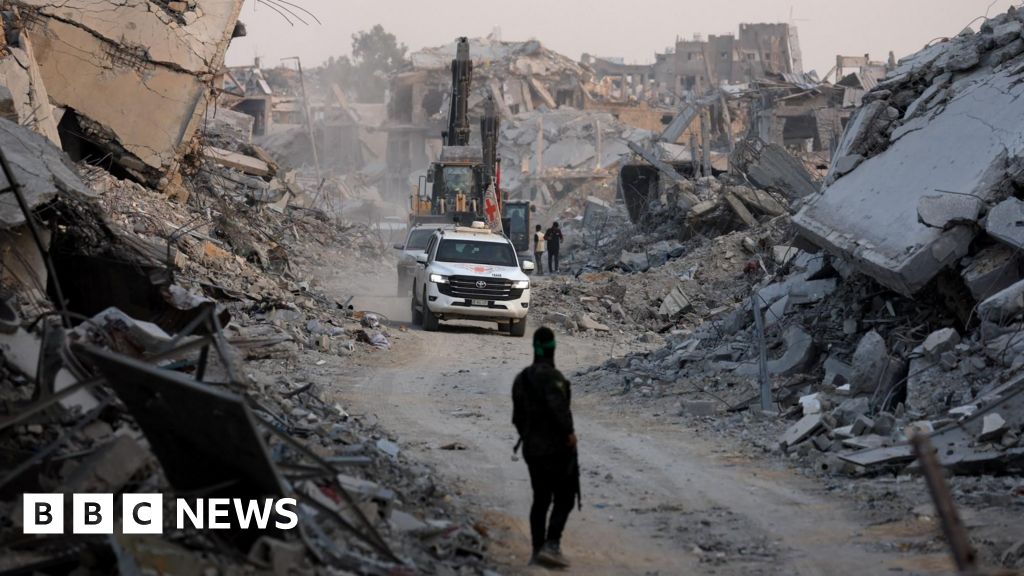
The conflict’s toll stretches beyond the battlefield. Recent reports from the UN describe Gaza as a “wasteland,” with ongoing airstrikes reducing entire neighborhoods to rubble and hindering rescue efforts. Critics such as UN humanitarian chief Tom Fletcher have raised alarm over the devastation inflicted upon the civilian population, warning that this destruction may fuel further unrest and complicate diplomatic efforts. Meanwhile, Hamas has blamed Israel for deliberately hampering recovery efforts by restricting the entry of heavy machinery into Gaza, leaving the task of recovering bodies and repairing infrastructure perilously difficult. The result—an ongoing humanitarian crisis that risks spiraling further out of control, with the weight of history pressing down on all involved.

International Significance and Historical Echoes

  • The recent exchange of bodies and prisoners marks only a momentary pause in a conflict that has raged for decades, echoing past failures of diplomacy and trust.
  • Global institutions like the United Nations have labeled Israel’s actions in Gaza as genocide, a charge vehemently denied by Israeli officials, highlighting a diplomatic standoff that continues to polarize international opinion.
  • Domestic politics in both Israel and Gaza play a significant role in shaping the course of the conflict, with leaders on both sides facing pressure from hardliners and moderates alike—who often interpret international interventions as meddling rather than peace-building.

Beyond regional borders, the geopolitical impact resonates worldwide: the United States’ support for Israel remains a cornerstone of American foreign policy, while Middle Eastern nations watch keenly, wary of the erosion of peace prospects. Historians and analysts warn that the ongoing cycle of violence risks embedding a new generation into a never-ending conflict—fueling hatred, broadening societal divisions, and challenging the very notion of international law. This shadow of history leaves a stark warning: the choices made today will define the fabric of the Middle East—and the future of global stability—for generations to come.

Conclusion: The Unfolding Saga

As this chapter in the saga of Gaza unfolds, the world holds its breath, caught between hope and despair. The relentless march of events—each death, each negotiation, each crossing—paints a story of a region teetering on the edge of a new epoch. Will diplomacy finally break the cycle of violence? Or will the weight of history continue to cast its long shadow? Only time will tell, but the urgency remains clear: for the inhabitants of Gaza, for the families torn apart, and for the global community watching from afar, the next move could either herald a new dawn or consign the region once again to the darkness of unending conflict. The pages of history are still being written—an enduring testament to the peril and promise embedded in every decision made today.

Israel strikes Gaza bus, kill eleven: Hamas warns of escalation

The recent surge of violence in Gaza underscores the fragile state of the current ceasefire, which was negotiated under immense international pressure. Despite claims of a temporary pause in hostilities, the situation remains volatile as *Israeli* military operations continue within the territory, notably in the northern regions where the tense borders demarcated by the so-called yellow line are still contested. The latest incident involving a civilian family tragically highlights how thin the veneer of peace remains, with reports indicating that 11 members of the Abu Shaaban family were killed when an IDF tank shell struck an apparently innocent bus while they were attempting to reach their home in Gaza City. Civil defence officials indicated that women and children were among the victims, marking a bleak milestone—the deadliest single incident since the ceasefire took effect eight days ago.

This incident signals a critical *turning point* in the ongoing conflict, raising questions about the *understanding of rules of engagement* and the efficacy of efforts to contain violence. The Israeli military contends that its soldiers targeted a “suspicious vehicle” crossing the demarcation line, which prompted warning shots that escalated unintended consequences. Yet, critics and Palestinian civil authorities vehemently argue that such strikes are disproportionate and unjustified, especially when civilians are involved. Hamas has accused Israel of outright targeting civilians, and *analysts* warn that these repeated breaches risk unraveling the fragile ceasefire, potentially igniting a new cycle of retaliation. As *International organizations* and *human rights advocates* call for restraint, the *geopolitical impact* of these events resonates far beyond Gaza, signaling a potential shift towards broader regional instability.

The ongoing presence of Israeli forces in more than half of Gaza’s territory is emblematic of the delicate balance of power that currently favors neither side. With many Palestinians unaware of the exact location of Israeli troop movements—owing to the absence of physical markers on the *yellow line*—the risk of accidental escalation remains high. Israeli Defense Minister Israel Katz announced plans to install visible signs to delineate the border, reflecting an effort to avoid further tragedies. Meanwhile, *Hamas* has criticized what it describes as Israel’s deliberate obstruction of search efforts for hostages and bodies, which further fuels mistrust. In a *warning* to the international community, scholars and *diplomats* warn that unless *hardline measures* are adjusted, the simmering conflict could spiral into a broader regional war, with repercussions for global security. The *geopolitical impact* reveals itself in how each side’s decisions ripple through their societies and influence international alliances, especially as the United States and European nations attempt to mediate amid this chaos.

Adding complexity to the crisis is the ongoing struggle over *hostage negotiations*. Last week, Hamas released Israeli hostage Eliyahu Margalit to the Red Cross, marking a rare moment of step toward de-escalation. However, *tensions* remain high, with Israel demanding the return of all remaining hostages and bodies, accusing Hamas of delaying compliance by the destruction wrought by its own strikes. The *U.S.-brokered ceasefire* resulted in the release of 250 Palestinian prisoners and the return of 20 Israeli hostages, but the debate over the complete reconciliation of the dead and the injured continues to haunt the fragile peace process. Analysts warn that any perceived lapse in fulfilling *de-escalation commitments* could quickly reignite hostility. The *historians* and *security experts* caution that such moments, if mishandled, risk turning into the defining conflict of our time, with wide-reaching implications for Middle Eastern stability. As the world watches, the shadows of history seem poised to repeat themselves, with each decision bearing the weight of generations, and the potential for a new chapter of tragedy—yet unwritten—hanging in the balance.

Kenyan Youths Raise Alarm: ‘We Are Orphans’ Amid National Tragedy

The passing of Kenyan opposition leader Raila Odinga has sent waves across the continent and beyond, highlighting the enduring influence of his political legacy in East Africa. Odinga, regarded as a symbol of resilience and democracy, drew massive crowds at his funeral in Kisumu, underscoring the deep-rooted support he cultivated over decades. His death at age 80 marks not only a personal loss but a significant juncture for Kenya’s political landscape and its position within the broader African Union. Former US President Barack Obama, echoing a sentiment shared by many, recognized Odinga as a “true champion of democracy,” a title that resonates with his hard-fought political career that spanned multiple electoral cycles, often marred by allegations of manipulation and violence.

Odinga’s political journey was characterized by his unwavering advocacy for self-governance and electoral transparency. Despite losing five presidential campaigns, he remained a potent force, embodying the aspirations of millions for democratic reform. The 2007 election crisis demonstrated his resolve, leading to a fragile but vital unity government aimed at curbing electoral violence. Analysts from respected international think tanks emphasize that Odinga’s legacy laid the groundwork for Kenya’s ongoing political reforms, even as intra-ethnic tensions persist. The geopolitical impact of his death extends beyond national borders—it underscores the fragile stability in a region frequently affected by political unrest, and the importance of regional diplomacy in fostering peace.

The death of Odinga coincides with a broader shift in African politics, where youthful populations and burgeoning economies demand greater representation and accountability. Historians such as Terence Ranger have noted that leaders like Odinga are vital in navigating post-colonial challenges, balancing traditional influences with the aspirations of new generations. The post-Odinga era presents a critical test for Kenya’s political institutions as they attempt to maintain peace and stability. The measures taken to prevent chaos during the funeral—warnings from Odinga’s family and the organization of orderly private burials—highlight the acute awareness of how fragile societal cohesion can be in times of leadership transition. The international community’s recent calls for calm stress the significance of regional stability—any upheaval risks destabilizing a vital economic hub and disrupting East African trade networks.

As history continues to unfold amidst these shadows of change, the legacy of Raila Odinga remains a powerful reminder of the thin line leaders walk between progress and chaos. His life encapsulates the ongoing story of African resilience—a continent where the struggle for justice persists amidst growing pains. While his body is laid to rest, the trajectory of Kenya’s democracy hangs in the balance. The desire for true reform, resilience, and regional stability fuels the hope that Odinga’s sacrifices will not be in vain. The echoes of his journey serve as both a warning and a source of inspiration—calling nations and societies to face the turbulent tide of history, aware that their actions today are the foundations upon which future generations will either build or unravel the complex tapestry of African nationalism and sovereignty.

Social Media Auto Publish Powered By : XYZScripts.com