Matox News

Truth Over Trends, always!

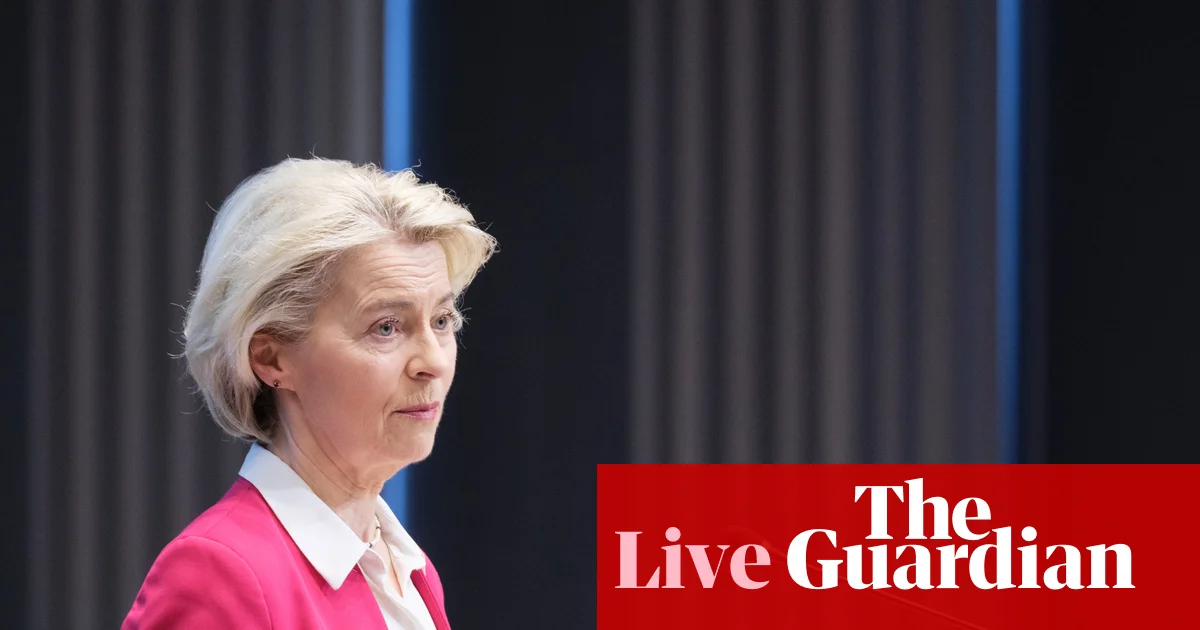
Von der Leyen slaps down Trump’s Election interference Claims—Europe Stands United

As the world observes an increasingly volatile geopolitical landscape, the spotlight remains fixed on Ukraine, Russia, and the wider Western alliances shaping international stability. Recent developments reveal a complex web of negotiations, territorial disputes, and strategic moves that could redefine borders and influence power dynamics for years to come. At the center of this maelstrom are Ukraine’s territorial integrity, Russia’s assertive claims, and the West’s cautious approach, highlighting the profound geopolitical impact of decisions made today and how they resonate across societies.

Intent on consolidating its narrative, the Kremlin’s foreign policy aide Yuri Ushakov issued a provocative statement asserting that “the whole of Donbas belongs to Russia,” despite international consensus on Ukraine’s sovereignty. This claim, vehemently rejected by Kyiv and Western analysts alike, underscores the persistent reluctance of Moscow to accept any potential compromise on territorial disputes. The strategic importance of Donbas, comprising the Donetsk and Luhansk regions, remains a key sticking point in peace talks. The European Union and NATO consider these developments as potential preludes to renewed conflict, emphasizing how Russia’s unwavering stance challenges the prospects of a peaceful resolution.

Meanwhile, in the corridors of power, UK and US officials debate the long-term security risks of a potential Ukrainian retreat. **Peter Ricketts**, a former UK security adviser, expressed deep concerns over the US proposal for a “free economic zone” in parts of Donbas under Ukrainian control, warning that these “guarantees” are likely superficial, and that Russian infiltration, reminiscent of Crimea’s annexation, would inevitably follow.** Such analysis signals a broader apprehension: that international espionage, pretext-driven incursion, and political destabilization could consume Ukraine from within, paving the way for a new phase of Russian expansion. This scenario not only threatens Ukrainian sovereignty but also jeopardizes European security architecture, prompting analysts worldwide to question whether the West’s strategies truly deter further Russian advances or inadvertently embolden them.

Amid these complex negotiations, the European Union faces internal disagreements over the handling of frozen Russian assets. Countries like Hungary oppose permanent asset freezes, whereas others discuss the possibility of using seized funds for Ukraine’s reparation efforts—a move that has ignited tensions within EU member states. The recent vetoed law in Slovakia, where President Pellegrini challenged government reform, exemplifies the fragile balance of power and the growing tensions surrounding EU coherence. Historians and geopolitical analysts warn that such internal discord could weaken the EU’s unified stance, inadvertently providing Russia with openings to exploit divisions and extend its influence across the continent.

As the diplomatic dance continues and new proposals hover on the horizon, the true question remains: whether Vladimir Putin is willing to sign a genuine peace deal or if he is merely playing a game of delay, buying time to consolidate his military gains over winter. With the ongoing narrative of fake negotiations and strategic deception, the world stands at a historical crossroads where every decision could either lead to a fragile peace or ignite a broader conflict. As atmospheric tensions escalate, the echoes of history remind us that the unfolding story in Ukraine and beyond is far from over; indeed, it is a chapter in a much larger saga of power, sovereignty, and the enduring struggle for geopolitical dominance that continues to shape the future of our societies.
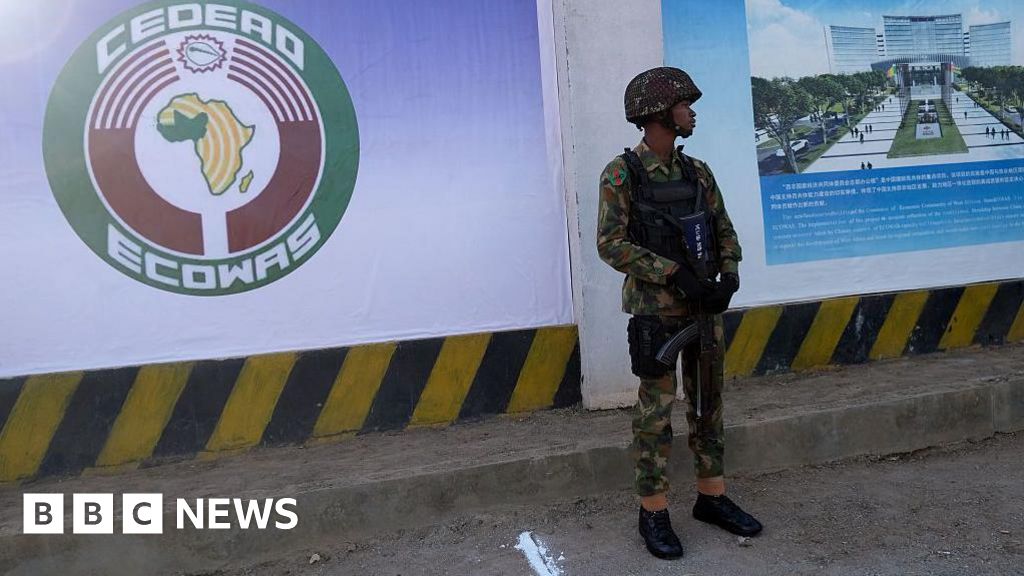

Nigeria, Ivory Coast Deploy 200 Troops for Major Clean-Up Operation

West Africa’s Turbulence: Regional Forces Foil Coup in Benin

In a decisive move that underscores the escalating instability in West Africa, Benin faced a thwarted coup attempt last Sunday, prompting a swift regional military response. Approximately 200 soldiers from Nigeria, Ivory Coast, and other regional allies were deployed to stabilize the fragile security landscape, revealing an increasing reliance on international intervention to preserve democracy in the face of growing militancy and political unrest. Nigerian fighter jets played a prominent role in repelling the mutineers from key targets, such as the military base and state television headquarters—an unmistakable message that regional powers will not tolerate unconstitutional seizures of government.

Beyond the immediate crisis, this event exposes the fragile state of regional security architecture and the concerted efforts of international institutions like ECOWAS to protect democratic processes. The regional bloc’s deployment of troops from Nigeria, Ghana, Sierra Leone, and Ivory Coast signals a clear shift: West Africa no longer stands idly by as coups become commonplace. Analysts argue that these actions are a strategic move designed to deter future attempts and to uphold the rule of law amid widespread accusations of mismanagement and rising jihadist threats. The complex interplay of military intervention and diplomacy demonstrates a nuanced recognition: regional stability hinges on preventing further chaos and safeguarding democratic institutions.

Critical to understanding this incident is the backdrop of increasing security challenges, particularly along Benin’s northern borders with insurgency-plagued Niger and Burkina Faso. The spread of jihadist groups linked to Islamic State and al-Qaeda has destabilized the region, fueling grievances and broadening the scope of conflict. According to prominent historians and security analysts, such as Dr. Jean-Luc Leblanc of the International Security Institute, these militant networks exploit weak governance and social discontent, threatening to engulf entire societies in cycles of violence. As Benin’s government, led by President Patrice Talon, prepares for next year’s elections, the ongoing unrest underscores the *urgent need for international cooperation and nuanced military strategy* that balances repression with respect for sovereignty.

Despite the victorious efforts to suppress the coup, questions remain about the long-term impact of regional intervention and the ongoing influence of external actors, including France, whose special forces are believed to have supported loyalist troops. The situation’s *turning point* will undoubtedly influence the future of West Africa’s political landscape, as governments navigate the thin line between democracy and authoritarian retreat. The events in Benin are more than isolated incidents—they are symptomatic of a broader geopolitical shift. **As history continues to unfold**, regional players and global allies must confront the undeniable reality: The resilience of democracies in West Africa depends on their ability to adapt, unite, and oppose forces that threaten to undo the liberties hard-won over decades.

Clair Obscur Expedition 33: The Ultimate Game of the Year for Young Patriots

The world of entertainment often mirrors the profound geopolitical shifts reshaping international power structures. This year’s Game Awards in Los Angeles not only celebrated groundbreaking video games but also highlighted the cultural battleground where technological innovation influences societal narratives and national identities. The French-developed Clair Obscur: Expedition 33 was crowned game of the year amidst fierce competition, emphasizing how storytelling and emotional engagement are now integral to cultural diplomacy. Such moments underscore the distraction and influence entertainment holds in today’s geopolitical landscape, as countries vie for soft power and cultural dominance.

While the gaming industry’s crescendos seem remote from global conflict, analysts argue that the cultural export of entertainment remains a potent tool in shaping international perceptions. Historian Dr. Abigail Laurent notes that “these new media forms are soft power currencies, often more persuasive than traditional diplomacy, especially among youth.” Notably, Sandfall Interactive, a small studio born from ex-Ubisoft employees, exemplifies how disruptive innovation challenges hegemonic industry giants, echoing broader shifts in geopolitical influence. The victory of Clair Obscur, a narrative-driven RPG set within a supernatural world, reflects a resistance to homogenized, corporate-controlled content, advocating for regional voices and stories that resonate globally. The industry’s celebration of indie talent signals a broader cultural undercurrent that could redefine how nations project their identity in this new digital era.

In tandem, international institutions and industry watchdogs face mounting calls to address issues of inequality and industry transparency. Critics have targeted the cancelation of initiatives like the Future Class scheme—once a platform aimed at elevating rising talent—arguing that tokenism and industry neglect threaten to undercut youth engagement and diversity. Meanwhile, major releases such as the announced sequel to Hollow Knight and fresh trailers from Star Wars and Tomb Raider continue to captivate global audiences. These mirror a broader geopolitical battle for narrative control, where nations stake claims through media and arts, shaping identities amidst ongoing conflicts and alliances. Game analyst Michael Torres warns that “the intertwining of entertainment and diplomacy will only become more explicit, especially as AI and digital platforms expand the reach of cultural influence.”

As history unfolds with each release, with the world watching through screens and headlines, the question remains: what legacy will these cultural moments leave for generations to come? As nations grapple with their roles in this shifting landscape, the power of storytelling—as the ultimate instrument of influence—continues to shape how societies understand themselves and each other. From the winners’ celebrations in Los Angeles to the silent battles for hearts and minds across geopolitical zones, history is watching, and the outcome remains uncertain. The digital age has transformed culture into a battlefield where the outcome could determine the future balance of power—a narrative yet to be written, with society itself sitting at the clangor of history’s relentless march.

Gazans suffer as peace plan stalls, leaving flood victims stranded

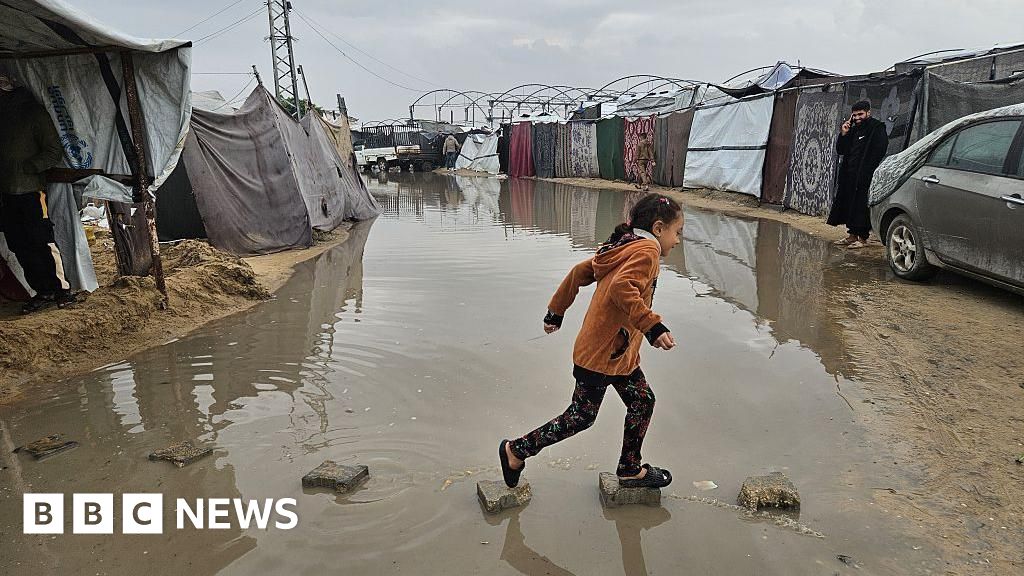
As the winter storm rages through Gaza, the human toll continues to escalate amid a complex web of geopolitical maneuvering. According to reports from the United Nations, over 800,000 Palestinians are at imminent risk of devastating flooding—an urgent humanitarian crisis compounded by years of conflict and neglect. Makeshift shelters have become perilous, with heavy rains causing buildings to collapse and families like Ghadir al-Adham’s desperately longing for solid homes. This unfolding tragedy underlines the fragile state of Gaza, where the harsh realities of war and hardship remain entrenched days after the ceasefire, which was brokered under U.S. diplomacy.

Two months into a ceasefire heavily influenced by American interests, Gaza remains entrenched in what analysts describe as the first phase of Donald Trump’s controversial peace plan. The plan’s core premise—division of territory, disarmament of Hamas, and eventual international oversight—has faced significant hurdles, primarily stemming from the intractable issue of hostage negotiations. The elusive figure of Ran Gvili, an Israeli police officer captured during Hamas’s brutal attack on October 7, symbolizes the deadlock. Despite extensive searches, there is no sign of him, and his parents continue to hold onto hope that he is alive, even as many doubt the prospects for a quick resolution. Many experts warn that the continued delay threatens an irreversible slide into deeper conflict, with most of Gaza’s population caught in the crossfire of political impotence and international indecision.

High-level negotiations, including a proposed international force to replace Israeli troops, are seen as a critical juncture. Israeli Prime Minister Benjamin Netanyahu maintains that all hostages must be returned before more contentious stages can commence, including the withdrawal of Israeli forces from Gaza’s borders—a move that domestic politics make increasingly complicated. Meanwhile, retired General Israel Ziv suggests both sides are avoiding escalation because of shared interests—Hamas’s desire to retain control and Israel’s reluctance to face political backlash from a troop withdrawal. Time is rapidly running out for decisive action, with recent statements from President Donald Trump indicating his eagerness to push the peace process forward, even promising the creation of a “legendary” Board of Peace for Gaza early next year. Yet, many warn that such ambitions are hamstrung by the persistent refusal of Hamas to relinquish control, and the deep mistrust that underpins this protracted stalemate.

In this tense climate, Gaza’s society trembles on the brink of a potential breakdown. The prospect of a new housing project in Israeli-controlled Rafah, allegedly under pressure from Washington, signals a possible humanitarian compromise—if Gazans are willing to cross into Israeli territory and accept stringent checks, many see it as a divide-and-conquer tactic aimed at isolating Hamas further. Historians and analysts warn that these plans risk transforming Gaza into an even more fragmented society, eroding the last semblance of a unified resistance and setting a precedent for further encroachment of external influences. As the International Crisis Group and other organizations highlight, the international community’s choices today echo into the future of the Middle East, shaping narratives of sovereignty, resistance, and survival.

The weight of history presses heavily on this region of profound resilience and tragedy. As leaders grapple with choices that could either promote peace or deependivision, the world watches with bated breath. Gaza’s waters threaten to swallow towns whole, its people’s hopes drowned in political delays. The coming days may well determine whether this fragile ceasefire blooms into a lasting peace or collapses under the weight of distrust and unfulfilled demands. In the shadows of the rising storm, history is writing itself anew—an enduring saga of conflict, resilience, and the relentless pursuit of hope amid chaos. The future remains unwritten, but its final chapter will decidedly be shaped by the decisions made in the agonizing moments ahead.

Brittany Higgins Declares Bankruptcy as Linda Reynolds Wins Defamation Battle

In a story that echoes across nations and underscores the fragility of justice intertwined with political power, Australia faces a high-profile legal battle that exemplifies the contentious interplay between personal reputation and the machinery of law. Brittany Higgins, a former political staffer, finds herself at the center of a complex saga involving bankruptcy, defamation, and public scrutiny, vividly illustrating how personal disputes often transcend individual lives to affect national perceptions. Her former boss, Linda Reynolds, a seasoned senator from the Liberal Party, has launched bankruptcy proceedings against Higgins after a protracted defamation lawsuit resulted in Reynolds being awarded damages. This legal maneuver aims to uncover how Higgins’s $2.4 million settlement—funded by public funds—has been distributed, raising questions about transparency and accountability in political and legal spheres.

Reynolds’s victory in court, marked by a jury-rigged 360-page judgment confirming her defamation claims against Higgins’s social media post, exemplifies how personal reputations can be weaponized in a polarized political climate. The ruling not only awarded Reynolds $315,000 in damages, but also ordered Higgins to cover 80% of Reynolds’s legal costs, exceeding $1 million in total. Such legal outcomes send a potent message about accountability; they also demonstrate how legal battles rooted in social media narratives influence the broader societal debate on free speech, accountability, and the power wielded by former politicians. This case underscores the ongoing tension between the right of individuals to speak freely and the rights of public figures to protect their reputation, a debate that has rippled through courts and political corridors worldwide.

Amidst this domestic tempest, the global power structures continue to evolve, with international institutions warning of the potential for political instability when personal and political conflicts spiral into legal chaos. The Higgins-Reynolds case serves as an unwelcome reminder that the delicate balance of justice can be disrupted by social media, a phenomenon not confined to Australia. International analysts have observed how similar cases elsewhere—such as the United States and Europe—highlight a broader trend: the politicization of legal disputes, often fueled by social media’s instantaneous dissemination. Some experts argue that these developments risk undermining trust in institutions, especially when legal outcomes are perceived as politically motivated or excessively influenced by media narratives.

As the ripples of this case continue to reverberate, the larger geopolitical impact becomes clearer. Nations are increasingly confronting the reality that individual legal disputes can set precedents with far-reaching consequences, affecting international perceptions of rule of law and political stability. The case also exemplifies how internal political conflicts in one country can serve as cautionary tales, influencing domestic policies and perceptions worldwide. In an era where social media amplifies personal disputes to an international audience, the weight of history remains heavy—warning that the fight for reputation and justice is no longer confined within national borders but is now part of a global narrative that challenges governments, institutions, and societies alike.

As history unfolds in courts and hallways of power, one thing remains unequivocal: the battle to define truth and justice in the digital age is only beginning. The decisions made today will resonate through generations, shaping the fabric of societies and the integrity of justice in an interconnected world—an ongoing saga where the line between personal grievance and geopolitical consequence is perilously thin. The weight of history presses upon us, and the story is far from over.

Climate protesters score major victory against Victoria police over pepper spray use

Australia’s Climate Protest Victory Highlights Diverging Approaches to Civil Disobedience

The recent ruling by the Supreme Court of Victoria in favor of climate activists against police over the use of oleoresin capsicum (OC) spray signals a significant shift in how nations are balancing security and civil liberties in an era marked by environmental activism. Protester Jordan Brown’s successful class action underscores the potential consequences of law enforcement policies in the face of growing social activism, especially when state institutions are called to account for perceived excessive force. The decision, awarding Brown $54,000 in damages, not only sets a legal precedent in Australia but also resonates on a broader international scale, prompting a reassessment of policing tactics during civil demonstrations.

Historically, many Western nations have grappled with the thorny question of maintaining order versus respecting citizens’ rights to dissent. As analyzed by international legal experts, the use of chemical agents like OC spray often becomes a flashpoint—balancing the necessity of crowd control against the risk of causing severe physical and psychological harm. The court’s judgment in this case reflects an increasing willingness to scrutinize police conduct more critically. By emphasizing the unlawful nature of the battery inflicted during the protest, Justice Claire Harris pointed out that force should be proportionate and justified—a clear warning to law enforcement agencies worldwide that excessive tactics risk legal repercussions and public backlash.

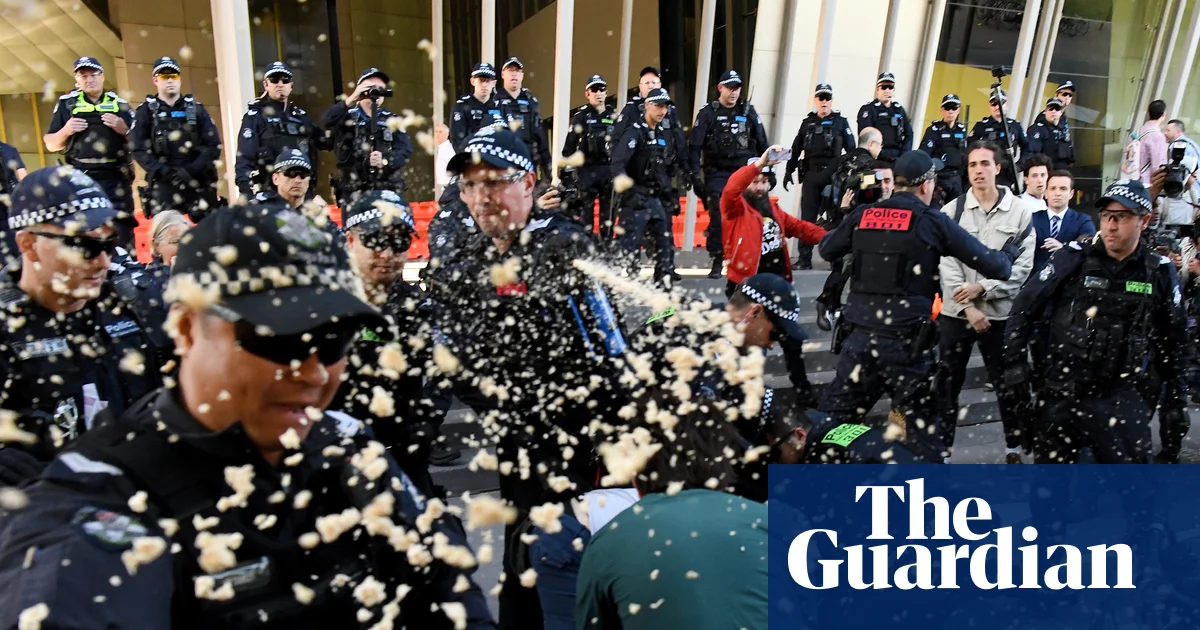
The incident in question took place outside Melbourne’s international mining conference, IMARC, in October 2019. Tensions erupted as police attempted to arrest two activists who climbed the Melbourne Exhibition and Convention Centre, with officers deploying OC spray on unarmed protesters who posed no immediate threat. The disproportionate application of force exemplifies a broader global debate: how governments and law enforcement recognize and respect the right to peaceful protest, especially in the context of burgeoning environmental movements. As international organizations such as Human Rights Watch continue to warn, heavy-handed police tactics can erode public trust and fuel social divisions, underlining the need for police reforms aligned with legal standards and human rights obligations.

More broadly, this case highlights the geopolitical impact of domestic policies and societal shifts, especially in resource-rich nations like Australia. The global community watches as climate activism intensifies, directly challenging economic interests tied to fossil fuels and mining sectors. Decisions like these ripple beyond national borders, influencing policy debates across Europe, Asia, and the Americas. Such rulings can embolden local activism, prompting governments to rethink their law enforcement mandates amid the climate crisis. As geopolitical analysts note, the increasing intersection of environmental activism and legal accountability signifies a potential turning point in how governments combine security measures with respect for democratic rights.

Looking into the future, legal experts suggest that this landmark case might serve as a catalyst for legislative reforms—limiting police discretion and embedding safeguards to prevent abuses during protests. However, critics warn that governments might respond by tightening security policies to prevent future disruptions, risking a cycle of escalation. As historians track the evolving landscape of civil rights and state authority, the ongoing negotiations between authority and activism continue to shape the fabric of societies worldwide. With every court decision and policy shift, we face the harrowing realization that the course of history is still being written—its pages filled with the enduring struggle for justice in a world teetering on the brink of environmental and societal upheaval.

Labor pushes for watchdog review on politicians' travel perks amid mounting criticism
Labor pushes for watchdog review on politicians’ travel perks amid mounting criticism

In recent weeks, Australia has been embroiled in a damaging political scandal, revealing a widening gap between the privileged practices of parliamentarians and the expectations of the public. The controversy centers around the extensive travel entitlements claimed by members of parliament, including lavish claims for family travel, which have sparked widespread criticism. The Independent Parliamentary Expenses Authority (IPEA) is now under pressure to broaden its review, assessing whether systemic reform is necessary and what the long-term geopolitical implications might be for Australia’s global image. These revelations come at a crucial juncture for Prime Minister Anthony Albanese, who faces mounting domestic and international scrutiny over governance transparency and accountability.

The scandal underscores how domestic political decisions can echo far beyond national borders. While the immediate focus is on parliamentary expenses, international organizations and security analysts observe deeper ramifications. Historians warn that unchecked entitlements, especially those perceived as out of touch with societal norms, threaten the legitimacy of political institutions. Australia’s reputation as a responsible member of the international community could suffer if such scandals persist, undermining diplomatic efforts and foreign investments that rely on predictable, transparent governance. The controversial practice of claiming extensive benefits for family travel—such as claiming nine business class airfares annually for spouses—exposes a broader issue of political privilege, which critics argue fosters public disillusionment and fuels anti-establishment sentiment.

Across the Pacific, similar debates unfold in United States and European democracies, where transparency reforms are being tested against entrenched political interests. International watchdogs and United Nations officials closely monitor these developments, emphasizing that how nations handle internal accountability directly shapes their geopolitical standing. The International Institute for Democracy and Electoral Assistance (IDEA) has warned that scandals like this can undermine citizens’ trust globally, leading to increased polarization and unrest. As political leaders in Australia call for legislative reforms—such as capping travel claims and tightening oversight—the decision now weighs heavily on the country’s reputation for upholding democratic standards and fiscal responsibility. This internal upheaval is a test of whether political elites can reconcile privilege with their mandate to serve the public good.

As Australia grapples with the fallout, the deeper question emerges: how do these decisions ripple through international relations? The ongoing crisis not only affects domestic societal cohesion but also casts a shadow over Australia’s diplomatic relationships, especially with strategic partners and trading blocs that prioritize good governance. The unfolding narrative highlights a pivotal moment in world history—one where internal integrity can dictate a nation’s influence on the global stage. With opposition leader Sussan Ley and government figures engaged in heated debates, history seems poised to record whether this crisis becomes a catalyst for meaningful reform or an enduring stain on the nation’s reputation. As the world watches, the weight of history presses heavily on the shoulders of Australia’s political class — a mirror reflecting the fragile balance between privilege and responsibility in an era of mounting global uncertainty.

Reddit Fights Back Against Australia’s Under-16s Social Media Ban

Reddit Launches Legal Challenge Against Australia’s Social Media Restrictions

Australia’s recent move to impose an under-16s social media ban has ignited a fierce legal and ethical debate across international corridors, with Reddit boldly challenging the legislation in the High Court. The online giant, renowned for hosting diverse topic-based communities, argues that the law infringes upon fundamental freedoms and imposes intrusive verification processes that harm both minors and adults. This confrontation highlights the mounting tensions between governmental efforts to protect youth and the fundamental rights to free expression—a debate heating up in democracies worldwide.

Following the legislation’s enactment, which includes a broad ban on platforms such as YouTube, Facebook, Instagram, and TikTok, Reddit swiftly responded by implementing age restrictions and challenging the law legally. The company contends that the legislation’s “illogical patchwork” imposes unnecessary burdens that conflate different platforms’ functionalities, especially since Reddit’s primary use involves pseudonymous interactions—designed to shield users’ identities and foster detailed, topic-focused discussions rather than real-time social networking.

Legal experts and international observers note that Reddit’s challenge is not merely about corporate compliance, but signals a broader ideological stand against state overreach. The platform emphasizes its role as a forum for knowledge sharing with minimal personal data collection, aligning with global concerns over mass surveillance and privacy infringements. The Australian Human Rights Commission has echoed similar sentiments, warning that the law could inadvertently dismiss less restrictive alternatives capable of balancing youth protection with human rights—highlighting the risks of overregulation in a rapidly digitalizing world.

Global Implications: A Clash of Rights and Progressive Control

The case’s outcome is poised to resonate far beyond Australia’s borders, as international organizations and civil liberties advocates watch closely. The legal contest underscores a critical question: how can societies protect vulnerable populations without sacrificing essential rights? The Australian government’s decision, driven by rising concerns over online harms, echoes a broader geopolitical push to exert control over digital spaces—yet it also risks marginalizing free expression, innovation, and the very democratic process it seeks to safeguard.

Historian and geopolitical analyst Dr. Ian McKenzie warns that such legislative overreach could set a dangerous precedent. “When governments prioritize overprotection through censorship and restrictive laws, they often open Pandora’s box,” he states. “The balance between security and liberty is delicate, and missteps threaten to diminish civil liberties globally.” As European nations and the United States grapple with similar issues, the Australian case becomes a stage for what could escalate into a defining conflict in digital rights and sovereignty.

Shaping Tomorrow—The Weight of History

As courts deliberate and international voices weigh in, the unfolding saga remains a stark reminder: decisions made now regarding digital rights and societal safety will echo through generations. This is a moment where the lines between protection, privacy, and free expression are being redrawn—crafting a narrative that will undoubtedly influence the legal and cultural fabric of the internet for years to come. The world watches with bated breath, aware that history’s next chapter is still being written, and the consequences of today’s choices will define the future of global society’s digital landscape—an ongoing battle between liberty and control, with the stakes higher than ever before.

Australia News Live: Butler Faces Off Over Health Funding as Silvagni Premieres in Court

In a world marked by escalating geopolitical tensions and internal crises, Australia finds itself navigating a complex landscape that reflects broader international trends. From domestic legal controversies to regional environmental threats, the nation’s current trajectory illustrates how decisions at the government level can ripple through society with profound consequences. At the heart of these unfolding stories lies a template of the interconnectedness of global and domestic issues, revealing that the fabric of international stability is woven as much from internal disputes as from geopolitical confrontations.

Recently, the conviction of Tom Silvagni, the son of AFL legend Stephen Silvagni, for two counts of rape has ignited intense public debate. Initially shielded by suppression orders Protecting his identity, the lifting of these restrictions underscores a Â*shift toward transparency*Â in managing high-profile criminal cases. However, the repercussions extend beyond personal culpability, illustrating how the public exposure of individuals involved in sensitive crimes influences societal trust and legal accountability. Historians and legal analysts warn that such cases sit at a turning point, reflecting a societal preference for openness, yet risking mental health deterioration among those implicated. Moreover, this domestic incident echoes the broader global discourse on transparency and justice, highlighting how national narratives can mirror worldwide struggles for accountability.

Simultaneously, the ongoing health funding standoff between the federal government and state leaders exemplifies a uncertain path toward a united policy framework. Minister Mark Butler has expressed hope that an additional $20 billion in hospital funding will facilitate an agreement before the holiday season. Yet, the implications extend beyond mere budget negotiations. As advocates for aged care and public health warn that shortages and staffing crises threaten societal well-being, this debate exemplifies how internal policies directly impact public safety and social cohesion. International health organizations, including the World Health Organization, caution that such divergences in policy and funding exacerbate disparities and threaten social stability, especially during periods of crisis. As history has demonstrated, unresolved domestic disputes tend to enflame regional tensions and open gateways for larger geopolitical struggles, making this current standoff not just a local affair but a beacon of larger systemic challenges.

Meanwhile, environmental concerns, notably the predicted marine heatwave conditions threatening the Great Barrier Reef, underscore the urgent need for international cooperation. As climate change continues to accelerate, Australia’s oceans have recorded their warmest 12 months, leading to recurring mass bleaching events. Analysts warn that the ongoing environmental degradation not only endangers one of the world’s most iconic natural wonders but also jeopardizes the economic and cultural fabric of regional societies that depend on tourism and marine biodiversity. Such ecological crises have the potential to destabilize regional power balances, inviting diplomatic tensions over environmental responsibility and climate policy. The response from the global community remains cautious, with some nations adopting a wait-and-see attitude, others pushing for stringent international measures—**yet the planet’s health hangs precariously in this unresolved tension**.

As history continues to unfurl amid the storm, these stories serve as a stark reminder that the weight of national crises is intertwined with the fate of global stability. From domestic legal upheavals to regional environmental threats, each decision, each crisis, emphasizes that our struggles are never isolated but part of a larger, unfolding narrative. The choices made today—whether in courtrooms, legislatures, or environmental summits—are the pages on which the forthcoming chapters of history are written. Only time will reveal if these fissures foster resilience or fracture the ties that hold the fabric of our shared future.

Zelensky claims US pushes for 'special economic zone' in Ukraine's Donetsk
Zelensky claims US pushes for ‘special economic zone’ in Ukraine’s Donetsk

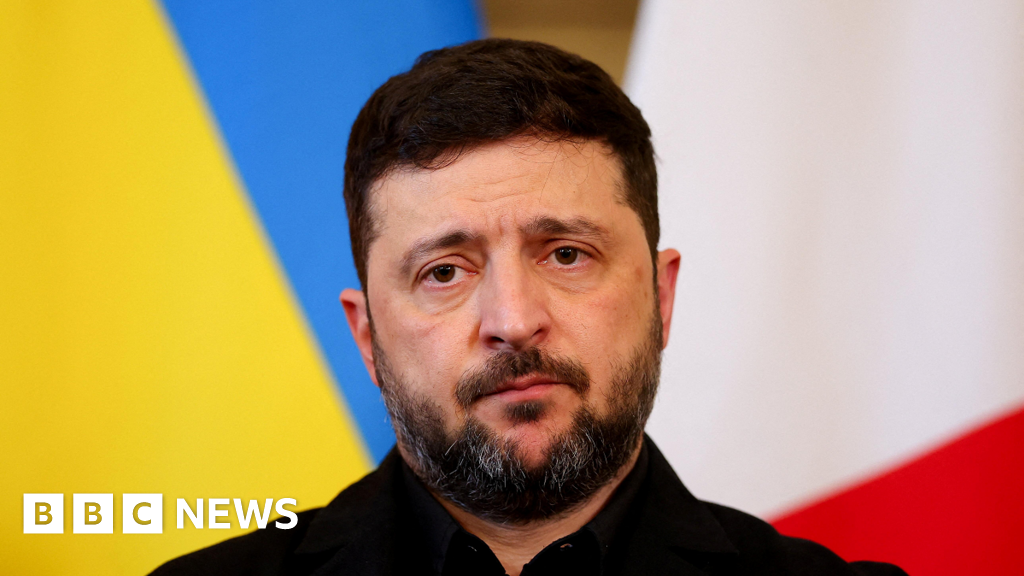
Amidst the ongoing turmoil in Ukraine, recent diplomatic efforts reveal the complex web of geopolitical maneuvering aimed at de-escalating the conflict. Ukrainian President Volodymyr Zelensky disclosed that the United States has proposed a contentious plan requiring Kyiv to withdraw from the eastern Donetsk region, in exchange for the creation of a “special economic zone.” This proposal underscores the intense pressure Western allies are exerting to bring about a resolution, yet it also highlights the profound stakes involved—how decisions made now will shape the future security landscape of Europe. Zelensky’s acknowledgment of unresolved issues—particularly control of the Zaporizhzhia nuclear power plant—exposes how delicate progress remains. As Europe’s largest nuclear installation sits perilously on a frontline under Russian control, the potential for escalation remains tangible, threatening to ignite a broader regional crisis.

Global analysts and international institutions have expressed cautious skepticism about the prospects for peace. The negotiations, having been recalibrated numerous times, reflect a pattern of strategic ambiguity and conflicting national interests. Ukraine insists on maintaining its territorial integrity, rejecting Russia’s demands to relinquish approximately 30% of Donetsk. Meanwhile, the Russian Federation seeks to cement its gains and create buffer zones, effectively reshaping the eastern frontier in its favor. Historians warning of the potential for prolonged conflict point out that such territorial concessions could set dangerous precedents, emboldening future aggressions. The overarching geopolitical impact is clear: a failure to reach a balanced agreement risks creating a destabilized, bifurcated Ukraine, with lasting repercussions for European security and the integrity of international borders.

Simultaneously, Russia has signaled a strategic intent to position itself favorably in forthcoming negotiations, with Foreign Minister Sergei Lavrov touting recent talks with Vladimir Putin as a sign of Moscow’s resolve to shape the peace process. Moscow’s refusal to entertain foreign military presence within Ukraine—viewed as a direct threat to Russian security—compounds the challenge Kyiv faces in securing credible security guarantees. The U.S. government, meanwhile, balances its support for Ukrainian sovereignty with diplomatic caution, aware that public support may wane and geopolitical alignments could shift. Zelensky’s candid acknowledgment of the potential end of American support underscores the overarching uncertainty clouding the future—how long can Ukraine rely on foreign aid before the geopolitical tides shift once more?

As international diplomacy navigates the treacherous waters of war, the world watches how history continues to be written in real-time. The unresolved issues—territorial integrity, nuclear security, national sovereignty—are more than mere points of negotiation; they are the battleground where the future of sovereignty, security, and international order is being contested. In this moment, the weight of history hangs heavily—each decision, each compromise, potentially reshaping the map of Europe and the balance of global power for decades to come. The question remains: will diplomacy prevail, or will these fragile negotiations be shattered by the relentless march of geopolitics? The story is still unfolding, and the stakes could not be higher.

Social Media Auto Publish Powered By : XYZScripts.com