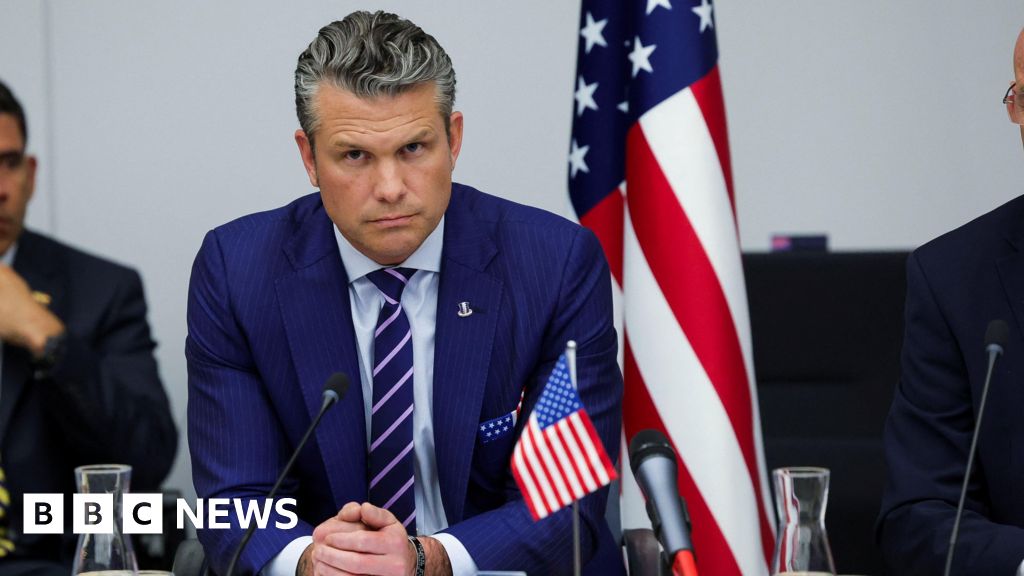
In an unfolding incident with significant geopolitical repercussions, US Secretary of Defence Pete Hegseth’s aircraft made an unexpected emergency landing during a return flight from a NATO Defence Ministers’ meeting in Belgium. The Pentagon confirmed that the aircraft, en route back to the United States, experienced a crack in the windshield, prompting standard safety procedures and a precautionary landing in the UK. Despite the sudden turn of events, officials assured the public that all onboard, including Hegseth, are safe.
This incident underscores the increasing vulnerability of high-profile government assets during a period of heightened international tension. Tracking by BBC Verify, combined with FlightRadar24 data, revealed that the aircraft began losing altitude off the southwest coast of Ireland, before looping eastward. The aircraft’s transponder then issued a “7700 squawk code,” a universal signal among aircraft indicating a general emergency. Such protocols reveal how fragile even the most secure operations can be when hardware failures occur unexpectedly—a fact new to international observers addressing the risks of global leadership. In February, a similar crisis unfolded when a government plane carrying Secretary of State Marco Rubio was forced to turn back due to a crack in the cockpit window, illustrating a disturbingly recurring issue with safety standards in high-stakes air travel.
The international significance of these events extends beyond mere technical failures; they highlight the imperative for robust security and safety protocols amidst a rapidly evolving geopolitical landscape. The NATO defence meeting in Belgium, which was focused on security assistance for Ukraine, marks a critical phase where alliances are tested and various nations argue over support strategies. The United States, as a leader within NATO, bears the weight of maintaining both military readiness and diplomatic credibility. Analysts warn that such technical mishaps, if frequent or perceived as downgrades in preparedness, could diminish trust among allies and embolden adversarial blocs that seek to exploit perceived vulnerabilities. For many historians and security experts, these incidents serve as stark reminders: in today’s volatile world, one misstep can ripple across continents, altering the balance of power.
As the aircraft safely touched down in the UK, the incident remains a vivid emblem of today’s unpredictable global stage. The image of a top US defense official’s plane grappling with technical failure amid international crises leaves an indelible mark on the collective consciousness. With nations eyeing each other warily, and the specter of conflict lingering over fragile peace agreements, these moments become more than mere technical anomalies—they are a testament to the mounting pressures on the machinery of global security. As history continues to unfold, the question remains: how many more crises will test the resilience of our alliances, and at what point will the cracks in the global order become impossible to conceal? The answer—like the fragile windshield of Hegseth’s plane—remains unseen but undeniably imminent, waiting to shape the course of history yet to be written.