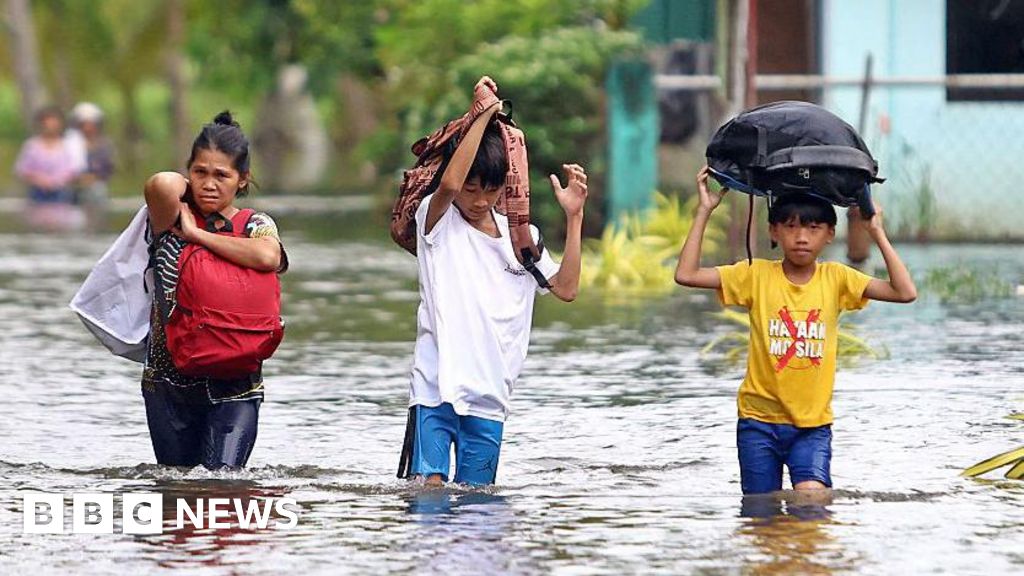
In a stark reminder of the Earth’s volatile climate and its **geopolitical** implications, the Philippines faces yet another catastrophic natural disaster as Typhoon Fung-wong — also known locally as Uwan — threatens to intensify into a super typhoon. Less than a week after a previous storm, Kalmaegi, devastated the nation with floods and claimed at least 204 lives, the specter of Fung-wong looms large, exposing the persistent vulnerabilities of this archipelago situated on the Pacific’s cyclone corridor. As the storm approaches Luzon, the country’s most populous and economically vital island, authorities have initiated urgent evacuations, highlighting the ongoing peril faced by millions unprepared for what may be an even more destructive force.
The forecast warns of sustained winds exceeding 185 km/h (115 mph) along with heavy rains and potentially life-threatening storm surges, which could once again cripple regional infrastructure and exacerbate a humanitarian crisis. The **Philippine meteorological service**, Pagasa, has issued cautious alerts, urging residents in low-lying coastal areas and small islands like Catanduanes to move to higher ground. The storm’s trajectory aims it directly at Luzon’s northern provinces, where evacuations are underway and schools are either closed or shifted online, reflecting a nationwide state of alert. This preparedness underscores a disturbing pattern—each storm’s ferocity seemingly amplified by **climate change**, which, despite not increasing the frequency of tropical cyclones, enhances their intensity through warmer oceans and atmospheric conditions.
International analysts and climate scientists have long warned that such conditions are not coincidental but are rooted in the broader **geopolitical** challenge of climate adaptation and environmental management. Notably, researchers warn that **climate change’s** impact creates a new, more dangerous normal, with storms capable of producing unprecedented wind speeds and rainfall. Countries like the **United States** and **China**, which contribute significantly to global emissions, find themselves under increased pressure to lead international efforts in climate mitigation. Meanwhile, vulnerable nations such as the Philippines, with limited resources, bear the disproportionate burden—faced with the devastating consequences of these weather events and with little capacity to effectively prepare or respond. Experts from institutions like the **World Meteorological Organization** emphasize that **these natural disasters** are reminders that international cooperation must be matched with robust local resilience strategies.
As history continues to writhe beneath the fury of the storm, some analysts caution that the pattern of devastation in the Philippines foreshadows a more turbulent future for the region. The death toll from Kalmaegi and subsequent storms underscores an ongoing humanitarian crisis, with poverty, inadequate infrastructure, and environmental degradation acting as catalysts for tragic loss of life. The world remains watchful, aware that each typhoon not only reshapes the islands but also redefines **global geopolitics**—where climate, economy, and security collide in the face of an evolving climate crisis. With every hurricane season, the weight of history presses upon us, reminding all that the forces shaping our collective destiny are still unfolding, and in their wake, they leave behind a trail not only of destruction but of urgent, unresolved questions about humanity’s resilience in the face of nature’s fiercest storms.