Shifting Tides in Ukraine’s Power Politics Amid War and Corruption Allegations
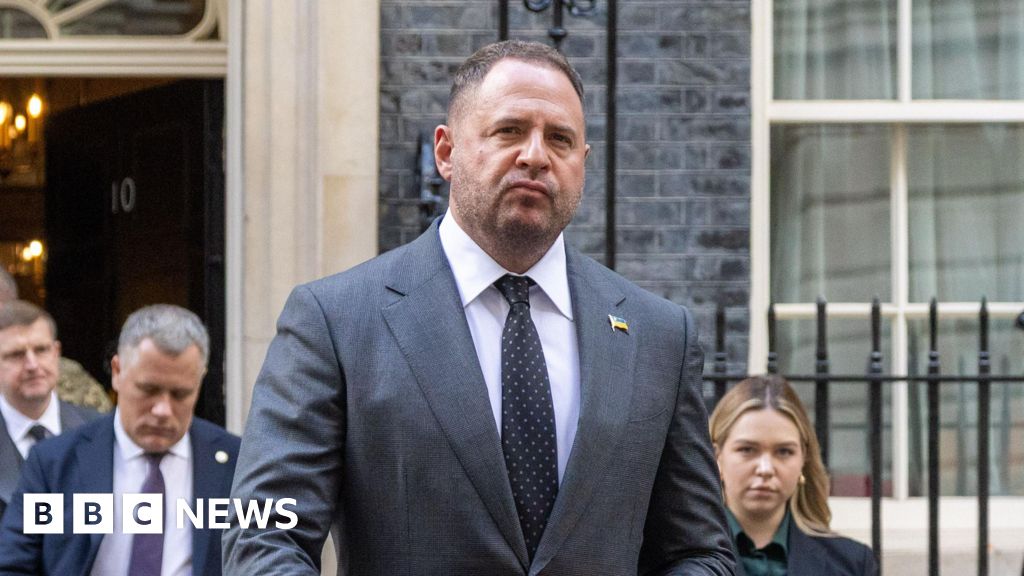
In the heart of ongoing global conflicts, Ukraine stands at a pivotal crossroads, as internal political upheavals threaten to destabilize its resilient stance against Russian aggression. The recent dramatic fall of Andriy Yermak, Kiev’s formidable chief of staff and a cornerstone in Ukraine’s wartime leadership, underscores the complex interplay of power, corruption, and international diplomacy. Once viewed as the second most influential figure in President Volodymyr Zelensky‘s administration, Yermak’s sudden departure follows a mounting scandal that has rocked Ukraine’s fragile governance structures. Amid allegations of high-level corruption, the very fabric of Ukrainian political integrity is under intense scrutiny from both domestic citizens and the international community.
The catalyst for Yermak’s downfall was a series of escalating investigations into corruption within Ukraine’s top echelons, reaffirming the persistent challenges faced by a nation fighting to defend its sovereignty while battling internal betrayals. The repression of anti-corruption agencies—initially a bold move by Zelensky to Russian interference—boomeranged, sparking mass protests and international criticism. When the government attempted to tighten control over bodies like the National Anti-Corruption Bureau (NABU) and the Specialized Anti-Corruption Prosecutor’s Office (SAPO), public outrage erupted. Later, the agencies released findings implicating members of Zelensky’s inner circle, including ministers and former allies, in siphoning off up to $100 million from public funds during a period when Ukraine is desperately trying to bolster its energy defenses against relentless Russian missile strikes.
Analysts warn that these revelations deepen the crisis of legitimacy for Zelensky’s government. The internal conflicts within Ukraine’s leadership evoke echoes of historic political scandals in transitional democracies — where the battle against corruption is often a proxy war for real power struggles. Historians and policy experts underscore that the geopolitical impact of this turmoil extends beyond Kyiv’s borders. Alliances with Western nations, especially the United States and the European Union, hinge on Ukraine’s ability to demonstrate genuine reforms and stability. Yet, the chaos suggests that Ukraine’s path remains perilously uncertain — a fragile nation whose destiny influences the entire security architecture of Eastern Europe.
As Kyiv grapples with political upheaval, the international community watches closely. Discussions continue on a proposed US-backed peace plan, which has faced criticism for allegedly favoring Russia’s interests. Yermak’s influence in these negotiations, particularly his recent diplomatic engagements in Geneva with figures like US Secretary of State Marco Rubio, highlighted his role as a key broker in Kyiv’s wartime diplomacy. The loss of such a central figure raises questions about the resilience of Ukraine’s diplomatic front. Many see this moment as a *turning point*, where internal strife could either propel Ukraine toward renewed unity or precipitate further chaos, possibly weakening the country’s negotiating position at a time when the stakes could not be higher.
A Critical juncture: Ukraine’s future in the balance
One thing remains clear: determined forces within Ukraine and among its allies recognize that the fight is as much against corruption as it is against the Kremlin. The story of Yermak’s fall exemplifies the perilous nature of leadership amid war — a reminder that even those who seem invincible are vulnerable when the foundations of trust crumble. With Kyiv’s leadership in flux and ongoing debates over how to best support Ukraine’s sovereignty, history will remember this moment as a test — a moment when the faith of a nation and its quest for genuine independence are either cemented or shattered in the crucible of internal upheaval. The weight of the future bears heavily on the shoulders of Ukraine’s leaders and citizens alike, as the unfolding narrative of resilience, betrayal, and hope continues to be written in the shadows of a war that defines a generation.