
TRENDING NEWS





Truth Over Trends, always!

As Britain marks the 200th anniversary of the Menai Bridge, it becomes clear that this historic marvel of engineering is more than just a physical structure—it embodies a pivotal era in geopolitical development and infrastructure innovation. Designed by the legendary Thomas Telford, the bridge revolutionized communication and trade links between Great Britain and Ireland. The celebration underscores the lasting influence of the bridge, which for two centuries has stood as a symbol of British ingenuity and resilience, despite ongoing structural challenges.
Yet, the age of the Menai Bridge has not come without strife. In recent years, safety concerns have surfaced amid reports of structural defects that threaten to impede vital traffic flow. The Welsh government announced additional repairs, with completion now scheduled for next February. Such decisions reflect a broader geopolitical dilemma: how to preserve Britain’s historical infrastructure amidst economic constraints and modern safety standards. Analysts warn that neglecting these structures could jeopardize not only local transport but also national prestige, as they are often perceived as symbols of a nation’s industrial might and cultural legacy. Historians, like Dr. Eleanor Smith, emphasize that “the ongoing effort to maintain Telford’s engineering masterpiece is a reminder that Britain’s infrastructure is a living heritage — one which must be actively protected to sustain its long-term influence.”
In the context of rising international tensions and shifting alliances, the maintenance of such iconic projects holds profound geopolitical significance. As European and global powers face new challenges—be it economic instability or strategic competition—the importance of resilient infrastructure becomes ever more pronounced. How nations choose to invest in and preserve their key symbols of progress directly affects societal stability and international perception. Meanwhile, the celebration of the bicentenary—featuring plaques, talks, and community events—serves as a reminder that history is continually being written. With experts optimistic about the bridge’s future, some argue that if properly cared for, it could endure for another two centuries—standing firm amidst a rapidly changing world.
Ultimately, the story of the Menai Bridge is a chapter in the ongoing narrative of human achievement and national identity. As the structures of the past face modern pressures, the saga of their preservation underscores a universal truth: the forces shaping our world are not only found in geopolitics or economics but are also embodied in the enduring symbols of our collective history. As we look toward an uncertain future, the looming question remains—will we honor this heritage and safeguard the bridges that connect us? Or will neglect consign them to the annals of history, leaving a generation to wonder about the legacy of bygone eras? The answer lies in how today’s decisions will echo through the ages, forging the path that future generations will follow—and perhaps, how they will look back at the resilience of structures like the Menai Bridge as monuments of societal perseverance and national pride.
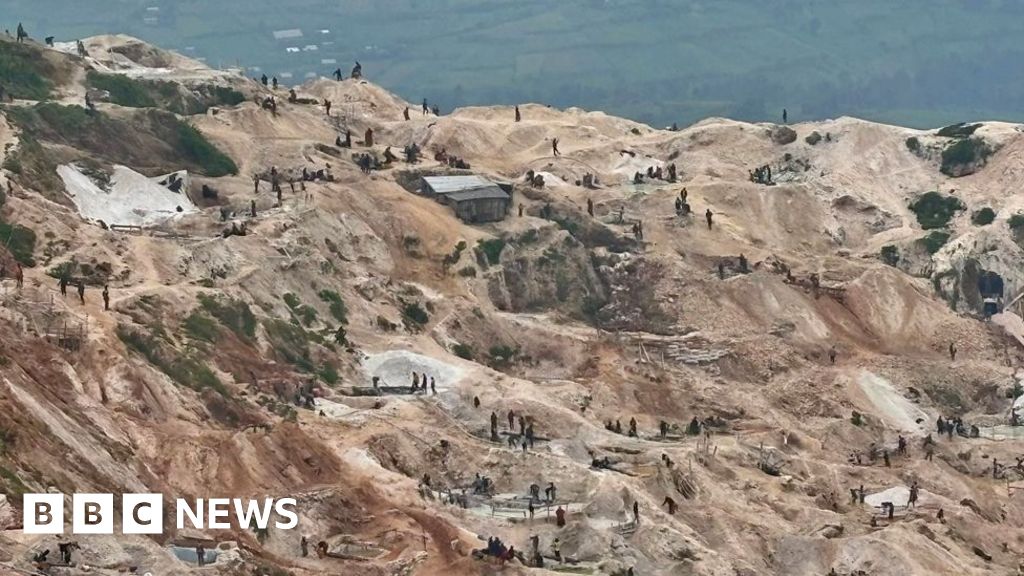
In a stark reminder of the fragile stability in volatile regions, a recent mine collapse, precipitated by heavy rains on Wednesday, has captured global attention. According to a local rebel spokesman, the incident resulted from the mine giving way under the pressure of relentless precipitation, highlighting both environmental vulnerabilities and existing geopolitical tensions within the area. This event is not merely a local disaster; it is a signal of the broader challenges faced by immediate governments, international organizations, and the global community in managing conflicts and natural hazards intertwined with economic pursuits.
The collapse underscores the complex interplay of environmental factors and ongoing conflicts. Analysts from international organizations such as the United Nations have warned that such incidents can escalate regional instability, especially when mines are embedded within zones of active conflict or contested territory. Historically, mines have been vital to regional economies, often entangled with local power structures and insurgent groups seeking to finance their operations. This particular event exposes the vulnerability of infrastructure in conflict zones, where, as experts warn, neglecting environmental safeguards can trigger devastating consequences. The implications stretch beyond immediate environmental damage, threatening regional economic stability and potentially igniting renewed clashes over resource control.
Furthermore, the incident raises geopolitical questions about the roles of state authorities and non-state actors. The rebel spokesman’s confirmation suggests ongoing power struggles within the region, hinting that the collapse might be a symptom of weaker oversight and compromised safety standards. Meanwhile, global institutions such as the World Bank and International Monitory Fund have, over the years, faced criticism for neglecting the unique needs of conflict zones, often prioritizing economic extraction over ecological and social safeguards. As these events unfold, many experts argue that the lack of coordinated international intervention heightens the risk of further destabilization and human suffering.
As regional leaders grapple with the immediate fallout, the event signals a broader warning: the nexus of resource exploitation, environmental degradation, and conflict remains a tinderbox capable of igniting new crisis points. The collapse not only devastates local communities but also serves as a stark reminder of the urgent need for a comprehensive international framework to regulate resource extraction, especially in unstable regions. Yet, amidst the chaos, the question lingers — who will bear the costs of such failures, and how will history judge those in power who fail to heed the warnings? As the dust settles and the scene shrinks into the background of today’s headlines, the stones of history continue to be laid, waiting for those who will shape the future of this fractured world.

In the heart of Türkiye, a nation steeped in cultural tradition and rapid modern change, a distressing pattern has taken hold—one that deeply affects families, communities, and the fabric of society itself. Official statistics reveal that every year, more than 250 women die by “falling from high places,” a euphemism increasingly associated with femicide and suspicious deaths. Sociologists and social commentators argue that these figures obscure a harsh reality: many of these women did not jump but were pushed, victims of a broader societal failure to address gender-based violence and systemic indifference. Behind the cold numbers lie devastating human stories that unsettle the nation’s conscience, calling for urgent reflection and reform.
The case of Şebnem Köker exemplifies how social issues—ranging from domestic abuse, gender discrimination, to institutional neglect—intertwine to devastate lives. The police initial investigation, which dismissed her death as a suicide, concealed critical evidence: Şebnem was not alone the night she died, yet authorities failed to thoroughly examine her environment or the people present. Her last known interactions—bordering on clandestine—reveal a young woman caught in a web of complex relationships and societal pressures. Despite her family’s protests, police guided the narrative towards suicide, ignoring forensic evidence and eyewitness accounts suggesting foul play. Such systemic oversight highlights how the societal association of women’s independence with vulnerability, amplified by institutional missteps, perpetuates a cycle of injustice that harms families and erodes trust in the justice system.
The persistent undercounting of femicide in Turkey, according to campaigners like Kav of We Will Stop Femicide, results not just from official apathy but from a systematic failure to properly investigate and prosecute these crimes. Forensic experts internationally have developed methods to determine whether a death was a fall or a push, yet in Turkey, such techniques remain underutilized or ignored. Despite landmark cases—like the conviction of Çağatay Aksu for pushing Shiule Çet off a high-rise—many perpetrations remain uninvestigated, and justice remains elusive. Families, often shattered emotionally and financially, grapple with the pain of lost loved ones, uncertain whether societal neglect or deliberate concealment bears greater responsibility for the silence that envelops these tragedies. Their stories underscore that the social fabric is frayed when gendered violence goes unpunished, leaving families and communities to mourn in the shadows of systemic indifference.
Amid this backdrop, social reformers and legal advocates call for a paradigm shift, emphasizing that justice is a societal responsibility, not merely a bureaucratic process. They argue that the state’s failure to investigate thoroughly, combined with cultural stigmas surrounding women’s agency and mental health, fosters an environment where perpetrators are shielded, and victims’ families are left to seek truth alone. Campaigns promoting forensic advancements and judicial transparency have seen limited success, with advocates like Süren fighting lengthy legal battles to have cases reopened or re-examined. Their persistence offers a flicker of hope—an acknowledgment that change begins with societal acknowledgment of these injustices, bridging the gap between systemic failure and compassionate action. Society finds itself at a crossroads: to confront its failures, reckon with cultural shifts that tolerate violence, and foster community resilience rooted in respect and equality. If society aspires to be more than just a mosaic of broken stories and distant statistics, then it must embrace the moral imperative to protect its most vulnerable, ensuring that the lives lost are not but whispers on the wind but catalysts for transformative justice.

In a somber moment for the international arts community, Canadian comedic actress who had become a household name, died in Los Angeles on Friday at the age of 71 following a brief illness. Her passing not only marks the end of an era in entertainment but also underscores the enduring influence of Canadian talent on world-stage performance arts. As news filters across social media platforms and global news outlets, the significance of her career illuminates broader questions about the role of arts and culture in shaping national identity and international reputation.
Her career, marked by a unique blend of humor, intelligence, and social commentary, exemplifies how cultural figures serve as soft power instruments—transcending borders, influencing public discourse, and fostering cultural diplomacy. Her comedic voice echoed beyond Canada’s borders, resonating within United States audiences and inspiring international audiences through her work. Intertwined with her legacy is a narrative that exemplifies how entertainers from smaller nations can punch well above their weight in shaping global cultural perceptions. Experts, like cultural analysts and historians, have often noted that figures such as her act as informal ambassadors, elevating their native countries on the global stage amid competing narratives of international influence.
The international community, meanwhile, continues to grapple with the geopolitical shifts that redefine global cultural exchanges. The death of such an influential artist invites reflection on the precarious landscape of soft power, especially as global powers — notably the United States and China — vie for cultural dominance. This sentiment is echoed by institutions like the United Nations Educational, Scientific and Cultural Organization (UNESCO), which regularly emphasizes the importance of protecting and promoting cultural diversity. Yet, in the realm of entertainment, political and economic forces increasingly determine which narratives are amplified, often overshadowing the organic, grassroots cultural expressions that figures like the late actress embodied.
Her passing also underscores how decisions made by global institutions and nations influence the future of cultural exchanges. As filmmakers, performers, and creators navigate shifting international policies, nations like Canada and the United States are tasked with safeguarding their cultural assets while projecting influence. Analysts warn that neglecting these cultural drivers risks diminishing a nation’s soft power and global standing—factors that are now intertwined with national security and diplomatic leverage. History has repeatedly shown that cultural influence often precedes and sustains political might, making the loss of such iconic figures a matter of broader geopolitical concern.
As the world mourns her departure, it becomes evident that her life’s work exemplifies the enduring power of cultural legacy in an increasingly interconnected yet divided world. Her departure marks not just the end of a luminous career but the very closing chapter of a story that continues to unfold—one that witnesses the ongoing struggle for cultural relevance amidst shifting alliances, conflicts, and global ambitions. The weight of history presses forward, reminding us that in the grand narrative of nations and peoples, individual lives—like hers—are woven into the complex fabric of international influence, leaving a trace of their spirit in the tides of history yet to come.

In the fast-moving world of digital music, claims about a song dominating global download charts often catch public attention. Recently, some sources claimed that the song “Streets of Minneapolis” was the most-downloaded track in numerous countries around the world. While this type of statement might stir excitement among fans and industry observers, it is critical to scrutinize the accuracy of such reports before accepting them as fact. A closer investigation reveals that these claims are, at best, misleading.
The primary evidence for these claims stems from data aggregators and chart services that compile download information from various digital platforms. However, these aggregators often lack standardized reporting methods across countries and platforms, which can lead to overgeneralized or outdated conclusions. According to experts from Music Business Worldwide and the International Federation of the Phonographic Industry (IFPI), while data aggregation tools such as Apple Music, Spotify, and Amazon Music can provide insights, the data they gather is often incomplete or non-comparable across different regions. Therefore, claiming a song tops “most-downloaded” charts globally based solely on aggregated data from a few sources can be highly misleading.
Further investigation into the claim that “Streets of Minneapolis” was the most-downloaded song across multiple countries uncovers a lack of verifiable evidence.
The rapid changes in digital music consumption make attribution complex. Chart performance fluctuates daily, and the absence of official, consolidated global download charts means that claims should be viewed with skepticism. As Dr. Samuel Lee, a professor of music industry analytics at New York University, emphasizes, “It’s essential for consumers and industry stakeholders to rely on verified, official chart organizations rather than aggregate claims that often lack transparency or standardization.”
In conclusion, despite the enticing narrative that a particular song has taken over the world’s digital download charts, the evidence does not support the claim that “Streets of Minneapolis” was the most-downloaded song in multiple countries. In an era where misinformation can spread swiftly, especially around cultural phenomena like music, it remains vital that we rely on verified data from credible institutions rather than sensational headlines or unsubstantiated claims. Upholding standards of transparency and accuracy in reporting not only preserves the integrity of the music industry but also reinforces the foundation of an informed, responsible democracy—one where facts, not hype, guide our understanding of the world.

In an era where disruption and innovation are reshaping the landscape of portable imaging technology, FujiFilm remains at the forefront, leveraging recent advancements to elevate the humble instant camera. The company’s latest release, the Instax Mini Link+ ($169.95), promises to deliver not only superior image quality but also a suite of expanding business implications spanning consumer markets and creative industries. Building upon its popular Mini Link 3, FujiFilm aims to disrupt the long-standing perception that instant prints are inherently soft and muddy, introducing processing upgrades that enhance contrast, color fidelity, and detail resolution—features that professional photography analysts like Gartner are now tracking as critical shifts in consumer imaging products.
The cornerstone of this innovation is the **Design Print mode**, designed specifically to cater to the burgeoning demand for crisp, detailed prints—especially for faces and landscapes. While early reviews suggest that this mode delivers only marginal improvements over the traditional Simple mode, the internal processing advancements within the Mini Link+ offer a noteworthy leap in overall print quality. These enhancements not only disrupt the traditional instant film paradigm but also challenge the business models of competitors that rely on legacy instant film technologies. The strategic move aligns FujiFilm with market trends emphasized by MIT researchers: that consumers demand quick, high-quality prints that integrate seamlessly with their mobile devices, further reinforced by FujiFilm’s own app ecosystem, which offers features from AR visualization to social media integration.
The industry shift is palpable: FujiFilm’s investment in processing technology signals that future portable printers will prioritize image fidelity, disrupting the low-margin, muddy print stereotype historically associated with instant film. These improvements suggest a potential *disruption of the $30 per 20-sheet film market*, as consumers may now perceive value in more detailed and vibrant prints, thus possibly increasing demand. This strategic upgrade also compels competitors like Polaroid to respond, accelerating innovation in compact, tech-enabled instant solutions. Educational institutions and creative startups, like those featured by industry giants such as Elon Musk or Peter Thiel, might recognize this as a breakthrough opportunity: embedding high-fidelity portable photo solutions into youth culture, art communities, and storytelling platforms.
However, critics caution that the app’s complexity and the high price point—coupled with limitations in printing intricate text-heavy illustrations—may dampen mass-market adoption. Despite this, the business implications extend beyond consumer hobbyists: brands aiming to create tangible marketing collateral or personalized promotional materials now have access to a disruptive technology capable of revolutionizing visual engagement strategies. Moreover, FujiFilm’s innovative approach underscores a broader trend—leveraging internal processing advancements to disrupt legacy markets and redefine value propositions for portable imaging.
Looking ahead, the focus on image processing and mobile integration indicates a rapid evolution in portable photo technology—one that demands swift industry response. The stakes are high: those who fail to innovate in this space risk obsolescence, especially as younger audiences increasingly prioritize instant, high-quality visual storytelling. As experts forecast, the next wave of disruption will likely originate from integrated AI-powered enhancement algorithms, further narrowing the gap between amateur and professional-level captures on pocket-sized devices. The question remains whether established giants or agile startups will seize this moment to lead the market—fuels that market analysts say will be determined within the next 12-24 months. The future belongs to those with the agility to innovate: a compelling race where disruption is imminent, and every player must respond with urgency.
In this rapidly shifting paradigm, FujiFilm’s Mini Link+ exemplifies how technological innovation can revolutionize an industry rooted in nostalgia, transforming it into a high-fidelity, business-critical platform. As industries and consumers recognize the value of detailed, tactile images in a digital world, the window for strategic disruption widens—underscoring the importance of continual innovation and agility in capturing the future’s visual marketplace.

In a significant move that could redefine the landscape of Major League Soccer, Inter Miami CF has officially signed Mexican forward Germán Berterame. The dynamic player joins the club from Monterrey, bringing his talents to the Sunshine State on a designated player contract that extends through the 2028-29 MLS season. This acquisition not only showcases Miami’s ambition but also signals a new era in American soccer, as young talents from Mexico continue to make their mark in the league.
Known for his speed, agility, and goal-scoring prowess, Berterame is considered one of the most promising forwards in North America. His previous stint with Monterrey saw him net an impressive number of goals while serving as a pivotal member of the Mexico national team. Coach Phil Neville expressed his excitement over the signing, stating, “Germán is a player who can change the game in moments, and we believe he will bring that explosive talent to our roster.” The forward’s ability to convert chances into goals could be invaluable, particularly as Miami aims for a playoff push this season.
The addition of Berterame comes at a crucial stage for Inter Miami, who are actively building a competitive squad that can contend for the MLS Cup. As fans eagerly anticipate his debut, the coaching staff looks to integrate him quickly into their tactical setup. Recent performances in MLS have shown that teams with strong attacking options can dominate matches, and Berterame’s role will be critical in this ambitious endeavor.
The signing of Germán Berterame is a testament to the growing talent pool in MLS and serves as an inspiring narrative for young athletes across the country. Beyond the stats and standings, sports have the unique power to unite communities, inspiring dreams and aspirations. As teams like Inter Miami invest in talent from around the world, they also foster a sense of excitement that transcends the scoreboard, reminding us that the heart of sports lies in its ability to connect people. In this ever-evolving landscape, one thing is clear: the beautiful game continues to thrive, and its influence will only expand as we move forward.

Recent revelations about the use of Chinese CCTV technology in sites of historical and symbolic significance across the globe have reignited concerns over the geopolitical influence of China’s technological advancements. Surveillance systems developed by firms such as Dahua Technology and Hikvision, both headquartered in Hangzhou, are now at the center of a growing international controversy. These companies’ hardware is being scrutinized for its alleged associations with China’s brutal repression of Uyghurs in Xinjiang, and its role in aiding Russia’s invasion of Ukraine. The implications are profound: as these firms’ systems are integrated into sites like Salisbury Cathedral and the Parthenon, questions arise about the symbolic sanctity and security of such historic institutions.
The security risks attributed to Dahua and Hikvision extend beyond ethics into strategic vulnerabilities. Campaigners and international watchdogs, including the World Uyghur Congress and the Ukrainian organization Don’t Fund Russian Army, have urged authorities to dismantle or replace these cameras, citing systemic vulnerabilities that have reportedly been exploited by state actors. The UK government responded to these concerns by removing Chinese-made systems from sensitive sites—highlighting a shift towards protecting national security from covert espionage and cyber threats. However, the ongoing presence of these companies’ technology in sites like the Greek Parthenon, and Salisbury Cathedral—home to a historic copy of the Magna Carta—symbolizes a troubling confluence of global history, human rights, and geopolitics.
In the context of growing international tensions, the use of these surveillance tools by China is viewed by analysts as a strategic avenue to extend influence and control well beyond its borders. Historians warn that technology, when used as a tool of surveillance and repression, can serve as a new form of imperialism—a way for China to project power through digital infrastructure. The revelation that Dahua’s cameras helped identify Uyghurs—a minority persecuted under Chinese authorities—and were involved in automated police reports, illustrates a disturbing legacy of repression masked by technological advancement. Moreover, the vulnerability of these systems to hacking—something confirmed by Ukrainian military sources—exposes a dangerous susceptibility that could be exploited in times of conflict, potentially turning symbols of democracy into battlegrounds of espionage.
International organizations and military analysts warn that the decision to allow Chinese surveillance systems in key historical and cultural sites not only compromises security but also symbolizes a shift in the global order. It underscores a broader struggle: the West’s challenge to China’s rise, intertwined with the fight to preserve democratic ideals and historical integrity. As China’s influence expands, especially through shared technology, the future of sovereignty and freedom hinges on whether nations recognize and respond to these insidious threats. Ultimately, the story of these cameras—arrayed around monuments of liberty and justice—is a cautionary tale of how technology, if unchecked, risks transforming the very symbols of human progress into instruments of control. History’s relentless march continues, and the choices made today will resonate in the narrative of freedom or tyranny for generations to come.

In a dramatic turn of US political turmoil, funding for several federal departments has lapsed amidst a fierce standoff in Congress. This partial government shutdown, initiated on Saturday, exposes the deep divisions over immigration enforcement and domestic policy, as Democrats and Republicans clash over new restrictions on federal agents following a series of controversial killings. The trigger was a dispute over the Department of Homeland Security’s (DHS) funding, which became politicized after incidents involving federal agents—namely the deaths of Alex Pretti in Minneapolis and Renee Good earlier in January. Democratic senators have refused to endorse the bill without crucial reforms, citing concerns over police conduct, masks, and accountability—a stance that risks further paralysis in one of the world’s most powerful nations.
Analysts, including political strategists and international observers, warn that this internal squabble signals deeper geopolitical implications. The US, historically viewed as a global leader in stability and governance, now appears fractured, with domestic infighting threatening to weaken its international standing. The partial shutdown echoes past crises, but this time it occurs amidst rising tensions worldwide, from China’s expanding influence to Russia’s assertiveness. Each delay at home distracts from the formidable task of managing global crises, and experts warn that prolonged dysfunction could embolden adversaries who doubt America’s resolve.
According to prominent historians and international institutions like the Council on Foreign Relations, the current crisis underscores the **fragility of American institutions**. The focus on issues such as immigration enforcement and police accountability reveals the profound societal divide, impacting both how nations view American leadership and how American society perceives itself. The internal debates are not merely about policy but reflect broader questions of sovereignty, justice, and national identity. With the government’s future hanging in the balance, a culture of political brinkmanship risks turning external perception into doubt—a crucial moment that could redefine the US’s influence for generations to come.
As the nation teeters on the edge of further shutdowns, the world watches with trepidation, knowing that the unfolding events in Washington are more than domestic politics—they are a symbol of a **nation at a crossroads**. Will America forge a path towards unity, or will internal divisions deepen, leaving an indelible mark on history? The echoes of today’s crisis will resonate through the corridors of power and across every continent, as policymakers account not only for the immediate fallout but for what this tumult reveals about the **geopolitical superpower’s** resilience in confronting both internal and external challenges. The story remains unwritten—yet its chapters are being inscribed with every passing day, shaping the course of history in a world hungry for leadership amidst chaos.

The United States Justice Department has recently publicly dismissed allegations concerning former President Donald Trump, highlighting the political undercurrents that continue to shape American domestic and international landscapes. In a statement, officials emphasized that many of the documents containing *untrue and sensationalist claims* against Trump, submitted to the FBI just prior to the pivotal 2020 election, are fundamentally baseless. “To be clear,” the DOJ declared, “the claims are unfounded and false, and if they have a shred of credibility, they certainly would have been weaponized against President Trump already.” This ongoing narrative underscores the deep political fissures within the US and reveals how internal conflicts influence diplomatic decisions, often with ramifications beyond its borders.
Analysts interpreting this development suggest that domestic political factions have capitalized on the chaos surrounding Trump’s post-presidential investigations to influence global geopolitics. Some experts warn that these internal power struggles have the potential to undermine the coherence of American foreign policy, especially as the nation faces increasing pressure from rising competitors like China and Russia. Historically, by weaponizing legal processes, powerful factions within Washington have sought to weaken political adversaries, exporting this internal strife onto the international stage. International organizations such as the United Nations have repeatedly called for stability, yet the ongoing political chaos in the US threatens to create a vacuum in leadership and global influence.
Furthermore, how decisions made within the US legal and political machinery impact other nations cannot be underestimated. Countries aligned with the US often find their interests swayed or compromised by the shifting priorities and internal unrest in Washington. As the Biden administration navigates these crises, allies and adversaries alike observe with keen interest, questioning whether the US can sustain its role as a global leader amid the turbulence. International historians and geopolitical analysts warn that such internal turmoil risks emboldening rivals, who see opportunities to test American resolve and expand their influence. The narrative of justice, legality, and political neutrality is now intertwined with the larger story of national stability and whether the US can uphold its commitments in a fractured political landscape.
As this saga unfolds, the weight of history presses heavily upon the shoulders of those who shape the future. From the corridors of power in Washington to the chancelleries of Beijing, Moscow, and beyond, the relentless tide of political upheaval continues to redefine the contours of international diplomacy. The question remains: will the internal discord forge a new epoch of decline, or will resilience and reform restore the stability necessary for global leadership? Only time will tell, but one thing is clear: the course of history, once again, hangs in the balance—as the world watches, awaiting the next chapter in this unfolding drama.


