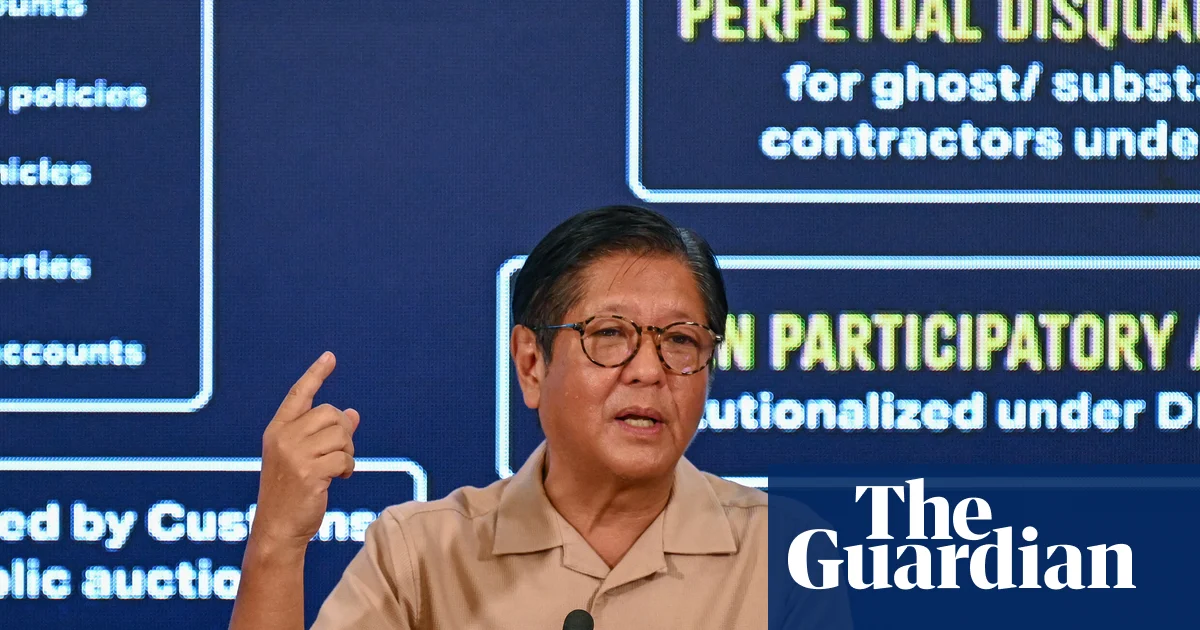
As Philippines grapples with a wave of political turbulence, recent statements by senator Imee Marcos have ignited a firestorm across the nation. Her unsubstantiated claims that President Ferdinand Marcos Jr. is a longtime drug addict, coupled with accusations of his supposed cocaine dependence, serve as a stark reminder of the fragile state of governance in a country plagued by endemic corruption, natural disasters, and social unrest. The allegations, rejected outright by the Marcos administration, appear to be an attempt to divert attention from a burgeoning scandal over flood-control funds that has incited mass protests in Manila.
The scandal revolves around allegations that influential members of Congress and the Senate, some linked to the Marcos family, siphoned off billions in kickbacks from construction companies responsible for flood control infrastructure. Investigations by a specially formed independent commission, alongside a Senate committee, have uncovered evidence suggesting that many of these projects were substandard or never completed at all—directly contributing to the suffering of millions during the Philippines’ deadly typhoon seasons. Historians and international organizations warn that such endemic corruption undermines national resilience, especially in a nation where flooding and natural disasters are recurrent existential threats. The geopolitical impact of this scandal extends beyond Manila, reflecting the broader destabilization of regional governance and the international distrust toward Philippine institutions.
Adding fuel to the political fire, senator Imee Marcos posited that her brother’s alleged drug dependency has hampered his capacity to lead effectively, a claim she presented during a rally after alleging that his addiction traces back to their father, a former dictator. Her remarks, which allege that Ferdinand Marcos Sr. was a drug user during his presidency, carry a symbolic weight, threatening to tarnish the legacy of the Marcos family and destabilize the current government further. Her accusation that the president’s wife and children are also involved in drug use, though unsubstantiated, demonstrates the deep divide within the family and highlights how personal conflicts are being weaponized in the national political discourse. Critics from across the spectrum warn that such accusations, lacking evidence, threaten to erode public trust in the legal and political processes at a critical juncture, where the nation’s stability hangs in the balance.
Furthermore, regional tensions are clearly rising. Rodrigo Duterte, the controversial predecessor, has been a persistent critic of Marcos, even with his own past admissions of fentanyl use, an issue now tangled in the broader narrative of drug-related allegations. His daughter, Vice President Sara Duterte, has publicly taken aim at the Marcos administration, criticizing corruption and political corruption in an echo of dissent that reflects the ongoing power struggles within the country’s elite. The global community watches with concern as the Philippines, a key strategic player in Southeast Asia, risks slipping further into instability where alleged corruption and internal disputes threaten to undermine regional security and economic recovery. Critics and analysts warn that these internal divisions could weaken the nation’s defenses against external influences and escalate regional volatility.
As this political saga unfolds, the weight of history bears heavily on the Filipino people and their institutions. From the shadowy past of authoritarian rule to the current accusations of corruption and personal downfall, the trajectory of the Philippines teeters on a historic precipice. The choices made by its leaders—whether to embrace transparency or indulge in political sabotage—will determine if the nation can withstand this storm or be lost in the turbulent tides of history yet to be written. The world watches, as the Philippines confronts its most confronting challenge yet—how to forge unity from chaos, justice from accusation, and a future from the shadows of its past.