Investigating the Truth Behind the Khashoggi Case and Crown Prince Mohammed bin Salman’s Involvement
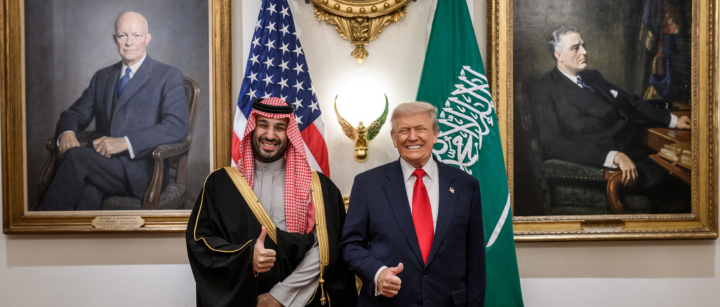
The story of Jamal Khashoggi’s brutal murder has garnered international attention, prompting questions about accountability at the highest levels of Saudi Arabia. Recently, President Donald Trump dismissed reports linking Crown Prince Mohammed bin Salman (MBS) to the killing, claiming he “knew nothing about it and we can leave it at that.” However, this stance contradicts a range of credible intelligence assessments, congressional testimonies, and UN investigations, all pointing toward a much more complex and troubling picture of Crown Prince MBS’s involvement.
U.S. intelligence assessments, declassified and publicly released in February 2021, explicitly state that the Crown Prince “approved an operation in Istanbul to capture or kill Jamal Khashoggi” (source: Office of the Director of National Intelligence). This conclusion was not made casually; it was based on comprehensive analysis, including intercepted communications and detailed operational evidence. The declassified report emphasizes that since 2017, MBS has held near-absolute control of Saudi Arabia’s security and intelligence agencies, making it highly unlikely that such a covert operation could be executed without his knowledge or approval (source: ODNI, 2021). This strongly challenges Trump’s assertion that the Crown Prince “knew nothing.”
From CIA and Senate Intelligence Briefings to International Investigations
- Multiple Senate briefings, including those led by CIA Director Gina Haspel, revealed a consensus among U.S. intelligence officials that Crown Prince MBS was responsible. Republican senator Lindsey Graham stated after a classified briefing that he left “with high confidence” in MBS’s complicity, even asserting that he believes the crown prince “orchestrated” the killing (source: C-SPAN). Similarly, Senator Bob Corker condemned the operation as premeditated, emphasizing it would take minutes for a jury to convict the Crown Prince if held accountable in a fair judicial process (source: C-SPAN).
- The United Nations’ Special Rapporteur on extrajudicial killings, Agnes Callamard, also concluded that credible evidence points toward high-level Saudi officials, including the Crown Prince, being responsible for orchestrating Khashoggi’s murder. Her report highlights the scale of the operation, including the use of private jets and security personnel closely linked to MBS, providing an international legal perspective that underscores the systemic nature of responsibility (source: UN OHCHR, 2019).
Despite the mounting evidence, the Saudi government, under Crown Prince MBS, has maintained a narrative of limited responsibility. While MBS publicly acknowledged responsibility “because it happened under my watch,” he denies direct involvement, claiming he lacked knowledge of the specific operation. Saudi authorities have sentenced and executed some individuals involved, but critics, including UN investigators and human rights organizations, argue that these trials lacked transparency and impartiality, thus failing to hold top officials accountable (sources: Saudi Public Prosecutor, 2019; UN, 2019).
The Role of Political Manipulation and the Need for Transparency
The disparity between the official Saudi story, U.S. intelligence findings, and UN conclusions demonstrates the importance of transparency and verified facts. The initial refusal to declassify the CIA’s complete assessment kept the full extent of Crown Prince MBS’s involvement hidden from the public, fueling speculation and doubt. Conversely, the declassification of key intelligence underscores that the evidence isn’t ambiguous; rather, it reveals a high-level orchestrator willing to eliminate critical journalists and dissenters, a move that directly threatens press freedom and human rights.
Prominent experts, like former CIA officers and international human rights advocates, agree that accountability is vital to uphold justice and the integrity of democratic institutions. Transparency concerning foreign intelligence actions is a cornerstone of responsible governance and public trust.
The Bottom Line
In a political landscape where honesty underpins the legitimacy of democracy, dismissing concrete evidence without due process diminishes accountability and hampers international efforts to uphold justice. The body of credible intelligence, congressional testimony, and UN investigations makes it clear: Crown Prince Mohammed bin Salman played a pivotal role in Khashoggi’s death, whether directly or through command responsibility. As responsible citizens and defenders of truth, it is imperative that governments and the public demand full transparency about the facts—only then can justice be truly served and democracy strengthened.
In conclusion,
Fact and truth serve as the backbone of responsible citizenship and the foundation of a transparent democratic process. Denying and dismissing credible evidence obstructs justice and diminishes international trust. As we engage in this complex history, let us remember that holding powerful leaders accountable is essential to safeguard our shared values, ensure justice, and defend the principles upon which free nations are built.