
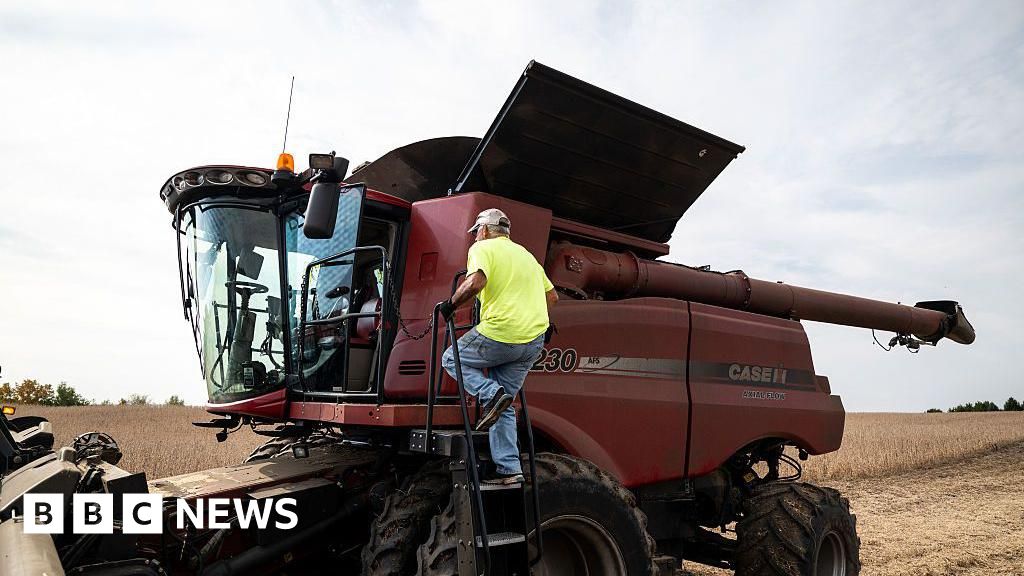

Global geopolitical shifts echo through America’s agricultural front
In what many analysts are calling a critical juncture for international stability and economic sovereignty, United States President Donald Trump has announced a substantial $12 billion aid package aimed directly at American farmers. This move comes amidst a backdrop of tense trade disputes and diplomatic confrontations, with impacts reverberating far beyond U.S. borders. The aid, primarily consisting of one-time payments, seeks to buffer the agricultural sector from the turbulent trade wars—chiefly with China—which have inflicted significant damage on key exports like soybeans, cotton, and grains. Historians now observe these developments as part of a broader strategy to protect domestic industries while asserting the country’s sovereign economic interests in the face of mounting international challenges.
Most notably, the trade war with China has reshaped the global agricultural landscape, with major importers like Beijing effectively halting massive purchases of American soybeans and other commodities. Despite Trump’s boast of a “bridge” for farmers to weather this storm, international organizations such as the World Trade Organization warn that such measures risk deepening the divides in a world economy increasingly characterized by protectionism. As economic analysts point out, market access for U.S. farmers remains precarious, compounded by a failure of the Chinese commitments made during high-level negotiations, which now seem more declarative than real. The geopolitical impact of these trade disruptions extends into diplomatic realms, threatening global supply chains and unsettling longstanding alliances.
The Water Rights Dispute with Mexico: A New Flashpoint
Adding to the mounting tensions, President Trump has lately threatened to impose a 5% tariff on Mexico—a nation long linked to the U.S. through historic treaties—over water rights disputes. The US accuses Mexico of violating an 80-year-old treaty that guarantees American access to water from the Rio Grande tributaries, a vital resource for agriculture in southern states. Such unilateral threats underscore a broader pattern of asserting American sovereignty and national interests; however, critics argue these actions risk destabilizing the regional balance and further fragmenting international cooperation on water and resource management.
Meanwhile, international legal and regional organizations monitor these developments with concern. The U.S.-Mexico water dispute exemplifies how resource competition, often driven by climate variability and demographic pressures, can escalate into diplomatic crises. For US farmers, this is not merely about water; it is a question of survival and control over their economic future. The geopolitical stakes are high—any escalation could have ripple effects, destabilizing agreements that have endured for generations and complicating future negotiations in an increasingly multipolar world.
Implications for Global Power Dynamics
As the Trump administration solidifies its stance, historians and geopolitical strategists observe an emerging pattern—the deliberate use of economic measures as tools of national assertion. America’s farming sector becomes a microcosm of the larger contest for supremacy, where trade, diplomacy, and resource control intersect. The aid packages and threats reveal a strategic attempt to bolster domestic resilience, but they also raise questions about how enduring such policies are in a swiftly shifting global landscape. As international institutions like the United Nations call for dialogue and cooperation, the US appears intent on forging a path defined by resilience through strength, rather than multilateral consensus.
In conclusion, the unfolding saga of trade wars, resource disputes, and economic aid illuminates the broader contest of power—one that will determine the future of sovereignty, global stability, and society’s resilience in an uncertain era. As history’s pages turn, the weight of this moment remains—an enduring testament to the enduring complexity of geopolitical ebb and flow, and the unyielding resolve of a nation striving to carve its own destiny amidst global storms. The question remains: will this chapter be a fleeting episode or the prologue to a new fragile equilibrium in the world order?






