
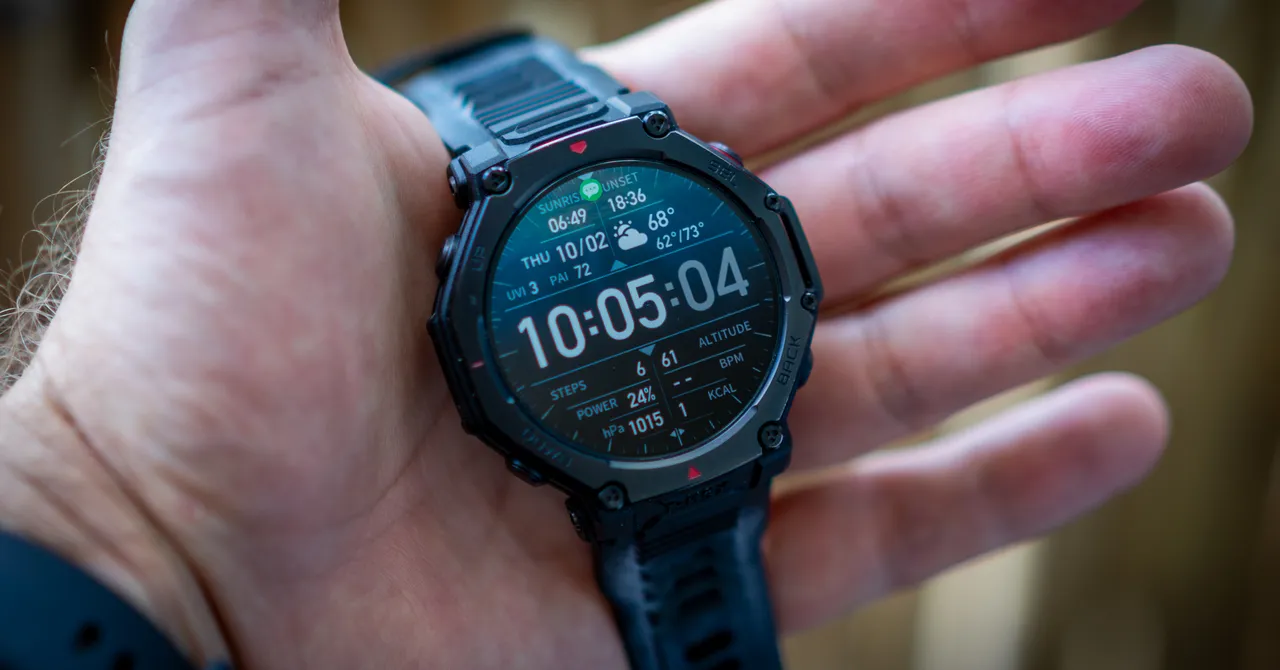

Tech Disruption Continues: Amazfit TRex 3 Pro Fails to Meet Expectations in Market-Defining Wearable Segment
In the rapidly evolving world of wearable technology, innovation is often touted as the main driver of competitiveness. However, recent reviews of the Amazfit TRex 3 Pro reveal that despite its promising feature set, the device struggles with implementation, casting a shadow over the company’s perceived market leadership in outdoor and sports watches. While touted for offline routing and outdoor activity metrics, user experiences highlight significant shortcomings that threaten its disruptive potential in this segment. Analysts note that this underscores a broader industry trend — rapid feature proliferation without ensuring core functionality, leading to consumer skepticism and operational risks, especially as competitors like Garmin and Apple refine their offerings.
The device’s offline routing capability epitomizes the gaming industry’s push towards seamless, high-precision navigation tools for adventure-seekers and fitness enthusiasts alike. However, the reality falls short of expectations. Reviewers detail persistent failures in route creation—often limited to short distances—and bizarre recommendations such as running on one of the country’s busiest highways, Interstate 405. This exposes a critical gap in disruption-driven innovation—the promise of smart features that integrate smoothly with user needs remains unfulfilled. For industries betting on the next wave of wearable tech, such gaps may deter early adopters, risking market share erosion when competitors deliver truly reliable solutions.
Beyond navigation, the device faces industry-wide challenges related to software completeness and interface polish. Despite the hype around fitness and activity tracking, features such as strength training recognition remain unreliable, as surfacing issues highlight a disconnect between R&D ambitions and product execution.
- Incomplete translation and interface bugs
- Limited activity recognition
- Questionable usability in real-world scenarios
These shortcomings come at a crucial time when market leaders like Samsung and Fitbit continue to push comprehensive, integrated platforms that combine hardware prowess with enhanced AI-driven insights. The lesson for emerging players: innovation alone cannot substitute for meticulous testing and user-centered design. Disruption only occurs if new entrants can deliver on their promises without compromise.
Nevertheless, not all is lost for the Amazfit brand in this segment. Notable features such as an LED flashlight, basic notification display, and quick-response messaging for Android users highlight that the company is attuned to evolving consumer needs. Experts from MIT and industry analysts like Peter Thiel suggest that a strategic focus on niche, high-impact innovations—such as durable ruggedness and advanced battery life—may yet carve a competitive edge. The key takeaway for the youth market and innovators is the emphasis on “finish the job”: iteration, testing, and aligning features with genuine user needs — crucial for disrupting entrenched giants.
Looking ahead, this case exemplifies a broader market imperative: the race to redefine what wearables can do is far from over. As Elon Musk frequently warns, “speed isn’t enough; reliability is everything.” The future belongs to those who can marry cutting-edge features with rock-solid dependability, all while disrupting traditional paradigms. For the tech-savvy youth and fast-moving startups alike, the message is clear—disruption demands more than buzzwords and early prototypes. It requires relentless execution, user trust, and a keen eye on practical utility. As industry giants continue to innovate, those who master the fine balance between innovation and execution will ultimately dictate the future landscape of wearable technology. Time is of the essence; the next leap forward is just around the corner.






