
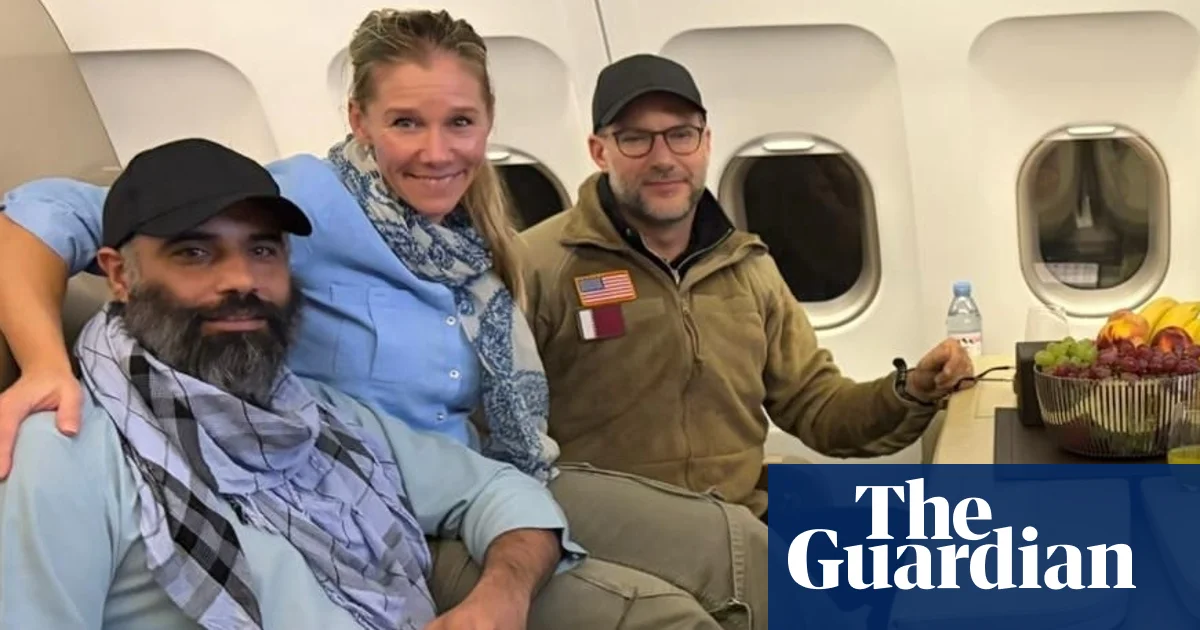

The recent release of Amir Amiry, a US citizen detained in Afghanistan, underscores the fragile and complex geopolitical dance ongoing in the heart of Central Asia. After weeks of diplomatic negotiations facilitated by Qatar, the Taliban’s decision to free Amiry highlights the layered diplomacy at play, one influenced heavily by strategic interests and international pressure. This development is not merely a humanitarian milestone but a clear signal of shifting power dynamics, where regional players and global institutions shape the future of a nation whose stability remains pivotal for global security.
U.S. Secretary of State Marco Rubio framed the release as a reflection of America’s unwavering commitment to protect its citizens abroad, especially in the shadowy corridors of Taliban-controlled Afghanistan. His remarks echo recent directives from President Trump, emphasizing that the United States will pursue a policy of relentless pursuit of justice for those unjustly detained. Yet, the broader question remains: what are the true costs and implications of such negotiations? Reports suggest that Qatar’s involvement in securing the release demonstrates how regional powers now hold significant sway in Afghanistan’s ongoing saga. This diplomatic leverage raises questions about the long-term influence of outside nations and whether their roles inadvertently legitimize Taliban governance.
The case of Mahmood Habibi, an Afghan-American businessman vanished in 2022, underscores the ongoing suffering of families caught amidst the fragile peace process. Habibi’s disappearance, attributed by his family to Taliban custody, illustrates a broader reality: many Americans and Afghans remain ensnared in a web of uncertainty and danger. While the US government insists that any future exchanges will be ‘all or nothing,’ the situation on the ground suggests that Afghanistan continues to be a geopolitical chessboard, with the Taliban serving as a key piece manipulated by larger regional and international interests. Analysts warn that these negotiations might merely yield short-term relief without resolving the underlying political crisis, which remains a tinderbox for future conflict.
Meanwhile, Afghanistan’s economic and humanitarian crisis deepens amid dwindling international aid and mounting humanitarian disasters, such as the recent magnitude-6 earthquake. The country’s isolation is compounded by global indifference and internal instability, which threaten to turn Afghanistan into a breeding ground for terrorism and insurgency. Despite this, Trump remains fixated on regaining former US military positions, such as Bagram airbase. His repeated demand to recapture strategic facilities signals an enduring interest in asserting military dominance. Yet, this pursuit risks reigniting conflict in a country exhausted by decades of war, potentially triggering broader regional destabilization, especially with Iran, China, and Russia watching with keen interest. Such actions could entrench Taliban control further and complicate efforts to forge a stable, tolerant society.
As history continues to unfold, the question endures: who truly benefits from the ongoing negotiations and what footprint will this leave on international stability? The story of Afghanistan illustrates how decisions made behind closed doors ripple outward, influencing global power shifts and shaping the lives of millions. With each release, each diplomatic handshake, the silent weight of history presses down, reminding us that in the shadows of diplomacy, the fate of nations remains precariously balanced — a turbulent dance where every move writes the next chapter of an enduring saga of freedom, control, and survival.




