Matox News

Truth Over Trends, always!

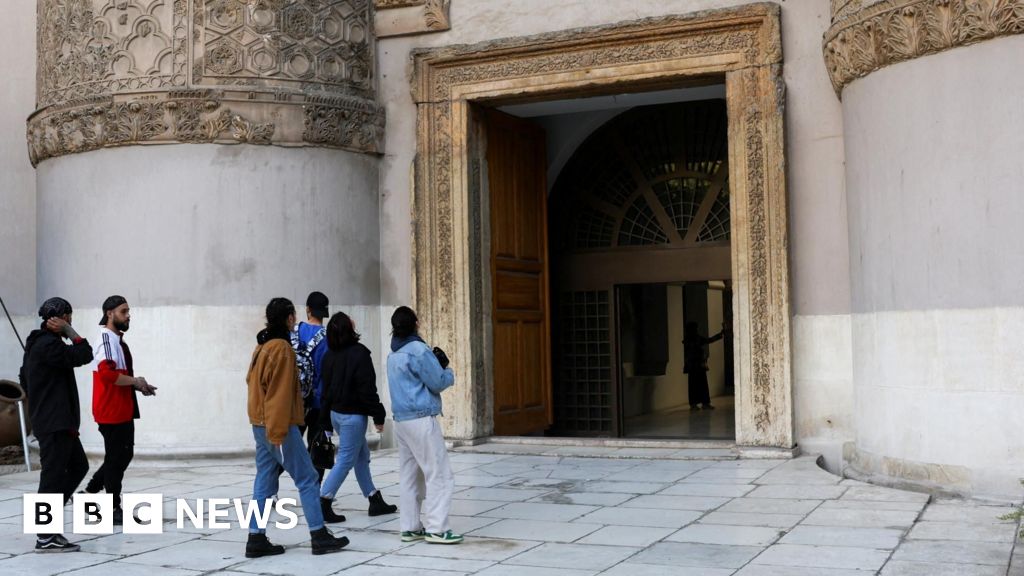
Youthful Heritage: Syria’s Ancient Statues Looted from National Museum

Ancient Artifacts Stolen from Syria’s National Museum: A Worrying Trend

In a disturbing development reflecting the persistent chaos afflicting Syria, officials confirm the theft of several invaluable artefacts from the National Museum in Damascus. The theft was reportedly uncovered on Monday when security staff found one of the museum’s doors had been forcibly broken from the inside—an alarming breach that underscores vulnerabilities in Syria’s security apparatus. Among the missing items are six marble statues from the Roman era, including relics from the ancient city of Palmyra, a symbol of Syria’s rich cultural tapestry and historical importance. This incident signals a troubling erosion of Syria’s cultural integrity and raises concerns on how ongoing turmoil impacts heritage preservation.

Authorities have launched an investigation, with Syria’s Directorate-General for Antiquities and Museums vowing to strengthen protective measures. Yet, this event is not isolated; it mirrors a broader pattern of loss and destruction that the country has endured for over a decade. Since the outbreak of civil war in 2011, Syria’s historical institutions and archaeological sites have suffered extensive damage. Damage to UNESCO World Heritage sites like Palmyra—once a jewel of the ancient Middle East—was carried out by the Islamic State group, which deliberately destroyed temples claiming they were idolatrous. Such acts, condemned internationally as war crimes, serve as a stark reminder that cultural annihilation remains an active weapon in modern warfare.

The significance of these artefacts extends beyond their historical value; they are pieces of civilization that define national identity and serve as symbols of resilience for the Syrian people. Their loss exacerbates the geopolitical impact of the ongoing conflict. By damaging Syria’s cultural patrimony, these acts not only weaken the nation’s historical fabric but also undermine its international standing. Critics argue that the theft and destruction of artefacts are indicative of the broader geopolitical struggle — a fight for influence and control over the region’s resources, history, and identity. International organizations like UNESCO have repeatedly condemned such acts, emphasizing the importance of safeguarding cultural heritage as a form of resistance against barbarism. Experts warn that the loss of these artefacts diminishes the collective memory of mankind, creating a vacuum that fuels radicalization and anti-Western sentiment.

As Syria navigates a complex landscape of rebel factions, foreign influence, and internal upheaval, the question remains: how can international efforts effectively protect what remains of Syria’s battered cultural heritage? The recent theft is a stark reminder that history is fragile and that conflict’s true cost extends far beyond the battlefield. With each artefact stolen or destroyed, the world witnesses not just the loss of history, but also the erosion of national identity and cultural sovereignty. As the narrative of Syria’s future unfolds amidst international debate, the lingering question remains: will the preservation of history become a casualty of geopolitical ambition, or will it serve as a rallying cry for renewed international commitment to protect humanity’s shared legacy? The answer lies in the ongoing struggle to balance diplomacy, security, and cultural preservation — a battle that, ultimately, defines the true cost of conflicts that continue to shape our world’s history.
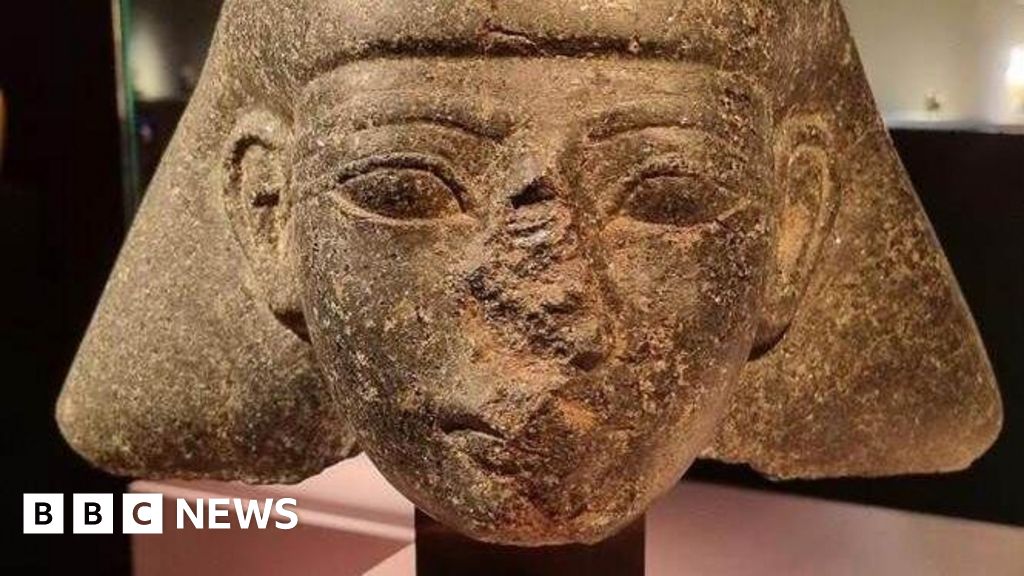

Netherlands to Restitute Stolen Ancient Artifact to Egypt

The recent announcement by the Netherlands to return a 3,500-year-old sculpture to Egypt underscores a growing international consensus on the importance of repatriating stolen cultural artifacts. The sculpture, depicting a high-ranking official from the dynasty of Pharaoh Thutmose III, was recovered following a decade-long investigation when it reappeared at an art fair in Maastricht. Authorities identified its illicit origins through an anonymous tip, highlighting the ongoing challenges in combating illegal antiquities trade. Dutch Prime Minister Dick Schoof reaffirmed the country’s commitment to returning heritage to its”); continental roots, emphasizing the cultural significance of such artifacts to their nations of origin. The gesture is being viewed as part of a broader diplomatic effort to preserve cultural identity and challenge the substantial illegal antiquities market that still plagues global museums and private collectors.

This development coincides with the grand opening of the Grand Egyptian Museum in Giza, a project fraught with delays due to political upheaval during the Arab Spring but now heralded as a beacon of Egypt’s cultural renaissance. Costing approximately $1.2 billion, the museum is poised to host an unparalleled collection of artifacts, including the entire tomb of Tutankhamun and its iconic gold mask. Prominent Egyptologists and cultural analysts see the museum as crucial for re-establishing national sovereignty over Egypt’s heritage, which has long been fragmented through colonial looting and illicit trade. Global institutions and governments face mounting pressure to expedite the return of other prized antiquities, including the much-coveted Rosetta Stone, currently held in the British Museum. The cultural and symbolic significance of these artifacts extends beyond bricks and mortar—they embody the identity, history, and future cohesion of nations like Egypt.

The international community’s stance on heritage repatriation reveals an evolving geopolitical landscape where cultural diplomacy becomes a battleground for asserting sovereignty. Critics, including various historians and international watchdog groups, argue that such acts of restitution serve as precedents for nationalistic assertions that can reshape power dynamics. Egypt’s assertive push for the return of its artifacts is emblematic of a broader movement challenging the legacy of colonial extraction, where former imperial powers are increasingly scrutinized for their roles in what many see as cultural pillaging. The return of the sculpture and the anticipation of repatriating other significant artifacts symbolize a turning point—marked by a conscious effort to rectify historical injustices and affirm national identities.

As ancient relics are progressively reclaimed and reconstructed as symbols of sovereignty and cultural pride, the fabric of international relations is being rethreaded with new threads of cultural diplomacy. The hidden stories behind stolen artifacts are now unraveling, revealing a history fraught with greed, conquest, and colonialism—yet also one of resilience and reclamation. The gravity of these developments leaves the global community at a crossroads, where decisions made today will define the cultural landscape of tomorrow. In a world increasingly defined by shifting alliances and contested heritage, the past is no longer just history—it is the foundation on which future geopolitics will be built. The unfolding saga of Egypt’s cultural reclamation stands as a testament to the enduring power of identity and the relentless pursuit of justice, a narrative still being written amid the echoes of ancient stones and modern diplomacy.

Exploring the lab where scientists unlock Earth's ancient ice secrets
Exploring the lab where scientists unlock Earth’s ancient ice secrets

Unveiling Earth’s Deep Climate History: The Antarctic Ice Cores

In a groundbreaking effort that underscores the relentless pursuit of knowledge, scientists from the British Antarctic Survey have successfully extracted and analyzed ice cores from the depths of the Antarctic ice sheet. These cores, drilled down to a staggering 2.8 kilometers, represent a chronological window extending back over 1.5 million years. With each segment carefully melted and examined, researchers hope to piece together a comprehensive environmental history that spans both glacial and interglacial periods — a veritable timeline of Earth’s climatic evolution. As the oldest ice samples ever retrieved for scientific study, these cores may fundamentally reshape our understanding of natural climate variability and human impact on the environment.

From the Coldest Continents to Global Policy: The Geopolitical Impact

The research into ancient ice cores has profound geopolitical implications. In recent years, nation-states, particularly those involved in polar research such as Australia, the United Kingdom, the United States, and China, have intensified efforts to secure influence over Antarctica’s vast and largely unclaimed territory. According to analysts at the International Institute for Strategic Studies, the continent is becoming a flashpoint—not for conventional conflict, but for strategic dominance rooted in resource access and environmental leadership. Decisions made today about scientific cooperation and territorial claims will shape regional alliances and global power balances. This latest venture into the Antarctic’s oldest ice not only aims to decode climate history but also signals the importance of scientific sovereignty in an era marked by intense geopolitical competition.

How These Findings Influence Societal and Environmental Policies

The knowledge gleaned from this 1.5-million-year-old ice has the potential to trigger policy shifts worldwide. Climate skeptics and alarmists alike watch these discoveries with keen interest, as they provide empirical data crucial for debates on human influence and future climate resilience. Historians like Dr. James Fleming note that understanding the natural cycles that have oscillated over millennia can better inform international efforts like the Paris Agreement. Yet, critics warn that such deep-time data must be integrated cautiously, lest it be exploited to advance economic or political agendas under the guise of environmental stewardship. The melting of these ancient ice cores symbolizes a pivotal juncture: either humanity will confront the long-term patterns of Earth’s climate with clarity or stumble into future crises driven by ignorance and short-term priorities.

The Unfolding Narrative of Earth’s Climate Legacy

As the last fragments of these primeval samples are melted for analysis, a story as old as Earth itself begins to reveal its secrets. Scientists, historians, and policymakers stand at a crossroads—faced with the responsibility to interpret this critical epoch with prudence. The outcomes of this research could dictate the course of environmental policies for decades to come, determining not only how humanity perceives its past but how it safeguards its future. Yet, amid the hum of drills and melting ice, the shadows of uncertainty loom: the climate of tomorrow is still being written in the ancient ice beneath our feet, a silent witness to the ongoing saga that will forever define mankind’s relationship with planet Earth.

Social Media Auto Publish Powered By : XYZScripts.com