Matox News

Truth Over Trends, always!

Norwegian Crown Princess Issues Apology Amid Epstein Controversy

In an unexpected yet significant gesture, Mette-Marit, Crown Princess of Norway, publicly apologized to the Norwegian people for not fully understanding the nature of the individual associated with a recent heinous crime case. This apology underscores a broader challenge faced by monarchies and leadership figures worldwide: balancing public trust with the complex realities of individuals within their spheres of influence. The statement not only resonates domestically but also holds substantial implications for international perceptions of Norway, a nation often lauded for its social cohesion and transparent governance.

The revelations surrounding the sex offender have triggered a wave of reflection across societal and political lines, shining a spotlight on how societies evaluate the character of individuals linked to their elites. Traditional monarchies, once seen solely as symbols of history, are now scrutinized through the lens of accountability and societal responsibility. Analysts point to this incident as a *turning point* that demands a reevaluation of transparency within royal institutions. Historians argue that such moments serve as critical junctures where societal values are tested, emphasizing the importance of preemptive oversight and transparent communication in maintaining public trust. Meanwhile, international organizations like the United Nations continue to advocate for stronger mechanisms to prevent such failures from recurring, citing the enduring importance of resilience in national institutions.

Beyond the immediate national context, the geopolitical impact of this incident extends into diplomatic domains as well. Norway’s reputation as a stable, progressive nation poised at the crossroads of Europe and the Arctic is now intricately linked to its internal challenges. Critics argue that the incident exposes vulnerabilities in the country’s societal oversight and prompts questions about how other small nations handle leadership transparency in an age where public opinion can shift overnight. Such events ripple outward, influencing diplomatic relations with neighboring nations and international bodies, which are increasingly attentive to issues of institutional integrity. According to international political analysts, this moment could catalyze reforms in governance practices, not only within Norway but across similar constitutional monarchies globally.

As the weight of history presses on these unfolding events, the lesson remains stark: decisions made in the corridors of power are etched into the collective memory of nations. The outcome of this controversy could either reinforce trust or deepen skepticism towards royal institutions, shaping the social fabric of Norway for generations to come. With the world watching, the path forward will undoubtedly define the character of a society that prides itself on transparency and steadfastness—values that are now, more than ever, under the microscope. History’s judgment awaits, and the choices made today will determine how societies reckon with the dark shadows of the past and illuminate the future.

Ex-Children’s Commissioner calls for apology over Covid mishandling of our youth

The Hidden Costs of Pandemic Decisions: Unveiling Societal Struggles and Resilience

The recent revelations from the UK Covid Inquiry highlight a sobering reality: our children and young people bore the brunt of policy failures during the pandemic, a period marked by chaos, moral oversight, and missed opportunities for compassion. As families grappled with unprecedented disruptions, the societal fabric was stretched thin, revealing cracks that threaten the foundation of our demographic future. Sociologists like David M. Levy warn that the long-term societal impacts of neglecting the mental health and educational needs of youth will echo for generations if left unaddressed.

Baroness Anne Longfield, former children’s commissioner for England, emphasizes the moral obligation that the current government faces to issue a formal apology once the full scope of the pandemic’s harm is understood. Her assertions underscore a critical point: adults were prioritized during policymaking, often at the expense of children’s welfare. The inquiry revealed a \”chaotic\” approach to school closures and reopening plans, where the voices of educators, mental health professionals, and families were often overlooked. This approach fostered an environment of uncertainty, fostering feelings of abandonment among vulnerable children.

Key facts emerging from the inquiry paint a grim picture: only 5% of vulnerable children attended school during the first lockdown, illustrating a failure to balance health risks with the educational and psychological needs of children. The miscommunication and indecisiveness fostered a sense of societal disconnect—a paralysis where decision-makers seemed to forget that behind every statistic was a family, a child’s future, and a community’s integrity. The rise in mental health conditions, eating disorders, and emotional distress among youth signals a “systemic shock” that could have been mitigated with proactive planning and genuine compassion.

As the inquiry progresses, it is clear that

  • policies must consider the holistic wellbeing of children
  • communication strategies should foster understanding rather than fear
  • future preparedness must be rooted in community engagement

addressing not only health but the social and emotional resilience of upcoming generations. Historians argue that society’s true strength lies in its capacity to learn from past mistakes and build a more inclusive, compassionate future. The challenge remains: will policymakers listen to the voices of those most affected and pave the way for a society where families are not left to pick up the pieces, but are empowered with clarity and care?

In the quiet moments of reflection, society is invited to ask: what kind of society do we want the future to remember? There is hope—through acknowledgment, empathy, and action, society can mend these fractured bonds. The echoes of these lessons warn us that transforming social policy is not merely a political duty but a moral imperative—ensuring that the wellbeing of children today sows the resilient communities of tomorrow.

Greenland Contraception Scandal: Victims Receive Danish Prime Minister’s Sincere Apology

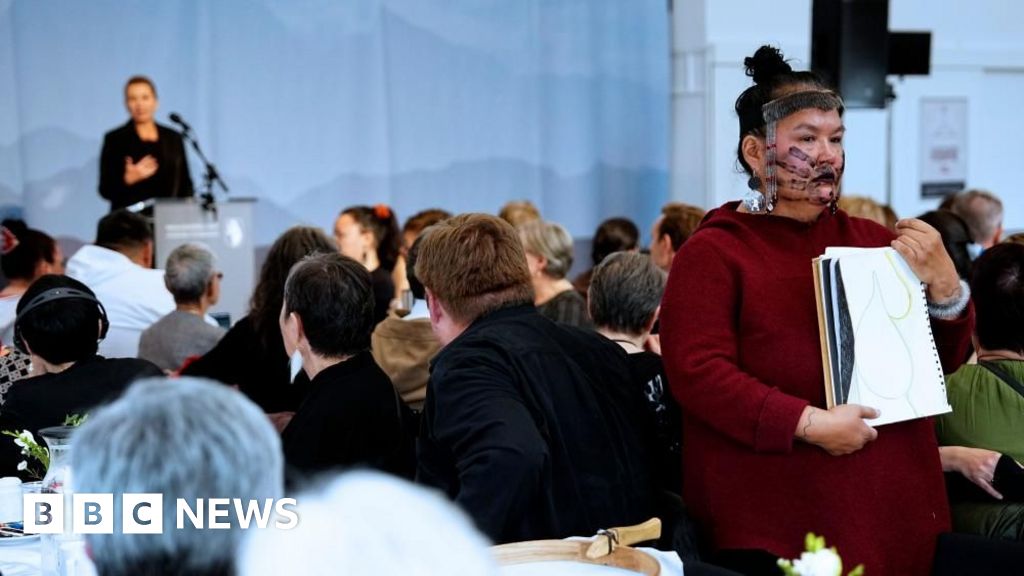
The historic apology by Danish Prime Minister Mette Frederiksen for the forced contraception program that targeted thousands of Inuit women in Greenland during the 1960s and 70s marks a significant, albeit complex, chapter in the ongoing relationship between Denmark and Greenland. The scandal, involving the involuntary implantation of IUDs—sometimes on girls as young as 12—has reignited discussions about colonial misdeeds, human rights violations, and the legacy of Western interference in indigenous populations. As a nation that transitioned from a Danish colony to an autonomous territory, Greenland’s journey is emblematic of broader geopolitical shifts, especially as global interest in the Arctic intensifies amid climate change and strategic competition.

Historically, Greenland has been pivotal in the geopolitical machinations of the North Atlantic, with Denmark maintaining oversight over healthcare until 1992, well into its push for autonomy. The recent revelations, coupled with Frederiksen’s formal apology, are not merely about acknowledging past injustice but serve as a crucial turning point that underlines the importance of self-determination and sovereignty for Greenlanders. Many analysts, including international organizations like the Arctic Council, emphasize that such admissions of past abuse are essential for healing and for redefining the trust and future governance of this strategic landmass highly coveted for its natural resources and geopolitical significance.

Despite the apology, critics argue that Denmark’s response remains insufficient without concrete reparations or acknowledgment of possible human rights violations. A lawsuit filed by 143 women seeking compensation underscores ongoing grievances and indicates that the wounds inflicted during colonial rule continue to resonate within Greenlandic society. Historians have pointed out that colonial-era policies were driven by economic and strategic interests, often at the expense of indigenous welfare. The unfinished chapter of reparations and acknowledgment highlights a broader international dilemma: how former colonial powers reconcile with past abuses, and whether genuine reconciliation can be achieved without tangible justice. The international community watches closely, mindful that the phase of unspoken colonial trauma is giving way to demands for accountability and dignity.

Furthermore, the implications extend into the Arctic’s geopolitical arena, where the United States, Russia, and China are maneuvering for influence around the melting ice, and President Trump’s earlier demand to acquire Greenland underscored the continent’s rising strategic importance. Denmark’s handling of Greenland affairs now faces increased scrutiny, as the narrative shifts from mere resource exploitation to sovereignty and moral rectitude. The recent controversies surrounding the removal of Inuit children and the reversal of a recent separation case exemplify the fragile trust needed for Greenland’s transition toward full self-governance. The decade ahead could see a profound redefinition of power dynamics, where Greenland’s indigenous voices demand recognition beyond symbolic apologies, challenging long-standing colonial structures and asserting their rightful place in a multipolar Arctic.

As history continues to unfold, the weight of past injustices, geopolitical ambitions, and the aspirations of Greenland’s people converge into a narrative that is both cautionary and hopeful. The apology, while a significant step, marks only the beginning of a deeper reckoning—one that tests the resilience of colonial legacies and the capacity of nations to mend their fractured histories. In the icy silence of the Arctic, the echoes of this moment will reverberate for generations, serving as a reminder that the ongoing struggle for dignity and sovereignty is written not just in history books, but in the very fabric of the future, where old worlds are shifting and new ones are emerging with the weight of history still to be written.

Social Media Auto Publish Powered By : XYZScripts.com