
Matox News

Truth Over Trends, always!

Fresh leaks: Apple’s smart home display arriving this fall alongside iOS 27

Apple Delays Launch of Revolutionary HomePod with Integrated Screen and Robotics-Driven Devices

In a significant pivot within the smart home and consumer device sectors, Apple Inc. has postponed the highly anticipated “HomePod with a screen” from its initial launch window of 2025 to an unspecified fall timeframe. This delay, confirmed by industry leak sources such as X insider Kosutami and echoed by Bloomberg journalist Mark Gurman, signals a strategic hold as Apple recalibrates its entrance into the burgeoning intelligent home market amidst evolving AI and virtual assistant capabilities. The device, which has been shrouded in secrecy, is reportedly a sleek, silver aluminum-cased gadget featuring a 7-inch display, utilizing a custom version of tvOS 27 and powered by USB-C—a clear move to unify its ecosystem under a more flexible port standard.

This delay is not isolated but part of a broader, phased rollout of innovative products aimed at disrupting the traditional consumer electronics market. Alongside the HomePod refresh, Apple is also revamping its lineup of smart home products, including a new version of the Apple TV 4K, and a smart home sensor currently in development. These devices are expected to leverage the latest advances in artificial intelligence and machine learning to offer enhanced automation, security, and seamless integration within the Apple ecosystem. The upcoming devices are anticipated to run on future OS updates—iOS, macOS, and tvOS—set to debut in 2027, aligning with Apple’s broader strategy to position itself as an indispensable hub in every connected home.

The planned introduction of a robot arm-equipped device, initially projected for this year, has now been postponed until 2027, underscoring the company’s cautious approach amid ongoing AI advancements and supply chain considerations. Industry analysts from institutions like Gartner highlight that these disruptions, although initially frustrating, create opportunities for disruptive innovation. Apple’s focus on integrating AI-driven features and hardware versatility could redefine user engagement in smart living spaces, propelling it ahead of competitors like Amazon and Google in the smart speaker and home automation sectors.

The business implications are profound: Apple’s strategy to stagger product launches—covering foldable iPhones, updated software, and smarter home devices—indicates a conscious effort to maximize market impact and maintain exclusivity in a rapidly saturated market. By aligning product timelines with AI and Siri enhancements, Apple is reinforcing its vision to become the central control point for digitally interconnected households.

  • Enhanced AI integration for personalized user experiences
  • Expansion into sensors and automation for smarter homes
  • Continued ecosystem lock-in to boost hardware and service revenue

Such moves collectively underline a broader industry shift towards disruptive innovation—where hardware becomes secondary to end-to-end smart environments driven by AI. As industry experts from MIT to Peter Thiel warn, the next decade will favor companies that can rapidly iterate on AI-powered hardware while maintaining ecosystem lock-in, a game-changing power play.

Looking ahead, the postponement of these flagship devices signals both challenges and massive opportunities. Apple’s cautious approach ensures it can deliver polished, AI-driven experiences capable of disrupting entrenched players, but it also presses the urgency for startups and incumbents to accelerate their innovation cycles. As AI continues to evolve from a supportive role to a core strategic asset, the next 12-24 months will be crucial in defining who dominates the smart home and consumer tech landscape—and those who fall behind risk being swept away by the relentless tide of technological disruption.
Apple gears up for premium push with new ‘Ultra’ lineup set to dominate

Apple’s Innovation Trajectory: Folding Devices, Visual-Enhanced Earbuds, and Market Disruption

Apple continues to push the boundaries of consumer technology, signaling a strategic shift towards integrating disruptive innovations across its product lineup. Rumors indicate that the tech giant is on the cusp of releasing a foldable iPhone priced at approximately $2,000, which would introduce a new dimension to premium mobile devices. This move positions Apple firmly in the competitive high-end segment, where innovation often dictates clear market leadership. Additionally, the upcoming touchscreen MacBook Pro, expected by fall, exemplifies Apple’s commitment to blending portability with cutting-edge display technology—a move that could redefine professional computing.

However, it is the evolution of wearable technology that exemplifies Apple’s focus on disruption and innovation. The rumored next-generation AirPods are said to include embedded cameras capable of feeding visual context directly to Siri, signifying a leap toward more intelligent, context-aware devices. This suggests a future where auditory and visual inputs are seamlessly integrated into a unified user experience, elevating the potential for how consumers interact with AI. Platforms like Apple Silicon and branding extensions such as AirPods Ultra are expected to consolidate the company’s market dominance, while also challenging established players in the wearables space.

Market Strategies: Going Both Up and Down

Apple’s approach appears to be twofold: expanding into high-end premium markets with ultra-luxury foldable devices and venturing into more affordable, versatile form factors to capture emerging consumer segments. The development of multiple foldable devices and the Neo model hints at a strategy to appeal to both tech enthusiasts seeking the latest innovation and mainstream users seeking adaptability. This “dual-market” approach could disrupt traditional product hierarchies, compelling competitors like Samsung and Google to reevaluate their offerings and innovate faster.

Analysts at Gartner emphasize that this dual trend might accelerate industry-wide disruption, fostering a more dynamic, competitive landscape. According to MIT researchers, such portfolio diversification aligns with the broader industry trend toward convergence of mobile, AI, and wearable tech, foreshadowing a new era of interconnected devices. As industry leaders like Elon Musk and Peter Thiel have consistently highlighted, innovation’s velocity is fundamental to maintaining economic dominance; Apple’s moves indicate it is fully attuned to this imperative.

The Road Ahead: Accelerating Innovation and Industry Transformation

The implications for businesses are profound. As Apple invests in disruptive technologies that blend form, function, and AI capabilities, competitors will need to accelerate their own R&D efforts to keep pace. The industry’s future hinges on seamlessly integrated, smart devices that redefine consumer expectations. The emergence of foldables, AI-powered wearables, and versatile form factors will likely serve as catalysts for industry-wide disruption. Time is of the essence—companies that fail to adapt swiftly risk obsolescence in an era where technological innovation drives market leadership.

As we look forward, one thing remains certain: the pace of change in consumer tech will only accelerate. Apple’s current trajectory underscores a clear reality—those who innovate fastest and adapt most nimbly will shape the digital landscape of tomorrow. Industry insiders and analysts warn that delays in embracing these emerging trends could leave others behind as the market evolves into a hyper-competitive, AI-integrated environment. The coming years will be pivotal, demanding bold moves and relentless innovation from all players seeking to secure their place at the forefront of the next tech revolution.

Apple’s chip boss could be the next to jump ship—what’s really happening?

Apple’s Leadership Flux Signals a Critical Juncture in Tech Innovation

The tech industry is witnessing a seismic shift as Apple, long considered a bastion of stability and innovation, navigates through a wave of executive departures that threaten to destabilize its strategic direction. According to Bloomberg‘s Mark Gurman, Johny Srouji, senior vice president of hardware technologies, is “seriously considering” leaving the firm. This potential exit highlights underlying industry pressures as Apple struggles to solidify its position in the rapidly evolving artificial intelligence (AI) landscape, a frontier where disruption is imminent and fierce.

In parallel, Apple’s leadership shakeup extends beyond Srouji. The company has recently undergone a series of high-profile departures—including COO Jeff Williams, AI chief John Giannandrea, policy lead Lisa Jackson, general counsel Kate Adams, and UI design leader Alan Dye—reflecting an internal climate of upheaval. This succession of executive changes suggests deeper challenges, especially as Apple attempts to reinvent itself amidst industry-wide AI revolution, where giants such as Google, Microsoft, and OpenAI are making aggressive moves to dominate the future of intelligent technology.

Disruption in Artificial Intelligence and Business Morphing

Apple’s inability to find its footing in next-generation AI solutions underscores its vulnerability in the face of relentless innovation. The company has struggled to match the AI acuity of rivals, notably evident in its Siri platform, which has lagged behind newer models leveraging large language models (LLMs) and real-time data processing. Recent reports suggest Apple’s AI team is undergoing significant restructuring, aiming to overhaul Siri and integrate more advanced features—efforts that could define the company’s future competitive edge.

This turbulent climate raises critical questions for investors and industry analysts alike. While Apple’s ecosystem remains lucrative, industry insiders warn that failure to innovate aggressively in AI could jeopardize its market dominance in consumer electronics and software ecosystem. Apple’s upcoming strategies, reported to include major upgrades to iOS 27, may serve as pivotal milestones in its attempt to reassert leadership or risk obsolescence amidst a disruptive AI arms race.

Strategic Implications and Industry Outlook

  • Innovation imperative: Apple must accelerate AI R&D to catch up or risk falling behind industry leaders.
  • Leadership stability: Executive departures can hinder strategic continuity, affecting product pipelines and technological breakthroughs.
  • Market impact: Disruption within Apple’s core operations could reshape competitive dynamics, forcing rivals to seize opportunities in AI-powered devices and services.

Above all, the unfolding scenario underscores a significant industry shift, where established tech giants are being compelled to rethink traditional business models in favor of AI-driven innovation. As Elon Musk and Peter Thiel have emphasized, disruption today is the norm, and agility is essential for survival. Apple’s current turbulence, while disconcerting, could catalyze a new phase of technological ingenuity if navigated wisely. Industry watchers must anticipate a period of intense competition and strategic recalibration, with who leads in AI and hardware integration determining the future global tech landscape. The clock is ticking, and the next few years promise to be pivotal in defining how innovation, disruption, and business resilience will merge within Silicon Valley’s ever-evolving arena.

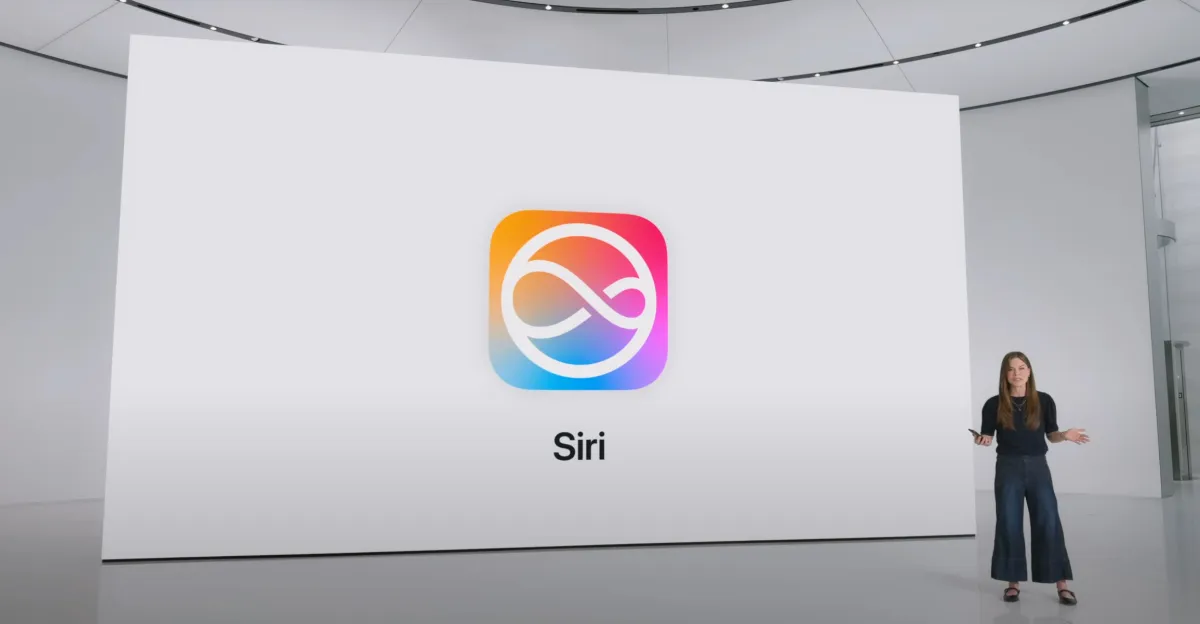
Apple’s ‘Veritas’ Chatbot: Exclusive Peek at Siri’s AI Boost for Employees

Apple’s Siri Revamp Signals New Wave of AI Innovation and Industry Disruption

In a rapidly evolving landscape dominated by AI innovation, Apple is taking a strategic step forward with its latest internal initiative, Veritas. Sources close to Bloomberg’s Mark Gurman report that the tech giant is testing a next-generation iteration of Siri, aiming to redefine the personal assistant experience through advanced machine learning capabilities. This move highlights Apple’s recognition that AI-driven disruption is no longer optional but a necessity to stay competitive amidst rising rivals like ChatGPT and Google Gemini.

Though delayed multiple times due to challenges in keeping pace with industry leaders, Apple’s renewed focus on internal AI tools underscores a broader strategic shift. Industry experts such as Gartner point out that integrating conversational AI within ecosystems confers a significant competitive advantage, especially as user expectations evolve towards more intuitive, context-aware interactions. The newly developed chatbot allows Apple engineers to simulate real-world conversations, testing features that enable Siri to perform complex tasks—like searching through personal data or editing media—more seamlessly. While the decision to keep Veritas internal indicates a cautious approach, the underlying technology underpins Apple’s broader ambition to embed AI at the core of its ecosystem, fueling innovation, and customer loyalty.

However, the industry implications extend beyond mere product enhancements. As Apple grapples with boosting Siri’s capabilities, it faces an industry-wide dilemma: how to balance innovation, user privacy, and market disruption. Given the company’s historical emphasis on privacy, partnering with Google’s Gemini for AI search suggests a pragmatic approach—prioritizing technological synergy over complete in-house independence. This strategic reliance could set a precedent, prompting a reshuffling of AI development partnerships across the industry.

Looking ahead, the trajectory of Apple’s AI initiatives signals an inevitable disruption of the digital personal assistant paradigm. The parts are aligning for a new wave where everyday AI interactions are more intelligent and contextually aware, transforming how users engage with technology. Analysts such as those from MIT’s Computer Science and Artificial Intelligence Laboratory emphasize that such advancements could usher in smarter, more autonomous devices that fundamentally reshape consumer expectations. As Apple and its competitors race to dominate the AI-powered future, one thing remains clear: the next decade will be pivotal. Disruption is accelerating, and those unprepared risk falling behind in the emerging AI-driven ecosystem that is poised to redefine tech industry benchmarks.

In this pivotal moment, the tech world must watch closely—not just for the innovations announced, but for the shifts in power and influence that will determine the dominant players of tomorrow’s digital age. For industries and consumers alike, the race to AI supremacy is a high-stakes game, with innovation and disruption now the currency of success.

Social Media Auto Publish Powered By : XYZScripts.com



