
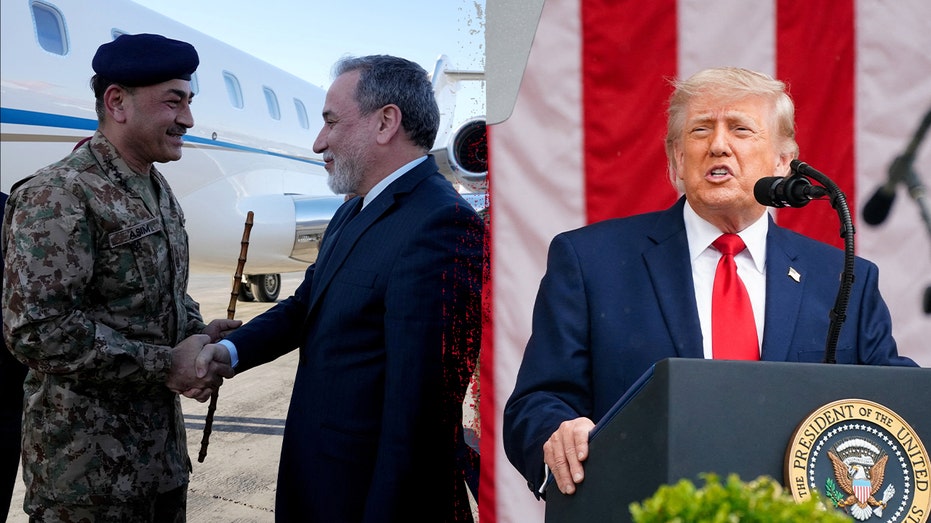

Pakistan has re-emerged as a pivotal player in delicate international diplomacy, with its army chief, Field Marshal Asim Munir, taking on a crucial intermediary role in discussions aimed at averting further conflict with Iran. This development places Islamabad squarely back at the center of U.S. foreign policy in the Middle East, despite a decades-long history of Washington grappling with accusations that elements within Pakistan’s security apparatus have at times supported militant groups. The situation underscores the enduring complexities of America’s engagement with a nation often described as its most complicated ally, a dynamic recently highlighted by former President Donald Trump’s public commendation of Pakistani leadership.
A History of Complication and Cooperation
For years, American officials have navigated a challenging path with Pakistan, frequently accusing Islamabad of “playing both sides” in the war on terror. Allegations concerning the provision of safe havens for Taliban fighters, concerns over nuclear proliferation, and the presence of figures like Osama bin Laden within its borders have consistently fueled distrust. Yet, despite these profound tensions and accusations, Washington repeatedly finds itself leaning on Pakistan for strategic cooperation in critical moments. The current Iran crisis is but the latest instance where geopolitical necessity has seemingly overridden historical grievances, forcing U.S. policymakers to engage with a partner whose reliability remains a subject of intense debate. This pragmatic approach highlights a fundamental contradiction in U.S. foreign policy, where strategic interests often compel engagement even with challenging allies.
Islamabad’s Denials and Divided Opinions
The renewed diplomatic engagement has not been without controversy, particularly following recent unconfirmed allegations, reported by the News Desk, that Iranian military aircraft might have been moved into Pakistani territory during the conflict — claims vehemently denied by Islamabad. These reports have exacerbated existing divisions within U.S. political circles, especially among Republicans. Senator Lindsey Graham, for instance, expressed profound skepticism, stating he doesn’t “trust Pakistan as far as I can throw them” if the allegations proved true. Such sentiments reflect a deep-seated caution regarding Islamabad’s true allegiances.
However, former President Donald Trump offered a starkly different perspective. On the same day as Graham’s remarks, Trump publicly praised Pakistan’s leadership, telling reporters: “They’re great… absolutely great.” He specifically lauded Prime Minister Shehbaz Sharif and Field Marshal Asim Munir for their efforts. This divergence of opinion within conservative ranks underscores the intricate and often contradictory nature of U.S.-Pakistan relations, where strategic utility often clashes with long-standing security concerns.
Strategic Imperatives in a Volatile Region
The persistent U.S. reliance on Pakistan, despite a history fraught with distrust, is largely driven by immutable geopolitical realities. Pakistan’s strategic location, bordering Iran, Afghanistan, and sharing proximity with China, makes it an unavoidable partner in regional stability efforts. Its role as a nuclear power further amplifies its importance, particularly in preventing wider regional destabilization. Engaging with Islamabad offers Washington a critical channel for communication and influence in a highly volatile part of the world.
Key reasons for continued engagement include:
- Regional Stability: Pakistan’s influence is crucial for managing crises in Afghanistan and preventing spillover from Middle Eastern conflicts.
- Counterterrorism Efforts: Despite past accusations, Pakistan remains a partner in various counterterrorism initiatives, sharing intelligence and conducting operations.
- Geopolitical Leverage: Maintaining ties provides a counterweight to other regional powers and helps secure U.S. interests in Central and South Asia.
- Nuclear Security: Cooperation on nuclear security protocols is paramount given Pakistan’s status as a nuclear-armed state.
“They’re great… absolutely great.”
— Former President Donald Trump on Pakistan’s leadership
As Field Marshal Munir continues his diplomatic efforts, the fundamental dilemma of U.S.-Pakistan relations persists. Washington’s pragmatic need for a regional partner in managing critical flashpoints, such as the escalating Iran crisis, often overrides deep-seated concerns about reliability and past actions. The ongoing dialogue, punctuated by both skepticism and praise from high-profile American figures, illustrates the complex balancing act required in maintaining ties with an ally whose strategic importance cannot be understated, even as questions of trust remain. The path forward for this “complicated ally” will undoubtedly continue to be defined by a delicate interplay of necessity, suspicion, and shared — if sometimes uneasy — objectives.






