
Matox News

Truth Over Trends, always!

AT&T’s Connected Life: A Fresh Play in the Smart-Home Arena

AT&T Reimagines Smart Home Market with Connected Life Launch

The telecommunications giant AT&T is making a bold second move into the smart home ecosystem with its newly announced Connected Life platform. After the company’s earlier effort, Digital Life, was phased out in 2022—owing largely to the obsolescence of its underlying 3G network—AT&T is now leveraging a strategic partnership with Google and Abode to disrupt traditional home security and automation markets. This move highlights a growing trend among established tech and telecom giants eager to integrate connected devices into a unified, user-friendly ecosystem that capitalizes on existing customer bases and facilitates rapid adoption.

At the core of Connected Life is a focus on innovation and disruption. The platform bundles Google Nest smart devices—though not the latest versions—and security sensors into two different kits: the Starter Kit at $11 per month (or $399 upfront) and the Advanced Kit at $19 per month (or $699 upfront). The Advanced Kit expands on features with additional sensors, a security keypad, and a Nest Cam security camera, providing an integrated end-to-end smart home experience designed to simplify user setup and management. This market shift towards turnkey solutions is driven by consumer demand for seamless integration, together with the rise of professional installation services that reduce barriers for less tech-savvy users. Google’s API integration through the Google Home platform ensures devices are manageable via a single app, emphasizing the importance of interoperability—a principle championed by MIT’s recent research on smart ecosystems.

From a business perspective, AT&T’s move signifies a strategic disruption of incumbents in smart home security. Given that AT&T has over 119 million wireless mobile customers and more than 10 million fiber optic internet subscribers, its potential reach to pitch a unified smart home solution is unprecedented. This business model consolidates multiple lines of service: telecommunications, internet, and smart devices—creating an ecosystem that fosters customer retention and opens new revenue streams. Industry analysts from Gartner suggest that such integrated platforms could redefine consumer expectations, forcing competitors like Amazon, Apple, and smaller startups to accelerate their own innovation cycles. What remains to be seen is whether AT&T can leverage its scale to deliver on reliability and user experience, critical factors for disruption success in this crowded space.

Looking to the Future: Innovation as the New Norm

The launch of Connected Life signals an industry-wide pivot towards consolidated, AI-enhanced smart environments. With ongoing advancements in AI, sensor technology, and 5G connectivity, the industry is on the cusp of a new era where homes will become autonomous, predictive, and deeply integrated with daily life. It’s a call to industry leaders and innovators alike: innovation and disruption are no longer optional but essential for survival in this rapidly evolving market.

As Elon Musk and Peter Thiel have often noted, disruption is the engine of progress. Falling behind in this race risks obsolescence, especially as consumer expectations shift toward ease and security. With AT&T’s formidable scale coupled with strategic partnerships, the company is clearly positioning itself to be a market leader—not just in connectivity but in the digital transformation of the smart home. The next few years will be crucial in determining whether this initiative can sustain innovation and truly disrupt industry giants. The future belongs to those who accelerate—this is the moment for bold moves, rapid iteration, and relentless pursuit of the cutting edge.
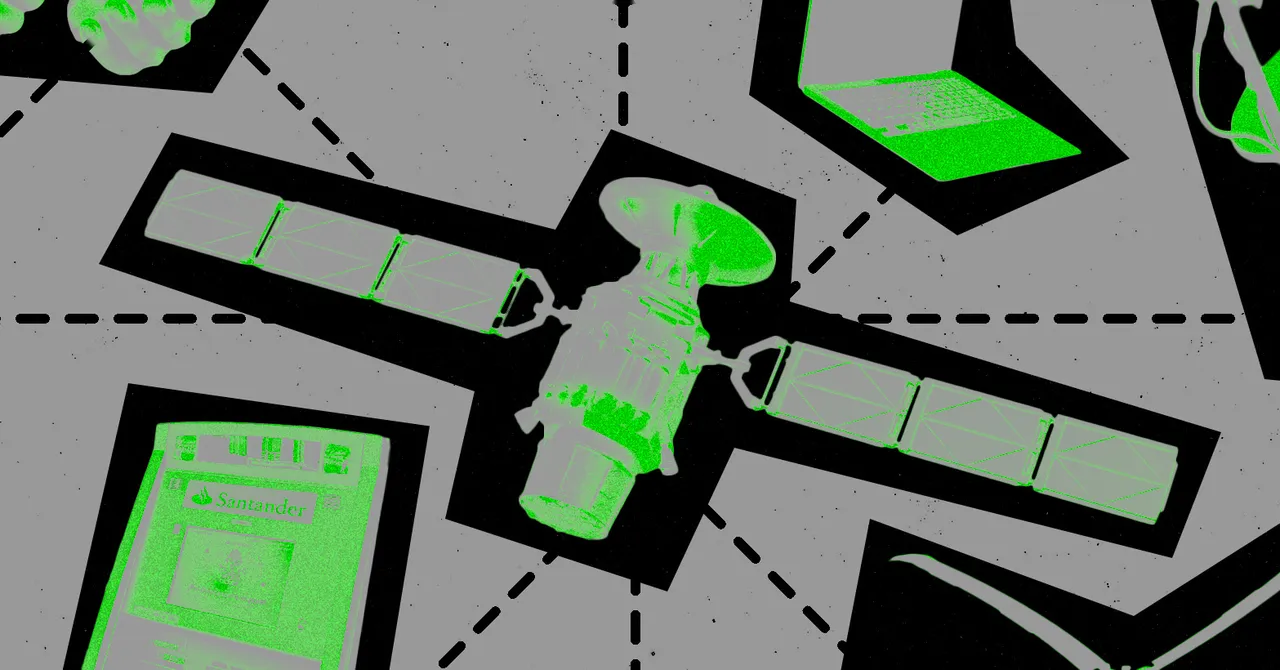

Satellites Spill the Secrets: Your Calls, Texts, and Data on the Open Sky

Satellite Communications Under Scrutiny: A Disruptive Wave for Global Security

In an era defined by technological innovation and unprecedented connectivity, recent findings have cast a spotlight on the vulnerabilities within satellite communication networks, signaling a profound shift in the landscape of digital security. SES, a dominant player in satellite services and parent company of Intelsat, has underscored a complex reality: users can often select their own encryption methods tailored to specific needs. This flexibility, while empowering, exposes a potential chink in the armor, especially on public Wi-Fi networks akin to those found in coffee shops or hotels. When such networks are compromised, malicious actors could potentially infiltrate sensitive satellite data, raising alarming questions about security protocols in this high-stakes domain.

Recent investigations have revealed disturbing lapses in satellite communication security, particularly involving Mexican government and affiliated organizations. Data collected by researchers using advanced satellite dishes—covering roughly 15 percent of global transponder communications—indicates significant unencrypted transmissions in Western US and Mexican airspace. These findings are not mere technical anomalies; they represent a disruptive breach that could undermine trusted satellite operations. Industry insiders, including Tom Stroup, president of the Satellite Industry Association, emphasize that such exposures threaten the integrity of critical infrastructure, prompting calls for enhanced vigilance and international cooperation to prevent further breaches.

The business implications of these security breaches are seismic. For satellite providers like SES and affiliated service firms such as Grupo Financiero Banorte, maintaining credibility in a fiercely competitive market hinges on robust, transparent security measures. Yet, the current landscape reveals a critical vulnerability—an open invitation for cyber disruptions that could affect everything from financial transactions to national security. Analysts from Gartner and MIT warn that disruption in satellite security could accelerate a shift toward new, more resilient architectures—like quantum-encrypted satellites and decentralized communication networks—that could redefine the industry horizon. Companies that fail to adapt risk falling behind as the demand for secure, disruption-proof satellite communications surges amidst geopolitical tensions and rapid technological evolution.

Looking Ahead: The Future of Satellite Security and Innovation

As the satellite industry confronts these mounting challenges, innovation emerges as the essential solution. The development and deployment of next-generation encryption technologies, coupled with international standards for satellite security, are becoming non-negotiable. Industry leaders like Elon Musk’s Starlink are already exploring scalable, ultra-secure communication platforms to outpace malicious actors. Meanwhile, MIT researchers and global agencies advocate for a paradigm shift: integrating AI-powered security systems and resilient satellite architectures that can withstand cyber-physical threats.

The industry stands at a crossroads—an inflection point driven by disruptive technologies and an urgent need for security vigilance. The next decade will determine whether satellite communication can uphold the promise of a hyper-connected future or succumb to vulnerabilities exploited by increasingly sophisticated adversaries. As Peter Thiel and other tech visionaries warn, those who fail to innovate rapidly may find themselves obsolete in a digital war where security is the new frontier. The race is on—an era of transformative innovation beckons for those willing to lead, disrupt, and redefine the future of global connectivity.

Social Media Auto Publish Powered By : XYZScripts.com


