Matox News

Truth Over Trends, always!

Audiences’ favorite influencers hit the scene: championing Britain’s legendary pubs and keeping the spirit alive

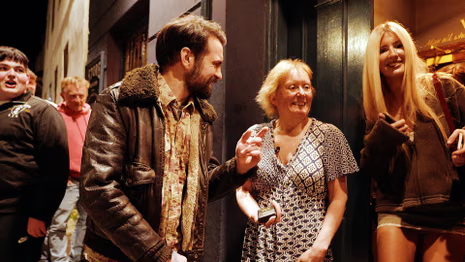
In an era where millennials and Gen Z are redefining social spaces, the humble pub remains an enduring testament to Britain’s rich social fabric. Despite the challenges posed by rising costs, urban gentrification, and changing drinking habits, a surge of fresh enthusiasm is evident in the vibrant scene of traditional wet-led boozers. Social media influencers like Niall Walsh and Jimmy McIntosh are leveraging digital platforms to showcase pubs with distinct character—places with patterned carpets, cozy fireplaces, and personal stories that exude authenticity. Their efforts highlight a cultural revival rooted in preserving community spaces while adapting to contemporary tastes.

Their advocacy underscores a broader cultural shift, one that celebrates “proper boozers,” an often romanticized concept of local pubs that prioritize atmosphere and genuine community over chain-store uniformity. Walsh and McIntosh aim to bring attention back to these establishments—many struggling with skyrocketing rent and cumbersome regulations—by creating content that emphasizes their unique aesthetic and social significance. For example, McIntosh’s detailed exploration of pubs like the Skirrid Inn in Wales or The Old Forge in Inverie demonstrates that even in the remotest corners of Britain, pubs serve as vital cultural landmarks, blending history, storytelling, and shared human experience. Their approach champions a lifestyle where leisure and wellness are intertwined, and where the act of gathering fuels personal resilience and community health.

By actively promoting pubs through Instagram accounts such as London Pub Explorer and Great British Pub Crawl, a new generation is reclaiming these spaces—not just as drinking venues but as catalysts for well-being, cultural connection, and lifestyle enrichment. Initiatives like these inspire young people to rediscover local history, support small businesses, and embrace a slower, more meaningful pace of life amid the chaos of urban existence. Whether it’s a classic pub with velvet curtains or a rugged countryside inn, these hidden gems foster a sense of belonging, making each visit a personal act of community renewal.

  • Visit a pub with historical charm—look for patterned carpets, authentic owner-operated environments, and local crowds.
  • Support social media pages that promote community-focused pubs, contributing to their visibility and survival.
  • Embrace the \”rural pub experience\”—consider exploring remote locations like the Old Forge in Inverie for a truly memorable adventure.

Ultimately, the ongoing narrative of Britain’s pubs is a story of resilience and revival. As individuals, we are invited to see these spaces not merely as places to drink but as living chronicles of our shared history, woven into the fabric of daily life. Through the lens of passionate creators and community advocates, the pub becomes a symbol of whether through tradition or contemporary innovation, a lifestyle that champions authenticity, connection, and personal impact. Their journeys serve as a reminder that embracing such cultural landmarks is more than nostalgia—it is a conscious choice to nurture the roots of our collective identity and, in doing so, find inspiration for the journeys ahead.

Grey’s Anatomy Star Eric Dane, 53, Succumbs to ALS—A Wake-Up Call for Younger Audiences

In a stark reminder of the human toll inflicted by neurodegenerative diseases, the recent announcement of the actor, renowned for his starring role in HBO’s Euphoria, battling the most common form of motor neurone disease (MND), has sent shockwaves across international communities. This illness, often referred to as amyotrophic lateral sclerosis (ALS), continues to challenge nations, health organizations, and scientific research communities worldwide. The actor’s openness has humanized a condition that remains shrouded in uncertainty and despair, emphasizing the universal nature of this modern health crisis.

Motor neurone diseases are a class of neurodegenerative disorders characterized by the progressive loss of motor neurons—specialized nerve cells in the brain and spinal cord responsible for voluntary muscle activity. Despite advances in medicine, the precise causes remain elusive, with global research efforts hampered by limited funding, insufficient understanding, and complex pathology. As international agencies and medical institutions grapple with these challenges, the geopolitical impact becomes evident: certain nations are better equipped to lead breakthroughs, while others face exacerbated health inequalities. Countries like the United States, the United Kingdom, and multiple European nations continue to invest heavily in research initiatives; meanwhile, developing nations struggle with basic healthcare access, underscoring disparities that influence global health outcomes.

Historians and analysis from organizations such as the World Health Organization (WHO) highlight that the societal and economic consequences of neurodegenerative diseases extend beyond individual suffering, impacting healthcare systems, caregiving networks, and national productivity. The recent case of the actor underscores how international attention can catalyze funding, research, and awareness campaigns. Yet, critics argue that preventative measures remain underfunded and underprioritized on the global stage, with many policies outdated or ineffective. As the disease progresses in celebrities and public figures, there is a poignant reminder that this affliction does not discriminate—the vulnerable and the powerful alike face similar battles, shaking societal perceptions and urging action from policymakers and global health agencies.

Looking ahead, the strategic decisions made by nations, combined with the international community’s commitment to scientific innovation and ethical research, will shape humanity’s response to this incurable foe. Scientists warn that without a decisive shift in global investment and cooperation, ALS may continue to claim lives at an alarming rate, leaving families devastated and societies strained. The recent case study of this prominent figure acts as a catalyst for renewed urgency—urging governments, corporations, and individuals alike to recognize the urgent need for breakthroughs. History is watching, and the weight of choices made today will determine whether future generations will face the same relentless disease or finally overcome the darkness it casts upon humanity. The unfolding chapter is a stark reminder that humanity’s resilience is measured not only by the wars fought or the economies built, but by the unwavering pursuit of knowledge amid the shadows of despair.

Social Media Auto Publish Powered By : XYZScripts.com



