
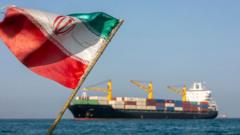

In a significant development for regional security, the United States military has conducted fresh strikes on an Iranian military site located in Bandar Abbas, a strategically vital port city. The actions, confirmed by US Central Command (Centcom), also involved the successful neutralization of four Iranian attack drones that posed a threat around the Strait of Hormuz.
Centcom reported that its forces targeted an Iranian ground control station in Bandar Abbas, specifically as it was preparing to launch a fifth drone. This decisive intervention underscores the persistent tensions in a waterway crucial for global energy supplies.
Defensive Posture in a Critical Waterway
The US military characterized its operations as “measured, purely defensive, and intended to maintain the ceasefire” currently in place. The Strait of Hormuz, a narrow sea passage between the Persian Gulf and the Gulf of Oman, is a choke point through which a substantial portion of the world’s oil transits daily. Maintaining its security and freedom of navigation is paramount for global economic stability.
The targeting of the ground control station and the downing of one-way attack drones highlight the ongoing challenges to maritime security. Such actions, while defensive, signal the US commitment to safeguarding international shipping lanes and deterring escalatory behavior in the region.
Fragile Ceasefire and Economic Impact
These latest strikes unfold against a backdrop of a fragile ceasefire between the US and Iran, coupled with protracted negotiations aimed at resolving a three-month-long conflict. This prolonged instability has severely impacted traffic within the Strait of Hormuz, contributing to a notable surge in global energy prices.
The Matox News desk understands that continued disruptions in this vital maritime artery carry significant implications for international trade and the free market. The need for a stable and predictable environment for global commerce remains a central concern for allied nations and economic stakeholders worldwide.
“Our actions were measured, purely defensive, and intended to maintain the ceasefire, ensuring stability in a critical global waterway.”
Upholding Order and International Norms
The US engagement, as articulated by Centcom, reinforces the principle of upholding international order and maritime freedom. Disruptions in key transit points like the Strait of Hormuz not only threaten regional peace but also have a cascading effect on global supply chains and economic well-being. The proactive interception of threatening drones and the targeting of their launch capabilities demonstrate a commitment to preventing further escalation and protecting established international norms.
As negotiations continue, the focus remains on achieving a lasting resolution that respects sovereignty, deters extremism, and ensures the unhindered flow of global commerce through one of the world’s most strategic maritime passages. The international community watches closely, advocating for dialogue and adherence to agreements to prevent further destabilization.






