Matox News

Truth Over Trends, always!

Roblox rolls out live AI chat to shut down banned language, keeping gameplay clean and cool

Roblox Leads the Charge with Next-Generation AI-Powered Chat Moderation

In a move signaling a new era of disruption within online gaming and social platforms, Roblox has announced the rollout of a revolutionary real-time, AI-powered chat rephrasing feature. This innovation aims to combat toxic language while preserving the fluidity of user interaction, marking a significant step forward in community safety and user engagement. As digital communities grapple with maintaining civility amid rising concerns over safety and moderation, Roblox’s approach exemplifies how strategic AI deployment can redefine industry standards and create competitive advantages against rivals.

Traditional content moderation systems on platforms like Roblox relied heavily on keyword filters that often resulted in clunky, disruptive user experiences. When a banned word was detected, the message was replaced with a string of hash symbols, disrupting conversations and sometimes fueling user frustration. Now, according to the company announced, the new AI feature rephrases inappropriate language into respectful and contextually appropriate alternatives. This not only maintains conversational flow but also fosters a more positive environment—a critical factor in maintaining user retention among younger demographics.

Moreover, Roblox is enhancing its detection capabilities, employing machine learning models that identify variations of banned language, such as leetspeak and other sophisticated bypass tactics. The platform reports a >20x reduction in false negatives related to sensitive information sharing, underscoring the impact of these technological advancements. Industry analysts from Gartner highlight that these developments aim to balance real-time interaction with robust safety measures, a dual challenge in digital community management. Roblox’s move exemplifies how AI, when strategically deployed, can disrupt longstanding moderation paradigms and establish new industry benchmarks.

Supporting this shift is Roblox’s recent implementation of mandatory facial verification for chat access, a response to mounting lawsuits and concerns over child safety. Critics argue that such measures reflect a broader industry trend—where safeguarding young users becomes intertwined with technological innovation. This proactive stance positions Roblox as a market leader tackling social responsibility head-on, which could attract a broader user base and solidify its market dominance amid increasing regulation and scrutiny. As pioneers like Elon Musk and Peter Thiel suggest, embracing disruptive innovation today is essential for future industry resilience, and Roblox’s integrated approach underscores this philosophy.

Looking ahead, Roblox’s strategic investments in AI-driven moderation tools demonstrate that the industry must evolve rapidly to meet the dual demands of user engagement and safety. The integration of real-time rephrasing, sophisticated language detection, and biometric safeguards indicates a move toward an ecosystem where disruption isn’t merely about technology—it’s about redefining community standards and business models. With competitors observing closely, Roblox’s innovations could set the template for a new era of safer, more engaging digital playgrounds—an imperative for all platforms seeking relevance in an increasingly regulated landscape. As the digital frontier continues to expand, those who harness the power of AI-driven moderation will lead the charge into a future where community, safety, and innovation go hand in hand.


FTC stands firm: Stalkerware pioneer Scott Zuckerman banned, tech watchdogs celebrate

The Federal Trade Commission (FTC) has decisively upheld its 2021 ban against Scott Zuckerman, the controversial founder behind Support King and its associated stalkerware products. This move underscores the ongoing clash between relentless disruption of traditional privacy norms and regulatory measures aimed at protecting consumers and vulnerable individuals from invasive surveillance technology. The FTC’s stance remains firm despite Zuckerman’s recent petition to revoke or modify the ban, citing mounting financial and operational burdens.

At the heart of this controversy lies the alarming pattern of innovation in illicit surveillance. When it first enacted the ban, authorities highlighted that Zuckerman’s product SpyFone facilitated stalking by secretly monitoring personal devices, exposing users’ most sensitive data. A major breach in 2018, involving over 3,600 phones, revealed that the company had left sensitive content—including selfies, messages, and audio recordings—vulnerable online due to extremely lax security protocols. This incident not only exposed personal information but also exposed the inherent risks of disruptive business models built around invasive monitoring.

  • Innovative breach exploitation exposed vulnerabilities in stalkerware security.
  • Demonstrated the potential for hackers to hijack sensitive personal data stored by these apps.
  • Highlighted the failure of regulatory frameworks to keep pace with rapidly evolving surveillance tech.

The case reveals a disturbing trend: repeat offenders attempting to circumvent regulation through clandestine operations. Less than a year after the FTC ban, evidence suggested Zuckerman’s team was running a clandestine secondary operation, SpyTrac, with ties back to the original Support King empire. Leaked data showed direct links to SpyFone and access keys to OneClickMonitor, raising questions about whether regulatory crackdowns can truly contain such disruptive entrepreneurs whose innovations push legal boundaries. Experts like MIT’s cybersecurity researchers warn that these activities threaten to erode privacy standards, fueling a clandestine market that’s difficult to regulate.

Industry analysts such as Gartner warn that the continued proliferation of such invasive technologies signals a need for robust enforcement and innovative reforms. The implications extend beyond individual privacy; they threaten to reshape the competitive landscape, driving legitimate tech firms to innovate smarter security and privacy solutions. As Peter Thiel and others argue, disruption in the surveillance tech realm could redefine the boundaries of personal liberty and corporate responsibility. The FTC’s refusal to relax the ban is a statement: regulation must evolve in tandem with innovation—crucial for safeguarding future technological progress.

Looking ahead, this high-stakes case serves as a stark warning to entrepreneurs and investors betting on disruptive tech: without strong ethical boundaries and regulatory compliance, even the most innovative ideas risk becoming regulatory casualties. As the industry braces for a wave of new innovations, the importance of urgently establishing clear legal and ethical frameworks will determine which companies lead the next revolution and which fall by the wayside. The future of technology rests on striking the right balance—fostering innovation while fiercely defending individual rights against invasive surveillance. Time remains of the essence; the clock is ticking for regulators and entrepreneurs alike to shape a secure, responsible digital frontier that can withstand the disruptive forces at play.

Greenlandic Families Push Back as Parenting Tests Banned, Fight to Reclaim Their Kids

Greenlandic Families Fight for Justice Amid Danish Child Welfare Policies

In an unfolding chapter of international custody and cultural conflict, families from Greenland are challenging decades-long practices by the Danish government that have led to the removal of their children. Tied to a complex history of colonialism, these legal and social interventions have sparked protests, emotional trauma, and ongoing legal battles, exposing a deep-rooted crisis of cultural identity and human rights. As Greenland strives for recognition of its sovereignty and cultural integrity, the case of these families underscores how international decisions can reverberate across societal fabric—shaping laws, perceptions, and lives in powerful, often tragic ways.

Central to this controversy are the so-called FKUs—parenting ability assessments that, since their inception, have been used by Danish social services in complex welfare cases. Critics argue that these evaluations are heavily biased, culturally insensitive, and lack scientific validity—particularly when applied to Greenlandic families. Analysts and human rights advocates warn that these tests, administered in Danish and tailored around Danish norms, distort true parenting capacity, threatening to erase traditional Greenlandic values and foster a cycle of loss and despair. For many families, like Keira and Johanne, these assessments have resulted in the heartbreaking removal of their children immediately after birth or during early childhood, often based on superficial tests that critics say cannot reliably predict parental success.

The Human Cost and Cultural Clash

The stories of Keira and Johanne are emblematic of the personal tragedy woven into this larger international issue. Keira, a Greenlandic mother, recounts her agony of having only two hours with her newborn, Zammi, before social services took her away—an experience marked by uncontrollable sobbing and whispers of regret. Despite ongoing visits, she remains separated from her daughter, battling court decisions rooted in assessments that questioned her parental abilities based on questions about Mother Teresa or the speed of sunlight. Similarly, Johanne’s premature son was taken at birth, despite a brief period of contact, and subsequently adopted—the loss lingering painfully for both parents. Such cases illustrate how administrative decisions intertwined with cultural insensitivity can fracture families permanently.

While the Danish government announced a review of hundreds of such cases in the wake of mounting criticism and protests—some in Nuuk, Greenland’s capital—>the process remains slow and uncertain. As of now, only a fraction of cases have been reevaluated, with no children returned. Critics, including social workers and psychologists, contend these assessments are often based on outdated or culturally biased criteria. The recent ban on FKUs in Greenland was a significant step, yet advocates argue that systemic reform is necessary to prevent future tragedies and uphold the rights of indigenous communities.

Implications for Global Law and Sovereignty

The dilemma extends beyond individual families; it highlights the broader geopolitical impact of colonial legacies and sovereignty. Greenland, a territory with a rich indigenous culture and increasing strategic importance due to its natural resources, finds itself at the crossroads of international governance and cultural preservation. The families’ struggles reflect a wider debate: should colonial-era social policies continue to dominate or give way to indigenous-led justice? International organizations like the United Nations and European Court of Human Rights face mounting pressure to intervene, signaling a global shift towards recognizing indigenous rights and cultural autonomy in social policies.

As historians and analysts observe, this murky intersection of law, culture, and geopolitics is a *turning point*—a test of how modern nations reconcile their histories with contemporary human rights standards. For Greenlandic families, especially, the fight is about more than custody; it is about preserving identity and dignity amid an evolving global landscape. Time may echo with the resolutions of courtrooms and legislative chambers, but the weight of history continues to cast shadows. The ongoing struggle for the return of their children serves as a stark reminder: decisions made in distant boardrooms and courtrooms today will, in time, define the legacy of justice, cultural resilience, and sovereignty for generations to come. The story is still unfolding, and only history can tell whether humanity advances towards true equality or remains prisoner to its colonial past.

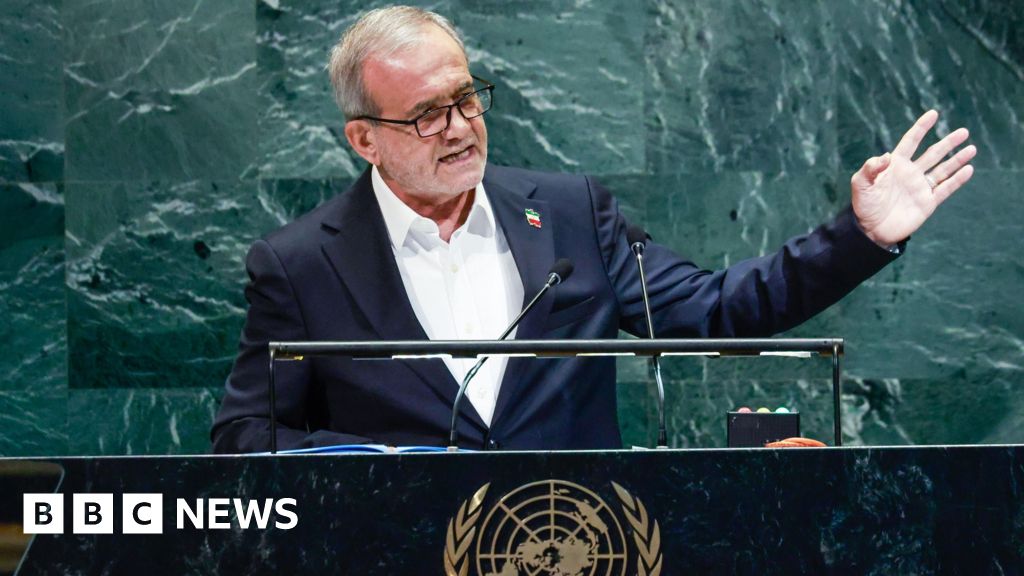
UN sanctions on Iran to resume after banned nuclear activity emerges

As Iran faces the looming reimposition of UN economic and military sanctions, the international community stands at a pivotal crossroads in Middle Eastern geopolitics. Nearly a decade after the landmark 2015 Joint Comprehensive Plan of Action (JCPOA) temporarily curtailed Iran’s nuclear ambitions, recent developments suggest a significant departure from diplomatic détente. The United Nations is poised to reinstate a broad set of sanctions—spanning arms embargoes, uranium enrichment bans, and asset freezes—that threaten to plunge Iran back into economic hardship, echoing the tumult of the pre-deal era. This move follows a letter from Britain, France, and Germany accusing Iran of violating its commitments—a step that has galvanised efforts by Russia and China to delay the measures, but with limited success.

Historians and analysts observe that the reimposition of sanctions is more than just about nuclear proliferation; it underscores a fundamental shift in international power dynamics. Russia and China have positioned themselves as strategic counterweights to Western influence, with Moscow signing a $25 billion deal to construct four nuclear reactors in southern Iran. Such moves are viewed by Western nations as a bid to deepen Iran’s energy independence while undermining U.S. sanctions. Meanwhile, Tehran insists that its nuclear program remains civilian, condemning any accusations of weaponization as “unfair, unjust, and illegal.” However, the International Atomic Energy Agency (IAEA) has reported a resumption of inspections, highlighting ongoing concerns about Iran’s nuclear trajectory—concerns that are unlikely to be mollified without significant diplomatic breakthroughs.

Despite Tehran’s claims of peaceful intent, the European Union and Western powers have intensified efforts to uphold the sanctions, emphasizing that Iran’s continued enrichment activities threaten regional stability. The regional tension is further exacerbated by Israel’s repeated threats to strike Iran’s nuclear facilities, threatening a broader conflict in the Middle East. Iranian Foreign Minister Abbas Aragchi’s assertion at the UN that “the negotiation with the United States is in fact a pure dead end” signals Tehran’s growing distrust of Western diplomatic motives. Nonetheless, Iran maintains it is bound by international treaty obligations to cooperate with the IAEA, even as the possibility of resumed negotiations appears increasingly fragile, and the prospect of conflict edges closer.

The geopolitical impact of these developments extends beyond the borders of Iran. The re-imposition of sanctions could further destabilize the already volatile region, prompting countries across Europe, Asia, and beyond to recalibrate their strategic calculations. International organizations warn that prolonged sanctions may push Iran closer into the embrace of authoritarian allies, reshaping alliances and intensifying the arms race. The looming sanctions serve as a stark reminder that the corridors of diplomacy are narrowing, and that the unfolding drama in Iran could be a significant chapter in a larger story—one written in the language of power, resilience, and the relentless pursuit of national sovereignty. As history continues to unfold, the question remains: will diplomacy prevail, or will this chapter usher in a new era of conflict that tests the very fabric of international peace?

Social Media Auto Publish Powered By : XYZScripts.com