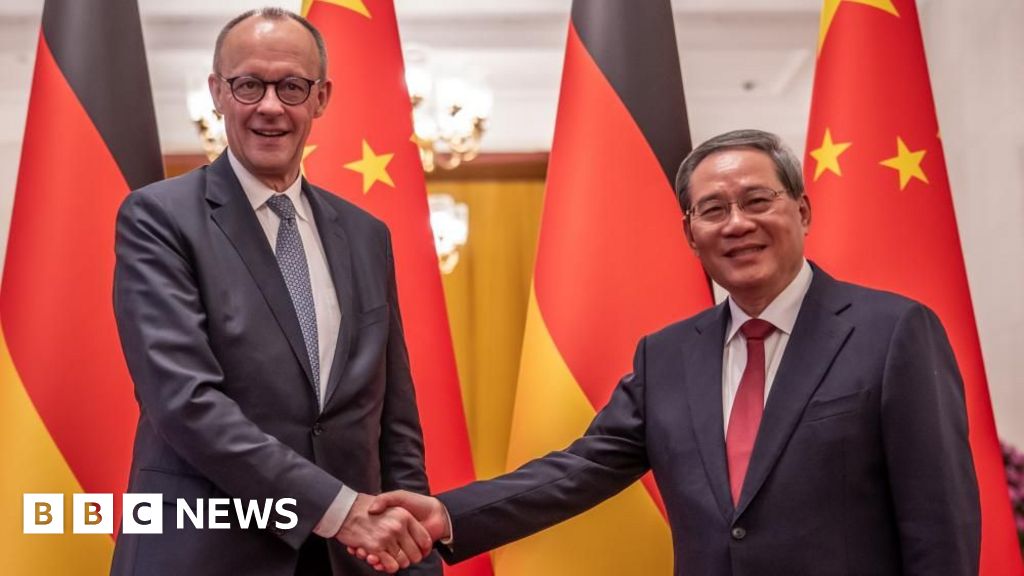

In a significant development amid shifting international trade dynamics, German business groups have issued a pointed appeal to Friedrich Merz, demanding a clear and decisive stance towards China’s economic practices. This move underscores growing concerns within Europe about the strategic risks posed by China’s expanding influence in global markets and the need for coherent policies to safeguard national interests. As tensions over trade competition, export controls, and technological sovereignty escalate, the call from industry leaders signals a potential turning point in Europe’s approach to balancing economic relations with China.
Under Germany’s increasingly complex geopolitical landscape, business sectors are warning that ambiguous or lenient policies could underminet the competitive edge of European firms, particularly in key sectors such as technology, manufacturing, and telecommunications. Analysts suggest that the European Union’s future approach may be pivotal in shaping global power dynamics. The pressure on Merz, the leader of the opposition, reflects broader debates within Germany—Europe’s economic powerhouse—about how to maintain a strategic and independent stance amidst rising U.S.-China tensions. Moreover, this call aligns with European efforts to reinforce export controls, safeguard technology, and counteract economic coercion, which many see as essential in preventing China’s market dominance from eroding Europe’s technological sovereignty.
Historically, decisions on trade and diplomacy have an enduring impact on national security, societal stability, and international rankings. The stance taken by Germany’s politische and business elites will likely influence the broader European Union’s foreign policy direction. Recent reports from international organizations, including the World Trade Organization, suggest that such moves could provoke retaliatory measures from Beijing, adding risk to European export-dependent economies. Meanwhile, U.S. policymakers, keen on coalition-building with European allies, are watching these developments with a mix of interest and apprehension, recognizing that the collective stance will shape how the Western bloc resists China’s strategic ambitions.
As critics warn of the potential for economic decoupling and diplomatic rupture, the words of historians and analysts carry increasing weight. Many caution that reckoning with China’s rise involves more than tariffs and export controls; it requires a deliberate, principled strategy that considers the societal and geopolitical repercussions for generations to come. The decisions made today could determine whether Europe remains a unified, resilient power or whether it succumbs to fragmentation and dependency. With Merkel’s legacy fading and a new chapter in global diplomacy emerging, the weight of history presses upon leaders to act decisively. In this unfolding saga of power, influence, and sovereignty, the future hangs in the balance—a testament to the enduring importance of strategic foresight in a rapidly changing world.