Matox News

Truth Over Trends, always!

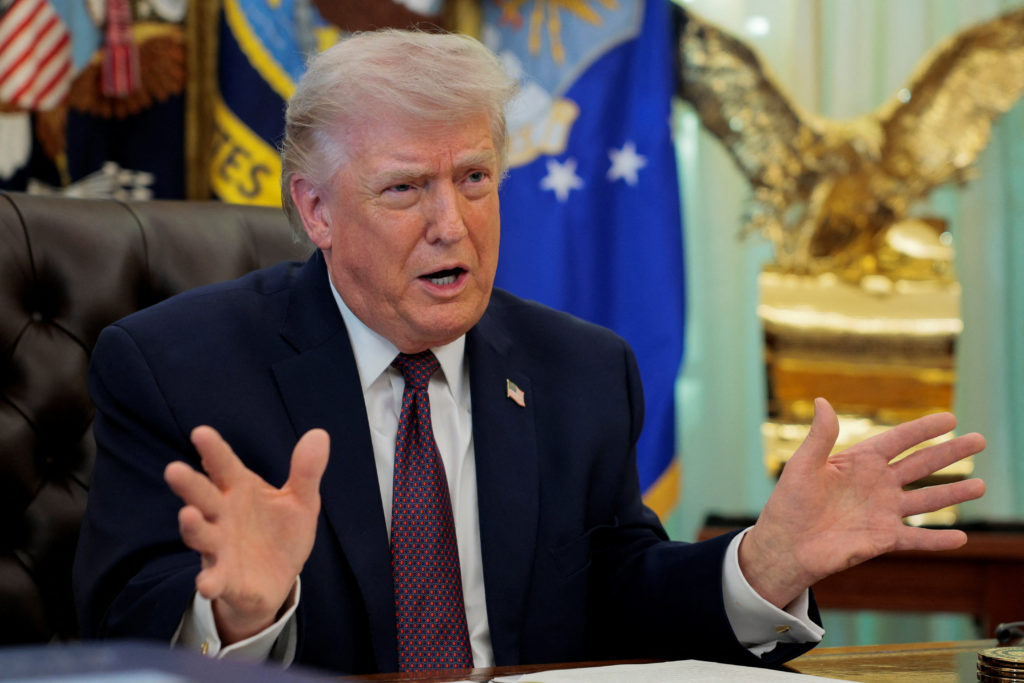
U.S. President Trump signs an executive order in the Oval Office of the White House
White House touts Trump’s pharma deals saving billions for Americans

In the relentless arena of American politics, the recent revelations concerning President Donald Trump’s negotiations with **pharmaceutical companies** underscore a critical juncture where economic policy intersects with political strategy. According to White House economists, these deals—aimed at reducing prescription drug prices to match those of other nations—could generate a staggering $529 billion in savings over the next decade. While such economic projections appeal to the public’s desire for affordability, the underlying power struggles reveal much about the conflicting forces shaping the nation’s health sector and its political landscape.

At the core of this controversy lies the tension between free-market principles and state intervention. Critics argue that the policy shift—a redefinition of conventional healthcare diplomacy— signals a bold move by the Trump administration to leverage government influence over private corporations. This approach echoes a longstanding debate among constitutional theorists who grapple with the extent of government authority. Drawing parallels with Reagan-era deregulation or Teddy Roosevelt’s trust-busting campaigns, the push for price moderation attempts to realign the balance of power in favor of consumers; yet, opponents contend that it risks undermining the very innovation that drives the pharmaceutical industry.

For many political analysts, the issue is less about healthcare and more about control. The Trump administration’s strategy demonstrates a deft understanding of how decisions made in the corridors of power ripple through the lives of ordinary Americans, influencing access to medication, economic stability, and perceptions of governmental efficacy. This is a classic example of policy choices serving as battlegrounds for influence. It’s not merely a matter of economics but a decisive move in power struggles where agencies, corporate interests, and political ideologies clash in a contest that will ultimately determine who holds sway in shaping the national future.

Significantly, these developments evoke echoes of historical parallels—such as FDR’s New Deal confrontations or the ongoing debate over the scope of presidential power. Scholars like **Leo Strauss** and **Walter Bagehot** have long observed that politics becomes the stage where destiny is written. In this context, the Trump administration’s policies redefine the boundaries of who controls healthcare. As the midterm elections loom, the political theater intensifies, encapsulating the fierce power struggle over **America’s economic sovereignty** and the rights of the people versus the influence of special interests.

In the final analysis, the battle over prescription drug pricing is emblematic of a larger, ongoing confrontation—one where the stakes are nothing less than the soul of the republic. As policymakers carve out their visions of America’s future, every decision becomes a stroke in the grand canvas of destiny, a reminder that politics is more than policy—it is the forge where history is shaped. How this controversy unfolds will determine not only healthcare but also the broader trajectory of American sovereignty and liberty, leaving an indelible mark on the fabric of the nation’s narrative.

Billions spent, yet the Xbox mystery remains unsolved for most teens

Xbox’s Strategic Pivot: Innovation, Disruption, and Industry Implications

Over the past decade, Microsoft’s Xbox division has undergone a profound transformation, signaling not just a repositioning of a gaming brand but a potential disruption of the entire entertainment ecosystem. Under the leadership of Phil Spencer, who announced his departure last week after steering the platform since 2014, the company’s evolution underscores a deliberate shift toward integrating gaming into a broader digital experience. Spencer’s tenure, marked by the rise of Game Pass and cloud gaming, cemented Xbox’s role as a pioneer in game streaming and accessibility, potentially challenging traditional console-centric models.

What’s compelling about Microsoft’s approach is its aggressive move toward redefining the relevance of hardware. The classic Xbox as simply a powerful console has given way to a paradigm where the brand’s essence is inseparable from any device capable of playing Xbox games. The advertisement campaigns emphasizing “Xbox everywhere” exemplify this strategic disruption, positioning gaming as a ubiquitous, platform-agnostic experience. This aligns with fundamental industry shifts identified by analysts from Gartner and MIT: the rise of cloud-native gaming solutions that threaten not only hardware sales but also traditional content and distribution models. By extending the Xbox ecosystem beyond dedicated consoles, Microsoft is attempting to dominate a new, disrupted market landscape where device independence becomes the norm.

Moreover, the company’s recent acquisitions — notably Activision and Bethesda — demonstrate a clear intent to control exclusive content, even as strategic positioning shifts. While critics argue that Xbox has become a “state of mind,” this evolution introduces significant business implications. As Microsoft increasingly becomes a major publisher on PlayStation and other rival platforms, it challenges the traditional industry consensus that platform owners alone reap the benefits of exclusive titles. This disruptive strategy could pave the way for platform-agnostic monetization models, accelerating the democratization of high-quality gaming and further blurring industry boundaries.

However, these transformative efforts are not without risks. The new leadership under Asha Sharma faces the challenge of translating “the return of Xbox” into tangible market dominance. As former Xbox President Sarah Bond departs, questions remain about the clarity of Microsoft’s long-term vision and how it will compete with the rapidly evolving cloud-based gaming giants like NVIDIA and emergent players inspired by AI-driven innovation. Industry observers, including top-tier analysts from Gartner, warn that failure to capitalize on this disruption could result in Xbox’s marginalization in an increasingly digital-first world. Yet, the company’s commitment to innovation signals a desire to not merely adapt but to lead industry shifts—offering a compelling glimpse of a future where gaming is no longer confined to consoles but integrated into daily life through seamless, platform-independent experiences.

As the gaming industry stands on the cusp of this new era, the urgency for established players to innovate is more critical than ever. Microsoft’s strategic disruption of Xbox signifies a broader movement across tech industries—where legacy brands must either evolve rapidly or face obsolescence. With AI, cloud technology, and next-gen streaming at the forefront, market watchers must anticipate a fierce race for dominance in what could be the most revolutionary phase of digital entertainment yet—one driven by relentless innovation and an unstoppable desire to redefine the boundaries of how, where, and when we game.

Billions in SEND funding to boost school inclusivity, government vows to fairer future

Government Initiatives Spark Debate Over Support for Children with Special Educational Needs

In a move that signals profound shifts in the landscape of education and social services, the government has announced sweeping reforms aimed at reshaping how children with special educational needs (SEN) receive support. These changes come amid vocal concerns from educators, families, and advocacy groups about the effectiveness and fairness of the current system, which many argue has left vulnerable students behind and strained communities at their breaking point.

The core of the reform efforts involves restructuring the support frameworks within local authorities and educational institutions. Critics fear that the decentralization plan might lead to inconsistency, with some regions potentially lacking the resources or expertise to adequately meet these children’s needs. As social commentators often point out, such shifts risk creating a fragmented system where families are left navigating complex bureaucratic hurdles, often feeling disempowered or misunderstood. This social upheaval underscores a persistent tension: how to balance equitable access to tailored education while managing limited resources within a decentralized framework.

The societal implications extend beyond the classroom, affecting families, communities, and the broader social fabric. When children with SEN are not supported properly, families experience heightened stress, financial strain, and emotional fatigue. These issues ripple outward, altering community dynamics and impacting local cohesion. Sociological insights, such as those from Dr. Emily Rodriguez, emphasize that *”access to quality support for vulnerable children is intertwined with societal resilience”* — a sentiment that underscores wider concerns about social equity and moral responsibility.

Furthermore, this reform initiative reveals underlying demographic shifts and cultural tensions that challenge the status quo. As historian Mark Lawson points out, societies that neglect their most vulnerable members risk risking societal fragmentation, where exclusion and inequality foster social divides. The proposed reforms aim to modernize and streamline the support system, but critics warn of a potential decline in inclusive education if implementations fall short. To address this, authorities propose targeted

  • training programs for educators
  • greater parental involvement
  • investment in community-based resources

, seeking to bridge gaps and foster a society where no child is marginalized.

As communities stand at this crossroads, questions about societal values and priorities loom large. It is a poignant reminder that the future of our neighborhoods depends on the moral choices we make today. Will these reforms create a cohesive society that upholds the dignity of every child, or will they deepen social divides? The challenge lies not only in implementing policy but in nurturing a collective conscience committed to building an inclusive society where every family can hope and every child can thrive. In the end, society’s resilience will be measured by its capacity to embrace its most vulnerable, transforming hope into tangible change, and fostering a future where unity and compassion prevail over neglect and indifference.

Social Media Auto Publish Powered By : XYZScripts.com